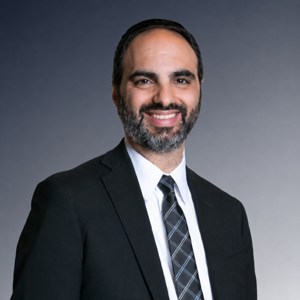
Living Emunah

Living Emunah

By Ashear, Rabbi DavidReligion & SpiritualityJudaism
Download on the App Store
  • Favorites

    27

    Followers

  • Typical duration

    6 min

    per episode

Based on Podcast App listening data

Living Emunah episodes

  • The Precision of Hashgachah Peratit
    The precision with which Hashem runs this world is absolutely mind-blowing. Everything happens at the exact time and place that it is meant to happen. Even events that seem to be the work of man are, in truth, the guiding hand of Hashem. A man related that on the 28th of Tishrei this year, he was in shul waiting for the reading of theTorah to begin. He waited and waited, wondering why it was taking so long. Someone finally told him that the person who was chosen to open the Aron Kodesh had accidentally taken out the wrong Sefer Torah. The one removed was rolled to somewhere in Parashat Pinchas, but the reading for that day was Parashat Noach. This meant they would have to spend quite some time rolling it to the correct place. The man couldn't understand how such a careless mistake could have happened. The gabbai always sets up the Sifrei Torah in a way that makes it obvious which one should be taken out. He was in a rush and now was going to be late. Meanwhile, the gabbai began rolling the Sefer, and everyone in shul worked on their middot and emunah, reminding themselves that this too was min haShamayim. Suddenly someone called out, "Look what it says here!" He pointed to the letters woven into the Torah's cover, where it read: Dedicated to the memory of a boy who passed away at seventeen years old on this very day—the 28th of Tishrei. What an incredible "mistake"! The man who opened the Aron had been guided by Hashem Himself, so that the Torah dedicated in memory of that young boy would be read on his yahrzeit. Suddenly, nobody cared about the delay. They were all in awe, having witnessed such a clear revelation of the Yad Hashem. After the tefillah, they discovered something astonishing. The 28th of Tishrei can never fall on Shabbat or Thursday; the only time a Torah can be read on that date is when it falls on a Monday. Since the boy's passing, that date had fallen on a Monday only five times, and it was not scheduled to do so again for another twenty years. That very day, Hashem orchestrated events so that his Torah would be read for him—guiding the man's hand to take out that exact Sefer. A woman related that for two years her husband refused to give her a get. Many rabbanim got involved, but nothing seemed to help. Her family encouraged her to publicize the situation and rally support, noting that he was ignoring the Beit Din summons. Before acting, she sought da'at Torah from her rav. He advised her to wait patiently and not to publicize anything yet. He explained that since she had just given birth, she would have to wait until her baby was two years old before she could remarry anyway. Listening to that advice was extremely difficult for her, because it was not in her nature to sit back and watch what seemed like injustice unfold. But she strengthened her emunah, saying, "No one has any power other than Hashem. The moment He wants me to have my get—I will have it." And finally, that day came. Her husband gave her the get. It was nothing short of a miracle. Afterward, the rav from the Beit Din told her, "With this get, you will be permitted to remarry in exactly ninety-two days." She looked at the calendar—and couldn't believe what she saw. The ninety-second day was the exact day of her son's second birthday. She felt as though Hashem was whispering to her, "You were in My hands the entire time. You were never delayed—not even by one second. The exact day that you would be halachically permitted to marry again is the day your get would fully take effect." The precision of Hashem in every person's life is truly beyond comprehension. We occasionally hear some stories, but these wonders are happening to millions of people every single day—all orchestrated perfectly by the One who directs every detail of creation. There is nothing random; every delay, every detour, every detail is part of Hashem's perfect plan.
    5 min
  • Avraham’s Test of Unwavering Emunah
    At the beginning of Parashat Chayei Sarah, the Torah goes into great detail regarding Avraham Avinu's purchase of the Me'arat HaMachpelah. The Ramban writes that this story is told at length because it represents one of the greatest tests of Avraham's life. Chazal tell us that when Moshe Rabbeinu questioned Hashem about making the work harder for Benei Yisrael in Miẓrayim, Hashem replied that He missed Avraham and gave an example of Avraham's steadfast emunah. Hashem had promised Avraham the entire land of Eretz Yisrael, yet when he needed a place to bury Sarah Imeinu, he could not find one until he was forced to pay an exorbitant sum — and still, he did not question Hashem. The Mefarshim are bothered, because from the pesukim it seems Avraham easily found a burial site, and the Benei Chet offered it to him free of charge. The Alshich HaKadosh explains that Avraham requested an "Achuzat Kever", a permanent burial place — one in which Sarah would rest until Tichiat HaMetim. However, the Benei Chet were only willing to offer a temporary plot; they did not want Avraham to hold a permanent stake in the land. Avraham then asked to speak directly with Efron Hachiti, offering to purchase the entire property where the Me'arah stood. Efron hinted that it would cost an enormous amount, and Avraham paid it in full, without the slightest complaint or question of Hashem's promise. Think about what Avraham was experiencing at that moment. He had just passed what may have been the greatest test in history — the Akeidat Yitzchak — and upon returning, he learned that his beloved Sarah had suddenly passed away. Wanting only to perform the mitzvah of k'vurah as quickly as possible, he found himself dealing with the most difficult, dishonest people imaginable. He was denied a place to bury his wife in a land that the Creator Himself had promised him as an eternal inheritance. When a person suffers loss and grief, it is natural to be emotionally fragile; to then face new frustration can easily cause one to lose patience or become angry. Yet Avraham Avinu maintained the same calm, pleasant demeanor throughout. He treated the Benei Chet and Efron with the utmost respect and paid an outrageous price — all while knowing that Hashem had already granted him this very land as a gift. This unwavering composure and acceptance were what impressed Hashem so deeply. Hashem was showing Moshe Rabbeinu the greatness of Avraham: that no matter how far Hashem pushed him, he never lost himself; he never let the test diminish his emunah. Whenever a person faces a situation in which he could easily lose control or complain, he must remember: Hashem put him there. Hashem is watching to see if he will rise above it. Avraham accepted everything that came his way with joy, knowing it was the Ratzon Hashem — the will of HaKadosh Baruch Hu. That was what Hashem "bragged" about to Moshe Rabbeinu. A man told me about his daughter who lives in Lakewood. Her brother-in-law asked to borrow her car for a night. She gladly agreed, but he unfortunately totaled it. Just a few days later, her brother asked if he could borrow her other car for the night. After what had just happened, she easily could have refused, saying she needed a break from lending her car. But Hashem was testing the depth of her middat hachesed. She smiled and handed him the keys. That night, he too got into an accident and caused major damage to the second car. She could have become upset, blaming them for carelessness — yet she accepted everything from Hashem with understanding and calmness. A few days later, their name was drawn in a local yeshivah raffle, and they won a brand-new Toyota Sienna worth $40,000. If a person worries about damage to his car, he must remember that Hashem can give him ten cars if He wishes. Our concern should not be about possessions — but about our character, our response to challenges, and how we accept Hashem's will. The harder the test, the greater the potential for growth.
    6 min
  • Heavenly Help in the Spiritual Realm
    For a 10% discount on Rabbi David Ashear's new book LIVING EMUNAH ON THE PARASHAH 2 click the link below https://www.artscroll.com/ Books/9781422645581.html We find that some people merit extraordinary heavenly help in their physical lives, while others receive extraordinary help in their spiritual lives. The true purpose of life, however, is not physical comfort or material success—it is spiritual growth . The physical blessings we receive are only given to help us achieve higher levels of spirituality. Our main focus in our tefillot should therefore be for heavenly help in our spiritual lives, and for the spiritual success of our children. No matter how hopeless a situation may appear, Hashem can lift a person from the lowest depths to the highest heights. Rivkah Imenu is the perfect example of this truth. She grew up in a home of spiritual darkness. Her father, Betuel, was a deceitful and corrupt man. Her brother, Lavan, was a greedy trickster. The city of Charan was filled with idolatry, dishonesty, and moral decay. The Midrash tells us that Rivkah's home was filled with the stench of idol worship. Her father was among the leaders of that idolatrous society, and her brother was his enthusiastic disciple. Rivkah was surrounded by tum'ah , but all she wanted was kedushah . How could she possibly lead a life of Torah and mitzvot in such a place? How would she ever find a husband who would lift her toward holiness? And then, one morning, while living the same ordinary life in the same spiritually harmful atmosphere, everything changed. In an instant, she was chosen to marry the son of Avraham Avinu , the Gadol HaDor . She went from the darkest home in Charan to the holiest home in the world. Her tefillot had brought her the greatest yeshuah imaginable. Rivkah became one of the mothers of Klal Yisrael . Hashem lifted her from spiritual darkness to eternal greatness. This lesson remains true for all of us. Hashem can take a person from any environment—no matter how far from holiness—and raise him to the greatest levels of kedushah . Nothing is beyond His power. A man related that his son had moved to another city, far from their family. All his other children lived nearby, and all were shomrei Torah u'mitzvot . This son's new city, however, had a much lower level of Torah observance. The father and mother were heartbroken. Their greatest joy in life was knowing that their children were growing spiritually and learning Torah every day, and now they feared this son would lose that connection. They prayed daily for their son's ruchaniyut . Time passed, and their son remained in that city for many years. One day, they attended a local yeshivah auction and noticed one of the prizes was a Judaica package that included the entire ArtScroll Shas in English. They dreamed of their son learning from those very Gemarot , so they placed a ticket in the raffle—and they won. They now had an entire Shas in boxes in their home. They used it as a reminder and motivation to continue praying for their son's spiritual growth. A few months later, their son called to tell them he was making a siyum . They were stunned. They had no idea he had been learning. Overjoyed, they told him about the Shas they had won and offered it to him as a gift. He was delighted and said he would love to have it. Not long after, their son and his wife found a new home—right next door to a kollel . He arranged to learn there daily and quickly became part of the community. The parents decided to bring the Shas to him personally. They packed the heavy volumes into four large boxes and went to the airport. Each box weighed over eighty pounds. The total excess baggage should have cost them hundreds of dollars. When they arrived at the counter, the agent smiled and said, "Today, we're giving you four extra suitcases free of charge." Without further explanation, he checked in all the boxes. They were able to bring the entire Shas free of charge to their son's new home, where it would be used daily for Torah study. Our tefillot for ourselves and for our children can move mountains. We often pray for livelihood or comfort—but the greatest blessings of all are in the spiritual realm. When we pray for ruchaniyut , Hashem appreciates it so much, because that is the true purpose of life: to grow closer to Him and to help our children do the same. Shabbat Shalom.
    6 min
  • Hashem Decides the Parnassah
    For a 10% discount on Rabbi David Ashear's new book LIVING EMUNAH ON THE PARASHAH 2 click the link below https://www.artscroll.com/ Books/9781422645581.html Living Emunah 2848 Hashem Decides the Parnassah Regarding a person's hishtadlut to earn a livelihood, the Chovot HaLevavot writes that one is only obligated to work to earn the bare minimum that he needs to get by. If Hashem wants him to have extra, He will send it without any additional effort on his part. And if Hashem does not want him to have extra, then no matter how hard he tries, no matter how many hours he works, he will not be able to get beyond what Hashem has destined for him. There is no such thing as one amount of hishtadlut to earn a regular livelihood and a different amount to become wealthy. It is all the same. Wealth is not achieved through extra work; it is decreed by Hashem and comes to those He chooses. A man told me that he automatically purchases a certain product every year at a specific time. A year ago, he realized that one of those products had lost him around half a million dollars the year before, and he wanted to cancel the order. But by the time he remembered, the order had already been placed. He called the company repeatedly, asking to cancel, but after going back and forth for two weeks, they told him it was impossible. He was frustrated but accepted that this was Hashem's doing and said kapparah . In the middle of that year, something unexpected happened. That very product suddenly became extremely popular, and its price skyrocketed. By the year's end, instead of losing a half a million dollars, he earned a five million dollar profit—on that same product he had tried so hard to cancel. Hashem wanted him to have that extra money, and He made sure he would not succeed in canceling the order. Someone once asked me, "If I don't have a job that can make me wealthy, does that mean I'll never become wealthy?" I told him, Hashem has infinite ways to bring blessing to a person. It is never our job to figure out how. A man who teaches in a school, earning just enough to get by, shared that one day he received a phone call from a businessman. The businessman had heard that he might know someone in a certain industry that he was trying to enter. The teacher indeed knew someone prominent in that field. The businessman told him, "If you introduce me to him and he helps me get into the industry, I'll give you generous commissions on every sale I make." The teacher said afterward, "I don't know if anything will come of it, but it showed me that if Hashem wants to send me extra money, He can easily do so—even for a schoolteacher with a simple salary." Another man said his mortgage company called out of nowhere, offering a much lower interest rate. They handled all the paperwork quickly, and just like that, he was saving over a thousand dollars a month—without lifting a finger. A woman told me that she went hiking with some friends. Along the way, she suddenly noticed that her large, expensive diamond had fallen out of her engagement ring. They were walking on a steep mountain road with a cliff on one side, slippery steps, and leaves everywhere. People were passing by from both directions. The diamond could have fallen off the cliff or been kicked away, and she had no idea where or when she had lost it. She stopped and reminded herself: if Hashem wants, He can easily return it. She recited the tefillah for finding lost items, pledged a generous donation to tzedakah , and thanked Hashem for putting her in that situation. Within three minutes, one of her friends called out—she had found the diamond under a pile of leaves. It was like an open miracle. Parnassah is completely in the hands of Hashem. The best hishtadlut for success is not working overtime or worrying more—it is tefillah and ma'asim tovim . When we do our reasonable part and place our trust in Him, Hashem takes care of the rest.
    6 min
  • A Private Meeting With the King
    The Gemara says that tefillah is something that stands at the height of the world—meaning it reaches the highest places in Shamayim—yet people treat it lightly and do not give it the proper respect that it deserves. It is not uncommon to hear people say, "I tried tefillah and it didn't work, so I stopped," or, "It doesn't seem like Hashem is answering my tefillot anyway, so why should I invest so much time and effort into them?" While that might sound like a logical deduction, it belittles the true value of what tefillah really is. The source of tefillah in the Torah comes from the words ״וּלְעָבְדוֹ בְּכָל לְבַבְכֶם״ —"to serve Hashem with all of one's heart." First and foremost, tefillah is called an avodah , a service to Hashem. We must understand that through the act of tefillah, we are fulfilling a great mitzvah. How does one serve Hashem with his heart? We come and stand before the Melech with all of our wants and needs and desires, fully understanding that everything we have—and everything we want and need—comes from Him and only Him. No human being has any power whatsoever to give us anything unless it is Hashem's will. Our complete nullification before Hashem, and our recognition of His absolute control to the point where we feel it in our hearts, is considered a great avodah to Hashem. Tefillah is not merely a means to get things from Hashem; it is a wondrous avodah that raises us to the highest spiritual levels. Rav Chaim HaLevi writes that one of the main and most basic kavanot a person must have when he gets up to pray is to know with clarity that he is standing right in front of the Melech Malchei HaMelachim HaKadosh Baruch Hu. He must imagine that he is literally being elevated to the highest places in Shamayim and being brought into a private room with just him and Hashem. And for as long as he is in the Amidah, that is how long that private meeting lasts. Hashem is right there, listening to every single word. The Alei Shur writes that if someone is able to perform the mitzvah of tefillah properly each time—truly imagining that private meeting with Hashem—he will never need any proofs about Hashem. He will never have questions in emunah. The more he practices recognizing that he is actually standing before Hashem, the more he will genuinely feel that he is standing before Hashem. A private meeting with the Creator of the world—telling Him what we want and need, with the recognition that only He can give it—is a very holy endeavor. And that is besides what we accomplish spiritually by just saying the holy words of the Amidah. Rav Chaim Volozhiner writes that our understanding of the words of the Amidah, written by the Anshei Knesset HaGedolah, is not even a drop in the ocean compared to the true depth of their meaning. Every time a person says the words of the Amidah—even with just their basic meaning—he is making tikkunim in all of the worlds, both the upper and the lower. And every time we pray, we create brand new tikkunim. From the time people began saying the Amidah until Mashiach comes, there has never been—and never will be—two identical tefillot. Each person accomplishes different spiritual rectifications in his own way with every single tefillah. We have no idea how much we accomplish with even one sincere tefillah. The greatest thing we can do for ourselves is to invest more time, more energy, and more thought into our tefillot—so that they become the avodah they are meant to be. Yes, it is true that Hashem also gives us our needs through tefillah—that is a bonus—but the main part of tefillah is the part that comes from us. It is a mitzvah like no other, and the more kavod we treat it with, the greater the avodah will be.
    6 min
  • Seeing Hashem in Every Detail
    Every time we see the hand of Hashem in our daily lives, it strengthens us to internalize that He is constantly orchestrating every event that takes place. A woman told me her family lives in an out-of-town community. Last year, during winter break, a few boys went away for Shabbat to their neighborhood. They originally planned to stay on a different side of town, but at the last moment, those plans fell through, so they ended up coming to her side of town for Shabbat. The problem was, they had nowhere to eat. Her father was asked if he could host two of the boys for Shabbat lunch. Normally, he does not like having boys over when his teenage daughters are home. But that Shabbat, something extremely uncommon happened — all his daughters were away. So he happily invited the boys in. They immediately took a strong liking to one of them, a thoughtful and refined boy whose family lives in Switzerland and who was learning in Lakewood. After Shabbat, they learned more about him, and this year, baruch Hashem, he married their daughter. How were they going to find the right match for her? Hashem brought the boy from across the world, directly into their home. The yad Hashem was unmistakable. A man told me another remarkable story. He received a phone call from an acquaintance in Israel asking for help. This acquaintance explained that his young son had a rare illness called PKU, where the body cannot break down protein. To get the necessary nutrition, the child needs a special formula called phenyl-free. But recently, the manufacturer had stopped producing it in Israel, leaving the three hundred people who rely on it scrambling to find it elsewhere. The father said he didn't know anyone in the United States. This man was the only person he could think of. He told him that he and his wife had been trying to figure out who to call, but nothing came to mind. Then the mother went to pray on Rachel Imenu's yohrzeit at Kever Rachel in Beit Lechem, pouring out her heart for her child's needs. That night, suddenly, this man's name came to mind. He told him, don't worry, I'll help you. He searched online and found the formula on a website. It was expensive, and there were sixteen cases available. He immediately asked friends if they wanted to participate in the mitzvah of helping these families. Baruch Hashem, together they bought all sixteen cases. The order was set to arrive at his home, and he knew someone flying to Israel that week. At first, the delivery date said it would take several days, which meant the traveler would miss it. But later that night, the shipping estimate suddenly changed, and the delivery was scheduled for the very next day. When this man saw where the formula was being shipped from, he nearly fell off his chair. The cases were coming from Bethlehem, Pennsylvania. The mother had gone to pray in Beit Lechem by Kever Rachel, begging for Hashem's help with this exact formula. And the very next day, the formula was shipped from Bethlehem. Hashem showed that He was listening in the most precise, unmistakable way. They received so many cases that they were able to distribute them to other families in Israel who desperately needed them. The yad Hashem was so clear. Every detail, every timing, every connection — all orchestrated with exact precision. And when we pay attention, we realize He is sending us messages like these all the time.
    4 min
  • Holding On When It Seems Impossible
    For a 10% discount on Rabbi David Ashear's new book LIVING EMUNAH ON THE PARASHAH 2 click the link below https://www.artscroll.com/ Books/9781422645581.html After one of the angels, appearing in the form of a person, told Avraham that Sarah would have a baby, the pasuk says that Sarah laughed, wondering how she could possibly have a child at such an advanced age. The Chizkuni writes that Sarah did not laugh at the moment she heard the news. The angel had said she would have a baby the following year at the same time they were currently in, which was Pesach. Initially, Sarah believed this would happen. She was filled with emunah that the words of the malach would come true. But when Tishre came around six months later and she was still not pregnant, that is when she began to lose hope. Only six months remained until Pesach, and nothing at all had changed in all that time. She looked at her situation, at her age, at the natural limitations, and it suddenly seemed impossible. It was then that Hashem asked Avraham, "Why did Sarah laugh?" and said, hayi paleh meHashem davar — is anything beyond Hashem? Even though she was so old, and even though only a six-month window remained for pregnancy and childbirth, Hashem still wanted her to believe it could happen. She believed for so long, but the moment it seemed too unlikely, she despaired. Of course, the rebuke was only on her exalted level, but the lesson is deeply applicable to all of us. There are times when we get our hopes up and truly believe in Hashem's salvation. We hold on tightly, convinced that what we want can happen. But as the months and years go by, keeping up that hope becomes harder. Sometimes the situation looks so bleak, so unlikely, that even imagining salvation feels unrealistic. It is precisely for those moments that we must remind ourselves, hayi paleh meHashem davar? Is anything beyond Hashem? It doesn't matter how long it has been. It doesn't matter how unlikely the outcome appears. Hashem can do anything, at any moment, and He wants us to believe that with all our hearts. I once read a story from the days of the Gold Rush. A man bought a plot of land and dug for months. He invested enormous time, money, and energy, but he found nothing. Exhausted and discouraged, he finally gave up and sold the land for pennies. The very next morning, the new owner dug just three feet deeper and struck one of the richest diamond pockets ever discovered. Three feet was the difference between despair and fortune. It is often the final moments before the yeshuah that feel the darkest. Hashem is ready to give; He just wants us to hold on a little longer. I once heard a mashal of a man trapped in a room that was completely dark, with no windows. He tried to chisel his way out through thick cinder blocks. Day after day he worked, but the room remained just as dark as when he started. He saw no progress at all. But what he didn't know was that he had almost reached the outside. A few more chisels would have broken through the wall and flooded the room with brilliant daylight. We can be the same. We pray so much, we put in effort, we do everything we can, and yet nothing appears to change. We don't realize that our tefillot and efforts may already have brought us to the very edge of breakthrough. We must never stop. The hope itself is a tremendous mitzvah. We are in this world to fulfill a spiritual mission, and every bit of hope, every tefillah, every moment we strengthen ourselves, brings us success in Hashem's eyes. The harder it is to keep hoping, the greater the avodah becomes. And if salvation comes, it will be because of those very tefillot and efforts we invested during the struggle. Hashem asks only that we continue hoping, continue believing, even when it seems bleak. If we do that, we have done our part, and we will be considered successful by Hashem.

    5 min
  • Parashat Vayera-Hayipalé Me-Hashem Davar
    For a 10% discount on Rabbi David Ashear's new book LIVING EMUNAH ON THE PARASHAH 2 click the link below https://www.artscroll.com/ Books/9781422645581.html Although Sara Imenu was nearly ninety years old and physically incapable of having children, Hashem still expected her to believe with full conviction that she could. The words Hashem used to describe His boundless abilities were, הֲיִפָּלֵא מֵיְ־הוָה דָּבָר — is there anything beyond Hashem? These are words that we must live by. It is true that the Gemara teaches that a person should not pray for something that requires Hashem to overturn nature. But our rabbis tell us that there are many exceptions to this principle. Rav Sadok Hakohen explained that having children is considered part of the natural order, and therefore no matter what any doctor says, a person is always encouraged to pray for children. Furthermore, if a person is facing a fatal illness, lo aleinu, the Orchot Rabbeinu writes that we must continue praying for refuah shelemah, and this is not what Chazal meant when they said not to pray for miracles. Even if doctors insist the illness is incurable, Rav Chaim Kanievsky zt"l said that there may be a medication in the world that we simply have not discovered yet. That is not a miracle; that is part of the natural world which Hashem controls completely. It is not our job to tell Hashem how to save us. It is our job to pray. Hashem can do anything—and it can all happen within the natural order. A woman — we will call her Sarah — told me the following story. She went to the doctor for a routine check. After the initial tests, she returned to the waiting room. A short time later, they called her name and told her the doctor wanted more imaging. She knew these weren't scheduled, and her heart dropped. She went in for the additional scans. As the technicians studied the images, she overheard them speaking in alarming tones: "Oh no… what are we going to tell the doctor?" "Let's try again…" Each time they repeated the scan, the tone got worse. Sarah panicked. Should she call her husband? Should she spare him the worry until she knew more? A flood of thoughts raced through her mind. She truly felt that her time in this world might be very short. But then she realized: at this moment, she didn't know anything for sure. This was the best time to pray. She wondered what words to use. Should she ask Hashem to remove whatever mass they were seeing — would that be asking for an open miracle? Should she ask that it be harmless — when the technicians' reactions indicated otherwise? Should she pray that surgery would be quick and successful? Each option seemed like she was dictating to Hashem how the salvation should come. So she said: it is not my job to tell Hashem how to help me. My job is simply to pray. With that clarity, she poured out her heart: "Hashem, please grant me many more healthy years of life so I can continue doing Your avodah." When the scans were finished, she returned to the waiting area and continued praying intensely. Finally her name was called. She braced herself. But the doctor smiled and said, "Everything looks great. You're good to go." She was stunned. She had heard the technicians' panic. She knew they had seen something. So she asked, "What about the retesting?" The doctor replied, "Oh, that wasn't for you. There's another Sarah. She has a known mass and we wanted updated imaging." The technicians were confused because they couldn't find the mass anymore and thought they were making mistakes. Her heart skipped a beat. While she was praying for life, convinced they had seen something terrible on her brain, she had no idea they were scanning the wrong Sarah. Never in her wildest imagination could she have predicted this scenario. But Hashem doesn't need us to figure out how salvation will come. He only asks us to trust and to pray. הֲיִפָּלֵא מֵיְ־הוָה דָּבָר — is anything ever beyond Hashem? Shabbat Shalom.
    6 min
  • Hashem Is Our Only King
    Many people are feeling uneasy about the results of the election for Mayor of New York. Just hours after the results were announced, there were already several anti-Semitic incidents. Rahmana li'slan. In moments like these, we must remember a fundamental truth: no matter what circumstances we find ourselves in, Hashem is always our loving Father. He is controlling every detail that happens every second of every day. Our King does not get elected. Our King does not change every four years. He was, He is, and He always will be the One and only power directing the fate of every individual and every nation. Shlomo HaMelech says in Mishle, פַּלְגֵי־מַיִם לֵב־מֶלֶךְ בְּיַד־יְהוָה עַל־כָּל־אֲשֶׁר יַחְפֹּץ יַטֶּנּוּ . "The heart of a king is like streams of water in the hand of Hashem—wherever He desires, He directs it." The Midrash explains: just like water in a bowl can be tilted effortlessly in any direction, so too the heart of every leader is in the hands of Hashem, and He tilts it exactly as He wills. Whatever Hashem wants to happen, He brings about through the leader. The Malbim there adds a deeper insight: ordinary people are given free will, but a ruler—who has power over multitudes—cannot be allowed unrestricted free will, or he could cause great harm(in general no one can use their free will to affect another person unless Hashem wills it). Therefore, once someone ascends to leadership, Hashem limits his free will and uses him as an instrument to carry out His plan. That is why throughout history, there were leaders believed to be lovers of the Jewish people who suddenly acted with cruelty. And there were others who were assumed to be our enemies, who turned out to be our greatest allies. Once they come into power, they are governed entirely by Hashem's plan. Whatever He wants for Am Yisrael—that is exactly what will unfold. It does not matter who the leader is. Everything depends on our actions. The Gemara teaches that when Achashverosh gave his ring to Haman, that act brought about more teshuvah among the Jewish people than all the Nevi'im throughout history combined. Sometimes Hashem places a leader over us to awaken us, to push us toward teshuvah, to strengthen our emunah, or to remind us that only He controls the world. So the real question is: Are we going to trust in Hashem, or in the headlines? Are we going to believe that Hashem determines our destiny, or that our lives are in the hands of politicians? Yes, Jewish history contains painful chapters. But none of those harsh events ever came because of what a leader wanted. They were all expressions of Hashem's will—and even the difficult decrees came from His love. Like a doctor who administers a painful injection to heal the patient, Hashem sometimes gives us challenges for our ultimate benefit. Everything He does is the absolute best for us. Always. We have been under Hashem's watch, we are under His watch, and we will forever remain under His loving watch. The best thing we can do is strengthen our belief that there is nothing in the world besides Him, and strive to be the best servants of Hashem we can be. It is always our deeds and our tefillot that determine how Hashem guides the world. Baruch Hashem, we have a loving Father watching over us at every moment. That knowledge alone should give us the greatest sense of peace and strength.
    5 min
  • The True Source of Parnasah
    A man who owns a store in the lobby of a hotel once approached a Gadol in Eretz Yisrael with a question. His store wasn't doing so well, and he wondered if perhaps opening a second store in a different location would bring more blessing. The rabbi told him, "You already opened a pipeline for Hashem to send you berachah. Do you think you need another one?" Then he added a mysterious line: "The Melech Malcheh HaMelachim can send a melech at any moment." The man left confused. The King of Kings can send a king? What does that even mean? But a few weeks later, the meaning became crystal clear. The king of Morocco came to town—and stayed in the very hotel where this man had his store. At one point during his visit, the king walked into the store with his entire entourage and bought two million dollars' worth of merchandise. The man developed a relationship with the king, and they continued doing business afterward as well. In an instant, his financial situation transformed dramatically. We must do something to open a pipeline—but once we do, Hashem can send every penny He wants us to have through that single pipeline. We often become so wrapped up in our hishtadlut that it consumes our lives. We forget what truly matters—because we are too busy worrying about parnasah. A man who learned Torah full-time began dabbling in the stock market. Very quickly, it took over his life. He couldn't concentrate on his learning because he was constantly worried—would the stock go up? Would it go down? Should he sell? Should he buy? He started coming late to shiurim, leaving in the middle, checking his phone in between. Finally, he caught himself. He realized this wasn't living. He pulled out of the volatile investments and moved into something far safer, something that wouldn't take over his mind and heart. Yes, we must open a pipeline—but no, we must not be consumed by it. A powerful segulah for blessing is to know with full certainty that Hashem alone sends parnasah. People, products, markets—they are merely tools, not sources. A man from Israel came to New York to collect money to pay off heavy debts. He heard about a very generous wealthy man and did everything he could to secure a meeting with him. He traveled to one city, only to be told the man spends his summers in another. He chased him there, only to be told that the wealthy man gives his sedaka through a gabbai. He met the gabbai, but the assistance he received was much smaller than he hoped. He still wanted to speak to the wealthy man personally. He went to the shul where the man prayed—but that day he wasn't there. Someone told him he was attending a berit milah at another shul. The man was about to order a car service to rush over when suddenly he stopped himself. He said, "Why am I chasing this one person as if he is the only one who can help me? I've done more than enough hishtadlut with him. I don't want to go beyond what I'm supposed to." At that exact moment, someone pointed out a different wealthy man who happened to be in the same shul—someone this fundraiser knew very well from years earlier. He had no idea that this acquaintance had become wealthy. He approached him, explained his situation, and to his amazement, this man gave him far more than he ever expected—even more than he had hoped to receive from the wealthy man he had been pursuing endlessly. We never need any specific hishtadlut or any specific individual to help us. Hashem can send salvation through anyone, at any moment, through messengers we would never imagine. Our main hishtadlut is always with Him—and Him alone.
    5 min

About Living Emunah

From the publisher's feed

A Daily ethical teaching by Rabbi David Ashear

Best of Living Emunah

Ranked by our users in the last 21 days

More shows like Living Emunah

The Rabbi Sacks Legacy by Rabbi Lord Jonathan Sacks

The Rabbi Sacks Legacy

557 Listeners

The Israel Guys by The Israel Guys

The Israel Guys

308 Listeners

Jewish Stories to Inspire: Motivational & Spiritual Stories Based on the Torah's Ethics, Values and Wisdom by Stories to Inspire

Jewish Stories to Inspire: Motivational & Spiritual Stories Based on the Torah's Ethics, Values and Wisdom

186 Listeners

Living with Emunah by Rabbi Efrem Goldberg

Living with Emunah

110 Listeners

Meaningful People by Meaningful Minute

Meaningful People

1,987 Listeners

From the Inside Out: With Rivkah Krinsky and Eda Schottenstein by Rivkah and Eda

From the Inside Out: With Rivkah Krinsky and Eda Schottenstein

263 Listeners

The Q & A with Rabbi Breitowitz Podcast by Rabbi Dr Yitzchak Breitowitz

The Q & A with Rabbi Breitowitz Podcast

234 Listeners

Call Me Back - with Dan Senor by Ark Media

Call Me Back - with Dan Senor

3,197 Listeners

The Times of Israel Daily Briefing by The Times of Israel

The Times of Israel Daily Briefing

1,070 Listeners

Kosher Money by Living Lchaim

Kosher Money

821 Listeners

History for the Curious - The Jewish History Podcast by JLE

History for the Curious - The Jewish History Podcast

232 Listeners

Gedale Fenster - Podcast by Gedale Fenster - Podcast

Gedale Fenster - Podcast

399 Listeners

Honestly with Bari Weiss by The Free Press

Honestly with Bari Weiss

8,473 Listeners

Inspiration for the Nation with Yaakov Langer by Living Lchaim

Inspiration for the Nation with Yaakov Langer

1,120 Listeners

Stories Of Hope With Tzipora Grodko by Meaningful Minute

Stories Of Hope With Tzipora Grodko

324 Listeners