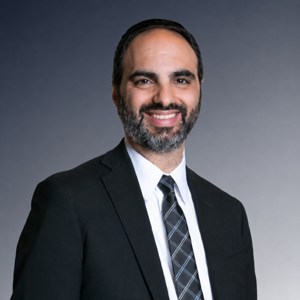
Living Emunah

Living Emunah

By Ashear, Rabbi DavidReligion & SpiritualityJudaism
Download on the App Store
  • Favorites

    27

    Followers

  • Typical duration

    6 min

    per episode

Based on Podcast App listening data

Living Emunah episodes

  • The Guardian of Life
    One of the malachim who came to visit Avraham Avinu brought the most beautiful news: "Ka'eit chayah u'lSarah ben" —"At this time next year, Sarah will have a son." But hidden in those words was a second message. The angel wasn't only telling Avraham that he and Sarah would finally have a child. He was also assuring them: Ka'eit chayah —At this time next year, you will both be alive and well to hold that child in your arms. This promise carried an eternal truth. The malach was a messenger of Hashem, and only Hashem can guarantee life. When a person is meant to live, no human, no illness, and no circumstance can shorten that time. Hashem alone is the Guardian of life, watching every one of His children with infinite love and precision. A rabbi related a story that happened at the beginning of the school year. His three-year-old child boarded the van as usual to go to school in the morning. When his wife arrived to pick the child up at 2:30 p.m., the teacher said, "Your child wasn't in school today." Panic. A mother's worst nightmare. They began to search frantically—and to their shock, they found the little boy still inside the van that had brought him that morning. The van had been sitting in the parking lot for hours. The weather that week had been brutally hot. But on that one day , the temperature dropped dramatically, and rain fell steadily. The child was perfectly fine. Hashem had arranged the weather so that this child would be spared. The time of his life had not yet come to an end—so Hashem changed nature itself to preserve it. A few days later, a man from the rabbi's shul approached him. He had heard the story and wanted to sponsor the Shabbat breakfast as a seudat hodah , a thanksgiving meal to Hashem for the rabbi's miracle. The rabbi thanked him but asked that no names be mentioned. "Let it be," he said, "a general hakarat ha'tov to Hashem for always protecting us." The man agreed and called the shul to sponsor the Shabbat kiddush in gratitude to Hashem "for watching over all our children and grandchildren." That evening, when he came home, his wife told him something startling. She had been babysitting a few grandchildren earlier that day. While she prepared something in the kitchen, she left them to play in the den. When she returned, she froze in horror—a toddler was holding a pen and poking it toward the eye of the baby sitting in an infant chair. She rushed to stop him, but there was already blood. Terrified, she called Hatzalah . After thorough testing, the doctors confirmed that, baruch Hashem , the baby's eye was completely unharmed. The poke had missed the pupil entirely. Her husband asked, "What time did that happen?" She said, "Around 4:30." The man was stunned. "That's exactly when I called the shul to sponsor the kiddush thanking Hashem for protecting our grandchildren—just minutes before this happened!" Hashem watches over every life with divine timing and infinite compassion. There are times when a soul's mission in this world is complete and it returns to its home in Gan Eden . But as long as a person is meant to live, no harm can touch him. Ka'eit chayah —Hashem decides the measure of every moment, and His protection never falters.
    0 min
  • The Power of Gratitude
    The Sefer Emunash Shalema quotes the Sefer Mitzvot Zemaniyot , who teaches that it is incumbent upon us to thank Hashem for everything He created for our benefit—and that this form of service is the most powerful of all the mitzvot. The Midrash on Mishlei says that even though Hashem has millions of malachim singing His praises, all He truly desires are the praises of His children. The Kedushat Levi writes that one of the intentions of David HaMelech in composing Tehillim with such magnificent praises of Hashem was his awareness that thanksgiving and praise have the power to nullify all harsh decrees and transform them into mercy and kindness. Recently, I attended a Pidyon HaBen for the eldest of twin boys. During the seudah, the grandfather of the newborns shared the remarkable story that led to this joyous occasion. He explained that his daughter and son-in-law had been childless for nearly six years, with little reason to hope. Doctors could not agree on what the problem was; there were conflicting diagnoses, and they found themselves at a painful standstill. Then, last year, while living in Eretz Yisrael, the couple was taken to a certain rabbi for a berachah . When they arrived, the rabbi advised them to become people who constantly thank Hashem for everything. He acknowledged how hard it was for them to be happy in their situation, yet he told them how wondrous it is to express gratitude even when it feels impossible. He urged them to spend time every single day thanking Hashem for all their blessings—and even to thank Him for not yet having children. He gave them a sefer on the subject of hakarat ha-tov , and said, "In the merit of your thanking Hashem, you should be blessed with children." At first, it was difficult for them to feel genuine appreciation in their circumstances. But they persevered, practicing gratitude each day until their hearts began to change. Soon they truly felt grateful for everything Hashem had given them. A few months later, the woman called her father in America, her voice bursting with excitement. "It's a miracle!" she exclaimed. "Baruch Hashem, we're expecting!" The family rejoiced, celebrating with tears of happiness. But only three days later, tragedy struck—the pregnancy was lost. The joy turned to heartbreak. Yet in the midst of their pain, the husband gently told his wife, "Maybe this is our test—to see if we'll still be thankful after disappointment. Let's rise to the challenge and keep thanking Hashem, even for this." They continued their daily words of thanks with renewed faith. A few months later, another miracle occurred: she was expecting again. This time, it was double joy—they were told it was twins. Nine months later, she gave birth naturally to two healthy boys, and the family celebrated two berit milot and a Pidyon HaBen . (The earlier miscarriage did not affect the pidyon , since it had occurred very early on.) Thanking Hashem is one of the greatest acts we can perform—especially when it's hard to do. Each of us has so much to appreciate. And when we cultivate hakarat ha-tov , we draw down mercy, kindness, and blessing upon ourselves and the entire world.
    0 min
  • The Power of Self-Sacrifice
    In this week's Parasha, Lech Lecha, we begin once again to learn lessons from the lives of Avraham and Sarah. They were both great nivi'im and understood the ways of Heaven. When Sarah saw that she was not meriting to have children, she began to think of what she could do as a special zechut to change her mazal. Chazal tell us that Sarah was not physically capable of bearing children, as she did not even have a womb. She realized that for such a salvation, she would need an enormous zechut. So what did she do? The pasuk tells us: Sarah gave her maidservant Hagar to Avraham as a wife, saying, "Perhaps I will be built through her." What was so great about giving Hagar to Avraham? Sarah knew that Avraham had a mitzvah to have children, but perhaps she was the one preventing him from fulfilling that mitzvah. With tremendous selflessness, she gave another woman to her own husband, solely so that he could fulfill Hashem's will. Moreover, Sarah could have suggested that Hagar be taken as a pilegesh instead of a full wife. But she was concerned for the kavod of Avraham. He was like a prince, and it was not fitting for him to have less than a true wife. We know that the natural longing of a woman is for the attention of her husband. In fact, the Gemara calls a co-wife a tzarah — a rival — because it becomes a rivalry for their husband's attention. For Sarah to voluntarily offer her husband a different wife so he could fulfill the mitzvah was an act of extraordinary mesirut nefesh. Sarah understood that self-sacrifice brings great berachah and yeshuah. And indeed, later in the Parashah, Hashem changed her name from Sarai to Sarah, and announced that she would be blessed with a child — the child who would become the future of Klal Yisrael. The Kli Yakar explains that Hashem removed the Yud from "Sarai" because the letter Yud is masculine, symbolizing that she had been created like a male in that she was unable to bear children. He replaced it with the letter Hei , which is feminine, signifying that she would now be able to bear children in the normal way of a female. But numerically, there was a loss — Yud equals ten, Hei equals five. To restore balance, Hashem created another Hei (five) and attached it to the name of Avram, turning him into Avraham. The mekubalim explain that the letter Hei is associated with reproduction. The Kli Yakar writes that it was Sarah's zechut — the selflessness with which she gave her maidservant to Avraham — that enabled not only herself, but also Avram, who until then was unable to father children, to now have children. The Hei that was added to Avraham's name came from Sarah, because it was in her merit that he gained this ability. From here we see the enormous power of a mitzvah done with mesirut nefesh. Sarah's selflessness was the catalyst that enabled both her and Avraham to have children — and through it, Yitzchak Avinu came into the world. Every extra zechut that a person gains is of immeasurable value. Our Rabbis tell us that when a mitzvah is performed, it creates an et ratzon — a time of Divine favor. The greater the mitzvah, the greater the et ratzon . And tefillot offered at such a time rise even higher. May we all merit, be'ezrat Hashem , to gain the right zichuyot that will bring about yeshuot for all who need them. Shabbat Shalom
    5 min
  • Hashem Leads Us Exactly Where We Need to Be
    Every hashgachah peratit story that we hear is meant to strengthen our emunah that Hashem is intimately involved in every detail of our lives. He knows exactly what we need and can provide it in the blink of an eye. Our responsibility is to recognize this, and to pray with the deep belief that Hashem is always with us. The rabbi from yesterday's story shared his own powerful experience. A few years ago, he needed a critical medical procedure that could only be done in the United States. The cost: forty thousand dollars out of pocket. He had nowhere near that kind of money, and the procedure was essential. He reached out to a chesed organization for help, and then, without much of a plan, boarded a plane from Israel to New York. When he landed, he called his mother for advice. With only $250 in his pocket and no idea where to turn, he was desperate. His mother suggested he try a very wealthy man who was known for generosity and who lived in Monsey during the summer. She urged him to knock on his door and ask for help. So he took $100 — almost half of the little money he had — and paid for a taxi to the man's house. He knocked repeatedly, but no one answered. The house seemed empty. Frustrated, he called his mother back. She had no more ideas. Now he was stuck in Monsey, drained of money, no plan, no connections — and the hot sun beating down on him. Then he became very thirsty. Spotting a shul, he went inside to look for water. Inside the hallway was one man, pacing back and forth, engrossed in a phone call. The moment he saw the rabbi, he stopped and asked who he was. When the rabbi told him his name, the man's face changed. "I know who you are," he said. "You're here trying to get a medical procedure, and you need $40,000." The rabbi was stunned. He had never seen this man before. How could he know so much? The man began interrogating him, demanding to know who had told him to come to this shul. The rabbi insisted that no one told him — he had simply come in because he was thirsty. The man explained: "I raise millions of dollars every year for people in need. But the demand is so great that I sometimes have to hide out in different places just to breathe. Today, I picked this shul, where I was sure no one would disturb me." At that very moment, he was on the phone with the very chesed organization the rabbi had contacted, discussing the rabbi's case. They had asked him to take on raising the $40,000, and he had flatly refused, saying he already had too many obligations. But now, staring at the rabbi who had just "randomly" walked into the building, he realized this was not random at all. "Now I see that Hashem Himself sent you here," he said. "And because of that, I will raise the money for you." And so it was. The rabbi received the full $40,000 for his medical procedure. Think about it. He stepped off a plane into a city of millions of people and millions of buildings. Hashem led him straight to the one building, at the one moment, where the exact person who was destined to be his messenger was waiting. Hashem can do the same for each of us. The more we strengthen our belief and pour our hearts into tefillah, the more clearly we will see His hashgachah in our lives.
    5 min
  • Everything Is With Siyata DiShmaya
    A person can plan, prepare, and work as hard as possible, but without Hashem's help, nothing will succeed. We make the efforts, but the outcome is never in our hands. From the simplest tasks of daily life to the greatest undertakings, we are dependent every moment on the blessing of Hashem. Be'ezrat Hashem , Living Emunah on the Parashah Volume 2 is about to be released. During the summer, I received a phone call from one of the sponsors who was going to help bring this project to fruition. He explained that he had fallen on hard times and was not going to be able to fulfill his pledge. I wished this man berachah v'hatzlachah , and then I turned to Hashem and asked Him to please send a different messenger to help. The very next morning, I overslept and missed my alarm. That small mishap caused me to pray in a shul I did not normally attend. After tefilah, as I stood in the lobby, a man recognized me and asked if I had time to hear a nice hashgachah peratit story. I told him most definitely, and he began. He told me about his associate, whom we'll call Yehuda, who was in the nursing home business. For nearly three years, Yehuda had been trying to secure a meeting with a very influential man in the industry. At last, the meeting was scheduled — Thursday night in a Manhattan restaurant. But Yehuda gave a shiur every Thursday night in Lakewood, and he never missed it under any circumstances. Now he was torn. This was the opportunity he had waited for, yet it would mean skipping his shiur. He tried to reschedule, but was turned down. Finally, with great strength, he told the man he could not attend and canceled the meeting. At first, he felt terrible. Three years of waiting, and he had given it up. But then he told himself: A person never loses by doing the will of Hashem. That Thursday, he prayed Minchah in Lakewood, as usual, being that he didn't have to travel to Manhattan. In that very minyan, he met a man who was even more prominent in the nursing home business than the one he had originally been scheduled to meet. He introduced himself, arranged a meeting, and ended up with a deal far greater than he could have imagined. Yehuda was overjoyed. By holding onto his shiur, he saw Hashem's blessing so clearly. When the man finished his story, I thanked him — and then asked if he might know someone who would be interested in sponsoring Living Emunah on the Parashah Volume 2 . His eyes lit up. "What? Living Emunah on the Parashah? I'm the number one fan of that book! I've given out over forty copies of the first volume. It has brought so many people closer to religion. It would be my greatest honor and pleasure to help sponsor the new volume." And just like that, the missing sponsor was replaced. It was then that I understood why I had overslept that morning. Hashem guided me to the shul where the very person I needed was waiting. Everything gets accomplished only with siyata diShmaya. While we were talking, a rabbi visiting from Israel overheard part of the conversation. He walked over and asked, "Are you sharing hashgachah peratit stories?" When we said yes, he told us he had one of the greatest stories that ever happened — and it happened to him personally. With Hashem's help, I will share that story tomorrow.
    0 min
  • Hashem Decides What We Receive
    There are times when a person looks back and thinks, If only I had taken that opportunity. Perhaps it was a business deal that turned out to be very lucrative, or another chance that could have brought success. Naturally, he wonders what he could have had, imagining how life might look if only he had acted differently. But someone who has been learning Emunah knows better. He understands that he already has everything he is meant to have. If Hashem wants him to have more, He will send it in another way, from another source. Hashem is in charge not only of what we receive, but also how we receive it. We should never feel that we "could have" or "should have" had more. Sometimes Hashem's Hand is so obvious that we can't miss it. Michael Cohen, founder of the Mitzvah Man organization, related that he once received a call from a family with eight children who could not afford a car. They asked if he could help. He explained that his organization did not give away cars, but if he heard of something, he would let them know. That very week, he got an email from Eshel Shabbat announcing a Chinese auction with a car as one of the prizes. Michael bought a ticket, publicly committing that if he won, he would give the car to that family He then put a public notice on his webpage that he commits to giving the car away if he wins. He also told his daughter to make sure he doesn't renege in a moment of weakness if he wins. His daughter told him not to worry, as there were thousands of tickets in the raffle and he wasn't going to win anyway. Two days later, the organization called saying he won the car. He was so happy. He gave the car to that family and told them not to thank him. It was a gift from Hashem. A couple of years later, he received another call from a family with a lot of children who couldn't afford a car. He told them as well that he didn't have cars to give away, but if something came along, he would let them know. A few weeks later, he got a text message on his phone from Eshel Shabbat saying, Last chance for the car raffle. He once again bought a ticket and said if he wins, he would donate the car to this family in need. Amazingly, two days later, he got a phone call from them saying that he won the car raffle again—and once again, he gave away the car. It is obvious that Hashem decides who wins raffles and who gets cars. A man told me he was in Israel for Sukkot and on Shabbat Chol HaMoed, in the shul he attended, they were bidding for the aliyot. He bought one aliyah for his brother-in-law and then purchased aliyah Levi for himself. At first, the gabbai said he couldn't buy two, but when he explained the first was a gift, they agreed. Yet when the time came, they gave aliyah Levi to someone else. His first instinct was to protest, but then he remembered the Gemara which says that everybody gets exactly what's coming to them, and no one could take even a hair's breadth of what's yours. He even said he was still going to pay for that aliyah. After the aliyah, the gabbai approached him apologizing, saying it was an oversight. That afternoon, he was invited by a rabbi to eat seudah shlishit at his house. The rabbi told him minchah at his shul was going to be at 6:15. But later on that day, this man realized the rabbi must have been mistaken on the time, as sunset was 6:25. So he went to the shul at 5:30, and when he was almost there, he saw the rabbi standing outside the shul looking for someone. When he got closer, the rabbi called out to him, saying to come quickly. He wanted to give him aliyat Levi and he was hoping he was going to come. The moment he walked into the shul, he went right up to the Torah and got aliyat Levi. He said afterward, If Hashem doesn't want you to get an aliyah, you could be in the shul a few feet away from the Torah, having already bought the aliyah, and still not get it. And if Hashem wants you to get an aliyah, you could be very far away, and the rabbi will stop everything and wait for you to come to get the aliyah. Whatever we get is decided by Hashem. He knows how and when to give us what He wants us to have, and therefore we should never second-guess a decision we made or feel bad about passing up on any opportunity.

    0 min
  • The Sweet Aroma of Sacrifice
    The pasuk says that Hashem smelled the pleasing aroma of Noach's korban and then declared that He would never again destroy the world as He had done with the Mabul. The Midrash explains that Hashem not only smelled the aroma of Noach's korban, but also the aroma of the fiery furnace into which Avraham Avinu was willing to be thrown. He smelled the aroma of the furnace that Hananyah, Mishael, and Azaryah were cast into, and He smelled the aroma of all of His precious children throughout history who were willing to sacrifice their very lives for Him. We are commanded to love Hashem with all our heart, with all our soul, and with all our money. That means being willing to give up even the most precious things to us in order to show our love for Him. Every form of sacrifice is precious to Hashem. Sometimes it means enduring embarrassment. Sometimes it means giving up comforts. Sometimes it means changing our plans. Whatever it may be, Hashem cherishes every effort we make for His sake. Sometimes Hashem even makes it clear just how much He treasures those sacrifices. A Rosh Yeshivah from B'nei B'rak told me a remarkable story. When Rav Chaim Kanievsky, zatzal, was niftar, he was asked to travel to France to deliver a hesped in a shul where his father had once been the rabbi. The Rosh Yeshivah agreed — but on one condition: he never missed his daily shiur at 12:30 in the yeshivah under any circumstance. If the organizers could arrange the trip in such a way that he would not miss his shiur, he would go. They arranged a flight on Thursday afternoon, allowing him to give the hesped Thursday night and return Friday morning — since there was no shiur on Fridays, it would work. But then, another shul in France, a six-hour train ride away, called with the same request. It was a shul where his father-in-law had once been the rabbi. They asked if he could stay for Shabbat, deliver the hesped motza'ei Shabbat, and fly back Sunday morning on a 7:00 a.m. flight. He made the calculation and realized that flight would not land in Israel until around 12:30 — too late for his shiur. So he politely declined. He flew to France that Thursday without even bringing luggage, expecting to return the next morning. But then the second shul called again. This time they had worked out a plan: if he would speak motza'ei Shabbat, then drive six hours overnight to Switzerland, he could catch a 6:00 a.m. flight that would land in Israel around 11:00 a.m., giving him time to reach the yeshivah by 12:30. This would mean spending Shabbat there with no belongings, traveling six hours by train, then another six hours by car through the night — to save one hour in flight time, just so he would not miss giving one shiur. He asked his wife for permission, and she gave her blessing. Heroically, the Rosh Yeshivah delivered both hespeidim with great inspiration. When he arrived for the early flight, it was delayed by half an hour. They landed in Israel at 11:30, and by the time he reached passport control it was 11:50. He was in the foreign passport line with about 50 people ahead of him. After all his sacrifice, it seemed that he would miss the shiur after all. But then, as if an angel was sent from Shamayim, an officer approached him, asked for his passport, stamped it immediately, and told him to pass through without waiting. Such a thing had never happened to him before. Next came the mandatory COVID test. The lines were long and crowded — except for one line that was practically empty. He quickly got his test and continued on his way, arriving at his shiur at exactly 12:30. When a Jew is willing to sacrifice for Hashem, Hashem shows him just how much that sacrifice is cherished. Avraham Avinu never knew how much he was accomplishing by walking into the furnace or by being ready to sacrifice Yitzchak. Hananyah, Mishael, and Azaryah never knew how much their loyalty would inspire generations. And every one of us, in our own way, when we give up something for Hashem, is adding to that eternal "pleasing aroma" that rises to Shamayim. The more we are willing to sacrifice to do Hashem's will, the more love we show Him — and the more Hashem shows His love for us.
    6 min
  • Emunah is a Process
    The Torah testifies that Noach was a צדיק תמים-completely righteous. He was a Navi who communicated directly with Hashem. He spent 120 years building the teva despite being ridiculed by everyone around him. He found חן-favor in the eyes of Hashem. Yet, despite all of this greatness, when the mabul began, it says that Noach did not immediately go into the teva. Chazal tell us it was because he had a small deficiency in his emunah. Even great people could have a lapse in emunah. It is an area that we have to constantly strengthen ourselves in because so many times it is tested. If a circumstance arises and we don't respond the way we think we should have, we shouldn't get depressed about it. Rather, we should think we're trying . It's a long process. Emunah is not easy, but b'ezrat Hashem, it's only going to get better. To have a rough day with emunah is very normal. The key is to grow from it, to come back later even stronger. Hashem is always with us, even when it doesn't seem that way. If we could remind ourselves, when we're going through the difficulty, and say, "Even this is from Hashem, and even this is for my good," it will help a lot. The sefer Ki Ata Imadi told a story about a man who we'll call Raphael who was on his way, with his son, to spend Shabbat with his rabbi in Yerushalayim . On Friday, they got on a bus anticipating a one hour drive. All of the seats on that bus were taken except for one. The man told his son he was going to take the seat, but then, the little boy who was sitting next to that open spot said he's saving it for his father who's getting on at the next stop. Raphael then became noticeably upset. He told the driver, "This is not right. There should be more buses and no saving seats." He got off the bus with his son, and he had to wait for the next one. The man who told over the story was on that bus. He said he knew Raphael as a man who always remained calm no matter what was going on. He never raised his voice. He was always able to accept everything b'emunah. Seeing him make that little outburst disturbed him. When this first bus was approaching Bet Shemesh, it broke down. Everyone on the bus had to get off and stand outside in the heat for a long time to wait for a new one. While they were standing there outside, they saw the next bus that Raphael got onto zoom right by them. The man telling the story said, "I saw Raphael and his son through one of the windows sitting peacefully on it." The second bus finally came and picked them up, and this man, who was telling the story, arrived very late in Yerushalayim . He quickly got ready for Shabbat and went to shul. When he walked into the shul he was surprised to see Raphael there, sipping tea and learning with his son. He immediately went over to him and said, "Look how much Hashem loves you. I was on that first bus. I saw what happened. I saw you get off. I just arrived now. We had to stand outside for a long time in the heat waiting for a new bus because ours broke down. You got on the right bus. You arrived with enough time to sit and learn with your son before Shabbat. Hashem helped you. He loves you." While he was saying this, he noticed a tear welling up in Raphael's eye. He wondered what he said that made Raphael so emotional. Then Raphael spoke up and said, "I want to tell you something. For many weeks now, I have been out of a job. My house is practically on empty. Whatever I try to do, I'm unsuccessful with. I feel like everyone is against me and whatever could go wrong always does. I decided maybe I needed to improve spiritually, so I asked my wife if I can go and spend Shabbat with my rabbi in Yerushalayim to get chizuk . I felt like I was finally doing something good and then, when I got on the bus to go, there wasn't even a seat for me. I felt like I was being turned away again. Even when I'm trying to do good I get pushed away? Even Hashem doesn't want me? That is when I got upset. I didn't want to think like that. I knew Hashem loved me. It just didn't seem that way. A short while ago, I turned to Hashem and I said, 'Hashem, please, if I'm wrong and You really do love me, please show me that You love me.' And now, you walk in and you say, 'Look how much Hashem loves you.' You can't believe how much you just helped me. Now I know I'm going to get through this with emunah. Thank you for the chizuk ." Hashem loves all of us. If we could recognize it during the trying times, we'll be able to stay strong in our emunah. And if we are ever weak in emunah, don't get down. Recover and get back up. Emunah is a long process and b'ezrat Hashem, we'll become great at it.
    7 min
  • Thanking Hashem for the Surgery
    A woman once related that her daughter had been married for a few years without being zoche to have a baby. It was a stuggle that she herself could not fully relate to, yet she suffered deeply through it together with her daughter. It was painful to watch other family members and friends have babies so easily, one after another, while her daughter remained empty-handed. After several visits to their regular doctor, they turned to a specialist who identified the issue and devised a treatment plan. The process, however, included invasive and painful testing that needed to be performed at precise times of the month. Because of the upcoming holidays, they were forced to postpone the treatments, which was disheartening. She tried to remain positive, encouraging her daughter to stay optimistic and reminding her to trust in Hashem. Of course, they prayed together constantly for the best outcome at the best time. Then, out of nowhere, her daughter required emergency surgery related to the same issue. The surgery delayed things even further. She was devastated. She didn't want to be sitting in a hospital beside her daughter recovering from surgery—she wanted to be there with her daughter in the delivery room, holding her newborn baby. The frustration was mounting, and her emunah was wavering. Her daughter came home to recuperate, but seeing her in pain only deepened her struggle. Anticipating long months of testing and treatment ahead, she didn't know how she could continue. In her desperation, she sought the advice of a respected rebbetzin. She poured out her heart, explaining how hard it was to keep her faith strong and to support her grown daughter through such a difficult challenge. The rebbetzin listened, then offered advice that seemed almost outrageous. She said firmly, "You must thank Hashem for the surgery." That was all she said—no elaboration, no explanation. The woman was stunned. Thank Hashem for surgery? For delays? For pain? She thought to herself: I want to thank Hashem for blessings, not for setbacks and suffering. Still, she decided to follow the advice. Every day, as she prayed, she began to thank Hashem—not only for the good, but for the surgery, the delays, and the process itself. At first it felt strange, even forced. But gradually it became easier. It reminded her of the lesson her children had once learned—that true emunah means accepting Hashem's will as one's own, even when it doesn't align with our plans. Slowly, her heart shifted. She began to sincerely and wholeheartedly accept Hashem's will, thanking Him again and again. And then, the miracle came. Just one month later—without a single test, without a single medication—her daughter was expecting. They were stunned. Overjoyed. Beyond words. Not only had Hashem granted them the child they so longed for, but He had spared them the agonizing process of IVF. A few months later, she attended a shiur and heard a line from Pirkei Avot that resonated with her to the core: "When you accept Hashem's will, He will make your will His will." In that moment, she realized the truth of what had happened. Once she truly thanked Hashem and embraced His will, Hashem embraced hers. Today, Baruch Hashem, they have their miracle baby. Every single day they treasure her presence and appreciate the blessing she brings to their family. The lesson was clear and life-changing: thanking Hashem even for the difficulties, and accepting His will even when life doesn't go as we hoped, is among the most powerful forms of avodah. The more heartfelt and sincere the thank-yous are, the more transformative they become. At the very moment a person experiences difficulty, that challenge is truly the best possible thing for them. However, that does not mean that going forward it won't be best to get what he is hoping for. Thanking Hashem for whatever happens has the power to turn hardships into salvations and to open the gates for wondrous outcomes.
    0 min
  • Strength to Wait, Courage to Believe
    The Chafez Haim writes that one of the main determinants of the greatness of a person in this world is the way he responds to how Hashem deals with him. In our generation, we have people who have become truly great through the emunah that they have learned and applied in their lives. One woman, who has been in shidduchim for about fifteen years, shared how much strength and courage emunah has given her. What inspires her most are not only stories of miraculous endings, but the journeys of ordinary people who still don't know how things will turn out — and yet, again and again, they choose the path of emunah over despair. Some face major crises, others the struggles of daily life, but they all summon the courage, often with superhuman effort, to choose emunah no matter what. She explained that the endings are secondary. It is the journey and the choices made before the yeshua that give her strength. The emunah that she has learned over the years has not only enabled her to get through each day, but to grow, and even soar, through her nisyonot because of the lessons she has absorbed. She knows that throughout the experience she is accomplishing something every day in her avodat Hashem. While in shidduchim, she feels that the world pushes hard against her to make her despair, but her emunah has saved her emotionally, psychologically, and spiritually. It has preserved her self-esteem and allowed her to face what can sometimes be a humiliating process with dignity and grace. She always reminds herself that she is loved by Hashem, that she is a special neshamah, and that her perfect zivug is waiting to be revealed at the right time. She related a very difficult conversation with a rabbi who had suggested a shidduch for her. After one date, she felt absolute clarity that the boy was not for her, and she declined to continue. Her decision was thoughtful and sincere, not frivolous. The rabbi, who truly cared about her, spent an hour and a half urging her to reconsider, questioning her entire approach to dating. He told her that the pool was extremely limited at her age. He explained that despite his best efforts, he could not convince certain boys to go out with her, and he warned her that while emunah and bitachon are central, she must be careful not to be — quote unquote — "foolish." Hearing those words was very painful. Her heart sank many times during the conversation. But the staunch emunah she had built over the last decade enabled her to listen calmly and respond with respect and conviction. She respectfully told the rabbi that she would not allow fear to push her into marrying or dating someone whom she knew was not right for her. She told him that a limited pool means nothing to Hashem. Statistics mean nothing to Hashem. "I only need one zivug," she said. "I am too special to need boys to be convinced to go out with me. If someone doesn't want to date me, that is Hashem's way of saying he is not my match." She told him, "I don't feel my emunah is "foolish", because I know with one hundred percent certainty that Hashem will bring my zivug, and he will be perfect for me, even if he does not look like the package I envisioned. Hashem has been gently guiding my heart and opening my mind for years so that when I do meet him, I will not feel I compromised, but that Hashem has brought two neshamot together at exactly the right time, when we were ready for each other." That night she could not sleep. She cried the entire night. She was confused after hearing such words from a rabbi, but she also felt a closeness to Hashem that she had never experienced before. She almost felt a direct line from her heart to the Kisei HaKavod. She said, "I felt Hashem's presence holding me. I respect the rabbi deeply, but he is not Hashem. Only Hashem is Hashem. To Him, no pool is limited. He could bring my zivug from anywhere, in ways I cannot imagine, because His creativity and solutions are endless. I continue each day to strengthen myself with words of emunah, knowing that my yeshua will come at the right time." Her words are so beautiful. We hope she finds her zivug very soon, but in the meantime she is rising to the highest levels in her avodat Hashem with her unwavering emunah.
    6 min

About Living Emunah

From the publisher's feed

A Daily ethical teaching by Rabbi David Ashear

Best of Living Emunah

Ranked by our users in the last 21 days

More shows like Living Emunah

The Rabbi Sacks Legacy by Rabbi Lord Jonathan Sacks

The Rabbi Sacks Legacy

557 Listeners

The Israel Guys by The Israel Guys

The Israel Guys

308 Listeners

Jewish Stories to Inspire: Motivational & Spiritual Stories Based on the Torah's Ethics, Values and Wisdom by Stories to Inspire

Jewish Stories to Inspire: Motivational & Spiritual Stories Based on the Torah's Ethics, Values and Wisdom

186 Listeners

Living with Emunah by Rabbi Efrem Goldberg

Living with Emunah

110 Listeners

Meaningful People by Meaningful Minute

Meaningful People

1,987 Listeners

From the Inside Out: With Rivkah Krinsky and Eda Schottenstein by Rivkah and Eda

From the Inside Out: With Rivkah Krinsky and Eda Schottenstein

263 Listeners

The Q & A with Rabbi Breitowitz Podcast by Rabbi Dr Yitzchak Breitowitz

The Q & A with Rabbi Breitowitz Podcast

234 Listeners

Call Me Back - with Dan Senor by Ark Media

Call Me Back - with Dan Senor

3,197 Listeners

The Times of Israel Daily Briefing by The Times of Israel

The Times of Israel Daily Briefing

1,070 Listeners

Kosher Money by Living Lchaim

Kosher Money

821 Listeners

History for the Curious - The Jewish History Podcast by JLE

History for the Curious - The Jewish History Podcast

232 Listeners

Gedale Fenster - Podcast by Gedale Fenster - Podcast

Gedale Fenster - Podcast

399 Listeners

Honestly with Bari Weiss by The Free Press

Honestly with Bari Weiss

8,473 Listeners

Inspiration for the Nation with Yaakov Langer by Living Lchaim

Inspiration for the Nation with Yaakov Langer

1,120 Listeners

Stories Of Hope With Tzipora Grodko by Meaningful Minute

Stories Of Hope With Tzipora Grodko

324 Listeners