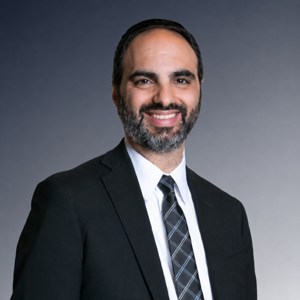
Living Emunah

Living Emunah

By Ashear, Rabbi DavidReligion & SpiritualityJudaism
Download on the App Store
  • Favorites

    27

    Followers

  • Typical duration

    6 min

    per episode

Based on Podcast App listening data

Living Emunah episodes

  • One Mitzvah Can Tip the Scale for the World
    The Rambam writes in Hilchot Teshuvah that every person should consider himself a benoni — a person exactly in the middle. This means that if he does even one more mitzvah, that single deed can tilt his own scales of judgment in his favor. But not only that — it can tilt the scale of the entire world and bring merit to all of humanity. One good deed has the power to bring salvation to the entire world at large. Therefore, especially during these days when the judgments are pending, it is incumbent upon us to increase our acts of tzedakah, to do more good deeds, to pray with greater concentration, and of course, to make teshuvah. אַשְׁרֵיכֶם יִשְׂרָאֵל — how fortunate are the Jewish people! Our people are so good; they can't wait to do acts of kindness, of chesed, of helping others at every opportunity. Michael Cohen from the Mitzvah Man organization told me that before the summer, he put out a request on behalf of a woman who had a special-needs child. She couldn't afford to send him to camp, but she hoped perhaps a volunteer might come and learn with him during an afternoon. Michael sent out the message, and right away, one person responded and pledged to go every Monday afternoon. When he told the woman, she was overjoyed. Then someone else called and said he would go every Tuesday. Then a third person offered Thursday afternoons — even though he would need to drive more than twenty minutes each way. The woman was deeply touched. And then, a fourth person called and asked: "How much is the camp tuition?" When he was told the amount, he immediately said he would cover the entire cost. Just like that, this woman's burden was lifted beyond anything she could have imagined. Hashem treasures every act of chesed and tzedakah that we do. And sometimes He shows us that appreciation very clearly. A man told me that one morning in shul, a collector — we'll call him Yehudah — came asking for help. This man not only gave him some money, but he felt bad for Yehudah, who was new in town and had nowhere to eat. He invited him for Shabbat. When Yehudah came, the host noticed his sweater had a very large rip in it. After a beautiful Shabbat meal, just before Yehudah was going to leave, the host remembered a brand-new sweater he had recently bought for three hundred dollars. Wanting to help, he told Yehudah: "Wait a moment." He went upstairs, brought it down, and asked Yehudah to try it on. It fit perfectly. The host said, "Since it's Shabbat, I can't give you a gift today — but you can wear it now, and after Shabbat it will be yours." Yehudah left so happy with his new sweater. And the host was even happier — not only for helping, but because his children had witnessed this act of generosity and learned through his example. That very afternoon, the host's wife went to visit her sister-in-law nearby. Normally, she would return home before Shabbat ended, but that day she stayed much longer. After Shabbat, just as she was leaving, her brother walked in from shul and said, "Perfect timing! I just bought a sweater that turned out a bit too big for me. I think it would be great for your husband. Please take it for him." When she came home minutes later, again in front of their entire family, she handed her husband a brand-new sweater. She told him: "Hashem was so impressed with what you did today, giving away your sweater, that He wanted you to see His appreciation right away. He arranged to send you another brand new sweater the very same day." Our deeds are so precious. Every act counts, especially during these days. Let us utilize them to their fullest. With Hashem's help, may we all be sealed in the Book of Life with a חתימה טובה .
    6 min
  • The Power of Tefillah for Others During Aseret Yemei Teshuvah
    The Rambam writes that although teshuvah and tefillah are powerful all year long, during the Aseret Yemei Teshuvah they are even more potent and accepted immediately. As the pasuk says: דִּרְשׁוּ ה׳ בְּהִמָּצְאוֹ, קְרָאֻהוּ בִּהְיוֹתוֹ קָרוֹב — seek out Hashem when He is closest, which is right now, in these days leading up to Yom Kippur. The mitzvah of this time is repentance: feeling regret for the sins we have done and sincerely accepting upon ourselves to improve going forward. Hashem desires our teshuvah even more than we do. He is called haRotzeh b'teshuvah — the One Who longs for repentance. There are many people we know whom we wish would be more observant. We try to encourage them, but they aren't interested. Yet tefillah can help bring them back to Torah and mitzvot. When we pray for others to make teshuvah , they receive more heavenly assistance to return. And if at this time of year our prayers are more readily accepted than any other time, we must seize the chance not only to pray for ourselves but also to pray for others to come closer to Hashem. Hashem has countless ways to awaken someone. In one simple act of hashgachah peratit , a person's life can change forever. A man named Reuven related the following story. Every summer, he and his family go up to the mountains for two months. They rent a truck to bring up their belongings, then drop it off at a return location and take a taxi back to their bungalow. One year, the return point was in a far-off place, completely devoid of Jews. Reuven arranged with a friend who was also returning his truck that day to share the same taxi. He returned his truck and waited. But his friend called to say he was delayed. As Reuven stood there waiting, a car pulled up. The driver asked if he knew of any shuls nearby. Reuven answered, "There are no Jews in this area. What brings you here?" The man explained that he had driven over four hours from his hometown to see the house his grandmother had lived in 85 years ago. Recently, he had been introduced to Torah and mitzvot and had begun putting on tefillin every day. But he hadn't yet put them on that day and was hoping to find a shul. Reuven immediately realized: This is hashgachah peratit. He told the man, "I should have been gone twenty minutes ago, but due to an unexpected delay I'm still here. Hashem wanted us to meet." He directed the man toward his bungalow colony, where thousands of Jews lived. Just then, Reuven's friend arrived in the taxi. Reuven excitedly told him what had happened. The friend replied, "I was so annoyed by the delay — but now I understand why it happened." He explained that when he went to return his truck, the clerk overcharged him. He argued for a long time until the clerk admitted it was a mistake. That delay was exactly what allowed Reuven to meet the searching Jew. Even a clerk's mistake is from Hashem. When they returned to the bungalow, they saw the man again and brought him to their rabbi. A relationship was formed, and over time this man became fully observant, now living a life of Torah and mitzvot. Hashem can give people extra help to return to Him. Especially now, we must pray for it. The Arizal said that one who has a child or relative off the derech should add at the end of the berachah Hashivenu Avinu l'Toratecha , before concluding, the following yehi ratzon : יְהִי רָצוֹן מִלְּפָנֶיךָ ה׳ אֱלֹקֵינוּ וֵאלֹקֵי אֲבוֹתֵינוּ שֶׁתַּחְתֹּר חֲתִירָה מִתַּחַת כִּסֵּא כְבוֹדֶךָ לְהַחֲזִיר בִּתְשׁוּבָה שְׁלֵמָה לְפָנֶיךָ כָּל פּוֹשְׁעֵי יִשְׂרָאֵל, וּבִכְלָלָם תַּחֲזִיר אֶת בְּנִי ______ בֶּן ______ בִּתְשׁוּבָה לְפָנֶיךָ, כִּי יְמִינְךָ פְּשׁוּטָה לְקַבֵּל שָׁבִים . Then conclude: " בָּרוּךְ אַתָּה ה׳ הָרוֹצֶה בִּתְשׁוּבָה ." May Hashem help us return to Him fully, and may He help all those who are distant to come back as well.
    0 min
  • Everything Can Change on Rosh Hashanah
    Chazal tell us that on Rosh Hashanah, Sarah, Rachel, and Chana were remembered and decreed to have children. Rashi explains that on Rosh Hashanah, Hashem decreed for them that in the upcoming year they would each give birth. The Gemara also teaches that on Rosh Hashanah, Yosef was decreed to be released from the Egyptian prison where he had been locked away for twelve years. We already know that every person is judged on Rosh Hashanah, and whatever will happen in the coming year is decided on that day. So what is unique about these great tzaddikim being judged favorably on Rosh Hashanah? Some explain that the Gemara is teaching us the extent of what can happen on Rosh Hashanah. It was physically impossible for Sarah, Rachel, and Chana to conceive — and yet that changed on Rosh Hashanah. It was a foregone conclusion that Yosef would never leave prison. No one close to him even knew where he was. Tehillim describes his soul as bound in chains. And yet, on Rosh Hashanah, everything changed. The world itself undergoes a rebirth on Rosh Hashanah. Everything starts fresh. What was impossible before can suddenly become possible. This should fill us with chizuk . Rosh Hashanah brings with it so much opportunity in every area of life. What was true last year has no bearing on this year. No matter how long a person has been waiting for a yeshuah , no matter how stuck his situation seems, he should feel that on Rosh Hashanah everything can change in an instant. This past year, I heard of a woman in her upper 60s who got married for the very first time. After so many years, it would seem unthinkable. She could have said, "If I didn't find anyone in the last fifty years, why should I find someone now?" But last Rosh Hashanah, Hashem decreed that the time had come, and she celebrated the most joyous wedding with her friends and family. A man told me about his own miracle. He and his wife had struggled for years to conceive. Eventually, all the doctors told them the same heartbreaking verdict: It is impossible. They recommended a surrogate, which would cost $130,000 — money the couple simply did not have, after already draining their savings on unsuccessful treatments. They tried in every possible way to raise the funds, but every attempt was blocked. And then, suddenly, the woman discovered she was expecting. The doctors were shocked. The couple went from despair to the greatest joy. They told me: We never lost our faith in Hashem, no matter what the doctors said. This is the power of Rosh Hashanah. People who are sick can be decreed for refuah. People searching for their zivug can be decreed to find them. The Melech Malchei HaMelachim , the King of Kings, comes to be with us during the Aseret Yemei Teshuvah, beginning on Rosh Hashanah night. We must seize this glorious opportunity. Let us accept upon ourselves to strengthen in Torah and mitzvot, to refine our ways, and to pray with all our hearts. And in that merit, may we be blessed with a year of berachah and hatzlachah in every area of our lives.
    0 min
  • Parashat Nitzavim: Never Losing from Doing Hashem’s Will
    At the end of Parashat Nitzavim, the Torah tells us: " הַחַיִּים וְהַטּוֹב נָתַתִּי לְפָנֶיךָ… וּבָחַרְתָּ בַּחַיִּים " — Hashem places life and goodness before us, and it is our job to choose life. Choosing life means choosing to follow Hashem's will, which always leads to blessing and good. At times, it may feel very difficult to do what's right. Sometimes it even seems as if we are losing by following the Torah. But that is only the way the test looks on the surface. In truth, when a person does Hashem's will, he never loses. Rabbi Yaakov Galinsky z"l gave a beautiful insight regarding a famous episode in the Torah. Chazal teach us that our Imahot were prophetesses. When Leah became pregnant with her seventh child, she saw through Ruach HaKodesh that it would be a boy. That meant that Rachel would end up with fewer shevatim than even Bilhah and Zilpah. After Leah already had four sons, Rashi tells us she had cried out to Hashem for another because she yearned to have more shevatim — but now she realized what this meant for her sister. If she were to have seven sons, it would have been a tremendous zechut. But Leah thought: How can I take so much for myself while my sister has so little? So she prayed that the child within her be changed from a boy to a girl. She gave up the neshama of Yosef HaTzaddik — one of the greatest figures in our history, considered on the level of the Avot HaKedoshim themselves — so that Rachel could merit having him instead. And Hashem answered her prayer. Leah gave birth to Dinah, and Rachel merited to bear Yosef. Think about what Leah gave up. She saw in her Ruach HaKodesh the greatness of Yosef, and she longed for the zechut of bringing him into the world. Yet she willingly sacrificed that privilege so her sister would not suffer. Nobody else knew of her prayer — it was a private act between her and Hashem. But Leah knew that if she acted for the Ratzon Hashem, she would never lose. And indeed, what happened? Dinah later gave birth to Asenat, who became Yosef's wife. Together they had Menasheh and Ephraim. In the end, Leah and Rachel became mechutanim — Rachel as the mother of the chatan, Yosef, and Leah as the grandmother of the kallah, Asenat. From both of them came two additional shevatim, as the pasuk says: " אפרים ומנשה כראובן ושמעון יהיו לי " (Bereishit 48:5). Leah had wanted another shevet, and in the end she received two of them — along with the merit of her selflessness toward her sister. Who could have imagined that Dinah's daughter would marry Yosef? Yosef was in Egypt, Yaakov's family was in Eretz Kena'an, hundreds of miles away. How would Dinah's child ever arrive there? The only answer is the miracles of Hashem. The lesson is clear: no one ever loses from following Hashem's will. The Torah promises that obeying Hashem leads only to life and goodness. As we stand just days before Rosh Hashanah, we must commit ourselves to becoming better in our observance of the mitzvot, and to do them with excitement — knowing that by doing so, we are choosing life, and choosing Hashem's path for us.
    0 min
  • The Loan Comes Due
    The Sefer She'erit Menachem quotes the Gemara in Bava Metzia which teaches an illuminating halachah. If a man borrows a thousand dollars and leaves a collateral with the lender worth far more than the loan, saying that if he does not pay back on time the lender may keep the collateral — the halachah is that the lender may not keep it. Why? Because it is obvious the borrower never really intended to give up an item worth so much more than what he owed. However, the Gemara qualifies: if a few days before the loan was due, the borrower was knocking on doors, desperately trying to come up with the money, then clearly he still wanted to redeem his collateral. The lender cannot keep it. But if a few days before the due date he was out drinking with his friends, showing no concern for repayment, then we assume he didn't really care, and the lender may indeed keep the collateral. The She'erit Menachem uses this halachah as a mashal for us during these days leading up to Rosh Hashanah. All year long, Hashem has been lending us life, children, sustenance, and countless blessings — all on condition that we use them to become the people we are meant to be. Now, as Rosh Hashanah approaches, the loan is coming due. Who can honestly say that he has "paid back in full," that he has fully utilized every gift Hashem has given him for avodat Hashem? But if, in these final days, we are sincerely trying — striving to improve, to recognize the gifts Hashem gives, and to use them properly — then Hashem grants us an extension. What we must not do is "drink beer with our friends," wasting these precious days in spiritual carelessness. Now is the time to reflect, to notice where we are lacking, to take concrete steps to grow, and if it feels overwhelming — to beg Hashem for His help. A man shared his personal story. He has been struggling in business for a year and a disaster struck: his pipes burst, and the entire sidewalk and driveway had to be dug up and replaced. The bill was thirty thousand dollars — money he simply did not have. Yet somehow he managed to come up with the full amount and pay it. It was then that thoughts of teshuvah entered his mind. He realized that since his business troubles began, he had stopped paying his tzedakah pledges. By now, he owed close to thirty thousand dollars. He thought to himself: If I could find a way to pay thirty thousand for pipes, shouldn't I treat my pledges to Hashem's causes with the same urgency? He resolved to try. With great effort, he managed to pay fifteen thousand, but after that he was stuck. He simply could not come up with more. So he did what a Jew does when he reaches his limit: he poured out his heart in tefillah. Three times a day he asked Hashem for help to pay off his full tzedakah obligations before Rosh Hashanah. Now, there was one man who owed him a large sum of money from a business deal. For months he had asked this man daily for repayment, until finally, six months earlier, they had come to an agreement: the man guaranteed that he would pay in full, but only when he was comfortable, and on condition that he would not be pressured again. He had not asked since. As Rosh Hashanah was draing near, he debated with himself: perhaps he should ask the man for fifteen thousand, just enough to cover the rest of his pledge? But then he told himself, an agreement is an agreement. He even thought, maybe this man has funds in his JCF account he could use to pay tzedakah on my behalf, but still he held back. He kept praying. Then, one day, he went to shul for Minchah, and there, unexpectedly, was that man. After tefillah, the man approached him and said: "Someone who owes me money asked if I had any unpaid tzedakah pledges that he could pay on my behalf. I thought of you — I'd like to let him pay fifteen thousand dollars toward your pledges through his JCF fund." The man could not believe his ears. That was exactly what he had been asking Hashem for. Exactly the amount he needed. Exactly the salvation he had been praying for. At that moment he felt how close Hashem was to him, how lovingly Hashem answered him. The message was clear: Hashem wants to help us. But first, we must show that we want to improve, that we sincerely want to pay back our "loan." When we do, and we turn to Hashem for help, He opens doors we never dreamed of.

    0 min
  • Wholehearted with Hashem
    Chazal teach that on Rosh Hashanah, Hashem judges every individual based on what he did every second of every day over the past year. With this knowledge, we should be doing everything in our power to make teshuvah and improve our ways. Especially now, in the month of Elul, when Hashem reveals an outpouring of mercy towards us, we must take advantage of this opportunity. But is there something we can do, in addition, that will make the judgment easier? The Ba'al HaTurim, commenting on the pasuk " תמים תהיה עם ה' אלקיך " , writes that whoever fulfills this mitzvah is considered as if he fulfilled the entire Torah, from aleph to tav. What does this mean? It means that one who does not worry about the future, but trusts that Hashem is leading him on the perfect path, and accepts wholeheartedly the way Hashem deals with him—without questions or complaints—is credited as if he has kept the entire Torah. Rabbi Menashe Reizman asked: Doesn't the Gemara say that it is forbidden to think that Hashem is a vatran —that He simply overlooks our wrongdoings? One of the fundamentals of emunah is that Hashem rewards mitzvot and punishes averot. If so, how can it be that someone who trusts Hashem's dealings with him, but still has sins, should be considered as if he fulfilled the entire Torah? Rabbi Reizman explained: It's not only the Ba'al HaTurim who says this. It is explicit in the pesukim themselves. In Parashat Balak, it says, " לֹא הִבִּיט אָוֶן בְּיַעֲקֹב וְלֹא רָאָה עָמָל בְּיִשְׂרָאֵל, ה' אֱלֹקָיו עִמּוֹ וּתְרוּעַת מֶלֶךְ בּוֹ ". These words are read in the Malchuyot section of the Musaf Amidah of Rosh Hashanah. Rashi explains this pasuk to mean that Hashem is not exacting with a person for his sins—even when he angers Him. Why? Because such people do not preoccupy themselves with trying to figure out the future. Instead, they place their full trust in Hashem. And because of this, Rashi says, they become worthy of blessing. What is the explanation? There are two ways a person can go through life. One way is with constant questioning: Why is my life the way it is? Why does he have so much blessing while I don't? Why does he have such good children and I struggle? Why does everyone else seem to get the good positions and I don't? Why are his daughters married off so easily, while mine are waiting so long? This is the natural human way—always comparing, always doubting, always feeling that life is unfair. If someone chooses this path, then Hashem treats him with the same precision. Hashem will look into his deeds with equal scrutiny: Why don't you concentrate on the words of tefillah? Why don't you have proper kavanah when you say berachot? But if a person does not question Hashem, if he refuses to ask "why" or "is this fair," and instead accepts that everything Hashem does is absolutely fair, upright, and the very best possible outcome—even when, from our limited perspective, it looks as if Hashem is doing "wrong" with us—then Hashem responds measure for measure: You don't question My actions, I won't question yours. This is not considered Hashem overlooking our sins. It is not a case of Hashem being a vatran . On the contrary—it is deserved. We have earned this special relationship. If we are tamim im Hashem Elokecha , then Hashem is tamim with us. This is a wondrous principle. But it is far easier said than done. The nature of man is to compare himself to others, to feel lacking, to complain—especially when things seem unfair. People try to improve, but the salvation they hope for does not always come. People pray with all their hearts, but do not always see their prayers answered. People think they have so much bitachon, but then they feel let down. Everyone has reasons they would naturally want to question. But if we can rise above that nature, if we can truly trust Hashem's will for us and believe with all our hearts that whatever is happening is absolutely the best thing for us, then we will enter a new category of human being: one who is tamim im Hashem Elokecha . And that comes with the most amazing benefits.
    6 min
  • The Best Answer
    One of the Torah readings on Rosh Hashanah is the story of the Akedat Yitzchak. To this day, we continue to benefit from the eternal merits Avraham Avinu gained by his willingness to sacrifice his son at Hashem's command. But there was another profound accomplishment that day. The Torah commands, " תמים תהיה עם ה' אלקיך " — Tamim Tehiyeh Im Hashem Elokecha (Devarim 18:13). Rashi explains that this means: do not concern yourself with what the future holds. Rather, accept that Hashem is leading you exactly to the places and circumstances you are meant to be. Trust that whatever will happen will be for the best, and therefore there is no need to worry. The Passuk says in Tehillim, " ואני בתמי אלך " . Chazal teach that this pasuk was said regarding Avraham going to the Akedah. He walked with wholehearted trust in Hashem. The B'nei Yissaschar explains the depth of this trust: Avraham already had a prophecy from Hashem that his future offspring would come through Yitzchak. And yet, now he was being commanded to bring him as a korban ola — a direct contradiction to the earlier prophecy! It is forbidden to disbelieve a prophecy. That meant Avraham was required, all the way to Har HaMoriah, to continue believing both truths at once — that he must sacrifice Yitzchak, and yet that his children would still come through him. To human logic, it was an impossibility. But Avraham went betumo — with complete Emunah. He did not wrestle with the contradiction. He did not calculate or analyze. He placed everything in Hashem's hands and told himself: It's not my job to figure out how the future will work out. It's my job to trust that Hashem is in charge of the future. In the end, we see the perfection of Hashem's plan. Precisely because Yitzchak was placed on the Mizbeach, he became able to father children. The Or HaChayim HaKadosh explains: Yitzchak was born with the neshama of a female, and for the first 37 years of his life he had no zivug — because every couple is one neshama, half male and half female. Yitzchak's neshama had come down alone. At the moment of the Akedah, as his soul left him, Hashem gave him a new neshama — a complete male neshama. And at that very moment, Rivka, the other half of his soul, was born. What seemed the greatest contradiction turned out to be the greatest answer. This is the lesson for us. In our lives we also face contradictions, situations that make no sense, questions that seem unanswerable. Our avodah is to walk with Hashem with complete emunah, to trust that He will reveal the answers in the perfect time. A man shared his story: At eighteen, he began working in his father's retail stores. By the time he was twenty-eight, married with children, those stores collapsed. From a comfortable lifestyle, he suddenly could not pay even for basic expenses. With no business skills beyond retail, he felt lost. He clung to his learning, spending hours each day in Torah, though even concentrating became difficult. Then, one day, his father asked a real estate friend to involve him in handling their empty stores. The young man took on the project and showed surprising ability. Eventually, that friend called and invited him to partner with his son-in-law in a new real estate company. The business flourished, and the man today enjoys both a solid livelihood and more time for Torah and mitzvot. At first, he had asked: Why did Hashem take away the only work I knew? But in truth, the "problem" was the answer. Losing his old job was the key to discovering his true path in life — one far better than he ever imagined. So it is with all of us. The answers may not be immediate, but they are always the greatest possible answers. Those who walk with Hashem in trust will see blessing — in this world and the next.
    0 min
  • Recognizing Hashem’s Hand
    Every neshama that comes down into this world is given a mission: to serve HaShem from the exact circumstances in which He places it. To do that, a person must learn Torah and mitzvot, so that he will know exactly what HaShem wants him to do in every situation he finds himself in. Everything we do for HaShem only benefits us, for HaShem Himself does not need anything from us. And an integral part of our avodah is to do it with happiness. HaShem wants us to be excited about mitzvot and to feel that they are our greatest honor and privilege. He knows the nature of people is to feel joy in doing something for those who do for them. And so, HaShem not only gives us everything we have — He makes sure we know that it all comes from Him, so that we will be more excited to serve Him. In Parashat Ki Tavo, regarding the mitzvah of bikkurim (first fruits), the Torah says: וְהָיָה כִּי תָבוֹא אֶל הָאָרֶץ אֲשֶׁר ה' אֱלֹקיךָ נֹתֵן לָךְ "It shall be when you come into the land that HaShem your G-d gives you " Later it says: וּלְקַחְתָּ מֵרֵאשִׁית כָּל פְּרִי הָאֲדָמָה אֲשֶׁר ה' אֱלֹקיךָ נֹתֵן לָךְ "You shall take from the first of every fruit of the ground t hat HaShem your G-d gives you" . And again: וְעַתָּה הִנֵּה הֵבֵאתִי אֶת רֵאשִׁית פְּרִי הָאֲדָמָה אֲשֶׁר נָתַתָּה לִּי ה ' "And now behold, I have brought the first of the fruits of the land that You, HaShem, have given me" . The Torah repeats again and again: "that HaShem your G-d has given you." Because if we truly recognized how much HaShem gives us, we would be overflowing with excitement to serve Him. The challenge is that we don't see Him making the fruit grow. We don't see Him writing the check, healing our illness, or bringing us our shidduch. Sometimes HaShem delays the gifts He has prepared for us, so that when they finally come, we will know exactly where they are from. A person struggling with parnasah, who prays with all his heart and then sees success, appreciates HaShem's blessing more than ever. From the very beginning, HaShem set this system in place. When Adam HaRishon was created, the Torah says the vegetation had not yet sprouted, כי לא המטיר ה' אלקים על הארץ —"for HaShem God had not yet sent rain upon the earth". Why? So that Adam would recognize the need to pray, and ask HaShem for rain. The more we recognize HaShem's Hand in giving us everything, the more joy we will feel in following Torah and mitzvot. Often HaShem makes His hashgachah peratit so clear that it cannot be missed. But even then, we must keep our eyes open. A man told me about an amazing story of hashgachah. His shul was writing a new Sefer Torah. The rabbi inspired everyone by speaking of the greatness of the mitzvah, and how it is even a segulah to have children. The man's son had recently married, and so he decided to sponsor Parashat Tazria, which begins with the laws of a woman giving birth to a baby boy. He did this in the hope that his son would be blessed with children. A few months later, to his amazement, his own wife became pregnant — after nearly six years since their last child. Baruch HaShem, the pregnancy was smooth, and she gave birth to a healthy baby boy on the very Shabbat when Parashat Tazria was read in shul. Incredible hashgachah! He had sponsored the writing of Parashat Tazria, which begins with the birth of a boy, and that very year, he himself was blessed with a son, born on Parashat Tazria. But here's the wonder: because he had donated the parashah in honor of his son, he completely forgot that he had even sponsored it. The miracle HaShem gave him slipped by unnoticed. Until later that week, his daughter dropped something in the car. As she reached under the seat to retrieve it, she pulled out a certificate. It was the certificate given to him by the shul, acknowledging that he had sponsored Parashat Tazria in the new Sefer Torah. When he saw it, he was stunned. He told me: "I didn't even realize what HaShem had done for me. But He loves me so much, He didn't want me to miss it. He made sure my daughter found that certificate, so that I would recognize His kindness." HaShem gives and gives and gives. The more we recognize it, the happier we will be to serve Him.
    6 min
  • Parashat Ki Tavo: The More We Appreciate
    The pasuk says in this week's Parasha, Ki Tavo , ושמחת בכל הטוב – we are to rejoice with all of the good that Hashem gives us. In this world, when a person appreciates what others do for him, those people are happy to give him more. But when a person denies the good, it makes others turn away from giving him. At the end of the year, when we are going to request of Hashem to give us a new year of blessing, the best thing we could do is to first appreciate how much He has given us already. One of the reasons people don't appreciate is because they feel that everyone else has more than them and everyone else is happier than them. But they are very mistaken. The sefer Orchot HaYeshiva tells the story of a young man who went to see Rav Shach, zatzal , and lamented that it seemed to him that his friend, who had gotten engaged at the same time as he did, seemed to be happier than him. He was asking the Rabbi if he should perhaps break off his engagement. Rav Shach replied, "The boy you are talking about was here before and he had the exact same complaint. He thought that you seemed happier than him." This is the nature of man, to always think that others are happier than he, but in actuality, Hashem gives each person exactly what he needs to be happy, to do his job. If we could only focus on what we do have rather than on what everyone else seems to have, we would be so much happier. Just saying the Birkot HaShachar in the morning with kavana can bring a person such an appreciation for Hashem. The Chochma U'Musar writes, before we say each beracha , we should think about what exactly we are about to thank Hashem for and then appreciate it to the fullest. For example, he said, one of the berachot is פוקח עיוורים – that Hashem gives eyesight to the blind. Simply, we are saying when we go to sleep we can't see and each day when we wake up, Hashem gives up the ability to see once again. We are supposed to imagine the feelings of a blind man, lo alenu , and then imagine that all of a sudden, a doctor came up with a medication that could cure the blind. How much joy would a blind man have finally being able to see? That is the amount of appreciation that we are supposed to show Hashem every single day because nothing is a given and just because a person has something today doesn't necessarily mean he'll have it tomorrow. It is only because of the chesed of Hashem that we are able to enjoy the blessings He gives us each and every day. We also have to feel so fortunate that we have the zechut to serve the Melech Malchei HaMelachim HaKadosh Baruch Hu . The sefer Mizmor L'Asaf writes, when a person enters the shul in the morning, he should be overcome with hakarat hatov that Hashem gave him the privilege of entering His home to come and speak to Him. The more we appreciate, the better our avodat Hashem will be, the happier we will be and the happier Hashem will be to give us even more.
    0 min
  • The Treasure of Aleinu
    The Anshei Knesset HaGedolah placed Aleinu LeShabe'ach into the Musaf Amidah of Rosh HaShanah, the very day when we crown HaShem as our King. There, it serves as the prelude to Malchuyot . As well, our Sages gave us the privilege of saying Aleinu at the end of every single tefillah, three times a day. If we would truly understand the treasure we have, being able to say Aleinu daily, we would approach it with tremendous joy and excitement. The Mishnah Berurah writes that one should recite Aleinu with awe and trepidation, because the malachim in shamayim listen as we say it, and the Shechinah is among them. When they hear us declaring Aleinu , they respond with the words אַשְׁרֵי הָעָם שֶׁכָּכָה לוֹ, אַשְׁרֵי הָעָם שֶׁה' אֱלֹקָיו . The Chida, in the name of Rav Hai Gaon, writes that one should recite Aleinu with the utmost kavannah, for it contains exalted and wondrous praises of HaShem. He adds that it should be said standing, even with a tallit over one's head. The Arizal teaches that Aleinu has the power to remove the negative angels who seek to block a person's prayers from ascending before HaShem. It begins with the words Aleinu le'shabe'ach la'Adon hakol —with those words we affirm that it is incumbent upon us to praise HaShem. Why specifically at the end of tefillah should we feel even more inclined to praise Him? Some explain: because HaShem has just given us the greatest gift. He allowed us to ask for all our needs, and He did so in a way that spares us from feeling like takers. In tefillah, we are credited with a mitzvah simply for fulfilling HaShem's command to pray. Even if no material blessing came from our prayers, the spiritual reward alone would be boundless. And yet, HaShem responds by providing our needs, as if we are somehow doing Him a "favor" by praying. Of course, He needs nothing from us. In truth, He is giving us everything, yet He makes us feel as if we are the ones giving to Him. For this, we should be overflowing with gratitude and praise. Then we declare: לתת גדולה ליוצר בראשית —"to give greatness to the Creator of the beginning." The Sefat Emet explains that Yotser Bereshit refers not only to HaShem as the Creator of the world, but as the One who continually pumps life and energy into all of creation. Every heartbeat, every breath, every moment of vitality flows from Him alone. Our task is to recognize this and live with that awareness. As we say during the Yamim Nora'im: וידע כל פעול כי אתה פעלתו —"And every being will know that You are its Maker." One of the reasons HaShem obligates us to make hishtadlut for our needs is to test whether we will believe that we are accomplishing with our own efforts, or whether we recognize that we are simply going through the motions while HaShem is doing everything. If we think that we actually change outcomes with our actions, then we have not yet passed the test. But if we believe that we are putting in effort only because HaShem commanded us to, and that the results will be whatever He wants, regardless of what we do, then we are succeeding. It appears to us that our hishtadlut causes results, and that is why it is so difficult to believe otherwise. If HaShem had not required us to make hishtadlut , it would be far easier to believe fully in His power and control. But now that we must make efforts, the challenge is great. We must not place too much emphasis on what doctors say, but only that we have fulfilled our obligation by going to them. We should not put too much emphasis on what kind of hishtadlut we do to earn parnasah, but simply that we did what was required for HaShem to send His blessing. HaShem is the Yotser Bereshit . He not only created the world, but He constantly pumps life and energy into everything, including us. For that, once again, we owe HaShem endless gratitude and praise. Let us learn the words of Aleinu properly and utilize the treasure that our rabbis gave us. If we can internalize its messages, we will walk out of every tefillah stronger in emunah, fortified with the clarity to recognize HaShem in everything that takes place.
    0 min

About Living Emunah

From the publisher's feed

A Daily ethical teaching by Rabbi David Ashear

Best of Living Emunah

Ranked by our users in the last 21 days

More shows like Living Emunah

The Rabbi Sacks Legacy by Rabbi Lord Jonathan Sacks

The Rabbi Sacks Legacy

557 Listeners

The Israel Guys by The Israel Guys

The Israel Guys

308 Listeners

Jewish Stories to Inspire: Motivational & Spiritual Stories Based on the Torah's Ethics, Values and Wisdom by Stories to Inspire

Jewish Stories to Inspire: Motivational & Spiritual Stories Based on the Torah's Ethics, Values and Wisdom

186 Listeners

Living with Emunah by Rabbi Efrem Goldberg

Living with Emunah

110 Listeners

Meaningful People by Meaningful Minute

Meaningful People

1,987 Listeners

From the Inside Out: With Rivkah Krinsky and Eda Schottenstein by Rivkah and Eda

From the Inside Out: With Rivkah Krinsky and Eda Schottenstein

263 Listeners

The Q & A with Rabbi Breitowitz Podcast by Rabbi Dr Yitzchak Breitowitz

The Q & A with Rabbi Breitowitz Podcast

234 Listeners

Call Me Back - with Dan Senor by Ark Media

Call Me Back - with Dan Senor

3,197 Listeners

The Times of Israel Daily Briefing by The Times of Israel

The Times of Israel Daily Briefing

1,070 Listeners

Kosher Money by Living Lchaim

Kosher Money

821 Listeners

History for the Curious - The Jewish History Podcast by JLE

History for the Curious - The Jewish History Podcast

232 Listeners

Gedale Fenster - Podcast by Gedale Fenster - Podcast

Gedale Fenster - Podcast

399 Listeners

Honestly with Bari Weiss by The Free Press

Honestly with Bari Weiss

8,473 Listeners

Inspiration for the Nation with Yaakov Langer by Living Lchaim

Inspiration for the Nation with Yaakov Langer

1,120 Listeners

Stories Of Hope With Tzipora Grodko by Meaningful Minute

Stories Of Hope With Tzipora Grodko

324 Listeners