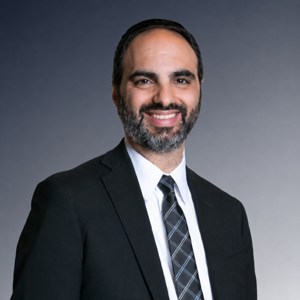
Living Emunah

Living Emunah

By Ashear, Rabbi DavidReligion & SpiritualityJudaism
Download on the App Store
  • Favorites

    27

    Followers

  • Typical duration

    6 min

    per episode

Based on Podcast App listening data

Living Emunah episodes

  • The Power of Tefillah
    The Chatam Sofer writes that tefillah is more readily accepted during the days of Elul and Aseret Yemei Teshuvah. This period is called Yerach Ha'etaním , which has the same numerical value as siach — to pour out our hearts in prayer. The Midrash in Parashat Ki Tavo says that Moshe Rabbenu, through ruach ha'kodesh , foresaw that the Bet HaMikdash would one day be destroyed and the mitzvah of bringing bikkurim would cease. Therefore, he established that there should be three tefillot every day. These tefillot, the Midrash teaches, would be more beloved to HaShem than all of a person's good deeds and even more than all of the korbanot combined. Rav Yechezkel Levenstein explained that it is always befitting for a person to improve, even slightly, in the way he prays — especially in his kavanah — because that effort can uplift his entire avodat HaShem . Tefillah is wondrous, especially when a person prays with awareness of Who he is speaking to. A man told me about an incident that happened recently while he and his entire family were on vacation. There was a mix-up with the keys for their apartment, and as Shabbat approached, they still had not been able to get inside. Finally, the hotel informed them that a worker named Alfonso was bringing the keys. But when a family member mistakenly approached a different hotel worker in a golf cart, the man wrongly assumed there was an attempt to harm him. He called the police and pressed charges for assault. Soon, sheriff's deputies arrived. They interrogated the family member and even detained him while waiting for a detective. The officers indicated there was a real possibility of arrest that very evening, just minutes before Shabbat. Frantically, urgent attempts were made to reach a top lawyer who was also a close friend. With only five minutes before candle lighting, they finally succeeded in contacting him, and he immediately spoke to the deputy. Shabbat began with tremendous uncertainty. Before Kiddush, surrounded by children and grandchildren, the family spoke about how during Kiddush we partner with HaShem in creation. They encouraged everyone to use that holy moment to silently pray for a yeshuah. They reminded one another that no one has any control other than HaShem — not the police, not the hotel worker, and not even the top lawyer. With those thoughts in mind, they made Kiddush. At around 9:45, while they were eating their meal, a police vehicle pulled up with their family member inside. Three officers explained that while the matter was not finished and would be referred to the state attorney's office, they had decided not to arrest him. They admitted it could have easily gone the other way. Then, the sergeant quietly asked one of the family members: "Did you pray to G-d for his release?" When he answered yes, the sergeant said: "It must have been your prayers, because he really should have been arrested." Here was a police sergeant telling them that their tefillot had brought salvation. Later that night, after the joyous meal, the children asked for a bedtime story from the sefer they had been reading together. The story they were up to told about a Jew who was wrongly accused and nearly jailed by three police officers. The children's eyes widened. It was exactly what had just happened to them. It was as if HaShem was sending them a direct message: I am here with you, guiding your lives. The entire Shabbat became one long conversation about the power of tefillah, especially when one recognizes the truth of ein od milvado — there is nothing but Him.
    5 min
  • First Fear, Then No Fear
    Many communities have the minhag to blow the shofar every day in Elul. The purpose is to awaken us, to instill fear and trembling as the awesome day of Rosh HaShanah approaches. There is also the minhag to read the mizmor L'David Hashem Ori v'yishi . And in that mizmor, David HaMelech says: " מִמִּי אִירָא… אִם־תַּחֲנֶה עָלַי מַחֲנֶה לֹא־יִירָא לִבִּי ". "Whom shall I fear? … Though an army encamp against me, my heart shall not fear" (Tehillim 27:1–3). At first glance, this seems like a contradiction. On one hand, we sound the shofar to create fear. On the other hand, we recite words of Tehillim telling us there is nothing to fear. Rabbi Menashe Reizman pointed out another similar contradiction. In Parashat Shoftim, the Torah commands: " כִּי־תֵצֵא לַמִּלְחָמָה עַל־אֹיְבֶיךָ… לֹא תִירָא מֵהֶם כִּי ה׳ אֱלֹקיךָ עִמָּךְ " "When you go out to war against your enemy… you shall not fear them, for HaShem your G-d is with you" (Devarim 20:1). Even if they appear greater and stronger, we are told not to be afraid, because we have HaShem on our side and no one else has power. Yet immediately afterwards, the shoterim announce exemptions from battle: " מִי־הָאִישׁ אֲשֶׁר־בָּנָה בַיִת־חָדָשׁ וְלֹא חֲנָכוֹ… מִי־הָאִישׁ אֲשֶׁר־אֵרַשׂ אִשָּׁה וְלֹא לְקָחָהּ… פֶּן־יָמוּת בַּמִּלְחָמָה וְאִישׁ אַחֵר יַחְנְכֶנּוּ " "Who is the man who has built a new house and not inaugurated it… who is the man who has betrothed a woman and not taken her… lest he die in battle and another man take her" (Devarim 20:5–7). Again, it seems inconsistent. First we are told there is nothing to fear, and then the Torah acknowledges the possibility of death in battle. Rabbi Reizman brought the Chovot HaLevavot (Sha'ar HaBitachon, fourth condition), who explains that true bitachon requires a person to be fulfilling the responsibilities HaShem has placed upon him. We often ask HaShem to grant our requests, but at the same time, He too has requests from us — that we live according to the Torah and mitzvot. When we strive to do His will, then we can confidently place our trust in Him to help with our needs. If someone ignores HaShem's will completely, it shows he doesn't truly know who HaShem is — and without that recognition, he cannot have genuine bitachon . Rabbeinu Yonah does write that even a rasha who trusts in HaShem will be surrounded with chesed. But that refers to a sinner who now wants to improve, who expresses a desire to return. Even that thought of change allows him to rely on HaShem's kindness. But someone who has no care for HaShem's will cannot say he trusts Him, because he doesn't truly know Him. Sometimes, HaShem must make life uncomfortable to wake a person up, to bring him to fulfill the mission for which he was created. Now we can resolve the contradictions. It is true that one who goes to battle with full awareness of ein od milvado will not be harmed. But to reach that state of bitachon , he must first experience the right kind of fear — the fear that motivates him to return to HaShem and strengthen his connection. That is why the shoterim warned the soldiers: war is dangerous, people may die. These words were meant to shake them into teshuvah, to awaken them to HaShem. Once that awakening leads to closeness and true trust, then indeed there is nothing to fear. So too in Elul. First we blow the shofar — to arouse fear and awareness that Rosh HaShanah is coming. Then, after we are inspired to draw near to HaShem and commit to doing His will, we can place genuine bitachon in Him. At that stage, there is truly nothing to fear, for HaShem Himself is our salvation.
    0 min
  • Our Job
    Our job during these days of Elul is to figure out how we can improve inour avodat Hashem and then make concrete commitments on what exactly weare going to do about it. This is one of the ways in which we prepare for theawesome days of judgment ahead. When the evil inclination tries to dissuade usby saying "This is too difficult for you," or "People will laugh at you." Wemust remember, by improving in our avodat Hashem, weare only helping ourselves. Everyone has many needs that they ask of Hashem.Very often, the way He gives us what we need is through the mitzvahopportunities that He sends our way. If we become inspired to take on somethingnew, that inspiration is also m'et Hashem ת and we should not let it go without doingsomething about it first. A man, who we'll call Yehuda, told a story about what happened when hewas 27 years old. He was having a very hard time with shidduchim andcould have easily fallen into despair many times. One day, he traveled fromYerushalaim where he lived to Bne i Brak toattend the wedding of a friend who was younger than him. At 10:00, after he dancedwith the chatan, he left the wedding hall and headed for the closest bus stopto return home. He bumped into a high school friend who was coming out of abuilding nearby. They spoke for a few minutes at the entrance of that building.Turned out, this friend was there to attend a sheva berachot . As they were talking, someone came out of the building and told hisfriend to please go upstairs because they didn't even have 10 men for the sheva berachot yet and the mood was very blah. It was close to 10:15 and theyonly had six. The person then asked Yehuda if he would do a chesed andcome up as well. Although it was late and he had a long ride home, he felt badfor the chatan and kallah and he went up. The scene he saw lookedpathetic. It was a chatan and kallah sitting there with their mechutanim ,one grandfather and two boys in an uncomfortable silence. Eventually they didget a minyan . The boy who invited Yehuda up asked him to please startsinging. Again, feeling bad for the chatan and kallah , he startedsinging some songs and only a couple of people joined in with him. Then he wasasked to get up and speak. Yehuda said he never saw this chatan in hislife, how could he speak by his sheva berachot ? The other boytold him a few things about the chatan and then told Yehuda he would bedoing a great mitzvah. Yehuda was a good public speaker and, after a littlemore prodding, he agreed to speak. He delivered a beautiful devar Torah and spoke so nicely about the chatan , as if he knew him for years. Afterthe speech, the chatan was so moved, he got up and gave Yehuda a hug andkiss, thanking him for his kind words. Nobody else spoke that night besidesYehuda. During dessert, the man sitting next to Yehuda asked him some questionsabout himself and when that man discovered that Yehuda had no connection toeither the chatan or the kallah , he was so impressed with the chesed he just did. That man also came as a chesed , not knowing the chatan or the kallah . He suggested his niece as a shidduch and, a fewmonths later, Yehuda became engaged to her. He is now happily married withthree children. Hashem presented Yehuda with a big chesed opportunity. Evenagreeing to go up was difficult, but then being the only singer and speaker atan unknown place must have been extremely uncomfortable. That is where Hashemhad the path to his shidduch awaiting. The avodah at times may behard but, as always, according to the efforts are the rewards.
    5 min
  • Parashat Ki Tetzeh: Seeing Beneath the Surface
    In this world, there is so much more than meets the eye. Things may appear to be one way, when in fact they are completely the opposite. Nothing should be taken at face value. Hashem is very deep, the Torah is very deep, and we are charged to use all our wisdom to see through the surface and try to understand on deeper levels. In this week's parashah Ki Tetzeh , the Torah teaches us about the mitzvah of shiluach hakan — sending away the mother bird before taking the eggs. The Torah promises a reward: lema'an yitav lach veha'arachta yamim — "that it will be good for you and you will have long life." Yet the Gemara tells of a boy who listened to his father — a mitzvah that also promises long life — and went to perform shiluach hakan . Tragically, he fell off the ladder and died. Where was the long life that the Torah promised? Our rabbis teach that "long life" in these pesukim is not to be taken at face value. It refers to life in the World to Come. One day, Hashem will send the Mashiach to redeem us. At that time, techiyat hametim will begin. The righteous who passed away throughout the generations will come back to life to enjoy the world of Mashiach. This resurrection will take place over many years, and those who rise earlier will live longer lives in that future time. Beyond that, Hashem will create a new world — Olam Haba — where the pleasure will be eternal and unlimited. That is the true world that is kulo aruch — everlasting — and there the rewards for mitzvot will be paid in full. Every experience we encounter in this world can be viewed from different perspectives. We must train ourselves to view everything with an emunah perspective, trusting that Hashem is always doing the greatest kindness for us. A man from Bnei Brak told how his widowed aunt called him late one Friday afternoon. All her power had gone out. No lights, no hot plate, no air conditioning. She begged him to come quickly. After asking a few questions, he figured it was a blown fuse, but she had no idea where to find the fuse box. He told her he would be right over. He thanked Hashem that his family had the habit of being ready early for Shabbat. Since everything was prepared, he had time to leave and help. By then there were no taxis available, so he grabbed one of his children's bicycles and pedaled as fast as he could through the intense summer heat of Bnei Brak. He fixed the fuse, and all the electricity came back on. By the time he got home, there was no time to shower, though he was dripping in sweat. Shul was starting, so he went directly as he was. Entering Shabbat that way was unpleasant, but he accepted it as Hashem's will. Towards the end of that Shabbat, during seudah shelishit , the power in his own home suddenly went out. After Shabbat, he checked the panel and saw that water had seeped in and damaged the main fuse — the one controlling the oven, stove, fridge, and air conditioning. At that moment, he could have asked: "Where is the justice? I went out of my way to help a poor widow with her fuse box, and then my fuse box gets ruined?" But instead, he used his emunah perspective. He said: "Hashem, You are so kind. Really, this Shabbat we were meant to sit in the dark with no food and no air conditioning. But in Your mercy, You gave me the chance first to do a big chesed for someone else, and in that merit, You delayed our blackout until the very end of Shabbat." Everything that happens to us is chesed Hashem . It may not always seem that way, but with emunah , we can always view it that way. Shabbat Shalom.
    6 min
  • Anticipating Hashem’s Salvation
    We've said it before and we'll say it again. People sometimes ask why we share so many stories with happy endings and miraculous yeshu'ot. "It's not real life," they argue. "So many stories don't end with that glamorous ending. Why only highlight the miraculous?" Some even feel disheartened that others are receiving salvations while they themselves are still waiting. It is true — not every story ends the way we want. But every story does end the exact way it is supposed to. Knowing that HaShem is the One in charge of all outcomes should give us chizuk. Everything is always going according to plan. Nothing ever happens haphazardly. And when we do see HaShem's wondrous hand in someone else's story, it strengthens our emunah that He is running the world. Furthermore, one of the questions a person will be asked after 120 is: "Did you anticipate My salvation?" The simple meaning is whether we anticipated the coming of Mashiaḥ. But the Bet HaLevi explains there is also a personal dimension: did we anticipate HaShem's salvation in our own struggles? When a person sees story after story of HaShem bringing yeshu'ot in extraordinary ways, it should strengthen him to believe that he too can be helped. It should give him hope, and motivate him to pray harder, realizing that salvation is a reality. Believing in HaShem's abilities and control is a great avodah. It is incumbent upon us to do whatever we can to strengthen that belief. Hearing real-life stories of others who experienced salvation is one of the best ways to build that hope. And even if we don't receive the miraculous yeshu'ah we were hoping for, knowing that HaShem is with us every step of the way can itself give us tremendous chizuk. A man related that he woke up in the middle of the night, consumed with worry over his financial situation. Unable to sleep, he went downstairs to think. His wife runs a small daycare center, but the government had canceled the subsidies for the families who sent their children there. Most parents couldn't afford the full tuition, meaning she would lose a significant amount of income that year. On top of that, his father-in-law, who had been paying their mortgage until then, had fallen into debt and could no longer help. The pressure was crushing. Sitting at the kitchen table in the early hours of the morning, he noticed a Hashgachah Peratit pamphlet that had arrived four months earlier. He hadn't read it, but in that moment, desperate for chizuk, he opened it. The first story he read was about a man who owed 20,000 shekels to the electric company and how HaShem helped him pay it. That was the exact amount he himself owed. The story gave him such encouragement — if HaShem could help that man, He could surely help him too. The second story he read was about a sofer. He himself was a sofer by profession, and that too gave him strength. Then he came across a third story that stunned him. It was about a man whose father-in-law fell into debt and could no longer support him — and how HaShem had helped him through it. At that point, nothing in his bank account had changed. The bills were all still waiting. But suddenly, he felt as though a heavy stone had been lifted from his chest. In just half an hour of reading, he became a new person. His family didn't know it yet, but they had just received a different husband and father — happy, smiling, and unburdened. HaShem had given him exactly the chizuk he needed. Stories of hashgachah and yeshu'ot are not just inspiring — they are powerful tools to strengthen our emunah. They remind us that HaShem is always involved, that He can help us in an instant, and that even if the yeshu'ah doesn't come right away, it is without question for the best.
    5 min
  • Nice Guys Finish First
    In the secular world, there's a saying: "Nice guys finish last." It means that in a competitive society, those who are kind, generous, and honest get taken advantage of, while the shrewd and aggressive people come out on top. But we do not live in a competitive world. We live in HaShem's world. And in His world, the "nice guys" finish first. We may not see how right away, but without a doubt, every act of kindness, every ounce of integrity, every moment of self-restraint is noticed, cherished, and rewarded by HaShem. A businessman once shared that he lost out on a very big deal because he refused to use dishonest tactics that were considered "standard practice" in his industry. His competitors laughed at him, saying, "See? Nice guys finish last." But years later, those very same competitors went bankrupt, tangled in endless lawsuits over their shady dealings. He, on the other hand, was blessed with steady success, peace of mind, and the respect of all who dealt with him. Looking back, he said: "The minute I walked away from dishonesty, I didn't lose a deal. I gained HaShem's partnership." HaShem's accounting is not like ours. Sometimes it looks like we're losing, but in truth we are setting ourselves up for blessings far greater than what we could have ever imagined. If someone chooses to be the "nice guy" — if he holds back his anger, forgives, lets another person go first, or does the right thing even though it costs him money — he becomes more beloved to HaShem and will surely gain from that. And HaShem's dividends in this world are not always in money. They can come as health, family harmony, or yeshu'ot in ways we could never anticipate. A man once told me he was listening to a class about someone who forgave a person who had wronged him — and immediately after, a relative of his was healed from a long illness. This listener thought of his own father, who was in the hospital and in desperate need of a yeshu'ah. He himself had been wronged and lost a tremendous amount of money, and he carried that resentment for many years. But in that moment, inspired by the story, he decided to let go. He picked up the phone, called the man who had wronged him, and made peace. He said it was one of the hardest things he ever did — but just a half hour later, his father woke up! Another man told me that a tenant of his left something valuable behind in the apartment he had rented. The next tenants found it, but when the previous tenants came to pick it up, they couldn't locate it — it seemed to have gone missing. The previous tenant told the landlord, "That's considered negligence, and they (the new tenants) should compensate me." Wanting to avoid machloket, the landlord called the current tenant and said he would personally pay the previous tenant and tell him it was from him. The current tenant replied, "No — I want to pay," and they actually went back and forth over who would have the zechut to pay in order to avoid machloket. Minutes later, someone called to say they had accidentally taken the item from the house and were already on their way to bring it back. The landlord said, "In the zechut of us trying to go over and above to avoid machloket, HaShem brought the item back." Another story: A man used to buy cars at auctions and resell them. Once, at an auction, there was an incredible deal. His friend and competitor was there too. Out of generosity, he offered the deal to his competitor. The competitor declined and insisted that he should take it. He bought the car, sold it for a major profit — and then, amazingly, the buyer sold it back to him at a lower price. He resold it again for an even larger profit. He said: "There was so much blessing in that car because I offered it to my competitor first." It is not always this obvious. In this world, it might look like the aggressive person wins. But such victories are fleeting. Wealth, power, and influence can vanish in an instant. What lasts forever are mitzvot, acts of kindness, and the emunah we show in HaShem. In HaShem's world, the "nice guys" don't just finish first — they never finish at all. Their reward lives on forever.

    6 min
  • The Best Investment
    When a person faces a challenge — whether in health, parnasah, shidduchim, or family — of course tefillah is the first response. But sometimes, along with tefillah , a person needs additional zechuyot to open the gates of blessing. After all, the purpose of life is to reach our spiritual potential, and many times it is precisely life's challenges that bring us there. A man we'll call Avraham related that his business was extremely demanding. He was on the phone all day and constantly traveling. Slowly, he stopped praying daily with a minyan . At first, it was only Mincha that he prayed alone. Then it became Arbit as well. Finally, even Shaharit he was praying by himself. In the beginning he felt bad about it, but then he got used to it, and it became his new way of life. One day he closed on a huge business deal. He purchased an office building and paid for it with a mortgage-like loan. His plan was to rent out the offices, cover the mortgage from the rent, and keep the rest as profit. However, he was only able to rent out a few offices. Most of the building remained vacant, and the mortgage payments began draining his personal account. He was losing money every month and sinking into financial trouble. He prayed hard for Hashem's help, but no one responded to any of the advertisements he placed. Around this time, he met a friend who could see the pressure he was under. After hearing all the details, the friend told him he had an idea. He said: "In the sefer Ma'or VaShemesh there is a promise that whoever prays three times a day with a minyan will merit bountiful parnasah . Strengthen yourself in this area, and you will see a yeshu'ah ." Avraham replied that this was not simple for him. His schedule was already set, and it would be extremely difficult to change it around. He did try, but even with the knowledge that it would bring parnasah , he was unable to maintain it. Several months passed, and one summer day in July his friend reminded him that the yahrzeit of the Ma'or VaShemesh was approaching, and asked if he wanted to join him on a trip to Krakow to visit the kever . Avraham needed a salvation badly, so he agreed. He knew his friend would try to convince him to commit to praying with a minyan on the trip — and that's exactly what happened. Throughout the journey, his friend spoke only about this. At the end he told Avraham: "The parnasah will just be a side bonus. The real gain will be the serenity of tefillah , the connection with Hashem, and the constant reminder of your purpose in this world." By the time they arrived, Avraham was convinced. At the kever of the tzaddik, he accepted upon himself to pray all three tefillot every day with a minyan . He also prayed with great intensity that Hashem bless him with abundant parnasah . What happened next was astonishing. Before Avraham even left the cemetery, he received a phone call from a representative of a major company in the country. They were interested in renting out every available office in his building — for the next ten years!. A contract was drawn up and signed soon thereafter.. Avraham had made the best investment of his life: three tefillot a day with minyan . The financial salvation that followed was only the bonus. The true reward was that he reconnected with Hashem and grew immensely in his spiritual life. That, indeed, was the greatest deal he ever made.
    5 min
  • Every Effort Counts
    Every good deed and every effort we make is recognized and cherished by Hashem. Sometimes He even shows us this so clearly that we cannot miss it. A story began over a year ago with two single girls who undertook to learn a sefer on emunah every night together as a zechut to get engaged. They finished the book, but nothing seemed to change. Instead of giving up, they began the next volume. This time, on the fortieth day of their reading, one of the girls started dating the boy who would eventually become her husband. On the very day they became engaged, the title of the lesson they were up to in the emunah book was "Yirmiyahu's Blessing." Amazingly, her c hatan's name was Yirmiyahu. They continued their nightly emunah learning even after the first girl was married. Recently, a year later, the second girl also got engaged. Incredibly, the night before her engagement, the lesson they learned mentioned a shul by name — "Yeshu'at Yaakov." The very next day she got engaged to a boy whose name was Yaakov Yeshu'a. Hashem made it so obvious to them that He valued their nightly learning. The salvation did not come immediately, but they persisted. Of course, the greatest gift they received was not only the engagement itself, but the emunah they gained through their dedication. Another story was told to me by a man named David. Last year, when it appeared that his father, Raymond, had only a few days to live, David wanted to bring him some joy. Since Raymond loved music, David arranged for a friend to bring an instrument to play for him. They could not find a singer, so the friend suggested playing recordings of Chazzan Moshe Dwek, whose voice matched beautifully with his instrument. Raymond enjoyed the music immensely. Sadly, he passed away a few days later. Afterward, someone pointed out an astonishing detail: years earlier, when Moshe Dwek himself was ill in the hospital, Raymond had been at his side, lifting his spirits and giving him c hizuk . Now, even after Moshe Dwek had passed away, Hashem arranged that his recordings would soothe Raymond in his final days — a beautiful circle of kindness repaid. There was also a man, Yehuda, who shared a remarkable story about someone in his community, whom we'll call Reuven. Reuven was in need of a yeshu'ah and was advised by a rabbi to make sure he always invited guests for Shabbat and Yom Tov meals. From that point on, he worked hard to ensure he always had guests. That year, just two days before Pesah, Yehuda received a call asking if he knew of anyone who could host new neighbors for the Seder. These neighbors were not religious and lived close by — if the host lived far, they might end up driving, which would be a tragedy on Yom Tov. Yehuda immediately thought of Reuven and called him. Reuven was thrilled — for the first time since he had started hosting, he had not been able to find guests. This was his chance. Even more remarkable, when Yehuda asked where he lived in relation to the new neighbors, Reuven answered that he was just two houses away. Hashem had arranged the perfect match: Reuven's desire to fulfill the mitzvah of hachnasat orchim was met by the need of the new neighbors. Every act, every mitzvah, every ounce of effort we put forth is treasured by Hashem. Sometimes He shows us directly just how much He values it — reminding us that nothing we do for Him ever goes unnoticed.
    5 min
  • Elevating Ourselves to Believe
    https://www.artscroll.com/ Books/lemynh.html  Living Emunah on Yamim Noraim Gaining faith from the Days of Awe Sometimes it appears at face value that good people lose out and wicked people prosper. This is because Hashem hides Himself so well and does not let it be obvious that those who follow Him always win and those who don't always lose. Because if that would be obvious, we would lose our free will. Hashem's ways are beyond our comprehension. There's a story told which took place in the days of the Ibn Ezra. There were two people traveling and they sat down on the road to eat. One of them had three loaves of bread while the other had two. A third man was passing by and asked them if he could eat together with them, and he would pay for the meal. They sat together and ate all five loaves. Afterward, the third man paid the other two five gold coins. They then argued about how to divide the money. The man with the three loaves said he should get three coins while the other one should get two. The man with two loaves argued that the guest ate from both of them and they don't know who he ate more from so they should just split the money equally. They brought the question to the rabbi of the city and he ruled that the man who had three loaves gets four coins while the man with two loaves gets just one. When people heard the ruling they started mocking the rabbi and the Torah saying it made absolutely no sense. When the Ibn Ezra heard about the case, he bemoaned the fact that people have a hard time understanding the ruling of a human being made of flesh and blood, and yet they think they're capable of understanding the ways of Hashem. The Ibn Ezra explained the ruling simply to the people as follows: Each loaf can be divided into three parts so five loaves makes a total of 15 parts, which means most probably each person consumed five parts so the man who had two loaves had a total of six parts which means he ate five of his own and shared just one with the other men. The man with three loaves had nine parts; he ate five of his own and shared four with the other men. That is why he got four and the other person got one. We have a mitzvah to trust that what Hashem does is always just and upright and is the absolute best thing for us. The pasuk says תמים תהיה עם ה' אלוקיך , which Rashi explains to mean כל מה שיבא אליך קבל בתמימות - anything that happens to you accept wholeheartedly. Rabbi Menashe Reizman said he visited a talmid chacham who has the dreaded disease known as ALS, he can't even move one limb in his body. The only thing that he has is his wisdom, his ability to think and comprehend. This particular talmid chacham had the disease for over 20 years and he is as happy as ever. He learns Torah with chavrutot from morning until night. Rabbi Reizman compared him to Nachum Ish Gamzu, someone who lost his hands and his feet and his eyes yet always managed to say " Gam zu l'tovah." This man has even less, because Nachum Ish Gamzu at least was able to talk while this man cannot, yet his face seems to be shining from the joy he has in his life. The natural response from someone in this position would be bitterness and agony, but someone who knows he has a mitzvah of תמים תהיה , someone who knows that Hashem is always doing best for him can shine despite his very difficult life. There are many people in this world who have very hard lives and they can't possibly fathom how what they are going through could be good. Yet, if they could say, "I don't have the ability to comprehend the ways of Hashem, but I trust that what He is doing is best for me," they can soar to the greatest heights. The harder that is to do, the more valuable it becomes. One day Hashem will enlighten us to see the goodness in everything He ever did, but before that happens, we can elevate ourselves by believing it and trusting in Him.
    6 min
  • Open Up the Gates
    https://www.artscroll.com/ Books/lemynh.html  Living Emunah on Yamim Noraim Gaining faith from the Days of Awe The Rambam writes, the more a person learns about who Hashem is, the closer he gets to Him, and the more favor he finds in His eyes. There's a sefer called Tomer Devorah , which explains in detail the attributes of Hashem. Rav Chaim of Sanz said, to learn this sefer is a wondrous segula to be saved from all types of sicknesses and plagues. Simply the reason is because the way we act down here is the way that Hashem treats us from above. And when we learn about the ways of Hashem, and then emulate them, that opens the storehouses of blessing. One of the middot of Hashem is that He is חפץ חסד , He loves doing kindness. And that is something that we are supposed to emulate. The midrash in Bereshit Rabbah 33 tells of a very difficult famine which took place in the city of Rabbi Tanchuma. There had been a long drought, and the city residents requested the Rabbi to decree a fast day to stop the famine. The Rabbi agreed, and the entire city fasted, but it still didn't rain. Rabbi Tanchuma then decreed a second fast, but still no rain. After a third fast went by without results, Rabbi Tanchuma told the city residents to increase their acts of kindness. One day, someone saw a man giving money to his ex-wife, and being that according to halacha , a person is not allowed to have a relationship with his ex-wife, this person told Rabbi Tanchuma, suggesting that perhaps there was an aveira prolonging the drought. The Rabbi summoned the man to ask him why he was giving her money. The man replied, "I saw her in such distress without any money and no one helping her, so I decided to help." At that moment, Rabbi Tanchuma lifted his face towards heaven and said, "Hashem, this man who has no obligation whatsoever to feed this poor woman, yet he had mercy on her and did it anyway. You, who are our loving Father, who is filled with compassion and mercy, please feed your loving children." Immediately, the skies opened up and it began to pour. We see from here that a simple man, with one pure act of chesed , could accomplish more than three fast days by an entire community. This is the value of having compassion on others and helping them. The Yerushalmi in Masechet Ta'anit tells the story of another occasion in which there was a severe drought in Israel. It was told to some Chachamim in a dream that if a certain donkey driver would pray for rain, then the blessing would pour down. The Chachamim called over this man and asked him what he did for a living. He replied that he transports merchandise on his donkey for people. Then they asked him if there was something special that he did recently. He said that a woman came crying to him, asking to rent his donkey. He asked her why she was crying. She said her husband was taken to prison by the Romans for not paying certain taxes they were requesting. They would not release him until they got the money. So she thought maybe she could rent a donkey and use it to make money with. The man had compassion on her. He sold the donkey and gave her the money to redeem her husband. The Rabbis asked this man to pray for the community to have rain and Hashem immediately answered his tefila . When we emulate Hashem and have compassion on His children, it opens up the gates of blessing and mercy.
    5 min

About Living Emunah

From the publisher's feed

A Daily ethical teaching by Rabbi David Ashear

Best of Living Emunah

Ranked by our users in the last 21 days

More shows like Living Emunah

The Rabbi Sacks Legacy by Rabbi Lord Jonathan Sacks

The Rabbi Sacks Legacy

557 Listeners

The Israel Guys by The Israel Guys

The Israel Guys

308 Listeners

Jewish Stories to Inspire: Motivational & Spiritual Stories Based on the Torah's Ethics, Values and Wisdom by Stories to Inspire

Jewish Stories to Inspire: Motivational & Spiritual Stories Based on the Torah's Ethics, Values and Wisdom

186 Listeners

Living with Emunah by Rabbi Efrem Goldberg

Living with Emunah

110 Listeners

Meaningful People by Meaningful Minute

Meaningful People

1,987 Listeners

From the Inside Out: With Rivkah Krinsky and Eda Schottenstein by Rivkah and Eda

From the Inside Out: With Rivkah Krinsky and Eda Schottenstein

263 Listeners

The Q & A with Rabbi Breitowitz Podcast by Rabbi Dr Yitzchak Breitowitz

The Q & A with Rabbi Breitowitz Podcast

234 Listeners

Call Me Back - with Dan Senor by Ark Media

Call Me Back - with Dan Senor

3,197 Listeners

The Times of Israel Daily Briefing by The Times of Israel

The Times of Israel Daily Briefing

1,070 Listeners

Kosher Money by Living Lchaim

Kosher Money

821 Listeners

History for the Curious - The Jewish History Podcast by JLE

History for the Curious - The Jewish History Podcast

232 Listeners

Gedale Fenster - Podcast by Gedale Fenster - Podcast

Gedale Fenster - Podcast

399 Listeners

Honestly with Bari Weiss by The Free Press

Honestly with Bari Weiss

8,473 Listeners

Inspiration for the Nation with Yaakov Langer by Living Lchaim

Inspiration for the Nation with Yaakov Langer

1,120 Listeners

Stories Of Hope With Tzipora Grodko by Meaningful Minute

Stories Of Hope With Tzipora Grodko

324 Listeners