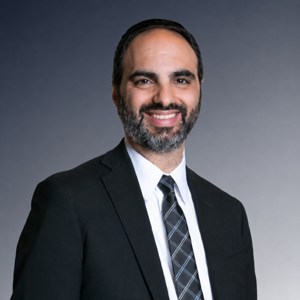
Living Emunah

Living Emunah

By Ashear, Rabbi DavidReligion & SpiritualityJudaism
Download on the App Store
  • Favorites

    27

    Followers

  • Typical duration

    6 min

    per episode

Based on Podcast App listening data

Living Emunah episodes

  • The Time You Give Comes Back With Blessing
    The Midrash Rabbah on Megillat Ruth, quoting Rabbi Yehoshua, teaches: יֹתֵר מִמָּה שֶׁבַּעַל הַבַּיִת עוֹשֶׂה עִם הֶעָנִי, הֶעָנִי עוֹשֶׂה עִם בַּעַל הַבָּיִת — More than the homeowner does for the poor person, the poor person does for the homeowner. One application of this Midrash is in how we view the time we invest in helping others. People often think — especially when life is busy and responsibilities pile up — I'd love to do more chesed… I'd love to learn more Torah… I'd love to do more mitzvot… but I just don't have the time. It sounds logical: every minute we spend doing Hashem's work is a minute we could have spent on ourselves. But Hashem's accounting works very differently. When we give our time for His mitzvot, we don't lose time — we gain it. And it's not simply returned; it comes back with blessing. The more we give, the more we are given. Often, this isn't obvious, but sometimes we see it clearly in our own lives. A man who had recently moved into a new apartment discovered that one of his neighbors was an elderly, broken Jew who lived alone with no family or support. He decided to offer a small kindness: a hot meal. That small act quickly turned into a daily delivery. His family joined in, and it became part of their routine. But over time, the chesed became harder. The neighbor began requesting more specific meals — vegetables chopped finely, fruit salad prepared fresh. At first, the man complied, but eventually, the demands wore on him. He decided to stop chopping and simply sent whole vegetables and fruit, reasoning, He knows how to cut them himself. Around that same time, his healthy baby — who had always eaten well — suddenly refused to drink formula. The baby cried through feedings, turned his head away, spit out whatever he managed to drink, and each feeding became a stressful, time-consuming ordeal. The man didn't connect the two events — until a friend who also knew the elderly neighbor praised him for his kindness. "You have no idea what kind of mitzvah you're doing," the friend said. Then he added, "If you could please send the food nicely, prepared fresh the way he likes it, it's a very big part of the mitzvah." Those words struck a chord. The very next day, the man went back to preparing the food exactly as the neighbor preferred. That same day, his baby ate without crying, spitting, or resisting. The connection was crystal clear. When he tried to save time by doing less chesed, he ended up losing time in another area. We never lose by giving — we only gain. The time we "lose" on a mitzvah is never truly lost; it's invested. Hashem repays us with smoother days, calmer outcomes, and, yes, even babies who cooperate. But when we guard all our time for ourselves, we often find that it slips away anyway — tasks take longer, frustrations mount, and things don't flow. So the next time the yetzer hara whispers, You don't have time for this mitzvah, for Torah learning, or for chesed, whisper back: I don't have time not to.
    0 min
  • Parashat V’etchanan: Emunah For Children
    In this week's parasha, V'etchanan, we have, arguably, the most well-known pasuk in the entire Torah: "שמע ישראל ה' אלוקינו ה' אחד" This pasuk is the root of all of our emunah that Hashem is our G-d and He is the only One in control. The Gemara says in Masechet Sukkah (p. 42) that when a child is first able to speak, his father should teach him this line Shema Yisrael. With this, we are training our children and imbuing them with emunah from the earliest age. Something of such vital importance can't wait until the child is 5 or 6 years old, it must begin from the moment he/she can speak. We should not underestimate how much emunah our children can absorb. Emunah should be spoken about in the home and children should be trained from very young ages in it. I recently received an email which said, "Ever since I started listening to the Daily Emunah messages, it's as if I entered a whole new world. Growing up I was religious, but I never thought about Hashem too deeply or how He plays a role in our lives, but in the last two years, since I began listening, I became a whole new person. I'm so much happier and calmer and accepting and so grateful for the inspiring emunah lessons. I am a preschool teacher and one day, as my students walked into class, Hashem put a thought into my mind. I decided I was going to repeat a chizuk message in emunah to them in an age appropriate manner. I saw how they drank up every word with so much enthusiasm. I noticed how hungry their souls were for a connection to Hashem, even though they all came from religious backgrounds. From then on, every single day, I started repeating another chizuk lesson to them in a kid friendly way. It didn't take too long and I started noticing changes in my students' behavior. For example, little Esther told little Channah, 'I lost the snack that my mommy gave me this morning, but I am not upset because I know Hashem did it out of love and one day I'll find out why.' Channah replied, 'Did you make sure to thank Hashem for your lost snack?' This kind of talk has become the norm in my classroom, from just a little emunah message every day." I received a different email from a woman who says she speaks about emunah in her house all the time. It has changed the way her entire household thinks, and they are so much happier as a result. A few weeks ago, she was visiting her in-laws with her five year old son on Shabbat and, while he was playing outside, something banged into his eye very hard. There was no ice there so she took her son back to her house which was not too far away. While they were walking, she said out loud, "Baruch Hashem, I just remembered, I bought margarine right before Shabbat. That's the best thing to put on your eye." The little boy said in response, "Mommy, Hashem knew I was going to get a bump, so He told you to buy the margarine. He didn't tell you I was going to get the bump because then you wouldn't let it happen." The proud mother was so grateful for her little boy's response. His immediate thought that Hashem put it in her brain to buy the margarine just for him was so beautiful. He's only five. Emunah is for the very, very young as well. As a note of advice, if a very young child gets a bump and we tell him it was from Hashem for his best, he might not take it the right way, he might even come to resent Hashem because, at that time, the child is in pain. The key is to teach the child the lessons beforehand so that the child, on his own, will say it's from Hashem for his best. And when the child does that, we should make him feel so special and tell him how proud Hashem is of him for having that emunah. Shabbat Shalom.
    6 min
  • The Tree Takes Time to Grow
    In today's generation, we've grown used to instant results. We place an order and expect it at our doorstep within hours. We start a job and want to see immediate success. And this mindset has quietly crept into our spiritual lives as well. We invest our time, our energy, and our hearts into our avodat Hashem , but when we don't see immediate results, the yetzer hara whispers in our ears: "Why bother? You've tried and tried—what do you have to show for it?" This struggle applies to so many areas of life: our tefillot , our limud haTorah , our efforts in helping others, or supporting a cause we care about. In the world of Torah and mitzvos, the fruits of our labor are often hidden—sometimes for years, sometimes for decades. But one thing is certain: no effort in avodat Hashem ever goes to waste. There's a powerful mashal that illustrates this: A man plants a seed deep in the soil and faithfully waters it every day. Weeks go by, and not even a sprout breaks through the ground. Discouraged, he stops watering, convinced his efforts were in vain. What he didn't know was that beneath the surface, the seed had already begun to take root. Strong roots were forming deep underground—out of sight, but full of life. Had he waited just a little longer, he would have seen a beautiful tree begin to grow. It's the same with us. The growth is there—we just don't always see it. If it's hard for us to continue, that only makes the reward sweeter. Every moment of hishtadlut —every heartfelt tefillah , every struggle to hold back a sharp word, every time we try to improve—is being collected and counted by Hashem. A person can work on their middot for years and not feel much change. They may still get angry, still feel overwhelmed, still struggle to maintain joy—but then, one day, in a moment they never imagined they could handle, they respond with calm and with strength. And in that moment, they realize: the change was always growing—it just took time to bloom. A woman once said that she had worked on her shalom bayit for years. She gave in. She stayed quiet. She chose peace over winning. But she felt like none of it made a difference. Then, during a difficult moment in their marriage, her husband said to her with tears in his eyes: "You don't know what kind of strength you've been for me all these years." The fruit had been growing all along. It just needed time to ripen. When we keep going—even when we don't see results—that is the ultimate expression of emunah . We believe that Hashem values every step. This world is the world of action. The world of reward is coming. So many of our greatest leaders didn't live to see the full impact of their work. But they kept pushing—and that's what made them great. Rav Aharon Kotler zt"l came to America in the early 1940s, at a time when the country was spiritually barren—especially when it came to yeshiva learning. In 1943, he opened a small yeshiva in Lakewood, New Jersey, with just 14 students. Few believed it would last. But Rav Aharon taught with fire. He poured his soul into building Torah in a land that seemed inhospitable to it. He led the yeshiva for 19 years, 7 months, and 1 day—until his passing. By then, the yeshiva had grown to about 160 talmidim. Modest numbers for nearly two decades of work. But the Rabbanim who remained said: Rav Aharon infused the yeshiva with kedushah . His efforts were l'shem Shamayim , and they would not go to waste. His son, Rav Shneur Kotler zt"l, took over—and remarkably, passed away exactly 19 years, 7 months, and 1 day from when he began. In that time, the yeshiva grew to over 900 boys. Still, the true explosion of growth came afterward. Today, BMG in Lakewood is home to over 10,000 talmidim—arguably the largest yeshiva in the world. Rav Aharon never saw it. But today, in the radiance of the Shechinah , he is surely reaping the reward. He planted the seeds. He watered them with sweat, with mesirut nefesh , and with unwavering bitachon . And Hashem made them grow. So if you're struggling… if you've been trying to grow in your avodat Hashem but don't see the fruits yet—don't stop. Don't listen to that voice that says it's not worth it. Every drop of effort counts. And one day, those seeds will sprout in ways you never imagined. Because the tree always takes time to grow. But the reward… is eternal.

    6 min
  • Every Second is His Plan
    Hashem doesn't just hear every word we say — He knows every thought that passes through our minds. Last Friday, I was shopping for Shabbat and noticed that the prices were unusually high. I picked up an item and began debating whether or not to put it back. Just then, a man came over to me and asked, "Is it true that anything we spend for Shabbat doesn't come out of the yearly income Hashem allots for us?" I replied, "Absolutely. It's an explicit Gemara." As soon as I answered, I realized Hashem had sent this man to remind me of that truth. I smiled, thanked Hashem for the immediate correction, and bought the item I had been second-guessing. Hashem is intimately involved in our lives — not just every day, but every second. Just over a month ago, a mother was looking to take her children on outings to keep them entertained before camp started. She tried two different places, but both were completely booked. The children were disappointed, and the mother, trying to soften the letdown, took them for ice cream instead. It was an extremely hot day. As they left the ice cream shop, the children ran ahead and mistakenly opened the door of a car that looked like their own. To their shock, there was a four-month-old baby alone in the back seat. The baby had been forgotten. They ran into various stores searching for the baby's mother. When she saw them holding her child, she burst into tears. "I always double-check!" she cried. "I just forgot this time…" On a hot summer day, R"l, it only takes 10–15 minutes for a tragedy to occur in a car. At that moment, it became clear to the mother and children why their plans had been canceled earlier. Hashem had rerouted them, put the idea of ice cream in their minds, and guided them to open the wrong car door — just in time to save that baby's life. Another remarkable story was shared by Rabbi David Ozeri. Last Thursday night, he received a call from a panicked father — a Rav in Eretz Yisrael. His 17-year-old daughter had landed in Newark on a stopover from Israel, and her connecting flight had been canceled due to weather. She didn't speak English, she was alone in a foreign airport, and it was already 11:00 p.m. Rabbi Ozeri immediately contacted a baal chessed in his community, who answered the phone right away. "Of course she's welcome to stay with us," the man said. "I'll even send an Uber for her." But the father was too nervous to place his daughter in an Uber alone at night. Rabbi Ozeri then thought of a woman in Brooklyn who drove children to school each morning. She was divorced and may have needed some extra income. He called her and asked if she would be willing to drive from Brooklyn to Newark to pick up the girl, bring her all the way to Deal, New Jersey, and then return home. The woman answered immediately, "It would be my pleasure to do the chessed," and added that she didn't want to be paid. But Rabbi Ozeri went to the host's home and gave him an envelope with $450, asking him to give it to the driver when she dropped off the girl. The next morning, the woman texted Rabbi Ozeri thanking him for the opportunity to do the chessed — and for the money. What she shared afterward was incredible. She said it was her turn to host her children for Shabbat, but when she checked her bank account, she had only ten dollars left. She didn't know how she would buy food for her large family. At that moment, she saw a request for tzedakah for a worthy cause. With great Emunah, she donated her last $10 and prayed that in the zechut of that mitzvah, Hashem would help her provide for Shabbat. The very next night, at 11:00 p.m., she received the call from Rabbi Ozeri — and ended up earning more than enough to buy everything she needed. We don't fully understand the ways of Hashem, but it seems like one of the reasons the girl's flight was canceled was so this woman could have the parnassah she had so desperately prayed for. When people heard her story, they were so moved that they voluntarily donated more — and she ended up receiving a total of $6,000. Hashem is involved in every moment of every person's life. He orchestrates everything with precision and purpose. Our job is to build our connection with Him — through our tefillot , through our mitzvot , and through our emunah.
    6 min
  • The Value of Our Support
    Chazal tell us, ישראל מפרנסין לאביהם שבשמים —Yisrael "support" their Father in Heaven. This means that the satisfaction Hashem derives from our good deeds is, so to speak, how we "support" Him. In earlier generations, that support came from the deeds of great tzaddikim—people whose entire lives were devoted to serving Hashem with purity and holiness. Their Torah learning was filled with clarity, their prayers pierced the heavens, and their mitzvot were performed with incredible precision and joy. In those times, Hashem, k'viyachol (so to speak), was being "supported" in abundance. But today, we no longer have such towering tzaddikim. We live in a time when it is very difficult to remain spiritual. Confusion and distraction are everywhere. Temptations are stronger than ever, and spiritual clarity is at an all-time low. So how do we compensate for all the support that has been lost? Hashem has darkened the world spiritually so that even the simplest mitzvah today requires mesirut nefesh —self-sacrifice. In this way, our deeds become incredibly valuable, and we are able to give Hashem the same nachat ruach —the same pleasure—as the tzaddikim of past generations. It is so hard today to stay focused during prayer, yet we come back day after day and try our hardest to concentrate, even if we can manage only a bit of kavanah . It's more difficult than ever to stay pure in thought, speech, and action—and yet we keep trying. We guard our eyes, watch our mouths, and avoid negative influences. It's harder than ever to live with emunah , especially when we don't see the results we're hoping for—but we still believe in Hashem's unending mercy and love. A man said that he doesn't understand why he now struggles with tests that were never an issue earlier in his life. Temptations that never appealed to him before suddenly became major challenges. One possible explanation is that he now needs his deeds to carry more weight—and that weight can only come through intense struggle. A teenager today feels pulled in every direction. It is incredibly difficult to maintain his religious standards. Once upon a time, praying, learning, and guarding oneself from sin were considered routine. Today, they are acts of heroism. Simple deeds done with effort in our generation are more beloved to Hashem than hundreds of effortless mitzvot done in generations past. A mother running a busy household barely has a moment to breathe, yet she still manages to pray, say Tehillim , avoid lashon hara in a group conversation, and faithfully care for her children and husband. These small acts are, k'viyachol , supporting Hashem in the world more than we can possibly imagine. And of course, we are the ultimate beneficiaries of this support. We just passed Tishah B'Av. Hashem is still homeless, and He is begging us to bring Him back home. Soon, He will reveal Himself to the world and reward those who remained loyal to Him. For now, He is still asking for our help. Let us take advantage of the opportunity while we still have it. The challenges in serving Hashem are actually for our benefit. We may not be on the level of the tzaddikim of the past, but we can accomplish the same—perhaps even more. Hashem will never abandon us. The difficulties we face today are His way of drawing even closer to us. Let us strengthen ourselves and recognize the immense value of everything we do. It is well worth the fight. Never say, "It's just one mitzvah," or "It's just one aveirah." Every mitzvah we perform is precious. Every aveirah we avoid is beyond measure.
    5 min
  • Catapult Into Greatness
    There are people who have to endure enormous yisurim in this world. Some are not able to leave their hospital bed. Some have been abandoned by their family. Some don't have any family. Not only do they have challenges beyond imagination, but they have nobody by their side helping them through them. A common denominator in challenges is usually thoughts of why is Hashem doing this to me? Am I so bad? What could I have possibly done in the previous lifetime to deserve all this? All they want is just to have a normal life like everybody else. Some even feel that Hashem hates them, lo alenu. We can never judge anybody. Nobody truly knows how difficult a person's circumstances are. And we hope and pray that they improve quickly. However, we must understand the way Hashem views yisurim. The pasuk says, כי את אשר יאהב ה' יוכיח. It is the ones that Hashem loves most that have to endure yisurim like this. The Mesilat Yesharim reminds us our purpose in coming into this world is not for this world. We are here to acquire eternal life in Olam HaBa. This world is a drop in the ocean compared to the Next World. A person has a very limited amount of time in this world to do a job that will earn him the right to live blissfully forever. The Pesikta Rabbati in parashat Achareh Mot says, Fortunate is the person who has to endure difficult yisurim in this world and does not complain to Hashem over it. Who had more difficult yisurim than Iyov? Rav Chaninah bar Pappah said, If Iyov would not have complained about his yisurim, the same way we say אלוקי אברהם, אלוקי יצחק, ואלוקי יעקב in the Amidah, we would have added אלוקי איוב as well. This statement is mind-boggling. It implies that Iyov would have been elevated to the same status as the Avot HaKedoshim had he accepted his yisurim. Our Avot dedicated every moment of their lives to Hashem. They became the greatest people who ever lived. How could it be that Iyov would have been considered on their level? This is how valuable it is for a person to trust Hashem and accept the way He deals with them. The more difficult a person has it, the greater is his opportunity to elevate himself. We only came into this world to achieve that purpose. Some become great through tireless avodat Hashem, day in and day out. Some can reach greatness with just a few words out of their mouths. If with all the difficulties they are going through and all the questions they may have and all the potential hard feelings they have towards Hashem, if they could change their attitude and say, "Hashem, I trust You. I know You're the only One in charge of my life and You are giving me the exact life that I need to fulfill my purpose in this world." That will make them great. Those words can elevate them to be counted amongst the greats of the generation and perhaps the greats of all time. We hope the yisurim will go away quickly, but before they do, the person should seize his opportunity while he has it to catapult himself into greatness, to attain the highest portions in the Next World. The value of accepting yisurin is beyond comprehension. That is precisely why it's so difficult to do. If we can persevere and accept the way Hashem deals with us, we'll rise to the highest levels and we'll be eternally rewarded.
    5 min
  • Bitachon and Geula
    The Rambam writes the purpose of the fast is to get us to remember the bad deeds that caused the destruction and then accept upon ourselves to fix them. The main cause of the churban was people hating each other. If our bitachon in Hashem would be stronger, there would be no room for hatred because we would believe b'emunah shelemah that everything, even what people do to us, is caused by Hashem for our best. Chazal tell us, the first Tisha B'Av of calamity was when the people cried from the words of the meraglim , which was due to their lack of bitachon in Hashem. If they would have trusted in Hashem, they wouldn't have been afraid of anybody. When we truly believe that there is only Hashem in this world and nothing else, we will be able to rectify all the sins that have prolonged this galut . The Gemara tells us, Mashiach will come אם בקולו תשמעון – when we heed Hashem's voice and nobody else's. The Shomer Emunim writes, when a person's bitachon is the way it is supposed to be, he will be able to overcome so many tests that the yetzer hara gets people to fall to. When a man is walking in the street in the summertime and wants to guard his eyes from seeing the wrong things, the evil inclination will tell him he needs to be on the lookout in case he sees somebody he needs to speak with or in case he sees a store that he needs to go to. And once the person's guard is down, he will undoubtedly see things he is forbidden to look at. A person with bitachon in Hashem will say, "I will not lose by following Hashem's will. If there is somebody I need to speak with, Hashem will send him to me." A person who is careful not to talk to others before he prays in the morning may have his evil inclination tell him, What if the person next to you now could help you? Maybe it is worth it to talk to him. Someone with bitachon would say, "If I accepted upon myself a stringency to honor Hashem, there is no way I will lose anything as a result." A concerned mother who is trying to get her daughter married may think, maybe I should compromise a little on my daughter's standards of modesty so she will get married quicker. If her bitachon was where it was supposed to be, she would immediately say to herself, "The One who is in charge of marriage has a standard that He loves. It doesn't make any sense for me to compromise on His standard if He is the One producing the shidduch ." A woman who just started the Amida hears the doorbell ring and doesn't know who it is, the yetzer hara will tell her, Rush through your prayers so that you can go see who it is . If her bitachon was strong, she would say, "I am talking to the One who is in control of the entire world. Does it matter which one of His puppets is at my door right now?" If a person is learning Torah and the yetzer hara tells him if he leaves early to tend to his affairs, it'll be so much better for him. Bitachon will say, "I am doing the will of Hashem now, I'll only gain if I stay." Hashem will not necessarily make it obvious to a person that he gained by doing the right thing, but that is only to keep a person's free will balanced. When our bitachon is strong, our middot will be the way they are supposed to be. We won't be arrogant, we won't get angry, we won't be jealous, and we'll be happy to do the job that Hashem sent us here to do. Let us resolve today to strengthen our bitachon in Hashem and, b'ezrat Hashem, that will be the zechut we need to bring the geula shelemah . Amen. תזכו בנחמת ציון .
    5 min
  • When Hashem Sends a Message
    A man told me that his wife had been a little negligent about something he had asked her to do multiple times. Unfortunately, as a result, their children were placed in a potentially dangerous situation. Baruch Hashem, everything worked out in the end, but he was extremely upset. He felt his wife had put their children in danger unnecessarily, and he had every reason to be shaken. Later that same day, while at home, he decided to learn a bit. The only sefer easily available was an ArtScroll volume of Masechet Shabbat. He randomly opened it to daf 32 ( ל״ב ), where the Gemara discusses how serious it is to place oneself in a dangerous situation. Reading it made him feel validated in how upset he was with his wife. But then, just a few lines later, he read something that shook him to the core: the Gemara says that someone who neglects learning Torah causes danger to their children. He read the line again and again. Suddenly, it hit him — he himself had been negligent in learning. He had never truly committed to a regular seder, always coming up with excuses, telling himself it wasn't realistic right now. And then he remembered something else. Just the day before, he had randomly chosen to listen to a shiur from a rabbi he had never heard before — a class recorded over ten years ago, out of thousands he could have selected. It was on the topic of Elul and Teshuvah, even though we're now in the month of Av. And incredibly, that rabbi spoke directly to the exact excuse this man had been telling himself for years. The rabbi explained why that excuse doesn't hold up, and how important it is for every Jew to carve out time to learn — even in a busy life. Now, in the span of 24 hours, Hashem had sent him three clear messages: His wife's mistake led to a danger that got him very worked up. The Gemara he "happened" to open addressed his exact situation showing him he was more guilty than his wife. The shiur he "randomly" chose directly called out his long-held excuse. He said, "I couldn't believe the hashgachah pratit. It was all connected. Hashem was clearly sending me a message, and this time, I didn't want to miss it." He picked up the phone, called his rabbi, and said, "It's time. Please help me start a serious learning schedule." Hashem speaks to us in different ways, at different moments. But it's up to us to open our hearts and pay attention to the message. Another man shared with me that from the time he graduated high school until the age of 35, he didn't put on Tefillin even once. He had drifted far from the path he was capable of being on. He loved his children dearly and would do anything for them. One day, his wife gently said, "Would you mind putting on Tefillin just for a few minutes each day — not for yourself, but so the kids can see their father wearing Tefillin?" That comment hit him like a ton of bricks. He realized how far he had gone — so far that his wife had to ask him to put on Tefillin, not even for Hashem, not even for himself, but just as an example for the kids. The very next day, he put on his Tefillin. He said he felt something special — something he hadn't felt in years. Slowly, one small step at a time, he began to come back. He started attending shul. He began learning Torah. Today, that same man has children learning full time, and he himself is growing stronger and stronger in his Avodat Hashem every single day. He is grateful beyond words for that moment that woke him up — that small comment that sparked something great. Every person is given opportunities for inspiration. Some are subtle, some are loud. Hashem wants all of His children close to Him, and He lovingly sends each one the exact kind of message they need. But it's our decision whether or not we act on it. We are getting closer and closer to the time of Yemei HaMashiach, when Hashem will fully reveal Himself to the world. Then, the tests we face now — the quiet, hidden tests of Emunah and consistency — will no longer exist. There will be no more confusion, no more doubt. But also, no more chance to grow through struggle. Now is the time. Now is the chance to grow in Torah, to grow in mitzvot, to become the people we are meant to become. Let's take the messages from Hashem and let them move us forward. Even one step today can change our entire life. And that one step can affect generations.
    5 min
  • The Only Vessel That Holds Blessing
    Chazal teach us that the Beit HaMikdash was destroyed because of Sinat Chinam—baseless hatred. And our Rabbis have explained that, in truth, almost all hatred is baseless , because we know that whatever another person does to us is ultimately coming directly from Hashem. Even though people have free will, person A cannot use that free will to harm person B unless Hashem allows it—and that only happens if it's meant to be. If someone is able to cause us pain, it's only because Hashem decreed it for our benefit. It may have saved us from something far worse. Instead of resentment, we should feel joy that Hashem is taking care of us in the way He knows is best. When we overcome our natural reactions and respond with emunah, our relationships become more peaceful and loving. That inner peace brings happiness—but more than that, it is Avodat Hashem of the highest level, and it opens the gates of blessing. Chazal say, "The only vessel that can hold blessing is peace." A person can have a spouse, children, multiple homes, cars, and all the wealth in the world—but if there is no peace, none of it can be enjoyed. It's worthless. One of the greatest pieces of advice for someone who wants more happiness and more blessing in life is to make peace with those they are at odds with. A man told me a story that began about ten years ago. His father had a bitter falling-out with a longtime business partner, and the partnership ended with deep resentment. The partner left, and the father continued running the business with his son. But after the split, the company began to struggle. The atmosphere at work became heavy, and nothing was going right. There was tension everywhere. Seven years later, out of nowhere, the former partner walked back in and asked for a job. Surprisingly, they agreed—and gave him a high-level position. From that day on, the business began to grow and flourish. Today, it's more successful than it ever was. The son couldn't understand how this man just showed up again. When he asked his father, the answer became clear: "That machloket was bothering me for years," his father said. "One day I decided to call him, apologize, and make peace. I felt such relief afterward, and I guess he felt comfortable enough to return and ask for a job." There's no doubt: the success came from the act of shalom. When peace is made, everyone feels better—and even more importantly, we bring tremendous nachat ruach to Hashem, who wants nothing more than to see His children getting along. People may hurt us, but it's our job to fulfill Hashem's will and love them anyway. It's not always easy. But with a little chizuk, we can do it. A woman shared with me that she and her husband weren't invited to a certain wedding. They knew the reason and were okay with it. But on the day of the wedding, they kept getting phone calls from others: "What time are you going?" "Want me to save you a seat at the reception?" "Are you bringing the kids?"—all assuming they were invited. Each call felt like another dagger. By the time the wedding started, they were fuming. The woman wanted to forgive, but it felt too painful. The very next morning, she opened a daily email on emunah that she hadn't opened in over a week. The title? "When You Aren't Invited to a Wedding." She couldn't believe it. She read it again and again until the message sank in. It reminded her that everything comes from Hashem—that even this was tailor-made for her benefit. With that perspective, she found the strength to truly forgive. And afterward? She felt so free. Holding on to anger and hurt only poisons us. But when we let go, when we forgive—even when it's hard—and believe that everything is from Hashem, we feel lighter, more joyful, and we open our lives to blessing. If we can do that, B'ezrat Hashem we'll merit the rebuilding of the Beit HaMikdash. Amen.
    6 min
  • The Transformative Power of Tefillah
    Although we are not permitted to hold weddings during these days, Halacha allows a person to become engaged—even on Tisha B'Av itself. The Gemara explains the reason: שמא יקדיםנו אחר —perhaps someone else will marry her first. But the Gemara then raises a question: If a person's zivug is already determined even before conception, how could anyone else take what was destined for someone? The answer: if the other person prays hard enough, he may merit it. From here we learn the incredible power of tefillah: It can change what has already been decreed. The Gemara in Masechet Berachot states that one can pray for the gender of a fetus only until the 40th day after conception. After that point, it is considered a tefillat shav —a vain prayer. However, the Yerushalmi in Berachot writes that even if a woman is already in labor, tefillah can still change the gender of the child. Even though we follow the Bavli and do not pray for a gender change after 40 days, the Sefer Berumo Shel Olam explains that the disagreement is only about whether one may pray for a miracle—but all agree that prayer itself retains the power to change reality, even up to the moment of birth. We find an extraordinary example in the case of Chizkiyahu HaMelech. The Navi Yeshayahu came to him and told him that Hashem had decreed death upon him—because he did not fulfill the mitzvah of peri'ah v'revia , having children. Chizkiyahu, although righteous, had seen through prophecy that he would father a wicked son and therefore refrained from marrying. Despite his reasoning, he was held accountable. Chizkiyahu then asked Yeshayahu if he could marry the prophet's daughter, in the hope that their combined merits would produce righteous children. But Yeshayahu answered: It's too late—the decree has already been sealed. Chizkiyahu turned his face to the wall and poured out his heart in prayer. And indeed, Yeshayahu was immediately told to return and inform the king that Hashem had added fifteen more years to his life. Many ask: Why didn't Yeshayahu know through prophecy that tefillah would change the decree? The Kad HaKemach answers: Tefillah is higher than prophecy. It stems from a level in Shamayim beyond where nevu'ah can reach. Even a prophet cannot see what changes tefillah might bring. Another powerful example is Leah Imeinu. It was decreed before she was born that she would marry Esav. But through heartfelt tefillah, she changed her destiny—and instead married Yaakov Avinu, the Gadol HaDor . The Gemara in Masechet Niddah asks: What can a person do to become wise? It answers: He should study Torah and pray to the One who possesses all wisdom. The Maharsha explains that the question refers to someone whose natural intellect was limited due to a Heavenly decree. Can such a person become wise? The Gemara answers: Yes—if he learns Torah and prays sincerely, even he can attain wisdom. Through Torah and tefillah, one can rise above natural limitations. There is nothing that tefillah cannot accomplish. Therefore, it is our responsibility to use this powerful gift with all our strength. Even if we feel that we've prayed many times and nothing has changed—we must continue. The Gemara tells us, חזק ויאמץ לבך וקוה אל ה —strengthen yourself, and do it again. There is no limit to what effort in tefillah can achieve. We must keep renewing our strength, returning to prayer again and again, pouring out our hearts with sincerity and Emunah.
    5 min

About Living Emunah

From the publisher's feed

A Daily ethical teaching by Rabbi David Ashear

Best of Living Emunah

Ranked by our users in the last 21 days

More shows like Living Emunah

The Rabbi Sacks Legacy by Rabbi Lord Jonathan Sacks

The Rabbi Sacks Legacy

557 Listeners

The Israel Guys by The Israel Guys

The Israel Guys

308 Listeners

Jewish Stories to Inspire: Motivational & Spiritual Stories Based on the Torah's Ethics, Values and Wisdom by Stories to Inspire

Jewish Stories to Inspire: Motivational & Spiritual Stories Based on the Torah's Ethics, Values and Wisdom

186 Listeners

Living with Emunah by Rabbi Efrem Goldberg

Living with Emunah

110 Listeners

Meaningful People by Meaningful Minute

Meaningful People

1,987 Listeners

From the Inside Out: With Rivkah Krinsky and Eda Schottenstein by Rivkah and Eda

From the Inside Out: With Rivkah Krinsky and Eda Schottenstein

263 Listeners

The Q & A with Rabbi Breitowitz Podcast by Rabbi Dr Yitzchak Breitowitz

The Q & A with Rabbi Breitowitz Podcast

234 Listeners

Call Me Back - with Dan Senor by Ark Media

Call Me Back - with Dan Senor

3,197 Listeners

The Times of Israel Daily Briefing by The Times of Israel

The Times of Israel Daily Briefing

1,070 Listeners

Kosher Money by Living Lchaim

Kosher Money

821 Listeners

History for the Curious - The Jewish History Podcast by JLE

History for the Curious - The Jewish History Podcast

232 Listeners

Gedale Fenster - Podcast by Gedale Fenster - Podcast

Gedale Fenster - Podcast

399 Listeners

Honestly with Bari Weiss by The Free Press

Honestly with Bari Weiss

8,473 Listeners

Inspiration for the Nation with Yaakov Langer by Living Lchaim

Inspiration for the Nation with Yaakov Langer

1,120 Listeners

Stories Of Hope With Tzipora Grodko by Meaningful Minute

Stories Of Hope With Tzipora Grodko

324 Listeners