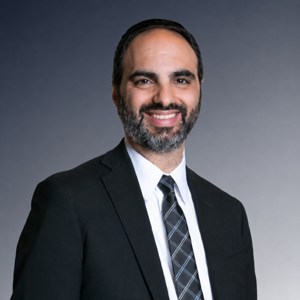
Living Emunah

Living Emunah

By Ashear, Rabbi DavidReligion & SpiritualityJudaism
Download on the App Store
  • Favorites

    27

    Followers

  • Typical duration

    6 min

    per episode

Based on Podcast App listening data

Living Emunah episodes

  • Parashat Balak: Our Greatest Treasures
    For a 10% discount on Rabbi David Ashear's new book LIVING EMUNAH VOL 8 click the link below https://www.artscroll.com/Books/9781422644645.html The pasuk says at the beginning of this week's parasha that Balak saw all that Yisrael did to the Emorim and he became afraid. Rav Moshe Sternbuch asked, why did Balak become afraid specifically from the Jew beating the Emorim ? They had done much greater things before this which should have caused Balak to become afraid of them, like obliterating the Mitzrim or Kriyat Yam Suf . The Rabbi quoted from the Kli Yakar who answered, what Yirsrael did to the Emorim is referring to a different episode, namely when Yaakov Avinu, whose name is also Yisrael, defeated the Emorim with his tefilot back in parashat Vayechi , before Yetziat Mitzrayim . Balak said to himself, if the Jews can take down an entire nation using their prayers, how are we going to stand up to them? This is why he hired Bilaam, who also had powers with his mouth. Later on in the parasha , when Bilaam blessed the Jewish People, he was in awe of how they wake up every morning like lions to grab mitzvot , putting on tallit and tefillin and reciting keriyat shema . These are our greatest treasures. The more we use the power of our mouths for good, the more blessing will come down from Hashem. Rabbi Elimelech Biderman related a story that a rabbi from New York told him. The rabbi said this past year around Hanukah time, he read an amazing story about an older boy who was having a lot of difficulty finding his zivug. Baruch Hashem, this year, that boy got engaged on Thursday night, the 11 th of Kislev. At his engagement, his younger ten year old brother showed him a piece of paper which had written on it, Today the 21 st of Cheshvan, year 5781, Saturday night, I, so and so, accept upon myself to say kriyat shema looking inside the siddur and having kavana in each word in the merit that my brother gets engaged by the 11 th of Kislev . And that's exactly what happened. He said shema every night the way he's supposed to and his brother got engaged on the 11 th of Kislev. The rabbi in New York got so excited after reading this story, he related it to his own family at the Shabbat table that week. He also had an older son not married and he also has a ten year old son. When his ten year old heard that story, he accepted upon himself on Rosh Chodesh Shevat the same kabbala . He wrote on a piece of paper, For 30 days, I will say kriyat shema al hamita from a siddur the right way in the zechut that my brother gets engaged. On the 30 th night, that young boy fell asleep without saying shema . The next morning, when he realized what happened, he started to cry. He told his father that he took on this kabbala and did it for 29 days in a row but then missed it last night. His father told him not to worry, it didn't hurt his kabbala . He said, "You accepted 30 days and you did 29 of them." The father then told his son to do the last day that night and it will still count. Amazingly, the very next day, on the 2 nd of Adar, 31 days from the time this boy made his kabbala , which was also the day he finished his 30 days, his brother got engaged. We have tremendous powers with our mouths. We can say kind words to others, we can read Tehillim , we can learn Torah, we can pray to Hashem. These are our strengths. This is what Balak feared, and this is what Bilaam knew was our secret. Let us utilize these precious gifts that Hashem gave us and do them all the right way.

    6 min
  • The Power of Yearning to Give
    For a 10% discount on Rabbi David Ashear's new book LIVING EMUNAH VOL 8 click the link below https://www.artscroll.com/Books/9781422644645.html Many people say, "If only I had a lot of money, I would help so many people. I would support yeshivot, fund chesed organizations, and provide for families in need." It's a beautiful sentiment that reflects a generous and noble heart. But often, this thought remains just that—a distant dream. In reality, a person does not need a lot of money to become a true baal tzedakah . If someone has a genuine desire to give, Hashem can open doors and make that desire a reality. A young mother raising several little children had no income. She noticed that many families in her building lacked toys, games, and books for their children. She sent a simple voice note to a group chat asking if anyone had toys in good condition to donate. Within a week, her hallway was filled with donations. She organized them into bins, labeled them, and opened her apartment one day a week for mothers to come and take toys for their children. No budget, no money—just heart and effort. Another young woman noticed that many families in her neighborhood were struggling to afford clothing for Yom Tov. Instead of just feeling bad, she decided to act. She received permission to use a high school gym on a Sunday, made flyers requesting donations of clean, gently used clothing, and organized volunteers to sort and set up. Families came to shop with dignity—free of charge. One man shared how Hashem gave him extraordinary siyata dishmaya to help people in large proportions. A few years ago, he was a bank clerk heading home when he noticed a flyer requesting furniture for a newly established beit midrash . They were seeking tables, chairs, and bookshelves and would appreciate any donation. He didn't think there was any way he could help, but he felt a strong desire to be involved. He tore off one of the tabs at the bottom with the contact number. The very next day, he arrived at work to find a carpenter dismantling his desk. The branch had just opened a month earlier and was furnished with upscale, elegant furniture. But management had decided it was too fancy and were replacing everything. The carpenter turned to him and asked, "Do you know anyone who might want this?" Suddenly, he remembered the flyer. He called the rabbi of the beit midrash and told him there was a huge amount of high-quality furniture available. They arranged a truck and were stunned by the quantity and beauty of the furniture. The beit midrash was now elegantly furnished, and the man was thrilled to have played a role in beautifying a house of Hashem. But that was only the beginning. His name was added to a list in the bank's construction department as someone who knew people and institutions that could use furniture. Just days later, the architect from another department called him: they were closing an entire floor in a Tel Aviv branch and needed someone to take the furniture. He didn't yet know who needed it—but he knew what to do. He called one yeshiva, then another. Two large trucks were dispatched to one yeshiva, and two more to another. Weeks later, another branch in Yerushalayim was closing, and again he arranged for the furniture to go to two more yeshivot. Over time, his number became well known. He helped dozens of institutions and families. Once, a yeshiva contacted him asking for 500 pieces of furniture. He had never dealt with such a quantity before but said he would try. Less than two months later, a carpenter from the bank called him—they were closing two large branches in Netanya and had 500 units of furniture available. He was able to fully furnish one of the larger yeshivot in the country. This man does not have wealth. But his yearning to give made him a shaliach to provide hundreds of thousands of dollars' worth of furniture to yeshivot and organizations across the country. Everyone has what they need to be successful in avodat Hashem . The more we yearn to do good, the more siyata dishmaya we receive.
    6 min
  • Thanking Hashem for 37 Trillion Miracles
    A young man was diagnosed with leukemia, Lo Aleinu. Baruch Hashem, he is now responding well to treatment. One day, his rabbi noticed that he was praying the Amidah with deep concentration and asked what inspired such intense kavanah. The young man replied that his doctor had recently explained to him how cancer begins. He said, "If even one single cell in the body mutates and begins to do the wrong thing, and then multiplies, it can become cancer." The young man continued, "I learned that the human body has more than 37 trillion cells, and all it takes is for just one to go off track." This struck him deeply. He began to think about the 37 trillion cells in his body that were doing exactly what they were supposed to, every moment. He realized how much he owed Hashem and felt an urge to say thank you for each and every one. So he did the math: if he wanted to say thank you for each cell, and it took just two seconds per "thank you" with real kavanah, and he did it nonstop 24 hours a day, how long would it take? His calculation came out to nearly 2.5 million years . That's what inspired him to say the Amidah with more heart and awareness—because he realized how Hashem is sustaining him with countless daily miracles. Each microscopic cell in our body is like a miniature city, with roads, factories, and workers. Cells contain tiny "machines" that produce energy, repair damage, send signals, and make proteins. Red blood cells deliver oxygen to every part of the body, completing a round trip in just one minute. There are about 25 trillion red blood cells alone. The cells send chemical messages to each other that instruct them to grow, heal, or repair. The brain, meanwhile, has 86 billion neurons firing electrical signals at lightning speed. Inside each cell lies a copy of a person's DNA, a blueprint so compact that if stretched out, it would measure six feet long—but it's packed inside something invisible to the eye. Even as we sleep, these trillions of cells continue to work— repairing damage, rebuilding muscles, cleaning waste and growing new tissues. —without pause. We could never fully thank Hashem for all He does for us. But we do get an opportunity each time we say "Asher Yatzar" to acknowledge and appreciate the intricate wonders of our body. We conclude that berachah by saying: רופא כל בשר ומפליא לעשות — "Healer of all flesh and Performer of wonders." Those wonders include our immune system, our blood cells, our nerve cells, our brain cells, our skin, our organs—and everything else that keeps functioning perfectly without our even noticing. Rebbetzin Silverstein recently shared a remarkable story. A mother had a child who could not control his bladder or bowels, and because of it, he was unable to attend school. Doctors could not help, and the parents were devastated. Then, the mother learned about the segulah of saying Asher Yatzar slowly, with kavanah, standing still, and reading it from a printed card. She began doing this every single time. Just a few weeks later, her son was miraculously healed. The doctors were stunned. The mother also said that recently, while shopping, she needed to use the restroom but couldn't find her Asher Yatzar card. She felt torn—not wanting to lose her kavanah. Just then, as if sent from Heaven, a man walked in and hung up an Asher Yatzar card on the wall. She was overwhelmed with gratitude. Hashem had answered her need at the perfect moment. We could thank Hashem every minute of our lives and still not come close to what He deserves. But the thanks we do give—if offered with heart and focus—can be incredibly powerful. Let us treasure every breath, every heartbeat, and every functioning cell—and use our moments of awareness to thank the One who never stops giving. If anyone would like to read a short write-up on specific kavanot to have during Asher Yatzar, click on the link at the bottom of today's transcript. To receive the email, you can sign up at livingemunah.com or send a request to [email protected] . https://www.dropbox.com/scl/fi/pyh95lif97je64ncdavei/Asher-yatzar-booklet-inside.pdf?rlkey=ypna9iig1pfqhrmif6bzpktqt&st=1ti1iv74&dl=0
    7 min
  • Hashem Controls Our Livelihood
    For a 10% discount on Rabbi David Ashear's new book LIVING EMUNAH VOL 8 click the link below https://www.artscroll.com/Books/9781422644645.html A man in Israel who works in the sound system industry bought a large van to transport his heavy equipment. Before using it for business, he made a personal commitment to first use it for a mitzvah—to do a chesed for someone else. He posted an ad offering his services but didn't receive any responses. Eager to begin using his new van for parnasah but determined to keep his word, he sat in the parked van one day and prayed sincerely that Hashem send him a mitzvah opportunity. Just minutes later, an avreich walked out of his kollel, saw the van, and knocked on the window. He asked the man if he could help him move apartments for just 300 shekels. The man agreed on the condition that others help carry the furniture. He ended up spending hours over the next few days helping the avreich move. When the job was done, he refused to accept any payment. The avrech was overwhelmed with gratitude. He told the man that he had been praying for days to find someone who could help him move at an affordable cost. The man was thrilled to be the one Hashem had chosen to answer that tefillah. He then asked the avreich if he could speak to the kollel to give them some chizuk. He shared how just a few years earlier he was drowning in debt with no way out. Then he read a book about the segulah of saying Birkat Hamazon slowly, with kavanah, and with joy. He also internalized a critical truth: his parnasah did not come from his work, but only from Hashem. He realized a person could work day and night and make nothing—or work just a little and earn a fortune. Everything is determined solely by Hashem. After that shift in perspective and practice, his debts disappeared and his business began to thrive. Another story was shared by a man named Yehuda, who still learns full-time in kollel. Ten years ago, he was eating at someone's home who honored Shabbat in a special way. When it came time for Birkat Hamazon , the host brought out a beautifully handwritten Birkat Hamazon written on klaf , like a mezuzah. The host explained he only used it on Shabbat, to give honor to the day. Yehuda was inspired and hoped that one day he, too, would own such a special item. Years passed. Yehuda recently mentioned to a friend that he was looking for a Birkat Hamazon on klaf and asked if he knew any sofer who might have one. The friend said it was rare and would likely be expensive. Two days later, that same friend told him he had just met a sofer who happened to have one available. Yehuda went to see it and was amazed—it was exactly what he had imagined, with inserts for all the holidays and beautifully handwritten. The sofer said the price was $1,500 but was willing to sell it for $1,000. Yehuda asked if he could pay $100 a month over 10 months, but the sofer said he couldn't do that. Yehuda turned to Hashem and said, "Hashem, this Birkat Hamazon is Yours. I know You can give it to me even if I can't afford it. Just because I can't buy it doesn't mean You can't give it." He prayed with real emunah that Hashem would find a way. A few days later, a friend told Yehuda he had just bought a Birkat Hamazon on klaf as a gift for someone, but that person couldn't use it because it didn't have vowels. Yehuda asked to see it, and to his astonishment, it was the exact same Birkat Hamazon he had hoped to buy. The friend had no use for it and gave it to Yehuda as a gift—for free. Hashem can give us everything we need. The more we believe in His absolute control over our parnasah, the more blessing it brings into our lives.
    0 min
  • How Hashem Measures Our Success
    For a 10% discount on Rabbi David Ashear's new book LIVING EMUNAH VOL 8 click the link below https://www.artscroll.com/Books/9781422644645.html People sometimes see others giving millions to tzedakah and wonder why they don't have the same zechut to give such large amounts. Others see children with exceptional middot and ask themselves, "Why do they have such great children, while ours are so difficult?" Some struggle to grasp even the basics of Torah learning, while others seem to understand the most complex sugyot effortlessly. It's natural to wonder why Hashem didn't give everyone equal opportunity, especially when the purpose of this world is to serve Him. In Parashat Chukat, we read how the Jewish people complained when they had no water. The pasuk says: " וירב העם עם משה ויאמרו לאמר ולו גוענו בגוע אחינו לפני ה '" They quarreled with Moshe and said they wished they had died like the rest of the people in the desert. They asked why he brought them out of Egypt just to die in a wasteland. This happened almost 40 years after they left Egypt—this was the new generation that was supposed to enter Eretz Yisrael—and yet they were speaking just like their parents had. Moshe could have thought that everything he had done over the past 40 years was for nothing. He had worked so hard to prepare this nation to be Am Hashem and build the Beit HaMikdash, and now it seemed like nothing had changed. But as Rav Shimshon Raphael Hirsch explains, a person is not judged by results—because results are in Hashem's hands. A person's greatness is measured by effort and pure intentions. We don't know Hashem's calculations. We don't know why things turn out one way for one person and another way for someone else. But we do know we are sent here with a mission—to act the way Hashem wants us to act, regardless of the outcome. Some people appear to succeed in life with very little effort, while others see little success despite their hardest work. A person who has a brilliant mind and understands the Gemara instantly, yet doesn't review or put in much effort, receives little reward for that understanding—it was a gift from Hashem. On the other hand, someone who works tirelessly to understand even a little, even if he never reaches the same level, will be rewarded far more for his toil. Parents who are blessed with children who naturally have strong middot and a love for Torah, yet do little to raise them that way, will not receive nearly the same reward as parents who devote hours upon hours to raising children with learning disabilities or challenging personalities—even if those children struggle. Hashem rewards effort , not results. A person struggling to make ends meet might earn more reward for a small donation than a wealthy person who gives large amounts easily. It's all relative. What matters is how hard it was to give, not how much was given. A rebbe who teaches day after day and sees no apparent nachat from his students is not a failure. Results are not in his hands. Effort is. Hashem pays us for our hishtadlut —our effort—not our outcome. Imagine if Rabbi Akiva had given up after losing his 24,000 students. The world would have missed some of the greatest sages who ever lived. But he didn't give up. He started again. He knew that his mission came from Hashem, and that the results were not the measure of his success. The Gemara tells us that after 120 years, a person will be asked: " עסקת בפריה ורביה ?" —Were you involved in trying to build a family? It doesn't say, "Did you succeed?" because that part is not up to us. We are also asked, " קבעת עתים לתורה ?" —Did you set times to learn? Not, "Did you master Torah?" Everyone truly does have equal opportunity—because everyone is judged by their effort, not their results. And effort is something that each of us can choose to give, every single day.
    6 min
  • Parashat Chukat: Giving Back to Hashem: Recognizing the Source of Our Success
    The Torah tells us in this week's parashah, Chukat, that the nation of Kena'an waged war against Bnei Yisrael. Rashi explains that they weren't actually Kena'anim, but Amalekim who disguised themselves as Kena'anim. Their goal was that when the Jews would pray to Hashem to save them from Kena'an, their prayers would go unanswered—because in reality, the attackers were Amalek. The next pasuk says that the Jews made a neder: if Hashem would help them succeed in the war, they would donate all the spoils to Him. And indeed, the next pasuk states: וַיִּשְׁמַע ה׳ בְּקוֹל יִשְׂרָאֵל וַיִּתֵּן אֶת־הַכְּנַעֲנִי וַיַּחֲרֵם אֶתְהֶם וְאֶת־עָרֵיהֶם וַיִּקְרָא שֵׁם־הַמָּקוֹם חָרְמָה Hashem heard their voice, gave them victory, and they fulfilled their promise by dedicating everything to Him. We find a similar idea with Yaakov Avinu when he fled from Esav. He made vows to Hashem in the merit of being protected. Although in general Chazal discourage making nederim, they allow it in times of distress. The Gemara in Masechet Eruvin (64a) learns from the vow the Jews made regarding their war against Amalek the tremendous power of using one's money for mitzvot in order to receive Hashem's extra mercy. The Gemara explains that if a convert passes away without any heirs, his possessions become ownerless. If someone acquires them and suddenly becomes wealthy, that wealth is at risk due to ayin hara. But if he uses part of it for a mitzvah, like buying a sefer Torah, the mitzvah protects the rest of the wealth. Another opinion says this also applies to someone who marries a woman who brings a large dowry into the marriage; he should use part of that money for mitzvot to guard it. A third opinion adds that even someone who profits handsomely from a business deal should invest part of the earnings in mitzvot to protect the rest from ayin hara. A final opinion mentions a sofer who writes tefillin. Rashi explains that even buying tefillin helps guard the wealth. However, the Maharsha explains differently: even a sofer who doesn't make much must use part of his earnings for mitzvot. Why? Although he may not have ayin hara on him, he might think his parnasah is coming from his skill and beautiful handwriting, forgetting that Hashem is the One giving him success. That attitude— כֹּחִי וְעֹצֶם יָדִי עָשָׂה לִי אֶת הַחַיִל הַזֶּה —can itself be a danger. To counter that, he must give some of his earnings to Hashem to express true recognition that He is providing. The Maharsha explains this is why the Gemara uses the case of Bnei Yisrael's war with Amalek as a proof rather than Yaakov's flight from Esav. In war, they could have believed it was their own strength that brought the victory. But they showed they knew it came from Hashem by pledging everything to Him. And this is why the Pasuk uses the words אם נתן תתן regarding the Jewish people's vow. Meaning אם נתן -if it will look like things are happening on their own in the natural way of the world, then please Hashem, תתן - we want to recognize that you are the One giving us the victory. The Me'iri writes similarly: people with yirat shamayim constantly reflect that their success comes only from Hashem. That awareness makes them enthusiastic to use what they have in Hashem's service. May we always remember that all we have and achieve is from Hashem, and may our recognition fill us with sincere hakarat ha-tov that drives us to give back with open hearts. Shabbat Shalom.
    6 min
  • Hashem Helps Those Who Strive to Grow
    Our main purpose in this world is to be true servants of Hashem. We are here to continuously grow in our observance of Torah and mitzvot. Every step we take in that direction is incredibly valuable. Some steps may be easier than others, and some may feel like mountains—but we are never alone. Hashem is always with us, waiting to help us succeed. Hashem loves when we turn to Him and ask for help in serving Him better. He often responds in ways that clearly show He is listening and appreciating our efforts. Sometimes He even orchestrates events so that the answer comes quickly and inspires not only the person who asked, but many others who hear the story afterward. A man shared that he was listening to a shiur in which the rabbi told a story about a woman who accepted upon herself to cut her wig shorter to be more modest. As he listened, he quietly said to Hashem, "I wish my wife would cut her wig, too." Literally within a minute, his wife called him out of the blue and said she felt she wanted to cut her wig shorter. He was stunned by the immediate siyata dishmaya—Hashem had heard his simple request and responded right away. During the recent war in Eretz Yisrael, a woman wanted to take on a kabbalah to share in the suffering of her fellow Jews. She decided she would sleep with only one pillow instead of two. But she felt she needed some chizuk to carry it out. She called a chizuk hotline, and the class she randomly selected spoke about how during World War I, the Chafetz Chaim slept on a hard bench and used his hands as a pillow to empathize with fellow Jews in pain. She couldn't believe it—Hashem had guided her to exactly the message she needed in that moment. A man told of his son, who learns in a top yeshivah in Eretz Yisrael. The son had returned home briefly for a family wedding, but when war broke out, his flight back was canceled. Once flights resumed, the travel agent said it would take at least a week—possibly longer—to find him a ticket. A few minutes later, a friend called and mentioned that he was at the kever of the Ribnitzer Rebbe. The man asked his friend to also visit the kever of his own rabbi, Rabbi Yehudah Davis, who was buried nearby, and ask him to pray that his son would return quickly to his learning. The friend agreed. Amazingly, just ten minutes after the tefillah, the travel agent called back and said he had suddenly secured a flight for the boy—leaving in just two days. Rabbi Shlomo Zalman Friedman shared another remarkable story in his popular Gilyon Noam Siach . He had decided to dedicate a special issue of the publication to the teachings and stories of the Kossover rebbe who had passed away last year. Unbeknownst to him, a young man had just entered the stage of shidduchim and felt lost without the guidance of that very rebbe—someone he had turned to his whole life. At this crucial juncture, he went to the rebbe's kever and prayed for direction. A few days later, someone handed him the new issue of Noam Siach , which "happened' to include a section of the rebbe's teachings specifically about shidduchim . It was exactly what he needed. Hashem had answered him so directly and clearly, it filled him with joy and gratitude. Hashem loves when we grow in Torah and mitzvot—and He especially loves when we turn to Him for help in doing so. He answers, encourages, and uplifts those who sincerely strive to get closer to Him. May we all continue to grow and fulfill our true potential. Amen.
    5 min
  • Every Step Is Guided
    It is so calming to know how involved Hashem is in every detail of our lives. He cares deeply about everything we do, and He is constantly with us, guiding us every step of the way. A woman shared that she had just moved into a new home and needed to buy curtains. One night, she planned to browse online, and in her excitement, she hurried through cleaning up dinner—but forgot to say borei nefashot . She sat down with her husband, opened their laptop, and began typing the word "curtains." After typing the first four letters—C-U-R-T—she looked at the screen and froze. The language bar was still set to Hebrew from when her husband had last used it. On a Hebrew keyboard, typing those four letters spells out: בורא ( boreh ). At that moment, she remembered she had forgotten to say borei nefashot . She said she usually typed without looking at the keyboard, and had she done so now, she would have realized on the first letter that the keyboard was in Hebrew. But this time, Hashem made her look down—just so she would type the word boreh and be reminded of the berachah she had missed. Another story was shared by a man who was looking for a good chavruta to learn with his son at night. He mentioned it to his wife, and she suggested a specific nephew who would be perfect. The problem was that his son was in high school, while the nephew was already learning full-time in a beit midrash with a chavruta his own age. It seemed unlikely that he would want to learn with a high school student. Still, the man had hope. At 11 o'clock that night—perhaps too late to call—he decided to send a text asking if it was a good time. The nephew replied that he was still in yeshiva talking to his chavruta, and that he would call shortly. When he called, the uncle asked if he'd consider learning with his son. The nephew's response left him speechless: "That's exactly what I was just talking about with my chavruta," he said. "I've been thinking I want to start learning at night with a high school boy." Amazing! Hashem had planted the idea in the nephew's mind just before his uncle reached out. Hashem knows the future and arranges everything in advance to help us. A woman who works in an office building said that one morning, her regular parking spot was taken, so she had to park somewhere else. That day, she especially needed to leave quickly after work. When she returned to the lot, she saw three Hatzalah vehicles completely blocking her usual spot. But the place where she had parked was totally clear. She immediately thanked Hashem for arranging in advance that she wouldn't be blocked when time was so tight. Another woman recalled something that happened 15 years ago. She had read an article about children who suddenly developed extreme OCD-like behaviors or severe emotional swings. The article explained that these behaviors could often be traced to untreated strep or Lyme disease—and once treated, the children returned to normal. For some reason, she was drawn to the article and even clipped it out, along with letters from parents describing what their children went through. Thirteen years later, her own child suddenly changed. Her behavior became extremely negative. Therapy didn't help, and she couldn't attend school. No one could figure out what was wrong. Every day, this mother prayed to Hashem to open her eyes and show her the solution. Then one day, she suddenly remembered that article. She found it, reread it, and had her daughter tested for strep and Lyme. Baruch Hashem , they found the cause. With proper treatment, her daughter returned to her normal self within weeks. She thanks Hashem for planting the interest in that article so many years earlier. It turned out to be the key that helped save her daughter. Hashem is with us every second of the day—guiding us, helping us, preparing everything in advance. We need to recognize His hand in our lives and constantly thank Him.
    6 min
  • Hashem’s Hand in Our Modern-Day Victories
    The pasuk at the conclusion of Parashat Beshalach reads: וַיִּבֶן מֹשֶׁה מִזְבֵּחַ וַיִּקְרָא שְׁמוֹ ה' נִסִּי Moshe built a Mizbeach after the Jews defeated Amalek, as a commemoration for the miracle that Hashem did for them. To defeat such a powerful nation, Moshe made this Mizbeach. Rabbi Menashe Reizman quoted the Ktav Sofer who asked: was this the only miracle that Hashem did for the Jewish people at that time? There were the Ten Makot, Keriat Yam Suf, the Man, the Be'er Shel Miriam. Why did Moshe make a Mizbeach only to commemorate the miracle of winning the war against Amalek? The Ktav Sofer answered that until that point, all of the miracles that the Jews had experienced were beyond the realms of nature, and it was obvious that Hashem and only Hashem performed them. However, the miracles in the war against Amalek came in the natural way of the world. Men were appointed to be soldiers and physically fight Amalek. It was people with swords doing battle, and there it may have seemed that it was their strength that enabled them to win the war. Therefore, specifically by that miracle, Moshe needed to do something to proclaim that it was Hashem's doing and that the people should recognize it through that Mizbeach and attribute the victory to Him. As we just experienced a victory in war, eliminating threats from Iran—who have been threatening to annihilate the Jewish people for decades—it behooves us to take a step back and recognize the Yad Hashem in this war as much as we can. We learn from Megillat Esther how to connect the dots of Hashem's involvement in world events from years before they take place. In Shushan HaBirah, the king moved his palace to where Mordechai and Esther lived. He killed his wife Vashti and then Esther came into the palace. Mordechai overheard the plot of Bigtan and Teresh and saved the king's life. It all came together when Haman decreed to annihilate the Jewish people. Hashem had been setting this stage from thirteen years in advance for those critical moments when everything had to be exactly the way it was to save the Jewish people. Here as well, Hashem was working in advance to pave the way for the destruction of our enemies. Chazal tell us we are like a sheep among seventy wolves, waiting to devour us, but we have Hashem—and therefore nobody ever will. In this instance, Hashem used America to assist us in this war, primarily through the actions of President Trump. Looking at it from the natural way of the world, which Hashem hides Himself inside of, it was because Trump is president that Israel had free reign to do as they pleased regarding their surrounding enemies. Nobody was putting restraint on them as previous administrations had done. It was the president's decision to enter the war and wipe out those dangerous nuclear facilities. The fact that this man is the current president is an open miracle. After the January 6th uprising on Capitol Hill after his defeat in the last election, it was obvious that Trump would never be back in politics. Yet, he was able to make the biggest comeback of all time. Obviously, Yad Hashem. Hashem made the man who he ran against in the last election feeble-minded to pave the way to his presidency. He was nearly assassinated, with bullets grazing his ear, yet he emerged alive and stronger than ever. When America got involved, it could easily have triggered World War III. Russia and China are great allies of Iran. However, Hashem had occupied Russia with their own war for the past three years, which kept them far away from this one. Trump decided to make tariffs on foreign countries, with China being the highest, and therefore they had back-and-forth negotiations over the past couple of months. China and America came to a happy agreement and made a peaceful relationship through those tariffs, so that they would stay out of this war as well. Hashem has heaped chesed upon His nation in wondrous ways, and it is incumbent upon us to show our hakarat hatov. We don't understand all the ways of Hashem, but we do know that since October 7th, there has been a renaissance of ba'alei teshuvah, people getting closer to Torah and mitzvot. Furthermore, the events of October 7th opened the door for Israel to decimate Hamas and Hezbollah. We pray for Hashem to bring back the rest of the hostages. We feel that we are very close to the geulah. Rabbi Reizman quoted the Chazal that says, "Whoever reports something in the name of the person who said it brings redemption to the world," and the Maharal there explains that to mean: the one who Hashem chooses to bring the geulah has to be someone who is going to give the credit of the salvation to Him. Someone who is able to give credit where credit is due is someone who will potentially be part of the upcoming geulah. We pray for the day when everyone in the world will recognize that Hashem is the King, and that He controls and rules over everything. We have just witnessed with our own eyes how President Trump thanked Hashem numerous times—first for saving his life and enabling him to do his mission, and now in his role in the war, Trump has said, "We love you, G-d." And then we saw Netanyahu tell the world that Israel's strength comes from Hashem's heavenly help. The world is hearing that success comes only from Hashem. We hope that we are at the doorstep of geulah. May we see the geulah sheleimah b'karov. Amen.
    8 min
  • Every Thought Counts in Avodat Hashem
    Every single good deed—and even a good thought—in Avodat Hashem is incredibly precious. When a person sees in the future the immense reward given for even the smallest intention, he will wish he had done more. Sometimes, even one thought of teshuvah can change everything. In this week's parashah, we read about the earth opening up and swallowing all those who joined in Korach's rebellion. Yet the Torah tells us that the sons of Korach did not die. Chazal explain that at the very last second, just before they were swallowed, they had a thought of teshuvah—and that alone saved them. The Midrash emphasizes that they didn't even have enough time to speak a word of repentance. Hashem accepted their teshuvah based solely on a thought. In last week's parashah, we learned that Kalev was promised he would enter the Land and that his children would receive an inheritance there. Rav Moshe Feinstein, in Darash Moshe , asks what Kalev did to earn such a great reward. He answers that when Kalev spoke up against the spies and expressed Emunah that Hashem could bring them into the land, for a brief moment the Jewish people believed him. Although they quickly reverted to fear and doubt, that fleeting moment of emunah was considered a moment of teshuvah. It was so precious that it brought great merit—not just to the people—but to Kalev himself as their source of inspiration. We should never underestimate anything we do in our service of Hashem. It is never "all or nothing." Every small act counts. A man shared that he had been walking with his friend Chaim, when Chaim's phone rang with a reminder that his hour of shemirat halashon was about to begin. The man found it odd—why keep it for only one hour if we are obligated to guard our speech all the time? Chaim explained that of course we try to keep these halachot at all times, but even setting aside one hour of extra vigilance is extremely valuable. It's a way to strengthen ourselves and build up consistency. Every extra moment of self-control is meaningful. Chaim then told a story he knew firsthand. His parents' neighbor, Nitzan, once called him asking for guidance on how to become fully observant. Until then, Nitzan had not kept mitzvot but said that something happened that completely changed his outlook. A few months prior, he had decided to keep a small part of Shabbat—from midnight on Friday night until 10 a.m. Shabbat morning. People laughed at him when they heard this, thinking it strange and inconsistent, but he felt it was a meaningful step he could take. He kept his commitment seriously. On one Friday night, he was out driving with friends and saw that it was 11:30 p.m. He told them firmly that no matter where they were, he would be getting out of the car at 11:50. His friends tried to persuade him to stay with them until around 12:15, but he wouldn't budge. At 11:50, he stepped out of the car and turned off his phone. He was far from home, so he slept on a bench and planned to take a taxi at 10 a.m. when his personal observance of Shabbat would end. When he got home the next morning, his parents were overwhelmed with joy and tears. They had just heard that the car he had been in the night before was in a devastating accident. Everyone in the car had died. They thought he had been with them. He told them that it was his decision to keep even a small part of Shabbat that had saved his life. That moment became a turning point for Nitzan. He decided from then on that he wanted to become fully observant. Every little act in Avodat Hashem matters. Even a moment of restraint, a fleeting thought of teshuvah, or a limited commitment can be the key to transformation—or even salvation. We can never underestimate the power and value of the smallest efforts or intentions. Shabbat Shalom
    5 min

About Living Emunah

From the publisher's feed

A Daily ethical teaching by Rabbi David Ashear

Best of Living Emunah

Ranked by our users in the last 21 days

More shows like Living Emunah

The Rabbi Sacks Legacy by Rabbi Lord Jonathan Sacks

The Rabbi Sacks Legacy

557 Listeners

The Israel Guys by The Israel Guys

The Israel Guys

308 Listeners

Jewish Stories to Inspire: Motivational & Spiritual Stories Based on the Torah's Ethics, Values and Wisdom by Stories to Inspire

Jewish Stories to Inspire: Motivational & Spiritual Stories Based on the Torah's Ethics, Values and Wisdom

186 Listeners

Living with Emunah by Rabbi Efrem Goldberg

Living with Emunah

110 Listeners

Meaningful People by Meaningful Minute

Meaningful People

1,987 Listeners

From the Inside Out: With Rivkah Krinsky and Eda Schottenstein by Rivkah and Eda

From the Inside Out: With Rivkah Krinsky and Eda Schottenstein

263 Listeners

The Q & A with Rabbi Breitowitz Podcast by Rabbi Dr Yitzchak Breitowitz

The Q & A with Rabbi Breitowitz Podcast

234 Listeners

Call Me Back - with Dan Senor by Ark Media

Call Me Back - with Dan Senor

3,197 Listeners

The Times of Israel Daily Briefing by The Times of Israel

The Times of Israel Daily Briefing

1,070 Listeners

Kosher Money by Living Lchaim

Kosher Money

821 Listeners

History for the Curious - The Jewish History Podcast by JLE

History for the Curious - The Jewish History Podcast

232 Listeners

Gedale Fenster - Podcast by Gedale Fenster - Podcast

Gedale Fenster - Podcast

399 Listeners

Honestly with Bari Weiss by The Free Press

Honestly with Bari Weiss

8,473 Listeners

Inspiration for the Nation with Yaakov Langer by Living Lchaim

Inspiration for the Nation with Yaakov Langer

1,120 Listeners

Stories Of Hope With Tzipora Grodko by Meaningful Minute

Stories Of Hope With Tzipora Grodko

324 Listeners