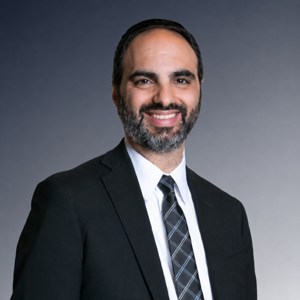
Living Emunah

Living Emunah

By Ashear, Rabbi DavidReligion & SpiritualityJudaism
Download on the App Store
  • Favorites

    27

    Followers

  • Typical duration

    6 min

    per episode

Based on Podcast App listening data

Living Emunah episodes

  • Nothing Is Too Small to Ask Hashem
    There is nothing too big to ask Hashem for, and there is nothing too small to ask Him for. Sometimes a person may feel that what he wants is too insignificant to "bother" Hashem about—but in truth, the opposite is true. When we turn to Hashem for even the smallest things, we demonstrate our belief that He is involved in every single detail of our lives. A woman shared that late one night, someone knocked on her door asking for tzedakah. She looked in her wallet and saw she barely had any cash, but she gave the man ten shekels. The next day, she went to the grocery store and bought many items. Without a car, she wondered how she would possibly carry everything home. She realized she didn't have enough cash left for a taxi. If she still had the ten shekels from the night before, it would have been enough—but she refused to regret doing a mitzvah. Instead, she turned to Hashem and asked for help. While she was paying, the customer ahead of her realized he had forgotten to pay for a melon. He asked her to add it to her credit card and offered to reimburse her in cash. She agreed. The cashier weighed the melon—it cost exactly ten shekels, the precise amount she needed for a taxi. A small request, a small solution, but a powerful reminder that Hashem listens. Another young woman recalled that when she was fifteen, she started listening to emunah classes and began involving Hashem in her daily life. Once, she and a friend wanted to put personalized photos on beach towels. They designed them, but the towels were too expensive. With the emunah they had built, they decided to pray to Hashem to lower the price by 50%. The next day, the price hadn't changed. They still really wanted the towels and didn't have much time before camp, so they ordered them anyway, continuing to pray for a price reduction. When the towels arrived, the company said there had been a slight error, and if they weren't satisfied, they could get replacements. A very small part of one picture had been cut off. The girls explained they wouldn't receive replacements in time and asked for a discount instead. The company responded by giving them a full refund. Just like that, their tefillah had been answered—they received the towels for free. Another story was told by a man named David. One evening, he stopped at a convenience store and saw a small display of toys. He decided to pick something up for his four-year-old son—something he had never done before—and chose a small toy police car. When he arrived home, his son was already asleep. He handed the car to his wife, telling her it was for their son. She was visibly shocked. She explained that earlier that day, their son had asked her about praying to Hashem. She told him that he could pray for whatever he wanted. He then said, "Hashem, could you please give me a toy car?" And now, his father came home with one that very night. The next day, when the boy received the car, he wasn't even surprised. His mother had told him Hashem listens, so he prayed—and Hashem answered. That was enough for him. We should all strive to have the emunah of a child: simple, pure, and full of trust. Hashem wants to hear our voices. He cherishes our prayers—whether they're for "big things" or the smallest everyday needs. Nothing is too small to ask for.
    5 min
  • Hidden Miracles and the Hand of Hashem
    The Gemara in Masechet Avodah Zarah tells a remarkable story about Rabbi Yehuda HaNasi, who was afflicted with severe intestinal pain. As a remedy, he required a particular apple cider that was produced only by idolaters. To ensure its kashrut—that it contained no wine—it needed to have been stored for seventy years. Naturally, Rabbi Yehuda was not in a position to wait that long. His attendants searched until they discovered a man who had an entire storeroom filled with seventy-year-old bottles of this cider. Rabbi Yehuda drank the cider and was cured. In response, he proclaimed: "Baruch HaMakom SheMasar Olamo LeShomrim" —Blessed is Hashem who entrusts His world to guardians. He praised Hashem for planting the idea in someone's mind to store that cider decades earlier, so that it would be ready at just the right moment. This story has a striking parallel in modern times. Recently, the American Air Force deployed fourteen bunker-buster bombs to destroy Iranian nuclear facilities that posed a threat to Israel. These were said to be the only bombs in the world that could penetrate the depths necessary to destroy the underground nuclear facility. These highly specialized bombs had never before been used in warfare. Developed about fifteen years ago, each bomb costs millions of dollars, and the aircraft capable of delivering them costs over $2 billion. These powerful weapons, designed and built long ago, had been waiting for the exact moment they would be used to protect Am Yisrael. Baruch HaMakom SheMasar Olamo LeShomrim. In the past week alone, we have witnessed numerous miracles—clear signs of Hashem's hand in our lives. A missile struck Soroka Hospital in Be'er Sheva, hitting the exact location of the internal medicine department. Yet miraculously, just the day before, the staff had worked with incredible urgency to evacuate all patients to an underground facility that had never before been used as a regular hospital unit. Only after everyone was safely relocated did the missile hit. What caused that sudden urgency? It was Hashem guiding their hearts. In Haifa, a Belzer family lived in an old building with no safe rooms and no bomb shelter. Sirens didn't sound in their area, but when they received a phone warning, they ran to the dining room and huddled under their table. Minutes later, their apartment took a direct hit. Half of it collapsed—but every family member, including small children, was rescued without a scratch. So many other miracles continue to emerge. Over 1,000 drones and more than 400 ballistic missiles were launched at Israel, and yet we were protected time and again. So many potential escalations could have taken place—Russia could have gotten involved, but Hashem kept them occupied with another war. China could have entered the conflict, but Hashem held them back. Baruch HaShem , the war has ended. May we always be zocher to recognize the loving hand of Hashem shielding His people from harm and orchestrating every detail of salvation—even decades in advance.
    5 min
  • Following the Cloud: Trusting Hashem Through Uncertainty
    In Parashat Beha'alotckha, the Torah devotes many pesukim to describing how the Jewish people followed Hashem's command throughout their travels in the desert. Again and again, the pesukim emphasize that they journeyed "al pi Hashem" and encamped "al pi Hashem" —by the word of Hashem. The Seforno explains that these pesukim are praising Bnei Yisrael in many ways for their remarkable emunah and trust. First, they were willing to encamp wherever the cloud of Hashem rested, even in barren, desolate places. They remained there as long as the cloud stayed, without moving to more comfortable or fertile areas. Second, at times they were camped in ideal locations—beautiful, spacious places that were perfect for them and their cattle—but when the cloud lifted shortly after, they packed up and left without hesitation. Third, there were times the cloud rested for just one night. They had barely unpacked, perhaps hadn't even set up their belongings completely, when morning came and the cloud signaled it was time to move again. Yet they followed it with full emunah , never questioning, never resisting. For forty years, they followed the cloud of Hashem without complaint. This unwavering loyalty is one explanation of what Hashem refers to in the pasuk: " זכרתי לך חסד נעורייך... לכתך אחרי במדבר " "I remember the kindness of your youth... your following Me into the desert" (Yirmiyahu 2:2). Hashem will always remember this faithfulness. The Ramban emphasizes how extraordinary this Emunah was. Imagine large families with small children, elderly grandparents, and all their belongings. After finally settling into their tents, they are told the next day it's time to move again. Or worse, remaining in an uncomfortable place for weeks, months, even years—all without questioning Hashem's plan. This was an act of great avodat Hashem , of complete submission and trust in Him. Today, many people are experiencing a modern version of this test. Due to the war, countless individuals are unable to fly or reach their desired destinations. Plans have been canceled, semachot delayed, families separated. Some have tried to leave or return to Israel and have encountered roadblocks, flight cancellations, or border issues. Others have driven for hours through neighboring countries only to be turned back. Some are missing, or will miss, close relatives' weddings. Both those making the weddings and those missing them now have a profound opportunity: to demonstrate unwavering emunah in Hashem's perfect plan. Every person is exactly where Hashem wants them to be. No one is "stuck." We are all placed . A person will board a flight the exact moment Hashem decides it is right. Of course, we make hishtadlut —we try. But the outcome is in Hashem's hands alone. And if a person can rise above the frustration and say with full heart, "I trust that I am exactly where Hashem wants me to be, and I accept this with love," —then he will soar to spiritual heights beyond what he could ever reach by getting on any plane. May Hashem give us all the strength to trust in Him completely, and may we merit to see true peace and tranquility-Amen
    4 min
  • Recognizing Hashem’s Hand in Our Victories
    One of the most difficult tests in life is when a person achieves something through effort, wisdom, and strength—and is then told not to attribute the success to himself, but to Hashem. Most people feel proud of their accomplishments, their clever strategies, or their brilliant ideas. But the pasuk reminds us כִּי הוּא הַנֹּתֵן לְךָ כֹּחַ לַעֲשׂוֹת חָיִל , and the Targum explains, that even our ideas—every single thought that passes through our minds—are gifts from Hashem. It's natural to feel proud after a major achievement, but it is up to each of us to pause and recognize that it was all from Hashem. So often, we fail to see the broader picture—how Hashem orchestrated every detail in advance, setting the stage for us to succeed in a way that appears seamless and "strategic." Recently, the world has witnessed Israel's remarkable military achievements, particularly in the face of Iranian threats. From eliminating key leaders and scientists to achieving aerial dominance, the successes have been astonishing. Add to that America's undetected, precision strikes on Iranian nuclear infrastructure, and one could easily fall into the trap of thinking it's all the result of human intelligence and power. But here, too, we must remember: " לא בחיל ולא בכח כי אם ברוחי אמר ה׳ " —victory does not come through strength or power, but through the spirit of Hashem. All wars are fought and won by Hashem— and only by Hashem . For decades, Israel has known about Iran's nuclear ambitions, yet was unable to act, as Iran lies over a thousand miles away. The logistics of such an operation seemed impossible. Israeli fighter jets could not pass through Jordan, Syria, or Iraq without being shot down. The southern route through Saudi Arabia was blocked, and the northern route through Turkey was a non-starter. But then Hashem changed everything. In December 2024, Syrian President Bashar al-Assad was overthrown, ending his family's 50-year regime. Hashem opened the Syrian skies. Jordan didn't just permit the use of its airspace—it actively helped shoot down Iranian missiles during the April attack, when Iran launched 300 ballistic missiles toward Israel. Iraq no longer has the capabilities to shoot down planes. Every obstacle was removed—by Hashem. Iran had feared this moment. For years, they armed Hezbollah and Hamas so that if Israel ever struck, they could retaliate from multiple fronts. But over the past year, Hashem gave Israel the strength and intelligence to neutralize the missile capabilities of both Hezbollah and Hamas. And when the moment came to strike Iran, there was no one left to respond. We should be proud of Israel's accomplishments—with the clear understanding that they are Hashem's accomplishments . America's support? Also orchestrated by Hashem, as it says: " לב מלכים ביד ה׳ " —the hearts of kings and leaders are in the hands of Hashem. Hashem can eliminate our enemies without a single soldier taking action. We saw this just a year ago, when the president of Iran and other officials were killed in a helicopter crash—without any military involvement. We saw it when a Turkish legislator who was publicly condemning Israel suddenly collapsed and died of a heart attack. " ה׳ איש מלחמה " —Hashem is a Man of War. He fights—and wins—our battles. The current operation has been referred to as " כִּלְבִיא יָקוּם " , and the Chatam Sofer once explained the word כִּלְבִיא spells out the passuk : כִּ י לֹ א בְ כֹחַ יִ גְבַּר אִ ישׁ - it is not by human strength that wars are won, but through Hashem alone. May Hashem continue to protect His people and bring the final geulah with Mashiach speedily in our days. Amen.
    6 min
  • Parashat Shelach: The Test That Began Centuries Earlier
    The pasuk in this week's Parashat Shelach tells us that the Meraglim (spies) came to a place called נחל אשכול , the Valley of the Cluster, and there they removed a massive cluster of grapes. This enormous cluster was later used to frighten the Jewish people, as the spies described the giants who inhabited the land and implied that Bnei Yisrael had no chance of conquering it. Then the pasuk says the place was named אשכול —"Cluster"—because of the cluster they took. But the Sefer Minchat Ani asks an important question: it seems the place was already called נחל אשכול before the cluster was taken, as the Torah says they arrived at the Valley of Eshkol before picking the grapes. The Midrash resolves this by explaining that the place was already called Eshkol, all the way back to the time of Avraham Avinu. The Midrash quotes the pasuk " מגיד מראשית אחרית "—Hashem reveals the end from the beginning—and teaches us that Hashem sees the past, present, and future all at once. One of Avraham's close companions was named Eshkol, and Hashem placed that name in the minds of Eshkol's parents because of the future cluster that would be taken by the Meraglim in that very location. But this raises an obvious question: why? Why would Hashem cause a man to be named "Eshkol" because of an event that would occur hundreds of years later? The Minchat Ani brings another Midrash that sheds light on this. When Avraham was commanded to perform a brit milah , he consulted his three friends. Aner told him not to do it—he was too old to harm himself. Eshkol warned that if he did it, he would be weakened and vulnerable to attack. But the third friend, Mamre, encouraged him, saying: "The same Hashem who saved you from the fiery furnace, from the four kings, from famine—He is now commanding you. He will protect you." This powerful moment became a lesson passed down through generations. Every Jewish child would grow up learning how Avraham courageously performed the brit milah , how Mamre showed emunah , and how Aner and Eshkol doubted. And now, centuries later, that same test returned. The Meraglim echoed the voices of Aner and Eshkol, casting doubt on Hashem's power to bring them safely into Eretz Yisrael. They cut the Eshkol—the very cluster that symbolized the mistake of the man Eshkol from generations before. And just like Mamre, Caleb stood up and proclaimed his emunah , telling the people that Hashem, who had always protected them, would continue to do so. Hashem arranged it all—placing the Meraglim at the same site as Eshkol's legacy, giving them a chance to correct the mistake of the past. This wasn't random. Their test had been developing for centuries. Nothing in this world happens by chance. Every test a person faces is custom-designed by Hashem, planned with precision before that person even enters the world. We have no idea how much our actions matter, how intentional each situation is, and how carefully Hashem prepares our challenges. In the case of the Meraglim , Hashem gave them every opportunity to succeed. He placed them at Nachal Eshkol , at the exact site where history had already taught the lesson they needed to learn. But they failed. Still, the message for us remains: Tests are given to make us great. Hashem not only gives us challenges, but also provides us with the strength, wisdom, and circumstances to overcome them. Every test we face is hand-tailored to help us grow, elevate ourselves, and earn eternal reward. If we internalize this, we'll face our own tests with clarity and strength. And with Hashem's help, we'll overcome them—and fulfill our unique mission in this world. Shabbat Shalom.
    6 min
  • Trusting Hashem to Guard Our Children
    In a world filled with potential dangers, it's only natural for parents to worry about their children when they leave the house. Some are overwhelmed by fear, constantly imagining the worst, and this robs them of peace of mind. But a parent must recognize a fundamental truth: even when a child is physically near them, it is not the parent who provides protection—it is Hashem. He watches over us, and He watches over our children. And if, chas v'shalom , harm ever does befall a child, we believe with emunah sheleimah that it would have happened regardless of where the child was or who was with them. It is never the circumstances themselves that bring about outcomes. Everything happens only through the word and will of Hashem. Every day, there are countless unseen miracles where Hashem protects children—sometimes found in naïvely dangerous situations, yet guarded from harm. Knowing this should bring us calm: wherever our children are, Hashem is with them. As it says in Tehillim: " הנה לא ינום ולא יישן שומר ישראל " —Behold, the Guardian of Israel neither slumbers nor sleeps. A Rebbe in a yeshivah shared a remarkable story. He had a student with a severe allergy to milk products. The Rebbe admitted that it was impossible to personally guarantee that not even a crumb of dairy would reach this child—but he did his best and placed his trust in Hashem, the true Guardian. Still, the Rebbe took every precaution. Any student sitting near the allergic boy during lunch was required to notify him if they brought dairy. Most of the time, those nearby were considerate and only brought parve food. However, mistakes do happen. One day, a boy who sat next to him noticed he had dairy and immediately informed the Rebbe . The Rebbe called the allergic boy over to sit beside him instead. When the boy opened his lunch, the Rebbe noticed what looked like an American cheese sandwich. The boy was about to take a bite when the Rebbe quickly stopped him. The boy insisted, "It must be parve. My parents know not to send me dairy." But the Rebbe , not taking any chances, called the boy's home. The mother was alarmed. She said there may have been a terrible mistake—her other son had requested a cheese sandwich that morning, and it was possible the lunch bags had been switched. Sure enough, the sandwich contained real cheese. Baruch Hashem , on the very day the allergic boy accidentally brought a cheese sandwich, his friend also "accidentaly" brought dairy and reported it, triggering the Rebbe to call the allergic boy over—averting a potentially life-threatening situation. It was clearly the hand of Hashem. Hashem is our constant protector. He knows every danger and precisely how to guard us from it. Another story illustrates this beautifully. A woman shared that one evening, about a half hour before sunset, she and her husband decided to go for a walk in a forest near their home. While walking, they encountered three little boys who approached them, asking how to get back to the road. After speaking with them, the couple realized these were three six-year-old boys who were completely lost and had no idea how to exit the forest. They escorted them safely back and then called one of the mothers to let her know her children were with them. The mother was deeply grateful. She had been driving around searching for them in a panic. It was min hashamayim that this couple had decided—at that exact moment—to go for a walk. Hashem had arranged for His messengers to find those boys and lead them to safety. As it says: " כי מלאכיו יצוה לך לשמרך בכל דרכיך " —For He will command His angels concerning you, to guard you in all your ways. It is not our job to live in constant fear. Our responsibility is to pray, to trust in Hashem, and to remember that no matter where our children—and we—are, we are always under His watchful care.
    5 min
  • Trusting Hashem with Our Expenses
    Life can get very expensive—whether it's housing costs, tuition, weddings, bar mitzvahs, or even just the basic day-to-day expenses like food and clothing. When someone doesn't have the money available to cover these costs, it can become a source of great stress. Fortunately for us, Hashem is fully aware of every expense we face, and He is the One in charge of covering them. If He deems it best for us to afford these costs through our own income, He will send the money in the way He sees fit. And if He decides that we must rely on others for help, we must believe that this too is what's best for us. The key is to recognize that whatever happens, it's Hashem orchestrating it for our benefit. Sometimes, people must live in less-than-ideal conditions for a while. But when Hashem determines it's time for a change, He opens new doors. He can give someone a bigger home or a better location—without them even needing to figure out how to make it happen. A rabbi shared a personal story. Every summer, he works away from home at two jobs—leading a minyan and running a day camp. Each year, beginning in January, he starts searching for a rental near his summer responsibilities. In previous years, he and his family lived in small, distant basement apartments—sometimes more than a 30-minute drive away. One year, he split the cost of a house rental with his brother in the ideal location. That summer, every morning, an elderly woman walked past their rental home as she exercised. The rabbi's daughter, waiting for her camp bus, would always greet the woman with a polite "hello." Later that summer, the woman told the rabbi she was planning to move to Florida and would be selling her house right up the block. She said she wasn't interested in maximizing profit—she just wanted a nice family to live in it. And because of the way his daughter greeted her every day, she wanted to offer it to them first. She promised to reach out again when she was ready to sell. A few months later, she called the rabbi and told him she had freshly painted the home, renovated two bathrooms, and even installed a brand-new roof. She was ready for them to come see it. The rabbi and his wife came to visit. After showing them around, the woman asked what they could afford. They offered less than half the market value—and she gladly accepted. In the end, they purchased the home with a down payment of just $57,000. The woman was genuinely happy to help them. It was clear this was all from Hashem. When He decided it was time for the rabbi and his growing family to have their own home, He placed it right in their hands. Another man told me that he had once been very successful financially, but fell on hard times last year. This year, with many large expenses looming, he had no idea how he was going to pay for them. His business was not generating the necessary income, and the pressure was building. Then, one day, a check arrived in the mail—completely out of the blue. It was from the government, with an explanation that it was a refund for tax overpayments made over the past ten years. The amount? $250,000—the exact sum he needed to cover his upcoming expenses. And after all his bills were paid, and life returned to normal, his business was still underperforming. Then he received yet another unexpected check—this time for over $9,000—from an old investment he had long forgotten about. Hashem has infinite ways to provide. As it says in the Torah: " ואכלת ושבעת וברכת את ה' אלוקיך על הארץ הטובה אשר נתן לך " Hashem provides for us fully—so we may eat, be satisfied, and bless Him for it. We must internalize this truth: Hashem knows every single one of our expenses, and He will help us pay for them in the way that is best for us. Whether through work, through people, or through seemingly miraculous events, Hashem is always the One covering the cost.

    5 min
  • Achenu Kol Beit Yisrael – Feeling the Pain of Our Brothers
    אֲחֵינוּ כָּל בֵּית יִשְׂרָאֵל, הַנְּתוּנִים בַּצָּרָה וּבַשִּׁבְיָה, הַמָּקוֹם יְרַחֵם עֲלֵיהֶם We say this heartfelt tefillah, asking Hashem to have mercy upon all of our brothers who are currently in danger. A question has been asked: Why do we say "Achenu kol Beit Yisrael" — all of the Jewish people? It seems to imply that every Jew is in danger, even though the threat may be limited to a specific location or group. The answer is that when one Jew is in pain , every Jew feels that pain. This is the strength of our nation — a people bound together by heart and soul. And it is in that merit — that we feel the suffering of our fellow Jews as our own — that we pray for הַמָּקוֹם יְרַחֵם עֲלֵיהֶם , that Hashem will indeed have mercy upon them. During World War I, the Chafetz Chaim was seen sleeping on a hard bench, using his hands as a pillow. Concerned for his health, his relatives asked him why he wouldn't sleep in a bed. He replied, "How can I sleep comfortably when thousands of my brothers are in danger, gripped with fear and uncertainty?" We are not being asked to sleep on a hard bench. But we must recognize that the deeds and prayers we offer on behalf of our brothers and sisters are the very zechuyot — the merits — that bring salvation. The pasuk in Parashat Beha'alotekha tells us: וַהֲיָה אִם־תֵּצֵא מִלְחָמָה בְּאַרְצְכֶם... וַהֲרֵעֹתֶם בַּחֲצֹצְרוֹת וְנִזְכַּרְתֶּם לִפְנֵי ה' אֱלֹקֵיכֶם וְנוֹשַׁעְתֶּם מֵאֹיְבֵיכֶם "When you go out to war in your land… you shall sound the trumpets, and you will be remembered before Hashem your God, and you will be saved from your enemies." When we do something that makes us remembered favorably to Hashem then Hashem saves us from our enemies. We have already seen extraordinary siyata dishmaya in the miracles that have occurred this past year. Hashem can destroy all of our enemies in a moment. He can ensure that not a single additional life is lost. But it is our tefillot and ma'asim tovim that will determine that outcome. We know how much Hashem appreciates every kabbalah that we make and sometimes He shows us that right away . A woman shared that she was going through a difficult time and wanted to take on something meaningful. One night, while folding laundry, she decided to cut her wig shorter for the sake of modesty — something she found very hard to do. At the same time, she decided to make her chore time more meaningful by listening to a Torah shiur. She randomly picked a class. In the middle of the shiur, the rabbi began to speak about the power of accepting kabbalot. He explained how something that seems small to us is actually huge in the eyes of Heaven — and he gave the exact example of a woman cutting her wig for modesty. Out of thousands of possible shiurim, she had chosen the one that perfectly reflected her personal decision. Hashem was clearly showing her how valued her efforts were. Another woman had been trying to get married for many years. She recently decided to take on something new as a zechut. She calculated how many Shabbatot remained before Rosh Hashanah and decided that she would treat each one like the queen it is. She committed to buying a new outfit for each Shabbat — without looking at the price — solely to honor Shabbat. She spent over $5,000 — a huge amount for someone living paycheck to paycheck. Just four days later, she received a check for $5,772 for work she had done in the past and didn't know if she would ever be paid for. It was as if Hashem was saying, "I see what you're doing, and I'm with you." Hashem loves every step we take to come closer to Him. We may not always see the results immediately, but we know with certainty that every tefillah , every perek of Tehillim , every act of growth , brings salvation — both for ourselves and for all of Am Yisrael . May Hashem fulfill our tefillah: וְיוֹצִיאֵם מִצָּרָה לִרְוָחָה וּמֵאֲפֵלָה לְאוֹרָה וּמִשִּׁעְבּוּד לִגְאֻלָּה, הַשְׁתָּא בַּעֲגָלָא וּבִזְמַן קָרִיב And have compassion on all our brothers and sisters.
    6 min
  • Parashat Beha'alotecha: Your Job
    Rashi writes at the beginning of this week's parasha, Beha'alotecha , when Aharon saw all of the Nasi'im bringing big donations to the inauguration of the Mishkan, חלשה דעתו – he felt bad that he did not have a part in them. Hashem told Aharon שלך גדול משלהם – your portion is better than theirs. Your job will be to light the Menorah and prepare the wicks . How is that better? Some of the ba'aleh mussar explain the give and take as follows. Aharon saw how others were serving Hashem and he felt bad that he couldn't serve Hashem like they were. Hashem told Aharon, I don't get impressed by how big a donation is or by what it consists of. What impresses Hashem is that each person does the job that He wants them to do – שלך גדולה – you have to consider your job the greatest job of all because only you could do it and nobody else could. Sometimes we look around at what others are accomplishing and we feel bad that we aren't doing the same. Everybody has a different job in this world to do. It does not matter what others are doing. What matters is if we are doing what we are capable of doing. Hashem loves each and every person's avodah , not because of what it is but because of who it is coming from. Even if someone has been underachieving in the past, Hashem is waiting, kavayachol, with open arms to once again become close with him. Whatever we do He adores and when we want to get closer, Hashem helps us do it. Rabbi Yechiel Spero told a story about a young couple who moved to Baltimore. On their first Shabbat as newlyweds, the bride Sarah escorted her husband to shul on Friday night. As she was sitting in the ladies' section, she noticed it was messy and decided to clean it up and organize it. While she was putting away the siddurim on the bookshelf, she saw a tefillin bag buried underneath a bunch of objects. Sarah took it and put it on a noticeable shelf so the one who it belonged to would be easily able to find it. After she finished cleaning, she admired what she did and decided to come back and do it every week. She noticed week after week the tefillin were always in that spot she put them in. She came back on a weeknight and took a picture of the bag and put up a sign with her number saying, whoever knows whose tefillin these are should please call her. She then took the tefillin to her house for safekeeping. Weeks later, she got a phone call from a woman who said she recognized the name on the bag. She was almost positive that it belonged to her old neighbor's son. That family had moved to Israel five years earlier. Although she hadn't spoken to them in years, she did have their phone number and happily gave it to Sarah. When Sarah called, the phone rang twice and then was declined, so she left a message. Two minutes later, Sarah's phone rang - it was the woman in Israel. After Sarah told her about her experience with the tefillin , she asked this woman if by any chance those tefillin belonged to her son. She heard silence on the line and then some muffled cries. Then the woman began to speak. "My son had gone off the derech 5 years ago. He struggled terribly and stopped wearing his tefillin . Our relationship has been extremely strained. We speak once or twice a year when he needs something. Today, my son called me and said, 'Mom, I want to come home. I am going to start praying again. Do you know where my tefillin are?' While he was asking me that question, your phone number came across my screen. I told him I would find them. Then I heard your message saying you had them." Hashem loves our avodah so much. Even a boy who was off the derech for 5 years, when he wanted to put his tefillin on again, Hashem orchestrated the events with amazing hashgacha to have them ready and waiting at that exact moment. Shabbat Shalom.
    0 min
  • Every Step Is Guided
    The pasuk in this week's parashah, Beha'alotekha , says: עַל־פִּי ה' יַחֲנוּ וְעַל־פִּי ה' יִסָּעוּ "The Jewish people encamped by the word of Hashem and traveled by the word of Hashem." The Torah is teaching us that even the simplest actions — like stopping and starting — were done only in accordance with Hashem's will. This is a lesson we must constantly remind ourselves. A person may make what seems to be the most logical, responsible decision, only to see things turn out entirely differently than expected. At times, our efforts lead us to dead ends. Other times, what initially appears to be a setback turns out to be the best possible direction. Life is full of twists and turns — challenges that shake our peace of mind, periods of hard work with little visible result, and moments of great success that come with almost no effort. But the common denominator in every situation is that it is all directed by the same loving and all-knowing Hashem. He is always leading each person on the path that is uniquely best for them. Sometimes, we feel like Hashem is making things unnecessarily hard. We pray for something simple — and don't even receive that. We wonder, "Is that too much to ask?" If we could internalize that even those denials come from Hashem's love, we would experience a deep peace of mind. We would soar to great spiritual heights with the precious gift of emunah — trusting in Hashem's plan. One woman shared a story that strengthened her emunah in a very deep way. She always loved roses. When she and her family bought their first home, she was thrilled to find a beautiful rose bush growing along the side of the house. A few years later, her son was diagnosed with a serious illness that had no known cure. She herself was also ill, in pain, and going through many other difficulties. One particularly difficult day, she stepped outside for fresh air and looked at her beloved rose bush. She noticed two weeds growing on either side of it. She tried to pull them out, but they were too deep. Her son tried too, but the roots were so strong that the entire ground around the bush started to come up. They stopped, but it was too late. The rose bush had been uprooted, and it seemed certain it would die. The woman turned her eyes upward and said, "Hashem, I understand that You know what's best. I accept the suffering and the pain. But why can't I at least have the roses that I love? Is that too much to ask for?" Years passed. The weeds she had tried to remove grew into a tall tree that eventually reached the second floor of their home. At one point, her son was prescribed an experimental medication that caused severe side effects. Just minutes after taking it, he ran wildly across the room and ended up dangling out the second-floor window by his ankles. She pulled him back in and shut the window, but he quickly ran into his sister's room and locked the door. Moments later, she heard her daughter scream, "Ma! He just fell out the window!" Terrified, she raced outside. To her astonishment, she saw her son standing there — alive, with only a small scratch. What had happened? He had grabbed onto that very weed that had once replaced her roses. Because it was still young and flexible, it bent under his weight, lowering him gently to the ground before bouncing back upright. In the moment, she had cried to Hashem for taking away her rose bush. But little did she know that He was already planting her salvation years in advance. Today, whenever she finds herself questioning why things aren't going her way, she thinks of those weeds — and remembers that Hashem is in control, always doing what is best.
    5 min

About Living Emunah

From the publisher's feed

A Daily ethical teaching by Rabbi David Ashear

Best of Living Emunah

Ranked by our users in the last 21 days

More shows like Living Emunah

The Rabbi Sacks Legacy by Rabbi Lord Jonathan Sacks

The Rabbi Sacks Legacy

557 Listeners

The Israel Guys by The Israel Guys

The Israel Guys

308 Listeners

Jewish Stories to Inspire: Motivational & Spiritual Stories Based on the Torah's Ethics, Values and Wisdom by Stories to Inspire

Jewish Stories to Inspire: Motivational & Spiritual Stories Based on the Torah's Ethics, Values and Wisdom

186 Listeners

Living with Emunah by Rabbi Efrem Goldberg

Living with Emunah

110 Listeners

Meaningful People by Meaningful Minute

Meaningful People

1,987 Listeners

From the Inside Out: With Rivkah Krinsky and Eda Schottenstein by Rivkah and Eda

From the Inside Out: With Rivkah Krinsky and Eda Schottenstein

263 Listeners

The Q & A with Rabbi Breitowitz Podcast by Rabbi Dr Yitzchak Breitowitz

The Q & A with Rabbi Breitowitz Podcast

234 Listeners

Call Me Back - with Dan Senor by Ark Media

Call Me Back - with Dan Senor

3,197 Listeners

The Times of Israel Daily Briefing by The Times of Israel

The Times of Israel Daily Briefing

1,070 Listeners

Kosher Money by Living Lchaim

Kosher Money

821 Listeners

History for the Curious - The Jewish History Podcast by JLE

History for the Curious - The Jewish History Podcast

232 Listeners

Gedale Fenster - Podcast by Gedale Fenster - Podcast

Gedale Fenster - Podcast

399 Listeners

Honestly with Bari Weiss by The Free Press

Honestly with Bari Weiss

8,473 Listeners

Inspiration for the Nation with Yaakov Langer by Living Lchaim

Inspiration for the Nation with Yaakov Langer

1,120 Listeners

Stories Of Hope With Tzipora Grodko by Meaningful Minute

Stories Of Hope With Tzipora Grodko

324 Listeners