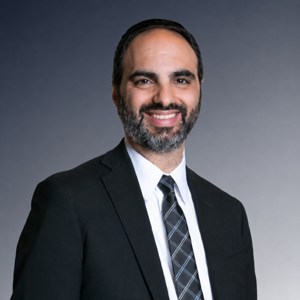
Living Emunah

Living Emunah

By Ashear, Rabbi DavidReligion & SpiritualityJudaism
Download on the App Store
  • Favorites

    27

    Followers

  • Typical duration

    6 min

    per episode

Based on Podcast App listening data

Living Emunah episodes

  • In Hashem’s Hands: The Torah Perspective on Seeking Medical Treatment
    Dealing with doctor's appointments and hospitals can be a very tedious and stressful process. Trying to find the right doctor or the right treatment, spending hours in traffic and waiting rooms—sometimes even weeks are spent trying a certain therapy, only for it to make things worse. The Chazon Ish wrote in a letter that it is a mitzvah to seek medical treatment, just like any other mitzvah. A person is obligated to take care of his health through natural means, and by doing so, he is fulfilling the will of Hashem. Therefore, when seeking medical treatment, one should feel as though he is performing any other mitzvah. He should even say לשם יחוד . He should feel that he is growing spiritually and keep in mind that he is doing this because Hashem commanded in the Torah: " ונשמרתם מאד לנפשותיכם " We are obligated to make hishtadlut for our health, to such an extent that even the sanctity of Shabbat is overridden in cases of danger. As the pasuk says: " וחי בהם " —You shall live by them. However, the only concern when engaging in hishtadlut is if a person begins to believe that the doctor is the one in control. We must never think that the doctor determines whether a person will actually be healed. That decision is entirely up to Hashem. If someone is meant to be healed, Hashem will grant the doctor the heavenly help needed to accomplish it. But Hashem doesn't need a doctor. He can heal a person with His words alone, as it says: " ישלח דברו וירפאם " Therefore, no doctor should ever say there is no hope. He can say that there is no known cure available at the moment, but with tefillah , Hashem can change anything. Hashem is the One who enables doctors to perform, and so our primary hishtadlut is always with Him. We can always be healed, no matter where we are or who is—or isn't—available to treat us. There is a man who shared the following story. He was in Ukraine on an outreach program, working to bring Jews closer to Torah and mitzvot. One morning, he woke up with terrible pain on the side of his head. A local doctor told him that the uppermost vertebra in his spine had moved out of place. The doctor added that surgery would most likely be required to fix it, but the procedure carried a very high risk of damaging nerves that could leave him unable to walk. The man immediately called his father-in-law, who was well-connected in the field of medicine. He described his pain and asked for urgent help. His father-in-law said he knew of an excellent doctor in Ramat Gan and would reach out to him. A short while later, the father-in-law called back and said, "The doctor from Ramat Gan is flying to your location tomorrow. He's going to treat you." The man couldn't believe it. How could this doctor be coming all the way to Ukraine? The next day, the doctor arrived. His treatment was almost miraculously quick and simple. No surgery was needed, and the problem was resolved. At the end of the visit, the man asked how much he owed. The doctor replied, "For my time, travel, and the procedure, it would be a large sum. But you don't owe anything. Two wealthy people who live nearby brought me here to treat them. My flight came in early enough that I had time to see you before my appointments. Hashem arranged for you to get top care at no cost. So the thanks go to Him." It was truly amazing. Hashem is the One in charge of every person's health. He sends the messengers He chooses to heal people, and He determines exactly when and how that healing takes place. We are obligated to take care of our health and to seek out the best messengers—but we must never forget that it is always only in the hands of Hashem.
    6 min
  • Growing in Emunah One Step at a Time
    We have learned time and time again that everything that happens in our lives comes directly from Hashem. There is no such thing as an accident or a coincidence. Everything is carefully planned and orchestrated exactly as it is meant to be. We have also been taught repeatedly that whatever Hashem does is the best thing for us. If we truly internalize these two principles—that Hashem controls everything, and that everything He does is for our good—we would be able to live with constant happiness, regardless of our circumstances. We've studied how the great Rabbis in Jewish history responded to their trials with unwavering emunah. They faced unimaginable challenges and still clung to their faith with strength and clarity. Although we recognize this as the ideal way to respond, we often find it incredibly difficult to emulate. When something painful or disappointing happens, our initial reaction may be one of sadness or frustration. We try to strengthen our emunah, and eventually we may begin to accept the situation. With further effort, we might even reach a level of accepting it with love and joy. But often we wonder: if we failed in the beginning and only came around much later, does it still matter? Is the struggle worth anything if we keep falling and responding the wrong way? I once heard a story that Rabbi Ephraim Wachsman shared in the name of Rabbi Shlomo Miller that offers powerful chizuk and perspective. The story took place in Yerushalayim after World War I, a time of severe starvation. In the Etz Chaim cheder, a rebbi wanted to bring a bit of joy to his students. On Rosh Chodesh, he went out of his way to get a cake and gave each student a slice to celebrate the day. The children, who were starving, were overjoyed. One boy, however, didn't eat his portion. Instead, he carefully wrapped it in a napkin. He loved his father dearly and knew how hungry he must be, so he decided to give the cake to him as a gift. But when recess came, he stared at the cake and couldn't control himself. He took one bite. Ashamed, he quickly wrapped it back up. Later, around lunchtime, the temptation overwhelmed him again—and he took a second bite. That day, the children were dismissed early. The boy ran home, cake in hand. He entered the house and said, "Daddy, Daddy, I brought you a present for Rosh Chodesh!" and handed his father the napkin-wrapped cake. But as he handed it over, he looked down in shame, realizing his father would see the bite marks. His father opened the napkin, saw the partially eaten cake, and looked at his son's face. Then he said: "My precious child, I see from these two bites just how hard it was for you to give me this gift. You struggled, yet you still gave it to me. That shows how much you truly love me. The bite marks are part of the beauty of the gift." The same can be said of our spiritual struggles. When a person wrestles with his challenges and still manages, eventually, to do what Hashem wants—even after failing along the way—it shows deep love for Hashem. The effort, the perseverance, the refusal to give up, all elevate the mitzvah and make it even more meaningful. Even if someone doesn't respond right away with complete emunah, the ongoing work to reach that place is a beautiful and treasured avodah. Hashem values that journey immensely. He is proud of the person who keeps trying, who keeps pushing, who keeps believing. We must never underestimate the value of any step forward in emunah. Every level we reach, no matter how delayed or difficult, is infinitely precious in Hashem's eyes.

    5 min
  • Struggles That Count: Finding Strength in Doing What's Right
    The struggles we face in trying to keep the Torah and mitzvot are incredibly precious to Hashem. In fact, they are the very reason we were placed in this world. When we have to struggle to do what's right, the mitzvah we perform becomes infinitely more meaningful. At times, we might wonder, "Doesn't Hashem want me to do this? So why is it so hard?" The answer is that of courseHashem wants us to do His will, and He often makes it challenging so that we can earn even greater reward through our effort. These difficulties are not obstacles; they are expressions of Hashem's love. When we view our tests this way, it becomes easier to rise above them. One woman, who had grown tremendously along with her husband and children, was preparing for her firstborn son's bar mitzvah. The family she is raising looks very different from the families she and her husband came from. She always tries to please everyone, so the pressure of making the event work for all sides weighed heavily on her. She prayed to Hashem to give her the strength to do what she knew was right — and to do it with joy. That morning, her young daughter had a school play. Her role was to be a bat kol , a heavenly voice, and she repeated the same phrase over and over: Stay strong. It's just a test. Do what's right. Hashem will be proud of you. Sitting in the audience, the woman was moved to tears. Those words felt like they were coming directly from Hashem. They gave her the strength and clarity she needed, and that night she celebrated the bar mitzvah in the way she believed would truly make Hashem proud. When a person sacrifices so much to fulfill a mitzvah, then when something unpredictable happens, Hashem often sends hidden help to ensure they succeed. A rabbi in Israel gives a daily Daf Yomi class with nearly 30 participants. He is extremely careful never to miss a session — they learn even during the most challenging times of the year. When he travels, he always arranges a substitute well in advance. Recently, on Shabbat Parashiyot Tazria/Metzora, he had to be out of town for a simchah and arranged a replacement. On Sunday morning, he asked the substitute how the class went. The man admitted — to the rabbi's shock — that he had prepared but completely forgot to show up. Worried, the rabbi asked one of the regular participants what happened. The man said they waited a long time for the replacement, and then a rabbi who teaches alef-bet in the local yeshiva walked in. They joked, "Here's the rabbi who'll give today's daf!" The alef-bet teacher asked which daf they were up to, and they told him: the first page of Masechet Shevuot. He sat down and proceeded to teach the entire daf — completely by heart. The group was astonished. The teacher explained that this was the only daf in all of Shas he had memorized — he had reviewed it 30 times. Out of more than 2,700 pages, this was the only one he could have taught without preparation. The Rabbi who leads this daff shiur is so careful to never miss. When an unexpected obstacle arose Hashem gave heavenly assistance. He prepared the perfect substitute in advance, ensuring the shiur would not be missed. Another woman had taken on the commitment of reciting Nishmat for 40 days, always at the same time so she wouldn't forget. One day, she had time off and went on a family trip. Before leaving, she grabbed a siddur — just in case someone might need it to say Birkat Hamazon . Later, when her alarm reminded her to say Nishmat , she panicked — she didn't have the specific booklet she usually used to say Nishmat with. Then she remembered: she had brought the siddur. It became clear that Hashem had orchestrated her grabbing that siddur so she wouldn't miss a day of her commitment. The challenges we face in doing mitzvot are meant to elevate us. And sometimes, when the situation is beyond our control, Hashem sends His help — if we've done our best to uphold our part. When we show dedication and care, Hashem responds in kind, guiding and supporting us in ways we might never expect.
    6 min
  • Parashat Naso-Hashem in Every Detail
    At the end of this week's Parashat Naso , the Torah goes into great detail describing the donations brought by the Nesi'im to inaugurate the Mishkan. Remarkably, each Nasi brought the exact same offering, yet the Torah repeats the full list of items again and again—spanning about 56 pesukim . Why such repetition? The Torah is teaching us a profound lesson: Hashem treasures the efforts of every individual . Even when people perform a mitzvah as part of a group, Hashem values the actions of each person separately. In a shul, there might be hundreds of people reciting the same words, but to Hashem, every word uttered by each person is uniquely precious. There is no such thing as Hashem getting "bored" of repetition. He cherishes everything we say and everything we do—every tefillah, every act of kindness, every mitzvah. The same applies when we experience His presence in our lives. Even when similar moments of hashgachah peratit repeat, each one feels new and meaningful. We're often moved by others' stories of hashgachah , and they awaken in us a desire to see Hashem's hand in our own lives too. Sometimes, we think: Those stories are inspiring, but they never happen to me. Yet we are encouraged to always hope and pray that they do. About a month ago, a story circulated about a chatan who wished to feel his late father's presence at his wedding. Miraculously, around that time, someone from Israel arrived in New York with a letter that the chatan's father had written decades earlier. Through an incredible sequence of events, the letter ended up in the hands of this chatan —dated with the exact date of his wedding. The letter, addressed to a chatan on his wedding day, was written by his father years earlier on that very same Hebrew date. The message felt as though it had come directly from his father, offering blessings from shamayim . This story was shared at a siyyum on Masechet Bava Metzia . In the crowd sat a man named *Yaakov. Hearing the story, he silently wished that he too could receive something from his late father, who had passed away over 20 years ago. The very next day, as Yaakov opened his mail, he noticed an envelope that looked like another routine request. But inside, to his astonishment, was a handwritten letter—written by his father 50 years earlier to a close friend. That friend had just discovered the letter while cleaning for Pesach and thought it would be meaningful to send it to the son of his old friend. Yaakov was overwhelmed. He couldn't stop reading the letter. As he reached the bottom, he noticed a few words written in the opposite direction—a postscript from his father asking his friend where he was up to in Masechet Bava Metzia . Yaakov was stunned. He had just returned from a siyyum on Bava Metzia , where he had wished for a message from his father. Still in disbelief, Yaakov went to his sefarim shelf and opened his Gemara Bava Metzia . Inside was a sticky note marking that he still had to complete pages 50 through 54. It was as if his father was reminding him: Your siyyum isn't complete yet—finish it properly. In that moment, he felt a powerful connection, a personal hashgachah that touched his soul. Yes, the stories we hear really can happen to us. Hashem treasures everything we do, and we are uplifted when we recognize His presence in our lives. May we always feel close to Hashem. May we always sense His guidance. And may we continue to be inspired by the miracles—big and small—that surround us every day. Shabbat Shalom.
    5 min
  • The Power of Tefillah
    The story is told that on one Erev Rosh Hashanah, Rav Bunim of Peshischa came to his Rebbe, the Chozeh of Lublin, to receive a berachah. However, he noticed that the Chozeh was hesitant. At the time, Rav Bunim had a successful business, but the Chozeh revealed to him that he had seen a decree in Heaven that during the coming year, Rav Bunim would lose all of his parnassah. On Yom Kippur, Rav Bunim poured out his heart in tefillah, with sincere tears and deep emotion. Though his business later faced serious challenges and was nearly shut down, not only was it saved — his parnassah actually doubled. When Rav Bunim returned to the Chozeh on Erev Pesach, the Rebbe greeted him warmly and told him he knew with certainty that Rav Bunim's tefillah on Yom Kippur had shaken the heavens and changed the decree from hardship to great blessing. This story reminds us that our tefillot can do wonders, but only if we truly believe in their power. The Nefesh Shimshon explains that when Avraham Avinu established the tefillah of Shacharit, he didn't merely create a morning prayer; he infused it with his own spiritual energy and power. Every time we pray Shacharit, we do so with the merit and spiritual momentum of Avraham Avinu behind us. The same is true for Yitzchak Avinu, who established Minchah, and Yaakov Avinu, who established Arbit. These tefillot were not only composed — they were charged with the deepest essence of the Avot, and that strength continues to support our prayers today. Similarly, every time a person opens a Tehillim, they are not just reading words on a page — they are connecting to the neshama of David HaMelech. Each word of Tehillim is imbued with his spiritual strength, his longing, his struggles, and his closeness to Hashem. Hashem is already close to us, waiting to hear our every word. But now we understand that our tefillot are not coming from us alone — they are carried by the koach of those who established them. Chazal teach us that there is special power in a tefillah that comes with kavanah and tears. When we realize just how valuable our prayers are and how much they can accomplish, we gain new strength and motivation to pray with deeper emotion and sincerity. One woman shared her personal experience: she had been struggling with shidduchim for years. The suggestions that came her way were few and far between, and none of them seemed right. Still, she prayed daily to Hashem to send her the right zivug. What kept her emotionally afloat was the fact that she had good friends that she was close to, and then one day out of nowhere, one of her closest friends who had gotten married told her she would no longer be able to continue their relationship. This news was devastating to her. She spoke to this friend every day. She was her lifeline of support. Shortly afterward, she traveled to Eretz Yisrael. Before returning home, she went to the Kotel to pray. Instead of complaining and bemoaning her fate, she decided to channel all of her pain and emotion into the most heartfelt tefillah. She cried to Hashem for her zivug and in her words, it was the most powerful tefillah she had ever made. The very next day, upon returning home, she received a call from a shadchan with a new suggestion — the man she would soon marry. These stories illustrate that tefillah has the power to change everything. It is up to us to believe that Hashem is listening, and that every word we say matters. We are never alone. When we pray with heart and connect genuinely to Hashem, we can draw down brachot that are far beyond anything we could expect. As the pasuk says: קָרוֹב ה' לְכָל־קֹרְאָיו לְכֹל אֲשֶׁר יִקְרָאֻהוּ בֶאֱמֶת (Tehillim 145:18) Let us strengthen ourselves to approach tefillah not as a routine, but as a living bridge to the Ribbono Shel Olam — a moment to pour out our soul, to draw from the merit of the Avot and tzaddikim, and to unlock the gates of blessing with every sincere word we say.
    5 min
  • Where the Glory Lies
    I once spoke to a person who considered himself an older single. He was completely consumed with the fact that he was still not married. He did not want to hear anything other than advice or a segula on how he could get married. He said he was unable to concentrate on anything else in life and resolved to basically be completely unproductive until he gets married. It wasn't something he was happy about, but he said he just wasn't able to focus on anything else. I told him life is so much bigger than just getting what we want. It is true that marriage is a mitzvah and will help a person with his avodat Hashem, but if he is doing his part in trying to get married, but it is just not working out, that means for the time being, it's Hashem will for him to serve Him without being married. If he thinks he can't function without being married, he'll be missing out on a major part of his purpose in this world. His job now is to do everything in his power to live the way a Jewish man is supposed to live. The value of a person's avodah when it is hard is infinitely greater than when it is easy. Of course it is hard to want to do anything else when our will is not being fulfilled, but precisely because it is so hard, that is where all the glory lies. When a person perseveres under duress, he will see that that time in his life made him into the person he was meant to become. I once read a mashal of a dove that was born without wings. The dove was in a depressed state because all of its relatives and friends were able to fly wherever they wanted while it was stuck in its place. It was even hard for this dove just to walk. Its friends and family would go out flying all day long, seeing the most beautiful sights, and at evening time, when they would return, they would talk about all the beautiful places they saw that day. This poor dove without wings would just sit there and cry, feeling bad that it wasn't able to experience the same pleasures that everyone else was. One day, this dove couldn't take it anymore and cried out to Hashem from the bottom of its heart, begging Him to give it wings. And sure enough, the next morning, when the dove woke up, there were two big wings that grew on either side of it. But this bird was not accustomed to flying and it didn't know that what appeared to be large obstacles on its sides were really the wings it was hoping for. So, as always, it began to walk, but now walking was so much harder with those heavy burdens on its sides. When it felt it couldn't continue on, the dove looked up towards Shamayim and said, "My loving Father in Heaven, is it not bad enough that I am unable to fly like everybody else, but now I also have to have trouble walking with these heavy burdens at my sides?" A Heavenly voice then called out, "My precious little bird, I did not give you any burdens. I gave you the wings that you have been yearning for. Start flapping them and you will soar to the greatest heights." That is the mashal . The nimshal is, sometimes people feel that the life they were given is a huge burden that is weighing them down. All they want to do is complain and have things change. But if they would be able to hear a Heavenly voice, the voice would say, "What you have is not a burden. That's what you need to be able to soar. Flap your wings, produce in the circumstances that you are put in and that will prove to be your greatness." We hope that everybody will eventually get what they are yearning for, but in the meantime, we must not blow the opportunity to become great in the circumstances we currently find ourselves in.
    5 min
  • Singing Hashem's Praises in Everyday Miracles
    When a person recognizes Hashem's involvement in his life, he has a mitzvah not only to thank Hashem, but to also sing His praises. The pasuk says: " שִׁירוּ לוֹ זַמְּרוּ לוֹ שִׂיחוּ בְּכָל נִפְלְאוֹתָיו " — "Sing to Him, make music to Him, speak of all His wonders." (Divrei HaYamim I 16:9) We are meant to speak joyfully about the wondrous things Hashem does for us. Baruch Hashem, I have the zechut to hear so many stories of how people felt Hashem's hand in their lives. There's an email address where people send in their stories( [email protected] ). I would like to share just a few that I recently received. What's so beautiful about some of these stories is how Hashem is involved even in the most mundane of tasks — something as simple as pressing a button. A woman who is an English teacher related that she had been working for years on developing an app to help students drill their English vocabulary. It was a long and exhausting process, and she hoped to secure a government tender that would allow her to sell the app to schools across Israel, helping her cover the high costs. But she hit a roadblock — the Ministry of Education wouldn't provide vendors with a list of schools and contact information. How could she sell her product without spending all her time manually searching for schools? Recently, while trying to look up a phone number on her computer — for the purpose of suggesting a shidduch — she accidentally pressed the wrong button. A file suddenly downloaded onto her computer. Curious, she opened it. To her shock, it was an Excel sheet with over 1,500 religious schools in Israel, complete with all their contact information. She had never even heard of such a list. But she didn't need to — Hashem had guided her fingers to press the exact button she needed. Another woman shared a story from a recent trip to Spain in late April. A nationwide power outage struck in the early afternoon, right as she and her husband were getting ready to catch a train to their next destination. The night before, she had purchased what she thought were train tickets via the railway app. But when she opened the app to confirm the departure time, she realized she had mistakenly bought bus tickets instead. She didn't even know that buses could be booked through the app! As it turned out, the train system had completely shut down due to the power outage, leaving passengers stuck for hours in the heat. Meanwhile, she and her husband boarded a comfortable, air-conditioned bus and arrived on time with no difficulties. Once again, Hashem had guided someone to press exactly the right button. A man submitted a powerful story about a fire that broke out a few weeks ago in fields near Beit Shemesh. He sent in a picture showing completely blackened, burnt fields surrounding a single patch of lush green. That green patch belonged to Moshav Matityahu — a religious moshav who keep Shemitah. The field manager was there as the flames approached. The trees — etrogim and rimonim — were in serious danger. But then, miraculously, the flames veered, forming a half-circle around this field, and moved on to burn the next one. Not a single tree of theirs was singed. It was clearly a bracha earned in the merit of keeping Shemitah. Tragically, the surrounding fields — which were not observing Shemitah — were all burned. Hashem can and does bless us in countless ways, sometimes in very visible miracles. One final story. A man had a specialist appointment last year. The waiting room had televisions playing on all sides, the volume blasting, and the content was extremely inappropriate. He tried his best not to look, but some of the images caught his eye and became lodged in his mind. He prayed deeply for Hashem to remove those images from his thoughts. A week later, he had a follow-up appointment at the same office. This time, before going, he poured out his heart to Hashem, asking not to be exposed to those same sights again. Miraculously, when he arrived, every screen was malfunctioning. The same clean advertisement played on a loop for the entire thirty minutes he was there. Other patients were complaining, but the staff could not fix it. Only he knew that it was an answer to his tefillah. Hashem is helping us constantly. It's our job to recognize His involvement, thank Him, and tell others about it. The more we speak of His wonders, the more aware we become of His presence in our lives — and the more reasons we find to sing His praises.
    6 min
  • The Will to Do Hashem’s Will
    The Chovot HaLevavot teaches us that when it comes to avodat Hashem , we are rewarded for our desire to do a mitzvah —even if we're unable to carry it out. This means that even a poor man is rewarded for wanting to give tzedakah , even if he doesn't physically have the means to do so. Our choices and our will to perform mitzvot are the very reasons we were created. This is the one area in which a person is not allowed to say, "I'll trust that Hashem will put the desire in my heart to do His will." Hashem created us to make that decision on our own and to develop that desire ourselves—He will not do it for us. However, a person may—and should—pray that Hashem help him maintain his desire to do good and provide him with the right environment and conditions to carry it out. In fact, Hashem loves when we ask Him for help to fulfill His will. First, it is up to us to decide that we want to do His will; only then can we ask for His assistance in following through. Sometimes we face extremely difficult circumstances, and it seems we may have to compromise on the spiritual standards we've set for ourselves. But we must know: Hashem yearns for us to do His will. If we truly desire it and sincerely ask Him for help, He will move heaven and earth to make it possible. Rabbi Elimelech Biederman once received a letter from a man who had such an experience. A few years earlier, this man had been inspired to improve his shemirat einayim —guarding his eyes. He took on many personal stringencies to protect himself even from potential challenges. About a year ago, he began experiencing intense pain in a certain part of his body. After an initial exam, his doctor told him he needed to see a specialist. He strongly recommended a specific expert whose clinic was located in the outdoor plaza of a very popular mall. The area, and especially that particular mall, was known for attracting crowds dressed immodestly. The man had committed never to enter such places, but now it seemed he had no choice. His doctor insisted that seeing this specialist could be a matter of life and death. The next available appointment was in a few weeks, at a time when the weather would normally be beautiful and the mall would likely be packed. The man spent the following three weeks praying daily to Hashem for help in maintaining his shemirat einayim . On the day of his appointment, something remarkable happened. The skies opened and it began pouring rain—torrents of it. This was after the rainy season had already ended. Rain during this time was extremely rare. Nobody could believe the weather. The rain was so heavy that almost no one wanted to be outside. The man arrived for his appointment to find the mall practically empty. He was able to visit the specialist and—amazingly—he didn't encounter any immodesty, even inside the office. Even more incredible: as soon as he got home, the rain stopped and the sun came out as it typically did during that season. It was clear that Hashem had changed the weather to help him maintain his commitment to shemirat einayim . This man had already made the decision to guard his eyes, and he asked Hashem to help him succeed. Hashem responded in a wondrous way. Everyone can be helped in their spiritual pursuits. But first, we must develop a sincere and powerful desire to do Hashem's will. Once we take that step, we can ask Hashem for help—and He will always be there to guide us through.
    5 min
  • Nothing Is by Chance: Seeing Hashem in Every Step
    Part of the gift of emunah is knowing that there is always purpose and meaning behind everything that happens in our lives. A wrong turn was meant to be, a bad purchase was meant to be — and the list goes on. When a person understands that there's purpose behind his so-called mistakes, he'll be able to feel calm even in situations that would naturally bring stress. A man was recently teaching emunah to a group of teenagers on a bus. He told them that nothing is a mistake, and that everything happens for a reason. Just then, the driver made a wrong turn. The speaker smiled and told the boys not to worry — it was Me'et Hashem . Amazingly, down that very road, there were nine Jews trying to complete a minyan for Mincha so someone could say Kaddish before sunset. The driver stopped the bus, they all got off, and they made the minyan. Another story: a woman received a message that a couple from her community had been hospitalized. She decided to visit them. Although the hospital was far and her day was full, she baked fresh challot that morning and brought some along to give them. When she arrived, someone at the hospital commented how much he loves challah. She apologized, explaining that she had brought the bread for the couple she came to visit. A short while later, she discovered that the couple had actually been discharged earlier that day. In the past, this woman would have been frustrated over going so far for "nothing." But now, with emunah, she just smiled and said, "I'm so happy that I work for You, Hashem. If I'm here, that means You wanted me to be here." She went back, gave the challot to the man who had admired them, and made his day. She doesn't know why Hashem arranged for her to receive that message and believe the couple was still there. But she knows there was a reason — and she was grateful to be part of His plan. אין עוד מלבדו — we are always where we are meant to be. A man shared that one morning, his chavruta wanted to learn and pray earlier than usual. Because of this, he got home earlier. Just as he arrived, he saw his wife about to enter her car — and a man was sitting inside, trying to steal it. He was able to detain the thief until the police arrived. His chavruta had his own reasons for starting earlier, but clearly, it was all part of Hashem's orchestration, ensuring this man would be home at the exact moment his wife was in danger. Another story: a woman received two precious rings from her grandmother. Each night, she removed them and wore them again the next day. One day, she couldn't find them. She searched the house thoroughly. Days passed. She prayed, did segulot , but it seemed the rings were lost. Then, at 2:30 a.m., she woke up with a sudden thought — maybe she had put them in the pocket of a shirt. That very shirt was in the laundry bag, which her husband was going to take to the cleaners in the morning. She rushed downstairs — and there were the rings, right in the pocket. They were very expensive and most likely would not have come back once they went to the cleaners. Hashem woke her up with that thought just a few hours before her husband was going to take them. Every moment of our lives is calculated. Hashem governs every second with precise purpose and meaning. Wherever we find ourselves, and whatever we're doing — we are working for Hashem. He has a unique job for each of us at all times!
    5 min
  • Trusting Hashem in Every Decision
    In Parashat Behar, we are introduced to the mitzvah of Shemitah — the command for a landowner to let his land rest for an entire year. The Gemara in Sanhedrin teaches that one of the reasons behind this mitzvah is to remind the landowner that the land ultimately belongs to Hashem. It is Hashem who determines how much produce the land will yield and when it will be given. The farmer's efforts do not add to or subtract from that decision. This lesson applies to all forms of livelihood. The mitzvah of Shemitah teaches us that parnasah comes only from Hashem, and it is He who decides when and how much a person will receive. In the case of Shemitah, Hashem even provides extra produce before the seventh year begins — showing that He already knows who will follow the mitzvah and provides accordingly. More broadly, the Chovot HaLevavot gives guidance on how to approach our work with the proper mindset. In Sha'ar HaBitachon, perek dalet, he writes that Hashem does not instruct a person which job to take or what merchandise to sell. Therefore,it is only logical to conclude that a person's responsibility is to pray to Hashem for guidance and trust that He will guide him to the business that he wants him to be in. If the options in front of a person are equal in spiritual terms, he can be confident that whichever one he chooses is the one Hashem wants for him. Even if, in hindsight, another option appears to have been more successful or profitable, it does not mean the person made a mistake. Similarly, a person must know that he is never stuck — he can leave a job that no longer suits him — but he also must know that wherever he was until now was part of Hashem's plan. When it comes to Torah and mitzvot, however, Hashem has given us clear instructions. That is where our choices matter most. In the physical realm, though, where no clear command exists, Hashem takes responsibility to guide us where we need to be. For example, if a girl is offered a potential shidduch and chooses to date a certain boy who seems to be the best match, but ultimately it doesn't work out — and later she finds that another suggestion proves to be the right one — it does not mean she made the wrong choice. It also does not mean that had she chosen differently from the start, things would have been smoother. Hashem had reasons for wanting her to go through the earlier process. Every experience, even unsuccessful ones, shapes a person and contributes to his or her growth. The key is to avoid regret when it comes to decisions in the physical world. We must believe that Hashem is constantly guiding us. Even if new information comes to light that would have changed a decision, it still doesn't mean the decision was wrong. If Hashem had wanted us to act differently, He would have arranged for us to have that information sooner. Whenever we feel regret — thinking we would have been more successful or happier had we chosen differently — we must see that as an opportunity to strengthen our emunah. It is Hashem who decides our financial success, and what has occurred until now was never dependent on our choices. Success is not about choosing the right job, field, or investment. It's about placing our trust in the One who controls all outcomes. It is not the business or merchandise that brings parnasah — only Hashem does. To Him, it doesn't matter which field we choose. We are always led to choose what we are meant to choose, and our parnasah is exactly what Hashem has decreed for us. Our decisions never change that. Shabbat Shalom
    6 min

About Living Emunah

From the publisher's feed

A Daily ethical teaching by Rabbi David Ashear

Best of Living Emunah

Ranked by our users in the last 21 days

More shows like Living Emunah

The Rabbi Sacks Legacy by Rabbi Lord Jonathan Sacks

The Rabbi Sacks Legacy

557 Listeners

The Israel Guys by The Israel Guys

The Israel Guys

308 Listeners

Jewish Stories to Inspire: Motivational & Spiritual Stories Based on the Torah's Ethics, Values and Wisdom by Stories to Inspire

Jewish Stories to Inspire: Motivational & Spiritual Stories Based on the Torah's Ethics, Values and Wisdom

186 Listeners

Living with Emunah by Rabbi Efrem Goldberg

Living with Emunah

110 Listeners

Meaningful People by Meaningful Minute

Meaningful People

1,987 Listeners

From the Inside Out: With Rivkah Krinsky and Eda Schottenstein by Rivkah and Eda

From the Inside Out: With Rivkah Krinsky and Eda Schottenstein

263 Listeners

The Q & A with Rabbi Breitowitz Podcast by Rabbi Dr Yitzchak Breitowitz

The Q & A with Rabbi Breitowitz Podcast

234 Listeners

Call Me Back - with Dan Senor by Ark Media

Call Me Back - with Dan Senor

3,197 Listeners

The Times of Israel Daily Briefing by The Times of Israel

The Times of Israel Daily Briefing

1,070 Listeners

Kosher Money by Living Lchaim

Kosher Money

821 Listeners

History for the Curious - The Jewish History Podcast by JLE

History for the Curious - The Jewish History Podcast

232 Listeners

Gedale Fenster - Podcast by Gedale Fenster - Podcast

Gedale Fenster - Podcast

399 Listeners

Honestly with Bari Weiss by The Free Press

Honestly with Bari Weiss

8,473 Listeners

Inspiration for the Nation with Yaakov Langer by Living Lchaim

Inspiration for the Nation with Yaakov Langer

1,120 Listeners

Stories Of Hope With Tzipora Grodko by Meaningful Minute

Stories Of Hope With Tzipora Grodko

324 Listeners