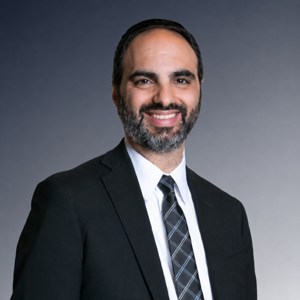
Living Emunah

Living Emunah

By Ashear, Rabbi DavidReligion & SpiritualityJudaism
Download on the App Store
  • Favorites

    27

    Followers

  • Typical duration

    6 min

    per episode

Based on Podcast App listening data

Living Emunah episodes

  • The Power of Loving Acceptance: Lessons from Nadav, Avihu, and Aharon
    Parashat Acharei Mot begins by telling us that Hashem spoke to Moshe after the tragic deaths of Nadav and Avihu, who died while attempting to draw closer to Hashem. Though their death was a colossal tragedy, the Torah teaches us how to view it—and more broadly, how to understand when tragedy befalls righteous individuals especially when they are engaged in holy pursuits. At that time, the Jewish people were yearning for the Shechina to dwell in the Mishkan they had built. After the sin of the Egel , they were unsure whether Hashem would rest His presence among them. On the day of the inauguration, Aharon offered multiple korbanot as instructed, but still, the Shechina did not descend. Only after Moshe and Aharon entered the Ohel Mo'ed to pray did a heavenly fire come down and consume the offerings. The people rejoiced—Hashem had forgiven them and chosen to dwell among them. In their deep yearning and love for Hashem, Nadav and Avihu brought the Ketoret on their own initiative. Then, the unimaginable happened: another fire came down and consumed them. Everyone was in shock. Was this a sign of Hashem's anger? Did it mean the forgiveness was rescinded? Moshe then told Aharon that Hashem had previously said He would be sanctified through the deaths of great people—and Nadav and Avihu were those chosen Tzaddikim. The Torah testifies that when Aharon heard this, " וידם אהרן "—he remained silent , accepting Hashem's will without protest. As a reward for his profound emunah and submission, Hashem then spoke directly to him. What appeared to be divine punishment was, in fact, a great Kiddush Hashem . The Or HaChayim explains that Nadav and Avihu became so spiritually elevated that their souls desired only closeness to Hashem and no longer wished to remain in the physical world. Today, we lack prophets to explain tragedies, but we have the Torah—eternal and unchanging—to guide us in how to view them. Our greatest strength lies in trusting Hashem and using pain as a catalyst for growth. We are reminded that this world is temporary, and every moment here is an opportunity to serve and connect with our Creator. The Rashbam writes that the greatest Kiddush Hashem on that day was not the death of the tzadikim , but Aharon's silent acceptance. Seeing his beloved sons die before him, he continued to serve Hashem with unwavering devotion. That act sanctified the Mishkan more than any offering brought that day. When a person accepts Hashem's judgment with love, he elevates not only himself but also the space around him. Such acceptance carries a powerful spiritual energy, capable of invoking blessing and even salvation. The sanctity of Har HaBayit , where the Beit HaMikdash would one day stand, was similarly established through Avraham Avinu's loving acceptance of Hashem's will. When commanded to offer Yitzchak as a korban, despite the contradiction to Hashem's earlier promise that his future offspring would come through Yitzchak, Avraham did not question. The Targum Yonatan on the passuk יראה ויקרא שם המקום ה ' explains that Avraham prayed not to harbor any complaints, fully submitting himself to Hashem's will. His wholehearted obedience imbued the mountain with eternal holiness. Just as the Mishkan was sanctified through Aharon's faith, and the Beit HaMikdash through Avraham's, so too can we infuse holiness into our lives and surroundings by accepting Hashem's decrees with love and trust. Whenever a person accepts the will of Hashem with love, although it's difficult, he elevates himself and the place around him. Our job is to trust Hashem and always continue growing in our Avodah no matter what happens.
    6 min
  • Without The Feeling
    One of the reasons that people may lose energy and excitement in their avodat Hashem is that they misunderstand the way Hashem deals with them. It makes logical sense that when a person is doing what Hashem wants, he should feel a certain spiritual elevation and receive some type of reciprocation which shows that Hashem is appreciating what he is doing. And so, when those things don't happen, people may begin to lose the enthusiasm that they once had. If they only knew how much Hashem appreciates what they are doing, and how much they are gaining every second of it, they would happily increase their enthusiasm. Let us analyze the way that Hashem dealt with Avraham Avinu. Hashem promised him a baby boy when he was 70 years old, but he did not see the fulfillment of that promise for another 30 years. Then, when Yitzchak was 37, Hashem commanded Avraham to offer him up as a korban . One would think, being that this was arguably the greatest mitzvah ever performed, that Avraham should have felt a connection to Hashem like no other on his way to do the Akeda . He should have felt an incredible spiritual feeling beyond imagination. Yet, it says וירא את המקום מרחוק – and he saw the place from afar. Chazal tell us that means he saw the מקומו של עולם - HaKadosh Baruch Hu – very distant from him. He did not feel any spiritual elevation, nor did he feel any connection to Hashem. It was actually just the opposite, a feeling of being distanced from Hashem. And one would think, after Avraham passed this monumental nisayon , Hashem should have showered him with blessing and showed him how great he became as a result. Yet that is not what happened. Rather, Avraham discovered that his wife had passed away, and he had to go deal with finding her a burial plot. This is precisely what made Avraham's deed as great as it was. The entire Jewish Nation is still benefiting from that one deed until today. Avraham knew that what he was doing was what Hashem wanted and that's all he needed to know. Going there without the spiritual feelings made the avodah even more precious. Not seeing Hashem patting him on the back, kavayachol , afterward made the avodah even more valuable. This world is the world of work. We need to toil in our avodat Hashem and the rewards come later. If someone has been praying for something for years without seeing results, he may feel that Hashem is not listening to him. Yet our Chazal teach us otherwise. Our Imahot prayed for years without seeing any results and that is precisely what made them as great as they became, continuing to push themselves without seeing the reciprocation. We know what Hashem wants from us. He told us in the Torah. And we know He appreciates every little move we make. When we continue growing and serving Him to the best of our ability, without the spiritual feelings and without the immediate rewards, it makes our service infinitely greater. If someone starts learning more or going to shul more, his natural expectations are that he will see more open blessing in his life from it. That may happen and it may not, depending on what Hashem knows is good for him. But if it doesn't happen and he continues learning and continues going to shul more, it makes those efforts so much more valuable and it raises him to such a higher level. He will most probably not feel any more spiritual from what he is doing, but that will just add to the potential levels he could reach. Akedat Yitzchak was done without any special feeling and without any immediate reciprocation. And we know that Hashem appreciated that act more than we could imagine. It made Avraham so great and the rewards of it are still being paid until today. This should be a model for us to understand that the greatness of our avodah does not depend on how spiritual we feel or how quickly Hashem gives us what we want afterwards. It's actually just the opposite. The more we persevere without the feeling and without the reciprocation, the greater the avodah becomes.
    6 min
  • The Eternal Merit of a Mitzvah
    Rabbi Chananiah ben Akashia teaches us that Hashem desires to bestow abundant merit upon the Jewish people. For this reason, He gave us many mitzvot—each one an opportunity to earn immense spiritual reward. While the ultimate reward for mitzvot is reserved for the World to Come, Chazal teach that mitzvot also bring tremendous benefits in this world. Our sages explain that the Jewish people were not originally deserving of redemption from Egypt. It was only through the merit of two mitzvot that they were finally freed. The sea itself split in the merit of Yosef HaTzaddik, whose steadfast resistance to Eshet Potiphar became a merit for all of Klal Yisrael. The Midrash at the beginning of Parashat Ki Tavo tells us that Hashem gave the mitzvah of bikkurim (bringing the first fruits) to the Jewish people as a merit to help them enter the Land of Israel. The Torah also teaches that honoring one's parents brings the reward of long life. And in the merit of emunah , Chazal say, we will be redeemed from our current exile. There are countless examples of how mitzvot serve as a source of zechuyot . Every test and opportunity Hashem gives us is a chance to accumulate spiritual wealth that benefits not only us but our children and grandchildren for generations. We may not always see the full reward of a mitzvah, but we can be certain that every one of them helps us in unimaginable ways. A powerful modern example was shared by A.J. Gindi, the head of Renewal—an organization that helps kidney patients find life-saving matches. A woman with an extremely high PRA level came to the organization, desperately in need of a kidney. Due to her rare profile, the chance of finding a match was extraordinarily slim. Even Renewal's vast international database turned up nothing. They held a special donor event in the hopes of a miracle—and miraculously, a match was found. Before the transplant, the woman was asked what merit she believed had brought about such an unlikely success. She replied that she personally wasn't aware of any special merit, but she shared a story from her grandmother's experience during the Holocaust. While imprisoned in a concentration camp, her grandmother was shown rare kindness by an SS officer, who gave her a pass allowing her to move freely without being questioned. She thanked him and pleaded for passes for her parents as well, which he granted. Overjoyed to help her family, she returned with the passes—but was then approached by someone who begged her to obtain one more. At first, she refused, fearing that pushing further might result in the officer rescinding everything. But then the person explained: the pass wasn't for himself—it was for the Bobover Rebbe , who was in their barracks. "We must save his life," he said. The woman, a professional artist, decided to try to replicate an identical pass. She spent the entire night replicating it with precision. The pass was delivered to the Rebbe, and baruch Hashem , it saved his life. The kidney recipient concluded: "Perhaps in the merit of my grandmother saving a life, Hashem is now saving mine." After the successful transplant, the donor was asked what merit she thought enabled her to be the match. She replied, "I'm not sure, but I come from a family of rabbis. In fact, my grandfather was the Bobover Rebbe." Everyone present was stunned. Eighty years after a brave woman risked her life to save the Rebbe, Hashem repaid the kindness in kind—his granddaughter was now saving her granddaughter's life. This is just one example of how a single mitzvah can echo across generations. Every mitzvah carries infinite merit, benefiting us both in this world and the next. It is our responsibility and privilege to embrace each opportunity with joy, knowing that every act of goodness creates a ripple of blessing beyond what we can ever imagine.
    6 min
  • No Mistakes in Heaven: Trusting Hashem’s Plan
    When our plans are suddenly canceled or unexpected mistakes arise, they often appear to be nothing more than unfortunate coincidences. In such moments, it's natural to feel disappointment or confusion about why things didn't go as expected. However, someone with emunah —faith in Hashem—understands that there is no such thing as a mistake. Everything unfolds precisely as it is meant to, even if the reasons are hidden from us. Most of the time, we're not privileged to see the full picture. We don't always understand why certain events deviate from our carefully laid plans. Yet sometimes, Hashem offers a glimpse behind the scenes, revealing how what seemed like a disruption was actually a necessary step in a greater design. A woman shared her experience from this past Simchat Torah . She had been eagerly preparing for a joyous Yom Tov, anticipating a full house with all her children and grandchildren. She cooked in advance, excited to host the entire family. But on Chol HaMoed , her three teenage sons expressed a strong desire to return to their out-of-town yeshivot for Simchat Torah . Though disappointed, she graciously agreed, recognizing how meaningful it would be for them. Then, on Hoshana Rabbah night, her married son informed her that he had missed his flight home from his in-laws. As a result, he, his wife, and their three children would be spending Yom Tov elsewhere. The vibrant family gathering she had envisioned quickly diminished, leaving her and her husband with unexpected quiet. On a whim, they decided to go to her husband's former yeshiva—where two of their sons would be spending the holiday. A room near the yeshiva became available that night, and they took it. They packed up the food she had lovingly prepared and made the spontaneous trip. Though out of character for them, the experience turned out to be profoundly uplifting. During the Yom Tov, two different people independently suggested a shidduch for their daughter—an alumnus of the very yeshiva they were visiting who was also there for Yom Tov . They followed up on the recommendation, and Baruch Hashem , their daughter is now engaged to that young man. A missed flight, a change of plans, and a last-minute decision to travel—all seemingly minor and natural occurrences—were, in truth, Hashem's orchestration to bring this family to the exact place where their daughter would find her zivug . In another touching story, a man shared how his 10-year-old daughter asked for a special siddur with her name engraved on it. He told her that was a gift he had planned for her bat mitzvah, over a year away. Not wanting to wait, she asked again. He gently explained that it was an expensive item and not something he could give her "just because," but he encouraged her to ask Hashem for it instead. He used the moment to teach her the power of heartfelt tefillah . Inspired, the young girl began praying earnestly each day for that personalized siddur . One day a few months later, her principal called her to her office. While she was there, the principal pulled out a beautiful sidur with her name engraved on it. She explained she bought it for her granddaughter but it was the wrong nusach. Being that the store wouldn't exchange it because the name was already engraved upon it, she was stuck with it. Then she thought of this girl in her school with the exact same name as her granddaughter and offered the sidur to her. And just like that, this 10-year-old girl received the sidur she wanted so badly. It looked like a mistake but we know there are no mistakes. Hashem wanted this girl to have that sidur and this is how He accomplished it. Her sincerity was moving—and a powerful reminder that no prayer is too small or insignificant in Hashem's eyes. Everything that happens is me'et Hashem and if we're able to internalize that, we'll have a much easier time dealing with the unexpected.
    5 min
  • Parashiot Tazria-Metzorah: The Test of Parnassah
    In Parashat Tazria , the Midrash relates a poignant story about a Kohen who served his community by diagnosing tzara'at . After losing all his wealth, he faced the painful dilemma of how to support his wife and children. With no viable options in his hometown, he resolved to leave Israel in search of livelihood. As he prepared to depart, he trained his wife—his only possible successor—in the laws of tzara'at . He taught her: "Every hair has its root, and the condition of the hair reveals the state of that root. If a hair becomes dry and colorless, it indicates that the affliction at its root is severe. But if the hair remains healthy, then the affliction is healing." His wife asked, "What if there are two hairs growing from one root?" He replied, "Each hair has its own root and is sustained individually." With profound insight, his wife responded, "If Hashem created a source of sustenance for every single hair, then surely He created sustenance for each one of your hairs—and for each of our children's hairs. And if Hashem is so meticulous in sustaining even a single hair, how much more so will He provide for you and our family." Her words, full of Emunah and clarity, convinced him to remain in Israel. Struggling with Parnassah is an intense and painful challenge. Chazal teach that if all other forms of suffering were placed on one side of a scale and poverty on the other, poverty would outweigh them all. Yet because the test is so great, the spiritual opportunity it offers is equally immense. The Chovot HaLevavot writes in the Shad HaBitachon that if a person's Parnassah is delayed in coming, he should think in his heart of how Hashem brought his Nishama down from the Kisei HaKavod into this world to do a job specifically at this time in history. The world has a 6,000 year plan and for reasons that only Hashem knows, He placed this person's Nishama specifically at this time. The same Hashem is the One in charge of giving him his Parnassah and he is the One who is holding it back now. And He knows that this is what is going to enable him to succeed in his mission. There is nothing better for a person than to go through the current period with his Parnassah delayed in coming. If he can internalize this and trust that Hashem is doing what's best for him, it would make him so great. It is very possible that the whole test is just to see how the person will respond and perhaps in the Zichut of the proper response, his future Parnassah will come in abundance. A man shared his experience: he had launched a promising business venture with two investors ready to commit both capital and valuable ideas. At the final moment, both investors inexplicably withdrew. Undeterred, he pivoted to another opportunity, this time drawing serious interest from a large institutional investor. The deal appeared certain—so much so that plans were being made for post-investment operations. He prayed fervently. But again, without clear explanation, the investor backed out. One by one, other prospective clients also disappeared.He was left bewildered, caught in a whirlwind of hope and disappointment. He has been praying and improving in Torah and mitzvot but is seeing no success in Parnassah. Of course, he should continue praying and improving but the greatest thing he could do is to accept with love that Hashem was behind everything that happened and it was all for his best, for him to fulfill his purpose in this world. We hope Hashem will shower him with Parnassah but in the meantime, he can rise to great levels by trusting Hashem and understanding that he was acting in his best interests. He can feel calm and composed knowing that he is in Hashem's hands and he could radiate that emunah to his family. The spiritual elevation he will get from that avodah will be worth more than any Parnassah that anyone could ever have. The tests in Parnassah are very difficult but that just means that the rewards for overcoming them are that much greater. Shabbat Shalom.
    6 min
  • Embracing the Challenge: Finding Strength in Hashem’s Plan
    There are times in life when a person feels that not receiving what they desperately want would be the worst possible outcome. In such moments, they may cry out and beg Hashem for help, day and night, with their entire being. During this time, they find it difficult to enjoy anything. Their thoughts are consumed by the issue, and they can't imagine life without a resolution. Naturally, we are encouraged to pray for what we believe is best and to place our hopes in Hashem's kindness. However, it's important to recognize that sometimes, a person's mission in this world may specifically depend on enduring that very challenge. What may appear to be an obstacle could, in truth, be the catalyst for personal growth and transformation. By resenting or resisting it, a person may miss the opportunity to fulfill their unique purpose. On the other hand, if one can sincerely accept Hashem's will, even while continuing to pray for relief, they open the door to spiritual elevation. Acceptance does not mean surrendering hope. It means that as long as the challenge remains, one embraces it and strives to grow through it. A simple shift in perspective can often save a person from months—or even years—of stress and anxiety. A man recently told me that he was out of town for Pesach. On the last day of Chol HaMoed, he attended a shiur after shul, where the rabbi spoke about the seventh day of Pesach and how the splitting of the sea is compared to the miracle of bringing couples together. Chazal teach us that not only does Hashem orchestrate marriages, but He arranges all human encounters. Later that morning, as he walked down the street, an Israeli woman approached him and began speaking in Hebrew. He couldn't fully understand her, so he turned to another man passing by—someone he recognized—who was fluent and could interpret. The woman had noticed that this man was missing fingers on one hand. She explained that her infant daughter was born with the same condition, and she was overwhelmed with fear and sorrow for her child's future. Without hesitation, the man called over his wife and children and told her, "I am the happiest man in the world." He shared how he lives a fulfilling life—with a job, a loving family, friends, and a deep sense of contentment. He had never felt that he was lacking anything. His sincerity and joy radiated to her. She was overcome with emotion, nearly brought to tears by the chizuk he gave her. Until that moment, she had envisioned only difficulty and despair for her daughter. But now, she saw hope. She never imagined that her daughter could possibly live a normal life let alone get married and raise a family. She was in such misery over the past six months but now everything changed. She thanked the man from the bottom of her heart for his words of encouragement and her life is now changed. Nothing else changed from that meeting other than her perspective and that made all the difference. Hashem gave her the exact chizuk that she needed by meeting this man while he was away in her hometown. Yes, Hashem was once again Mizaveg Zivugim. We always hope to get what we want but we must remember there's a much bigger plan for us and the worst thing we could do is fight against the circumstances that Hashem puts us in. Everything we go through is to make us the people we're meant to become. This man said he sees so clearly the fact that he was born with a hand without fingers has made his life more meaningful and better in countless ways. We are always encouraged to pray for what we want but if we didn't get it yet we should happily accept the circumstances that Hashem has put us in.
    5 min
  • Staying Close to Hashem in Challenging Times
    When people face hardship, their instinctive response is often to seek extra mercy from Hashem. They might take on new halachic stringencies, elevate their level of kavanah during tefillah , and pray with greater emotion, sincerity, and even tears. They do their best to act with heightened spiritual awareness, all in the hope that these efforts will bring about a salvation. But when time passes and the situation doesn't improve—or even worsens—it becomes increasingly difficult to keep that spiritual momentum going. Some begin to feel that their prayers and efforts are going unnoticed. "If Hashem isn't responding," they wonder, "why should I keep trying?" For some, this disillusionment may evolve into frustration or anger, leading them to distance themselves from mitzvot or religious observance altogether. They may begin to question whether Hashem truly cares. But we must hold on to a critical truth: Hashem cares more than we can possibly understand . The fact that we haven't received what we've asked for is not a sign of divine indifference. Rather, it is a reflection of Hashem's infinite wisdom. He sees the complete picture—past, present, and future. He knows our mission in this world, and what is best for us at every stage, even when we cannot comprehend it. And when the struggle to stay spiritually committed intensifies, our avodah becomes all the more meaningful. Hashem cherishes every sincere effort we make—especially when it is difficult. A man in the real estate business shared his story. His industry had been facing a downturn, and one failed deal after another left him with no leads and growing discouragement. He reached a low point and, for the first time in his life, contemplated skipping shul on Shabbat. In frustration, he told himself he wouldn't go. That Friday afternoon, he had his usual call with a business associate—a non-Jewish Irish gentleman with whom he regularly discussed the market, business trends, and more. Every week, their call ended with the man wishing him, "Shabbat Shalom." But this week was different. As they were about to hang up, instead of the usual farewell, the man simply said, "Okay, go to shul now," and then ended the call. The timing was uncanny. For the first time in decades, this man had planned not to go to shul , and here was Hashem sending him a message—through the mouth of a gentile associate—urging him not to break his lifelong habit. It was a moment of clarity. Hashem had been watching and cherishing each one of this man's tefillot for over fifty years. He didn't want him to miss even one. The man went to shul that night, full of gratitude. He thanked Hashem for the unexpected chizuk , and for reminding him how deeply valued his efforts are. Yes, business may be tough. Life may feel overwhelming. But that should never diminish our trust in Hashem or our commitment to His mitzvot. In fact, when maintaining emunah is hardest, that's when it shines brightest.
    5 min
  • Hashem Always Takes Care of Me
    We love to see salvations from Hashem. Sometimes, we witness immediate responses to our tefillot , and when that happens, it is an incredible experience. Rabbi Aholiav Chiyun once related that he met Rabbi Shlomo Musayof, founder of the Musayof shul in Yerushalayim, on Purim . Rabbi Musayof looked noticeably sad, and when Rabbi Chiyun asked him what was wrong, he explained that he had a son who had escaped from Russia to America 12 years earlier, and he had not heard from him since. In those days, making an international call was extremely expensive, and even letters were uncertain to reach their destination. Rabbi Chiyun told him to pray right then and there for his son's return, as it was an et ratzon , an auspicious time for tefilla . He also blessed him that Hashem should answer his request. Exactly a week later, there was a knock at Rabbi Musayof's door. When he opened it, the man standing there said, "Abba." Rabbi Musayof could hardly recognize his son, especially with his big beard. He embraced him, thanking Hashem for bringing him home. The son explained that he had been struggling to even afford rent and food and traveling to Israel was impossible. However, a week earlier, an elderly man overheard him speaking Hebrew and approached him. The man mentioned that he had an extra plane ticket to Israel and offered it to him. Later, they realized that this conversation took place at the exact same time that Rabbi Musayof had been praying the week before. It was an extraordinary yeshuah , showing the power of tefilla and Hashem's perfect timing. However, not all prayers are answered so quickly. A man once shared that he had been begging Hashem day and night for salvation from an enormous challenge in his life. But instead of seeing relief, everything collapsed, and he lost everything. He felt abandoned and struggled to continue praying. For six months, he could not even open a siddur . Finally, one day, he mustered the strength to begin praying again. As he recited the words ה' שפתי תפתח —"Hashem, open my lips"—he broke down crying uncontrollably for half an hour. This was a man with deep emunah , and he felt the painful void of Hashem's absence in his life. Now, he is working hard to see the good and rebuild the connection he once had. Sometimes, we do not receive the answers we hope for, but feeling Hashem's presence through our struggles can make all the difference. Rabbi Benyamin Pruzansky shared another story that highlights Hashem's hidden hand in our lives. A man was speaking with his business partner, Meyer, at their sporting goods store when he mentioned a tragedy that had recently occurred in their community. A man had passed away, leaving behind a young family. Meyer, who had also lost his father at a young age, was asked to give chizuk to the mourners. Although Meyer did not know the family, he understood their pain and agreed to go. When he arrived, he tried his best to offer words of comfort from his heart. Before he left, he approached the 11-year-old boy in the family, Shlomo, and made him an offer. "I own a sporting goods store," Meyer said. "I sell all the latest brand-name sneakers. I want you to come to my store after the Shiva and pick out any sneakers you want—for free." Shlomo's teary eyes suddenly widened. "You don't know what this means to me," he said. "I was getting ready to go to camp for the summer, and the day before my father passed away, he told me he was going to take me to get brand-new sneakers." "The last few days, I've been trying to figure out how I'm going to go without my father. I prayed to Hashem to help me, and now you came and offered me new sneakers, just like my father promised. Hashem always takes care of me." This young boy was going through an unimaginable loss, but recognizing Hashem's hand in the process gave him so much chizuk . We may not always receive exactly what we ask for, but knowing that Hashem is guiding and helping us—even when we cannot see it—can strengthen us tremendously.

    6 min
  • The Secret of Parnasa
    The Yismach Yisrael writes that if someone is humble regarding parnasa and truly believes that his income does not come from his efforts but rather from Hashem's chesed , he opens the pipelines for more shefa to pour down. The mann that the Jews received in the Midbar came in the merit of Moshe Rabbenu, who was the most humble of all. His humility opened the pipeline for blessing. When Moshe told the Jews about the mann , he said, הוא הלחם אשר נתן לכם ה' לאכלה – "This is the bread that Hashem has given you." He was revealing to them the secret of parnassah —knowing that it is Hashem who provides. A man once shared that he had been doing very well in business. He was extremely busy—constantly in meetings, dealing with contracts, producers, and buyers. Then, his business started to decline. He made a costly mistake, overpaying for an item and losing a significant sum. Orders began to dwindle. People realized they didn't necessarily need him to procure their products. Over time, the orders decreased further until his company seemed to disappear completely. At first, he was only concerned about losing luxuries, but soon, he feared he would have to ask for handouts. Sleepless nights followed as he agonized over his financial situation. He wondered if this downturn was a result of his own pride—believing that his success came from his own efforts, connections, and business acumen. Realizing he needed a change in perspective, he began studying Sha'ar HaBitachon and Chovot Halevavot . Slowly, he internalized that he was not the one bringing in his income—only Hashem was providing for him and his family. It was purely Hashem's abundant chesed that allowed them to have everything they needed and more. The customers weren't responsible for his livelihood, nor was his product; it was only Hashem. Day after day, he immersed himself in sefarim on emunah , seeking chizuk from every possible source. Eventually, he reached a point of complete inner peace. He truly felt that his Father in Shamayim was taking care of everything. At that moment, he experienced genuine trust in Hashem. That same day, an old client, someone who had not been in touch for a long time—called him. This client placed an exceptionally large order, the biggest he had ever received. The profit from that single transaction was equivalent to three months of earnings. He thanked Hashem for the invaluable lesson in emunah and appreciated the opportunity to acquire the proper perspective on earning a livelihood. It is easy to say that Hashem does everything, but truly believing it is much harder. When asked about parnasa , we may instinctively say, "It's all from Hashem." But do we truly feel it in our hearts? Only Hashem knows the depths of a person's Emunah . Our task is to internalize this truth—that everything we have comes from Hashem. And when we truly believe it, we open the pipelines for blessing.
    5 min
  • Parashat Shemini-The Three Pillars of the World
    Our Sages teach us that the world stands on three pillars: Torah , Avodah , and Gemilut Chasadim . Rabbi David Najjar found a fascinating allusion to this concept in a Passuk from this week's Parashah, Shemini . The Passuk states: " ואת העולה המציאו אליו לנתחיה ואת הראש ויקטר על המזבח " — referring to the korban olah . Rabbi Najjar notes that the initial letters of the phrase " ואת העולה המציאו אליו " spell out the divine name with which Hashem created the world — suggesting a connection to the creation of the universe itself. Since the Passuk discusses the korban olah , it clearly alludes to Avodah , one of the world's foundational pillars. Furthermore, the first letters of " לנתחיה ואת הראש " form the word " לוה " — meaning "lent," a reference to Gemilut Chasadim . The final letters of the words " אליו לנתחיה ואת הראש " spell out תושיה" " , a term associated with Torah , as seen in the Passuk from Mishlei: " נצור תושיה ומזימה " ("Guard sound wisdom and discretion"). Hence, this single Passuk subtly contains allusions to the three pillars upon which the world stands. Additionally, another Passuk in the Parashah — " וירא כבוד ה' " ("The glory of Hashem appeared") — has the same gematria (numerical value) as " בצדקה וחסד " ("through charity and kindness"), reinforcing the idea that performing acts of kindness and giving charity is a form of honoring Hashem. Hashem often presents us with opportunities to give tzedakah or perform chesed as a test of our faith and character. Parting with our time or money can be difficult, but we must remember: we never lose by honoring Hashem. He is fully capable of repaying us many times over. One individual shared that a rabbi he knew reached out, requesting help with the final $12,000 needed for a down payment on a home. The rabbi promised to repay $1,000 monthly over the next year. Although it was a significant sum, the man agreed to help. Shortly after, an unexpected announcement regarding the tariffs put all of his orders on hold, causing him to reconsider. However, he reminded himself that he had already committed — and more importantly, that the rabbi needed the funds. He overcame his hesitation and sent the full $12,000. A few days later, he unexpectedly received a check from the IRS for nearly $15,000. Neither he nor his accountant could explain it — until it became clear to him: this was all a test from Hashem. He was never meant to have to give up that money, Hashem just wanted to see if he would be able to part with it in the performance of this great Mitzvah of lending money. Another man shared a similar story. A friend urgently needed $315, and without hesitation, he handed over his credit card. Due to a minor credit card fee, he ended up paying $324. Less than an hour later, he returned home to find that the fencing work he'd commissioned had just been completed. The invoice totaled $3,324 — but the contractor offered to reduce the charge to an even $3,000. The amount waived? Exactly $324. These stories beautifully illustrate the divine providence and care Hashem shows those who give generously. Acts of tzedakah and chesed not only honor Hashem — they bring His blessings into our lives. Shabbat Shalom.
    5 min

About Living Emunah

From the publisher's feed

A Daily ethical teaching by Rabbi David Ashear

Best of Living Emunah

Ranked by our users in the last 21 days

More shows like Living Emunah

The Rabbi Sacks Legacy by Rabbi Lord Jonathan Sacks

The Rabbi Sacks Legacy

557 Listeners

The Israel Guys by The Israel Guys

The Israel Guys

308 Listeners

Jewish Stories to Inspire: Motivational & Spiritual Stories Based on the Torah's Ethics, Values and Wisdom by Stories to Inspire

Jewish Stories to Inspire: Motivational & Spiritual Stories Based on the Torah's Ethics, Values and Wisdom

186 Listeners

Living with Emunah by Rabbi Efrem Goldberg

Living with Emunah

110 Listeners

Meaningful People by Meaningful Minute

Meaningful People

1,987 Listeners

From the Inside Out: With Rivkah Krinsky and Eda Schottenstein by Rivkah and Eda

From the Inside Out: With Rivkah Krinsky and Eda Schottenstein

263 Listeners

The Q & A with Rabbi Breitowitz Podcast by Rabbi Dr Yitzchak Breitowitz

The Q & A with Rabbi Breitowitz Podcast

234 Listeners

Call Me Back - with Dan Senor by Ark Media

Call Me Back - with Dan Senor

3,197 Listeners

The Times of Israel Daily Briefing by The Times of Israel

The Times of Israel Daily Briefing

1,070 Listeners

Kosher Money by Living Lchaim

Kosher Money

821 Listeners

History for the Curious - The Jewish History Podcast by JLE

History for the Curious - The Jewish History Podcast

232 Listeners

Gedale Fenster - Podcast by Gedale Fenster - Podcast

Gedale Fenster - Podcast

399 Listeners

Honestly with Bari Weiss by The Free Press

Honestly with Bari Weiss

8,473 Listeners

Inspiration for the Nation with Yaakov Langer by Living Lchaim

Inspiration for the Nation with Yaakov Langer

1,120 Listeners

Stories Of Hope With Tzipora Grodko by Meaningful Minute

Stories Of Hope With Tzipora Grodko

324 Listeners