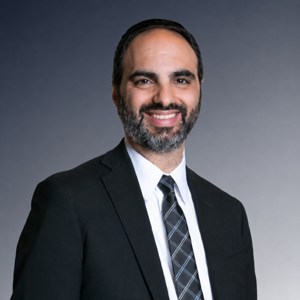
Living Emunah

Living Emunah

By Ashear, Rabbi DavidReligion & SpiritualityJudaism
Download on the App Store
  • Favorites

    27

    Followers

  • Typical duration

    6 min

    per episode

Based on Podcast App listening data

Living Emunah episodes

  • The Only Real Option
    In the Haggadah, the Pasuk V'nitz'ak el Hashem Elokei Avoteinu refers to the Jewish people crying out to Hashem in prayer, a moment that occurred following the death of the King of Egypt. Immediately after this, the Pasuk states, Vayishma Hashem Et Kolenu —"And Hashem heard their voices," leading to their redemption. What is the connection between the king's death and the Jewish people's cries to Hashem? The Rashbatz offers an explanation: for many years, the Jewish people had anticipated that the death of the harsh king would ease their suffering. However, when a new king arose and the oppression became even more severe, they recognized that their only hope lay in Hashem's salvation. It was at that moment of realizing that only Hashem could help them, that their prayers became earnest, and they were answered. This serves as a valuable lesson. Often, when people face challenges, they devise multiple plans in their minds to address the situation. Even as they pray, they may subconsciously rely on these plans, leading to less sincere prayers. It is crucial to recognize that no matter how many potential solutions seem available, without Hashem's intervention, none are truly meaningful. It's easy to beg Hashem for help when there are no other apparent options, but the true test comes when multiple avenues appear open to us. If, in such moments, we can pray with the same sincerity as though no alternatives exist, our prayers hold greater value. This reflects true emunah — the realization that Hashem alone controls our fate. The effort lies in the mind; we must internalize the belief that Hashem, and only Hashem, has ultimate authority over all things. A man named Jack shared an interesting story that illustrates this concept. Just before Rosh Hashanah, he received an unexpected request from his mother. She asked him to arrange for his father to be a sandak (the person who holds the baby during a Berit Milah) for a third time that year, as she had heard that performing certain actions in pairs could be a bad omen. (Note: although the Gemara suggests that performing actions in pairs might expose one to negative influences, contemporary halachic authorities no longer consider this a concern.) Jack found himself at a loss. Being chosen as a sandak is an extraordinary honor, one that is rarely given. Great Torah sages would travel great distances for the privilege of this mitzvah. Halachic authorities even rule that the sandak holds greater honor than the mohel or the father of the newborn, granting him precedence for an aliyah on the day of the Berit Milah. The Zohar HaKadosh compares the act of performing a Berit Milah to bringing a korban to Hashem, with the sandak's lap serving as the altar upon which the korban is offered. The Maharil draws a comparison between the sandak and the kohen offering the ketoret in the Beit HaMikdash, while the Migdal Oz advises striving to perform the mitzvah of being a sandak, even at great personal expense. Some even suggest that being a sandak can be a segulah for wealth. Understanding the rarity and importance of this honor, Jack realized that finding an opportunity for his father to serve as a sandak, especially on such short notice, would be incredibly difficult. After hanging up with his mother, Jack turned to Hashem in prayer, saying, "I don't know how to make this happen, but I know that only You can help me. Please grant me success." That evening, Jack attended a simcha where he was unexpectedly approached by an old acquaintance. This man asked Jack if he knew anyone who would be willing to serve as a sandak at a Berit Milah the next day for a Baal Teshuvah. Jack, astonished, immediately responded that his father would be honored to take the role. The next day, Jack drove his father to the Berit Milah, fulfilling his mother's request. This story illustrates the power of sincere prayer. While prayer is always effective, it is especially potent when we approach it with the understanding that only Hashem can grant our requests. Such prayer carries immense spiritual value. May we all strive to pray with full emunah, trusting completely in Hashem's control over our lives.
    5 min
  • Every Footstep
    Rav Chaim Kaniyevsky Z"l asked in his Sefer Ta'amah Dikra, if Hashem wanted to punish the Egyptians measure for measure, drowning them because they drowned the Jewish babies, why do He have to bring them all the way to the Yom Suf to do it? Why couldn't He just bring a tsunami upon them right where they were in Egypt? The Rabbi answered, Hashem wanted to show us that when bringing punishment upon a sinner, Hashem doesn't need to bring the punishment to him. Rather, He can make the sinner himself go to the punishment. Rabbi Menashe Reizman explained, this was an additional lesson in Hashem's hashgacha peratit, namely, that a person is in the complete control of Hashem. Even when it looked like the Egyptians were chasing the Jews of their own free will, it was Hashem pushing them to bring them to their punishment. The Ramban writes, of all the wonders that Hashem performed in Mitzrayim, this was the greatest wonder of all. The fact that Pharaoh and the Mitzriym saw an open miracle with their own eyes of Hashem splitting the sea for the Jews, and yet they still went in to chase them. This was to show that Hashem is in charge of every footstep that man takes. It may look like that we're moving on our own, but in actuality, Hashem is leading us. A man told me that his wife Ruth is currently studying to become an eye doctor. She had an assignment in school to bring in a family member for an eye exam. Most people bring in their spouse for this, but her husband wasn't available that day. So she asked one of her nieces, Gila, if she could come instead. Gila happily agreed and made the long trip there that day. The exam was going well until the very end when Ruth found something suspicious going on in Gila's eye. Her supervisor suspected that it was a retinal hole, so they did some imaging. That would mean she would have to be seen by a specialist in the next couple of weeks. Ruth then went with Gila for lunch. The supervisor called them back, saying she just received more results from the imaging and it turned out to be much more serious. It was a retinal tear which, heaven forbid, could lead to blindness. Gila had no symptoms as she was seeing perfectly. There was no way she was going to find out about this before it may have been too late. They were able to get her an appointment for surgery the very next day and baruch Hashem, she's fine now. Gila had no idea how much danger she was in. Hashem guided her footsteps to get that eye examination and save her eyesight. A father recently made a seudat hoda'ah, thanking Hashem for saving his two-year-old daughter who had fallen into a pool. The father said it happened so quickly. In a split second, she was in the water. By the time he pulled her out, she wasn't breathing. He ran into the house in a panic, crying for someone to call hatzalah. But help had already begun to arrive in a most unexpected way. A man was driving by in a golf cart and saw what was happening and quickly sprang into action. Like Eliyahu Hanavi, he started CPR on the little girl right away and within 90 seconds, the stranger had revived her. She was stabilized and then airlifted to a nearby hospital and remarkably, she was discharged the very next day. Every second matters when it comes to life and death. Hashem guided that man's footsteps to be right there at the time he was needed. Although things may seem to happen in a natural way, Hashem is pulling the strings from behind the scenes all the time.
    5 min
  • Pale in Comparison
    If we would be able to see what we accomplish by doing mitzvot, we would run after them with such excitement and everything in this world would pale in comparison to them. When the Jewish People were preparing to leave Mitzrayim, they were told to go and gather all the wealth of Egypt. At that time, Moshe Rabbenu chose to go and find the aron of Yosef instead, and for that Chazal applied the pasuk חכם לב יקח מצוות to him. While everyone was becoming billionaires, Moshe went to do one mitzvah and he was called the wisest of all of them for that endeavor. Besides for the fact that his reward was eternal while their wealth would only last here in this world, seven days later at Yam Suf, the entire nation was in jeopardy of being killed out by the Mitzrim . When the Sea saw the aron of Yosef, it split and the entire nation was saved. Moshe Rabbenu was thus credited with saving the entire Klal Yisrael because of his pursuit of that one mitzvah. Why did the Sea split for Yosef? Because years before when he was being tested with the wife of Potifar, he ran away from temptation and so now the water was running away from his aron to save the entire Klal Yisrael . Imagine if during that difficult test Yosef would have known that he was going to be the cause of millions of people to be saved, he would have ran away with ease, it wouldn't have even been a test. However, Hashem does not allow a person to see the wondrous effects of what his deeds are going to accomplish, in order for his free will to remain balanced. But we must know that if we did have the eyes to see what was happening when we do mitzvot, we would be so excited to perform every single one of them. I read a story about a man who asked the gabai in his shul to reserve Aliyat Maftir and chazan for Mussaf on one of the upcoming Shabbatot , since that was the week of his mother's yahrtzeit . This man was a very organized person and always made sure to plan things a long time in advance. He was a long time member of that shul and one of its supporters and the gabai told him both of those honors were open and he made a note to reserve them for him. When that Shabbat arrived, the man came into shul filled with anticipation, but there he noticed that a stranger had joined the minyan that day and was in deep conversation with the gabai . The man was curious to hear what the debate was about and, to his shock, he found out that this stranger had asked for Maftir and chazan for Mussaf because he also had a yahrtzeit . Here he was a long time member and supporter of the shul and he asked for these from weeks in advance and now some stranger just strolls in out of the blue and thinks he can take those honors? But then, a small voice whispered inside of him, maybe he should give in? Who knows what merits help the neshama the most. Maybe giving up what was his for someone else would accomplish even more. And so, with great strength, he went over to the gabai and told him to give those honors to the other man. He would take a different aliyah and be chazan for Shacharit on the actual yahrtzeit instead. The gabai said, " Chas v'shalom , there is a system here, these are yours." The man reassured the gabai that he was actually happy to do this. And when the gabai saw he was serious, he went over and gave them to the other man. Rabbi Aharon Toisig, a prominent Rav from Bnei Brak, was present in the shul when this episode took place and he related what happened the next day. The congregant came into shul and said his mother came to him in a dream and said to him, "My son, I was given special permission to descend to this world to thank you. The elevation that I experienced when you gave up the Maftir and Mussaf was greater than any other I had ever experienced. I remember well the elevation I merited in past years when you got Aliyat Maftir and was chazan for Mussaf , but those did not come close to what I merited this year when you mustered up the fortitude to give up the honors that were rightfully yours for the sake of peace and to help someone else." This is just one small example of the great effects of our deeds. The harder they are to perform, the greater they become. We should always run to do mitzvot with the utmost excitement.
    6 min
  • Don’t Pass Up
    ****OUR APOLOGIES FOR THE LAST EMAIL - BELOW IS THE CORRECT SHIUR FOR TODAY**** Hashem gives everyone the chizuk they need to pass the test they are given or to accomplish the mitzvot that He presents them with. If a test or mitzvah opportunity would be too difficult for a person to handle, Hashem will give that person the strength or words of encouragement that they need in advance to enable them to handle the test, or to give them the ability to follow through with the mitzvah that He's going to present them with. A young man told me that on the night of the Shevi'i Shel Pesach , he went with his wife and children to eat at his parents' house. At the meal, his father gave a Devar Torah about grabbing opportunities to do mitzvot. He quoted a rabbi who once said to his kehila that at Kriyat Yam Suf , there was a man by the name of Gershon ben Aminadav. Immediately, some members of the congregation corrected the rabbi and said, "No, it was Nachshon ben Aminadav." The rabbi continued and said, "There was also a man named Gershon ben Aminadav. But at the last moment, he lost the courage to go into the Yam Suf, and therefore nobody ever heard of him. Nachshon ben Aminadav, on the other hand, seized the opportunity to show his bitachon in Hashem and he is remembered forever for the good." The message was clear, don't pass up on mitzvah opportunities. That same night, this young man changed his plans and instead of sleeping by his parents' house, he and his wife decided they were going to walk home instead. As they were getting close to their apartment, a Pakistani man called to them from his car saying, "A Jew needs help!" They were a little afraid to approach, but the man pleaded saying there was a Jew in his car, it was an Uber. The young man went over and glanced in the back seat and indeed, he saw a Jew there dressed in Chassidish garb. He asked him what he was doing in a car on Yom Tov. The man said he was from Borough Park, then said he was from Williamsburg. He sounded very confused. Then he said he was trying to go to downtown Brooklyn, something that also made no sense. The young man realized he had special needs. He told the driver to call the police, but the driver wanted nothing to do with this and so he kicked the Chassidish man out of the car. The young man wasn't sure what to do next. He and his wife decided to walk with him back to their apartment and they would try to get a goy to call Shomrim. When they arrived back, the wife was a little afraid to bring the man into their apartment with their little children. The young man said he would ask the neighbor's housekeeper to call, but, in general, he had very little to do with his neighbors and was nervous to knock on their door at this late hour. A minute later, the neighbor's door opened. They saw some commotion and asked what was happening. The young man explained the issue. The neighbors said they had just called Hatzalah because someone passed out. He had since woken up, but they were still nervous. He said they would ask Hatzalah what to do when they came. In the meantime, they brought the Chassidish man into their home and gave him something to eat. When the Hatzalah arrived, they went straight to where the man who passed out was. After a few minutes, they said all was fine. The young man then approached the Hatzalah members and asked them about calling Shomrim because he found someone in the street who seemed to be lost. One of the Hatzalah members said he was on Shomrim. They brought him to where the Chassidish man was eating. He took one look at him and said, "I can't believe it. This man was missing for almost two days and no one could find him. Baruch Hashem, you found him." The young man felt so good that he was able to help here. He told me, normally he is very reserved, and if that would have happened on any other night, he would have just kept walking and not approached the car. It was only because his father just told them, an hour before that, "Don't be like Gershon ben Aminadav," that he had the courage to go over and help out and do the mitzvah himself. Hashem gives us opportunities to do mitzvot and He also gives us the strength and courage in advance to follow through with them.
    6 min
  • Who Would Have Thought?
    Who Would Have Thought? Three people recentlyapproached me, each asking a similar question. "I know that Hashem onlydoes good. Yet, what could possibly be good about the pain and anguish I amgoing through now?" One of them had Shalom Bayit problems, one had Shiduchproblems and the other had health problems. It is easy to learn about Hashem'sgoodness and talk about it, giving Chizuk to others. However, when a personhimself is in a difficult situation, it is not so easy to feel that goodness. What is the answer totheir question? How could painful situations possibly be good? It is very hardfor us to understand, because we have such a narrow view of life. There is somuch more going on than meets the eye. When Rabbi Akiva was suffering at thehands of the Romans, the angels in Heaven asked Hashem how this could possiblybe good. Hashem responded, "In order for you to understand this, I wouldhave to unravel the entire world and explain everything from the beginning oftime." Everything is interconnected. There are past lives, Gilgulim andTikunim, which are beyond our comprehension. I am reminded of parabletold by the Chafetz Chaim about a man who had such a difficult life. All he didwas complain. Finally, it was revealed to him that in a previous life, he hadblemishes that did not allow him to enter the highest parts of Gan Eden. Thesoul wants nothing more than to be close to Hashem for all eternity. He beggedfor another chance to return to this world and live the life he was currentlyliving as a Kapara(atonement), in order to eternally enjoy the next world. Hesaw in advance how difficult his life would be, and he still wanted it. Itturns out that he was complaining about a life that he himself had begged for. One day everything willbe clear. When Hashem does reveal to us why He dealt with us the way He did, wewill be in a state of jubilation, thanking and praising Him for everything Hedid. For now, we must trust that what we are going through is also good. We also must know thatjust because today there is pain or difficulty, does not mean that it will bethat way tomorrow. Sometimes people are in tough situations that they feel willnever end. I know an older single that had a broken engagement. The person wasdevastated. The family was devastated. They felt like they had lost thegreatest opportunity, thinking they would never find anyone as good. After ayear, the person got married and said they could not imagine marrying anyoneelse. No matter how long aproblem continues, ישועת ה' כהרף עין -Hashem's salvation can come in the blink of an eye. The ChafetzChaim writes in his book, "Shem Olam," if someone would have seen thebitterness and toil of our ancestors in Egypt , they would never have believed that they could ever leave. No one had ever escaped Egypt . They hadtotal control over the Jews, forcing each person to produce 400 bricks a day.Who could ever have predicted that they would leave ביד רמה , obliterating theEgyptians and making a mockery of Pharaoh, who had to get up in the middle ofthe night to beg the Jews to leave? Who would have thought that 50 days laterthe Jewish people would be at Har Sinai, receiving the Torah and reachinglevels higher than any prophet we ever had? Who would have thought that YosefHaTzadik, who languished for 12 years in an ancient Egyptian jail, would, in aninstant, become the second most powerful man in the entire world? What aboutthe days of Haman? The king of the entire world signed and sealed the edictagainst the Jews. There was no place for them to flee. Who would have thoughtthat not even one Jew would die, and Haman and his family would perish. " מקימי מעפר דל מאשפות ירים אביון "-Hashemlifts us up from the dumps, " להושיביעם נדיבים "- and He elevates us to sit withthe nobles. אין כאלקינו -There is none like our G-d. יחלישראל אל ה ' -we must hope and pray to Him,because כי עם ה' החסד והרבה עמופדות -He has an abundance of salvation. While we are in theproblem, we must have emunah that even the suffering is good. At the same time,we must hope to Hashem that He brings us joy the way we want toexperience it.
    6 min
  • Hashem's Master Plan
    There are times when a person sets out to do something and, all of a sudden, he hits a roadblock. He tries everything he can to go around it, but to no avail. The roadblock may come in the form of a person denying him or a circumstance denying him. And he is left helplessly to try to figure out what to do next. In those frustrating circumstances, a person could easily lose his cool, but then he will have failed his test. He must internalize, it is not the person or the circumstance that is stopping him, it is only Hashem. If he could react in those situations with emunah, it will elevate him so much and hopefully, one day, Hashem will reveal to him the goodness in why He had to stop him. Shmuel Herman found himself walking around, his chest tight with anxiety churning inside of him. He couldn't focus on his learning or anything else for that matter. He was being pressured in all directions because he was turning 30 and still not married. He was learning in Israel and dreading going back home to London for Pesach to face more relatives who were going to pressure him. Then came an attractive offer for him to travel to Washington to help Jews make a Seder for Pesach . The kiruv organization that invited him would provide everything, including his plane ticket, three meals a day and accommodations and even a little compensation. He happily accepted the offer and put in a great deal of effort in preparing. During the 12 hour flight, he reviewed all the classes he prepared on the Haggadah and the story of Yetziat Mitzrayim . He also prepared some talks on the topic of emunah. Finally, he landed in New York, anticipating catching his connecting flight to Washington. When it was finally his turn at the border control, the airport official looked at his passport and ordered him to go to a small side office. A stern security officer was behind a desk there and he began interrogating. The questions continued on and on and while Shmuel kept glancing at the clock, hoping to make his connecting flight, the security officer kept interrogating. When Shmuel mentioned he had a flight to catch, the security officer became angry saying, "I'm not interested in your connecting flight. Right now you are being interrogated and as far as I'm concerned, you can turn around and go back to Israel." Then Shmuel yelled out, "I didn't do anything! Why is this happening?" And the officer got even angrier. There was nothing Shmuel could do, he was stuck there and was going to miss the flight and potentially his seminar as well. When they finally let him go, he went to an airport desk asking if there was a flight he could get on to Washington. Everything was booked for the next two days, which meant he would not be able to get to his destination. Another Jew was standing there and overheard Shmuel saying he didn't know what he was going to do for Pesach . After speaking to him for a few minutes, the man invited Shmuel to come have the Seder at his house. With no choice, Shmuel accepted. He was a big hit there, as he was well prepared for the Seder and he gave that family a memorable experience. The man of the house, Mr. Braun, suggested his niece, who was 29, as a shidduch . And PS, not too long after that, Shmuel got engaged to her. When Shmuel was in that security office being interrogated, he couldn't imagine anything good from him missing the flight and inspiring Jews on Pesach . But in hindsight, he realized, everyone was just a puppet in Hashem's master plan to bring him his long awaited shidduch.
    5 min
  • Tell the Story
    We have an easy opportunity to fulfill ten mitzvot, every single day, called the עשר זכרונות – the Ten Remembrances. They are printed in the siddur and are usually recited after Shacharit. We can actually fulfill these mitzvot multiple times a day. The Pele Yoetz writes in Erech Dibur that each one of these remembrances is a heading with many subcategories. For example, one of them is to remember Yetziat Mitzrayim-the exodus from Egypt. That could also be fulfilled be remembering other kindnesses and wonders that Hashem has done for us, whether to the Jewish People at large or even to the individual. The idea of the mitzvah is to instill in us the knowledge of Hashem's capabilities and His constant hashgacha over everything that goes on in the world at large, as well as in our own personal lives. It is also to awaken our love for Hashem by appreciating His involvement in our lives. This means, each time a person says over a hashgachat peratit story about how he saw Hashem involved in his life and that he appreciated it, he will also be fulfilling a branch of זכר ליציאת מצרים and will get credited for a mitzvah. It does not have to be an earth shattering story, whenever we notice the Yad Hashem and appreciate it, that's enough. A man told me that he and his friend drove for a half an hour to pick up a refrigerator that someone was graciously giving away. As they were bringing it to the car, they noticed a brand new refrigerator next to the garage. The woman of the house said she's hoping her husband will be able to get it into the house that night when he came home from work. The two young men said they'll be happy to do it right then and there. It was very big and very heavy. It took them a long time to finally get it to the front door, and then they saw it was too large to fit through it. They tried hard to get it in, with no success. They were sweating and huffing and puffing at this point, but they were not going to give up. And then, a Home Depot truck pulled up right in front of the house, a man came out of the door saying he left some of his tools there that morning when he dropped off the new refrigerator. He tried to come back earlier but he misplaced the address and he finally got it now. He came back eight hours later, at 5:30, the exact time that the young man and his friend were trying to get the refrigerator in. They asked him, "Could you please help us get this through the front door?" The Home Depot worker said sure, and he was able to get it in with them. The young man was so excited. He told me, "Look at what Hashem did to help us. He made this man forget his tools in the morning, and then brought him back at the exact moment we needed him." It's not a major story, but the young man felt Hashem's hashgacha in his life. He felt Hashem's kindness and spoke about it in appreciation and that fulfilled a mitzvah. A woman emailed me that her teenage daughter wanted a keyboard, but she didn't have the financial means to purchase one for her. She told her daughter, "I wish I could get it for you, I just can't now. Pray to Hashem, He could always find a way to get one to you." Her daughter thought that it was something too trivial to ask Hashem for, but her mother assured her, Hashem always loves to hear her prayers. She listened to her mother and prayed for a keyboard. That same afternoon, as the mother was about to light the Shabbat candles, their lamp broke. She asked her daughter, "Please bring the pieces to the garbage before I light." When her daughter came back, she had in her hand a beautiful keyboard. "Where did you get that from?" her mother asked. "A neighbor didn't want their keyboard anymore and they were throwing it out." There, she got exactly what she wanted. They were so excited, they felt the Yad Hashem and appreciated it so much. It's not a major story, but it's a story where they felt Hashem; and by telling over that story, they got a mitzvah for it. We could fulfill this mitzvah all of the time, whenever we feel the Yad Hashem and we appreciate it with words, and by sharing it with others we can inspire them as well.
    6 min
  • Salvation in an Instant
    We begin the Seder with the Ha Lachma Anya , which speaks about the matzah and ends with the words, "Now we are still in Galut. We hope to be in Eretz Yisrael with the Beit HaMikdash before next year's Seder." Rabbi Ronen Sharabani gave a beautiful explanation in his new Haggada Me'afar Kumi about why we begin with this. Chazal tell us that the final ge'ula will take place in the month of Nisan. So, when the month begins, all of Klal Yisrael is hoping to be in Yerushalayim with the Korban Pesach by the night of the Seder. However, if Lel HaSeder arrives and once again Mashiach has not come, it could cause a person to enter the Seder with feelings of despair, thinking: "We've made this request of L'shanah Haba'ah B'Yerushalayim every year of our entire lives—and it still hasn't happened. What's going to give us chizuk to think that things will ever change?" For this, the Rabbis tell us to begin the Seder speaking about the matza. The Seforno writes on the pasuk describing Yosef Hatzaddik being rushed out of prison that this is the way of all salvations that Hashem brings—they come in an instant. Even when it looks like there's no hope in sight, things can suddenly change. And this is what happened in Mitzrayim. The pasuk says they were rushed out of Egypt without enough time for their dough to rise. Matza is the symbol of an instant salvation. And so it says about the future geula : פתאום יבוא אל היכלו —Mashiach is going to come suddenly. When we internalize that the salvations of Hashem come in an instant, we will never despair, because we know everything can change in a moment's notice. What we see today has nothing to do with tomorrow—and the same applies to the difficulties people are currently experiencing. No matter how long it's been, no matter how dismal it seems, salvation can always come in an instant. A woman told me she got married about twenty years ago and was looking forward to a joyful home filled with children. After seven long years of waiting for their miracle, they were blessed with a precious daughter who indeed filled their hearts with the joy they had hoped for. For years after that, they tried every possible method to have another child, but it wasn't working. They delved deeply into learning and practicing emunah , and then, with the advice of their rabbi, they decided to take a pause from all their efforts and instead focus on enjoying the life they had. Especially since they were making so many efforts, they risked attributing success or failure to their own actions rather than to Hashem. They spent a year focusing more on spirituality, adopting a healthier lifestyle, eating better, exercising regularly, and appreciating everything Hashem had already given them. Then they went back to the doctor to try another treatment. Everything was looking good. They were awaiting results from a certain test, and when the results came back positive, they were thrilled. Even the doctor was elated. He told them they needed to repeat the test two more times. The second time, the numbers were even better. But on the third test, the results took a turn the other way. After eight long years of waiting for their second child, it appeared that once again they were going to be let down. That night, they called a hotline for emunah , and amazingly, there was a story shared about a childless couple who had been told by their doctor that they would never have children. The husband went for a drive afterward to clear his mind, and when he returned home, he found that his wife had set the table with their finest china. She told him, "We're going to celebrate all we have, despite the sorrowful news." The next morning, at 5 a.m., they received a phone call from the fertility clinic saying it had been a mistake—and that she actually was going to have a child after all. This woman and her husband took that story as a direct message from Hashem. They picked themselves up and enjoyed that Shabbat more than ever. They sang with their 8-year-old miracle girl. They expressed gratitude and celebrated all the blessings that Hashem had given them. That Motzaei Shabbat , they went for another test, and amazingly, everything changed for the better. Baruch Hashem , that year, they were blessed with their second miracle baby. The salvations of Hashem always come in an instant. This is the chizuk we give ourselves at the beginning of the Seder, and this is something we must always keep in mind. B'ezrat Hashem , we should see the Geula Shelema and celebrate this holiday in Yerushalayim with the Korban Pesach. But even if that doesn't happen— even then —it doesn't mean the geula can't come a second later. Shabbat Shalom and Chag Sameach.

    6 min
  • A Heroic Smile
    The Vilna Gaon once said that the hardest mitzvah in the entire Torah to fulfill is being happy on the holiday. The reason it's so difficult is because it requires us to be in a constant state of joy for all seven days – no worry, no sadness, no aggravation. This is hard even for a person who's blessed with a family, with a house, with parnasa. But what about when it comes to people who don't have those same blessings? How could they be in a constant state of joy? For some, the holidays are the saddest part of the year. People who don't have families; people who don't have a place to be. They listen as everybody else makes their holiday plans and they feel left out. An older single woman said she wished she could just go to sleep before the Seder begins and wake up the next morning to a new day. She dreads having to sit at the table with all of her married siblings and their children. She is always asked to help with this child or to babysit that child. Everyone figures since she doesn't have her own family, she's available to be at everyone else's service. Everyone tells her, "Don't worry, this is going to be the last holiday for you without a husband. By next year you'll be married, b'ezrat Hashem." She doesn't want to hear it anymore. She wished she could just skip the whole thing. There are people who are ba'aleh teshuva and their families don't have a real Seder. They don't have anywhere to go; everyone else is busy with their own families. There are single mothers who try to play the role of the mother and father and give their children a real Seder, but it's never ideal. There are single parents who are separated from their children, who have to be lonely guests at other people's tables. "Holidays are supposed to be family time," they say, "why can't we be with our families as well?" Their pain is very great. How could they possibly fulfill this mitzvah of being happy on the holiday? It is an extremely difficult task, but if they could find it within themselves to try and accomplish, they will receive unimaginable rewards for it. Chazal tell us, doing a mitzvah with difficulty is worth a hundred times more than doing the same mitzvah without difficulty. Rabbi Dessler explains, to do any mitzvah with even the slightest amount of difficulty is worth a hundred times more than doing it without that difficulty. If there is more than a slight amount of difficulty, then the mitzvah becomes a hundred times greater than before, and so on. And if it's an extremely difficult mitzvah, it could be worth thousands and thousands of times greater. We can't fathom the reward even for an easy mitzvah, how much more so something very difficult. The Zohar HaKadosh writes, when a person sits by his table at the Seder and says over the story of Yitziat Mitzrayim, Hashem assembles the angels together and brags to them about how His People rejoice in His salvation. Imagine if someone who has every reason to want to skip the Seder but, nonetheless, strengthens himself and still says the praises of Hashem and still manages to be happy, what would Hashem tell the angels then? When a poor man brings a flour offering as a korban, the pasuk says, "ונפש כי תקריב – he's bringing his soul." The Gemara explains, because it's so hard for him to bring even that flour offering, Hashem considers it as if he brought his own soul as a korban. Now, if for a person to give up his money to serve Hashem is considered like he gave his soul, what about if a person is able to sacrifice his emotions, to say, "Hashem, You know how hard it is for me to go through another holiday like this, but I'm going to lift myself up, I'm going to do the best that I can and serve You the way that You asked, with joy. I'll sit at a table with strangers and forget about my problems and just focus on praising You. Or I'll sit at a table without a spouse, or without children, and I'll overcome my sadness to do this mitzvah the best way." That avodah would be unbelievable. And it's not all or nothing, every little effort counts. For some, just getting to the Seder and putting on a smile is already a heroic act. May Hashem give all of us the strength to rejoice this Pesach, and may we see the ultimate salvation of Mashiach Tzidkenu. Amen.
    0 min
  • Why Is It Called Pesach?
    The question has been asked: Why do we call the holiday "Pesach"? It's named after the fact that Hashem "passed over" the homes of the Jews during Makkat Bechorot . But seemingly, that is just one small detail of a much bigger picture. Furthermore, why is this the only miracle described with the term יד חזקה —Hashem's "strong hand"? And why did Hashem choose to redeem us from Mitzrayim specifically in the month of Nisan? *While the Jews were enslaved in Mitzrayim, Egypt was the superpower of the world. They made it impossible—by natural means—for the Jews to ever escape. And in the words of the Zohar, they also used כישוף (sorcery) to cast a spiritual spell, so that even in the supernatural realms, they were unable to go free. The Rambam writes in his famous Iggeret Teman that when Moshe Rabbeinu began the process of extracting the nation of Israel from Egypt, all the astrologers agreed unanimously that the Jews had no chance for independence or even to alleviate their lowly state of subjugation. The Bet HaLevi adds another dimension to the slavery. He writes in Parashat Bo that there are many dimensions to the universe. Each dimension is on a different level, but they are all connected and exist parallel to one another. For example, the existence of fire as we know it in this world is entirely different in the dimension above, and the criteria for it to burn things there are different. When Avraham Avinu was thrown into the fiery furnace and was not burned, it was a great miracle. But this was a miracle only in our eyes. In the higher dimensions, there was no miracle whatsoever. A righteous individual should not be burned by fire. In that instance, the fire in the higher dimension acted as it should normally, and in the lower dimension, the fire was forced to act parallel to the higher fire. Whenever a miracle takes place for a righteous individual, the nature of the higher dimension alters the course of events in the lower dimension—even if that violates the laws of nature in the lower one. Regarding the miracles in Mitzrayim, however, it was very different. Over the two centuries that the Jews were there, they became severely corrupted by the idolatrous and immoral culture of Egypt. In their parallel existence in the higher dimensions, their fate appeared to be sealed—to remain enslaved there for all time. There, Hashem needed to violate the laws of nature in every dimension of the universe. This is why the Torah uses the term יד חזקה when referring to these miracles—a term never used for any other miracle ever performed. Hashem did not only redeem us from physical slavery; He also redeemed our souls in the spiritual dimensions as well. Through the total overthrow of the powers of Egypt, Hashem's supremacy over the world became apparent. The Aruch HaShulchan explains why Hashem chose the month of Nisan to be the month of redemption. The Egyptians worshipped the sheep, which represents the zodiac symbol Aries—the most prominent of the twelve signs. During Nisan, that constellation rises at sunset every evening. Pharaoh relied on its ascending power to protect him from Hashem. That is why he still had the confidence to throw Moshe and Aharon out of the palace even after six plagues. Later on, knowing that the month of Nisan was about to begin, his arrogance and confidence rose to unprecedented levels—so much so that he even threatened Moshe with death if he dared come back again. In response, Hashem told Moshe, " החודש הזה לכם " : This month will be for you—the head of all months. It will be ours, because it will be proven that the so-called powers of astrology are false and that Hashem is the sole power in the universe, above and below, and that we are His treasured nation. Rav Yerucham Levovitz explains that this is why we use the name Pesach to describe the holiday. Even though Hashem performed numerous miracles, the essence of the holiday is commemorating the moment the world recognized Hashem as the only One with power. That moment took place during Makkat Bechorot , which occurred at the midpoint of the month of Nisan—when the constellation Aries was at its peak influence. At that moment, Hashem demonstrated His power and His love for Klal Yisrael when He struck down the Egyptian firstborns and passed over the homes of the Jews. Whenever we pray to Hashem, we should imagine His complete power—not just over the lower world, but over the upper dimensions as well. Even a decree that is sealed in Shamayim can be broken. In the month of Nisan, Hashem showed the world that He is the only power. From then on, Nisan became the month of miracles. May we see the ultimate salvation with the coming of Mashiach, speedily in our days. Amen. * taken from Yalkut Yosef Pesach edition English
    7 min

About Living Emunah

From the publisher's feed

A Daily ethical teaching by Rabbi David Ashear

Best of Living Emunah

Ranked by our users in the last 21 days

More shows like Living Emunah

The Rabbi Sacks Legacy by Rabbi Lord Jonathan Sacks

The Rabbi Sacks Legacy

557 Listeners

The Israel Guys by The Israel Guys

The Israel Guys

308 Listeners

Jewish Stories to Inspire: Motivational & Spiritual Stories Based on the Torah's Ethics, Values and Wisdom by Stories to Inspire

Jewish Stories to Inspire: Motivational & Spiritual Stories Based on the Torah's Ethics, Values and Wisdom

186 Listeners

Living with Emunah by Rabbi Efrem Goldberg

Living with Emunah

110 Listeners

Meaningful People by Meaningful Minute

Meaningful People

1,987 Listeners

From the Inside Out: With Rivkah Krinsky and Eda Schottenstein by Rivkah and Eda

From the Inside Out: With Rivkah Krinsky and Eda Schottenstein

263 Listeners

The Q & A with Rabbi Breitowitz Podcast by Rabbi Dr Yitzchak Breitowitz

The Q & A with Rabbi Breitowitz Podcast

234 Listeners

Call Me Back - with Dan Senor by Ark Media

Call Me Back - with Dan Senor

3,197 Listeners

The Times of Israel Daily Briefing by The Times of Israel

The Times of Israel Daily Briefing

1,070 Listeners

Kosher Money by Living Lchaim

Kosher Money

821 Listeners

History for the Curious - The Jewish History Podcast by JLE

History for the Curious - The Jewish History Podcast

232 Listeners

Gedale Fenster - Podcast by Gedale Fenster - Podcast

Gedale Fenster - Podcast

399 Listeners

Honestly with Bari Weiss by The Free Press

Honestly with Bari Weiss

8,473 Listeners

Inspiration for the Nation with Yaakov Langer by Living Lchaim

Inspiration for the Nation with Yaakov Langer

1,120 Listeners

Stories Of Hope With Tzipora Grodko by Meaningful Minute

Stories Of Hope With Tzipora Grodko

324 Listeners