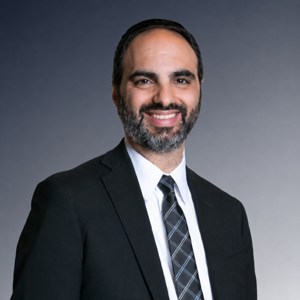
Living Emunah

Living Emunah

By Ashear, Rabbi DavidReligion & SpiritualityJudaism
Download on the App Store
  • Favorites

    27

    Followers

  • Typical duration

    6 min

    per episode

Based on Podcast App listening data

Living Emunah episodes

  • This Glorious Month
    " בניסן נגאלו ובניסן עתידין להיגאל "—just as our ancestors were redeemed in Nissan, so too will we be redeemed in Nissan. As we enter this glorious month, our hopes are higher than ever for the coming of Mashiach. We have been learning about the days of Mashiach in the Daf Yomi, and we see events unfolding in the world at large. It is up to us to do our part. Chazal teach us that our forefathers were redeemed from Mitzrayim in the merit of their emunah, and we, too, will be redeemed through our emunah. But what kind of emunah do we need? When the women brought their copper mirrors as donations for the Mishkan, Moshe Rabbenu initially did not want to accept them. However, Hashem told him that these mirrors were more precious to Him than anything else—more beloved than the menorah, which represents Torah, more than the mizbe'ach, which represents tefillah, and more than the shulchan, which represents tzedakah. What was so special about these mirrors? The men in Mitzrayim were suffering terribly. They had lost their will to continue, feeling that all their labor was in vain. The women used these mirrors to beautify themselves and encourage their husbands, giving them the strength to carry on. They reassured them, reminding them that there was a future—that Hashem runs the world. Their chizuk empowered their husbands to persevere and fulfill Hashem's will, even under the most trying conditions. The Tikkunei Zohar describes how Rabbi Shimon bar Yochai, when looking into the future, saw the generation before Mashiach and lamented, " ווי מאן דיזדמן בהאי זמנא "—Woe to those who will live in that time. Yet, he also said, " זכאה מאן דמשתכח בההוא זמנא וקיים בהימנותא "—Fortunate are those who will be in that time and hold strong in their emunah. Our Rabbis have told us that we are living in the עקבתא דמשיחא , the final generation before Mashiach. We are the very ones that the Zohar was speaking about. One might ask: throughout history, our people have endured immense suffering—the Holocaust and many other persecutions. By contrast, today, baruch Hashem , we live with religious freedom. Why, then, did the Zohar express such concern for this generation? A great rabbi once explained that while, as a nation, we may have it good, if we examine individual households, we will find so many struggling with personal challenges. The pain people carry is often hidden. Just the other week, in a single day, I was approached by eight different individuals seeking chizuk. One had just been told that his wife might lose her pregnancy. Another had suddenly and tragically lost her husband. One had been diagnosed with a terminal illness. Another was at risk of going to jail. One had a sick child, another was struggling with business problems, and yet another was facing shalom bayit issues. Late that night, as I was leaving shul, a husband and wife approached me. The woman began to speak about her daughter, who was having an extremely difficult time with shidduchim. At first, I expected the conversation to be like the others I had that day. But then she surprised me. She wasn't downcast at all. She told me that, eight years ago, she started a nightly emunah conference in the zechut of her daughter finding a shidduch. Today, over 400 women participate. And through it, she has gained an unshakable emunah—like a pillar of fire. She is so grateful to Hashem for all He gives her each day. She goes to other people's weddings with complete joy, celebrating without a trace of jealousy. Her emunah is contagious. Wherever she goes, she uplifts others, infusing them with strength and faith. This is exactly what the Zohar meant: Fortunate are those who live in this time and have emunah. Today, so many struggle with personal darkness. But those who find a way to rise above it and praise Hashem, despite their hardships, shine the brightest. In previous generations, our ancestors were like burning torches, illuminating the world with their Torah and mitzvot—but they lived in broad daylight. In contrast, we may be but small flames, yet we are burning in the thickest darkness. Though we may not reach the Torah and mitzvah observance of previous generations, we have an extraordinary opportunity. We can shine with our emunah, something so precious to Hashem. May Hashem strengthen our emunah and grant us the merit to greet Mashiach in this great month of Nissan. Amen.
    0 min
  • "Hashem Can Support Us in Infinite Ways"
    One of the great tests in life is in the area of parnasa . When a person doesn't know how he will earn the money he needs, and instead of panicking, he strengthens himself and places his trust in Hashem—this is a precious form of avoda . When the Jewish people left Mitzrayim, they faced this very test. They were entering a wilderness, a place with no food, and they didn't have enough provisions to feed their families. And yet, they trusted that Hashem would provide everything they needed. In response, Hashem told us through the Navi that He would always remember the kindness that the people did for Him when they left Mitzrayim by trusting in Him. The love He had for them at that moment was so intense, He compared it to the love a man has for his new bride. The Jewish people were then tested with the same challenge for 40 years in the desert. Would they try to gather extra man for the next day, or would they trust that Hashem would provide for them? And even though Hashem did provide for them, year after year, it was still considered a test all the way through the 40th year. This is because human nature is such that, no matter how good things have been until now, a person still worries about what will be tomorrow. No matter how many years everything has been taken care of, he still worries about the future. Someone who can overcome this worry and instead trust in Hashem rises to the greatest heights—and will be rewarded eternally for it. The Chovot HaLevavot , in Sha'ar HaBitachon, writes that whenever a person faces a test in parnassah and withstands it, he will be greatly rewarded. He brings as examples the Jews leaving Mitzrayim and being tested in the midbar with the man . We, too, can give Hashem the same avoda that our ancestors did—trusting in Him fully. The Chovot HaLevavot continues: Hashem has many ways of supporting a person, and therefore one should never give undue importance to any particular means. Many people today are anxious about recent tariffs placed upon imports from foreign countries. These tariffs threaten to take away the means that some people have relied upon for years to earn a livelihood. Markets are declining, and the economic outlook appears grim. But this presents a wondrous opportunity for a person to shine in the eyes of Hashem—to say, "I believe my parnasa comes from Him. He can provide no matter how many tariffs are imposed or how poor the markets look." If someone finds himself unable to sleep at night due to worry and manages to overcome it with bitachon , Hashem considers that to be an act of chesed —and it increases that person's chen in Hashem's eyes tremendously. This is the greatest response we can offer in these times. Life is a cycle: one day things are down, the next day they're up. The only things that really matter are our reactions and our emunah . Hashem can give a person parnassah in infinite ways. A rabbi recently related a story. One day, at 3:15 in the afternoon, he received a call from a man in Israel who desperately needed $2,000 to pay for the Sheva Brachot of his child. The man had tried several different avenues, but nothing had worked, so he turned to this rabbi—a friend in New York—for help. The rabbi said he would see what he could do. Less than five minutes later, the rabbi received a call from one of his congregants, who just wanted to share a quick story. As the congregant was backing out of his driveway, he noticed a little dog in his rear-view camera. When the dog didn't move, he got out of the car, and the dog ran in fear to the man's backyard. The man went about his errands, and on the way back, he saw a large sign that read "Missing Dog." It looked like the same dog he had seen earlier. He called the number on the sign and told the couple on the line that he believed their dog was in his backyard. They told him the dog had been missing since Friday—two days—and they were absolutely worried sick. They immediately drove to his house, and when they saw the dog, they were elated. They thanked the man profusely and handed him $2,000 in cash—the reward they had promised for the dog's return. The man accepted the money and then called his rabbi, saying he wanted to donate it to a worthy cause. The rabbi told him about the phone call he had just received five minutes earlier, and the congregant was happy to donate it for that purpose. The rabbi then called his friend in Israel and told him the amazing news: the money had just come in and he related the story of how it happened. The friend was overwhelmed and said, "Wow. Hashem is amazing. Look what He did for me." He added, "When I was thinking about how to get the $2,000, Hashem made someone's dog run away—across the world. Then He brought that dog to the house of a congregant of the rabbi I was going to call. And not just any congregant—a man who would want to donate the money and would immediately call his rabbi." Hashem can support us in infinite ways. Our job is to trust Him and to know that our parnasa comes from Him—and only Him.
    7 min
  • So Privileged
    One of our primary obligations in this world is to learn to fully trust in Hashem. It is an avodah that is so dear to Him. When the Jewish people followed Hashem into the desert after Yetziyat Mitzrayim , trusting that He would provide for all of their needs, it made them so beloved to Him. When Hashem wanted to redeem the Jews from slavery and they didn't have enough merits, He gave them two mitzvot with the same theme: showing trust in Him. They were to slaughter the Egyptian deity and trust that Hashem would protect them. And at the same time, they needed to get a brit milah , which would weaken them considerably, making them even more vulnerable to be attacked. Hashem wanted them to fully trust in Him, and that is how they became zocheh , to finally get out of Mitzrayim . The main area that Hashem wants us to trust Him in is in the way that He taught us to live. As we approach the holiday of Shavuot, Matan Torah , it is incumbent upon us to take this to heart, to trust that Torah and mitzvot are the absolute best thing for us. We are to feel so privileged to be the Am Hashem and to look to carry ourselves that way. There is no greater enjoyment in this world than living the life of Torah, but because from the outside it looks like a daunting task, not everybody is willing to jump in so fast. Once they experience the beauty of Torah, they feel bad they didn't get involved earlier on in their lives. Everybody has different moments that give them the boost they need to commit themselves to the lifestyle Hashem wants from us. The key is to capitalize on those opportunities. I read a story that was told by a teacher in a girls high school in Israel. She had a student, who we'll call Shira, who refused to dress according to the codes of modesty. Every time she was rebuked for it, she just tuned it out. She managed to graduate from that school and then went on to work. One day, a former teacher of hers met her in the street and was pleasantly surprised to see her fully dressed like a daughter of the queen that she's supposed to look like. She couldn't help but ask her what prompted her to make this big change in her life. Shira replied, “It all happened when I was walking in the street one day and an Arab terrorist shot and killed three people. I was standing to his right a meter and a half away, but he was shooting to the left and did not notice me. I ran to the nearest building, my heart beating wildly. I felt a deathly fear and couldn't calm down. My body was shaking. “It took me hours to finally breathe a sigh of relief and appreciate the great miracle that Hashem did for me. Everyone was talking about the terror attack and I heard someone saying that whoever is killed because he's Jewish, it's considered that he died al kiddush Hashem. And Shulchan Aruch says, whoever dies al kiddush Hashem is buried in his own clothing instead of the regular shrouds that people are normally buried in. “I started to think, if that terrorist had looked to his right, there would have been four victims that day instead of three and I would have been put in the grave in the clothing that I was wearing. I would have had to appear before the Beit Din shel Mala and give an accounting in those clothing. What an embarrassment, I thought. Those clothes would have been with me forever. What kind of chutzpah would it have been to stand before the Creator of the world in clothing that did not conform to His halachot of tzniut ? I would have been eternally embarrassed with nowhere to hide. From that day on, I decided I'm going to dress in a way that I would be proud to stand in front of Hashem in.” After she began dressing modestly, she truly appreciated the beauty of it and felt bad that she hadn't started earlier. Every mitzvah is beautiful and enjoyable. If we trust Hashem, we'll happily do every mitzvah the best way possible.
    6 min
  • Parashat Vayikra: The Honor of Humility
    The pasuk in this week's parsha states: " ויקרא אל משה וידבר ה' אליו מאהל מועד לאמר " - Hashem called to Moshe, and then Moshe entered to speak with Him. At the end of Parashat Pekudei, it says that Moshe was unable to enter the Ohel Mo'ed because the cloud of Hashem had descended upon it. However, in Parashat Mishpatim, it states that Moshe entered the cloud of Hashem at Har Sinai, which seems to indicate that he was able to enter. The Ohr HaChaim explains that in that instance, it first says " ויקרא אל משה " , meaning Hashem called Moshe in first. A person cannot simply enter a place where the Shechina resides. However, if Hashem calls the person in, then it becomes possible. That is why Parashat Vayikra begins with Hashem calling Moshe to enter the Ohel Mo'ed. What did Moshe do to merit this calling? The Shevet Mussar explains that Moshe did not contribute any donations toward the Mishkan, even though he was in charge of its construction. Specifically because he did not contribute, Moshe was chosen for this role—so that no one could ever claim personal credit for building Hashem's house. The Midrash states that the phrase " כאשר צוה ה' את משה " appears 18 times regarding the Mishkan. It gives a parable of a king who commanded his servant to build him a palace. On each part that the servant built, he wrote the name of the king—on the walls, on the pillars, on every detail of the palace. When the king entered and saw his name everywhere, he said: "My servant has honored me so much, and yet I am inside while he remains outside." Immediately, the king called his servant to enter the palace. Similarly, when Hashem instructed Moshe to construct the Mishkan, Moshe "wrote" on everything " כאשר צוה ה' את משה " . Hashem saw that Moshe had given Him all the honor, while he himself remained outside. In response, Hashem called Moshe inside. The phrase " כאשר צוה ה' את משה " reflects Moshe's complete self-nullification. He did not take any credit for his role; rather, he attributed everything to Hashem. Even though Moshe did not physically build the Mishkan, he stood by the workers, reminding them that their strength and talent came from Hashem. He even reminded Betzalel, despite his wisdom, not to lose focus and to recognize that all his abilities were granted by Hashem. The one who did not physically labor was the one invited in—because he gave Hashem the most honor. Humility, in which a person attributes everything to Hashem, brings Hashem honor. In turn, Hashem honors that person. The letter Aleph in Vayikra is small. The Gemara explains that in Moshe's humility, he wanted it to appear as Vayikar (without the Aleph ), implying that Hashem " ויקר -happened" to appear to him, rather than explicitly calling him. He wrote the Aleph small so it would not seem as though he was exceptionally deserving. In the end, Hashem used the extra ink from the small Aleph to make Moshe's face shine. Moshe's name is absent from the Haggadah because Yetziat Mitzrayim was meant to teach for all generations that Hashem alone controls the world. One of the reasons Moshe was chosen as the leader was because he was willing to remove himself from the story and give all credit to Hashem. His humility allowed him to gain immeasurably. Each day, we have the opportunity to serve Hashem in this way. The more we attribute everything we have and do to HaKadosh Baruch Hu , the more He rests His presence upon us. If we internalize that all success comes solely from Him, we truly honor Hashem—and in that merit, may He call us closer to Him. We all desire closeness with Hashem. The path to achieving it is through humility—by recognizing that everything we have and everything we accomplish is entirely from Him. Shabbat Shalom.
    6 min
  • Response To Tragedy
    A man told me he hasn't been able to sleep in four nights since the tragedy occurred this past Shabbat. He thinks about it day and night, and so many questions come to his mind. He can't fathom such a thing could have happened. First and foremost, we must use our feelings as a springboard to value life more and understand how transient and fleeting this world is and how there's nothing more important than our service to Hashem. This is the only thing we bring with us. Regarding our feelings of feeling bad for the people who left the world, we must know every person has a Neshama, and the Neshama never dies. We should not think that our Neshama is something beyond us that we don't have such a connection to. We are our Neshama, our thoughts, our emotions, everything about us comes from our Neshama. The body is not what gives us life. It is just the casing that surrounds us. When a person passes on, the only change that occurs is that the person sheds his case. The person is still alive. He still has the same thoughts. He has the same feelings. He moves on and lives in another location, a place that is far better than the world that we live in. When the soul leaves the body, that is when life truly begins. And for a person who did his job properly in this world, and all the more so pure, innocent children, their journey to Gan Eden is the most beautiful experience. From the first moment, they are privileged to see the radiance of Hashem's She c hina , and Hashem does not leave them. He escorts them to their luxurious abode in Gan Eden, and their relatives and friends who have moved on to Gan Eden come out to greet them. The Neshama has the semblance of our physical bodies. That is why when someone sees a relative in a dream, the relative appears the same way that he did down here. This world is such a small part of our existence. The next world is what lasts forever. When a baby is in the mother's womb, it can't imagine that there's life beyond the womb, but little does it know, when it comes out, there's a whole world in front of it. The same is true of the next world. We can't imagine another world out there, but there is one far better than this world in every possible way. Rabbi Yitzchak Isaac Sher was already in Israel when the Holocaust began. He eventually found out that his only son was amongst those who died Al Kidush Hashem back in Europe. When he found out, he gathered all his students together to give them chiz uk for the atrocities that were going on. Most of his students also lost many of their relatives. The rabbi began in a calm and peaceful tone. He started by saying a blessing for the bad tidings the same way he would on good tidings. And then he began describing to the students the delights and beauties that are awaiting in the world of truth. He said, "Imagine I was told that my son is in the upper story of my house right now, and he is filled with all the goodness that can possibly be experienced. Anything he wants, he could have. He is in a place of bliss and tranquility. The only issue is that the door to get in is locked, so I can't get in. Wouldn't I still be so happy for my son? This is the way we should feel about all our relatives. They are in the highest places in Gan Eden, enjoying with Hashem." When someone goes to Gan Eden, we don't have to feel bad for them. They have everything. It is us back here who are going to miss them. There is so much out there that we can't see. Hashem puts every person where they need to be for exactly how long they need to be there. One of the expressions that we use to comfort the mourners is hamakom yenahem etchem . The Sefat Emmet asks, why do we use the word etchem in plural? Even if there's only one mourner, we say etchem or tena c hamu min ha shamayim . We use the plural form of the word you. He answers, the phrase is meant to comfort not only the mourner, but the soul that departed. Because when the soul sees the mourners crying, he wants to tell them, "Don't feel bad. I'm right here, I'm fine. It's so much better for me now. You don't understand." Hashem does not allow the mourners to see the neshama , however. So the neshama feels bad for the mourners. When a visitor comes to the mourner, he brings consolation to the neshama as well, because the visitor is doing what the neshama wants to do, cheer up the mourner. And that is why we say hamakom yenahem etchem . May Hashem comfort you in plural, both the mourners as well as the souls that have departed. One should never think that if someone lives for a short amount of time and accomplishes, he would have accomplished more had he been given more time. The midrash tells us, Moshe Rabbeinu lived 120 years, leading the Jewish people in the desert for 40 years, bringing down the Torah to Am Yisrae from Shamayim . Shemuel Hanavi , however, lived for just 52 years. He served the people and carried their burdens while he was the leader. And the pasuk in Tehillim in Perekh 99 equates Moshe and Shemuel. And from here, our rabbis learn, it's not about the amount of time a person has. If the person did what he was supposed to do in the amount of time that Hashem has given him, he will gain the full reward in the next world. If someone is taken at a young age, the family and friends are going to miss him, but they should never feel bad that they are missing out. The ones who left the world don't care to be missing out on anything here. They are in a much better place. May Hashem console the mourners and may all of us become inspired to improve our ways and get closer to Hashem.
    7 min
  • Do Not Budge
    If, lo alenu, a tragedy occurs and everyone who hears about it thinks "How could such a thing happen? The people affected are so righteous. How could they be suffering like this now? Isn't Hashem merciful? How could all of this suffering be considered mercy?" This is one of the most difficult questions in emunah to deal with. Emunah means to believe, even though we don't comprehend. We never change our emunah because of something that appears to contradict it. The Rambam wrote, in his Igeret Mussar, to his son, "כאשר תמצאו כתוב עמוק ומאמר נבוך – if you ever come upon something written that is very deep and obscure, whether it's something in the Torah, Nevi'im or Sifreh Chachamim – אשר לא תבינוהו – which is not understandable – ונראה כסותר פינות התורה – and it appears to be contradicting fundamental principles of Torah – אל תזוז מאמונתכם – do not budge from your emunah – עמדו בחזקתכם – hold on to what you have been accustomed to believe – והפחיתות ההוא חשבוהו בכם – and the fact that you don't understand what it's saying is just a result of your human deficiency – הניחוהו בקרן זוית – put it on the side for now and don't change your emunah because of a question." This is how we are supposed to think. If something happens in the world that doesn't seem to conform to what we know about Hashem. In the future, Hashem is going to give a big class on everything that ever took place in this world and, at that time, everything will make perfect sense, and we will see clearly how merciful and righteous Hashem always was. Now is when we have the opportunity to believe even if we can't see it. There is so much out there that we can't comprehend – Gan Eden, Olam Haba. When a tzaddik leaves the world, he has the most wonderful experience moving on to a much better place. We don't see what's going on on the other side. A Rabbi was once speaking to an audience about tragedy and he spoke about the real purpose of life and this world, namely to earn the merit to enjoy with Hashem for all of eternity. After the class, a young widow approached and said, "I believe everything you said, Rabbi, and I know my husband couldn't be happier now where he is in the Olam HaEmet. But what about me? How am I supposed to go on, raising little children by myself? The pain I'm going through is too great to bear. I can't imagine being able to live another day like this." The Rabbi felt this young woman's pain and tried to empathize. He then said he knows a man personally who experienced a similar tragedy and lost his young wife suddenly. He was left with little children to take care of all by himself. At that time he was saying the same words: He can't imagine to go on in the position he's in. How could he continue with the pain? How could he possibly raise those children without his wife? About a year later, this man got up to speak in front of hundreds of people at an Azkara for his wife. He said there, he wants to publically give hakarat hatov to Hashem for the help He has provided him with during that first difficult year. He said although he was not able to work that much because he was tending to his children, he had one of the best years financially that he ever had. He thought that the day to day life was going to be impossible, but he said Hashem gave him strength to persevere. Baruch Hashem his children are happy and well taken care of. And he has received an outpouring of love from so many friends and relatives. Even during the darkest times, when it is so hard to see Hashem, He is there holding a person's hand every step of the way, kavayachol saying, "I wish you could understand why this had to happen. One day you will, but for now, don't worry, I will be here for you. I will give you the strength that you never thought you could have." In this world, our emunah is tested, but if we hold on tight and trust in Hashem we will reap the greatest rewards.
    6 min
  • When Tragedy Hits
    The tragedy that has just struck our community has affected the entire Klal Yisrael. On Shabbat Kodesh, Erev Rosh Chodesh Nisan, our world was shaken. Three holy nishamot ascended to Gan Eden Ha'Elyon as korbanot olat . נסתרים דרכי ה . The ways of HaShem are beyond us. From our vantage point, we see tragedy, we see pain and suffering, and we see difficult days ahead. In shamayim , there's a completely different picture, one in which we are not privy to see. The Navi tells us, the day will come when בלע המות לנצח ומחה ה' אלקים דמעה מעל כל פנים , death will cease and HaShem will wipe away all of our tears. The Gemara says this means that HaShem , with all of His splendor and glory, will personally console every individual for all of the tragedies and hardships that they had to suffer in this world. At that time, He will explain how it was all done with love and mercy, and then we will be fully consoled. For now, we look toward the Torah for guidance. The Torah tells us that on Rosh Chodesh Nisan, at one of the happiest times in all of history, the inauguration of the Mishkan , two of the greatest tzaddikim of the time were taken. It was a year like this, in that Rosh Chodesh Nisan fell out on the first day of the week. HaShem said, בקרבי אקדש -His name becomes sanctified by taking the ones that are closest to him. We have no concept of what the death of tzaddikim accomplishes. We do know that it elevates the name of HaShem . We do know that it atones for us, and we do know that it brings us closer to the Geula, but there's so much that we don't know. As far as we are concerned, the Torah tells us, וכל בית ישראל יבכו את השרפה , we are to feel the pain of the mourners and cry along with them. We want so badly for them to have consolation. It's hard for us to go through our regular day now without thinking about this tragedy. This is one of our strengths. We share in the burden of our friend's pain. The Gemara says כל המרחם על הבריות מרחמין עליו מן השמים , simply this means whoever shows compassion to others is treated compassionately by HaShem . The Rishner Rebbe, however, explained this line a little differently. When a person deals compassionately with his friend in pain, then HaShem gives extra compassion to that person in pain. By sharing some of his burden, we are able to alleviate his pain. If the ones who left this world would be able to talk to us right now, they would say, we are fine. We have reached the place that we came down to this world to get to . And seeing this world from their vantage point, they would tell us to utilize every moment that we have wisely and to resolve to improve in our service of HaShem . If we don't feel like doing something in the physical realms now because of the tragedy, that's okay. But we should not let this cause us to refrain from doing anything spiritually. If we make any improvement whatsoever in our service of HaShem , we will be directly benefiting the three holy souls, because they will be rewarded for whatever we do, because they have caused it. They would also tell us to please strengthen yourselves, to please utilize your time in this world to do what's important. Strengthen your marriages, be a better parent, be a better friend, make Shalom. Don't let petty things bother you. If we can commit to being stronger in our service of HaShem , we will not only be benefiting the Niftarim , we'll be benefiting the family left back as well. Now is the time of year that is the most auspicious for Geula. If the Jewish people at large become awakened to improve in their service of HaShem , be'ezrat Hashem this will be the last thing that we need for the M a sia c h to come . May HaShem console the mourners and console all of us, and may the family be reunited speedily with the coming of the M a sia c h soon. Amen.
    6 min
  • Parashat Pekudei: No Matter What
    Living Emunah 2738 Parashat Pekudei: No Matter What In the beginning of parashat Pekudei, the Torah calls the Mishkan, the Mishkan of testimony. One of the things it testified to was Hashem's great love for us. The Mefarshim are bothered why the Torah repeats so much about the Mishkan in parashiyot Vayakhel and Pekudei, after they were already mentioned in Terumah Tetzaveh. Some explain the Jewish people were commanded to build a house for Hashem before they did the Chet Haegel. After they committed that grievous sin, they felt so distanced from Hashem and feared they would never be able to bring His presence down to dwell amongst them. However, after they made Teshuva, Hashem told Moshe to tell the Jewish people that He wants the exact same Mishkan built with every detail and that He was going to dwell with them. And that is why the details are repeated after the Chet Haegel. We see from here that no matter what a Jew does, Hashem always wants him back. We should never feel that because of our sins that Hashem doesn't want us. All we have to do is say that we are sorry and Hashem will be waiting with open arms, kavyachol, to bring us closer. Rabbi Snir Gueta told a story about a young woman named Shlomit. After years of waiting for a child, her parents were blessed with her birth. Tragically, a few years later, her mother fell ill and passed away, leaving her father to raise her alone. He tried his best to connect to his daughter and give her all the love and attention that he could. As she grew during her teenage years, she began drifting from the religious path that he was trying so hard to keep her on. As she got older, she drifted further until she was constantly arguing with her father about religion. She told him outright she was not interested in being religious. Her father kept telling her that he promised her mother that he would raise her to be a true Bat Yisrael, but she wouldn't change. One day she told her father she was leaving home and moving to India. Her father yelled at her, saying that she was being so insensitive, ignoring his request and leaving him all alone. She apologized for leaving him, but said she was going no matter what. Her father, in a moment of desperation, said to her, "If you leave, you are not welcome back. I will never forgive you for this." Her friends were waiting outside, and she left. She was in India for three years. At that time, one of her friends from Israel traveled there, and when she saw her, she hugged her, telling her how much she missed her. And then she gave her her condolences over the death of her father. Shlomit couldn't believe what she was hearing. She had no idea that her father passed away. She began crying uncontrollably, regretting the nonsense that she had been involved in over the past three years, completely abandoning her father and Hashem. She took the next flight back to Israel, and went straight to the cemetery, searching for her father's grave. When she finally found it, she sat there, crying, begging for him to forgive her. She said, "Please, Abba, I made the worst mistake. I will come back to Hashem now. All I want is for you to forgive me." She then went to the Kotel. She stood right by the mechitza between the men and women, and pulled out a piece of paper and wrote a note to Hashem, asking Him to please show her if her father forgave her for what she did. She put the note in the wall, and it immediately fell out. There was no room in any hole there for her note. She saw by the edge of the mechitza, in the men's section, an opening, and she put it there. When she put it down, another note fell out. She picked it up, and saw the name Shlomit bat Chana. She opened it, and began to read, and started to tremble. It said, "Borei olam, my daughter is in India, please bring her back to Teshuva. Her name is Shlomit Bat Chana. If I could talk to her right now, I would tell her that I forgive her for everything. All I want is for her to come back to You, Hashem." Shlomit broke out in tears, and thanked Hashem, and fully came back to Torah and Mitzvot. A human father is willing to take his daughter back, no matter what she does. All the more so, Hakadosh Baruch Hu wants every one of His children back, no matter what they have done. Hashem loves and wants every Jew close to Him. All we have to do is be sincere. Shabbat Shalom.

    6 min
  • How Much Hishtadlut?
    A man asked the following question: He is leaving a job that he had for many years and now has two potential job offers. One is close to his home and will earn him enough to cover his expenses, but there is no potential to earn more through commissions. The second job is an hour drive from his home, which will require more hours of work and is a more difficult job. It will give him the same salary, but has potential for more income based on commission. He wanted to take the local job, but his wife is wondering, perhaps, if he is supposed to make more money, he will now be limiting himself by accepting the job that pays less. The Chovot Halevavot in the Shaar Habitachon (chap. 4) deals with this question. He says, when it comes to parnasa, a person should work with the goal of doing enough just to cover his basic requirements in this world. If Hashem determines that a person should be wealthy, he will earn that wealth without having to invest any additional effort. And if he is not destined to be wealthy, even if everyone in the entire world, both in the heavens and the earth, all the angels and human beings would try to help him and add to what he is getting, they would not succeed. This can be understood in light of what the Chovot Halevavot teaches us in the previous chapter. There he explains the rationale of why Hashem wants us to make hishtadlut in the first place. One reason is because in the process of earning a livelihood, there are numerous tests to overcome and by a person staying faithful to Hashem throughout the process, he will earn immense reward in the Next World. The second reason is because if a person would have too much free time, it would lead to sin. The conventional thinking is that we need to work to earn money. Chovot Halevavot is teaching us Hashem doesn't need our efforts to give us money. He has a completely different set of reasons for why we go to work. This means that Hashem required us to make a certain effort to earn a livelihood and once we've done that, He will give us exactly what we are destined to earn. The effort required is just to earn the bare minimum to get by, and therefore, regarding the current question, it is obvious that the man should take the closer job. His goal is to use the extra time to learn Torah and grow spiritually. Since the job will cover his basic expenses, it's a sufficient hishtadlut. He will earn every penny that Hashem decrees for him to have. If it is more than the employer is currently offering him, it will come another way, or the employer will give him a raise. Hashem has infinite ways of giving a person parnasa. If someone is working harder than he needs to earn the bare minimum and is making a lot of money, he may feel that it is his extra hard work that is paying off. Chovot HaLevavot compares him to a man who was walking in the desert and overcome by thirst. He found a pit with murky water and drank as much as he could. When he traveled a bit further afterward, he found a spring with pure sweet water. When he discovered that spring, he felt bad that he already filled himself to capacity with the disgusting water. If he would have just waited a little longer, he would have been able to enjoy the clear water instead. It is the same with the man who works overtime and earns a lot of money. If he would have worked less and put in more time for Torah, Mitzvot and his family instead, he still would have earned the same amount. Only it would have come without all of that additional effort. Our hishtadlut is not what produces our money. We do hishtadlut because Hashem tells us to. And when we fulfill His requirement, then He will give us exactly what we're meant to have.
    5 min
  • Only in the Hands of Hashem
    On the night before Yetziat Mitzrayim , when Hashem struck the Egyptian firstborns, the Jewish people were commanded to remain inside their homes until morning. Rashi explains that Chazal teach in Masechet Bava Kama : " - מאחר שניתנה רשות למשחית לחבל אינו מבחין בין צדיק לרשע - Once the destroying angel is given permission to destroy, he no longer distinguishes between a tzaddik and a rasha ." Since the angel had permission that night, the Jewish people were instructed to stay indoors and out of harm's way. At first glance, this seems troubling. Does it mean that even a tzaddik can be harmed, despite his righteousness? How do we reconcile this with Avraham Avinu's plea when he heard that Hashem planned to destroy Sedom ? He said, "Far be it from You to kill the righteous along with the wicked!"—suggesting that Hashem would never allow a tzaddik to suffer unjustly. The Emek Beracha writes further that a tzaddik even has the power to repel the destroying angel, as we see with Aharon Hakohen and Pinchas , who halted plagues through their actions. In the beginning of Parashat Vaera, the pasuk says, וידבר אלוקים אל משה ויאמר אליו אני ה '. Hashem used His name of judgment and mercy in the very same pasuk. The Ohr Hachayim there explains, Hashem was telling Moshe, While I was dealing with the Egyptians with harsh judgement, simultaneously I was granting mercy to the Jews, even though they were mixed in with each other. Even though the destroying angel was given permission to destroy, Hashem still had mercy on the Jews. The Rambam teaches that as long as a tzaddik maintains a deep connection to Hashem in his thoughts, he remains untouchable. The Gemara in Masechet Shabbat states, "There is no death without sin and no affliction without transgression." There is never a moment that everything is not being completely controlled by Hashem. A destroying angel is just another one of Hashem's millions of agents carrying out His will. The Alsheich strengthens this point based on the pasuk that states Hashem stands amidst the judges when they are judging a court case. A judge must be fully aware of Hashem's presence so that He does not sway the judgment by even one iota. The Gemara says a judge should feel like the gates of Gehinom are open beneath him and as if there is a sharp sword stretched out against him if he purposely judges a case wrongfully. Look how much Hashem cares about the right judgment being done. He doesn't want someone who doesn't owe money to pay. He doesn't want someone who doesn't deserve a penalty to receive it, whether it's lashes or worse. Then how could it possibly be that He would allow a Tzaddik to suffer or a destroying angel not to be מבחין בין צדיק לרשע if he doesn't deserve it? The Alsheich explains, when Chazal said the angel doesn't distinguish, refers to when Hashem sends the angel of death to take the lives of people who are committing the worst of averot. That becomes a time of Din. At that time the angel is given permission to see everyone's sins illuminated on their foreheads. If a tzaddik has a sin that is fitting to be punished in a similar manner, then the tzaddik will be taken as well. Normally, Hashem, in His infinite mercy, gives people years to make teshuva. Someone could even be given decades before he is punished for a sin in the hope that he will repent and not need to be punished. However, if there is a time of divine decree, then the sins of the tzaddik will be brought to light. However, if the tzaddik does not deserve to be punished, the destroying angel will have no power over him. And if he is a tzaddik gamur , he will even repel the angel. The bottom line is we are always under the hashgacha of Hashem. No person or angel ever has any power of its own. Therefore, we can be calm knowing that we are always only in the hands of Hashem.
    6 min

About Living Emunah

From the publisher's feed

A Daily ethical teaching by Rabbi David Ashear

Best of Living Emunah

Ranked by our users in the last 21 days

More shows like Living Emunah

The Rabbi Sacks Legacy by Rabbi Lord Jonathan Sacks

The Rabbi Sacks Legacy

557 Listeners

The Israel Guys by The Israel Guys

The Israel Guys

308 Listeners

Jewish Stories to Inspire: Motivational & Spiritual Stories Based on the Torah's Ethics, Values and Wisdom by Stories to Inspire

Jewish Stories to Inspire: Motivational & Spiritual Stories Based on the Torah's Ethics, Values and Wisdom

186 Listeners

Living with Emunah by Rabbi Efrem Goldberg

Living with Emunah

110 Listeners

Meaningful People by Meaningful Minute

Meaningful People

1,987 Listeners

From the Inside Out: With Rivkah Krinsky and Eda Schottenstein by Rivkah and Eda

From the Inside Out: With Rivkah Krinsky and Eda Schottenstein

263 Listeners

The Q & A with Rabbi Breitowitz Podcast by Rabbi Dr Yitzchak Breitowitz

The Q & A with Rabbi Breitowitz Podcast

234 Listeners

Call Me Back - with Dan Senor by Ark Media

Call Me Back - with Dan Senor

3,197 Listeners

The Times of Israel Daily Briefing by The Times of Israel

The Times of Israel Daily Briefing

1,070 Listeners

Kosher Money by Living Lchaim

Kosher Money

821 Listeners

History for the Curious - The Jewish History Podcast by JLE

History for the Curious - The Jewish History Podcast

232 Listeners

Gedale Fenster - Podcast by Gedale Fenster - Podcast

Gedale Fenster - Podcast

399 Listeners

Honestly with Bari Weiss by The Free Press

Honestly with Bari Weiss

8,473 Listeners

Inspiration for the Nation with Yaakov Langer by Living Lchaim

Inspiration for the Nation with Yaakov Langer

1,120 Listeners

Stories Of Hope With Tzipora Grodko by Meaningful Minute

Stories Of Hope With Tzipora Grodko

324 Listeners