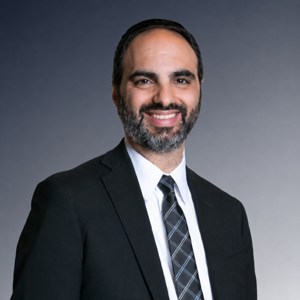
Living Emunah

Living Emunah

By Ashear, Rabbi DavidReligion & SpiritualityJudaism
Download on the App Store
  • Favorites

    27

    Followers

  • Typical duration

    6 min

    per episode

Based on Podcast App listening data

Living Emunah episodes

  • The Hidden Miracles That Save Us
    We say everyday in Pesukei DeZimra , " אהללה ה' בחיי . The Ketav Sofer explains that this means we should praise Hashem simply for the gift of life itself. " אזמרה לאלוקי בעודי "—I will sing to Hashem for all the extras He gives me. When we truly recognize our blessings, we will not only praise Hashem, but we will sing to Him with joy. There are so many potential dangers in the world, and Hashem, who is the Shomer Yisrael, is constantly watching over us. We have no idea about how much Hashem protects us, but we do know that He does, and we must thank Him for that, too. A rabbi shared how his wife went for a routine checkup. Since she was over 50, the doctor recommended a colonoscopy. She delayed the appointment several times until, one day, she received a message asking if she wanted a Cologuard test kit, which allows for an at-home screening. She agreed, and days later, two kits arrived instead of one—an apparent mistake. Since they had an extra, she told her husband to take one as well. They both sent in their samples, and the doctor informed her husband that his results were positive, requiring further examination. Although he had no plans to undergo a colonoscopy, he now had no choice. During the procedure, they removed polyps and discovered additional growths requiring surgery. Everything moved quickly from that point. They were able to get appointments due to last-minute cancellations. On the day of the surgery, the doctor informed him that if the growth was too close to the rectum, they would not be able to reconnect it, and he would have to wear a bag for the rest of his life. Baruch Hashem , the surgery was a success. It took an hour and a half longer than expected, but they removed everything, and he would not need a bag. The rabbi sang the praises of Hashem. He had no idea how much danger he was in, yet Hashem sent him exactly what he needed—through the mail—to save his life. Only Hashem knows the dangers people face and He has infinite ways of protecting them. Rabbi Binyamin Pruzansky shared a powerful story that took place last year on Erev Pesach in the Geula neighborhood of Yerushalayim. Rabbi Zev, a talmid chacham , went to Shacharit after spending nearly the entire night preparing for Pesach . He was scheduled to make a siyum for the firstborns at his shul . After tefilla , everyone gathered for the siyum . He was finishing Massechet Baba Kama. He went to the sefarim shelf to pull off a Hebrew Artscroll gemara to finish the masechet with. This masechet is divided up into three volumes in the Artscroll Shas. He opened the Gemara and began reading out loud. It was then that he realized he pulled out the wrong volume. The waiting men shifted impatiently as the rabbi went back to the sefarim shelf and pulled out a different volume. When he turned to the end of that massechet, he saw again it was the wrong volume. How could I make such a fool of myself twice? He silently rebuked himself. I must be much more tired than I even realized. Finally, on the third attempt, Rabbi Zev got it right. He read the last few lines and made the siyum. As the men began eating the celebratory cake, the door of the shul suddenly burst open. A man ran inside, announcing that there had just been a terror attack. Two terrorists had driven down the street trying to ram pedestrians. When they saw no one outside, they got out of their car and began shooting. Miraculously, their gun jammed, and no one was harmed. The people in the Beit Midrash realized that had Rabbi Zev pulled out the correct Gemara on his first attempt, they would have finished earlier and been outside at the very moment of the attack. We have no idea how much Hashem protects us every single day. It is our responsibility to thank and praise Him for the life that He gives us.
    6 min
  • It’s Not All or Nothing
    When a person is going through a difficult time, or if he experienced an embarrassing situation and is feeling a great deal of pain as a result. He thinks about it day and night and can't concentrate fully on anything else he tries to accomplish. He tries again and again to put it out of his mind but to no avail. One of the ways in which he can feel better about what happened is by internalizing that it came from Hashem. Although a person may have been learning emunah for years and has learned countless times that everything comes from Hashem, when it comes time to actually apply it, it is not so simple. Being that the circumstances which brought about the difficulty usually seem so natural, it's hard for a person to feel Hashem's hand behind it, especially when it seems like other people are the cause of their problem. However, just because a person's initial reactions are not like the greats of all time, it doesn't mean they can't achieve the level of emunah they hoped they would have had. All it means is they need an extra boost to get there. Whether it is listening to a few classes on emunah or reading a book on emunah, or speaking to other people about what happened, or just internally convincing themselves of the real truth, with a little extra effort, they will be amazed at the results. It is never all or nothing. Sometimes, just a little emunah will take the edge off and that will accomplish so much for the person. The more effort we put into it, the better the results will be. Rabbi Pinchas Shafer related a story that a man told about himself. The man said, he has a friend of many years whom he trusted and with whom he shared things that he would not tell just anyone. One day, that friend took advantage of their closeness in order to insult him terribly. The pain he experienced was unimaginable. It hurt him so much, he literally did not know what to do with himself. The negative emotions overwhelmed him. He tried to think it through logically and find some points in his friend's favor, but he was so distressed he was unable to do that. He decided he needed to work on his emunah so he called a hashgacha peratit hot-line and listened to a song with the words from the first Ani Maamin – "I believe with complete faith that the Creator, yitbarach Shemo , creates and orchestrates the entire Creation and He alone makes everything happen, as He always did and always will." He listened to this song again and again, dozens of times, until he finally felt calm and it was clear as day to him that this friend was just a messenger of Hashem. Once he calmed down, he started thinking about a possible message that Hashem might be telling him. He then recalled that he once hurt someone else with a similar type of insult, thinking he was acting l'shem Shamayim by doing so. But perhaps he was wrong and he needed to get forgiveness from that man. He then thanked Hashem for giving him this thought process. The very next day, in his regular learning, he was up to page 105 in Masechet Yevamot and encountered a story about a Rabbi who mistakenly embarrassed somebody else, thinking he was l'shem Shamayim for doing it. The Gemara , however, said he was wrong and he had to suffer the consequences. This man felt like Hashem was talking directly to him and, baruch Hashem, he was able to get forgiven. Whenever someone is struggling with emotional pain and it is so hard for him to think clearly, with a little extra work in emunah, it will make the situation much easier for him to deal with.
    0 min
  • The Ones Who Step Up, Succeed
    The pasuk in Parashat Vayakhel states that Hashem filled the hearts of Betzalel and Aholiav with wisdom to carry out the intricate work of constructing the Mishkan . Rav Shach asked: Why were these two individuals chosen over anyone else in Klal Yisrael ? He explained that when the people heard Moshe announce Hashem's command to build the Mishkan , no one wanted to take responsibility for such an overwhelming task. It seemed impossible. But Betzalel and Aholiav stepped forward, not because they already possessed the necessary skills, but because they believed in the mission. They understood that "it is not the capable who do, but rather those who do become capable." They wanted to take on the responsibility, and after Moshe appointed them, Hashem filled their hearts with the wisdom they needed to succeed. Their zechut has benefitted Kelal Yisrael for all generations. After David HaMelech killed Goliat, Goliat's brother sought revenge. A man named Elchanan ben Ya'areh struck Goliath's brother down with a weaving tool before he could cause harm. Rashi explains that Elchanan was a descendant of Betzalel, and in the zechut of Betzalel's weaving of the Parochet in the Mishkan , Hashem gave Elchanan the ability to eliminate this threat with the very same type of tool. Another powerful story is told about the father of Rabbi Aholiav Chiyun. He was 90 years old when his son was born. His wife, much younger than him, desperately wanted a child. She went to pray at the kever of Aholiav ben Achisamach in Sidon, and miraculously, they had a son. They named him Aholiav, attributing his birth to the zechut of Aholiav ben Achisamach. At four years old, however, the boy still had not begun to speak. His mother returned to the kever to pray again, bringing her son with her. Before she even finished her tefilla , he opened his mouth and asked her a question. She was so shocked that she nearly fainted. That boy later grew up to become a gadol b'Yisrael and was a chavruta of Chacham Ovadia Yosef in Yeshivat Porat Yosef . Betzalel and Aholiav stepped forward to do Hashem's will, and He gave them the ability to succeed. Their zechut continues forever. When a person is moser nefesh to do what is right, Hashem grants him special siyata dishmaya to accomplish it. Rabbi Goel Elkarif told a story that he heard directly from the person it happened to. Today, this man is a talmid chacham living in Yerushalayim. When he was in shidduchim , he was introduced to a girl with outstanding middot and deep yirat shamayim . However, no one told him that she suffered from a severe stuttering problem. When they met, he immediately noticed the issue. But because of his sterling character, he wasn't going to reject her solely because of it. They continued seeing each other. She was perfect in every way except for her extreme speech difficulty. With great emunah , he decided to move forward and got engaged to her. Amazingly, the day after their engagement, her stuttering disappeared completely and never returned. She had seen doctors, therapists, and specialists, but nothing had ever helped. Yet the moment she was engaged, the problem vanished. This chatan was moser nefesh to do what he believed was Hashem's will, and in return, Hashem gave him the greatest gift. Hashem can help us with anything. Our role is to do His will, and He will take care of the rest. Shabbat Shalom.
    5 min
  • Every Jew Feels the Truth
    Rabbi Eli Mansour's NEW Book - Maayan Eliyahu on Pesah is here!! (Derashot in English for the upcoming Sedarim) CLICK THE LINK BELOW TO ORDER YOUR COPY https://itorahbooks.com/produc ts/maayan-eliyahu-pesach- hardcover?mc_cid=08f9dc045e& mc_eid=f5807e4c64 Every Jew has a neshama that is literally a part of Hashem. No matter how distant a person may seem from religion, he will always have an inner connection to Hashem—because that is his essence. Deep down, every Jew has emunah ; sometimes, it just needs to be brought out. A man once shared that he was at a hotel for Pesach , and early one Chol HaMoed morning, he went to the breakfast room to prepare a bottle for his daughter. A waiter approached him and asked for a d'var Torah . It seemed like an unusual request, as the waiter did not look Jewish. After sharing a Torah thought, the man was shocked when the waiter revealed that his mother was Jewish—but he was about to marry a non-Jewish woman. Recognizing the significance of the moment, the man introduced him to the rabbi at the hotel, who spoke to him at length, trying to convince him to reconsider. Amazingly, four years later, this man is now fully religious and engaged to a bat Yisrael . The neshama of a Jew yearns for a relationship with Hashem, even if it may not seem that way on the surface. A rabbi from Arachim , a well-known outreach organization, shared a similar story: Many years ago, he was on a flight from New York to Israel. Sitting next to him was a man named David, who took a sleeping pill the moment the flight began. Something about David seemed familiar, but the rabbi couldn't place where he knew him from. Five hours later, David woke up, and the rabbi tried to start a conversation. David immediately shut him down. " I'm not interested in religion. I don't want to discuss it. " He mentioned that he had gone to yeshiva as a child but had since left religion entirely. It was then that the rabbi realized—David had attended the same yeshivah as he had! Curious, the rabbi asked him why he had abandoned Judaism. David explained, "At first, I felt lonely in yeshivah and realized I wasn't going to become anything special there. Slowly, I started becoming angry—first with the people, then with the religion. And now, I don't even believe in Hashem anymore." The rabbi asked if he could share just one story. David agreed. The rabbi told him about an event that had been recorded by Simcha Raz, the author of Ish Tzadik Hayah , about Rabbi Aryeh Levine. Simcha Raz was once invited to a gathering of dignitaries, where some of Israel's top military officials were present. He was the only one in the room wearing a kippah , and some people began challenging him about his belief in Hashem. He asked them, "When you go into battle, do you have a plan, or do you just wing it?" A general replied, "Of course, we have a plan! We also have a Plan B in case Plan A doesn't work. And we even have a Plan C in case Plan B fails." Simcha Raz then said, "I see that you don't believe in Hashem. But what if you're wrong? What if, after 120 years, you are banished from Olam Haba? Shouldn't you at least have a Plan B—just in case?" The general responded, " You only need a Plan B when there is a doubt about Plan A. But I have no doubt that religion is false. In fact, to prove it, I'll even write you a contract right now, signing over my Olam Haba to you." And so they did. The general wrote up a contract, signed it, and handed it over to Simcha Raz. Two days later, the general's son showed up at Simcha Raz's house, pleading for the contract back. At first, Simcha refused. He told the boy to come back in a few days. Then, he asked his rabbi what to do. His rabbi advised him to return the contract. When the son came back two days later, begging once more, Simcha gave it to him. The boy then revealed, "My father doesn't want to take the risk. He decided to follow your advice and have a Plan B." The rabbi then told David, "You see every Jew deep down feels the truth. Maybe you should second guess your decision about leaving Hashem." David remained silent, and that was the last they spoke on the plane. But recently, the rabbi attended an Arachim seminar—and saw David there, wearing a kippah . David told him, "When I saw all the hostages who weren't religious before saying that what kept them going was their tefillot, their Tehillim, and their connection to Hashem, I realized—I don't want to take the risk. Maybe it's real." Every Jew has a spark inside of him, yearning to be close to Hashem. If we ever have the opportunity to help someone who has strayed, we must remember—deep down, they want it. They just need the right words to bring it out.

    6 min
  • The Salvation Is Already There
    During this month of Adar , we are meant to increase our happiness—a joy that stems from true emunah in Hashem. By studying the miracles of Purim and Pesach , we gain chizuk and learn to appreciate how fortunate we are to have Hashem guiding us at all times. When salvation came in both instances, it arrived כהרף עין —in the blink of an eye. ונהפוך הוא —in Purim the Jewish people went from mourning to celebration on the very same day. Yetzias Mitzrayim was done b'chipazon —they were rushed out of Mitzrayim , triumphantly marching to freedom. Both salvations were planned years in advance. In Purim , Hashem was מקדים רפואה למכה —He prepared the salvation even before the decree was issued. And in Mitzrayim , the night of Yetzias Mitzrayim is called ליל שמורים —a night Hashem had planned and anticipated for years. Whatever challenge a person finds himself in, he must recognize that salvation is already there—he is simply asking Hashem to reveal it to him. A woman shared that this past September, her husband started losing his hair due to alopecia. At first, they had no idea what was happening as patches of hair were randomly falling out. After seeing multiple doctors and doing extensive blood work, they were told that he had a severe case of alopecia—and there was little they could do to stop it. Her husband was a young man with a full head of hair—his identity, in a way. The diagnosis was devastating, and they struggled to cope. Soon after, he developed an inflammation, and the hair loss became even more extreme. There was one medicine that might have worked, but it would have compromised his immune system and made him highly susceptible to illnesses. After consulting with rabbanim, they decided it was too dangerous to take. The doctors prescribed a cream for his face, which they doubted would work, but they suggested he try growing a beard with it. "Please don't get your hopes up," they cautioned. From that day on, he and his wife grew in many areas of avodat Hashem , strengthening their commitment to Torah and mitzvot . Baruch Hashem , a few months later, he grew a full beard. Overjoyed, his wife told their rebbetzin about the miracle and asked what she could do to express her gratitude to Hashem. She suggested doing the mitzva of covering her hair. After much internal debate, she made the decision to do it. When they returned to the doctor, he was stunned. "Never in my career have I seen such improvement and recovery without any real medication," he told them. He then put her husband on a very light medication and said he expected a full regrowth within three to six months, b'ezrat Hashem . They went from hearing "there's no chance" to "we have never seen such a recovery." That is Yeshuat Hashem k'heref ayin . A rabbi shared another story: His daughter and son-in-law recently bought a home, using every last dollar they had to purchase it. It was a bargain they couldn't pass up, but it left them struggling with daily expenses. They knew they would be able to get back on their feet, but it would take at least a month until their next paychecks arrived. That Friday, their car broke down. They had no idea how they would afford the repairs. When the mechanic called, he said the car was ready and everything was fine—the total cost was just $100. As she opened the car door, she noticed an envelope on the passenger seat with the words Chag Sameach—Love, Dad written on it. She opened it and found $500 in cash. Confused, she called her father to ask about it. He replied, "There's no chag now—I didn't leave that envelope there." Then he recalled that he had given her an envelope last Pesach . She must have misplaced it in the car, where it had ended up in the glove compartment. The mechanic, while fixing the car, had emptied the glove compartment and unknowingly placed the envelope where she would find it. Hashem had set aside that money for her a year before—waiting for the moment she would need it most. When the time was right, Hashem caused the car to break down so the money would be revealed. Hashem has what we need waiting for us. We just need to pray to Him to expose it.
    6 min
  • Getting the Message
    Usually, the way the world works is that events in the physical realm are influenced by our spiritual actions. We are all on a mission in this world, and Hashem ensures that we have the opportunity to fulfill it. Most of the time, the reasons behind what happens to us are hidden. There are endless calculations behind every event, and we can never fully comprehend them. However, sometimes Hashem sends us clear messages, guiding us toward what we need to improve. I read of two such stories, told firsthand by the people who experienced them, in a Hashgacha Pratit bulletin. The first was shared by a man we'll call Ralph. One night, about five years ago, Ralph was driving home from the grocery store, feeling good about his financial success. He had a great job, was making good money, and could buy whatever he wanted. As he was putting away the groceries, he noticed a mouse in his house. He told his wife, and they both became nervous. The next day, they set traps, but they didn't work. They tried poison, but that didn't help either. Over time, the mice multiplied, until it felt like they were everywhere. They called an exterminator, but even he couldn't solve the problem. This went on for nearly a month, and they were beside themselves. One day, Ralph bumped into his religious neighbor. They usually didn't converse, but this time, the neighbor asked how he was doing. Ralph shared his frustration about the mice problem. The neighbor suggested that he come speak with his rabbi. Ralph wasn't sure how a rabbi could help with mice, but at that point, he was willing to try anything. When they walked into the shul , the rabbi was just finishing a shiur . Amazingly, he was quoting a Gemara about a Rabbi who had once visited a city plagued by mice. The residents asked him what to do, and he told them the mice were devouring their crops because they weren't properly taking ma'aser . After the shiur , the neighbor introduced Ralph to the rabbi and told him about the mice. The rabbi asked Ralph if he was giving ma'aser from his earnings. Ralph admitted that he didn't feel the need to share his hard-earned money with anyone. The rabbi then gave him a short lesson on the importance of tzedaka and told him that, to start, he should give 20% of his next paycheck. That night, the mice problem was worse than ever. The next day, Ralph made a firm commitment to give 20% of his upcoming paycheck to tzedaka . When he came home that evening, he saw five dead mice lying on his living room floor. The infestation stopped entirely—and never returned. The second story was shared by a man we'll call Shimon. One morning, Shimon woke up and felt that his lips were swollen. When he looked in the mirror, the swelling was even worse than it felt. He went to the doctor, and as soon as the doctor saw him, his eyes widened. He said he had never seen anything like it before. The doctor prescribed a few creams, but when Shimon went to pick them up, the pharmacist told him he highly doubted they would help. Feeling desperate, Shimon called a different doctor and scheduled another appointment. When he came home, he told his wife what had happened. She looked at him and pointed out that his left hand was also swollen. When Shimon looked down, he saw that his hand had become extremely inflamed. His wife hesitated but then carefully shared her thoughts. She said, "Maybe this is connected to something that needs improvement. I'm not sure, but could it be related to how you sometimes engage in mundane conversations while wearing your tefillin ?" It wasn't easy for her to say this, but Shimon urged her to share her thoughts. Shimon accepted her words. Right then and there, he committed to no longer speaking mundane conversations while wearing tefillin . Amazingly, the next morning, when Shimon woke up, there was no trace of swelling—neither on his lips nor on his hand. Hashem's messages are rarely this obvious. We must remember that everything we do matters. Every action has an effect on our lives. Hashem, in His infinite mercy, only wants to help us accomplish our mission so that we can earn an eternity of pleasure in Olam Haba .
    0 min
  • Behind the Scenes
    The sefer Ki Ata Imadi writes, a man came over to him one year a few days after Purim with a complaint. He said he had some issues with one of his children and after he learned all about the segulot of the day of Purim, he spent hours in heartfelt tefila , both on Ta'anit Esther and on Purim. He shed tears and begged Hashem to fix the problems with his child. Now, a few days later, he didn't see any change. "If Hashem answers everyone who asks Him on Purim, why wasn't I answered?" he asked. The rabbi thought about it and then told him, "You used the day of Purim properly. You prayed the way you are supposed to. You believed Hashem was going to help. There is no question that you were helped, but that doesn't mean you will necessarily see the results immediately." The rabbi gave him a mashal . When a child tells his father on the night of the Seder, "I'll give you the afikoman for a bicycle," and the father agrees, that doesn't mean the child is going to have a bicycle the next day. The father might feel that waiting a few months until the summer would be more beneficial for his child to have the bike then. The child accomplished on the night of the Seder, but it doesn't necessarily mean he's going to see the immediate results of that accomplishment. So, too, a person's tefillah on Purim for sure accomplished, but that doesn't mean that he'll necessarily see those results right away. The wheels might be in motion, things are happening behind the scenes, we're just not able to see them. There are so many things which happen that we can't see. Whenever we do a mitzvah or learn a word of Torah, so much goes on in the spiritual realms. Our souls become purified and blessings come down from Shamayim . We don't know which blessings stem from which mitzvah. We don't see when those blessings are being produced, but we know mitzvot produce goodness. We trust that Hashem knows how to apply them the way He sees fit. There are individuals with so much emunah. They know when they act l'shem Shamayim Hashem is proud of them and brings blessing to their efforts. They are so confident about it that they are even willing to act upon that emunah. Rabbi Noach Weinberg, z"l , the founder of Aish HaTorah, once met a Jew at the Kotel who was very distanced from Torah and mitzvot. He spoke to him for a while and then he invited him to his home to eat. The young man was very impressed with what the Rabbi was saying and he actually agreed to come learn in his yeshiva for some time. The boy was very smart and quickly advanced in his learning. After two solid weeks there, he told the Rabbi, "Thank you very much, butI have to leave now." The Rabbi asked why, since he was doing so well. The young man said, "I'm a master chess player and I have to go to play in the World Chess Championship that is being held in America." The Rabbi knew once this boy left he was never returning. He felt bad for him, for his neshama , not to mention that he had so much potential. At that moment, Rabbi Weinberg made a tefila to Hashem to please put the words in his mouth that could convince this boy to stay. Then the Rabbi got an idea. He told the boy, "Before you go, let me make you a deal. I will play you one game of chess. If you win the game, I'll pay for your flight to America. But if I win, then you agree to stay here and learn more." The boy happily agreed and shook the Rabbi's hand on it. They sat and played and, astonishingly, the Rabbi beat this world expert in chess. The boy had no choice but to stay and, baruch Hashem, he eventually grew to become a true ben Torah . Some months after that, the boy asked the Rabbi a question. He said, "I agreed to the chess game because I was confident I would beat you, but please tell me, what were you thinking? How could you make a deal like that, knowing how good I was?" The Rabbi replied, "I wanted more than anything for you to continue your growth in Torah and mitzvot and get closer to Hashem. I had no ulterior motives. I was pure. So I prayed to Hashem to help me and I believe that He put that thought in my brain to offer you the chess match. I knew when someone is l'shem Shamayim , Hashem gives them extraordinary help. That having been said, I relied on Hashem to move my fingers and tell me where to put the pieces so I could defeat you. And that's what happened." Hashem helps us all the time. We are not always able to see it clearly. We should never second guess our emunah. Things are happening behind the scenes. Hashem is answering our tefilot and He is leading us in the directions that we need to go in.
    0 min
  • PURIM: We Always Win
    From a simple reading of Megilat Esther , it appears that Mordechai refusing to bow to Haman is what provoked Haman to issue the decree to wipe out the Jews. There must have been many Jews at the time who were angry that Mordechai had to be different, rather than just conforming like everyone else. That's what it seemed like, but Chazal tell us what really happened. When nine years before that, the Jews benefited from the seudah of Achashverosh, then it was decreed in Shamayim that they would be wiped out. The Mefarshim tell us, because Mordechai did not benefit from that seuda and because he did not bow down to Haman, he was the one who was able to be the catalyst to bring about the eventual salvation of the Jews. No matter what it might look like, when we do the right thing we always win. And when we do the wrong thing, we always lose. Hashem will not always make it so obvious. In fact, many times it will appear just the opposite, that it is the good people who lose. But it is only a test. Good always wins. The sefer Vaveh Ha'amudim brings a story that a man told about himself: Fifty years ago I worked in a butcher shop in Haifa. It was basically the only source of kosher meat in the neighborhood. I was living in a very small apartment at the time and I had to drive 30 minutes every morning to take my children to another city to the yeshiva that I wanted them to be in. The clientele in the butcher shop ranged from people just starting to keep kosher to religious people who were very particular about which meat they consumed. The sign on the door said "All our meat is glatt kosher" but there were times when the owner of the shop was not able to procure glatt meat and, instead, he took what was called "kosher meat" which was on a lower standard. The issue was, he did not inform the customers of this and there were people who would be mortified to find out they were not getting glatt meat. I couldn't watch them buying meat that I knew they would not want to consume, so when that kind of customer ordered his meat, I would tell him in a low voice, "The meat we have today is not for you, come back another day." I was petrified of getting caught by the owner, but I couldn't let the customers be misinformed like that. Eventually the owner caught me and fired me on the spot. During those days it was very difficult to find work. My children were hungry and I wasn't providing enough for them. But I kept my emunah strong, knowing that I did the right thing and Hashem would take care of me. One day, I met a man who came over to me who saw me looking so depressed and asked me what was wrong. I told him, "You want to know? I live in a small apartment. I have children sleeping on the floor. I have to drive 30 minutes each way to take my children to school. I don't have a job and my children are hungry. That's what's wrong." The man said, "I am a contractor. I just built a brand new building in a religious neighborhood right near your children's school. The apartments in that building are very spacious. There will be plenty of room for you to fit your children there. I have a deal for you. I will accept your current apartment now as a down payment for an apartment there and the balance you can pay me whenever you get the money." I couldn't believe this offer. I asked the man why he was being so generous. He said, "One day, about two weeks ago, my wife came back from the butcher empty handed, and I asked her where's the meat? She told me a worker there hinted to her that the meat wasn't up to her standards. I admired whoever that person was and I was worried about him losing his job. I just found out that it was you. I want to have the zechut of helping you for your heroic acts." The man concluded by saying, I thought I was sacrificing for Hashem, but now I see Hashem gave me much more than I ever did. I live in a beautiful apartment in a neighborhood that I want to be in. And baruch Hashem, I even found a job here with much better pay. When we do what is right, we always win. It might not always seem that way but it is for sure the truth. Purim Same'ach and Shabbat Shalom .
    0 min
  • A Golden Opportunity
    The Rama writes in siman 695 that it is a good practice to learn Torah on Purim before the seuda, as it says in the pasuk, "ליהודים היתה אורה ושמחה – First they had אורה, which is Torah, and then שמחה , which is rejoicing. Chazal tell us when our ancestors were saved from the decree of Haman, they reaccepted upon themselves the Torah and mitzvot. At Har Sinai they accepted it out of fear and then, on Purim, they accepted it out of love. The Shem M'Shmuel in parashat Tetzaveh writes that already from three days before Purim, a special Divine light of Torah emanates from Shamayim like during the three days of hagbala before Matan Torah on Har Sinai . The Chida writes one of the reasons we wear Shabbat clothing on Purim is because it is likened to the holiday of Simchat Torah. I saw brought down, just like when we received the Torah on Har Sinai, the people were healed from any physical or spiritual ailments. That power comes back during Purim, as well, which is like the day of Matan Torah . Besides for the kedusha that is imbued in us each time we learn Torah and besides for the eternal rewards we receive for learning it, learning Torah also has side physical benefits as well. Rabbi Menashe Reizman told that the Taz wrote a kameya (amulet) 400 years ago and, with it, dozens of people became healed from illnesses and dozens of couples who couldn't have children merited to have children. A hundred years ago in Yerushalayim , an adam chashuv had an inclination to open up that kameya to see what's written inside of it. He wanted to copy it and make many more of them so more people could be helped. He knew the rule that once a kameya is opened, it loses its power, but he was willing to take the risk to help others. So he opened it up and he saw written inside, "I, David ben Shmuel HaLevy, in the merit that I toiled to understand the depths of Tosafot in Masechet Chulin, daf 96a, please Hashem, help all those who are barren and help all those who are sick." That was the whole kameya. The merit of the Taz toiling on one Tosafot brought yeshuot to so many people. Our learning of Torah is so precious to Hashem. The pasuk says in Mishleh, "יקרה היא מפנינים – It is more valuable than precious stones." The Gemara in Masechet Horayot explains the pasuk to be saying that the Torah is more precious even than the Kohen Gadol going לפני ולפנים – entering the Holy of Holies on Yom Kippur. The sefer Ki Ata Imadi puts this into perspective for us. He wrote, imagine we were able to witness the Kohen Gadol entering the Kodesh Kodeshim on Yom Kippur. Chazal say when he entered, nobody else was allowed in, not even the holiest angels. It was an exclusive meeting between the Kohen Gadol and Hashem. He would dip in the mikveh right before and then put on his special white garments. An old sage with a white beard, wearing all white, he looked like a malach . In one hand he was carrying a spoonful of coals and in the other a spoonful of ketoret . As he is about to perform the holiest avodah , in the holiest place, on the holiest day, imagine a Kohen Gadol called to someone and said, "You told me your father is sick, please tell me his name so I could ask Hashem now to heal him." What a golden opportunity to have the Kohen Gadol himself pray for a refuah shelemah for someone at that time. What could possibly be a better opportunity than that? Chazal are teaching us in Masechet Horayot , based on the pasuk , it is an even greater opportunity to ask for a refuah shelemah after a person just finished learning a piece of Torah. The learning of Torah is more precious to Hashem even than the Kohen Gadol entering the Kodesh Kodeshim on Yom Kippur. How fortunate we are! We have the opportunity to learn Torah any time we want. Hashem shared this precious gift with us. Let us take advantage and learn it as much as we can.
    6 min
  • Utilize The Gift
    The Kav HaYashar in siman 97 writes that the day of Ta'anit Esther is very auspicious for having our tefilot answered and therefore, he says, anyone who needs rachamei Shamayim should take time out on that day and say Mizmor 22 in Tehillim and afterward he should pour out his heart to Hashem and ask Him for whatever he needs and then he should add-in the zechut of Mordechai and Esther, Hashem should open up the gates of Shamayim and accept his tefilot with favor. The sefer Bishvili HaMinhag explains why tefila is so powerful on this day. It is clear from the words of our Chazal that the entire salvation of the Jewish People at the time of Purim was all because of tefila . The Rambam writes, one of the reasons we are commanded to read the Megillah is to make known to the generations the promise given to us in the Torah " kaHashem Elokenu bichol korenu elav" – that Hashem answers us whenever we call out to Him. Which means, we were saved at that time in the merit of our tefila . And that is what we are reminding everybody when we read the Megillah . As a side note, the pasuk stresses that Hashem answers us when we call out elav – to Him. Which means, when He is the only One we are focusing on, when we truly understand that there is no other means of salvation other than Him. Ta'anit Esther specifically was established to commemorate the fact that our people fasted and prayed in anticipation of Hashem helping them at that time. And so, this day went down in history as a day of tefila . And as we know, the same spiritual energy that was in the world at that time comes back each and every year and we can take advantage of it now as well. Regarding tefila in general, the Midrash Tanchuma in parashat Vayera says, Hashem tells us to be very careful and utilize tefila because there is nothing better than it. It's even more powerful than all of the korbanot . And Hashem said further, "Even if a person is not worthy to be saved, just because he prays and is sincere with his pleas, I will do chesed with him ." Here, HaKadosh Baruch Hu bichvodo ubi'atzmo is teaching us the greatest segula of all to be helped – heartfelt sincere tefila . Hashem loves when we ask Him for help with our spiritual needs. A Rabbi who was zoche to learn with the Chazon Ish said, when they used to get to very hard sugyot which they couldn't fully grasp, the Chazon Ish would get up and go to the corner of the beit midrash and say Tehillim . Then, he would ask Hashem to open his mind to comprehend the depth of the sugya and that is how he merited to comprise the wondrous sefer called Chazon Ish. Tefila works. A man told me he was having difficulty understanding the Gemara which he learns once a week. He attends a class which is given on a high level while he is just a beginner. I told him to use the power of tefila to help himself. The following week he told me, before the class he spoke to Hashem at length, asking him in his own words with sincerity to give him the merit to understand the class. That day, he practically took over the class. All of the other students were in awe at the clarity he had. Tefila is wondrous and on Ta'anit Esther it's even more powerful. Let us utilize this gift that Hashem has given us, let us pray for the Mashiach and for the Geula Shelemah and, b'ezrat Hashem, the same way that tefila brought salvation to the Jewish People in the days of Haman, so too it should bring salvation to us today.
    5 min

About Living Emunah

From the publisher's feed

A Daily ethical teaching by Rabbi David Ashear

Best of Living Emunah

Ranked by our users in the last 21 days

More shows like Living Emunah

The Rabbi Sacks Legacy by Rabbi Lord Jonathan Sacks

The Rabbi Sacks Legacy

557 Listeners

The Israel Guys by The Israel Guys

The Israel Guys

308 Listeners

Jewish Stories to Inspire: Motivational & Spiritual Stories Based on the Torah's Ethics, Values and Wisdom by Stories to Inspire

Jewish Stories to Inspire: Motivational & Spiritual Stories Based on the Torah's Ethics, Values and Wisdom

186 Listeners

Living with Emunah by Rabbi Efrem Goldberg

Living with Emunah

110 Listeners

Meaningful People by Meaningful Minute

Meaningful People

1,987 Listeners

From the Inside Out: With Rivkah Krinsky and Eda Schottenstein by Rivkah and Eda

From the Inside Out: With Rivkah Krinsky and Eda Schottenstein

263 Listeners

The Q & A with Rabbi Breitowitz Podcast by Rabbi Dr Yitzchak Breitowitz

The Q & A with Rabbi Breitowitz Podcast

234 Listeners

Call Me Back - with Dan Senor by Ark Media

Call Me Back - with Dan Senor

3,197 Listeners

The Times of Israel Daily Briefing by The Times of Israel

The Times of Israel Daily Briefing

1,070 Listeners

Kosher Money by Living Lchaim

Kosher Money

821 Listeners

History for the Curious - The Jewish History Podcast by JLE

History for the Curious - The Jewish History Podcast

232 Listeners

Gedale Fenster - Podcast by Gedale Fenster - Podcast

Gedale Fenster - Podcast

399 Listeners

Honestly with Bari Weiss by The Free Press

Honestly with Bari Weiss

8,473 Listeners

Inspiration for the Nation with Yaakov Langer by Living Lchaim

Inspiration for the Nation with Yaakov Langer

1,120 Listeners

Stories Of Hope With Tzipora Grodko by Meaningful Minute

Stories Of Hope With Tzipora Grodko

324 Listeners