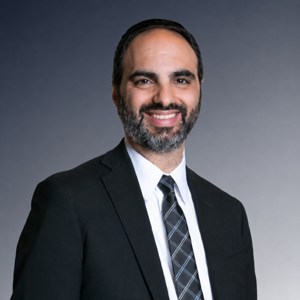
Living Emunah

Living Emunah

By Ashear, Rabbi DavidReligion & SpiritualityJudaism
Download on the App Store
  • Favorites

    27

    Followers

  • Typical duration

    6 min

    per episode

Based on Podcast App listening data

Living Emunah episodes

  • Measure for Measure: Seeing Hashem’s Justice
    The pasuk in Iyov states, " אלוקים הבין דרכה והוא ידע את מקומה ". The Malbim explains that only Hashem truly understands what is happening in this world—how people are being rewarded or punished. What appears to us as a reward may, in fact, be a punishment, and what seems like a punishment may actually be a great reward. We judge based on what we see, but Hashem sees the past, present, and future all at once. Only He knows the full picture—the deeds of each person, their inner thoughts, and their intentions. However, Chazal do reveal to us one way in which Hashem interacts with the world: מדה כנגד מדה —measure for measure. With this understanding, we can sometimes catch a glimpse of Hashem's justice in action. The way we act is the way we are treated. At the end of the seven-day feast in Shushan HaBirah , on Shabbat Kodesh , King Achashverosh called for Queen Vashti to appear and display her beauty. She refused, and as a result, she was put to death. Rashi brings the Gemara in Megilla , which asks: Why didn't she come? After all, she was just as immoral as Achashverosh. The Gemara answers that Hashem struck her with tzara'at , making her appearance repulsive. Since she had been summoned to appear without clothing, she was too embarrassed to show herself. Rashi explains that Hashem caused her to develop tzara'at at that exact moment so that she would refuse the king's order and be put to death—because every Shabbat , she would force Jewish women to work in a humiliating manner, without clothing. Now, on Shabbat , she was punished in the very same way. To the human eye, it seemed like a drunken king making an irrational demand and an impulsive decision to execute his wife. But in truth, it was all hashgachah pratit . Hashem orchestrated every detail—the king's command, Vashti's affliction—because of the wickedness she displayed every Shabbat . Nothing happens randomly. Hashem is behind everything, whether we see it or not. A young man who is becoming more observant spends a few minutes each night learning emunah with a rabbi. One evening, they studied the concept of מדה כנגד מדה , how every action is noticed and valued by Hashem, and how reward and punishment always come in perfect measure. A few days later, this young man was driving when someone accidentally hit his car. After assessing the damage, he realized that the driver who hit him was a kollel student. Feeling bad about making a Torah scholar pay, and knowing that the damage wasn't critical, he decided to let him off completely. Two days later, this same young man accidentally hit someone else's car. This time, however, the other driver insisted on getting the car repaired. The damage was estimated at $1,000—his entire week's paycheck. Feeling overwhelmed, he shared what had happened with a friend, who suggested visiting a trustworthy body shop owner he knew. When they arrived, the owner took one look at the damage, grabbed his tools, and within minutes had repaired the car perfectly —without charging a single dollar. At that moment, the young man recalled the lesson he had just learned. He had let someone off, and Hashem let him off. At first, he thought the second driver would simply forgive him, just as he had forgiven the first. But Hashem, in His infinite wisdom, arranged it differently. Even though we don't always understand Hashem's calculations, we can see glimpses of מדה כנגד מדה in our lives. Everything we do matters. Hashem wants us to make the right choices so that He can reward us—both in this world and in the next.

    6 min
  • Parashat Titzaveh: The Light That Sustains Us
    At the beginning of this week's parasha , Titzaveh , Bneh Yisrael were commanded to bring שמן זית זך —pure olive oil—to light the menorah . Only the very first droplets from each olive were permitted for this purpose. Chazal tell us that although only 12 hours' worth of oil was placed in the lamps, the flames miraculously burned for a full 24 hours—demonstrating Hashem's presence among the Jewish people. The menorah represented the light of Torah. The Gemara states that whoever wishes to attain wisdom in Torah should face slightly southward while reciting the Amida , because the menorah , which symbolizes Torah wisdom, stood in the southern part of the Beit HaMikdash . The power of Torah is far beyond our comprehension. The Midrash tells us that Shlomo HaMelech constructed ten menorot for the Beit HaMikdash , each with seven lamps, totaling 70 flames—corresponding to the 70 facets of Torah. Chazal further teach that as long as those flames were burning, the 70 nations of the world remained subservient to Am Yisrael . But from the day those flames were extinguished, those nations gained power over us. All of our strength comes from Torah. The Sefer Sas Be'Imratecha records a powerful story about Rabbi Moshe Chevroni, the former Rosh Yeshiva of Yeshivat Chevron . At one point, he wasn't feeling well and went to the doctor for an evaluation. After running tests, the doctor informed him that he had been diagnosed with a serious illness and had only three months left to live. His family and talmidim were devastated. But instead of falling into despair, the Rosh Yeshivah made a firm decision—he would dedicate these final months to learning Torah without interruption , stopping only for the most basic necessities. And so he did. He immersed himself in Torah study, and Baruch Hashem , instead of living for just three more months, he lived for another 20 years. The Steipler Gaon , upon hearing this, remarked in amazement, "Hashem gave him a blow, but instead of breaking from it, he elevated himself—and the merit of his Torah added 20 years to his life." What was even more astonishing was that throughout those two decades, he never required treatments that would prevent him from learning. He continued delivering his regular shiurim and prayed with the yeshiva minyan every single day. The Chozeh of Lublin once had a long line of people waiting to see him for berachot and advice. Suddenly, in the middle of his appointments, he asked everyone to step out of the room for a few moments. Once the room was empty, he locked the door. One of his chasidim , eager to learn from the Rebbe , hid inside the room to see what he was going to do. To his astonishment, he saw the Rebbe take out a Mishnayot and begin learning a perek . Unable to contain his curiosity, the chasid revealed himself and asked, "Rebbe, why did you send everyone out just to learn a perek of Mishnayot?" The Chozeh replied, "The last few people who came to me shared their suffering and begged for salvation. I felt that in order to give them a proper beracha, I needed the strength of Torah within me—so I paused to learn first." All of our great rabbanim who had the power to give berachot drew that strength from their Torah learning and purity of character. We must treasure the Torah we have and use our time wisely to learn it in depth. It provides us with the spiritual energy we need to succeed in this world. Shabbat Shalom.
    5 min
  • The Greatest Treasure in Prayer
    The Perush HaKotev on the En Yaakov asks how we can understand the words of Chazal that whoever says Tehillah L'David ( Ashrei ) three times a day is guaranteed to be a ben Olam Haba . It seems like such a small task to receive such an enormous reward. One of the explanations given is that the essence of this mizmor is to praise Hashem and reinforce our belief that He is all-powerful, capable of granting us anything we need, and that only He alone can help us. If a person repeats this message three times a day and truly internalizes it, he is most certainly worthy of Olam Haba . The Mabit and Sefer Nafshi Cholat Ahavat'cha elaborate on this concept. The main goal of prayer is for the one praying to recognize that everything he asks for is dependent solely on Hashem. This is one of the reasons why Hashem gives us needs—so that we will come to Him, ask for help, and ingrain within ourselves the understanding that only He can provide for us. When a person reaches the level where he wholeheartedly believes that his request can only be granted by Hashem, he has already fulfilled the purpose of having that need. In most cases, it is at that moment that his tefilla is answered. A person who understands that one of his primary purposes in this world is to believe that everything comes from Hashem will cherish every request he makes of Hashem. Every time he prays for a shidduch , healing, parnasah , or anything else—if he has the right thoughts about Hashem's power—his prayer is already a tremendous success, even if he hasn't yet received what he is asking for. These emunah -filled requests acquire eternal life. They are worth more than any material gain in this world. Therefore, if someone has a need that has led him to pray to Hashem for an extended period and he has done so with the belief that only Hashem can help him, he should feel a deep sense of hakarat hatov for the incredible opportunity Hashem has given him to earn eternity. This is in addition to the great mitzva of ולעבדו בכל לבבכם that he fulfills each time he prays. This perspective can help us focus better during our tefillot . If we understand that the true purpose of our prayers is to strengthen our emunah and recognize that only Hashem can grant our requests, we will prioritize this mindset each time we pray. It is recommended that during tefillah , we pause and think: "I am about to acquire another treasure—the understanding that only Hashem can give me what I seek." Then, for each request, we should consciously reinforce this belief. With this approach, every prayer builds our Olam Haba . And yes, as a side benefit, once a person fully believes that only Hashem can provide what he is asking for, most of the time, he will be granted his request. But that is only secondary. The greatest treasure lies in the emunah that prayer cultivates within us.
    5 min
  • Our Job
    When a person is in need of a salvation and has exhausted all possible avenues of hishtadlut , he can fully rely on Hashem for salvation. We are only obligated to make hishtadlut and act within the normal framework of the world when opportunities are available. But if we have tried everything and no solutions remain, our only task is to turn to Hashem and pray. The stronger a person's emunah in his tefillah , the more powerful it will be. The pasuk states, " כי הוא אמר ויהי " —Hashem created the entire world with His words. " השולח אמרתו ארץ עד מהרה ירוץ דברו ." When Hashem wills something to happen, He sends His word, and it moves with lightning speed to fulfill His command. The moment Hashem says the word, there is no delay—salvation is already in motion. The first mitzva discussed after Matan Torah is the laws of Eved Ivri —a Jewish servant. Why is this the first mitzva introduced? I once heard a profound explanation. The Jewish people had been slaves in Egypt for 210 years. From their perspective, it seemed impossible that they would ever be freed. Imagine someone in year 205 being asked if he thought freedom would ever come. He would likely have said, "We've been here for centuries—nothing is ever going to change." Yet, when Hashem gave the command, not only were they freed, but they themselves became slave owners. A person can rise from the lowest of the low to the highest of the high in an instant. A maggid shiur from England shared how he struggled with parnasa . His salary arrived sporadically—some months he received only a third of his wages, sometimes even less. There were months when he wasn't paid at all, followed by months when a lump sum would suddenly appear. Living with such financial uncertainty forced him to pray from the depths of his heart, knowing that Hashem alone is the provider. Recently, several additional difficulties arose, including government delays in payments they were supposed to send him. His children needed food, clothing, and other necessities. The holidays were approaching, and he had no idea how he would afford everything. One day, his wife asked him to go shopping for essentials. But when he checked his account, he saw there was no money to spend. He told his wife, "We need to turn to Hashem and beg Him for a yeshuah." That morning, after Shacharit , he bumped into an old acquaintance. The man said, "We haven't seen each other in a while. I have £5,000 and was wondering if perhaps you wanted to borrow it from me." The rebbe couldn't believe his ears. It was as if Hashem had sent him a messenger immediately after he finished praying. He happily accepted. A few days later, a family member reached out—without being asked—and said he wanted to help him for the holidays. Shortly after, he deposited a generous sum into his account. In the days that followed, instead of paying only a fraction of his salary, the yeshiva deposited a much larger amount than usual. Then, the family discovered money in the house they hadn't even realized they had. And finally, the government transferred all of their delayed stipends. Within a few days, the rebbe had over £100,000 in his bank account. All at once, an outpouring of shefa came pouring down from Shamayim . But it came after an abundance of tefillot , immense emunah , countless shiurim in Sha'ar HaBitachon , and receiving continuous chizuk . Hashem's salvations are truly wondrous. They can come from anywhere, in the blink of an eye. No matter how long it has been, things can always change instantly. Our job is to always pray with emunah .
    6 min
  • Tests towards Greatness
    The Gemara in Sanhedrin tells us that David HaMelech asked Hashem why, in the Amidah , we say אלוקי אברהם, אלוקי יצחק, ואלוקי יעקב . Hashem responded that it is because the Avot were tested and passed their tests. We see from here that tests make a person great in this world. The Midrash in Tehillim says that Hashem does not elevate a person to a high position until He first tests him. The pasuk states that Hashem tested the Jewish people in the desert " להטיבך באחריתך " The Sforno explains that Hashem wanted to elevate Bnei Yisrael to become even greater than the angels who serve Him, and that is why He tested them. Many times, Hashem has gifts waiting for a person, and by passing a test, they become worthy of receiving them. A well-known story illustrates this concept: Rashi's father, Rabbi Yitzchak, once found a rare diamond and went to sell it to a local jeweler. The jeweler didn't have enough money to purchase such a valuable stone and suggested that the bishop buy it instead. The bishop had been searching for such a diamond to place on his cross. He offered an enormous sum of money for it. When Rabbi Yitzchak heard the purpose of the purchase, he refused to sell the diamond. However, he realized that if he didn't sell it, it would likely be taken from him by force. So, instead, he threw it into the ocean. That night, he was told in a dream that because of this great sacrifice, he would be blessed with a son whose light would outshine all the precious stones in the world, and whose Torah would illuminate generations to come. The following year, he had a son, whom he named Shlomo. He grew to become the towering sage known as Rashi. A man told me a personal story that took place more than 30 years ago: After high school, he traveled to Israel, where he became religious. He returned for a second year and planned to go back for a third. That summer, he was in his hometown making the final arrangements for his return. On the last day before his flight, on the way to the airport, he stopped at a convenience store to buy a drink and some snacks. While in the store, he remembered that he had purchased a lottery ticket and decided to check the numbers on the store's machine. As soon as he inserted the ticket, red sirens went off across the store. Startled, he asked what was happening. The store manager told him, "That means you won. You matched at least five numbers—possibly six." Shocked, he asked how much he had won. The manager replied, "It could be anywhere from $500,000 to several million dollars." He was stunned. For a moment, he paused to take it all in. But then, fear set in. If he had won millions, would he still go back to yeshiva ? Would this change his life in ways he didn't want? He made a firm decision: instead of checking the numbers immediately, he would first board his flight to Israel. Once he was settled back in yeshiva , he would check the ticket and see how much he had won. Early the next morning, he arrived in Israel and went straight to the yeshiva building. He placed his jacket in the same spot where he had always hung it for the past two years and then went to the Kotel to pray Shacharit . When he returned, his jacket was gone. His lottery ticket was in the zipper pocket. He had not told anyone about the ticket. He searched the entire yeshiva , but the jacket was never found. To this day, he has no idea how much he would have won. Instead of millions of dollars, Hashem gave him something far greater—he remained in yeshiva for several more years, married a bat talmid chacham , and raised a family of outstanding talmidei chachamim with sterling Midot. It is clear that the money was not meant for him, but the test most certainly was. Hashem had given him an extraordinary nisayon . And heroically, he chose to return to Israel, fearing that the money would steer him away from the path he had chosen. Hashem blessed him in ways far beyond anything money could buy. Life's tests can be challenging, but they are designed to lift us up and make us great.
    6 min
  • Life’s Tests
    When someone faces a difficult test in life, their initial reaction may be one of resentment. "Why do I have to deal with this now?" they may think to themselves. It may seem as if they are simply a victim of circumstance, stuck in an unfair situation. But the correct perspective is to recognize that Hashem arranged this challenge specifically for them. Hashem is presenting them with a unique opportunity to grow and reach great heights. The test may be incredibly difficult to overcome, but we know the rule: " לפום צערא אגרא " —according to the difficulty is the reward. I read a story about a woman who worked as a secretary in a yeshivah , earning a relatively low income. Her husband's job was commission-based, and there were times when he didn't earn anything at all. When they struggled to make ends meet, she would borrow money from the yeshivah 's gemach . The man in charge of the gemach had a strict policy: He would only accept repayment in his home, where he could personally tear up the record of the loan. One day, the secretary wanted to repay her loan while she was still in the yeshiva , as she had no time to go to his house. At first, he refused, but after much pleading, he finally agreed. A month later, she received a call from him, saying her loan was still outstanding. She reminded him that she had paid in the yeshiva building, but he had forgotten. Since the record of the loan had not been destroyed, he insisted that she still owed the money. She pleaded with him to trust her, but he refused. The most he was willing to do was say, "If you already paid, then consider it a donation. But you must pay." This was an incredibly difficult test. She and her husband were already struggling, and now they were being asked to repay a loan they had already paid. But they decided to pay again—for the sake of shalom . A couple of weeks later, she was unexpectedly offered a government job with a high salary and excellent benefits. From then on, she never needed to take another loan. Now, years later, even after retiring, she continues to receive a pension from that job. We can never fully understand Hashem's ways, but it seems clear that this test was given to her as an opportunity to merit great blessing. Rabbi Pinchas Shefer shared a similar story: He knows a man who seems to have supernatural success. Whatever he touches turns to gold. He has nachat from his children, and every shidduch he pursued for them worked out in the best possible way. But life was not always easy for him. He was born to a father who was extremely difficult to respect. His father had many personal struggles, which affected the way he treated his children and those around him. This man recognized that his challenge in life was kibbud av va'em . Instead of letting his circumstances destroy him, he used them to build himself. While his siblings distanced themselves from their father, he made every effort to honor him, fulfill his needs, and treat him with respect. He even went beyond what halacha required, purely out of gratitude to the father who had brought him into this world. Even when his father humiliated him, he remained silent so as not to diminish his father's honor. Although we do not fully understand the ways of Hashem, it is clear that of all his siblings, he was the one with tremendous success in every area of life. Life's tests may be difficult, but they are given to us to grow and gain from.
    5 min
  • Parashat Teruma: Unconditional Giving
    In this week's parasha, Teruma, Hashem told Moshe: דבר אל בני ישראל ויקחו לי תרומה -speak to the Jewish People and ask them to donate toward the construction of the Mishkan. The Ba'al HaTurim quotes a pasuk in Yeshayahu, דברו על לב ירושלים , to explain that here Hashem was asking Moshe to appease the Jewish people before requesting donations. Why? Because He was about to ask them to part with their money. The Da'at Shraga raises a perplexing question: All of the wealth that the Jews had—their gold, silver, and precious stones—came directly from Hashem. He made them rich in Mitzrayim and at the Yam Suf. Shouldn't they have had a natural sense of hakarat hatov and give happily? Especially considering how central hakarat hatov is to Judaism. We are called Yehudim because we acknowledge and express gratitude for the good we receive. The Midrash tells us that when Hashem commanded Moshe to go to Pharaoh and save Bnei Yisrael, Moshe first had to ask permission from Yitro. Why? Because Yitro had opened his home to him, and Moshe understood that someone who receives kindness must show hakarat hatov . Only after receiving Yitro's permission did Moshe go to redeem the Jewish people. This demonstrates how essential hakarat hatov is. So why did the Jews need to be appeased before giving back to Hashem? The Da'at Shraga answers that the Torah is teaching us a profound lesson. Of course, the Jewish people were obligated to show hakarat hatov and give generously—and indeed, they did! They contributed so much that Moshe had to tell them to stop because there was a surplus. However, the one who gives is not supposed to demand hakarat hatov . As the Chovot Halevavot teaches in Sha'ar Habitachon, when a person does a favor for someone else, he should never mention it again or make the recipient feel indebted. True giving must be unconditional. This principle does not exempt the recipient from showing gratitude, but hakarat hatov must come from the recipient's own initiative—it should never be expected by the giver. For this reason, Hashem asked Bnei Yisrael to donate as if He had never given them anything in the first place. Their hakarat hatov had to be purely from them. When we receive something, we owe hakarat hatov in two ways: First and foremost, to Hashem—because everything we receive ultimately comes from Him. Second, to the person who was chosen as Hashem's messenger to bring us this good. This concept is vital in maintaining strong relationships, particularly in marriage. Many spouses feel unappreciated, which causes them to lose motivation to continue giving. We must remind ourselves: Our reason for giving is because it is Hashem's will. When we give, we are serving Him. Hashem recognizes and rewards every act of giving, even if we receive no appreciation from others. At the same time, a spouse who receives should recognize and express gratitude for what the other does. A little appreciation provides tremendous chizuk and encourages even more giving. But receiving hakarat hatov is a bonus—it should not determine how we act. The Chovot HaLevavot further teaches that when a person gives l'shem shamayim , Hashem guarantees that he will ultimately receive the hakarat hatov he deserves. Our focus should always be on giving without expecting anything in return. And when we live this way, Hashem ensures that we receive what is truly best for us. Shabbat Shalom.
    5 min
  • Opportunities for Closeness
    Chazal tell us that Hashem made our Imahot barren because He desired their prayers. Many ask the question, we know that Hashem is all merciful and only does what's best for us, so why would He put the Imahot through all that pain because of something He desired? Our sefarim hakedoshim teach us that Hashem places each person in this world to do a mission, and a major part of that mission is to recognize Hashem from amidst the darkness and tribulations that are experienced here. Hashem took a piece of Himself and put it inside of us, it's called our neshama . That neshama yearns to have a relationship with Hashem, but our physical bodies get in the way. The goal is for the spiritual to shine through the physical. Rabbi Menashe Reizman quoted from many sources that when a person experiences difficulties, his physicality gets diminished and it allows for his neshama to get much closer to Hashem. If that is the point of our existence, to get as close to Hashem as possible while being here, that means a difficulty becomes a great opportunity. Someone who does not know this prays all of their tefilot with one focus – just to end the hardship. But with this knowledge, the person could accomplish so much more with his prayers. He could recognize that he was just let into the palace of the King – the closest he can get. He can gain spiritual fortunes through connecting to Hashem in ways that were not available before. During those times, recognizing that Hashem is the only One who can help him will do wonders in connecting the person to Hashem. Because when a person needs help, and he comes to Hashem completely nullifying all other options, that is the greatest expression of finding Hashem amidst the darkness. Our Imahot were barren, and there was nothing any doctor could do to help them. During those years, when they were praying to Hashem and recognizing He was the only One who could help them, they achieved a relationship with Hashem beyond our comprehension. Their physicality was broken down and their neshamot were shining so brightly. They completely nullified themselves to Hashem and that achieved perfection for them in this world. Yes, they were eventually given what they wanted and it was precisely because they achieved such closeness to Hashem. Whenever anyone is going through a dark time in his or her life, he should know the opportunity to achieve closeness to Hashem at that time is unparalleled. A woman told me, at her daughter-in-law's 20 week sonogram, she was given a very negative report. The doctor told her and her husband that the baby had many heart abnormalities as well as kidney issues. The husband asked the doctor, who was a gentile, "What should we do now?" The doctor replied, "I see from your dress that you believe in G-d. The best advice that I can give you is to pray to Him." Over the next few months, the fetus was checked by various cardiologists and surgeons and they all said the same thing: best case scenario is that when the baby comes out it would need just one open heart surgery, but most likely it would need several surgeries. Meanwhile, the family worked hard on their emunah and bitachon , they spoke to gedolim , they read stories of similar cases where Hashem made miracles and they utilized this time to pray every tefila from the depths of their hearts. Last week, the young woman went into labor. There were nine doctors in the room who informed the parents that the baby was going to be born with a scary color, it would not cry when it came out, and it would be weeks before the mother would be able to hold it or feed it. And then, the baby came out. And it was crying, and it had the perfect coloring, and it did not need to be hooked up to any machinery. The heart had a very minute issue which did not require any surgery at all. The mother held the baby, fed the baby and a few days later took her beautiful baby girl home from the hospital. The doctor told the family, "I'm so glad I and everybody else was so wrong." Everybody did see something abnormal there, but Hashem showed them He was the only one in charge. The woman told me throughout that time period, her emunah level was at the highest it ever was, her relationship with Hashem hit new levels and she is so appreciative for that, besides for the miracles they received. P.S. They had consulted separately with three gedolim during that time and each one of them said that the baby was going to be born totally healthy. Another man I know recently told me, a few years back the hospital called him telling him the horrifying news that his relative was diagnosed with a terminal illness. While his wife was still on the phone with the doctor, he called a gadol who will remain nameless and asked him for a beracha . The gadol told him, there is nothing wrong with your relative, the doctors are mistaken. He said, "Rabbi, the doctor is on the other line reading the test results off of a laboratory report." The Rabbi reiterated, "He's wrong." Fifteen minutes later, the doctor called back apologizing, they misread the diagnosis and the person did not have the illness they thought he had. Hashem gives special siyata d'Shamaya to those who are closest to Him. We can all become very close to Hashem by recognizing Him in this world, especially during those times that He seems to be so hidden.
    7 min
  • Despite the Difficulties
    When someone is going through a difficult time and prays day and night for a yeshuah but sees no change, it becomes incredibly hard to continue praying. He begins to feel like Hashem isn't listening. So why should I bother? He sees everyone around him enjoying their lives, free of the challenges he is facing, and he wonders, Why me? Why do I have to be so different? He has learned that everything Hashem does is good—but in this case, he cannot fathom how his suffering could possibly be for the best. Sara Imenu was one of the greatest women who ever lived. She went decades without a child, praying day and night, yet her tefillot remained unanswered. How could this have been good for her? Isn't raising children the essence of a Jewish woman's role? Everyone around her was building families, which made her situation even more painful. Yet, in hindsight, it was precisely this challenge that made Sara Imenu who she became, Decades of heartfelt tefilla without an answer. Decades of unwavering trust in Hashem, believing He was doing what was best for her. She was destined to be the mother of Klal Yisrael , and that required years of deep, heartfelt prayer. When something is extremely difficult for a person, it becomes exponentially more valuable. Praying after not being answered is far more precious than a routine tefilla. Believing in Hashem's kindness, even when everything seems to say otherwise, is an extraordinary zechut . If someone is struggling and searching for merit, these are among the greatest things he can do: Believe that his suffering is from Hashem and is for the absolute best, and continue praying, even though the answer has not yet come. Someone once shared that he had been begging Hashem for help. There were many possible outcomes that he would have been somewhat happy with. But after all of his efforts and tefillot, in his mind, the worst possible scenario unfolded. It became almost unbearable for him to continue praying when things only seemed to get worse. But perhaps Hashem was giving him the opportunity to attain the ultimate zechut —to trust in Hashem even after experiencing the greatest letdown. The ability to return and place one's trust in Hashem after such disappointment is an extraordinary achievement. The primary goal of a person's time in this world is to become the greatest eved Hashem he can be. And it is through challenges like these that we accomplish that goal. The Midrash in Yalkut Tehillim teaches that everyone experiences afflictions in life: Some lose sleep at night due to a toothache. Some are kept awake by an eye ailment. And some willingly stay awake learning Torah. The Midrash explains that all these afflictions count toward a person's necessary yesurim . When we endure pain in our avodat Hashem , it removes suffering that would have come in other ways. Losing sleep to learn Torah is difficult, but Hashem, in His kindness, does not only reward us for the Torah learned—He also considers it a substitute for other afflictions. Similarly, if someone finds it extremely difficult to pray—if it is the last thing he wants to do—then beyond the immense value it has for his neshama , and beyond the yeshuah it can bring, it is also considered a form of yesurim for him. Hashem sees the full picture of our lives. His goal is for us to succeed in this world and fulfill our mission, so we can enjoy eternal bliss in the Next World. The afflictions of this world are insignificant compared to the eternal reward that awaits us. But the only way to earn that reward is to fulfill our avodah in this world. Every tefilla we say, every thought of emunah we have, is infinitely precious. Everyone is destined for greatness—but we must put in the hard work first. Our greats never turned away from Hashem despite the immense difficulties they faced. Their tefillot and emunah through their challenges are what made them the tzaddikim they became.
    6 min
  • The More Chesed We Do
    Gemilut Chasadim is one of the mitzvot for which Hashem rewards us in both this world and the next. It is so precious to Hashem when we go out of our way to help others. The Chafetz Chaim writes in his sefer Ahavat Chesed that after 120 years, when a person stands in judgment before Hashem, he will see that most of the mitzvot he performed were not done with all the required halachic details. However, if he was a ba'al chesed in this world, Hashem will judge him with chesed as well. Even if he doesn't fully deserve it, his mitzvot will be accepted, and he will receive their full reward. Gemilut Chasadim is not only about giving money—it is about giving time and energy. Whenever we go out of our way to help someone, we should be mindful that we are fulfilling the mitzva of Gemilut Chasadim . And no matter what, we always gain from it. A man, whom we'll call Reuven, shared the following story: In 2013, Reuven was living in an apartment with about $7,000 in his bank account. One Sunday morning, he received a call from someone asking if he could help make a minyan for a person who needed to say Kaddish . At first, his yetzer hara tried to convince him otherwise. "It's raining outside, it's cold, I'm sure they'll find someone else." But he overcame the struggle and went to join the minyan . After tefillah , the man who had asked him to come thanked him and mentioned that he was getting involved in something called Bitcoin. Reuven had never heard of it before. The man encouraged him to buy one coin. At the time, the price was $50 per coin. Reuven listened to his advice and bought one. Very quickly, the price doubled to $100. Excited, Reuven called the man to thank him. The man told him, "Buy more. I'm certain it will keep going up." Following his advice, Reuven bought more coins—and as the price rose, he kept buying. Today, his Bitcoin holdings are worth millions, with each coin valued at around $100,000. Of course, in the Next World , his act of helping someone make a minyan will be worth infinitely more than millions of Bitcoins. But he is also happy to have seen a side benefit from the good deed he did. Sometimes we are asked to help others, and we don't think we can. But Hashem is interested in the effort , not just the results. If He wants the person to be helped, He will bless the efforts. A real estate developer, whom we'll call Shimon, shared his own experience: One day, he received a request from someone who needed an urgent appointment at the Cleveland Clinic. The waiting list for this particular appointment was extremely long. Shimon was very involved in helping people, but this time he felt he had no connections at the Cleveland Clinic. He initially told the person that he didn't think he could help. But after hanging up the phone, he told himself, "I have to at least try." He searched for a list of hospital contacts and decided to call the vice president. The secretary answered, and Shimon introduced himself. Thirty seconds later, the vice president was on the line. "Are you Shimon Cohen, the real estate developer?" the man asked. Shimon replied, "Yes." The vice president continued, "I've been on a waiting list to get a condo in one of your buildings in Florida. I heard there are only a couple of units left, and multiple people are trying to get the last one." Shimon told him, "Let me see what I can do for you." The vice president then asked why Shimon had called him. Shimon explained that he had a friend who urgently needed an appointment at the hospital. The vice president immediately replied, "Consider it done. You help me, and I'll help you." Afterward, Shimon reflected, "What were the odds that the one person I called would be someone who needed my help at that exact moment?" Because Shimon had a sincere desire to help, Hashem orchestrated the zechut for him to do so. Every effort we make to help others is precious to Hashem. And the more chesed we do, the more chesed Hashem grants us in return.
    5 min

About Living Emunah

From the publisher's feed

A Daily ethical teaching by Rabbi David Ashear

Best of Living Emunah

Ranked by our users in the last 21 days

More shows like Living Emunah

The Rabbi Sacks Legacy by Rabbi Lord Jonathan Sacks

The Rabbi Sacks Legacy

559 Listeners

The Israel Guys by The Israel Guys

The Israel Guys

308 Listeners

Jewish Stories to Inspire: Motivational & Spiritual Stories Based on the Torah's Ethics, Values and Wisdom by Stories to Inspire

Jewish Stories to Inspire: Motivational & Spiritual Stories Based on the Torah's Ethics, Values and Wisdom

186 Listeners

Living with Emunah by Rabbi Efrem Goldberg

Living with Emunah

109 Listeners

Meaningful People by Meaningful Minute

Meaningful People

1,986 Listeners

From the Inside Out: With Rivkah Krinsky and Eda Schottenstein by Rivkah and Eda

From the Inside Out: With Rivkah Krinsky and Eda Schottenstein

263 Listeners

The Q & A with Rabbi Breitowitz Podcast by Rabbi Dr Yitzchak Breitowitz

The Q & A with Rabbi Breitowitz Podcast

234 Listeners

Call Me Back - with Dan Senor by Ark Media

Call Me Back - with Dan Senor

3,197 Listeners

The Times of Israel Daily Briefing by The Times of Israel

The Times of Israel Daily Briefing

1,070 Listeners

Kosher Money by Living Lchaim

Kosher Money

820 Listeners

History for the Curious - The Jewish History Podcast by JLE

History for the Curious - The Jewish History Podcast

231 Listeners

Gedale Fenster - Podcast by Gedale Fenster - Podcast

Gedale Fenster - Podcast

399 Listeners

Honestly with Bari Weiss by The Free Press

Honestly with Bari Weiss

8,473 Listeners

Inspiration for the Nation with Yaakov Langer by Living Lchaim

Inspiration for the Nation with Yaakov Langer

1,121 Listeners

Stories Of Hope With Tzipora Grodko by Meaningful Minute

Stories Of Hope With Tzipora Grodko

324 Listeners