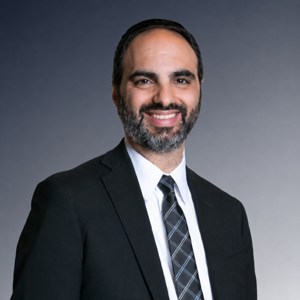
Living Emunah

Living Emunah

By Ashear, Rabbi DavidReligion & SpiritualityJudaism
Download on the App Store
  • Favorites

    27

    Followers

  • Typical duration

    6 min

    per episode

Based on Podcast App listening data

Living Emunah episodes

  • Hashem’s Will
    Learning emunah means learning about who Hashem is and how He interacts with us. If we truly want to understand Hashem, we must also learn what His will is. Often, we make assumptions about what Hashem wants, but in most cases, His will is not something we can determine on our own—it must be taught to us. For example, a person might think that giving large amounts of money to tzedakah justifies earning that money even at the expense of hurting others. However, this is entirely against Hashem's will. Withholding money that is rightfully owed to others violates several negative commandments in the Torah. No matter how much tzedakah one gives, it can never justify wrongdoing. The Gemara in Bava Batra states that stealing from a person is worse than stealing from the Beit HaMikdash . In Bava Kama , the Gemara teaches that if a person's ox damages an ox belonging to the Beit HaMikdash , he is exempt from payment. However, if his ox damages another person's ox, he is fully responsible. The Tiferet Shmuel derives from these sugyot that Hashem considers our friend's money even more important than money designated for the Beit HaMikdash . This teaches us that it is Hashem's will for us to be extremely careful with other people's money— even more so than we would be with money designated for holy purposes. Taking from one person and giving that money to charity is not only unjust—it is counterproductive. The greatest tzedakah one can do is conducting business with chesed and ensuring that our fellow Jews can earn a livelihood with dignity. The Rambam lists eight levels of tzedakah , and the highest form is helping someone become self-sufficient. How, then, can a person damage another's livelihood and justify it by giving the money to charity? The Chafetz Chaim , in Ahavat Chesed , writes that the Torah is filled with lessons teaching us to perform chesed . Hashem created us in His image, meaning that we are meant to reflect His middot . Just as Hashem loves to give and help others, we are naturally inclined to do the same. When a person develops a giving nature—both in thought and in action—he emulates Hashem and, in doing so, draws close to Him. Conversely, when someone acts selfishly, stepping on others to raise himself up, he removes the tzelem Elokim within him, thereby distancing himself from Hashem. The purpose of our journey through this world is to accustom ourselves to cling to Hashem in this world so we will be able to bask in the radiance of His Shekhinah in the Next. Hashem is חפץ חסד —He desires that we do chesed for one another. If someone wants to cling to Hashem, he must be careful with other people's money. If ever presented with an opportunity to take advantage of another financially, a person should stop and remind himself: "I want to cling to Hashem. I have the opportunity to do the greatest tzedakah—to help my friend stay on his feet and ensure his business succeeds. That is the will of Hashem, and that is what will make me truly great."
    0 min
  • Parashat B’shalach: Shabbat Shira
    In this week's parasha , B'shalach , we read about monumental events, including Kriyat Yam Suf and the battle against Amalek. Yet this Shabbat is called Shabbat Shira —the Shabbat of Song—named after the song of gratitude that Bnei Yisrael sang upon being saved from the Egyptians. This highlights the immense power of expressing sincere gratitude to Hashem. The Sefer Sas B'Imratecha points out that when the shira describes how the Egyptians sank like stones, the pasuk says, " ידמו כאבן " —rather than the more common term, " יפלו כאבן ." He explains that ידמו is related to דממה —silence. At Kriyat Yam Suf , the Egyptians witnessed Hashem's greatness, and some were even moved to praise Him. Had they done so, they would have been saved. However, they were not worthy of this zechut , and so ידמו כאבן —they were silenced along to bring their downfall. A person has so much to be grateful for, yet it is human nature to focus on what is missing rather than appreciating the thousands of blessings already present. Even when we have every reason to sing to Hashem, the yetzer hara tricks us into complaining instead. When this happens, we must take a step back, see the bigger picture, and counter his tactics with gratitude. A woman in Israel gave birth to a child after waiting more than 13 years. The baby boy was born on Shabbat, and she and her husband were overjoyed. Her mother, who had stood by her side for all those difficult years, shared in their immense happiness. However, very quickly, she became deeply concerned about the logistics of the berit mila . The berit mila would be held the following Shabbat, and she realized that she lived in a small home, far from all her relatives. How could they celebrate the berit without their family present? She became so consumed by this worry that she was on the verge of tears. Then she stopped herself. "We waited 13 years for this miracle," she thought. "Now I'm going to cry over something so trivial?" She shifted her focus and instead spent her time thanking Hashem for the incredible chesed He had done for her family. The very next day, she was informed that one of her trust funds had matured and was available for withdrawal. The amount was more than enough to rent a hall in a hotel and book rooms for their entire extended family to stay for Shabbat and attend the berit mila . Gratitude brings yeshuot . Another woman was desperately trying to reach someone. She called the person nine times in a row, but there was no answer. Frustrated, she stopped, took a deep breath, and recited Mizmor L'Toda , sincerely thanking Hashem for always doing what was best for her. Then, she dialed the number once more—and this time, the person picked up right away. She said, " Whenever I have a problem, instead of complaining or getting upset, I choose to thank Hashem instead—and time after time, I see yeshuot unfold before my eyes." A fourth-grade rebbe shared with me: One morning, he woke up and realized he had lost his voice. He wasn't sick. He had no sore throat. But he simply couldn't speak. Assuming it would pass, he waited. But three days went by, and nothing changed. He went to his doctor, who was baffled—there was no clear medical explanation. Later, while driving, the rebbe was listening to a shiur in which the speaker told a story about a man who was at risk of losing his hearing. His rabbi asked him if he had ever thanked Hashem for the ability to hear. The man admitted that he had never given it much thought. Following his rabbi's advice, he spent the next few days sincerely thanking Hashem for the gift of hearing. Shortly after, his hearing was miraculously restored. Hearing this, the rebbe thought to himself, "I've never once truly appreciated my ability to speak." So he began thanking Hashem—silently, in his mind—for the wondrous gift of speech. He did this for three consecutive days. By the third day, without any medication, his voice returned completely. This Shabbat is called Shabbat Shira —the Shabbat of Song. Let us take this lesson to heart: to always focus on Hashem's blessings, thank Him for them, and even sing to Him for them. Shabbat Shalom.

    6 min
  • Give Yourself an Edge
    Trying to get into yeshiva or seminary can be very stressful. There are many applicants and only limited spots and, unfortunately, people have to get rejected. One of the ways in which a person can give himself an edge is by working on his bitachon in Hashem. The pasuk tells us, someone who is bote'ach b'Hashem is surrounded by Hashem's kindness. It is an enormous zechut which Hashem rewards in this world as well. A man told me, six years ago his son was applying to yeshiva high school and he sent in an application to four different yeshivot . The father made sure his son reviewed his Gemara over and over so that he would be able to do well when those yeshivot would test him on it. One day, his son's 8 th grade rabbi called him and told him he is not doing enough to get his son into a good yeshiva. He told him various things that other parents were doing, including making connections or being more persistent, to give their children an edge. This man told the rabbi he was doing the normal hishtadlut and he fully believed that Hashem was in charge of which yeshiva his son would get into. He went on to speak very strong words of bitachon . The rebbe heard him and praised him for the great level that he reached. To see the extent of how powerful his words of bitachon were, the next day a principal from another yeshiva called him to tell him that he heard some of the lines of bitachon he told that other rebbe the previous day and he wanted to hear them for himself. His son began the interviews with some of the yeshivot that he applied to, but then he told his father his dream was to go to a certain yeshiva which was considered one of the top yeshivot in all of America. It was known to be extremely difficult to get into. But this father happily encouraged his son to "go for the gold" and so they applied there as well. He told his son, "Hashem is in charge and if this is a good yeshiva for you, He'll help you get into it." A couple of weeks later, his son was going on a Shabbaton and the boys were asked to prepare a devar Torah to say at the meals. The boy was learning Masechet Kiddushin and his father remembered a davar Torah that his friend told him from the Mishnat Kesef when he was 16 years old that connected what he was learning in Masechet Kiddushin to parashat Mishpatim . He told his son the devar Torah and then told him not to take anyone else's place if they wanted to speak. He should only volunteer when no one else wanted to. For the leil Shabbat meal, there were three volunteers. For the Shabbat day meal, another three and for Seudah Shlishit another three. But finally, at the Melave Malka , nobody volunteered so this boy raised his hand and offered to give the devar Torah. Since it was after Shabbat he was able to speak into a microphone. Right before he began speaking, His Rosh Yeshiva who was there received a phone call from the administrators at that top yeshiva asking for information about this boy who applied to their yeshiva. The Rosh Yeshiva told them he was about to give a devar Torah and they asked to listen in, so he put the phone by the boy and they listened to the entire devar Torah. It was extremely impressive and they decided on the spot they wanted this boy in their yeshiva. Baruch Hashem, the boy spent the next four years growing tremendously in that yeshiva. It was perfect for him in every way. The odds of him getting into that yeshiva were very slim, but with Hashem, odds don't matter. They had full bitachon in Hashem and, in that merit, Hashem helped them get in in an amazing way, timing that phone call from the administrators to the exact second this boy was speaking. The best hishtadlut we can make is always improving our bitachon in Hashem.
    6 min
  • No Matter How Distant
    Last week, we discussed how Hashem can provide a home for someone even if they lack the financial means to afford it. We shared a story about a man who accepted upon himself to completely remove business matters from his mind on Shabbat, and miraculously, he received all the money he needed from various sources. Since then, I was told an incredible story about how Hashem provided a home for a family that had no extra money beyond their basic necessities. They lived in a tiny apartment, struggling to cover their essential expenses, and never dreamed of living in a house, let alone owning one. One day, their landlord's daughter began straying from the proper path. As time passed, she became a negative influence on their family, to the point where they felt they could no longer stay there—not even for one more day. Desperate, the wife called her brother, who had many connections, and pleaded with him to find them another apartment immediately. He told her it was impossible—how could he find them a place to move into the same day? But she refused to take no for an answer. After thinking it over, he suggested they move in with their widowed mother, whom we'll call Mrs. Rosenberg, who lived alone in a spacious home. He called to ask, and she was delighted to welcome them. Immediately, he and another brother rented a van, packed up all their belongings, and moved them into Mrs. Rosenberg's house. They reached a monetary settlement with their landlord, and just like that, they were out of the apartment. Given the high cost of housing, it seemed they would be staying with their mother for a long time. Meanwhile, Mrs. Rosenberg had recently rekindled a friendship with another widow, whom we'll call Mrs. Miller, who lived in a different city. They had a lot in common, and Mrs. Rosenberg had been inviting her for Shabbat for some time. Eventually, Mrs. Miller accepted the invitation. When she arrived, Mrs. Miller enjoyed the company of the entire family. She continued visiting for several Shabbatot over the next few months. One day, she asked Mrs. Rosenberg why her daughter and son-in-law were always there. Mrs. Rosenberg explained their situation, mentioning that they could not afford to rent an apartment. Mrs. Miller was disheartened. "Everyone should have their own home," she said. "Please tell your daughter to start looking for a house. I want to help her." Mrs. Rosenberg was stunned by the generous offer. "I don't know if you realize," she told her friend, "but homes here cost no less than a million dollars." Mrs. Miller remained unfazed. "Tell them to look anyway." A few days later, they found a beautiful, spacious home with everything they could ever want. The asking price was $1.2 million. When Mrs. Miller heard the number, she asked to speak with Mrs. Rosenberg's son-in-law. She told him to apply for a mortgage to see how much he could qualify for. He and his wife, who also worked, went to the bank and were approved for $550,000. When they shared the news with Mrs. Miller, she immediately took action. She hired a lawyer to help them close on the house, and after all the fees, they were still short $700,000. Without hesitation, Mrs. Miller wired them the full amount, telling them it was her greatest pleasure to help. Since Mrs. Miller had no children of her own that she was close with, she felt as though she was buying a home for her own daughter. And just like that, a family who had struggled to afford rent on a tiny apartment became the proud owners of a beautiful home. They love having Mrs. Miller over, and she is overjoyed that she was able to help them. Hashem orchestrated every step of this process from beginning to end. He brings together His messengers with those He wants them to help. No matter how distant salvation may seem, a person can always be helped.
    0 min
  • A Precious Glimpse
    If we had the ability to see what every mitzva accomplishes, we would want to do nothing else but mitzvot . To preserve our free will, Hashem does not reveal the full impact of our mitzvot in this world. The true reward is reserved for the World to Come. However, there are times when Hashem allows us to see dividends of our mitzvot in this world as well, giving us chizuk and a glimpse of how precious our deeds truly are. Rabbi Snir Gueta from Israel shared an incredible story: He was invited to Florida to speak at the home of a man whose two-year-old daughter was on life support. Although the family had a gate around their pool, security footage later showed that a strong wind had pushed the door open, leading to their little girl falling into the water. She was in the pool for eight minutes before being discovered. Her father pulled her out and performed CPR before she was rushed to the hospital. After examining her, the doctors gave a grim prognosis—there was only a slim chance of survival. They said that if she made it through the first 72 hours, there might be a glimmer of hope. The father, a well-known and influential person, put out a call for tefillot , and thousands of people responded. Every night, hundreds gathered in the hospital parking lot, reciting Tehillim and praying fervently for her recovery. Miraculously, she survived the critical 72 hours. On the tenth day after the accident, her condition deteriorated drastically. Her numbers began to drop, and the doctors warned that she had only minutes—maybe hours—left to live. Convinced that there was nothing more they could do, they began making preparations for the worst. Desperate, the father went live from the hospital room and pleaded with people to storm the heavens. Thousands responded, pouring their hearts into Tehillim like never before. Amazingly, the little girl's numbers began to rise again. The doctors were stunned. They asked the father what he had been reading. After witnessing what had just transpired, they told him that he had just experienced a miracle. By the time Rabbi Gueta was invited to speak at their home, the little girl had already been on life support for six months. When he arrived, he saw her still hooked up to machines. He delivered an inspiring class and then urged those present to take action. "We need to do more," he said. "Each of us should take something upon ourselves in the zechut that she should recover." On the spot, people began calling out kabbalot —commitments to strengthen their observance of mitzvot . The parents were deeply moved by the outpouring of dedication and hope. About half an hour later, as Rabbi Gueta was on his way back to the airport, he received a phone call from the father. "All of a sudden, the life support machine stopped working," he said. "Her numbers began dropping. We did everything we could to fix it, but nothing worked. The numbers kept going down." Then, the most incredible thing happened. Her numbers started rising again—on their own. She was able to breathe unassisted. She no longer needed the machine. This occurred right after an entire room full of people had committed to improving their observance of mitzvot . Our prayers and deeds are incredibly powerful. Their true reward is in the Next World, but sometimes, Hashem allows us to see their impact in this world as well. The little girl still needs our tefillot . Heleni Orna bat Chen Chanah —may Hashem grant her a complete refuah sheleimah speedily.
    5 min
  • Awaken Hashem’s Mercy
    When we show compassion to others and go out of our way to help people, it awakens Hashem's mercy upon us. While our motivation for helping others should never be for the reward, like all mitzvot, Hashem rewards every effort we make in doing His will. Often, we don't realize how a small act of chesed can have a profound impact on someone's life. A 21-year-old woman shared her story: She struggled socially throughout high school. Being extremely shy, she had no close friends. Last year, she mustered the emotional strength and courage to attend the wedding of a classmate—someone she would occasionally speak to when that classmate wasn't with her usual group of friends. She entered the wedding hall, silently asking Hashem to help her maintain her dignity. As she walked in, she noticed a group of girls sitting near the entrance. To her surprise, one of the girls—together with her friends—called her name and greeted her warmly, as if she was their closest friend whom they had been waiting all night to see. She recalled: "I'm crying as I write this. They all smiled at me and invited me to sit in the one empty seat left at their table. We spoke as if we were old friends. It was the first time I had ever been treated this way. It was truly something special." She concluded that although she wasn't on the level to understand Hashem's hashgacha, she did notice something remarkable—the three girls who made her feel special that night all got married this same year, in that exact month, two of them in the very same wedding hall. Another young woman shared her experience: One night this past year, a younger friend gave her a ride home from a weekly class they both attended. During the drive, her friend confided that she felt bad about forgetting to pray daily and truly wanted to grow religiously. Without thinking much of it, the young woman offered, "Would you like me to send you a text message every morning to remind you to pray?" In her mind, she assumed this would last for about a week. Her friend responded, "If it wouldn't be a burden for you, I would love that." The next morning, she sent the first message: "Don't forget to pray today. Hashem loves you." Her friend replied with an enthusiastic, "Thank you!" This continued for months. Even on her off days, she set an alarm to ensure she would be up in time to send the text. No matter where her friend traveled—including different time zones like Alaska—she remained committed to sending the daily reminder. There were times when she received no response for weeks. Feeling foolish, she debated whether she should stop. But just as she had those thoughts, Hashem made it that her friend would reply with something like, "Oh, this is so helpful! Love you." At the end of the summer, she was still faithfully sending the reminders. Then, Baruch Hashem, she got engaged. She called her friend to share the news. To her amazement, her friend replied, "Wow! I can't believe it—I also just got engaged!" Then her friend said, "I was praying for you every single day to get married. I'm so happy for you!" The young woman reflected, "I thought I was doing her a favor by pushing myself to send those reminders every day. But in reality, I was simply reminding her to pray for me." Baruch Hashem, her friend got married, and now her husband reminds her to pray every day. She concluded, "I had the zechut to bring one of Hashem's children closer to Him, and in turn, Hashem blessed me with the zivug I had been waiting for." When we have compassion for others, Hashem shows extra compassion for us.
    0 min
  • Finding Favor
    In this week's parasha , the Torah, in two different places, mentions the fact that when the Jewish people were leaving Egypt, Hashem gave them חן in the eyes of the Mitzrim , and the Mitzrim gave them their gold and silver and clothing. In parashat Shemot as well, the Torah repeats the same thing. Why was this such an important fact that the Torah needed to tell us three different times? Rabbi Menashe Reisman quoted the Steipler who gave a wondrous explanation. As we know, Hashem could have taken out His nation with just one makkah . The reason He did ten makkot is like the pesukim tell us, to give us emunah in Him. With the first set of makkot , it says, בזאת תדע כי אני ה '. Regarding the second set of makkot , we were taught אני ה' בקרב הארץ . And in the final set of makkot taught us כי אין כמוני בכל הארץ . But even after all the makkot , Hashem did not yet prove that He is in charge of the thoughts and will of every person in the world. We know the hearts of kings are in the hands of Hashem, like it says לב מלך ביד ה '. But what about the rest of the people? Here is where Hashem showed us His complete control over people. After the Mitzrim experienced a total devastation of their land and suffered thousands of deaths, the Jews then asked them if they could have their expensive jewelry and gold and silver utensils. Let's try to imagine exactly what the Mitzrim were feeling at that time. Many of their children had died of thirst during Makkat Dam , as well as the other makkot . How much trauma did they have from the wild animals taking over their land and their homes? They still had the wounds on their bodies from the boils and the lice. After Makkat Barad , there was nothing left in the fields to eat, and after Makkat Arbeh , there was a complete hunger. They were totally frozen for three straight days during Makkat Choshech . And then, on the day of Makkat Behorot , after their god was roasted and the aroma filled the land, the Jewish people knocked on their doors and asked them to please part with their precious, expensive utensils. In the normal way of the world, the Egyptians should have slammed the door on their faces saying, how dare you ask us for something after what you did to us? Yet, Hashem made the Jews find favor in the eyes of the Mitzrim . Every Mitzri not only gave them their expensive utensils, they even offered the Jews more than they asked for. This was a bigger miracle than any of the other makkot . Here, Hashem showed us that people are just puppets. He can change their minds in an instant. This lesson was vital for us to learn, because the only way we can be true servants of Hashem, is if we know we don't have to be servants to anybody else. So long as we think we need to do things to find favor in other people's eyes, we run the risk of not serving Hashem the way we're supposed to. When a buyer asks his customer to take him somewhere that doesn't conform to the codes of Judaism, the customer needs strength to tell that buyer he's not allowed to go there. When a businessman has an inclination to skip minyan and/or learning Torah to go to work early, he needs strength to know that all of the customers are making their decisions whether or not to buy his product according to the will of Hashem. If he honestly believes that, he will know that his main hishtadlut is tefila and Torah, and the rest is just going through the motions. What makes a customer choose one product over another, when there are dozens of the same product selling? Hashem gives חן to the one He wants the customer to buy, and that's the one he buys. What makes a man choose a woman to marry? Hashem gives her חן in that man's eyes. Hashem is the only one in charge of everything, including people's minds. Let us internalize this fact and put His will before anybody else's.
    6 min
  • No Effect
    The Chovot HaLevavot , in Sha'ar Cheshbon HaNefesh (Chapter 3), teaches that no one in this world can give us anything unless Hashem wills it. Even if a person was the only one in the world, he would not possess a single thing more than what Hashem decreed for him. And even if the world's population doubled, he would not have one possession less than what was meant for him. Rabbi Menashe Reizman gives a mashal : A father with 19 children had to make the simplest wedding for his youngest child, cutting out all possible extras. The child may have thought, "If only I were an only child, my father would have made me the grandest wedding." But this is entirely false. That child would have received the same wedding regardless of how many siblings he had. Hashem provides for each person individually, and no one else has any impact on what we receive. A hundred years ago, people worried that if the world's population continued growing at its current rate, food would become scarce—some even predicted that one apple would have to be divided among four people, based on the ratio of apples to people, at that time. At that time, there were 2 billion people in the world. Today, the population has quadrupled to over 8 billion, yet there is no shortage of apples—there are enough for every person to have more than four apples. Some now worry that, with the increasing population, the world will run out of oxygen. But we laugh at this notion because we understand that Hashem provides for every person individually, and no one is affected by the presence of others. A person can live in isolation, surrounded by abundance, yet be unable to benefit from it. Conversely, someone with little means, surrounded by many others, may still have everything he needs. It all depends on Hashem's will. Rabbi Yaakov Meir Schechter related a story from a time of famine in Yerushalayim when there wasn't enough bread for everyone. Bread had to be rationed based on family size. Ironically, the baker—who had access to all the bread he could ever want—contracted a rare illness that prevented him from eating any of it. No one could believe that the one person with unlimited access to bread was unable to enjoy it. Only Hashem determines who benefits from what. Rabbi Schechter also shared an account from Rabbi Shaul Sharabani about his experience living in the Old City of Yerushalayim when it was under Turkish rule. He and a friend received draft notices for the Turkish army. At the time, being drafted was considered a terrible fate, as both a person's spiritual and physical well-being were at great risk. Rabbi Shaul and his friend accepted upon themselves that if Hashem saved them from the draft, they would travel to the kever of Rabbi Shimon bar Yochai in Meron and spend the day thanking and praising Hashem for their salvation. In those days, traveling to Meron was extremely difficult, but they believed that their mesirut nefesh in fulfilling their promise would be a great zechut for them. B'chasdei Hashem , both of them were miraculously exempted from military service. Rabbi Shaul immediately fulfilled his pledge. He made the difficult journey to Meron and spent the entire day crying tears of gratitude and praise to Hashem. His friend, however, did not join him. Since their exemption had occurred through seemingly natural means—connections and assistance from others—he did not fully attribute it to Hashem. Unfortunately, just a few months later, this friend received another draft notice. This time, there was no way for him to get out of it. Our hishtadlut does not accomplish anything—only Hashem does. It is up to us to recognize this and internalize that Hashem provides for each person individually, and no one else has any effect on our lives.
    0 min
  • The Primary Hishtadlut
    People often say, "Baruch Hashem, we're able to get by with our daily expenses, but we don't have enough to afford moving into a house." Some people have lived in small apartments with large families for years, dreaming of the day they can move into a more spacious home. Hashem has countless ways to provide a person with a home. He can lead them to find something at a very low price. He can inspire others to pitch in and help raise the necessary funds. He can bless the family with increased income to afford a home. The possibilities are endless. At the same time, it is possible that a larger home is not destined for someone. However, as we know, prayer and good deeds can change any decree. When a person is in need of a yeshua , it is always a good idea to focus on improving their prayers and committing to perform mitzvot properly. One man shared his experience when he needed 150,000 shekels to complete the down payment on a new home. The weight of it consumed his thoughts day and night. He had no natural way to obtain such a large sum and feared losing the opportunity to buy the house his family had longed for. He had already informed his current landlord they were moving out, and the family had started packing their belongings. His primary hishtadlut was heartfelt tefilla . One Friday afternoon, he called a chizuk hotline, and the rabbi on the line spoke about the immense power of keeping Shabbat properly. The rabbi explained that thinking about business or money on Shabbat is foolish. "Shabbat is the source of all monetary blessing," he said. "Someone who keeps Shabbat with the mindset that all of their affairs are complete and lets go of financial concerns, even in their thoughts, taps into the special blessings of Shabbat." Hearing these words, the man immediately resolved that, for the upcoming Shabbat, he would feel as though he was already wealthy and had all the money he needed. He committed to enjoying Shabbat without a single financial worry. After Shabbat ended, he prayed to Hashem to make this mindset a reality. Amazingly, the next day, he received 50,000 shekels from a completely unexpected source. The following Shabbat, he strengthened himself once again to banish financial concerns from his mind. He enjoyed Shabbat immensely, observing it in the best way he could. That Motzaei Shabbat, he prayed again with all his heart, and once more, Hashem sent him an incredible yeshua : that Monday, he received 75,000 shekels from another unexpected source. Throughout the week, he attempted to secure the remaining balance from other potential sources, but nothing materialized. Then came another Shabbat, and now, just two days remained before the balance was due. If he didn't have the money in time, he would lose the house. Strengthening himself like a lion, he resolved once more not to think about his financial struggles for even a moment. He focused his mind on feeling as though the money had already been provided. With that, he experienced yet another beautiful Shabbat. After Shabbat, he prayed with more intensity than ever before. Baruch Hashem , in the two days that followed, Hashem sent him the exact amount he needed—not a shekel more, not a shekel less. Hashem can provide for all our needs. Heartfelt tefilla and sincere good deeds are the greatest hishtadlut we can do.
    0 min
  • His Messengers
    One of the reasons we don't fully appreciate Hashem as much as we should is because, even when we receive clear blessings, we tend to attribute them to the people who gave them to us directly. We often fail to internalize that these people are merely Hashem's messengers. The Chovot HaLevavot , in Sha'ar HaBitachon , writes that Hashem has more love and mercy for us than anyone else in the world. Any compassion shown to a person ultimately stems from Hashem's compassion. When we receive something from others, it is because Hashem placed compassion into their hearts, enabling them to provide us with what He wants us to have. Of course, we must have hakarat hatov to those who help us, as Hashem deemed them worthy of fulfilling the chesed . But we cannot overlook the fact that everything we receive ultimately comes from Hashem. Likewise, when something is taken from us, it is Hashem acting through His messengers. Sometimes, we ourselves are His messengers, performing His will for others. A man, whom we will call Yosef, shared an incredible story. He lives in Har Nof and traveled abroad for a family wedding. On the return trip, his flight had a stopover in Holland. Due to a delay in the first flight, Yosef and his wife missed their connecting flight to Israel. It was already Friday, and there was no way to catch another flight in time for Shabbat. At the airport, a friendly Jew recommended they drive to the Jewish community in Antwerp, where they would surely find warm hospitality for Shabbat. When they arrived in Antwerp, however, Yosef and his wife felt hesitant about relying on others. Instead, they planned to buy some food and stay in a hotel. As they drove near the shul, they saw a man walking and asked where they could buy food. The man told them that all the Jewish stores were already closed for Shabbat but offered to guide them to the nearest grocery store. Yosef and his wife accepted his offer, and the man got into the back seat of their car. During the ride, they struck up a conversation and learned that this man was 36 years old and still unmarried. He shared that one day he had walked into a bet midrash and noticed a Gemara Masechet Sotah open to the page that states: "Forty days before a person is even conceived, Hashem determines who they will marry." Ever since, his daily prayer had been: "Ribbono shel Olam, You wrote in Your Torah that I have a zivug, and I believe with emunah shelemah that You will help me find her. Please let it happen soon." Yosef's wife listened intently and felt strongly that she wanted to help this man find his zivug . The man guided them to the shul where Shabbat guests were welcomed. Yosef and his wife went there and experienced the most heartwarming Shabbat, surrounded by people filled with ahavat Yisrael . They later said it was worth missing their connecting flight just to witness the kindness of the Antwerp community. During Shabbat, they met other guests, including a family from France whose daughter was searching for a shidduch . Yosef's wife immediately thought of the man who had helped them and suggested him as a match. Baruch Hashem , they turned out to be a perfect match, and shortly thereafter, the couple became engaged and then married. Yosef and his wife saw clearly how Hashem used them as His messengers to bring this couple together. They understood why they missed their connecting flight, why the man at the airport directed them to Antwerp, and why they met the 36-year-old near the shul. They even understood why he got into their car to show them where the grocery store was and instead brought them to the shul for guests. Everything that happens to us is guided by the ratzon Hashem . Sometimes Hashem gives to us through His messengers. Sometimes He takes through His messengers. And sometimes, He makes us His messengers.
    0 min

About Living Emunah

From the publisher's feed

A Daily ethical teaching by Rabbi David Ashear

Best of Living Emunah

Ranked by our users in the last 21 days

More shows like Living Emunah

The Rabbi Sacks Legacy by Rabbi Lord Jonathan Sacks

The Rabbi Sacks Legacy

559 Listeners

The Israel Guys by The Israel Guys

The Israel Guys

308 Listeners

Jewish Stories to Inspire: Motivational & Spiritual Stories Based on the Torah's Ethics, Values and Wisdom by Stories to Inspire

Jewish Stories to Inspire: Motivational & Spiritual Stories Based on the Torah's Ethics, Values and Wisdom

186 Listeners

Living with Emunah by Rabbi Efrem Goldberg

Living with Emunah

109 Listeners

Meaningful People by Meaningful Minute

Meaningful People

1,986 Listeners

From the Inside Out: With Rivkah Krinsky and Eda Schottenstein by Rivkah and Eda

From the Inside Out: With Rivkah Krinsky and Eda Schottenstein

263 Listeners

The Q & A with Rabbi Breitowitz Podcast by Rabbi Dr Yitzchak Breitowitz

The Q & A with Rabbi Breitowitz Podcast

234 Listeners

Call Me Back - with Dan Senor by Ark Media

Call Me Back - with Dan Senor

3,197 Listeners

The Times of Israel Daily Briefing by The Times of Israel

The Times of Israel Daily Briefing

1,070 Listeners

Kosher Money by Living Lchaim

Kosher Money

820 Listeners

History for the Curious - The Jewish History Podcast by JLE

History for the Curious - The Jewish History Podcast

231 Listeners

Gedale Fenster - Podcast by Gedale Fenster - Podcast

Gedale Fenster - Podcast

399 Listeners

Honestly with Bari Weiss by The Free Press

Honestly with Bari Weiss

8,473 Listeners

Inspiration for the Nation with Yaakov Langer by Living Lchaim

Inspiration for the Nation with Yaakov Langer

1,121 Listeners

Stories Of Hope With Tzipora Grodko by Meaningful Minute

Stories Of Hope With Tzipora Grodko

324 Listeners