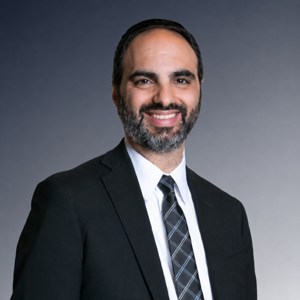
Living Emunah

Living Emunah

By Ashear, Rabbi DavidReligion & SpiritualityJudaism
Download on the App Store
  • Favorites

    27

    Followers

  • Typical duration

    6 min

    per episode

Based on Podcast App listening data

Living Emunah episodes

  • A Tax We Must Pay
    Those who understand that hishtadlut is merely a way of camouflaging Hashem's involvement—and that He alone brings results—make Hashem's will their top priority when deciding what hishtadlut to undertake. The Sefer Sas B'Imratecha shares the story of a man in desperate need of a $6,000 loan. He made an appointment at a gemach that was open only one hour a week, from 4 to 5 p.m. on Mondays. It was well known that if you were even one minute late, you would need to reschedule for the following week. When Monday came, the man became preoccupied with other pressing needs and realized that if he didn't leave immediately, he would miss his appointment. Yet he hadn't prayed Mincha yet, and by the time his appointment ended, it would be too late to pray. Initially, he thought of praying quickly by himself. But then he stopped and reminded himself that the One who could grant him the loan was the same One to whom he needed to pray. How could he compromise on tefilla ? He went to a shtiebel that had constant minyanim . There, his yetzer hara urged him to join a minyan already in progress, pray quickly, and still make it to the gemach . Once again, he overcame his inclination and joined a minyan just beginning. He prayed a full and beautiful Mincha and stayed until the last word. When he walked out of the minyan , he saw the head of the gemach , who apologized and explained that he had to leave the gemach to pray Mincha . The man told him he could process the loan immediately after finishing his tefilla . If the man had rushed to the gemach without praying Mincha , he would have missed the head of the gemach . His trust in Hashem's control over all outcomes enabled him to make the correct decision. Similarly, those who recognize that every obstacle encountered in hishtadlut comes from Hashem can handle such challenges in the right way. Rabbi Tanami from Rechasim once noticed that the mikveh in his community was run down and underutilized. He raised enough funds to restore it, but to his dismay, people still weren't using it. Rabbi Tanami invited Rabbi Baruch Raphael Toledano to inspire the community about the importance of mikveh . After Rabbi Toledano's heartfelt words, the mikveh became so popular that the attendant asked for a raise for staying so late at night. Seeing Rabbi Toledano's impact, Rabbi Tanami invited him to speak in other communities needing chizuk about mikveh . On one such occasion, they set out for a small town near Haifa in Rabbi Tanami's car. When they tried to start the car, it wouldn't start. After five minutes of trying, Rabbi Toledano suggested they walk to a bus stop and take public transportation instead. At the bus stop, Rabbi Toledano saw a man he recognized from Morocco. They exchanged pleasantries, and the rabbi asked if the man was putting on tefillin daily. The man admitted that while in Morocco he never missed a day, he had become lax since moving to Israel. Rabbi Toledano spoke to his heart, and the man resolved on the spot to never miss a day of tefillin again. Afterward, Rabbi Toledano told Rabbi Tanami, "Let's go back to the car now—it will start." Sure enough, the car started on the first try. Rabbi Toledano explained, "It's clear that Hashem caused the car not to start so I could help this Jew reconnect with tefillin . Once the mission was accomplished, the car would work." People who live their lives understanding that Hashem is in charge see the world differently. They are not bound by the apparent rules of nature because they know that everything can change in a moment according to Hashem's will. Our hishtadlut doesn't accomplish anything on its own. It is merely a "tax" we pay and a test we must pass. Ultimately, only Hashem controls everything.
    0 min
  • Parashat Va’era: Create the Zechut
    In this week's parasha , Va'era , we read about the makot that Hashem sent upon the Egyptians. These upcoming parshiyot describing Yetziat Mitzrayim form the foundation of our emunah in Hashem. It is here that Hashem demonstrated to the world that He is actively involved in every aspect of life. On Pesach, we drink four cups of wine corresponding to the four leshonot of geulah mentioned in the parasha- והוצאתי, והצלתי, וגאלתי, ולקחתי . There is, however, one more lashon , והבאתי , which refers to Hashem bringing the Jewish people into Eretz Yisrael. The Seforno asks why this lashon was not fulfilled with the generation that left Mitzrayim. He explains, based on what is written later in Parashat Ki Tisa , that this generation did not fully believe that Hashem could conquer the mighty kings inhabiting the land. While they witnessed Hashem defeat Pharaoh, they doubted His ability to defeat the 31 kings in Canaan. The pasuk says, " ויאמן העם " —the people believed Hashem could take them out of Mitzrayim, and because of this belief, they merited to see the exodus. But since they lacked belief in והבאתי , they did not experience its fulfillment. It was the next generation, which fully believed, that merited entering the Promised Land. When we believe in Hashem's limitless abilities, it creates a zechut that brings us divine assistance and enables us to witness Hashem's salvations. The Sefer Sas B'Imratecha shares a story of a taxi driver in Israel who had recently begun drawing closer to Torah and mitzvot . He attended classes regularly and was diligently practicing what he learned. One day, he drove a passenger from the center of the city all the way to Hadassah Ein Kerem Hospital at the edge of the city. Not wanting to return with an empty cab, he waited outside the hospital, hoping to find another fare. Ten minutes passed, then 20, then 30—no one approached his cab. People were leaving the hospital either by bus or private car. After 45 minutes, another taxi pulled up, dropped off a passenger, and parked nearby. A few minutes later, someone exited the hospital, walked directly to the other taxi, got in, and left. This driver was frustrated. He had waited 45 minutes with no customers, while the other driver, who had just arrived, immediately got a fare. Where was the fairness? Then he remembered a lesson from one of his classes: All of a person's income comes solely from Hashem. Whatever is meant for a person will reach them, one way or another. With this thought, he calmed down and let go of his frustration. Moments later, a man who appeared to be a high-ranking official approached his cab and asked in English if he could take him to the north of Israel. The driver agreed. The man asked for the fare, and the driver replied, "A thousand." The man got into the taxi, and when they arrived at their destination, he handed the driver ten folded bills. As the driver counted the money, he realized they were hundred-dollar bills. He had meant to charge 1,000 shekels, but the passenger had paid him 1,000 dollars instead. Feeling it was wrong to keep the money, the driver looked for the man to return the overpayment. However, the man was nowhere in sight. The driver then thanked Hashem for this unexpected gift. Just moments after reaffirming his belief in Hashem's hashgacha over his parnasa , he had earned the largest fare he had ever received from a single ride. When we fully believe in Hashem, it creates a zechut that brings about salvation. Shabbat Shalom.

    5 min
  • Priceless Information
    The Midrash in parashat V'Etchanan says a person should be happier with his yissurin – afflictions – more than when he receives open good because yissurin cleanses a person and gets rid of his averot . The Yalkut Shimoni in Tehillim says a person should thank Hashem when yissurin befall him because yissurin bring a person much closer to Hashem. At the end of Rebbe Avraham, brother of the Vilna Gaon's life, he was bedridden in excruciating pain, suffering from open wounds all over his body. When his son began to cry seeing his father in that condition, his father said this was the greatest gift that Hashem bestowed upon him. He said, "If I had the strength right now, I would get up and sing and dance out of joy in Hashem's goodness in giving me these yissurin . This is how our great chachamin viewed yissurin because they knew of their great effects. How great it would be if a person was able to achieve the effects of yissurin without having to actually experience them. The Gra wrote in a letter that there is a way to achieve this. He said if we follow his instructions, we will receive untold reward in the Next World by absolving ourselves of all our sins without having to suffer any physical pain. He wrote there, if a person would hold himself back from speaking something he shouldn't be saying, or if he would control a certain desire, that would accomplish more than any other form of yissurin . He writes further, for every second that a person holds himself back from saying something he shouldn't, he will also merit a special pleasure in the Next World that no angel could ever fathom. This means if someone is ready to relate a juicy piece of gossip to a crowd of people which would for sure make him the center of attention, he should stop himself and think, "If I hold back now, that would take the place of so much yissurin that may have been destined to befall me." And if it is very hard to do, he should know that for every second that he holds himself back, it's considered an additional affliction. Plus, he will receive untold rewards for his restraint in the Next World. This does not only apply to holding back from lashon hara . The Gemara says in masechet Moed Katan that Rabbi Yanai's student used to ask him very difficult questions during their daily class. But on the holidays, when the attendance of the class was very large, this student never asked the Rabbi a question because he didn't want to potentially embarrass the Rabbi if he didn't have a good answer. The Gemara applied to this student the pasuk in Tehillim , ושם דרך אראנו בישע אלוקים, which the Gemara explained to mean, as a reward for holding back his desire to show off his understanding of the material, he merited to be amongst those who were going to experience great salvation from Hashem. Every time we break our evil inclination, that is considered yissurin and, potentially, can wipe away endless amounts of averot . Imagine if a person was being told off and had a nasty comment he could say back that would allow him to enjoy sweet revenge, but instead he closed his mouth and didn't say a word. The kapara brought about by that act is unimaginable. Additionally, for every single second that he keeps his mouth closed at that time, he will be rewarded with the greatest rewards. Yissurin are great and accomplish so much for us, but nobody likes going through the painful process to receive those benefits. Here, the Vilna Gaon is giving us priceless information. We could accomplish more than any type of yissurin by holding back from saying things we shouldn't or by breaking any other desire for any kind of temptation. These are difficult things to do but it is well worth it. The next time a person is put into such a circumstance, he should pause and think about the golden opportunity that is being presented to him at that time.
    6 min
  • The Kappara Before The Yeshuah
    Sometimes in order for a person to receive a yeshua , he first has to go through a period of kapara and then, from that difficulty, Hashem sends the salvation. If a person knows that perhaps the difficulty he is going through is preparing him to receive a blessing, it will be easier to handle. In fact, the Gemara says in Masechet Taanit , daf 20, if someone accepts his difficulties with joy, it brings salvation to the entire world. A man told, he has a child who suffers from kidney problems. He needs constant medication and various treatments. One of the side effects of this illness is severe lack of appetite and vomiting. At one point, the child stopped eating completely, agreeing only to drink water. He then needed to be hooked up to a feeding tube, but even with that, he continued vomiting. If he would ever be tempted to taste anything, he would later vomit whatever entered his body in the previous few hours. This past year, his wife was with the child in the hospital because he got pneumonia. On the day they were being discharged, as they were walking in the hallway, the child suddenly began vomiting. Generally, when this child is vomiting, there is nothing to do. They have to just wait until he finishes and then they clean him up and change his clothing. So he vomited and vomited and his mother simply stood there, waiting for him to finish. Among the people sitting in the waiting room nearby was a woman who made it clear to everyone that she was appalled by this site. This woman saw a little child vomiting who seemed to be in pain and his mother just standing idly by, not knowing that this was standard procedure. She got up in front of everyone and yelled, "What a neglectful mother you are. Why don't you help your son?" The woman wanted to bury herself in shame, but then she remembered hearing when a person gets shamed, it's a huge kapara . The person becomes purified and has a great power of tefila . So, she utilized the opportunity and asked Hashem to bring healing to her son. That Sunday, this boy asked to eat and hours passed without him vomiting. He ate again later that day and again did not vomit. This was a major breakthrough for them. Although the child still has kidney issues, he is able to eat and keep the food down. Instead of lashing back at that woman or feeling sorry for herself, this woman chose to utilize the difficulty to bring salvation closer. Recently, another boy had been practicing for his bar mitzvah parasha for months and he got an appendicitis a few days before he was supposed to read. The appendicitis happened on a Wednesday and he was scheduled to read the Torah that Shabbat. They were also going to have a big seuda to celebrate afterward. But instead, the boy had to be in the hospital and he missed the reading and the seuda . They notified all the guests on Friday not to attend the celebration. It was a somber time. After the doctors studied the appendix, they found a cancerous tumor growing inside of it. Baruch Hashem, it did not spread and the boy is totally fine now. He needed a big yeshua that he didn't even know about. Hashem brought about a very difficult situation that perhaps was the kapara that they needed to receive this yeshua . Hashem is always helping us, whether it seems that way or not. Our best response is to always thank Hashem for what happens and continue living life happily, knowing that we are always in His hands.
    0 min
  • Three Times a Day
    The Gemara in Masechet Berachot teaches that whoever recites Tehilla L'David (Ashreh) three times a day, praising Hashem, is a ben Olam Haba . Yet the same Gemara states that one who recites Hallel daily is considered a blasphemer. We know Hallel is one of the greatest praises, so how can this be understood? The Meshech Chochmah in Parashat Bechukotai explains that Hallel is generally reserved for thanking Hashem for open miracles performed for our nation, such as the makkot or Kriyat Yam Suf . Reciting Hallel daily, even without such miracles, suggests that the person only values Hashem's interventions that defy nature, overlooking the countless hidden miracles Hashem performs every day. By contrast, Tehilla L'David praises Hashem for His everyday hashgacha peratit over each individual and every creature. As the pasuk says, ואתה נותן להם את אכלם בעיתו —"Hashem gives everyone its needs at the time that it needs." We must recognize how Hashem takes care of us every moment of every day. Each person gets what he needs in a unique way. When we look back and see how Hashem gave a person just what he needed when he needed it, in a hidden yet exposed way, it gives us extra chizuk to recognize that Hashem is always behind the scenes taking care of us. A woman shared a story about how she had hired a rabbi to learn with her 11th-grade son every night. When a recent payment to the rabbi was overdue, he sent a friendly text reminder. The woman planned to write a check the next day but completely forgot. That night, as she boarded a plane, she remembered. She asked the rabbi for his Zelle information and told her husband, Reuven, to send him $1,600 via Zelle. A few days later, the rabbi mentioned he hadn't received the payment. Surprised, the woman sent him a screenshot of the confirmation. Upon closer inspection, the rabbi noticed that Reuven had mistakenly entered the wrong middle initial in the email address. Reuven immediately sent the payment to the rabbi again, and then emailed the person who had accidentally received the $1,600. The next morning, Reuven received a reply that began, "Thank you for giving me the opportunity to perform the mitzva of hashavat aveda and return the lost money" The recipient explained that when the money arrived, he didn't recognize the sender or the purpose of the transfer. He even contacted a friend with the same last name as the sender. The friend said he did know someone with that name, but didn't think he would be sending him this money, so he didn't bother to call him. In fact, that person actually was Reuven who did send the money. The man also mentioned that it was amazing hashgacha peratit that he received this exact amount at that exact time. He was making a bar mitzvah for his son but lacked the $1,600 balance needed to pay for the tefillin he was about to pick up. His wife had asked him what they would do, and he replied, "Hashem sends the money when it's needed." Just half an hour before he was to pick up the tefillin , the $1,600 came through. The man concluded his email by asking for a few extra days to repay the money, as he had already used it. Reuven, moved by the story, responded that it would be his greatest zechut to participate in the mitzva of buying tefillin . He told the man he did not need to repay the money at all. Overjoyed, the man thanked Reuven. The next day, Reuven shared the story with a friend, who also wanted to help. Reuven asked the man how much more money he needed for the bar mitzva , and the man replied, "$900." The friend immediately sent him the remaining amount. Hashem made this woman forget to pay the Rabbi twice by check and then caused her husband to put the wrong letter in the email amongst dozens of other things that had to take place for this man to get that money at that time. Hashem helps everyone. We should look for His hand in our everyday lives and thank and praise Him at least three times a day.
    6 min
  • Beyond Comprehension
    After Moshe was placed in a basket in the Nile River, the pasuk states: ותתצב אחתו מרחק לדעה מה־יעשה לו "His sister stood from afar to see what would happen to him." The Midrash explains that the entire pasuk uses language referring to the Shechina , as if to say that it was Hashem Himself who was standing from afar, watching over Moshe. What is the lesson here? Rabbi Menashe Reizman, based on the mefarshim , explained that what Miriam did—standing and watching—seemed irrational. Naturally, a baby left in a basket on a river would not survive. People usually cannot bear to witness suffering, especially when it involves a relative. So, what was Miriam watching for? The answer is that Miriam was a neviah . She had received a prophecy that the Jewish savior would be born into her family. She stood there with unwavering emunah , waiting to see how Hashem would bring about the salvation. Even though it seemed as though her prophecy would be nullified—since Moshe was abandoned in the river—she trusted that Hashem would fulfill His word. This teaches us that Hashem's ways are far beyond our comprehension. What appeared as abandonment was, in fact, the very act that enabled Moshe to rise to leadership. Being raised in the king's palace gave Moshe the stature and respect necessary to lead the Jewish people. The word אחותו (his sister) in the pasuk also signifies connection. Although Hashem appeared רחוק -distant, He was always present, providing exactly what was needed. The suffering endured by the Jewish people in Mitzrayim was immense, yet the Torah dedicates only a handful of pesukim to describing it. The majority of these parshiyot focus on the geula and Hashem's wondrous salvations. The mefarshim explain that dwelling too much on hardships can distort our perception and harm our emunah . For example, Chazal tell us that Pharaoh killed 300 Jewish babies every day—150 in the morning and 150 in the afternoon—and bathed in their blood. When Moshe witnessed this unimaginable suffering, he asked Hashem how such atrocities could happen. Hashem explained that it was all being done with chesed , to provide the necessary tikkunim for those souls. Moshe pleaded with Hashem to save at least one child, and Hashem permitted it. That child, however, later caused great destruction to Klal Yisrael . His name was Michah. Michah used the inscription "Aleh Shor" , which Moshe had used to retrieve Yosef's coffin, to bring forth the egel from the fire—a sin that continues to impact us today. Michah brought avoda zara into Eretz Yisrael and was the father of Yeravam ben Nevat(Nevat was another name for Micha), who led the ten tribes into exile and set events into motion that ultimately led to the destruction of the Bet Hamikdash . We cannot fully comprehend Hashem's ways. The children killed in Mitzrayim were undergoing tikkunim to achieve eternal life in the World to Come. Many were gilgulim (reincarnated souls) from earlier generations—the generations of Enosh, the Dor Hamabul , the Dor Hapelaga , and the people of Sodom. The Mishna in Pirkeh Avot teaches: אל תסתכל בקנקן אלא במה שיש בו - "Don't look at the vessel but at its contents." The Lev Aryeh explains that this can also refer to the atrocities in Mitzrayim. The letters קן in the word קנקן have a numerical value of 150(written 2x), hinting at the 150 babies killed every morning and every afternoon. The mishna reminds us not to focus solely on the apparent suffering but to consider the greater purpose—those souls were spared from bringing even greater harm to Klal Yisrael . Even the worst suffering can be Hashem's way of providing tikkunim for each creation, ensuring its eternal life in the World to Come. Our role is to trust that the Shechina is always with us, working for our ultimate benefit. The Chatam Sofer writes that every Jew has a mitzva, as they age, to reflect on their life and see how Hashem guided them. We are to recognize how events that once seemed terrible were, in hindsight, truly good. One of our main missions in this world is to develop complete faith in Hashem's constant and boundless chesed . One day, everything will be revealed. Until then, we have the opportunity to demonstrate our belief.
    7 min
  • Parashat Shemot: In a Big Way
    The pasuk says in this week's Parasha, Shemot, that Pharaoh decreed all the Jewish baby boys should be thrown into the Yeor . But the Torah testifies that the Jewish midwives feared Hashem and did not listen to Pharaoh, but rather they kept the babies alive. The Chafetz Chayim asked, the words, "ותחיינה את הילדים," that they kept the babies alive, seems superfluous, being that the Torah already told us they feared Hashem and did not listen to Pharaoh. The rabbi explained that the Torah here is giving us an insight into the great mesirut nefesh that these women portrayed. The midwives could have easily said that they did not want to continue doing this job anymore, in which case they would've been exempt and had no claims on them from anyone. Pharaoh wouldn't be able to have a claim against them for not violating his decree because it wouldn't be their job anymore. And Hashem wouldn't have a claim against them for killing the babies because they wouldn't be. But they did not want to just exempt themselves. They truly cared about saving the Jewish babies and did not want to take the risk of their potential replacements listening to Pharaoh. So they put their own lives at risk to save others, and Hashem rewarded them for that in a big way. It is very easy for a person to find reasons to exempt himself from something. But if instead he goes out of his way to want to please Hashem, then Hashem gives him Heavenly help in a big way. The sefer Toratcha Sha'ashuay tells the following story about the great zechut that a woman got from going out of her way to help someone in need. There was a 13-year-old boy learning in one of the great yeshivot in Europe. He was the youngest in the yeshiva and one of the only ones without a bench to sleep on at night. The boys learned in an old shul and ate the meals by people's houses. They slept in the shul and whoever didn't get a bench had to sleep on the floor. In the bitter cold winter, this was extremely hard. This boy couldn't sleep at night and was therefore having trouble learning during the day. One day he received a letter from his uncle asking him if he wanted to come and work in his business. This uncle did not have any children and he promised his nephew if he would come work for him, he would leave him all his possessions when he would pass on from this world. The boy had a very big internal struggle deciding what to do. On one hand, he knew how valuable Torah study was, but on the other hand, he was having an extremely difficult time with it. And that night, as he was lying down on the ice-cold floor, he decided he was going to take the offer. About an hour later, a widow came knocking on the front door of the shul. This boy was the only one awake and he went to see who was there. The widow explained she just finished sitting shiva for her husband. He sold blankets for a living and left a lot of them in the house. She said she wanted to donate some to the yeshiva. This boy took the blankets and for the first time was able to sleep normally. That made him decide to stay in the yeshiva, and eventually he became the Gadol Hador who affected tens of thousands of people in his lifetime: Maran HaGaon Harav Shach. When the widow passed away in 1975, Rav Shach attended her funeral and told the students how she saved his life with that act of kindness. The Hashgacha of her coming in the middle of the night on the same night that the young Rav Shach was planning on leaving was amazing. We can say about this woman ותחיינה את הילדים, she gave life to the boy. She was motivated l'shem shamayim , and Hashem gave her tremendous s iyata dishmaya to benefit from that act of chesed for all eternity. We should always do our best to go out of our way to help others, even if we may be exempt, because we never know what each act will produce. Shabbat Shalom.
    6 min
  • Catch the Message
    Hashem speaks to us all the time. We need to be aware and keep our eyes and ears open for His messages. Sometimes a person needs a yeshuah and seeks something to improve on as a zechut . It's possible that Hashem will convey what he needs to work on in a subtle way, but he must be vigilant and on the lookout for the message. A 7th-grade rebbe shared a story about a student in his class who struggled to grasp even the basics. The more the rebbe tried to explain, the less it seemed the student understood. After Pesach last year, the class began learning a new masechet , and suddenly, the boy started understanding everything. Not only that, he retained all that he learned and quickly became one of the top students in the class. The change was astonishing, happening in such a short time. The rebbe's amazement did not go unnoticed, and the boy explained what had led to the transformation. He said, "A few weeks ago, rebbe told us about the holy tanna Matyah ben Charash, who faced a great test in guarding his eyes. He was even willing to lose his eyesight to avoid sinning. Hashem performed a miracle for him and restored his sight. "I thought to myself, I also need to safeguard my eyes. Across from the bus stop where I wait every morning is a public school, and I usually watch the students, including the girls who dress immodestly. After rebbe mentioned Matyah ben Charash, I decided to guard my eyes. Every day when they arrive, I look down and pray to Hashem to enlighten my eyes in His Torah and help me remember what I learn. Hashem answered my request. Since then, I've been able to understand and remember everything." This boy needed help with his learning, and Hashem subtly hinted to him what he needed to do to merit it—through the rebbe's words about shemirat enayim . The boy understood the message and experienced an incredible yeshuah . Sometimes Hashem gives us exactly the chizuk we need. A man shared that he became very involved in encouraging others and giving chizuk . Baruch Hashem, he was good at it and helped many people. However, recently, he began to have second thoughts. The work was consuming so much of his time, sometimes keeping him on the phone with people for over half an hour. He wondered if he should scale back and focus more on other areas of avodat Hashem , including his own learning. That very day, as he was grappling with these thoughts, he came across a piece in a book on emunah that spoke directly to his dilemma. The book quoted the Chafetz Chaim, who emphasized how much Hashem values those who bring chizuk to others. The Chafetz Chaim compared it to a father whose children are sad, saying that such a father would feel immense hakarat hatov toward anyone who brings joy to his children. The man felt reassured that he was on the right path. That night, as part of his routine, he read two halachot from the Sefer Chafetz Chaim and a paragraph of mussar from the back of the sefer . To his amazement, the very same idea he had read earlier in the book on emunah appeared in the mussar section of the Sefer Chafetz Chaim that night. It was Hashem who was showing him the same chizuk twice in one day to reinforce the message. The encouragement he needed to continue his avodat hakodesh was delivered clearly and powerfully. Hashem speaks to us all the time. If we're on the lookout, we will catch His messages.
    5 min
  • A Wondrous Segula
    If someone has been making hishtadlut in a certain area for a long time but hasn't seen success, there is a segula attributed to Rav Chaim Palachi that can work wonders. Whether the hishtadlut pertains to shidduchim , parnasa , health, or any other matter, strengthening one's bitachon in the following way can bring great siyata dishmaya . The practice involves saying the first paragraph of Alenu l'Shabe'ach with intense kavana . Then, go back to the words הוא אלוקינו ואין עוד אחר —"He is our G-d, and there is none other"—and deeply internalize that no one else in the world can help besides Hakadosh Baruch Hu. With this mindset, proceed to the second paragraph, על כן נקוה לך ה' אלוקינו , and focus on the specific issue causing distress. As you recite it, think: "Hashem, I am placing all my bitachon in You." A man who learned of this segula for the first time shared it with his niece in Argentina, who was struggling with shidduchim . She asked if it was enough to perform the segula once a day when reciting Alenu , as she only prayed once daily. Her uncle assured her that this was sufficient, and he committed to having her in mind as he performed the segula three times a day. Remarkably, within a month, she found her shidduch . This segula is not new; it is simply another method to instill the principle of אין עוד מלבדו . A woman once told me about her longstanding eye condition. Her eyes were persistently watery and produced mucus, and none of the medications she tried brought relief. A few years ago, she turned to the Rebbetzin whose class she attended weekly for advice. The Rebbetzin encouraged her to work on internalizing that only Hashem could help her. Then, she suggested a practical step: "Chanuka is coming up this week. Each night, stand by the candles for 15 minutes and pray to Hashem, fully believing that only He can help." The woman followed the Rebbetzin's advice and even stopped relying on the ineffective medications. Each night of Chanuka, she stood before the candles, praying with all her heart and focusing on her emunah that only Hashem could heal her. Amazingly, her condition improved with each passing day. By the end of Chanukah, her eyes were completely healed. Baruch Hashem, it has now been two years, and the issue has not returned. There is no substitute for genuine belief in Hashem's power. It cannot be faked, as Hashem perceives the true feelings within a person's heart. When one fully believes in אין עוד מלבדו , it becomes a wondrous segula that brings an outpouring of siyata dishmaya .
    4 min
  • Come out on Top
    If a person gets taken advantage of or is wronged by another individual or business and then the person sees how much that other individual or business is flourishing as a result, he may begin to feel that it pays to do the wrong thing because those who do, get away with it and enjoy from it. But there could be nothing further from the truth. The Mishnah says in Pirkei Avot that Hashem who created the world and sees everything that goes on, He is also the Judge, the Witness and the Plaintiff. He never forgets anything. He does not show favoritism in judgment and He cannot be bribed. And for everything that people do, they are held accountable. The yetzer hara makes a person think that he can do wrong and get away with it, but the Mishnah warns, אל יבטיתך יצרך – a person should not let his yetzer hara convince him that he could escape, because Hashem is the most righteous and fairest Judge. Everybody will get what is coming to them. If someone was taken advantage of and was meant to have the money that was stolen from him, he'll get it back. And if it was not meant for him, then the one who took advantage of him was just acting as a messenger to take away what wasn't his. However, that messenger is fully held accountable for choosing to do wrong and will be brought to justice for the crime unless he makes teshuva . It may appear that people get away with things for years, but that does not mean that Hashem is not holding them accountable. When the goblet was found in the sack of Binyamin and the Shevatim had to return to the viceroy, Yehuda told him, "What can we say? האלוקים מצא עוון עבדיך - Hashem has found the sin of your servant." Why was Yehuda speaking about Hashem to this leader? Because Yehuda knew, everything happens only from Hashem. And if they were suffering this torment, it must be because of an avon they committed. He was regretting selling Yosef as a slave now, seeing that he and his brothers may also become slaves. This episode took place 22 years after they sold Yosef, yet Yehuda saw it as a clear consequence for that action. Sometimes Hashem brings kapara to a person shortly after he sinned, sometimes it takes years, sometimes decades and sometimes not until in the Next World, but every action that a person does is always taken into account and nothing ever goes unnoticed. Therefore, we should feel calm, knowing that no matter what other people do or try to do to us, we are always in Hashem's hands and He is the fairest, most righteous Judge. Moreover, we should never let our evil inclination convince us to do wrong or take revenge because there is accountability. Those who harmed us will not get away with it. And we should never harm others either. Our sole focus should always be doing the will of Hashem. And if we do, we will always come out on top.
    0 min

About Living Emunah

From the publisher's feed

A Daily ethical teaching by Rabbi David Ashear

Best of Living Emunah

Ranked by our users in the last 21 days

More shows like Living Emunah

The Rabbi Sacks Legacy by Rabbi Lord Jonathan Sacks

The Rabbi Sacks Legacy

559 Listeners

The Israel Guys by The Israel Guys

The Israel Guys

308 Listeners

Jewish Stories to Inspire: Motivational & Spiritual Stories Based on the Torah's Ethics, Values and Wisdom by Stories to Inspire

Jewish Stories to Inspire: Motivational & Spiritual Stories Based on the Torah's Ethics, Values and Wisdom

186 Listeners

Living with Emunah by Rabbi Efrem Goldberg

Living with Emunah

109 Listeners

Meaningful People by Meaningful Minute

Meaningful People

1,986 Listeners

From the Inside Out: With Rivkah Krinsky and Eda Schottenstein by Rivkah and Eda

From the Inside Out: With Rivkah Krinsky and Eda Schottenstein

263 Listeners

The Q & A with Rabbi Breitowitz Podcast by Rabbi Dr Yitzchak Breitowitz

The Q & A with Rabbi Breitowitz Podcast

234 Listeners

Call Me Back - with Dan Senor by Ark Media

Call Me Back - with Dan Senor

3,197 Listeners

The Times of Israel Daily Briefing by The Times of Israel

The Times of Israel Daily Briefing

1,070 Listeners

Kosher Money by Living Lchaim

Kosher Money

820 Listeners

History for the Curious - The Jewish History Podcast by JLE

History for the Curious - The Jewish History Podcast

231 Listeners

Gedale Fenster - Podcast by Gedale Fenster - Podcast

Gedale Fenster - Podcast

399 Listeners

Honestly with Bari Weiss by The Free Press

Honestly with Bari Weiss

8,473 Listeners

Inspiration for the Nation with Yaakov Langer by Living Lchaim

Inspiration for the Nation with Yaakov Langer

1,121 Listeners

Stories Of Hope With Tzipora Grodko by Meaningful Minute

Stories Of Hope With Tzipora Grodko

324 Listeners