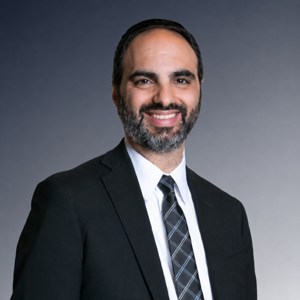
Living Emunah

Living Emunah

By Ashear, Rabbi DavidReligion & SpiritualityJudaism
Download on the App Store
  • Favorites

    27

    Followers

  • Typical duration

    6 min

    per episode

Based on Podcast App listening data

Living Emunah episodes

  • The Proper Perspective
    It is possible for a person to have a completely incorrect understanding of how Hashem interacts with us, stemming from misconceptions about concepts they learned as a child. For example, Chazal teach us that Hashem punishes midda keneged midda —measure for measure. Some people might perceive this as a form of revenge, chas v'shalom , as if to say, "If you act that way, I will do the same to you." This interpretation is a complete distortion of what midda keneged midda truly is. The Alshich explains this concept through a pasuk in Tehillim: ולך ה' חסד, כי אתה תשלם לאיש כמעשהו —"To You, Hashem, is kindness, for You repay a person according to their deeds." Hashem performs a tremendous act of chesed by ensuring that the consequence a person faces corresponds directly to their misdeed. Initially, Hashem grants a person time to do teshuva without any punishment. If the person does not repent, Hashem, in His compassion, does not want the sin to remain on their record. As an act of chesed , He provides a consequence designed to awaken the person to recognize their wrongdoing and inspire them to do teshuva . Hashem desires for each person to attain eternal happiness, which sin would jeopardize. Midda keneged midda is one of Hashem's many acts of love, designed to guide us toward a better path. Consider the following story: A man was confined to a wheelchair, and his wife managed their household efficiently. They were known for their hospitality, opening their home to many people seeking a meal or solace. One regular visitor became so accustomed to their generosity that he treated their home as his own, staying for hours and unintentionally straining their hospitality. Eventually, the couple moved to a new, more spacious apartment on the fifth floor. Although this would typically be challenging for someone in a wheelchair, the building had an elevator that went directly to their floor. However, on their first day in the new apartment, the elevator malfunctioned, stopping only at the fourth floor. Each day, the husband needed assistance carrying his wheelchair down one flight of stairs and back up again—a significant inconvenience. As days passed without the elevator being fixed, the wife recalled a story she had heard. A family once moved without informing a poor, lonely man who regularly visited them for food every Friday. On their first day in their new home, the woman encountered a scorpion in her kitchen. Though they killed it, another appeared the next morning. Realizing something unusual was happening, they consulted their rabbi. The rabbi opened Perek Shira and pointed out the scorpion's song: "And His mercies are upon all His creations." He suggested they reflect on whether they had failed to show compassion to someone. The couple remembered their oversight in not notifying the lonely man about their move. They sought him out, informed him of their new address, and invited him to continue visiting. After this, the scorpions stopped appearing. The wife related this story to her husband and suggested that their situation was similar. They wanted Hashem to have pity on them, yet they had not shown compassion to the guest who was accustomed to visiting them. They realized they had failed to inform him about their move. That very day, they reached out to him and reassured him that he was welcome to visit whenever he wanted. By the next morning, the elevator was fixed. Someone hearing this story might think Hashem was punishing the family for their lack of compassion. However, that is not the correct perspective. Hashem knew how much they gained from their chesed toward this guest and wanted to ensure they didn't lose out on those eternal merits. In His kindness, He gave them a reminder to continue their good deeds. Everything Hashem does is an act of chesed . We need to train ourselves to see events in this light and maintain the proper perspective
    0 min
  • Parashat Vayechi: Yehuda’s Legacy
    In this week's parasha , Vayechi, Yaakov tells Yehuda, " יהודה אתה יודוך אחיך ", that he will be the king, and the Jewish people will be named after him— Yehudim . This honor was granted to Yehuda because of his ability to admit his guilt, even when it would lead to public humiliation. The Midrash recounts that when Yehuda convened a bet din to judge Tamar, he served as its head, with Shem ben Noach and his grandfather Yitzchak Avinu as the other two members. Their ruling was to sentence Tamar and the twins she was carrying to death. However, right before Tamar was to be executed, she subtly hinted to Yehuda that she was not guilty, but rather he was. At that moment, Yehuda faced a profoundly difficult decision. He was the head of the bet din , a highly respected leader, and in the presence of two of the greatest individuals in history. He could have ignored Tamar's hint and proceeded with the execution. If he had done so, no one would have ever discovered Yehuda's involvement. Alternatively, he could have delayed the proceedings until the commotion died down by claiming there was new evidence to investigate. This approach would have allowed him to quietly resolve the situation later, preserving his reputation and ensuring Tamar remained unharmed. But Yehuda chose neither of these options. Instead, he stood up in front of everyone and declared, "She is right, I am wrong." Yehuda's ability to control himself and prioritize truth over his own honor earned him the right to become king. This act also granted him the z'chut to father the dynasty that would ultimately bring forth the Mashiach. To be an איש אמת , a person of truth, and to admit guilt even at great personal cost is a remarkable quality. Chazal teach us that emmet is the seal of Hashem. This was the defining trait of Yaakov Avinu, who excelled in emmet . To admit guilt, even when no one else knows the truth except Hashem, is a complete act of emunah . It reflects a person's acknowledgment that Hashem knows all and that they will not hide from the truth. Of course, we do not need to publicly broadcast our wrongdoings. But when circumstances call for it, admitting our guilt is an opportunity to shine. Rav Shach once delivered a deep shiur to the entire Ponevezh Yeshiva on the gemara they were studying. During the lecture, a student asked a question that seemed to completely undermine Rav Shach's argument. Rather than talking his way out of it, Rav Shach immediately admitted, "That's a great question—I see I'm wrong." He closed the gemara and stopped the shiur . Just a minute later, another student proposed an excellent answer to the question, allowing Rav Shach to continue with the shiur . Yet the episode demonstrated how quickly he could admit the truth, even at the risk of embarrassment. Rabbi Yehuda Ades שליט"א , the Rosh Yeshiva of Kol Yaakov, shared a story about his teacher, Rabbi Shlomo Zalman Auerbach ז צ"ל . When Yeshivat Kol Torah was considering Rabbi Shlomo Zalman as their new Rosh Yeshiva, they asked him to deliver a shiur to the entire yeshiva. During the shiur , another rabbi raised a question about his explanation. Rabbi Shlomo Zalman later said he had three potential answers in mind, but in his heart, he felt that all of them were flawed and that the questioner was correct. During the audition, he admitted publicly, "I see I made a mistake. I am wrong." Rabbi Shlomo Zalman was ultimately chosen as the Rosh Yeshiva. One of the decision-makers later remarked, "When I heard the rabbi publicly admit he was wrong, I knew he was the right choice for Rosh Yeshiva." People are not perfect, and it is often difficult to admit when we are wrong. Yet this quality defines us as Yehudim . If the moment arises when we must admit guilt despite the embarrassment, doing so elevates us immeasurably. Shabbat Shalom
    0 min
  • Messengers Everywhere
    The Sefer Oznayim LaTorah relates a story passed down through a chain of tradition: From the Brisker Rav, who heard it from his father, Rav Chaim, who heard it from another rabbi, person to person, back to the one who experienced it. On one occasion, Napoleon visited a small city in Poland. The local leaders and dignitaries prepared a grand reception for him, each taking turns to extol his praises. In the middle of the event, Napoleon asked why no one was there to represent the Jewish community. Immediately, some people went to search for a Jew. They returned ten minutes later with an elderly rabbi, one of the only Jews in the area. Napoleon then asked the rabbi to say a few words. The rabbi replied that he was not accustomed to speaking about monarchy, as he only knew how to speak words of Torah. Napoleon encouraged him to share some Torah, as he had already received enough praise. The rabbi then quoted a pasuk from Parashat Vayeshev regarding Yosef speaking to the sar hamashkim in prison. Yosef told him he would be reinstated as the chief wine steward for the king and then said, " כי אם זכרתני "—mention me to Pharaoh when you are freed. The rabbi posed a question: The words כי אם suggest they are providing a reason for what was previously stated. Seemingly, it should have said instead, וזכרתני . He explained that Yosef was telling the sar hamashkim , "It doesn't make sense that you were imprisoned in the first place. When a man of stature like yourself is accused of a crime, an investigation is conducted, and only after guilt is established is he jailed. Yet you did nothing wrong and were still imprisoned. The only reason you are here now, and leaving soon, is " כי אם זכרתני " —so you can mention my name to the king and secure my release. I too was imprisoned unjustly." The rabbi then turned to Napoleon and said, "My great emperor, how is it that you are here now in this small town in Poland, so far from your palace? Perhaps this is G-d sending you to witness the plight of the Jews here. We are treated unfairly. We are beaten and killed for no reason. Please save us from the torture we endure." The lesson here is clear. Hashem sends His messengers to different places at different times to accomplish what He wills. No matter where we are, we can trust that help is always possible, for Hashem can easily place one of His messengers to assist us. Rabbi Binyamin Pruzansky tells a story that illustrates this idea. A young man named Eli traveled with friends by car from Brooklyn to Toronto for a wedding. He planned to return with them on Thursday night, but changed his mind and decided to fly back alone the next morning. After his friends departed, he stayed at a hotel near the airport. When he was checking in for his flight the next day, Eli realized he had left his passport in his luggage, which was in the car that had already returned to Brooklyn. Now stranded at the airport on Erev Shabbat with no way to get home, he pleaded with the airline agent to let him board without his passport, but the request was denied. Desperate, Eli moved to the side and prayed to Hashem for help. Just then, a man in sandals and a straw hat approached him and asked, "What's the matter? You look miserable." Eli turned around and saw someone who didn't look like what he imagined a heavenly messenger would. But he had no choice but to explain his situation. The man responded, "A citizen is always allowed to return to their country of origin. That's the law. Even if you don't have a passport, they must let you board the plane." He instructed Eli to return to the desk and assert this point. Eli followed the advice, and at first, the agent refused to comply. Eli persisted, saying, "It's the law." The agent went to investigate and, after confirming the information, allowed Eli to board. Hashem puts His messengers everywhere. No matter where we are, we can always be helped.
    6 min
  • Get More Involved
    One of the pillars upon which this world stands is Gemilut Chasadim.Rabbi Shlomo Zalman Friedman, author of the Noam Siach , related that he was in Israel this past Yom Kippur. He went to Viznitz for Kol Nidre , and as is known, they start a half hour before everybody else. He was so busy on the phone helping people back in America that he arrived almost at the end of Kol Nidre . He was so disappointed, especially since one of the highlights of his tefillot on Yom Kippur is saying the Or Zarua LaTzadik , which he had already missed. This was a very bad start to a most important day. A little later, during a break, the rabbi noticed the Be'er HaParasha bulletin on the table in front of him, written by Rabbi Elimelech Biderman. He opened it randomly to a page and started reading. There, it said that a chasid of Rav Shlomka of Zvil was at the bedside of a sick friend the entire day of Rosh Hashana. He had missed all of the tefillot and only managed to get to shul for the Tekiat Shofar .When the Rebbe saw him, he said to those around him, "This man is a ben Olam Haba ," because Gemilut Chasadim is such a powerful mitzvah, and that's what he was involved in. Rabbi Friedman felt like Hashem was talking directly to him. Here he felt so bad that he was late for shul on Yom Kippur, but it was because he was involved in Gemilut Chasadim , and Hashem showed him how valuable that was. People who dedicate themselves to helping others see so much siyata dishmaya when helping people. A man who started an organization called the "Mitzva Man" told me that every year they get 5,000 toys donated and give them out to children in hospitals for Chanukah. One year, after the distribution was already made, they received an additional 5,000 toys from generous sponsors who wanted to be a part of the mitzva. Being that they had already distributed to all the children they knew, and it was just two days before Chanukah, they didn't know what they were going to do with all the extra toys. So the Mitzva Man did what he always does. He turned to Hashem and said, "Please help me, Hashem, find the right place to give these toys to." A few hours later, he received a call from an organization in Lakewood saying they saw a picture of the Mitzva Man and his staff in a magazine distributing toys for Chanukah. They said they give out toys every year as well, but this particular year they didn't have funding for it. The man on the line asked if perhaps the Mitzva Man had any extra toys he could give them. The Mitzva Man asked, "How many toys do you usually distribute?" The person on the other line said, "About 5,000." "That's amazing," the Mitzva Man replied. "I have 5,000 extra toys ready for pickup right now." This conversation took place at 10 o'clock at night. The organization from Lakewood happened to have a huge truck of theirs in Brooklyn, where the Mitzva Man was located at that time, ready to head back to Lakewood. The truck, the man said, is rarely in Brooklyn, but because Hashem knew it was going to be used to transport these toys, He sent it there that day. Five minutes after that phone call, the truck was already by the location, ready to have the toys loaded on. Gemilut Chasadim is such a precious mitzva. There are so many selfless individuals, giving up their own time to help others every single day. The Mitzva Man told me he received a phone call from a woman asking if he could find a ride for her and her two sons to visit her husband, who was in a rehabilitation center very far away. He would be there for maybe almost a year, and it was a three-hour drive to get there, and she couldn't drive, which meant if she couldn't find a ride, neither she nor her children would be able to see their father and husband. The Mitzva Man knew finding someone to drive for seven hours, dedicating an entire day to doing this would be very difficult. It would be three hours each way and one hour of visiting time. He put out a message with the request, and at first, there was no response. But then a gentleman responded that he takes a minivan to that rehab center at least once a week, bringing family members to visit their relatives. He said it was because he himself had been in that center, and he rarely got visitors, and he understood how hard it is not to have visitors. So he vowed that when he left that place, he was going to drive people every single week to make visits. With the right motivation, everyone can get more involved in Gemilut Chasadim .
    0 min
  • A Shidduch in the Blink of an Eye
    The shidduch process can be very frustrating, waiting for suggestions, waiting for responses. Sometimes, things look like they are going so well, and all of a sudden, everything falls apart. Sometimes, after waiting a long time, a prospective shidduch is finally set up. The girl begins getting excited, hoping this could be the one. Then, on the day they are supposed to meet, the boy calls in sick and somehow never follows through. Getting rejected or overlooked is considered tremendous yesurin . We don't know why people have to experience them, but for sure, they are accomplishing so much through their experience. Every moment of waiting is accomplishing different types of tikkunim that will benefit them for all eternity. As hard as it is to imagine, everything is happening exactly the way Hashem wants it to happen, for the person's benefit. If the person can stay strong in their emunah and trust that they are in Hashem's loving hands, the value of what they are experiencing will become exponentially greater. No matter how long it has been or how bleak it seems, we must always have the emunah of ישועת ה' כהרף עין -everything can change in the blink of an eye. Salvation can literally come at a moment's notice. Part of a person's responsibility as a God-fearing Jew is to always have hope that salvation could come instantly. The Jewish world was overjoyed when we found out last year that a Rosh Yeshiva in Israel had his first baby at the age of 88. The Rosh Yeshiva had lost his first wife in 2015 and then, at the age of 82, remarried a woman in 2018 who was more than 30 years younger than him. Six years later, she miraculously gave birth to a healthy baby boy. The Rebbetzin told the incredible story of how this shidduch took place at a massive gathering in Lakewood, and Rabbi Binyamin Prusansky related it in his new book, Living with Miracles . After marrying late and having a family, she found herself alone again. She was nearly 50 years old and had one dream: to marry a talmid chacham . She strengthened her emunah and prayed to Hashem to make it happen. In the meantime, she dedicated a sefer on tefilla as a zechut for herself and others, written by Rabbi Daniel Travis. She was hoping to get married within the year, but as the end of the year approached, not one shidduch had been suggested to her. One Erev Shabbat , she brought her son to the orthopedist to have his cast removed. On her way into the building, she slipped and fell down a flight of steps. She hobbled into the office and was told that she had pulled some tendons and might have a hairline fracture. When she arrived home, she sat in the kitchen and elevated her leg, resting her foot on a chair while her children prepared for Shabbat. As she sat there, she noticed her diary on the kitchen table. Skimming through it, she came to a notation she had made for Tu B'Av, which was just two weeks away. The date was circled, and written on the page were the words, Im Yirtzeh Hashem, My Wedding Day . Sitting there with her injured foot, just two weeks away from what she so fervently believed would be her wedding day, she felt dejected. She had worked so hard on her bitachon . How could this be the outcome? But then she caught herself and said, "Hashem can do anything. I need to remain hopeful—Hashem could bring me a shidduch in the blink of an eye." That Shabbat, she focused her thoughts and heart on building her confidence that Hashem could answer her tefillot כהרף עין . On Motza'eh Shabbat , a shadchan called with a suggestion—it was the Rosh Yeshiva. The shadchan said what set her resume apart from others was that Rabbi Daniel Travis, a student of the Rosh Yeshiva, was listed as one of her references. Rabbi Travis read to the Rosh Yeshiva the dedication she had written in his sefer , which expressed her profound love and support for Torah. Those words convinced the Rosh Yeshiva that he had found his zivug . Their meeting took place during the Nine Days. About thirty minutes into their conversation, the Rosh Yeshiva asked her, "What date would you like the wedding to be?" Unprepared for the question, she steered the conversation in a different direction. But then, ten minutes later, he asked again, and again she diverted the discussion. A few minutes later, he asked her if she wanted to get married, to which she replied, "Yes." "So when do you want the wedding to take place?" he asked. She said, "Tu B'Av is a beautiful day to get married." "Tu B'Av it is," the Rosh Yeshiva answered. And eleven days later, their wedding was held. It had seemed like salvation was far off. But the Rebbetzin renewed her strength in believing in ישועת ה' כהרף עין , and amazingly, she was married on Tu B'Av, just as she had hoped.

    0 min
  • Left Out?
    One of the very difficult parts of life is when a person feels left out, when everybody else seems to have or get what he doesn't. He wonders why he has to be different. He doesn't feel like he did something so wrong to deserve less than everyone else. Seeing everyone enjoying themselves while he is left out adds to his sadness. If all of a girl's friends have gotten married and she is the only one left single, or if all of a person's friends and relatives are raising children while he and his wife are still childless, or if all of a person's friends and relatives have the ability to support themselves with dignity while he feels like a poor beggar—these scenarios are very difficult to deal with. If the person is able to strengthen himself and say, "I believe b'emunah shelema that Hashem is giving me the best possible circumstance to be in for my benefit," and truly feel that what he has is good, that would make him so great. Because this is so difficult to do, it is so valuable. Hashem does give every single person exactly what he needs to fulfill his purpose in this world. If he fulfills his role happily, he will be happy in both worlds. When Rav Shach, zt"l, was younger, he learned in a yeshiva with the most outstanding boys in Lithuania. He himself was among the top boys in the entire yeshiva. It was accepted at that time that whoever had a reputation of being a top learner would get a shidduch who would provide for all of his future expenses, including a home. When Rav Shach got engaged, he came back to the yeshiva, and the other boys asked him what he got. He said, "I got a great shidduch from a great family." Then they asked him, "What about a house?" Rav Shach answered, "My future father-in-law is very poor and can't afford one." His friends couldn't believe what he was saying. He was the best boy out there and could easily get any girl or any family he wanted. They felt it wasn't proper for his kavod to marry into a poor family. Rav Shach told them he knew he got the best shidduch. " אשה יראת ה' היא תתהלל —a woman who has yirat Shamayim is the most praiseworthy Marriage is not about money. It's about the best girl who wants to live a life of avodat Hashem." They tried to convince him to at least obligate his father-in-law to put in a certain amount of money towards a house. Rav Shach refused that as well. He said, "He can't afford it, and I will not pressure him to do something that he is not capable of doing." Rav Shach got married and began building a home of kedusha and tahara. It was extremely difficult for them to afford their expenses, especially a place to live. They ended up renting a very small one-room apartment while all of his friends had very large, nice places to live in, with all of their financial responsibilities taken care of freeing their minds to concentrate only on their learning. Rav Shach never regretted his decision for a moment. Sometime later, World War II broke out, and the enemy was quickly approaching the area in which they lived. Those people who had nice homes found it too difficult to just get up and abandon them. Rav Shach, however, didn't waste a minute. He and his family quickly fled the country and moved to Israel. Lo ale מ u, his friends did not make it out on time. It must have been extremely difficult for Rav Shach to live in poverty, especially when all of his friends had it so great, and he could have easily gotten the same. He saw later how, precisely because he didn't have wealthy in-laws, he was able to survive. He eventually became the Gadol Ha ג or, influencing his entire generation. It is very difficult to not have what others do, but we must understand Hashem has a different plan for every person, and everything that happens is always exactly the way it's supposed to.
    6 min
  • Parashat Vayigash: The Final Corridor
    In this week's parasha, Vayigash , Yosef reveals himself to his brothers with the words, אני יוסף, העוד אבי חי - "I am Yosef; is my father still alive?" These words evoke the statement from Chazal, אוי לנו מיום הדין , "Woe to us from the Day of Judgment." Yosef's brothers had repeatedly expressed concern for their aged father, but when Yosef asked this question, they realized they had been contradicting themselves. They had caused their father to suffer for 22 years by selling Yosef into slavery. The Rabbis caution us not to repeat their mistake. While we may justify our actions with excuses, one day we will stand in judgment before Hashem, and we do not want to be found hypocritical. Our purpose in this world is to follow Torah and mitzvot in the circumstances Hashem has placed us. We are held accountable not only for our actions but also for the opportunities we could have embraced but did not. A central aspect of emunah is believing that every moment of our lives matters and that Hashem expects us to use each moment productively. After Yosef interpreted Pharaoh's dreams, warning of seven years of plenty followed by seven years of famine, he advised Pharaoh to appoint an איש נבון וחכם to oversee the storage process. Rabbi Eliyahu Lopian asked: Why was it necessary to appoint a navon v'chacham for the seemingly straightforward task of gathering and storing grain? He explained that during seven years of extraordinary abundance, it would be difficult for someone surrounded by plenty to truly appreciate the need to store every last piece of grain. Only a chacham , who is רואה את הנולד (able to foresee future consequences), could envision the desperation of the final year of famine and act accordingly. By picturing the end of the famine, where people would beg for crumbs, a chacham would ensure that not a single grain was wasted. Similarly, in this world, we live amidst an abundance of opportunities to perform mitzvot. It is our responsibility to gather as many mitzvot as possible, for in the next world, there will be no further opportunity. There, a hunger for mitzvot will arise, and people will yearn for just one more chance to perform a mitzvah. A chacham lives in the present with an eye toward that future. There is no greater pleasure than that reserved for the World to Come, but this joy is determined by how much a person accomplishes in this world. The Chafetz Chaim would frequently imagine himself standing before Hashem for judgment, ensuring he was properly prepared. Our Rabbis teach עולם הבא עולם הזה דומה לפרוזדור בפני , this world is like a hallway leading to the next world. To gain entry to the grand ballroom, we must prepare properly while in the hallway. This requires a sense of urgency to utilize every moment to its fullest. I once read a mashal : If a king summons someone to determine their fate in the kingdom, that person would dress in their finest attire for the meeting. Upon reaching the final corridor before entering the throne room, they would stop to check their appearance in a mirror, ensuring they were perfect for the king. This world is that final corridor. We must always strive to present ourselves perfectly before the King. Someone who internalizes this perspective will live each day to its fullest, maximizing the potential Hashem has bestowed upon him. Shabbat Shalom.
    6 min
  • Open the Pipeline
    One of the reasons that Hashem wants us to make a hishtadlut for our physical needs in this world is because of the spiritual elevation we are able to achieve as a result. A person is obligated to put in an effort and then believe whole heartedly that the results had nothing to do with his effort. The Chovot HaLevavot writes in the Shaar HaBitachon ( perek 3) that all a person's hishtadlut does is reveal what Hashem already decreed for him to have. And when a person worries or puts in too much effort, it is because he doesn't fully believe that it is Hashem bringing the results. Therefore, each time we make an effort in something, it is a great opportunity for us to grow in emunah. We could feel calm that we have made a reasonable effort and then hold ourselves back from going overboard. And when the results do come, we can completely attribute them to Hashem and not our efforts. We are only obligated to do what we are capable of. And if we are limited in our capabilities, that just means Hashem will do more, but it does not mean that we shouldn't try at all. When the miracles of Chanukah occurred, the Jews didn't say, "We are outnumbered militarily, so we might as well just not fight." They did not say, "We only have enough oil for one day, so why bother." They did what they were capable of doing, and that's all that was required of them. That is what opened the pipeline for Hashem to send His beracha. If we try a certain hishtadlut and it doesn't produce the results we are hoping for, it doesn't necessarily mean we aren't meant to get those results. It just means Hashem did not want them to come that way. Once we have put in our effort, Hashem can bring the result in any way He sees fit. Rabbi Schwartz, a Rosh Kollel in Elad finally received the call he had been waiting for. It was from the office of a wealthy man who lives in Chicago. The rabbi had requested a meeting with him to discuss the possibility of this man donating $36,000 that the rabbi was in need of to support his kollel. Now, months later, the secretary called him saying the man would see him on Wednesday at 6:00 pm. The rabbi quickly called his travel agent to get a flight. The travel agent was able to get him a ticket with a stopover in Paris at a reasonable price. The flight was due to land early Wednesday morning in Paris and then, a few hours later, take off for Chicago. When the plane landed, the rabbi took a taxi to a shul to pray with a minyan, however, due to delays in the minyan, as well as unexpected heavy traffic on the way back to the airport, the rabbi missed his connecting flight by minutes. Initially, he was very distraught. He went to the ticketing desk to try to find another flight to Chicago that day, but there weren't any. His only option was to return to Israel. He was able to get a flight back that was scheduled for eight hours later. He decided to go back to the shul and use his time to learn, pray Mincha and perhaps go to the mikveh. When he arrived at the shul, he went upstairs in search of a tea room, as he hadn't eaten anything that day yet. Walking up the steps, he saw a distinguished looking gentleman whom he recognized as one of the biggest supporters of Torah in the world. This man was almost impossible to get on the phone and even harder to get a meeting with. Now was the rabbi's chance. He introduced himself and asked if he could please speak with him for just a couple of minutes about his kollel. To his relief, the man happily agreed. The rabbi did not need to schedule any appointments with any secretaries or wait months to get in, they sat down right then and there. After the rabbi's presentation, the wealthy man said he had just arrived in Paris to attend the berit milah of his grandson, scheduled for the following morning. Since he was to be honored as the sandak, he was looking for a special gift to give the infant. "I think a donation to your kollel on his behalf as a zechut would be the best gift I could possibly give him." He then took out an elegantly bound leather checkbook and wrote a check and handed it to the Rabbi. The Rabbi couldn't believe his eyes. It was double what he was hoping to get in Chicago. When he finally landed back in Israel that night, he checked his phone and saw a message that was left by the office in Chicago. It was the secretary apologizing that the wealthy man wouldn't be able to make the meeting, but she assured him they would send a check without the meeting. A week later, a check arrived for $36,000. This rabbi made his hishtadlut to get that donation, but clearly his hishtadlut had nothing to do with the results he got. Hashem is in charge and the more we internalize this, the greater spiritual elevations we get.
    7 min
  • The Weight of Our Deeds
    Chazal tell us the Yevanim made the Jewish People write on the horn of an ox "אין לנו חלק באלוקי ישראל - We have no share in the G-d of Israel." The Sefat Emet asked, this phrase is seemingly self- contradictory. On the one hand they were told to write that they have no share, but they were also saying that Hashem is the G-d of Israel. The Sefat Emet explained, the Yevanim admitted that indeed Hashem was the G-d of Israel, but they wanted to destroy the emunah of the Jewish People that their actions matter. They wanted the Jews to think that their actions don't make any impressions in Heaven. And that's why one of the mitzvot which they tried to abolish was Rosh Chodesh, because that's a mitzvah which shows how we determine the calendar. They wanted us to think our actions are meaningless. But we know our deeds carry so much weight in Shamayim , and whatever we do is so precious to Hashem. The sefer Vaveh Amudim told a story which took place 35 years ago on one of the nights of Chanukah. In the beit midrash of the Admor , the Bet Yisrael , all of his chassidim wanted to be close to watch as the Rebbe lit the Menorah . They had a system where whoever was close up one night had to go to the back the next night in order to give everybody a chance to be close. A young man there decided to defy the rules and went up close even though he was already close on the previous night. The gabai politely told him to go back, but he defiantly refused. He told the gabai , according to the rules he also should move back, why should he get to be close every night? After the gabai repeatedly tried to get this boy to move, the boy kept becoming more and more brazen. It got to a point where the gabai took his hand and smacked the boy across the face. Everyone there watched in shock, and the boy ran out of the bet midrash humiliated. Thirty seconds later, the Beit Yisrael came in to light. After the lighting, the gabai regretted his actions and sent a messenger to go find the boy to ask his forgiveness, but the boy refused saying he would never forgive him for what he did. On Thursday of parshat Miketz , the Bet Yisrae l asked for this boy to come to his office. He was told about what happened and wanted to bring about peace. He told the boy to go read the Zohar of that day's Chok L'Yisrael, and that would help him figure out what to do. The boy went to the beit midrash and opened the Zohar . There was a story of Rabbi Abba who was sitting by the entry to the city of Lod, and he watched as a man went to lie down under a protrusion of rock which came out of a large mountain. Soon afterward, a snake was making its way toward that man to bite him when, all of a sudden, a heavy branch came off a tree and killed the snake. The man woke up and saw the snake and left the place where he had been lying down. A few seconds later that protrusion became dislodged and came crashing down right in the spot that man had just been lying in. When Rabbi Abba witnessed this man having two miracles performed for him, he went over to him to ask him about his deeds which warranted this type of special treatment. The man replied, "If anyone does something bad to me, I immediately forgive him, and if I'm not able to, I will not go to sleep that night until I forgive him. And when I forgive, I totally put out of my mind the evil that the person did to me. Furthermore, I make sure to go out of my way to do something nice for him." Rabbi Abba later said about this man that in this aspect he was even greater than Yosef HaTzaddik, because Yosef was able to forgive what his brothers did to him but, after all, they were his brothers. This man was able to forgive complete strangers. When the boy finished reading this Zohar , he understood what he needed to do. He went to the gabai's house and told him that he wholeheartedly forgives him. That same night, the boy was learning in his bed, and he brought the shamash candle close to use its light. Eventually, he dozed off but the candle fell on his bed and a fire started. Baruch Hashem , the boy woke up in time and managed to get out. His tzitzit was completely burnt, but the fire didn't touch him. That is when he realized he also had a miracle done for him to save his life because of his great deed of forgiving. Our deeds matter very much. Everything we do to serve Hashem is so precious to Him.
    7 min
  • Chanukah: Hidden Presents
    If a person is going through a difficulty and he feels like his world is crashing down around him, the best thing he could do is strengthen himself like a lion and go on with life happily. Hashem is the One who has brought about the difficulty for the person's benefit. If he believes that, it would give him the strength he needs to move on. Initially the person may feel that he has nothing to look forward to and would rather just stay home and mope around. However, usually, there are hidden presents waiting to be given by Hashem in those situations, but in order to access them, we need to do our part first. Although the Greeks tried to defile every jug of oil in the Beit HaMikdash, Hashem hid one from them. That was the hidden present waiting for us to discover. If the Jewish People would make teshuva and want to serve Hashem like they were supposed to, Hashem had that miracle jug sitting and waiting for them. A young woman who grew up in a certain part of Canada went to seminary in Israel after she graduated high school and became very friendly with a nice group of girls from Brooklyn, New York. Many of her siblings had already moved to Brooklyn, and that's where she wanted to be as well. After she finished seminary, she found a job in Brooklyn and a place to live, but she was not yet a U.S. citizen. She would periodically travel back to Canada to visit her parents. The last time she tried to come back into the U.S., she was stopped at the border. She was questioned as to why she had been spending so much time in the U.S. The last time she was there it was for over six months straight. They were not happy with her answers, and they ended up putting her in handcuffs. After a lot of questioning, they eventually let her go, but said she would never be allowed into the U.S. again until she could prove that she was actually living in Canada. They wanted pay-stubs from a job in Canada which she did not have. At that point, her heart dropped. Her whole life was in Brooklyn – her job, her friends, and she was currently trying to find a shidduch there as well. Where she was from there were not so many religious Jews on her level and, besides, she didn't want to live there anyway. She did have one sister who lived in Montreal, and she decided to go live with her until she could figure things out. While at her sister's house, she was very depressed. She didn't want to do anything productive because she thought, what was the point, she didn't want to be there. After two weeks, somebody gave her a lot of chizuk in emunah, and that gave her the strength to pick herself up and continue living life the way she is supposed to. She found a job in the neighborhood there which she enjoyed very much. At that job, she met a woman who suggested a relative of hers as a shidduch . The woman said he is currently in Toronto, but he has dual citizenship, and his life is in Brooklyn. The young woman looked into it and accepted the offer. Last week she got engaged to this boy. Now, she's going to be allowed back into America through marriage. She is going to live in the exact place she wants to be, she is getting her old job back and she is looking forward to being happily married. What she thought was the worst possible thing for her was actually Hashem leading her to the hidden present He had waiting. She needed to pick herself up first to access it. It was the chizuk in emunah which gave her the strength that she needed. It was specifically her getting up and moving on with life that led her to meet the person who would eventually suggest the shidduch she is going to marry. There are hidden presents waiting for us all the time. Very often, it's our emunah in those times of difficulty which help to lead us to finding those presents.
    6 min

About Living Emunah

From the publisher's feed

A Daily ethical teaching by Rabbi David Ashear

Best of Living Emunah

Ranked by our users in the last 21 days

More shows like Living Emunah

The Rabbi Sacks Legacy by Rabbi Lord Jonathan Sacks

The Rabbi Sacks Legacy

559 Listeners

The Israel Guys by The Israel Guys

The Israel Guys

308 Listeners

Jewish Stories to Inspire: Motivational & Spiritual Stories Based on the Torah's Ethics, Values and Wisdom by Stories to Inspire

Jewish Stories to Inspire: Motivational & Spiritual Stories Based on the Torah's Ethics, Values and Wisdom

186 Listeners

Living with Emunah by Rabbi Efrem Goldberg

Living with Emunah

109 Listeners

Meaningful People by Meaningful Minute

Meaningful People

1,986 Listeners

From the Inside Out: With Rivkah Krinsky and Eda Schottenstein by Rivkah and Eda

From the Inside Out: With Rivkah Krinsky and Eda Schottenstein

263 Listeners

The Q & A with Rabbi Breitowitz Podcast by Rabbi Dr Yitzchak Breitowitz

The Q & A with Rabbi Breitowitz Podcast

234 Listeners

Call Me Back - with Dan Senor by Ark Media

Call Me Back - with Dan Senor

3,197 Listeners

The Times of Israel Daily Briefing by The Times of Israel

The Times of Israel Daily Briefing

1,070 Listeners

Kosher Money by Living Lchaim

Kosher Money

820 Listeners

History for the Curious - The Jewish History Podcast by JLE

History for the Curious - The Jewish History Podcast

231 Listeners

Gedale Fenster - Podcast by Gedale Fenster - Podcast

Gedale Fenster - Podcast

399 Listeners

Honestly with Bari Weiss by The Free Press

Honestly with Bari Weiss

8,473 Listeners

Inspiration for the Nation with Yaakov Langer by Living Lchaim

Inspiration for the Nation with Yaakov Langer

1,121 Listeners

Stories Of Hope With Tzipora Grodko by Meaningful Minute

Stories Of Hope With Tzipora Grodko

324 Listeners