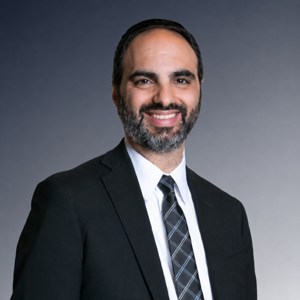
Living Emunah

Living Emunah

By Ashear, Rabbi DavidReligion & SpiritualityJudaism
Download on the App Store
  • Favorites

    27

    Followers

  • Typical duration

    6 min

    per episode

Based on Podcast App listening data

Living Emunah episodes

  • Parashat Vayishlach: On the Spot
    We mentioned that a person has to be patient when it comes to Hashem. He may have prayed the best tefillot, which may have already been answered, but that does not necessarily mean that he is going to get what he asked for right away. He may have done the greatest act of mesirut nefesh, which is going to bring the salvation he wants, but it may not come immediately or even in the near future. And if we are patient and trust that Hashem will give us what we need at the right time, that will make us great. This does not mean, however, that we shouldn't pray with emunah that Hashem could help us right away. The pasuk says that Hashem is the King who answers us " ביום קראנו ," on the day that we call out. Sometimes a person is in need of an immediate yeshu'ah, and he is encouraged to pray with emunah that this can happen. In this week's parasha , Vayishlach , Yaakov was told that Esav was charging towards him with an army, aiming to kill him. Yaakov needed an immediate salvation, and he called out to Hashem from the depths of his heart. Although he felt unworthy of being helped, as is the way of tzaddikim, who always ask for a divine favor, he did mention that Hashem had promised him to do good for him. Yaakov tried to gain the merit of extra zechuyot to help him in his time of need. And indeed, Hashem saved him in a miraculous way. A man who we will call Shlomo told me the following story. He was learning in a yeshiva in the mountains, and he wanted to go to a wedding that a rabbi of his was making in Brooklyn. He found a ride to the wedding, but didn't have a ride back. He said to himself that it's important to attend this wedding, because he had so much hakarat hatov to this rabbi, and he would somehow figure out a way to get back. So he took the ride and went to the wedding. Towards the end of the wedding, he went outside the hall hoping to find a ride to a place where there were constant minyanim, called Shomer Shabbos. And from there, he hoped to find someone driving to the mountains. He saw a car pull up, and he and a couple of friends asked the driver for a ride. He happily took them. While they were in the car, Shlomo asked the driver if perhaps he would be going to the mountains. Amazingly, he said he needed to go there the next morning early to appear in court over a ticket he got that past summer. Shlomo was so excited and asked if he could come along. The driver said it would be his pleasure. The only problem was, Shlomo didn't have a place to stay overnight, so he hinted to the driver. The man invited Shlomo to sleep at his house and was very hospitable. The next morning they were off. The host asked Shlomo in the car if he heard the phone ringing in the middle of the night. Shlomo said he didn't. The man explained that he had gotten a phone call from the hospital saying his mother-in-law's numbers went down significantly, and they thought she only had a few hours left to live. They told him and his family to come in right away to say goodbye. This was obviously very disheartening news. The host and his family got up and began getting dressed. He then remembered he was supposed to drive Shlomo to the mountains. He turned to Hashem and said, "Please, Hashem, I want to drive this boy so he can go learn Torah in his yeshiva. Please enable me to have the zechut of driving him." A few minutes later, the doctor called back and said they didn't need to come in. The numbers just went back up and she was okay. Here, they needed an immediate yeshu'ah, and baruch Hashem, they got it. In general, we must be patient when it comes to seeing salvations from our deeds and tefillot, but at the same time, we must pray with the emunah that Hashem could always help us on the spot. Shabbat Shalom.
    5 min
  • The Waiting Period
    Living Emunah 2683 The Waiting Period One of the great ways the Ba'al Emunah serves Hashem is with his patience. Hashem promised Avraham He would give him Eretz Yisrael. Yet, when it came time to bury his wife there, he had to pay an enormous sum of money for the land. Hashem was so proud of Avraham for not questioning Him, not asking why he had to pay for the land that Hashem had already promised him. Avraham was also promised a child who would take over his legacy. Yet Avraham had to wait 30 years to see the fulfillment of that promise, and he never questioned Hashem even once about it. We learn a lot about how much Hashem appreciates our acts of self-sacrifice and how much blessing they bring down. However, because today we live in a generation where everything comes instantly, it has become much harder for us to have patience and to wait to see the blessings come after we perform heroic deeds. This just means that the rewards for us waiting today are astronomically greater. A person who has done a great act to bring honor to Hashem and has not seen the yeshu'ah he was hoping for has an opportunity today to earn infinite merits by staying patient and trusting that Hashem will help him at the proper time and that his deed will bring down a great amount of blessing. It is true that our deeds bring blessing, but it doesn't necessarily come right away. Rachel Imenu performed one of the greatest deeds in all of history by giving over the signs to her sister Leah. She was willing to give up her husband-to-be to her sister to save her from shame. Chazal tell us that Rachel was physically incapable of having children and that it was in the zechut of this act of self-sacrifice which gave her the merit to have children. Yet, she still had to wait 14 years from that time to have her first child. We see from here that, just because she did the deed that merited her salvation, it didn't mean she was going to get it right away. Similarly, Chazal tell us that because of Yosef's ability to resist the temptations of Potiphar's wife, he became the second in command over the entire country of Egypt. It was his being in that position that enabled him to save his family from the hunger and bring them down to Mitzrayim with dignity. Yet, what happened after he heroically overcame his inclination and did the will of Hashem? He was thrown in jail. Not only that, he had to stay there for 12 long years before he finally came out.The act he did was tremendous. It earned him the title of Tzaddik. But he didn't see an immediate salvation from it. The same is true in many situations. People may be told by holy rabbis about different things they can do as a zechut for salvation. They listen to the rabbis and they sacrifice so much to do what the rabbi recommended. But they don't see any results from it. This does not mean that the deed didn't produce a yeshu'ah. It could very well be that because of what they did, they will get the salvation they're looking for. It just may not come right away. It could possibly take even years. Our job is to have patience and trust in Hashem. He will reward everything we do if we maintain our emunah during the waiting period. We will become so great from it, especially today when waiting is so difficult.
    5 min
  • His Chosen Messengers
    The Chovot HaLevavot in the Sha'ar HaBitachon describes numerous benefits that a person with bitachon enjoys. One of these is that his parnassa is guaranteed to come, and Hashem will use every means to ensure the person receives what he needs. One example brought is when Achab sinned by engaging in avodah zara , and as a punishment, Eliyahu HaNavi withheld the rain. Hashem then instructed Eliyahu to go into hiding. How was Eliyahu able to eat during that time? The pasuk says that Hashem commanded the ravens to bring him bread and meat every morning and evening. From this, we see that sometimes Hashem will even use animals as His messengers to help those who trust in Him. A woman told me that she often visits the graves of her grandparents to recite Tehillim and speak to Hashem. However, there was one grandparent whose grave she could never locate. The last time she went to the cemetery, she was determined to try her hardest to find it. She searched and searched but was unsuccessful. She had such a strong yearning to locate that kever . She began praying fervently, asking Hashem to guide her. She worked on strengthening her belief that Hashem could easily help her. And although she was in a cemetery with hundreds, if not thousands, of kevarim , she reinforced her bitachon and kept speaking to Hashem. Suddenly, a tiny bird landed in front of her and playfully hopped around. It caught her attention because it was unlike the other birds she usually saw there. Within seconds, it began walking away from her, weaving between other kevarim . She decided to follow the bird. She had such strong bitachon that Hashem was going to help her. She followed the bird for about a minute until it stopped and perched on a kever . She looked at the name, and it was none other than the grandfather she had been searching for. She stood there, frozen in awe of the hashgacha peratit she had just experienced. Hashem had literally guided her to the place she sought, using one of His little birds as His messenger. When someone truly believes that Hashem can help, it is an enormous zechut and brings about siyata dishmaya . The more a person learns emunah , the more it develops. When a person's emunah is very strong, he is able to put it into practice. Bitachon is putting our emunah into action. It's a feeling in the heart that cannot be feigned. It takes time to develop, but when achieved, it brings about a profound sense of closeness to Hashem.This woman truly felt that sense of bitachon and merited to see the help she sought. Another young lady shared that she recently began giving a shiur on Shabbat afternoons for girls in her area. On Thursdays, she shops for snacks and drinks for them. On her last trip to the store, she bought many items but didn't have access to a car. When she left the store carrying numerous heavy packages, she realized how difficult it would be to reach the shul with all that weight. She tried walking one block but struggled, carrying 10 liters of drinks along with cakes, cookies, and snacks. It was an exhausting challenge. She began talking to Hashem, saying, "Hashem, I know You can get me a ride in an instant. It would be so helpful if someone would pull over now and take me to the shul ." A few seconds later, a car pulled over with a mother and daughter about her age. They asked if she needed a ride with all her heavy bags. The daughter got out of the car, loaded all the bags into the trunk, and they drove her directly to the shul she needed to reach. This lady needed a shaliach to help her, and Hashem sent her the perfect messenger. When a person has that sense of Bitachon , Hashem will use His chosen messengers to help him.
    5 min
  • From a Different Angle
    Sometimes a person wants something very badly and sees his peers receiving it, while he remains lacking. Naturally, he feels bad, wondering why everybody but him seems to receive. Yet, this is not necessarily a feeling of jealousy. They just see how easy it is for Hashem to grant it, and that makes them feel worse. No matter how many times we hear a concept in emunah, hearing it again can have a greater impact. Sometimes, reacting the way Hashem wants is very hard. Even though we know it's what we're supposed to do, it is still difficult to implement. Hearing it again from a different angle may provide the chizuk a person needs to react better than they would have without that chizuk. Rachel Immenu performed a heroic act by giving her husband-to-be to her sister to spare her embarrassment. She did eventually marry Yaakov as well, but she remained childless while Leah was having children. She watched as her sister had child after child while she remained barren. Then she gave her maidservant, Bilha, to Yaakov and had two children through her. Rachel named the second child נַפְתָּלִי as a description of what she was going through at that time. Rashi explains she was saying how hard she was begging and pleading with Hashem to give her a child, and at least she merited to have a child through her maidservant. The Malbim explains that the word נַפְתָּלִי implies a covering as in צמִיד פָּתִיל . Rachel was saying, "The reason my sister keeps having children while I do not is completely hidden(covered) from me. It is from the hidden ways of Hashem that are beyond my comprehension." And then she said, גַּם יָכוֹלְתִּי , "But I am able to accept it with happiness because I know that Hashem only does good." After that reaction, she merited to have her very own child, Yosef. Perhaps one of the zechuyot she needed to finally merit a child was this reaction to her situation. Accepting the will of Hashem with joy is an enormous zechut. When a person doesn't see any reason why he shouldn't have something, and everybody else seems to get it, it's extremely hard to accept the will of Hashem with joy. We know that this is the way we are supposed to respond. And we know that Hashem always acts with our best intentions. It's just not easy to accomplish. The pasuk says about Naftali: " נַפְתָּלִי שְׂבַע רָצוֹן וּמָלֵא בִּרְכַּת ה ' "—"Naftali is satisfied with favor and full of Hashem's blessing." Rachel's attitude when naming that child affected his very essence. It must have been extremely hard for her to maintain that attitude, but it accomplished so much. Our actions and thoughts are very powerful. When a person is struggling with something, the last thing they want to do is to be happy with it. They simply want the difficulty to end as quickly as possible. Being able to be happy with the emunah that Hashem is doing the best possible thing for us is very difficult but very rewarding. However, it cannot be done as a ploy to get what we want. We have to truly work on ourselves to genuinely feel happy, knowing that Hashem is doing the absolute best for us right now. The reward for maintaining such thoughts might eventually change our circumstances, but that cannot be our sole motivation. May Hashem help us cultivate the right attitude in all situations. And may Hashem bless everyone with כָּל מִשְׁאֲלוֹת לִבְּכֶם לְטוֹבָה .
    5 min
  • A Good Tefila
    The Gemara tells us, one of the areas we constantly need chizuk in is tefila . No matter how good a person's tefilot are, over time they tend to become more habitual and therefore could definitely use chizuk . The Meiri writes that a person should always feel confident in the power of a good tefila to break a decree and if someone is going through a tough time, or has a family member that is ill, he should go to a chacham and ask him for advice on how to have a good tefila . What is a good tefila ? Obviously one with emotion and tears and obviously one with kavana . But there is another very important factor that could make the tefila truly great. When Rachel Imenu saw that she was barren for many years, she told Yaakov to do something to ensure that she will have a child. The Ramban explains, Rachel was asking Yaakov to pray, thinking that the tefilot of a tzaddik like Yaakov would for sure be answered, especially if he puts all of his efforts into it. But Yaakov replied, there is no guarantee that his tefilot would ensure that she'll have a child. Then, says the Ramban, when the tzadeket Rachel saw that she couldn't even rely on the tefilot of Yaakov who was the Gadol HaDor , that's when she prayed with all of her heart and soul, realizing she had to go straight to Hashem because He was the only One who could help her. Then, וישמע אליה אלוקים – that is when Hashem answered her tefila and that is when she finally had a child. The best prayer is one in which the person realizes Who he is standing in front of and what His capabilities are. This is one of the reasons why we start the Amida with praise, so we realize who Hashem is, and only then do we make our requests. We all know that only Hashem could help us, but from time to time, we need to be reminded of it so that it is at the forefront of our minds. I read a story about a couple from Israel who did not have children for many years. They went to a lot of doctors and none were able to help. One day, the man was telling his friend he didn't know what else he could possibly do to be helped. His friend said to him, he heard there's a top doctor in America who has helped many couples with cases that seemed hopeless. People fly from all over the world to see him. He suggested trying to get an appointment with that doctor. They took his advice and traveled to America and consulted with that doctor, who raised his hands helplessly saying he didn't know what to do to help them. There was one more highly recommended doctor there, but his fees were exorbitant. The couple decided they had to try and they waited there for weeks to finally see him. That doctor analyzed their case for a very long time. He did his own testing and finally concluded by saying, "I don't see any problems at all with you. I can't explain why you are not having children, but I do see that you are religious Jews. Pray to your G-d. Only He could help you." When they heard those words from the top doctor in the field, they took on new meaning to them. From then on, they spent every tefila crying buckets of tears, understanding who they were actually talking to and, within a year, they were blessed with a baby boy. There is nothing that can take the place of a good tefila .
    5 min
  • Parashat Vayetze: Yaakov’s Bitachon
    When Lavan asked Yaakov what he wanted his wage to be for shepherding the sheep, Yaakov replied, לֹא תִתֶּן לִי מְאוּמָה —"Don't give me anything yet." He then proceeded to remove the spotted, speckled, and brown sheep from the flock and told Lavan to take them all away under the guardianship of his sons, stating that only the future spotted, speckled, and brown sheep would be his. The Seforno writes on the words לֹא תִתֶּן לִי מְאוּמָה that Yaakov was saying, "I don't need you to give me any specific wage. If I find favor in Hashem's eyes, He will grant me everything that I'm meant to receive." The Sefer Madregot Ha'adam elaborates on the great bitachon that Yaakov exemplified here. His wages had already been changed numerous times, with Lavan repeatedly trying to swindle him. He knew that going forward, Lavan would likely cheat him again. Yet, he remained unfazed. He told Lavan he would continue to work and receive exactly what Hashem wanted him to have. Afterward, when Yaakov used the rod to influence the future animals being born, Rabbenu Bechayeh writes that this was because Hashem gave him that idea in a dream, indicating this was the method by which He was going to provide him with the income He intended for him. There are times in life when people feel they are being cheated by others or that others are withholding money owed to them. The best advice in such situations is to strengthen one's bitachon and believe that only Hashem determines the money one receives. If Hashem wants a person to receive it, he will. No one can stop that. The bitachon we feel in our hearts is an enormous zechut, and that merit can grant a person Heavenly help to receive what he needs even more quickly. A man, whom we'll call Yosef, told a story about another man who came to him one day in shul, asking him to fill a certain position . Yosef was not looking for additional work, but the man told him the salary, and Yosef agreed to take the job. He enjoyed the work very much and excelled at it. Everything was working out well—except for one thing: Yosef's salary wasn't being paid. One month passed, then another, and then another, yet his employer still hadn't made a single deposit into his bank account. Before Rosh Hashana that year, Yosef approached the employer and reminded him, "I did not come to work as a volunteer." The employer responded, "Of course, of course! I'll deposit the money right away." But the money still wasn't deposited. This situation was deeply troubling to Yosef. He began to wonder: Was this man actually cheating him? Had he been convinced to work with no intention of payment? Yosef wanted to quit immediately but wasn't sure if that was the right thing to do. He began vacillating over whether or not to leave. The uncertainty consumed him, and he became increasingly frustrated. Then, suddenly, Yosef realized he was placing too much focus on whether or not his boss was going to pay him. He wasn't acknowledging that this boss was not really in charge. The employer was merely a messenger from the true Boss, Hashem. Yosef hadn't even devoted any time to speaking to the real Boss about his situation. He then came to the conclusion that it wasn't his employer who convinced him to work there—it was Hashem who sent him. And if Hashem wanted him to do that job, then, naturally, Hashem would ensure he was paid—just as He always does. This newfound understanding brought Yosef a deep sense of calm, and he happily went back to work the next day. Incredibly, it was less than three days later that all the money he was owed was deposited into his bank account. There is nothing that can take the place of true bitachon in Hashem. Shabbat Shalom.
    5 min
  • Interested in Only One Thing
    The Ohr Hachayim writes on the pasuk, " וַיָּבֹא מֹשֶׁה וְאַהֲרֹן אֶל־פַּרְעֹה וַיַּעֲשׂוּ כֵּן כַּאֲשֶׁר צִוָּה ה '", that the will of Hashem is more precious to the Tzaddikim than anything else in this world. Here the Torah testifies that although Moshe and Aharon had just performed an open miracle in front of Pharaoh by turning a stick into a snake and they could have felt very proud of it, nevertheless they were only interested in one thing: " כַּאֲשֶׁר צִוָּה ה '", doing it because it's what Hashem wanted. Hashem loves when we want to do His will. If a person truly has a desire to do the ratzon of Hashem, then Hashem will give him Heavenly help to accomplish it. A man told me that after his father passed away, he accepted upon himself to continue doing the chesed that his father did for others, which was placing older people in the right care, including putting them in the nursing homes that would suit them the best. The man felt that every chesed he would do in this area would be honoring his father and honoring Hashem. And because of his passion, he has seen tremendous Siyata Dishmaya in finding ways of helping people. For one example, recently, he was on a business trip across the country. While he was there, he received a call from a woman crying that her mother wasn't being taken care of properly and she needed help. He asked her where she was located. Amazingly, she was in a home in the city in which he had just landed. He told me he hadn't been in that city for over a year and had never received a request for help from that city. He didn't even know how she heard of him. He said he wasn't familiar with the area, but he would do his best to help. He told her he would call her right back after his business meeting. He then went to the meeting, and afterward, his partner wanted to go to a certain shopping center with him to look at the merchandise in the store window there. They used Waze to locate the store. Waze took them to the back entrance of the shopping center, and a sign on one of the doors there caught his eye. It was the office of the local Bikur Cholim. He went in, and the president of Bikur Cholim happened to be there at that moment. He was able to get from him all the information he needed. He then called that woman back and helped her in the best way he could. He said he had no idea how he was going to help her, but Hashem led him to the one place that was able to provide the information he needed to help her the right way. Another man told me he was working very hard on guarding his eyes from seeing the wrong things. He got rid of his smartphone. He put a strong filter on his computer, and he even moved to a very religious block. The day after he moved into his new house, he was looking out of one of the windows and was able to see clearly into an apartment building a few blocks away. There was one apartment that caught his eye. The entire apartment was visible, especially at night, as they didn't close their shades and the occupants dressed very immodestly. This was visible from two of his main windows. On the following nights,the same scene repeated itself. They never closed their shades. His family loved natural light, but by keeping their shades open, it would pose a hazard to him. For the next few months, they kept the shades closed, and then they went away for the summer. The man prayed very hard to Hashem to solve this problem for him. He did not want the daily test of having to hold back from looking at improper sights. He was trying so hard to avoid this test, and now it was right in his face. He begged Hashem to help him, and lo and behold, when they came back from the summer vacation, they were pleasantly surprised. A neighbor on the next block built a large extension just tall enough to block that apartment building from their view. They were so thankful to Hashem. This man really had no idea how he was going to solve this problem, but he didn't need to know. All he needed was a yearning to do the will of Hashem, and he prayed for help, and Hashem gave him the help that he needed.
    5 min
  • The Key to Life
    Every situation we find ourselves in provides us with unique opportunities to serve Hashem. If a person goes through a period of financial struggle, that is a special opportunity to serve Hashem in a unique way. If a person experiences difficulties with shidduchim, health, or having children, each of those circumstances provides the person with unique opportunities. The key in life is to be able to do the right job in every circumstance that Hashem places us in. Some tests last for months, some for years, and some for just days. Having the proper emunah and acting accordingly will define how successful a person is in this world. One of the great tests of life is how a person acts when Hashem blesses him with wealth. The natural inclination is for the person to feel that he doesn't need Hashem because he is self-sufficient. A wealthy family may feel that they don't have to pray for shidduchim for their children. Since they have money and the ability to buy their children homes and cars and support them, they feel they can get any shidduch they want. If they have a health issue, they may not feel the need to pray as much because they have connections with the top doctors in all fields. One of the big tests of wealthy people is to feel like they have nothing and need Hashem for everything. The Arizal writes that before we say the Amida in Shacharit, we recite the words, ' עוזר דלים ,' Hashem helps the impoverished, and we should feel as if we are impoverished in every area. When a person gets to the beracha of Barech Alenu , no matter how much money he has, he should feel like he has nothing and needs Hashem for every last dollar. When he says Refa'enu , he should feel that all of his connections to doctors are meaningless. Hashem is the only One in the world with the ability to heal him. The same is true with every beracha in the Amida. The greatest genius must feel as though he has no brainpower without Hashem and must beg Hashem during Atah Chonen to grant him the ability to understand. Let us learn this lesson from the way Avraham Avinu acted in the situations that Hashem placed him in. Avraham was the wealthiest man of his generation. How did he act when he needed to buy a burial plot? Imagine today if an extremely wealthy man walked into the offices of the Chevra Kadisha to buy burial plots. He might choose the most prestigious plots, and if told they weren't available, he might say: "Tell me what it costs; I'll pay anything, and I'm not taking no for an answer."He might speak with the attitude that his money can get him whatever he wants, whenever he wants. Avraham Avinu, however, spoke to the B'nei Chet with great humility, saying: I am only a גר ותושב -foreigner and a stranger - among you. The B'nei Chet couldn't believe the way he was talking. They told him, "No, you are our master, you can have whatever you want." The Midrash says, Abraham replied, "Only HaShem is the master." Every time they tried to honor him, he minimized it. And he wasn't just speaking words, he truly believed he didn't deserve any honor. When Avraham sent Eliezer to find a shiddukh for Yitzchak, he did not rely on his wealth. He told Eliezer: " ה' אֱלֹקֵי הַשָּׁמַיִם יִשְׁלַח מַלְאָכוֹ לְפָנֶיךָ ." - Hashem, the God of the Heavens, will send His angel before you. And when Avraham experienced success, he immediately bowed to Hashem in gratitude—unlike the natural inclination of a wealthy man to think he accomplished everything. Baruch Hashem, today, many wealthy individuals emulate Avraham. Despite their wealth, they exhibit tremendous humility. They are true inspirations, overcoming the test of wealth, and they will be eternally rewarded for it. The pasuk says about Yitzchak Avinu: " וַיִּגְדַּל הָאִישׁ, וַיֵּלֶךְ הָלוֹךְ וְגָדֵל, עַד כִּי גָדַל מְאֹד ." The Tiferet Shmuel explains that the pasuk repeatedly uses the word גדול to highlight how a person who overcomes the test of wealth can become a גדול . By acting humbly and perfecting his middot despite his wealth, he achieves greatness. Every stage of life presents a different set of tests. Our success will be determined by how we deal with each circumstance as it arises.
    6 min
  • Our Deeds
    Living Emunah 2677 Our Deeds Although we may not always perceive the effects of our deeds, we can rest assured that every small action we take is immensely valuable and carries great weight in Shamayim. The way events unfold in the physical world depends on decisions first made in the spiritual realm in Shamayim. Our tefillot and mitzvot make all the difference; they have the power to alter even what has already been decreed. In Parashat Toledot, the Torah uses the word ויעתר , meaning a pitchfork, to describe tefilla. Chazal explain that just as a pitchfork overturns the grain on the threshing floor, moving it from place to place, so too the prayers of the righteous overturn the "mind" of Hashem. A man, whom we'll call Yitzchak, shared a personal story from years ago. Yitzchak had a relative, whom we'll call Reuven, who was extremely wealthy. One of Reuven's dreams was to dedicate a shul that would serve as a center for Torah and tefilla. Two congregations in Israel, each in dire need of a building, heard about Reuven's aspirations and sought his support. Both congregations were operating out of trailers and desperately needed a proper building. Representatives from each kahal approached Reuven, imploring him to choose their congregation. They promised to prominently display his name on the building as a gesture of gratitude. Reuven was unsure which kahal to support, so he sought advice from a rabbi. The rabbi suggested sending a trustworthy individual to pray in both shuls undercover to determine which one showed greater potential for growth. Reuven appreciated the suggestion and asked Yitzchak to take on this task. Yitzchak flew to Israel, planning to spend the first Shabbat with kehillah number one and the second with kehillah number two. During his visit to the first kehillah, Yitzchak observed an older congregation. There were no Divrei Torah, and the seudah shlishit lacked enthusiasm. The members were scrambling to find a speaker until they finally asked Yitzchak to say a few words. It was a very quiet and uneventful Shabbat. The following week, Yitzchak attended the second kehillah and found an overflowing crowd. Older people, younger people, avreichim, and children all prayed with fervor. Each tefilla included a fiery speech focused on themes of achdut and shalom. This kehillah exuded unity and mutual love. Yitzchak concluded that this was the kehillah for which Reuven should build a shul. Reuven was thrilled to support such a vibrant kehillah. The second kehillah was elated upon learning that they would receive a new building. When the project was completed, Reuven flew to Israel to pray in the new shul. However, that Motzaeh Shabbat, he called Yitzchak with complaints. Reuven described the congregation as primarily older people, resembling the first kehillah Yitzchak had visited. Yitzchak had no immediate explanation. The following Shabbat, Reuven went to pray in the first kehillah, only to find the lively, multi-generational community Yitzchak had initially described for the second kehillah. Confused, they investigated further and discovered what had happened. On the Shabbat Yitzchak visited the first kehillah, a Shabbaton for the younger crowd had been held at a hotel, leaving only the older members in attendance. During Yitzchak's visit to the second kehillah, it had been the yahrzeit of the rabbi's father, and the rabbi had invited his large family, including dozens of grandchildren and great-grandchildren, who filled the shul. When Reuven heard this, he said, "I have no complaints. It is obvious that Hashem arranged the events to work out like this because He wanted that Kehillah to get the shul that I donated to." He wondered, however, what zechut this kehillah had to warrant such divine favor. The rabbi of the second kehillah explained: "We longed deeply for a shul. We committed to completing the entire Tehillim every day in shul with a minyan. Additionally, two members who were involved in a bitter machloket, which affected the entire kehillah, were asked to reconcile as a zechut for receiving the new building. On the Shabbat your representative visited, we emphasized achdut and shalom." Through the power of their Tehillim and efforts toward shalom, Hashem orchestrated circumstances so that one kehillah appeared nearly empty and the other overwhelmingly full, ensuring the second kehillah received the building they so desired. Our deeds are truly wondrous.

    7 min
  • Catapult to Growth
    A man we'll call Ralph shared with me that he hadn't been learning much recently. One night, he pushed himself to attend a class, even though it was very difficult for him to get there. Afterward, he was so glad he went. When he returned to his car, he discovered that it was damaged, and no one had left a note. He felt upset and frustrated. The next day, Ralph took the car to a body shop, where the repairs cost him $400. He couldn't help but think that this only happened because he had gone to the class. "If I had stayed home," he thought, "my car wouldn't have been there, and this wouldn't have happened." Anger welled up in him, and he told Hashem that this made him not want to attend classes anymore. The following day, while driving, another car hit Ralph from behind. The driver got out, visibly apologetic for not being more careful. He looked at Ralph's car and saw that it looked like it had just minor damage. He said to Ralph, "How much do you want? $200? $300? Here, take $400." Ralph inspected his car and realized there wasn't even a scratch. He thanked the man for the $400 and they parted ways. Ralph said he saw this as a clear sign that Hashem had returned the money to him, and he apologized for questioning Him the day before. Ralph realized that Hashem was showing him that he hadn't lost anything by going to the class. Baruch Hashem, Ralph is once again excited to continue attending. However, we must understand that we can never fully grasp the ways of Hashem, even in a situation like Ralph's which seems straightforward. Another possible interpretation is that because Ralph pushed himself to learn Torah that night, Hashem deemed him worthy to get a relatively small kapara in the form of a $400 repair bill—sparing him from something worse. However, after Ralph displayed anger towards Hashem and then threatened to stop learning Torah, he may have lost that zechut and so the next day he was given the money back. There are countless other possibilities that we can't even think of. What we do know is that no one ever truly loses from doing a mitzva. When it appears otherwise, it's merely a test. When Avraham passed the supreme test of Akedat Yitzhak, he received the devastating news that his wife had passed away. It could have appeared as though her death was a direct result of the mitzva he had just performed. Yet, Avraham knew that Sara was destined to live precisely as long as she did, and that any connection between her passing and the Akedah was merely a test. Similarly, Hashem gives us opportunities to strengthen our emunah because He loves us and wants to grant us more zechuyot. If a person is meant to lose money, it will happen one way or another. If Hashem makes it appear that he lost it because of a mitzva, that is an opportunity to recognize that Hashem is just testing him because He loves him, just like He did with Avraham Avinu. He should think the loss was going to happen regardless, but now by having emunah he will be able to soar to the greatest heights and reap eternal rewards. Baruch Hashem, Ralph has since been learning emunah, and he now sees Hashem's hand in every aspect of his life. He loves going to class, and he knows that he will never truly lose from it. We may not pass every test we face, but if we learn and grow from them, even our failures can become catalysts for growth and they will be added to the side of our merits. Every experience in life can be transformed into avodat Hashem. We shouldn't be overly harsh on ourselves for past mistakes. Instead, we should use feelings of regret to catapult ourselves to want to become better and better.
    6 min

About Living Emunah

From the publisher's feed

A Daily ethical teaching by Rabbi David Ashear

Best of Living Emunah

Ranked by our users in the last 21 days

More shows like Living Emunah

The Rabbi Sacks Legacy by Rabbi Lord Jonathan Sacks

The Rabbi Sacks Legacy

559 Listeners

The Israel Guys by The Israel Guys

The Israel Guys

308 Listeners

Jewish Stories to Inspire: Motivational & Spiritual Stories Based on the Torah's Ethics, Values and Wisdom by Stories to Inspire

Jewish Stories to Inspire: Motivational & Spiritual Stories Based on the Torah's Ethics, Values and Wisdom

186 Listeners

Living with Emunah by Rabbi Efrem Goldberg

Living with Emunah

109 Listeners

Meaningful People by Meaningful Minute

Meaningful People

1,986 Listeners

From the Inside Out: With Rivkah Krinsky and Eda Schottenstein by Rivkah and Eda

From the Inside Out: With Rivkah Krinsky and Eda Schottenstein

263 Listeners

The Q & A with Rabbi Breitowitz Podcast by Rabbi Dr Yitzchak Breitowitz

The Q & A with Rabbi Breitowitz Podcast

234 Listeners

Call Me Back - with Dan Senor by Ark Media

Call Me Back - with Dan Senor

3,197 Listeners

The Times of Israel Daily Briefing by The Times of Israel

The Times of Israel Daily Briefing

1,070 Listeners

Kosher Money by Living Lchaim

Kosher Money

820 Listeners

History for the Curious - The Jewish History Podcast by JLE

History for the Curious - The Jewish History Podcast

231 Listeners

Gedale Fenster - Podcast by Gedale Fenster - Podcast

Gedale Fenster - Podcast

399 Listeners

Honestly with Bari Weiss by The Free Press

Honestly with Bari Weiss

8,473 Listeners

Inspiration for the Nation with Yaakov Langer by Living Lchaim

Inspiration for the Nation with Yaakov Langer

1,121 Listeners

Stories Of Hope With Tzipora Grodko by Meaningful Minute

Stories Of Hope With Tzipora Grodko

324 Listeners