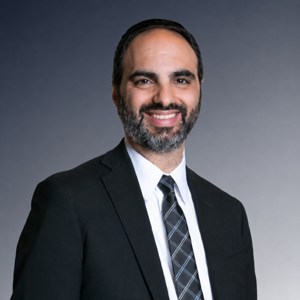
Living Emunah

Living Emunah

By Ashear, Rabbi DavidReligion & SpiritualityJudaism
Download on the App Store
  • Favorites

    27

    Followers

  • Typical duration

    6 min

    per episode

Based on Podcast App listening data

Living Emunah episodes

  • Parashat Toledot: The Reward is Unimaginable
    In this week's parasha, Toledot , we are introduced to the wicked ways of Esav harasha . Yet although he was so wicked, he merited to rule over our people throughout history until that great day of ועלו מושיעים בהר ציון לשפוט את הר עשיו. What did he do to merit all of his blessings? The mitzvah of kibbud av v'em . And although he did excel in many aspects of this mitzvah, he was far from perfect in it, as can be seen explicitly in the pesukim . Furthermore, he was only careful with kibbud av and not kibbud em, as the Rambam explains. Yet, with all of his rishut and all of his deficiencies, he was still rewarded for generations in the merit of this one mitzvah. How much more so will the reward be for even the simplest Jew trying his best to serve Hashem, doing dozens and even hundreds of mitzvot every single day. Of course, we know the real reward for mitzvot is paid in the Next World, while here we only receive their dividends. Every single effort we make is appreciated by Hashem. A rabbi told me he wanted to do the mitzvah of kibbud av v'em and visit his parents who moved to Israel. This rabbi learns half a day and teaches half a day. And so buying plane tickets for him and his wife was a major expense. The travel agent told him the best he could get for two tickets at this time of year was $3800. He then offered him $500 less if he would take a stop-over. The rabbi accepted and booked the tickets. A few hours later, he realized that with the stop-over he was going to miss praying Shacharit with a minyan , as well as his entire morning seder of learning. Then he thought to himself, is it worth $500 to miss minyan and Torah? Of course not. He called the travel agent back and switched to the direct flight. In the end, his flight back had to land in another country because of a technical problem and, due to the delay, he ended up getting back after his morning seder . The airline gave him a $2400 credit for the inconvenience that they caused. He said to me, it was clear that for whatever reason he was meant to arrive in the afternoon that day, but baruch Hashem, he chose Torah and tefila over the money. And as a bonus, Hashem gave him an extra $2000. Our mitzvot are so precious. Even the objects that we use in their performance become holy and thereby bring about yeshuot . I read a story about a young rabbinical scholar who lives in Israel who accepted upon himself to go every Friday to the Shaarei Tzedek Hospital with his accordion and play Shabbat songs to the patients and bring them joy. One day his car broke down and the cost to fix it was more than the worth of the entire car, so he left it. He couldn't afford a new one, but he was worried. How would he continue his mitzvah of bringing joy to the sick on Fridays without a car? He decided he was going to go above and beyond and lug his big accordion on two separate buses to get to that hospital. He continued this week after week and month after month. A couple of years ago, he came into the room of an elderly patient in a coma who the doctors had already given up hope on. When he played his accordion and started singing Shabbat songs, the patient made a very slight smirk and the family began to celebrate. They called the nurses in to see. The following week when he came back and played again, again the smirk came back. On the third week, a miracle took place. While he was playing the song, her eyes opened. He kept playing and, finally, she said a couple of words. The children were so thankful to this young rabbi and asked him more about himself. He told them about his weekly chesed and how he has been doing it with extra effort since he lost his car. They were so moved, they chipped in and bought this rabbi a new car. A week later, their mother was out of the hospital. Our mitzvot are wondrous. The rewards for them are unimaginable and the kedusha that we bring about through their performance is great. Shabbat Shalom.
    6 min
  • Praying Again
    Living Emunah 2675 Praying Again The pasuk says, " וישכם אברהם בבקר אל המקום אשר עמד שם " and Chazal tell us, it was at this time that Avraham Avinu instituted the tefilla of Shacharit. This took place right after Sedom was destroyed. We know Avraham prayed so hard to save Sedom, and seemingly his tefillot were not answered. That was precisely when he went to the exact same place and prayed again. It was this tefilla that saved Lot and the spark of Mashiach that was inside of him. Avraham did not get discouraged when his tefilla was not accepted. He immediately went back and prayed again, and this made his tefilla so much greater. The Sefer Sas B'Imratecha tells a story about a family who lost their matriarch after she fell ill with a dreaded illness. They prayed and prayed, but in the end, she was taken to the Upper World. Sometime after that, their father got sick as well. The family was broken and was having a difficult time bringing themselves to pray again with the same emotion they had displayed when their mother was sick. Their father then proceeded to tell them a story that took place during the Holocaust. He said a Jewish woman had given birth to a baby whose bones were out of place. She knew of a Gentile woman who was an expert in fixing this issue. One night, she snuck out of her house in the ghetto and brought her baby to this Gentile's home. The Gentile woman was shocked to see the Jewish woman with her baby at her doorstep. She told her they were doomed to death anyway. The woman begged for help, and the Gentile woman had mercy on them. She said she would not only help the baby, but she would hide both of them in her basement and save their lives. The woman thanked her, but then she said she had eight more children at home and couldn't leave them. The Gentile woman told her to go get the rest and bring them all back. She would protect them all. This mother, with all of her strength, managed to smuggle out her children, and they spent the next couple of years in this Gentile's cellar. When the war ended, they moved to America. Later on, after they were settled, they decided to make a grand party to honor this Gentile woman who saved their entire family. They sent her a plane ticket and arranged to have a party in a hall with a lot of guests in her honor. The Gentile woman came and greatly appreciated the tribute. They asked her what possessed her to not only cook and toil for ten complete strangers but even risk her own life for them, as it was known that if the Nazis caught someone harboring Jews, they would kill them on the spot. The woman said that she loved studying the Bible, and she had a special affinity towards Jews. Initially, when she offered to protect the woman and her baby, she was very scared. However, when the woman said she had eight more children, the Gentile woman felt excited and much calmer. She recalled the story of Avraham praying for Sedom and how Hashem said He would have saved the entire city had there been ten righteous people there. She felt that if she could have ten righteous people staying in her home, then God would protect her. This was the story that this ill father told his children. He concluded by telling them, "It seemed that Avraham's prayers for Sedom did not work. However, 3600 years after those tefillot, we still see them saving more lives. We have no idea what our tefillot accomplish. Just because it appears that you were not answered in the past does not mean you should be discouraged from continuing to pray in the future. Please pray hard for me. B'ezrat Hashem, Hashem will take your tefillot and rip up the decree of this illness." Tefilla is always wondrous, but it is especially powerful when a person comes back to pray after it seems that he was not answered before.
    6 min
  • Overcoming the Obstacles to a Shidduch
    Finding a shidduch is compared to Kriyat Yam Suf. Many explanations have been offered to clarify this connection. The road leading to finding the right match can be exceedingly difficult, but when that day finally comes, the feeling is exhilarating. It seems that the Torah's depiction of the shidduch process unfolded very smoothly . Avraham sent Eliezer to find a girl for Yitzchak. Eliezer prayed to Hashem. He was answered immediately. Rivka returned with him and married Yitzchak. Yet we see from Chazal that it was not simple at all. Lavan and Betuel did not want the shidduch to happen and they were not going to allow Rivka to go. Eliezer had to make dozens of changes in describing to them the details of what actually happened when he met Rivka. Even after all of that, Betuel still objected to Rivka going, until Hashem Himself had to remove him from the picture. Avraham Avinu, the father of the chatan, was considered a prince in the eyes of the world. He was extremely wealthy. The chatan himself was the best shidduch in the entire world at that time, yet it was still so difficult to bring the shidduch to fruition. This is because getting married and establishing a family of shomrei Torah and Mitzvot is an enormous zechut, especially in this instance in which it was going to be the home that began the entire Klal Yisrael. The negative forces in Shamayim will do everything possible to stop such Kedusha from entering the world. How does one overcome these negative forces? The Shem MiShmuel shares a beautiful insight into how it happened here and how perhaps we could accomplish the same with our own Shidduchim. We know Eliezer was the one charged with the mission of finding a wife for Yitzchak. Chazal tell us Eliezer himself had a daughter of marriageable age. Eliezer was Avraham's top student who helped him bring back thousands of people to Hashem. He was hoping that Avraham would let Yitzchak marry his own daughter, but when he offered it, he was rejected. Not only that, he was then asked to be the one to go find a wife for the same person he wanted for his daughter. He could have easily given up after encountering his first obstacle, thinking to himself, maybe if this doesn't work out Avraham will reconsider. Yet he did everything in his power to bring the girl that Avraham wanted. He understood he was doing the will of Hashem and did it to the best of his ability. He even prayed for it to happen and thanked Hashem when he saw it was going to happen. This was a tremendous act of self-sacrifice He surrendered his own desires to fulfill the will of Hashem . The Gemara says that the previous generations merited miracles because of their mesirut nefesh in sacrificing their own will to do the will of Hashem. The Shem MiShmuel continued and asked why did Hashem orchestrate that Eliezer had a daughter of marriageable age exactly when he was asked to do this job? Why did Hashem present him with such a difficult test? He answered that in order to bring the shidduch to fruition, they needed to bypass all the negative forces in Shamayim trying to stop it. Only a heroic act of mesirut nefesh had the power to overcome them. The zechut of mesirut nefesh can overcome any obstacle. It was specifically Eliezer that was going to be able to get this job done because he would be doing it with mesirut nefesh. The same can be said, b'ezrat Hashem, in all marriages. If there are a lot of roadblocks along the way, it could be because the marriage is going to be so holy, and the kelipot in Shamayim are trying to stop it. An act of mesirut nefesh can overcome them. This, perhaps, is another explanation of how shidduchim are likened to Kriyat Yam Suf. When the Jewish people stood with the water up to their noses, and the midat hadin would not allow the waters to split, it was the great act of mesirut nefesh of Nachshon ben Aminadav that overcame that midat hadin and brought about the wondrous miracle of Kriyat Yam Suf. May we merit to see all those trying to establish a home of Kedusha fulfill their goal very soon.
    6 min
  • Finding the Right One
    There are many singles who are having a very hard time in shidduchim. It is so difficult for girls to watch the days pass by with no prospects in sight. They wait week after week, month after month, and year after year, wondering if they will ever get married. The same is true of a boy who is getting on in years and can't seem to find the right one. It is also so hard for the parents and family members of these individuals to watch their loved ones hurting so much. They wish they could help them, but it's just not working out. It is important for these singles to understand that although they aren't married yet, there is still so much they could accomplish in their current situation. Our main purpose in life is to serve Hashem to the best of our ability in any situation we find ourselves in. We do not take the attitude that "If I'm not married, then nothing else matters." To the contrary, everything else matters. We must use every day of life to its fullest, and that is the determinant of our success in this world. At the same time, we also know that Hashem has already chosen a marriage partner for every single person. The difficulty is just finding them. There can be many factors determining why a person has to wait a long time to get married, but we know prayer and good deeds can always help speed up the process. An act of self-sacrifice carries a tremendous amount of weight in Shamayim. If someone has such an opportunity, he should do his best to capitalize on it. The Be'er HaParasha told a story that happened recently. Two sisters over the age of thirty were still not married. They were the only children in their family, and they were taking care of their father who was ill. Finally, it seemed like the perfect shidduch came along for the younger of the two. Everything was progressing nicely, and they were all looking forward to hearing good news. The day came when they thought the shidduch was going to be finalized. However, when the younger sister came home that day, she looked completely shattered. The older sister asked her what happened. She said the shidduch was broken off because of monetary issues. She told the other side that her father is ill and doesn't have money. She herself had a life savings of a hundred and fifty thousand shekels, but that was not nearly enough for what the other side was anticipating. Of course, we know that money comes from Hashem, and the main focus of a shidduch is the person, not their financial status. Money comes and goes. Many people have had money when they got married and subsequently lost it, and many have gotten married without money and have been blessed ever since. Be it as it may, in this particular case, the shidduch was broken off. The older sister felt so bad for her younger sister. She knew how excited she was to finally get married, and she was not going to let money get in the way. She had five hundred thousand shekels in savings and told her sister she was going to give it all to her. The younger sister refused that most generous offer, but the older sister wouldn't take no for an answer. The younger sister then went and told the other side about the money, and the shidduch was back on. The chatan was so moved by the selfless act of this older sister. He called a friend of his who lived in America to tell him about his engagement, and he also told him about the amazing act of self-sacrifice that his future sister-in-law had made. This friend was blown away. He told a friend of his who was single and about the same age as this girl, about what she did. This friend happened to be very wealthy, and he was also deeply touched by the selfless act. He felt it was worth it for him to fly to Israel to go out with her. Baruch Hashem, that shidduch progressed very quickly, and they got engaged. The wedding of that couple just took place now in the month of Cheshvan. Both of these girls seemed so distant from getting married, and then כהרף עין , both of them found their zivug. Sometimes all we need is one great zechut to be blessed with finding the right one.
    6 min
  • Divine Feedback
    Hashem appreciates every little effort we make in our Torah learning. Sometimes in His subtle ways, Hashem gives a person a little smile, kavyachol, showing him how much He appreciates what he does. A man told me he was living in New Jersey for the summer, but spent a couple of nights a week in his Brooklyn house. It was very difficult to bring his large gemara back and forth , and so he left it in New Jersey. When he was in Brooklyn, he just used the shul's gemara. The problem was that on the days he was in Brooklyn he wasn't able to take notes in his gemara, which he was accustomed to doing. Eventually, he got a paperback gemara just on the perek he was learning, and brought it back and forth for a couple of weeks, taking notes every single day. But then he misplaced it and didn't find it until right after the summer. Recently, he had to travel overseas, and while there, he met some Jews from Panama in the Chabad house. They discussed gemara, and asked him which gemara he was learning. He told them the second perek of Baba Metzia. They said, "Wow, that's what we're learning," and they made up to learn together on Shabbat afternoon. He had his paperback gemara with him, and when he sat down to learn the next day, he asked them where they wanted to start from. They chose the exact word that he had started his notes from in that book. He was so happy that he was able to share with them what he wrote, which helped all of them understand the gemara better. They learned for almost two hours straight, and then, when they got to the last word that he had notes on, they said they had to stop. It was amazing. He had notes on one page in the entire perek , and they wanted to learn that exact piece, not one word more or one word less. He felt like Hashem was telling him how much He appreciated his efforts in taking notes. Another man told me, he had worked very hard on composing his own dvar Torah, which he was so proud of. He told it to his rabbi, and then to any other rabbi he came into contact with. He made this dvar Torah a long time ago, and it happened to be from a pasuk in Parashat Vayera. This year, on Parashat Vayera, he went to a shul that he never attended before, and the gabai who gives out the aliyot approached him and gave him an aliya. When he was up there during the reading, he saw the pasuk that he made his dvar Torah on, and was so inspired. It was like Hashem was telling him, I see the effort that you're making, and I appreciate it. Another man told me, he has a child who has been married for many years without children. This year, he was told of a segula to get the aliyah that speaks about Sara Imenu having a child. He called the rabbi from the shul he normally attends and asked him if he could reserve the aliya for himself, to which the rabbi said of course. He also told his child to get the aliya where he prays. That Shabbat, he was eating by one of his sons-in-law, who requested for whatever reason that he pray with him the next day in shul. He saw that it was important to his son-in-law that he pray with him, but it would mean he wouldn't get the aliya he reserved. However, to make his son-in-law happy, he decided to go with him. Amazingly, when the time came for the aliya that he wanted, the gabai from that shul came over to him and invited him for it. Nobody there knew that this is the aliya he had requested. Only Hashem knew. Hashem put it in the mind of that gabai to give him this aliya. Everything that takes place, every moment of the day, is orchestrated by Hashem. He sees what we do, He knows what we want, and He loves and appreciates all the efforts that we make in Torah and mitzvot. Most of the time, we're not going to get immediate feedback, and that's part of our test. But when we do, it gives us so much chizuk.

    6 min
  • Parashat Chayeh Sarah: The Right Hishtadlut
    One of the reasons that we are required to make hishtadlut when trying to accomplish something is because Hashem wants us to camouflage His involvement in it. We are to do as much as needed to make it appear that we are the ones accomplishing, but realize that, actually, our actions are not what bring results. Only Hashem does. This is one of the big recurring tests in life. We must be cautious during our hishtadlut that we don't believe that we are the ones getting it done. One of the ways that we can test ourselves is by seeing how much effort we are putting in. If we already did enough to accomplish the goal, yet we continue to put in more and more effort, that is an indication that we really believe we are the ones producing. If we are able to stop when we feel we did enough, then we are showing that we believe it's Hashem. The Brisker Rav pointed out a beautiful lesson in hishtadlut that we learn from this week's parasha, Chayeh Sara, from Avraham Avinu. Avraham sent his faithful servant Eliezer on a mission to find a wife for Yitzchak, but there were some things that were not going to be in his control. And so Eliezer asked Avraham, what if the girl does not want to come back with me? Now we must know Eliezer was the son of Nimrod, who was able to ensnare the entire world with his ability to persuade. Eliezer must have had some of that ability himself. He was also coming with an exorbitant amount of money. When Eliezer asked Avraham what to do if the girl doesn't agree to come, Avraham could have easily told him, don't give up so easily, be stubborn, use your wits to persuade her. If need be, you could buy them with money and gifts, whatever it takes, make sure that you don't come back without her. This would have been a very understandable and logical hishtadlut, yet that was not the response that Avraham gave. Avraham told him, if the girl doesn't want to come back to you, then you are absolved of your mission. You don't need to persuade or buy anyone. All you need to do is enough hishtadlut to get the job done in a natural way and that's it. Avraham understood we are not the ones who produce results and we never have to take desperate measures to get what we want. This is a vital lesson for life. Of course, we need to make hishtadlut, and we can't be lazy about it. It has to make sense that the effort we are putting forth should be enough to produce the desired results. However, more than that is detrimental. Furthermore, our hishtadlut must be accompanied by genuine tefila which shows that we understand Hashem is producing the results. Making the right hishtadlut with the right intentions is a great zechut which will help bring about more Heavenly assistance. Whenever we make any hishtadlut in any area, we must remind ourselves of these concepts. If we really believe that Hashem is in charge, we'll never do anything shady to bring about results. We'll never make too much effort and we'll never act desperate. Avraham Avinu was confident that Hashem was in charge of the shidduch. In the end, Eliezer did not need to do any persuading. Even though Rivka's father and uncle tried to stop the shidduch from happening, Hashem foiled their plans and brought the shidduch to fruition. Hashem is always in charge. He is always the One bringing the results. We must truly internalize this and have it show in our actions. Shabbat Shalom
    5 min
  • Every Dollar
    A wealthy man told me that although his business is thriving, he understands that he did absolutely nothing to earn his wealth. He then related just one example of how Hashem orchestrated events to bless him with the wealth that he has. He had an average business here in America and was looking to open a similar business overseas. While he was on the flight to go to this other location and see the opportunities there, he made conversation with the man sitting next to him. He mentioned what line of business he was in and how he was looking to expand. The man told him he knows someone with a similar business in the exact location he was looking to open and this person was looking for someone to buy his company. He said his business was doing great, but because he lost a lot of money in other investments, he needed to sell right away. He made the connection and this man bought the business, and it has been thriving ever since. He told me he sees so clearly how Hashem practically put this opportunity right in his lap. He also mentioned that just a few years before that, he was so poor that he was evicted from his apartment for not paying the rent on time. Look how quickly Hashem can take a person from poverty to riches. We know every dollar that a person earns comes from Hashem. Shulchan Aruch writes, it's a good idea to say the parashat Hamann every day and the Mishna Berura explains, by internalizing what it says there, the person will take to heart that his hishtadlut is not what earns him his money. Just like the mann, those who gathered more didn't gain, so too, those who do too much hishtadlut don't gain from it. We constantly need chizuk in this area. Someone told me he bought a stock and after a few weeks sold it with modest gains. A week later, the stock skyrocketed over 100 points, which would have earned him a huge profit. He continues following this stock every day, watching it go higher and higher, regretting the fact that he sold it. He keeps thinking about the money he should have had and it's eating him up. How can we give this man chizuk to stop regretting his actions? I told this man, we believe be'emunah shelema , what the Gemara says, that a person's income is decided on Rosh Hashana, and he will only get exactly what Hashem said he will get. It does not matter if the money comes from a stock or from a business deal or in the form of a gift. It is all included in the number that Hashem had already decreed. If this person would have made all the money he feels he should have from that stock, it would have just meant that he would get less in other areas or have to lose in other areas. We should imagine that our parnasa is like wine in a barrel that has many spigots. If someone empties a lot of wine from one spigot, then there will just be less wine to come out of the others. The amount of wine does not change based on how often the person opens the spigots or which ones he chooses to open. So too our parnasa does not change if we earn a lot in one source. Therefore, this person should not feel bad that he sold the stock. That will not change what he'll earn this year by even one penny. Any money he is supposed to have will come one way or another. The main hishtadlut is for us to realize that the money comes from Hashem and to pray to Him to send it. If there was any way that a person could possibly get an increase on what was decreed on Rosh Hashana, it would only be through a spiritual zechut. Believing that parnasa comes only from Hashem and internalizing that in his heart is an enormous zechut. The best thing this person can do is stop regretting his decision to sell. Rather he should focus on the fact that Hashem has infinite ways of bringing parnasa and the only determinant of how much money he will make is the will of Hashem.
    6 min
  • Persevere
    It may happen that when a person sets out to do a mitzva, he runs into obstacles. He then continues trying to do the mitzva, but the obstacles get harder to overcome. He may think to himself, I don't understand, I'm trying to do something for Hashem. Why would He keep trying to stop me? Does He not want me to do the mitzva? The answer is, for sure He wants you to do the mitzva, but He wants you to get the most out of it. The harder a person tries to do a mitzva, the greater the mitzva becomes. If it gets extremely difficult to do, and the person continues to persevere, his rewards for that mitzva will be unimaginable. The Sefer Sas V'Imratecha tells the following story, which took place a number of years ago. Two great Rebbes, who were brothers, arranged a tish on Tu B'shvat, and suddenly, at around midnight, one said to the other that they hadn't done the mitzva of Birkat HaLevana yet. This was the last night to do it, and there were only a few hours left to get it done. The problem was that it was overcast with thick clouds, and there was a very slim chance that the moon would appear in the next few hours. At that time, they were in the Zichron Moshe shul in Yerushalayim. They decided to travel towards Yericho, and hopefully spot the moon there. They figured that the eastern part of Israel was hotter, and maybe had less clouds. They were approaching Yericho, and were stopped at a checkpoint. The sky there was filled with clouds as well. They asked one of the soldiers if they could put out a message asking soldiers in other locations if anyone could see the moon from where they were stationed. The soldier was dumbfounded by the request, and asked the Rebbe why he wanted to know such information. The Rebbe told him about the mitzva of Birkat HaLevana, and how there were only a few hours left to do it. The soldier put out the request, and almost every reply was negative, except for one, who said he was near Me'arat HaMachpela, and he was able to see the moon. The Rebbes became so excited, and urged their driver to go there immediately. The soldier told them by the time they got there, the moon would probably be gone, but they didn't pay any attention to him, and they hurried there at once. When they finally arrived, it was two o'clock in the morning. Baruch Hashem, the moon was still visible, and they recited Birkat HaLevana with great jubilation. Even though it was very late, and they were extremely tired, they wanted to take advantage of the fact that they just did a mitzva with great self-sacrifice. One of the Rebbe's sons was with them, who was married for twenty years without children. They decided to go to Kever Rachel to pray, and there they prayed from the depths of their hearts, and miraculously, that year, the Rebbe's son was zocheh to have his first child. The value of a mitzva done with great difficulty is enormous. If we ever set out to do a mitzva and we run into obstacles, it's a gift from Hashem to enable us to get a much bigger mitzva for the very same deed, but it requires effort and perseverance. Hashem never wants to stop us from getting a mitzva. He only wants to make it better for us.
    4 min
  • Overcoming Jealousy
    The midda of קנאה , jealousy, can ruin a person's entire life. It can cause him to always feel lacking and dissatisfied. The Orhchot Tzadikim writes that it could lead a person into doing the worst averot . It is a Midda that everyone is born with, and it is up to us to uproot. One of the things that people are jealous of is other people's material success. There is so much more to life than money and materialism, and it's not worth wasting time and energy agonizing over. I recently heard of a man who spent years planning and then having a yacht built for him which cost over $90,000,000. Lo Aleinu, he got sick and was never able to go on it even once. On his deathbed he repeated over and over, "What is it all worth? What is it all worth?" The only thing that is everlasting in this world is Torah and Mitzvot. The Orhchot Tzadikim writes further that when a person is jealous of other people's looks or wealth or any other strength that they may possess, he is in violation of one of the most basic principles of Emunah, namely, that Hashem runs the world and gives each person exactly what he needs to do his job. When someone complains that he doesn't have what someone else has, he is saying that Hashem is not being just. He is complaining against the One who decided who got what. If someone could give himself the proper chizuk he can turn that potential flaw into a great avodat Hashem. The next time a person sees what someone else has and feels bad that he doesn't have it he should stop himself and say, "Hashem decided who gets what. Hashem decided that I shouldn't have this right now. I am going to believe in His hashgacha and stop desiring it. I am going to trust that Hashem gave me what I need to do my job and I am going to be happy with it." This would be such a great avoda. The Orhchot Tzadikim writes further that jealousy could also lead a person to go off the derech. Sometimes what a person desires is something that a wicked person possesses. So he says to himself it doesn't make sense that the wicked get all the good things while he, who he feels is righteous, doesn't. He causes himself to ask the age old question of why the wicked prosper. It is only because of his jealousy that he decided what the wicked man has is good and that's what causes him to ask this question. He may then say it doesn't pay to be righteous. I might as well also do evil, maybe I'll get that blessing too. Material success does not necessarily mean it's a blessing. There's a concept of materialism being just the opposite. Nobody knows who is truly enjoying blessing and who isn't. Hashem is righteous in all of His ways. He rewards good and punishes evil. The Orhchot Tzadikim adds that jealousy makes a person hate others for no good reason. He is bitter at the people who have what he doesn't have, and he could only be happy when they lose it. One of the greatest antidotes to jealousy is strengthening emunah. The more a person believes that Hashem is the One who decides who gets what and that each person gets based on his purpose in this world, it will be easier to focus on what he has rather than desire what everybody else has. Every time we overcome jealousy and believe in Hashem's hashgacha we turn a potential aveira into a great mitzva.
    5 min
  • Facing the Incomprehensible
    There are times when a person feels like he is being pushed to his limits. He already experienced one difficulty, and then another was added, and then another. He feels like Hashem is picking on him, and he's having a very hard time understanding how Hashem could do this to him, especially since he learned about how much Hashem loves him. We must constantly remind ourselves that the only things that are valuable and eternal in this world is our service of Hashem. Everything else in this world is just a distraction. When someone is able to serve Hashem at a time of extreme difficulty, and continue trusting in Him that He's doing the best for him, that could accomplish what would normally take a person ten lifetimes to accomplish. Let us learn from one example in the Torah. The Zohar Hakadosh tells us there is nothing in the world that has the power to nullify a decree of death, plague, or sickness, like the Parasha of Akedat Yitzchak. Of course, this doesn't just mean reading the words, rather, it's understanding and internalizing them. What was so special about Akedat Yitzchak? Let us analyze for a moment some of the difficulties involved in this great test of Avraham Avinu. He was promised at the age of 70 a child that would take over his legacy and continue his life's mission. He then patiently waited for 30 years to have that child. He then invested all of his time and energy building up the child for 37 years, and then Hashem told him to sacrifice the child as a korban. On the surface level, it seems like a very cruel request, something beyond comprehension, coming from a loving and merciful God. Furthermore, Avraham was being asked to do something that he was preaching his whole life against. He would tell all of the idol worshippers that God didn't want them offering their children as sacrifices. Moreover, Hashem seemed to be contradicting what He already told Avraham, that Yitzchak would be the future of Klal Yisrael. It was such a difficult request that made no sense. Avraham could have had many questions here, yet he chose to trust Hashem and do the command with joy and zeal. The Sefat Emmet gives us a beautiful insight into how Avraham was able to overcome this monumental test. He said Avraham was a navi. He was able to see the future, that Moshe Rabbeinu and all of the greats throughout history were destined to come from Yitzchak. We know that every tzaddik brings so much nachat ruach to Hashem with his Torah and good deeds. With the Akedah, Hashem would be losing out on all of those greats. Hillel Hazaken, Rabbi Akiva, Rabbi Yochanan, Rav and Shmuel, Abaye and Rava, the Rambam, Rashi, the Baal Shem Tov, the Gra, the Chafez Chaim, and so on. It must be that this one act of sacrifice was going to be greater than all the deeds of all of the greats throughout history combined. Avraham contemplated how special this was going to be for Hashem, and that's what gave him the chizuk, to do it with joy. And indeed, we are still benefiting today, thousands of years later from that one act. Avraham heroically passed the test and amazingly did not tell one person afterward what he did. He was purely L'Shem Shamayim. We only know about it because the Torah told us. Hashem put Avraham in the most difficult circumstance and asked him to do the incomprehensible. That is where all of Avraham's glory lies. Similarly, when a person finds himself in a very difficult situation in life, and it keeps getting more and more difficult to the point where he can't comprehend how Hashem could put him in such a situation, and he feels like he wants to turn the other way in anger and frustration, that is when he must give himself chizuk and say, if he is able to overcome this and continue serving Hashem with joy now, that could be more valuable than what he does for his entire life. One deed done under extreme difficulty is worth infinitely greater than deeds done under normal conditions. The greatest chesed that Hashem can give a person is the opportunity to earn an eternity of bliss. We are in this world on a mission, and Hashem who wants us to succeed always puts us in the exact circumstances we need to be in to achieve that success
    6 min

About Living Emunah

From the publisher's feed

A Daily ethical teaching by Rabbi David Ashear

Best of Living Emunah

Ranked by our users in the last 21 days

More shows like Living Emunah

The Rabbi Sacks Legacy by Rabbi Lord Jonathan Sacks

The Rabbi Sacks Legacy

559 Listeners

The Israel Guys by The Israel Guys

The Israel Guys

308 Listeners

Jewish Stories to Inspire: Motivational & Spiritual Stories Based on the Torah's Ethics, Values and Wisdom by Stories to Inspire

Jewish Stories to Inspire: Motivational & Spiritual Stories Based on the Torah's Ethics, Values and Wisdom

186 Listeners

Living with Emunah by Rabbi Efrem Goldberg

Living with Emunah

109 Listeners

Meaningful People by Meaningful Minute

Meaningful People

1,986 Listeners

From the Inside Out: With Rivkah Krinsky and Eda Schottenstein by Rivkah and Eda

From the Inside Out: With Rivkah Krinsky and Eda Schottenstein

263 Listeners

The Q & A with Rabbi Breitowitz Podcast by Rabbi Dr Yitzchak Breitowitz

The Q & A with Rabbi Breitowitz Podcast

234 Listeners

Call Me Back - with Dan Senor by Ark Media

Call Me Back - with Dan Senor

3,197 Listeners

The Times of Israel Daily Briefing by The Times of Israel

The Times of Israel Daily Briefing

1,070 Listeners

Kosher Money by Living Lchaim

Kosher Money

820 Listeners

History for the Curious - The Jewish History Podcast by JLE

History for the Curious - The Jewish History Podcast

231 Listeners

Gedale Fenster - Podcast by Gedale Fenster - Podcast

Gedale Fenster - Podcast

399 Listeners

Honestly with Bari Weiss by The Free Press

Honestly with Bari Weiss

8,473 Listeners

Inspiration for the Nation with Yaakov Langer by Living Lchaim

Inspiration for the Nation with Yaakov Langer

1,121 Listeners

Stories Of Hope With Tzipora Grodko by Meaningful Minute

Stories Of Hope With Tzipora Grodko

324 Listeners