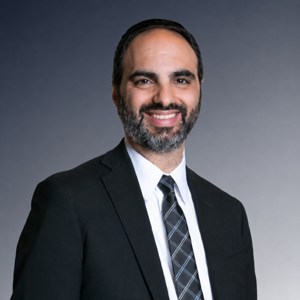
Living Emunah

Living Emunah

By Ashear, Rabbi DavidReligion & SpiritualityJudaism
Download on the App Store
  • Favorites

    27

    Followers

  • Typical duration

    6 min

    per episode

Based on Podcast App listening data

Living Emunah episodes

  • See through the Facade
    One of the main jobs of a person in this world is to see through the facade of nature and recognize Hashem's absolute control over everything. It is not the food that we eat that keeps us alive. But rather, as the pasuk says, כי על מוצא פי ה' יחיה האדם - we live because Hashem says so. It is not the clothing that we wear which keeps us warm. It is Hashem who keeps us warm. Although if we go outside without a jacket, we're cold and if we go out with a jacket, we are warm, we must believe it's not the jacket that provides the warmth, it's the word of Hashem. But He makes it appear that it's the jacket in order to balance our free will. The more a person recognizes this with everything in life, the stronger his bitachon will be. And when someone truly believes this deep in his heart, it's a tremendous zechut and could bring about wondrous salvations. In any area that a person needs help in, one of the greatest ways to get it is to believe that it's completely in the hands of Hashem and the hishtadlut he is going to make is just a camouflage. The Mabit writes, one of the purposes of prayer is to ingrain in us the realization that it is Hashem Who is providing everything we are asking for. Therefore, the more things we ask for help with, the more it shows we recognize that we need Hashem's help for them. Rabbi Avigdor Miller writes in his sefer Or Olam , when we say the words רפאינו ה' ונרפא , we are supposed to think, we need You to heal us, Hashem, because there's no other way to be healed – it's רפאינו ה' ונרפא – You heal us and then we will be healed, and that's it. When we involve ourselves in hishtadlut to become healed, like going to a doctor or taking medication, it's very easy to forget that it's really Hashem doing it. And that is why the Shulchan Aruch writes, there is a special Yehi ratzon we are supposed to say before taking medication to remind us at the time we need it most that it is really Hashem who is going to heal us. Yes, we must do hishtadlut to be healthy, which includes eating right and taking care of ourselves, as well as controlling our inclinations of getting angry or being jealous, because in the natural way of the world, those things cause the body to get sick. But throughout our hishtadlut , we must remind ourselves, we will only be healthy if Hashem says so. One of the many reasons why a person may need to get sick is because the person is losing his connection with Hashem. The Or Olam gives a mashal of a father who sends his son, who lives abroad, money every month. As time goes on, the son forgets to thank his father, and so one month the father doesn't send the money. Immediately, the son calls his father asking him where the money is. The father says, "Why don't you call me when I'm sending you money? Why do you only call me when you don't get it?" Hashem wants us to have a relationship with Him for our own good. When our relationship is strong, we don't need to be reminded about it. That is why we say, הושיענו ונוושע , that refers to preventing us from getting sick in the first place. We tell Hashem, "We know You are the One who keeps us healthy and we appreciate it," and therefore there's no reason for us to get sick. When someone is close to Hashem when he has it all, that is the greatest segula to keep what he has. When the wealthy man asks for parnasa from Hashem with sincerity, that shows he knows he has nothing without Him, and he needs Hashem constantly. That is such a beautiful avodah . We need Hashem for everything, and we have nothing without Him. We need to remind ourselves again and again of this idea. If we pray properly with kavana, recognizing that we need Hashem for each thing we're asking for, then each time we pray, we'll be growing in emunah, and we'll become true ba'aleh emunah and bitachon , seeing through the natural way of the world, and recognizing that everything is from Hashem.
    6 min
  • Dancing with the Moon
    Before every Rosh Chodesh, the moon completely disappears from our view for 24 hours. And then right afterward, on Rosh Chodesh, there's a rebirth of the new moon. And then each day, we see more and more of the moon. And we make a beracha called ברכת הלבנה , or otherwise known as Kiddush Levana. The Gemara says, when the amoraim used to make this beracha on the moon, they would dance afterward. The Rema writes, people should dance after saying it, just like they do at a wedding. What is so special about this beracha more than any other that it should get such a response? The Arugat HaBosem explains, based on the Gemara, that initially the moon complained to Hashem that it and the sun were both equals. The moon wanted to have a unique job and serve Hashem a different way. For that, the moon was diminished. Everybody is given the exact job that they need to do to be successful in this world. We are supposed to do our job with joy. Usually, a person's lack of satisfaction from his job comes from jealousy. He sees others with more than him and feels that if he had what they had, he would be a better Jew. The tikun that the moon needed to make was to be happy with whatever job Hashem would give it. And every day, Hashem gives it a different job. For 29 days out of the month, it appears differently each day until the last day. Then Hashem tells the moon that He wants a service done from it in complete darkness. Sometimes, people are asked to do similar jobs. They feel like they are completely in the dark. Nothing ever goes their way. Their prayers don't seem to be getting answered. They have a hard time wanting to serve Hashem. What they don't realize is that during those times, they can shine the brightest. Because when there is complete darkness, even the smallest amount of light makes a huge impact. Every avoda they do at that time is worth infinitely greater because of the difficulty involved. When we say Birkat HaLevana, we acknowledge that the moon made Teshuvah. We say חוק וזמן נתן להם שלא ישנו את תפקידם . The moon never deviates from the job that Hashem wants it to do. ששים ושמחים לעשות רצון קוניהם -Not only that, but the moon does its job with joy and satisfaction. We are supposed to take this lesson from the moon and do our jobs happily. This is one reason why there is a minhag to dance with joy when we say Birkat HaLevanah. We are saying that we are also going to do our jobs happily, and we dance to show it. When a person thinks to himself thoughts such as, "If only I were married, I would be such a better Jew"; or "If only I had children"..or "If only I had more parnasa…" or if only I had better health...then I would be the person I am capable of becoming." He should then tell himself, "at this moment, Hashem wants me to serve Him to the best of my ability the way He made the situation. For today He wants me to serve Him without a spouse or without children or without Parnasa or without good health." If the person can give himself chizuk and serve Hashem from where he is with joy, he would become so great. Yes, we can pray for things to change going forward. But until they do, our job is to serve Hashem the way He wants us to. And if we can do it happily, we can reach the highest levels. During this month called Elul- Rachamim, a month of mercy, we can work on this and b'ezrat Hashem, that will be a tremendous zechut for us for the upcoming year.
    5 min
  • You Do Your Part and He'll Do His
    The Pasuk says in Parashat Re'eh: "וברכך ה' אלוקיך בכל אשר תעשה"-Hashem your G-d will bless you in everything you do. Our Rabbis learn from here our obligation to put in our Hishtadlut, our effort, to accomplish what we want. Along with this obligation comes a very big test that everyone faces on a daily basis- to be able to put in the effort, yet realize the whole time that Hashem is really the One getting everything done. Hashem wants the world to run בדרך הטבע , through nature, so in order to camouflage His presence, He makes it look like we are the ones accomplishing. But in truth, it is all Hashem. The Mesilat Yesharim calls our Hishtadlut a tax to pay. Once we have fulfilled the quota, Hashem sends His blessing down. Shlomo Hamelech summed it up in a Pasuk in Mishle: "סוס מוכן ליום מלחמה" We have to get the horse ready to go out and fight in battle. An army cannot go out to war expecting a miracle. Rabbenu Bachya says that if they do, they will lose. They have to make all of the necessary preparations to fight. But the Pasuk concludes: "לה' התשועה" The victory of the war is entirely in the hands of Hashem. The'בוטח בה- one who trusts in Hashem, knows that once he puts in his effort he can feel comfortable with the knowledge that he did his part. Then, whatever happens is the will of Hashem for his best. A person should never feel that his efforts were wasted , even if he didn't see his desired results. For example, a man worked on a sale for six weeks, and then it all fell through. His time was not wasted, he paid six weeks' worth of tax, and that opened the pipeline for Hashem to send blessing when He sees fit. If a person went to three doctors and didn't yet come up with a solution for his health issue, he didn't waste his time. He did his Hishtadlut, he paid his tax, and now he should feel great knowing that he did his part. If there is ever a situation where a reasonable Hishtadlut is not possible, then the person becomes exempt from Hishtadlut, and he can totally rely on Hashem. For example, if a person had an ailment, and tried one method to cure it, yet it didn't work, and then tried another, and a third, and still no results, and the doctors say that there is nothing else to try. At that moment, the person becomes exempt from Hishtadlut, and he can totally rely on Hashem for a cure. Rabbi Yechezkel Abramsky, זכר צדיק לברכה, used to tell over the following story which happened to him. He was taken to Siberia against his will along with a group of people. They were told to remove their shoes, their jackets and their shirts. They had to walk on snow and ice for miles. The Rabbi had a condition from a very young age that he was very sensitive to the cold, and he would frequently get sick from being exposed to even moderately cold temperatures. His mother, he recalls, used to send him to school in many layers of clothing to protect him. He still had this condition now, and he knew that many people had died in Siberia from being exposed to the frigid temperatures. On his first walk on the ice, he turned to Hashem and said, "The Gemara tells us: '-הכל בידי שמים חוץ מצינים ופחים"Everything is in the hands of Heaven except for cold and hot," which means that if a person goes outside in the winter without a jacket and gets sick, he brought that upon himself. Hashem commanded us to guard our health; we are not allowed to act recklessly. The Rabbi continued. "When I had extra layers and jackets I put them on to protect myself. But now, I don't have that ability, so I am exempt from that obligation. All that is left is the בידי שמים part. Now Hashem, it is only in Your hands. Please, save me from getting cold here." The Rabbi testified, that for over a year and a half in Siberia, he never felt cold even once. It is not the clothing that warms us up, it is Hashem. When we have the ability to help ourselves, we are obligated to. But when there is nothing for us to do, we can totally rely on Hashem. Those who are able to see through nature and recognize that everything is really Hashem, will not only pass this very big test, but they will reap the rewards both in this world and in the next.

    6 min
  • For Our Best
    People who go through periods of difficulty in their lives hope and pray every day for those difficulties to end. They imagine how great it would be to get the salvation they are so eagerly anticipating and they can’t wait for that day to come. It does happen sometimes that instead of getting a salvation another major difficulty arises. The person may then think to himself, it is bad enough I have one difficulty, now I have to deal with another? But if the person would look at this from a different perspective, perhaps it would be able to change their situation for the better. The person should think, maybe by overcoming this new difficulty, it’ll give me the zechut I need to get the salvation for the first one. Maybe this is Hashem’s way of helping me get my salvation that I want so badly. So instead of fighting the circumstance, the person should view it as a calling to elevate himself, an opportunity to overcome with emunah and get the zechuyot that he needs. A rabbi told me, when he started out as the rabbi of a shul some 40 years ago, he got a strange request from a new congregant. The man said he was in need of $2000 and had no way of obtaining it and it was critical that he get it right away. The rabbi asked him what he needed the money for. The man said he just discovered his wife was expecting and they did not want to continue on with the pregnancy. They were not ready for children and they surely couldn’t afford the expenses that came along with them. The rabbi said, “At least let us find another family to raise the child.” The man said the cost to go through with it was at least $10,000, which he definitely didn’t have. Forty years ago, $10,000 was an extremely high number. The rabbi himself had no idea where he would get that kind of money from, but he told the man, heroically, “If you want the $2000, I’m not the man to help you, but if you want the $10,000, I’ll get it for you.” The man discussed it with his wife and they agreed. The rabbi went searching for a donor for this money. He found a man learning in kollel for eighteen years who was still not blessed with children. He told him, if he paid for the expenses, this child would be his. Although this kollel man and his wife did not really have $10,000, they agreed to pay $1000 a month for the next 10 months. Finally, the day of the delivery came and a beautiful, healthy baby was born. The mother who delivered the baby said she wanted to keep her child. She and her husband told the rabbi, the deal was off. They also said they could not afford to pay back that $10,000. The rabbi did not know what to answer them. He tried convincing them that they couldn’t really back out at this point, but they wouldn’t hear of it. What would the rabbi tell the kollel man and his wife, who sacrificed, paying $10,000 and gave so much anticipating finally having their own baby? He prayed to Hashem for the right words and he went there and broke the news to them. He then said, “In Shamayim , this baby is considered yours. You will get all the credit for bringing the baby into the world.” He also told them, the zechut of accepting the ratzon Hashem is enormous. He then encouraged them to take in a foster child from the organization called Ohel as an additional zechut . Although this news was devastating to that couple. They listened to the rabbi and, amazingly, four months after that, after nineteen long years of marriage, this couple received the wonderful news that they were expecting. Baruch Hashem, later that year they welcomed twins into the world. What seemed like a devastating blow was actually their opportunity to lift themselves up and earn endless zechuyot and, eventually, get that salvation they were always hoping for. Everything that happens is for our best, even what appears to be something way too hard to handle.
    6 min
  • Leave the Questions on the Side
    There are various segulot found in Chazal , some which promise wealth, some marriage, some children. If a person follows exactly what he was told to do but does not see the outcome that he was told he would get, it could severely damage that person’s emunah. The same applies when people go to rabbis for berachot and the rabbi tells them, If you do this, you will get married by this date, or you will have a child by this date. If it doesn’t happen, the person’s emunat chachamim gets damaged. The Gemara tells us that even a Tanna , Elisha ben Avuya went off the derech because his emunah in the Torah became shattered when what he saw didn’t seem to match up with what it said. The Torah says for doing the mitzvah of kibud av v’em one of the rewards is long life and the same applies to the mitzvah of shiluach haken . Elisha once saw a boy who was told by his father to climb a tree and sent away the mother bird, and he fell and died. He did both mitzvot that promised long life and he died young. This caused Elisha to go off the path. The Gemara says, if he would have understood the pasuk properly, he would not have gone astray. The reward referred to in those mitzvot of long life is speaking about life in the Next World. The Rambam wrote in a letter to his son that if he ever comes across a pasuk or a Chazal that he doesn’t understand, he should attribute the lack of understanding to his own shortcomings. He should leave the question on the side and, one day, he will get an answer. The Shulchan Aruch writes in siman 118 that washing netilat yadayim for bread with a lot of water is a segula which brings a person wealth. The Mishna Berura there writes, if somebody is careful to always wash with a lot of water but did not become wealthy as a result, it is because that person has other deeds which he did that are blocking the parnasa from coming. Washing with a lot of water does bring wealth, but that is assuming the person didn’t do an averah that blocks the wealth. The Mizmor L’Asaf writes, the same applies the other way. If a person did an averah whose negative effect is to lose parnasa , if he has certain merits, they can prevent the parnasa from being lost for the time being. The Gemara says, someone who prays the Amida at sunrise will not get damaged that day. The Mishna Berura says something similar about a person who is סומך גאולה לתפילה . Rav Chaim Kanievsky, zatzal , said the same applies to those guarantees. They are assuming the person did not do an averah that would require him to get damaged. If somebody followed a segula of Chazal and did not get the reward he was looking for, it is not because the segula didn’t work. Rather, it is because of other deeds that he did that he needs to make teshuva for first. And therefore, he should not lose faith in the promises of Chazal but improve his ways and continue doing the segulot . The Chatam Sofer in his Teshuvot in siman 158 writes, regarding the segula of being a sandak making a person wealthy, it is one hundred percent true. However, it is also possible that the person may have done sins which block that parnasa from coming. The same applies as well when a rabbi gives a beracha . The rabbi has power, but there could be other factors that are holding back the coming to fruition what the rabbi said. Every word in the Torah is emmet , every word of Chazal is emmet . We should never allow an experience to cause our emunah to waver even in the slightest bit. There is an answer to every question and if we don’t know it yet, we should leave the question on the side and continue doing our avodah knowing that one day we will get the answer and the answer will be so clear to us that we won’t even believe that we ever had the question in the first place.
    5 min
  • Hashem Loves to Help
    The Gemara tells us, if a person sees that hardships have been coming his way, he should view it as a calling to improve his ways. Sometimes a person knows exactly what he needs to improve in but other times it is very hard to determine. A person is encouraged to ask Hashem to help him make the changes that need to be made. Hashem loves to help us, especially with our spiritual needs, we just need to want it enough and sincerely ask Him for His help. A rabbi related, one morning on his way to the yeshiva in which he taught, he realized he was very late. He was hoping someone would offer him a ride and, sure enough, a nice driver who saw him looking did indeed offer him a ride. Before they got to the block of the yeshiva, the rabbi asked to be let out. As he hurried to the yeshiva, he realized he forgot the bag that he had with him in the car. That bag had his most prized possession, a very large notebook with all of his own personal chiddushei Torah that he had written over the course of thirty years. It was irreplaceable, a lifetime of work with no other copy of it. There was nothing in that bag that had any identification on it. In the days that followed, the rabbi did various segulot for finding lost objects. He also hung signs and invested a lot of effort in trying to identify the driver of that car. Because he had gotten out of the car near stores, he asked the store owners to check their security cameras, perhaps they could see the license plate of that car, but none of them had a clear enough view. He continued praying and hoping for a yeshua . Then he started to do some self-introspection, thinking, maybe Hashem wanted him to improve in something. All of his tefilot from then on were concentrated towards asking Hashem to show him what he needed to rectify. Then, suddenly, it hit him. He recalled that he used to always visit his parents once a week and recently he had completely stopped. Maybe that was the mitzvah he needed to fix. He started to think further, the pasuk says, one should honor one’s parents so that it should be good for him. From the positive we can infer the negative, the lack of honor can cause something good to be lost, in this instance, his chiddushei Torah. That day, he went to visit his parents. They were so happy to see him and, when he left, he told himself, from then on, he would try to honor them and visit them at least as often as he used to. The very next day, his father called him, asking if he lost his notebook with his chiddushei Torah. “Yes!” the rabbi yelled with great jubilation. His father told him, the owner of the car where he left that notebook is accustomed to visiting his own father every day. When he gave him a ride that day, he was on his way to visit his father. When he discovered the bag left in his car, he tried to identify its owner, but there were no identification marks. He brought the notebook to his father and asked him for an idea how to reach the person who left it there. The father didn’t have any ideas and so, in the meantime, the notebook remained there in his house. One day, someone came to his father for a bikur cholim visit. The father showed his friend the notebook and asked him if he could figure out how to identify the owner. The guest leafed through the notebook until he discovered on one of the pages, in small letters, a family name. Because he knew the rabbi’s father, he brought it to his house. That is when his father called him to tell him the good news. How amazing it was! The notebook was retrieved by the rabbi in the very place he chose to improve upon, his parents’ home. Hashem enlightened him because he asked for help. Hashem is always available to help everybody, especially when it comes to our spiritual needs
    5 min
  • Treat Them with Respect
    The Torah is the beginning of parashat Ekev promises the most beautiful rewards to those who adhere to the mitzvot . Rashi writes there that the Torah is speaking about the mitzvot that people trample upon and don't give enough respect to. Every mitzvah is such a treasure and, unfortunately, sometimes we take them for granted and don't treat them with the respect that is befitting them. Recently, a student of mine told me that he had allocated money for tzedaka and asked me if I could recommend a few people to give to. I thought of a friend of mine who is a mashgiach in a yeshiva in Israel and has a very large family. I knew he needed the help. I called to tell him of the money he was going to receive and he said, very excitedly, "Baruch Hashem, there's more to this story," which he proceeded to share with me. He said, like many others he is struggling with parnasa and on Shabbat Parashat Ekev , he read a story about a man who was also struggling with parnasa and he took upon himself to say Birkat HaMazon with kavana and very quickly his fortunes changed. My friend said to himself after reading that story, he had not been treating Birkat HaMazon the way it should be treated. He generally looks to avoid eating hamotzi and prefers mezonot instead. He felt like that was an insult to Birkat HaMazon . So from that day forward, he accepted upon himself not only to have more kavana when saying it, but to make sure to eat bread for breakfast every single day and have the zechut to say Birkat HaMazon . His wife is an excellent school teacher, but hasn't been able to find a job for the last three years, partly because schools generally want teachers there by 8:00 am, but because he has to be in yeshiva early, she has to send the little children off to school and can't start work until 9:00. Eight days after his kabbala , his wife received a phone call from a school asking if she would be willing to be their 5 th grade teacher for this year. This was on September 1, just days before school was starting. She told them she would love to but she wouldn't be able to get there until 9:00. Because they needed her so badly, they accepted her anyway. And just like that, after three long years, she had a great job. A few days after that is when I called him and told him out of nowhere he was getting thousands of dollars. That's when he told me about his kabbala to say Birkat HaMazon with kavana and to stop trampling on it and give it the respect it deserves. He added that last week his wife went to a resume specialist to see if she could somehow improve hers. The specialist told her she did it all wrong and would never get a job with that resume. She didn't even get a chance to fix it yet and, with the poor resume, she still got that job. Our mitzvot are wondrous. The more respect we treat them with, the more blessing we get in return.
    0 min
  • Down to the Smallest Details
    Chazal tell us that every person is obligated to say בשבילי נברא העולם – that the world was created for him. One explanation is that it was worth it for Hashem to create the entire world for each Jew to do his own personal avodat Hashem. Hashem values the service of each person so much. There is no one else in the world that can replace what Hashem wants from each and every Jew. When someone goes to shul to pray or to learn Torah or to do any other mitzvah, he should understand how vital his avodat Hashem really is. Another explanation of בשבילי נברא העולם is that every person should feel that everything in the world that Hashem created and constantly does is all just to benefit him. And that is supposed to invoke such a deep feeling of hakarat hatov towards Hashem. Hashem does everything for us down to the smallest details and when we see it clearly, it gives us so much chizuk. A woman said, after doing renovations there were a variety of construction related items in front of their home waiting for the bulk pick up. One of them was a partially used can of white paint. One day, her energetic young son discovered the paint and had a very good time with it. The worst part of the damage was that he spilled half the can over a large area in the street. The stark contrast of white paint haphazardly spilled over black asphalt was definitely an eye sore. She knew there was no feasible way to get rid of that paint and felt bad that all their neighbors would have this unpleasant sight on the street that they shared. They realized this was from the smaller problems in life but, nonetheless, it bothered them because they were the cause of something negative to their neighbors. Hashem, in His infinite kindness, helped them even with this relatively minor issue. A few days later, they received a notice from the municipality that they were going to pave their street. This was the first time their street got paved in forty years. When the designated day arrived, they were so delighted to see a newly paved street that was fresh, clean, and completely black. Yes, Hashem helps us even with the most minute details of life. We know He is with us at every moment. But when we see it so clearly, it is very heartwarming. Another woman said she has a child with special needs. She has many challenges with this child as he requires constant, round-the-clock care. One day, she was literally at the end of her rope when she reached out for support. She spoke to a woman and shared with this woman her dream that one day her five-year-old son would stand at his bar mitzvah and deliver a speech that everyone in the crowd would be impressed with. While this dream brought a smile to her face and light to her eyes, she expressed concern whether she was being realistic or not. The woman who she was speaking to told her, it was a very important dream, and she should hold onto that vision and keep it alive. Later that same day, a friend of hers called her. They don't see each other that frequently but she mentioned she was passing by the area and wanted to come by and say hello. This particular friend has a degree in Special Ed. And so, she shared with her some of the challenges she was going through with her son. She also mentioned that her son just began attending a new school. After hearing that, her friend shared something with her that blew her mind. She said she had a student several years ago with a very similar profile to her son. He attended this very same school and made tremendous progress. Years later, her friend attended this student's bar mitzvah in which he stood up and delivered a speech that impressed everyone in the crowd. The woman couldn't believe this incredible hashgacha . The very same day she expressed her dream, Hashem came and whispered to her that this dream could indeed be a reality and that gave her so much chizuk . Hashem does everything for us down to the smallest details. It is incumbent on us to feel this way and express our hakarat hatov all the time.
    6 min
  • Accept with Love
    If a person had a very big problem to deal with and he was told that if he would accept what Hashem had given him with love, immediately that problem would disappear, he would have a very easy time accepting that problem. He would recognize the great benefit he is going to receive by responding with joy and it wouldn't even be a test for him. I read a story about a woman who worked to support her family, enabling her husband to learn Torah day and night. On one occasion, she had a month's worth of earnings in cash and put it in an envelope and asked her husband to deposit it in their bank account on the way to his kollel. That day there was a major rainstorm and on the way there the man slipped and fell. He quickly got up and continued on. When he finally arrived at the bank, he reached into his pocket to pull out the envelope, but to his dismay it wasn't there. His heart dropped. An entire month's worth of his wife's earnings and he had just lost it. He ran back to the place that he slipped to search for the envelope, but it was nowhere to be found. He was so broken over what had taken place and feared telling his wife about it. He knew his wife was an eshet chayil and would for sure accept it with emunah, but he still dreaded breaking that news to her. He worked up the courage to call her and told her what happened. She told him, "Don't worry, it could happen to anyone." She encouraged him to go learn with peace of mind and everything would be okay. After she hung up the phone, she knew her husband was going to have a rough day, thinking about what he did. She knew he was going to come home ashamed later that evening. She decided she was going to remove any distress from her heart and instead think about how to make him not feel bad. She planned a very fancy dinner that night with their nicest dishes and she was going to make every effort for them to accept what happened with joy. Her husband came home that night looking very ashamed, but he immediately saw the festive atmosphere and his expression quickly changed. They sat and ate together, giving each other chizuk in emunah and they accepted that this is what Hashem wanted for them and they did it with love. At the end of that meal, there was a knock at the door. It was a man returning the envelope with all the money intact. They were both overjoyed! The wife had gone that day to put up a sign in the place that her husband told her he had slipped. She had her name and number on it and the finder actually knew who they were and brought it straight back to their house. When a certain noted rabbi heard this story, he said, "It was the zechut of them accepting with love that brought them back the money." If we would know that accepting a problem takes away the problem, we would be so excited to accept it with love. Our great Rabbis have told us, when we accept our problems with love, we get something so much greater than that. Having our problem solved is a temporary worldly benefit. The Chofetz Chaim writes, when someone accepts with love what Hashem does to him, יתרומם עבור זה מדריגתו מאד מאד – his spiritual level soars to the greatest heights and לעתיד לבוא יהיה שולחנו שלם מכל טוב – in the Future World he will receive endless reward for it. That is a guarantee. It may also be true that problems in this world go away with the proper reaction, but for sure, one hundred percent, that reaction will earn a person the greatest rewards forever and ever.
    5 min
  • The Mitzvah You Didn’t Expect
    Michael Cohen, who would later go on to found the well-known organization Mitzvah Man , once set a personal goal to do at least one act of chesed every single day. But one day—years before his organization ever existed—he found himself struggling to fulfill that mission. He drove around like a salesman searching for a client, only he was looking for a mitzvah. Maybe someone needed a ride. Maybe a pauper was waiting for tzedakah. Maybe someone just needed a helping hand. But nothing came his way. Still determined, he turned to Hashem and prayed: Please send me a mitzvah. I want to do something for You. Toward the end of the day, he passed a food pantry gemach and decided to walk in. "Is there anything I could do to help?" he asked. The person behind the desk looked relieved. "Actually, yes—perfect timing. We have a huge amount of garbage piled up in the back. Would you mind helping us get rid of it?" At first, Michael was taken aback. Garbage? he thought. After sincerely wanting to do a mitzvah, this was what he got? This was his big mission? But then he caught himself. If I'm a true eved Hashem, I should be happy to do whatever job Hashem gives me. I asked for a mitzvah, and this is what He sent. That means this is exactly what I'm supposed to do. He rolled up his sleeves and did the job with a full heart—because when a person serves Hashem with emunah, no act is beneath him. If Hashem sent it, it's a privilege. שויתי ה' לנגדי תמיד - The pasuk teaches that in every situation in life, even when something doesn't look glamorous or meaningful, we must remember: I'm standing before Hashem. This is the mission He's giving me right now. Real emunah means living with Hashem every moment. When we truly feel that everything in front of us was given to us by Hashem for a reason—whether it's giving a shiur or dragging garbage bags—it all becomes avodat Hashem , if done with the right mindset. Rav Yerucham Levovitz used to speak about the greatness of kavod Shamayim . He told the story of a man who cleaned the area in front of the Aron Kodesh with his own beard—just to give more honor to Hashem. What others might have seen as lowly or extreme, he saw as an exalted expression of love and reverence for the Melech Malchei HaMelachim, HaKadosh Baruch Hu . A Rosh Yeshiva once shared a story about a young boy in yeshivah who was not known for his brilliance, but was consistent, sincere, and always willing to help. One Erev Shabbat, while the rest of the boys were busy preparing for Shabbat, someone accidentally knocked over a large pot of soup in the kitchen. It spilled everywhere—steaming hot liquid all over the floor. Most of the boys quickly moved on, not wanting to get involved. But this one boy quietly got down on his hands and knees and started cleaning, without being asked. That Shabbat, the Rosh Yeshiva commented during his drashah: "Sometimes Hashem looks at how a person reacts in the quiet moments. You're not being tested on a big stage—just with a dirty floor. But your decision in that moment can lift you to greatness." We don't always know which moment or mitzvah will shape our future. Sometimes it's the most unexpected acts—the so-called small ones that we almost turn down—that open doors we never imagined. Maybe it was Michael Cohen's sincere willingness to take out garbage for the sake of kavod Shamayim that earned him the heavenly assistance to later build a world-renowned chesed organization. What matters most is that we're willing—to accept whatever mission Hashem puts in front of us, and to do it with joy. Because whether we're giving someone a ride, giving tzedakah, or just taking out the garbage—if we do it l'shem Shamayim , we become partners in Hashem's plan. May we all merit to embrace every opportunity Hashem gives us with emunah, humility, and joy. Be'ezrat Hashem , we hope to release Living Emunah on the Parashah , Volume Two, sometime next month. There are a few opportunities for dedications If anyone would like the zechut of dedicating part of the book, please email: [email protected]
    6 min

About Living Emunah

From the publisher's feed

A Daily ethical teaching by Rabbi David Ashear

Best of Living Emunah

Ranked by our users in the last 21 days

More shows like Living Emunah

The Rabbi Sacks Legacy by Rabbi Lord Jonathan Sacks

The Rabbi Sacks Legacy

557 Listeners

The Israel Guys by The Israel Guys

The Israel Guys

308 Listeners

Jewish Stories to Inspire: Motivational & Spiritual Stories Based on the Torah's Ethics, Values and Wisdom by Stories to Inspire

Jewish Stories to Inspire: Motivational & Spiritual Stories Based on the Torah's Ethics, Values and Wisdom

186 Listeners

Living with Emunah by Rabbi Efrem Goldberg

Living with Emunah

110 Listeners

Meaningful People by Meaningful Minute

Meaningful People

1,987 Listeners

From the Inside Out: With Rivkah Krinsky and Eda Schottenstein by Rivkah and Eda

From the Inside Out: With Rivkah Krinsky and Eda Schottenstein

263 Listeners

The Q & A with Rabbi Breitowitz Podcast by Rabbi Dr Yitzchak Breitowitz

The Q & A with Rabbi Breitowitz Podcast

234 Listeners

Call Me Back - with Dan Senor by Ark Media

Call Me Back - with Dan Senor

3,197 Listeners

The Times of Israel Daily Briefing by The Times of Israel

The Times of Israel Daily Briefing

1,070 Listeners

Kosher Money by Living Lchaim

Kosher Money

821 Listeners

History for the Curious - The Jewish History Podcast by JLE

History for the Curious - The Jewish History Podcast

232 Listeners

Gedale Fenster - Podcast by Gedale Fenster - Podcast

Gedale Fenster - Podcast

399 Listeners

Honestly with Bari Weiss by The Free Press

Honestly with Bari Weiss

8,473 Listeners

Inspiration for the Nation with Yaakov Langer by Living Lchaim

Inspiration for the Nation with Yaakov Langer

1,120 Listeners

Stories Of Hope With Tzipora Grodko by Meaningful Minute

Stories Of Hope With Tzipora Grodko

324 Listeners