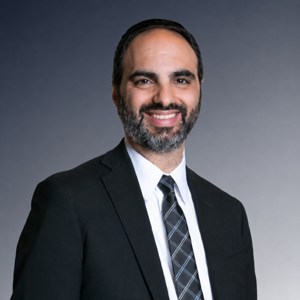
Living Emunah

Living Emunah

By Ashear, Rabbi DavidReligion & SpiritualityJudaism
Download on the App Store
  • Favorites

    27

    Followers

  • Typical duration

    6 min

    per episode

Based on Podcast App listening data

Living Emunah episodes

  • Discovering Hashem in the Darkness
    After Hashem formed Adam, the pasuk says that Hashem blew into him a spirit of life. The Zohar HaKadosh teaches that this spirit of life is the nishamah—a part of Hashem Himself. This means that every Jew, who is also given a nishamah, has a piece of Hashem inside of him. We don't need to search far to discover Hashem, because He is already within us. Some of the hostages who were completely unaffiliated described how much they felt Hashem's presence with them in captivity. When their physicality was broken down, they were able to tap into the spirituality that was always there inside of them. One of the hostages related that he was in a very small cell, deep underground. He wasn't even able to stand up straight in it, nor was he able to spread out his hands to either side. He was living in complete darkness and could not see a thing. He said that it was precisely in that thick darkness that he was able to discover Hashem. He felt a light that was indescribable. He was motivated to pray to Hashem every single day. He developed such an appreciation for everything he had, to the point that he was thanking Hashem for the very air he was breathing. He thanked Hashem for the small piece of bread that he received each day. He thanked Hashem for what he had—and he even thanked Him for what he did not have. Then he said something astonishing: if there was one thing that he misses from being in captivity, it was that feeling of closeness to Hashem. It was such a good feeling that it brought a smile to his face in the midst of the worst darkness. He told the crowd, "How is it possible to be happy with nothing, trapped in a dungeon?" The answer: it was only kirvat Hashem —the closeness to Hashem. Another hostage said that while he was there, he became so close to Hashem that when his captors showed him a video of another hostage being released, and he saw a stage filled with hundreds of Hamas militants, all he wanted to do at that point was to get on that stage and shout with all of his strength שְׁמַע יִשְׂרָאֵל ה׳ אֱלֹקֵינוּ ה׳ אֶחָד - that Hashem—and only Hashem—is in charge. Another hostage related that the terrorists offered to give him better conditions and better food if he would convert to Islam. He told them: "I am a Jew and I will never abandon my faith." He admitted that before captivity, he never imagined those words would come out of his mouth. But in the darkness of that dungeon, he found Hashem, and he knew he would never let Him go. When he was freed, he gave chizuk to the crowd listening to him. He said: "I want all of you to understand that you are Jews, and you need to do more mitzvot. A Jew must know that he comes from greatness and he is not like everybody else." We must know that wherever we are, Hashem is always with us—and the darker it gets, the more light of Hashem we can experience. One hostage shared that after he was released, he was with his father on a phone call with the Yanuka. The Yanuka told him about how he had advised his father to learn the story of Yosef being taken down to Mitzrayim and then reunited with his father. He said to study it every single day, and in that zechut, his son would also one day be reunited with him. When the hostage heard that, he was stunned. He said, "I can't believe what you're telling me. I never learned that story before, but while I was in captivity, the terrorists showed me a video of the story of Yosef and his brothers in Mitzrayim, and I know every single detail from it." The father was studying that story, and the son was watching that story. What are the odds that Hamas militants would show this Jewish boy, of all things, the story of Yosef and his brothers? Another manifestation of Hashem's presence, shining in the darkest times. We are never alone, no matter how dark it seems. In fact, the darker it gets, the more we are able to experience the light of Hashem.
    6 min
  • Rising Higher Through the “Unfair” Tests
    There are times when a person may feel that he is being treated, quote-unquote, "unfairly" by Hashem. He tries so hard to do good, but it seems like everything keeps getting thrown back in his face. The natural inclination in those moments is to want to turn away, to give up. But if he does, he will lose out on the greatest possible gain. When Hashem puts a person through these kinds of challenges, they are golden opportunities—doorways that can bring him to unimaginable heights. If instead of turning away, a person continues to serve Hashem with even more love and more passion, he earns merits beyond comprehension. Avraham Avinu spent his life teaching the world about Hashem. His deepest longing was to have a child who would take over that mission and continue spreading Hashem's light. But for decades, it seemed impossible. Avraham and Sarah could not have children. One night, Hashem lifted Avraham above the stars and told him: " הבט נא השמימה וספור הכוכבים… כה יהיה זרעך " ( בראשית ט״ו:ה ). Chazal explain that Hashem was showing him that the Jewish people are above the mazalot—beyond the dictates of nature. Even if something appears impossible, Hashem can change it in an instant. Hashem then promised Avraham that he would indeed have a child who would carry on his mission. Avraham waited patiently, nearly thirty years, for that promise to be fulfilled. Finally, he and Sarah were blessed with Yitzchak. They poured their lives into raising him, nurturing him to become the great tzaddik he was destined to be. And then one day, Hashem issued a command that defied all logic: " קח נא את בנך את יחידך אשר אהבת את יצחק והעלהו שם לעולה " ( בראשית כ״ב:ב )-to bring Yitzchak as a sacrifice. From a human perspective, Avraham could have cried out: "This was my life's mission! This was the child I was promised! Now it's all being taken away?" That would have been understandable. But Avraham took a different path. He rose very early the next morning, eager to fulfill Hashem's will. He even saddled his own donkey—though he had countless servants—because he wanted to show his zealous love for Hashem. He went with passion, not despair. And that single act created merits that still protect us thousands of years later. When the Jewish people were in the desert, Balak and Balaam plotted to destroy them. The Chatam Sofer says this was one of the most dangerous moments in our history. Balaam tried to use the power of zealousness to sway Hashem. He, too, arose early and saddled his donkey to curse the Jewish people. But Hashem replied: "You wicked man, My beloved Avraham has already preceded you! He rose early and saddled his donkey to serve Me out of love. In his merit, you will never harm his children." Avraham had no idea at the time how much he was accomplishing. By serving Hashem with joy even in the face of what seemed like betrayal, he laid down eternal protection for his descendants. We see this pattern again with Yosef HaTzaddik. He was living a holy life, learning Torah every day with his father, Yaakov. Suddenly, his life was turned upside down. He was sold into slavery, torn from his family, and thrust into the moral depravity of Egypt. And then, when he was at his lowest, Yosef faced one of the most difficult challenges in history—the test of Potiphar's wife. He could have said: "This is my reward for living so purely? Why should I keep trying?" But instead, Yosef resisted with all his might. Centuries later, when the Jewish people stood trapped at the Yam Suf with the Egyptians pursuing them, it was Yosef's bones that were carried to the water. In his merit of running away from sin, the sea split. Yosef had no idea that his private moment of self-control, when faced with so many difficulties, would one day save millions of lives. This is what is at stake when we feel tested, when life seems unfair. We cannot imagine what our Emunah and perseverance will bring. If instead of complaining or questioning, we rise to the challenge and serve Hashem with more love, we are not only helping ourselves—we are bringing blessing to our children, grandchildren, and all of Klal Yisrael.
    0 min
  • Beresheet-Never Losing Out by Giving
    Living Emunah 2830 Bereshit-Never Losing Out by Giving The pasuk says in this week's parashah, " זֶה סֵפֶר תּוֹלְדוֹת אָדָם " (Bereshit 5:1). Chazal tell us that from this pasuk we learn that HaKadosh Baruch Hu showed Adam HaRishon all of the future generations, every single person who would eventually be born. Among the neshamot Adam saw was that of David HaMelech. Adam saw what a lofty neshamah David had, and also that it was destined to leave this world just three hours after entering it. Adam knew he himself had been granted a lifespan of one thousand years. Out of compassion, he decided to donate seventy years of his own life to David HaMelech. Hashem told him to sign on this pledge, and Adam did so. The Shelah HaKadosh writes in his siddur Sha'ar HaShamayim that when Adam was approaching the age of 930, Hashem told him that his time was near. At that moment Adam wanted to retract his pledge, but Hashem told him it was too late — he had already signed. Adam felt he still had more to accomplish in this world, but his time had come, and there was nothing he could do to extend it. On the surface it might appear that Adam lost out by giving away seventy years of his life. However, the Sefer Sas Bimratecha quotes the Zohar, which explains that Adam's main concern was to repair the damage caused by his sin, which had brought such destruction to the world. He had already fasted for 130 years to make a tikkun for it. David HaMelech, too, spent many years of his life immersed in teshuvah for the episode with Batsheva. The Gemara explains that David did not actually commit an aveirah — it only appeared as if he had. Nevertheless, he dedicated his life to teshuvah. All of David's teshuvah went towards rectifying Adam's sin, for David was only alive because of Adam's gift. Had David lived another thirty years, he would have completely rectified Adam's sin and the ge'ulah would have arrived in his time. Even so, the majority of the sin was corrected, and Adam ultimately gained far more from David than he ever could have accomplished with those seventy years himself. The lesson is clear: a person never loses out by giving. So often we use our time or money to help others, and then a thought crosses our mind that we could have done more for ourselves with those resources. But in truth, we never lose out from helping. Whatever we were meant to accomplish for ourselves is accomplished through the very act of chesed — and even more blessing comes in its place. Every neshamah is sent to this world with a mission, and Hashem knows exactly what each soul needs. He gives us the precise opportunities we require in order to fulfill our purpose. A rabbi recently shared a story. A community member called him from the hospital, where he sat at his father's bedside with his siblings. Their father's blood pressure had dropped dangerously low, and the doctor said he was expected to pass away at any moment. The rabbi explained that he had two shiurim to give back-to-back and absolutely could not miss them, but he promised to come as soon as he finished. After his first class, he called to check in. "Status quo," the man replied. After the second class, the same answer. The rabbi then drove forty minutes to the hospital, and still — unbelievably — nothing had changed. The blood pressure remained dangerously low, but the man was still alive. The rabbi told the family they should recite from the siddur the vidduyim and tefillot that are said before a person's passing. They all began reading together. They completed every last word, and the moment they finished, the machine began to beep. Their father's neshamah departed from this world at that precise instant. The rabbi later reflected: it was as if the neshamah was waiting for that final tikkun to be completed, holding on until it was done. Only then was it ready to leave. Each neshamah has its unique mission. As we begin Parashat Bereshit and embark on a new year, we must focus on utilizing every opportunity Hashem sends us to grow and become the people we are meant to be. Shabbat Shalom.
    5 min
  • Nothing Missing but Prayer
    After the Yamim Nora'im have concluded and our judgments for the upcoming year have been finalized, it is natural for a person to feel that his deeds and tefillot will no longer have such an effect on his life. After all, whatever will happen this year has already been determined. Yet, the Gemara teaches us otherwise. It says that although the total amount of rain for the year has already been decreed, if the people do teshuvah afterward, Hashem will ensure that every drop falls at the right time, in the right place, and not a single drop will go to waste. The Sfas Emet (Sukkot 5649) writes similarly regarding parnassah. Even though a person's income has already been determined on Rosh Hashanah and Yom Kippur, if he has bitachon in Hashem, that same income will be filled with blessing. Furthermore, Hashem can minimize the losses decreed for him. Instead of spending money on a dentist or repairing a leaky roof, those expenses may never arise at all. Someone told me that he was bracing himself for an astronomical tax bill. Yet when the final notice came, it was inexplicably only half of what he expected. Just like that, he saved a fortune. This is how Hashem blesses people — even after outcomes seem to have been decided. And when it comes to tefillah, it is even clearer. We need heartfelt tefillah just to receive what was already decreed for us. Rashi in Parashat Bereishit explains that although Hashem decreed that vegetation would sprout, He held it back until Adam HaRishon prayed. Only after Adam's tefillah did the rains come and bring forth the growth. So too with us: Hashem may decree blessing, but our tefillot are the key to bring it down into reality. Rav Shimshon Pincus pointed out a similar message from Rashi in Parashas Miketz. When Yaakov sent his sons back to Mitzrayim with Binyomin to buy more food, he gave them gifts — the money that had been returned to them, plus new money — and he told them he had made every possible preparation. And then he said, "Now you are not missing anything except prayer. I will pray on your behalf." Yaakov was teaching that everything could be perfectly in place, but without tefillah, nothing works. The same applies to our lives. Hashem may have decreed that the shidduch is ready this year, or the parnassah, the refuah, or the baby. But the only ingredient missing is our tefillah. Furthermore, the Passuk says כַּה׳ אֱלֹקֵינוּ בְּכָל־קָרְאֵנוּ אֵלָיו-How fortunate we are to have Hashem who answers whenever we call to Him! The Gemara teaches, based on this passuk, that when a person prays with a minyan, he can even change an existing decree. And therefore, our deeds and our tefillos are always of paramount importance. Every word of tefillah and every little deed carries tremendous weight in Shamayim. Now, as we begin anew, is the time to strengthen our tefillot and strengthen our deeds as much as we can.
    5 min
  • You Never Lose
    A travel agent called his rabbi the other day, asking if hewas allowed to book a flight that was scheduled to leave on Shabbat for anotherJew. The rabbi told him, although it would not violate the negative commandmentof לפני עיור, because this potential customer could easily book the same flightelsewhere, however, there would be an issur d'rabanan of helpingsomebody else commit an avera . Yet, there are acharonim who holdthat this prohibition does not apply to people who don't care about keeping themitzvah. And therefore the rabbi concluded there is what to rely upon if hewanted to book that ticket, but he would recommend not to. The travel agent then said, "You mean, it would belike a Kiddush Hashem if I don't? I want to make sure I do everything inmy business the way Hashem wants. The rabbi replied, "Yes, it would be a KiddushHashem, and don't worry, you'll never lose out on business by being carefulto follow Halacha the best way. In fact, another man just called me a half anhour ago and told me a personal story." The rabbi continued, "He is a contractor, and toldthat he found a great home that he wanted to renovate and resell. It was asuper deal. The real estate agent gave him her word that it was his for$675,000. The papers were finally in order, and the contract was ready to sign,but it was Chol Hamoed Sukkot . The contractor did not want to dobusiness on Chol Hamoed. He told the real estate agent he wanted to waituntil after the holiday to sign it. She replied that if he didn't sign rightthen and there, she would put it back in the market and surely the price wouldgo up. 'This is a דבר האבד,' she added. 'It's a loss if you don'tdo it now. And therefore it's permissible to purchase, even on Chol Hamoed. "The contractor told her he wanted to honor Hashem, and be strict, especiallysince Chol Hamoed is treated lightly these days. She then told him,'Okay, it's your loss.' And she put the house back on the market. Sure enough,the price did go up as a bidding war ensued, until it finally reached $810,000.After the holiday, she called the contractor and asked him if he wanted to beatthat price or let it go. She added, 'You see if you would have listened to meand signed on Chol Hamoed , you would have gotten it for $675,000.' Hetold her, 'It's okay, let the other person take it for 810.' 'The real estate agent then told the owner of the homeabout all of the events, which transpired. The owner himself is a religiousJew. When he heard that the contractor refused to sign because of CholHamoed, he said, 'I'm very impressed with him. And I want him to have thehouse.' The real estate agent told him, 'That would mean you're foregoing$135,000.' The owner said, 'There are things that are more important thanmoney. Nobody should lose for being strict on Halacha.' And with that, thecontractor got the home for $675,000." He told the rabbi afterward, "I see this all the time.Nobody can take what's yours. If Hashem wants you to have something, you'll getit. And of course you'll never lose by following His will." When the rabbitold this story to the travel agent, the travel agent replied, "Thank you,Rabbi. That's just what I needed to hear. That story couldn't have come at abetter time." This is the absolute truth. Hashemis in charge of our parnasa . If we do our best to go over and above todo His will, we'll only gain from it."
    5 min
  • Love Notes
    Hashem sends us "love notes", kavayachol , from time to time to show us He's with us and how much He cares about us. Everything that happens is from Hashem, but when He makes it extra clear that He is involved, it gives us a lot of chizuk. A woman emailed that she had to bring her 3-week-old newborn to the hospital for testing and a procedure, and it was very stressful for them. While her and her husband were in the waiting room, her husband told her not to forget her siddur, as he pointed to it on the other side of the room. She knew she didn't bring her siddur to the hospital, but when she went over to check, she saw her name on it. They figured out her husband must have brought it when she was giving birth three weeks earlier. Now it was in the waiting room of the Nephrology Unit. That meant, Hashem took her siddur that had been floating around the hospital for three weeks and put it exactly where their baby was going to be when undergoing this procedure. They felt Hashem was giving them a kiss, kavayachol , and that made their experience much less stressful. Baruch Hashem, everything worked out okay. A man told me his son is older and not married. Last year, he was lighting the Chanukah candles in his dormitory feeling sad that all of his friends were in their own homes with their wives and children, lighting, and he was still in a dormitory. That night, he poured out his heart to Hashem and concluded by saying, "Please, Hashem, can You give me the merit of being able to light the Chanukah candles next year married in my own apartment? Baruch Hashem, this boy just got engaged and his future in-laws scheduled the wedding for the night before Chanukah. When he heard the date, he cried tears of joy, seeing how Hashem gave him exactly what he asked for. Another man told me, as a side job, he builds sukkot for people. He created his own sukkah which usually takes him days to build. This year, a new young couple moved into the second apartment in the two-family house he lives in. He told this couple that they would be able to use his sukkah any time. They were so happy because they didn't have a sukkah of their own. The night after Yom Kippur, this man had to take his baby to the hospital, and the hospital said they wanted to keep him there until he was completely healed. That meant that this man and his wife had to take turns staying with the baby there. Baruch Hashem, it looked like the baby was going to be fine, but throughout his time there this man was concerned he would not have time to build his sukkah this year. What were they going to do? The hospital didn't release the baby until late Thursday night with Sukkot being the next night. The man was hoping that somehow, because he builds other people's sukkot , this year Hashem would take care of his. Friday morning, he saw in his driveway a whole bunch of new sukkah panels. What were they doing there? He wondered. He asked his new neighbors about them and the man replied his parents had extra panels and asked him if he needed them. Since he didn't see any sukkah being put up in the driveway, he said yes, he did. It was a huge 12x20 sukkah , but there was no schach or wooden beams. The man said to him, "I have the schach and I have the wooden beams." It was a very easy sukkah to construct and, baruch Hashem, they had the nicest sukkah they ever had. The man told me, the feeling was amazing. Every year it takes him days to build his own sukkah . This year, when he wasn't able to, Hashem sent him a sukkah right to his doorstep on Erev Sukkot. Feeling the Yad Hashem is exhilarating. He sends everyone subtle messages from time to time. If we take them to heart, it will give us so much chizuk .
    5 min
  • Sukkot: In Hashem’s Hands
    The Sefer Ha'ikarim writes, there are three fundamentals of Emunah that every Jew must believe. Number one is the existence of Hashem. Number two is that the Torah was given to us from Shamayim. And number three, Hashem is involved in everything that happens in this world- hashgacha peratit. The Sefer Kometz Mincha suggests that each of the shalosh regalim corresponds to one of these three fundamentals. On Pesach, the world learned that Hashem exists. On Shavuot, we saw the Torah coming down from Shamayim. And on Sukkot, we saw how Hashem took care of the Jewish people's every need in the desert, surrounding them in His clouds of glory. Thus, we leave our homes and go to live in temporary structures to show that we know we are in Hashem's hands. He is the One who protects and watches over us at all times. This is one of the reasons why Sukkot is called "zemans simchatenu," the time of our greatest joy. Because when a person internalizes that he is in Hashem's hands, he can be happy in all situations in life, even during the trying times. A woman related how Emunah gave her the ultimate strength and joy to deal with a very difficult situation that she was experiencing. Last year, she had a miscarriage late in the pregnancy. It was a devastating blow, especially since they had been waiting to have a child. After the loss, she worked very hard on her Emunah. That is what enabled her to get through that very difficult time with sanity. She conceived shortly afterward. However, to her dismay, things went wrong right from the beginning. The pregnancy was filled with fear and panic. Every doctor's visit meant more fear. And every trimester brought its own challenges. She decided to start listening from the beginning of an Emunah hotline that she would regularly call. This hotline has over 2,000 5-minute clips. And she went back and started from number one. She drank every word thirstily and allowed the words to penetrate her soul and override her emotions. There were many times when she thought the pregnancy had ended. She kept repeatedly attempting to strengthen herself like a lion and kept listening to the classes aggressively. She would dial the number trembling and then hang up feeling much more relaxed and hopeful. There were many nights when panic would overtake her and the doctor's grim prognosis wouldn't let her sleep. She would then call the Emunah hotline and let the words of chizuk calm her nerves and enable her to fall asleep. There were times when she had questions like, if Hashem didn't want us to be parents yet, why did He have to pick up our hopes so high only to drop them down so low? But then the Emunah lessons answered that question for her too. Perhaps there was a harsh decree written for them and Hashem in His infinite mercy was giving them temporary challenges in exchange. Those thoughts gave her a lot of Chizuk. She felt like she entered the pregnancy on a premature theoretical level of Emunah and left it on an advanced level with a concrete connection to Hashem. She would not sell this connection for any money in the world. It's the most precious commodity that she possesses. By the end of the pregnancy she had already listened to 770 classes on the hotline. She especially connected with the lesson about imagining the yeshua of Hashem before it happens and relying on Him for it. As she holds her beautiful baby girl in her arms, she knows with certainty that the only thing that got her to this glorious moment was her Emunah and Bitachon. When we go outside and look up at the flimsy s'chach, we should internalize that it is only Hashem who protects, only Hashem who helps and only Hashem who takes care of us. The more we recognize this, the happier we will be.
    5 min
  • Ha’azinu and the Power of Gratitude
    The beginning of Parashat Ha'azinu speaks about the kindnesses that Hashem did for Am Yisrael after they left Mitzrayim. He surrounded them with His Clouds of Glory in the desert. He then brought them into Eretz Yisrael and gave them the most delicious fruits to eat. Hashem took care of them physically in every way. But then the pasuk rebukes the people for not showing the proper gratitude. Instead of becoming more devoted to Hashem, they became worse. The best way to serve Hashem is with feelings of gratitude. We must feel gratitude even for the smallest blessings—how much more so for the countless blessings that Hashem gives us every single day. Even if a person received only a small gift, he is obligated to feel hakarat hatov. Rabbi Menashe Reizman told a story that was related by Rabbi Naftali Halberstam, which happened to him personally. In 1947, while he was learning in a yeshiva in Israel, there was a draft for the army. One day a military jeep pulled up and soldiers demanded their ID cards. Rabbi Naftali and two of his friends did not have any documents of exemption and were arrested. Eventually, they were brought to trial. When the names of the boys were called out before the judge, they announced, "Naftali Halberstam." The judge trembled, turned angrily toward the police, and shouted, "You brought this lunatic here? Send him and his friends away immediately!" Just like that, the boys received their release papers. Years later, Rabbi Naftali was walking down the street and suddenly recognized that judge. He reminded him of what he had done years before and asked his name so he could show proper hakarat hatov. The judge said, "You think you know about gratitude? I'll tell you what gratitude is." He then recalled a story about his father, whom we'll call Yehuda. Yehuda had moved to Israel but was not fond of the charedim. One day a great rebbe came to town and everyone went to get a blessing. Yehuda had no interest, but his friends persuaded him to come along. When it was his turn, the gabbai told him to write down a request and leave a small donation. Yehuda put down two small coins and said he had no requests. The rebbe blessed him, and he left. That year, the rebbe passed away. A few months later, Yehuda saw the rebbe in a dream. The rebbe said, "You showed me kindness by giving me two coins. I have come back to repay you by telling you that both your Rashi and Rabbeinu Tam tefillin are pasul." At first, Yehuda dismissed the dream, but his friends convinced him it couldn't hurt to check. He did, and found that indeed both pairs of tefillin were completely pasul. Yehuda later said, "Years have passed, but that dream saved me from being someone who never wore kosher tefillin." The judge concluded, "That was my father's story. When I heard your name in court, 'Halberstam,' I immediately remembered that rebbe, Rabbi Halberstam of Shinova. I trembled, and I released you at once, pretending you were a lunatic. It was part of the chain of gratitude from the rebbe, who I knew would want you released." If Hashem allowed a rabbi to appear in a dream to repay gratitude for two small coins, imagine how much hakarat hatov we owe Hashem for everything He gives us. Hashem showers us with infinite kindness, and thoughtful people recognize it. Rabbi Avigdor Miller was a master of hakarat hatov. He opened our eyes to see the endless chasadim that Hashem does for us. One of his famous examples was the peel of an apple. Once the peel is removed, the apple rots quickly. Hashem created the peel to keep the apple fresh longer than any man-made container. The apple is full of liquid, and to keep the juices from seeping out, Hashem designed the peel with a slight layer of oil. The peel also prevents rainwater from soaking into the fruit while it is still on the tree. The peel acts as a sign of readiness: its colors shift—red, green, yellow—to signal when the fruit is sweet and edible. Unlike people, whose outward garments often conceal what lies within, the peel truthfully reveals the fruit's state. Hashem even made the peel attractive and fragrant to make the apple more appealing. How does all that sweetness enter the fruit? Through the thin brown stem at the top. From mud and rain below and sunshine absorbed by the leaves, everything passes through that tiny channel into the fruit. No human could design such a delicate conduit. Yet Hashem uses it to bring forth nourishment and delight. Inside, the juice is distributed evenly, refreshing without spilling. The apple can be sliced neatly without mess. When one finishes eating, there is a "coupon" inside for countless more apples—the seeds. It's like a chocolate bar that comes with a voucher for another bar and another, endlessly. Each apple contains the potential for thousands more. Hashem arranged that the flesh around the seeds be tough and inedible, so they would be preserved. Each seed lies in its own perfectly designed chamber, ready to grow into a new tree. This is just part of the kindness contained in one apple. Hashem designed the entire world for our benefit. It is incumbent upon us to recognize this, and to serve Him happily with gratitude, showing that we are capable of being the people He created us to be. Shabbat Shalom.
    8 min
  • The Gift of Yom Kippur
    In His great love for us—Hashem shared with us what is going on in the heavens at this critical time of year so that we can succeed. The entire world was judged on Rosh Hashanah, but most of them didn't even know it. They went about their regular business, while we had the zechut to be in shul praying to Hashem. We were given the perfect words to say in the Amidah. We knew exactly what we needed to do: accept the kingship of Hashem upon us, internalize that there is purpose in life, that we are rewarded and punished for everything that we do, and blow the shofar. And now Hashem is prepared to remove our sins on the day that our judgment is finalized, and He told us what to do to make it happen. Yom Kippur is a day when we can become so close to Hashem. All we need to do is repent for the averot that we have done. On this final day of judgment, Hashem removes the satan so that nobody can prosecute us. He wants us to succeed. He wants to give us the best of everything. It is up to us to do our part. The plan of Hashem is for us to enjoy eternal bliss in the World to Come, but for that to happen we must do our jobs properly in this world. Yom Kippur is a time to focus on what's really important in life. All year long the yetzer hara tries to make us forget. He tricks us into sinning, but now, when we are the most focused, it's time to wake up. It's time to feel bad about what we have done and accept upon ourselves to leave those bad ways. Our souls yearn to be close to Hashem. That is the way we will be the happiest. A man told me that on a regular night there are an average of 10,000 Jews at the Kotel. Out of the 10,000, there are an average of 300 completely unaffiliated Jews, and out of those 300, at least 30 of them become ba'alei teshuvah just from the Selichot. From what? From putting their hands on the Kotel and saying out loud שמע ישראל ה׳ אלקינו ה׳ אחד . Their souls become aroused to become closer to Hashem. All of our happiness comes from being close to Hashem, but that requires us to overcome our evil inclination and do what Hashem wants. Everybody has things they know they can improve in. The yetzer hara tries to convince a person to push it off, saying eventually he'll change, just not yet. On Yom Kippur, when we are thinking clearly, we must accept upon ourselves to be the people we know we are capable of being. Sometimes it's extremely hard, but we have the ability to do it. Let us not let this opportunity go by without utilizing it properly. Somebody told me he has been in a bitter dispute with someone else. They both feel that they have been wronged, and neither of them would even consider apologizing to the other. Over the course of time, the hatred they had toward each other only grew worse. Many Yom Kippurs went by, and they continued carrying the weight of this machloket on their shoulders. Recently this man asked me for chizuk, words that would make him want to make peace. He reiterated that he didn't think it was possible to even talk to the other individual, let alone apologize. I told him there is something very important he must realize. He is viewing this as something between him and the other person, but he is forgetting the most important part of the picture: it is Hashem who commanded us not to hate. It is Hashem who commanded us not to have machloket. The same way we have a mitzvah to put on tefillin and sit in the sukkah, we have a mitzvah to have peaceful relationships with people. When a mitzvah is extremely hard to do, we dig deep down and we are moser nefesh to do what Hashem wants. I told this man to talk to Hashem and say: "Although it is extremely difficult to apologize to someone who I feel wronged me, I'm doing it for You, Hashem." With that act, he will bring so much kedushah into himself. He will connect to Hashem in amazing ways and rid himself of the terrible sin of hatred and machloket. When he does that, he will feel so much better. It will remove so much negative energy from his body and cause his soul to soar to the greatest heights. Now is the time to make teshuvah. Hashem wants to bless us in every way, and that is what He told us to do. It is up to us to push ourselves and accept to live up to our potential, and with Hashem's help, we should all have a gmar chatimah tovah.
    0 min
  • The Bribery Hashem Accepts
    As we get closer to Yom Kippur, the feelings of awe and trembling intensify. We are trying harder and harder to be better, to make teshuvah , but the list of averot is long—many we don't even remember we did. Bittul Torah, Lashon Hara, Onat Devarim —and the list goes on. We are afraid to be judged for our actions, just as we say in Tehillim : אִם־עֲו‍ֹנוֹת תִּשְׁמָר־קהּ ה' מִי יַעֲמֹד "Hashem, if You will take all of our sins into account, who will be able to stand before You?" The pasuk in Mishlei (17:23) says: שֹׁחַד מֵחֵק רָשָׁע יִקָּח לְהַטּוֹת אָרְחוֹת מִשְׁפָּט Rashi explains that this means Hashem, so to speak, accepts "bribery" from the rasha and changes his judgment from bad to good. Similarly, the Midrash Shocher Tov on Tehillim (17) says: Hashem tells us, "My children, while the gates of tefillah are open, do teshuvah , because in this world I will accept bribery. But once I sit in judgment in the future, I will no longer accept it." The Midrash concludes that the time Hashem accepts shochad is right now—during the Aseret Yemei Teshuvah. It sounds like from the Midrash that the bribery Hashem accepts is teshuvah, tefillah, and tzedakah. Whereas in an earthly court, if the person on trial says he's sorry, it doesn't change anything—if he's guilty, he's guilty. But in Hashem's court, if the person says, "I'm sorry," then Hashem lets him off. However, the Chafetz Chaim explains, based on Chazal, that it goes much further than this. The Tomer Devorah says similarly: when a person has mercy on others, even though he was wronged by them, that brings the mercy of Hashem upon him, even though he did wrong to Hashem. When we overcome our evil inclination to take revenge, to bear a grudge, or to hate an individual that harmed us—even though he may deserve it—but instead we forgive, that is the bribery Hashem accepts. He will then give us mercy and blessing, even though we don't deserve it. During the Aseret Yemei Teshuvah we say: המלך המשפט . The Mareh Yechezkel asks seemingly, it would be better for us to say the usual: מלך אוהב צדקה ומשפט . Why would we switch now and only speak about Hashem being the King of mishpat, which is strict justice? The rabbi answered: all year long, we say that Hashem loves both tzedakah and mishpat. He loves giving us tzedakah, but He also loves justice being carried out, and we don't know which one He loves more. Now, during these days, we declare המלך המשפט —Hashem is the King over mishpat. He is the only ruler and decider about how the rules of mishpat will be carried out, and we are hoping that He will override the regular rules and use His power as King to pardon us. But that will depend on whether we give Him, so to speak, the ability to do so. And He told us how: we must overlook and forgive those who wronged us. A couple of hundred years ago in Lithuania, there was a family blessed with four boys who all became outstanding talmidei chachamim, each one a gadol b'Yisrael. The most famous of them was Rabbi Yechiel Michal Heller z"l, author of the sefer Amudei Or. He was a tremendous gaon. Each one of his brothers also wrote sefarim and served as rabbis leading massive congregations. Rabbi Yechiel used to sign his name " העלוב יעקב מיכל בן ר' אהרן "—"the downtrodden or humiliated one, Yechiel the son of Aaron." One of the rabbi's grandchildren related why he signed his name that way. Rabbi Yechiel's grandfather was an extremely wealthy man who traveled from city to city doing business, leaving his daughter in charge of his store. Many unscrupulous people were jealous of his wealth and spread a false rumor that his daughter had committed a terrible sin. When the time came for shidduchim, nobody in the community would marry her. She grew older, and nothing changed. Her father was distraught. They knew the truth—that she had done nothing wrong—but nothing they said could change people's minds. The father couldn't bear to watch his daughter grow older with no hope of a shidduch. He decided to inquire about a young man named Aharon Shmeisser, the son of a wagon driver. Aharon would sit near his father, and when the man who whipped the horse grew tired, Aharon was the backup. He knew no Torah and worked the lowest of jobs. But the wealthy man could not allow his daughter to continue suffering. He told his daughter his plan, and with no better alternative, she agreed. The wealthy man asked the wagon driver if he would allow his son to marry his daughter. At first he hesitated, but after some thought, he agreed, and after just one meeting the wedding date was set. On the day of the wedding, the bride whispered a tefillah to Hashem: "You know the truth that I am completely innocent. I believe this was all orchestrated by You, that this man is my zivug, and that there was no other way my father would have ever agreed to let him marry me. Therefore, I don't hold anyone accountable for this. I will not hate anyone or hold a grudge against them. But please, Hashem, give me children who will be outstanding talmidei chachamim ." Her prayer was answered. She merited to have four sons who became among the greatest chachamim of their time. She overlooked the wrong done to her and believed it was all from Hashem, and that opened the heavens to shower blessing upon her. This is why her son signed his name העלוב —for his mother, the aluvah. It was in her merit that all of his Torah came to be. The power of overlooking and forgiving is wondrous.

    0 min

About Living Emunah

From the publisher's feed

A Daily ethical teaching by Rabbi David Ashear

Best of Living Emunah

Ranked by our users in the last 21 days

More shows like Living Emunah

The Rabbi Sacks Legacy by Rabbi Lord Jonathan Sacks

The Rabbi Sacks Legacy

557 Listeners

The Israel Guys by The Israel Guys

The Israel Guys

308 Listeners

Jewish Stories to Inspire: Motivational & Spiritual Stories Based on the Torah's Ethics, Values and Wisdom by Stories to Inspire

Jewish Stories to Inspire: Motivational & Spiritual Stories Based on the Torah's Ethics, Values and Wisdom

186 Listeners

Living with Emunah by Rabbi Efrem Goldberg

Living with Emunah

110 Listeners

Meaningful People by Meaningful Minute

Meaningful People

1,987 Listeners

From the Inside Out: With Rivkah Krinsky and Eda Schottenstein by Rivkah and Eda

From the Inside Out: With Rivkah Krinsky and Eda Schottenstein

263 Listeners

The Q & A with Rabbi Breitowitz Podcast by Rabbi Dr Yitzchak Breitowitz

The Q & A with Rabbi Breitowitz Podcast

234 Listeners

Call Me Back - with Dan Senor by Ark Media

Call Me Back - with Dan Senor

3,197 Listeners

The Times of Israel Daily Briefing by The Times of Israel

The Times of Israel Daily Briefing

1,070 Listeners

Kosher Money by Living Lchaim

Kosher Money

821 Listeners

History for the Curious - The Jewish History Podcast by JLE

History for the Curious - The Jewish History Podcast

232 Listeners

Gedale Fenster - Podcast by Gedale Fenster - Podcast

Gedale Fenster - Podcast

399 Listeners

Honestly with Bari Weiss by The Free Press

Honestly with Bari Weiss

8,473 Listeners

Inspiration for the Nation with Yaakov Langer by Living Lchaim

Inspiration for the Nation with Yaakov Langer

1,120 Listeners

Stories Of Hope With Tzipora Grodko by Meaningful Minute

Stories Of Hope With Tzipora Grodko

324 Listeners