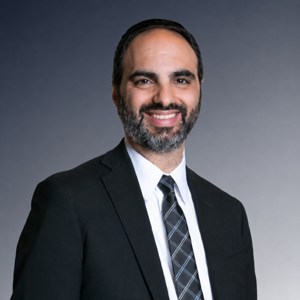
Living Emunah

Living Emunah

By Ashear, Rabbi DavidReligion & SpiritualityJudaism
Download on the App Store
  • Favorites

    27

    Followers

  • Typical duration

    6 min

    per episode

Based on Podcast App listening data

Living Emunah episodes

  • The Natural Miracles of Tefillah
    In the beginning of this week's Parashat Vayishlach, Ya'akov Avinu is preparing to confront Esav, who wanted to kill him. Rashi tells us that Ya'akov prepared himself in three ways: sending gifts, praying, and strategizing for a potential battle. Why did Rashi list them in this order—placing tefillah second, between sending gifts and preparing for war? The Be'era Parashah explains that Rashi is teaching a fundamental principle about tefillah. Hashem built into the nature of the world that prayer works. And just as giving gifts and preparing for war are normal hishtadlut that people do, so too tefillah operates within the natural order. It is not considered miraculous to have prayers answered. For this reason, the Maharsha writes that although the Gemara teaches that a miracle performed for a person can deduct from his merits, anything attained through tefillah—even the greatest salvations—does not take away any merits, because tefillah is never considered a miracle. This understanding should give us tremendous chizuk. The answering of tefillah is part of how the world was created to function. Tefillot are so powerful that they can change decrees no matter how impossible the odds may appear. Chazal tell us that in Shamayim it had been decreed that Esav would marry Le'ah and Ya'akov would marry Rachel—"the older for the older, and the younger for the younger." The Alshich adds that Le'ah had four overwhelming hurdles preventing her from marrying Ya'akov. First, the heavenly decree had designated her for Esav. Second, the Pasuk testifies to Rachel's beauty. Third, the Pasuk tells us that Ya'akov loved Rachel. And fourth, Ya'akov worked for seven years for Rachel and took great precautions not to be deceived by Lavan. Yet Le'ah prayed so intensely, so persistently, with so many tears that her eyes became tender. And through those tefillot, she overturned the decree and all the natural odds. Chazal say that the greatness of tefillah is such that not only did Le'ah avoid marrying Esav, she even preceded Rachel to marry Ya'akov. And because of those same tefillot, she gave birth to six of the twelve Shevatim—the Bechor, the Kehunah, the Levi'im, the Meluchah, and the lineage of Mashiah—all emerging from her prayers. The Pasuk in Parashat Vayera says that the angels were sent to destroy Sedom while Avraham was still standing before Hashem. The next Pasuk tells us that Avraham prayed for Sedom to be spared. The Seforno explains: even though the decree had already been issued and the angels had already arrived in Sedom, Avraham still prayed, because he understood the ways of Hashem. As Chazal tell us Even if a sharp sword is already touching a person's neck, he should still pray, because tefillah can work no matter how desperate the situation seems. This past year, a woman received the difficult news that she had a tumor, lo 'alenu. At that time, she strengthened herself in guarding her speech and devoted herself to encouraging others to do the same. She was told that she would need the strongest form of chemotherapy. The doctors warned her of every side effect—especially that it was absolutely guaranteed she would lose all her hair. She asked them if there was anything at all she could do to avoid this. Their answer was clear: with the dosage she required, there was a one-hundred-percent certainty she would lose every strand. But she strengthened herself with the knowledge that with Hashem, nothing is fixed. She poured her heart into tefillah—not only for a full recovery, but also that she should not lose any of her hair. Today, Baruch Hashem the tumor has been completely removed. And amazingly, she did not lose even one strand of hair throughout the entire process. The doctors had no explanation. But the explanation is clear. She prayed to the Creator of the world—the One Who decides whether hair falls out or remains. Tefillah is wondrous, and Hashem created it to work as part of the natural order of the world. The more a person recognizes Hashem's power and involvement in every aspect of his life, the deeper, stronger, and more effective his tefillah becomes. Shabbat shalom.
    6 min
  • Created for a Mission Only You Can Fulfill
    It is not uncommon for a person to feel down about himself when he looks around and notices other people's strengths and talents. He sees that his friends give more charity than he does. He sees that they pray with more concentration. They understand the learning more quickly, and everything seems to come easier for them. And he begins to wonder, "What is my life worth? I have nothing that I excel in." A young man once wrote a painful letter to Rav Shlomo Wolbe about his struggle in yeshivah. He felt everyone else understood the Gemara and shiurim right away, while he worked so hard just to grasp the basics. Others remembered what they learned, while he forgot. He felt he was accomplishing nothing, and it was breaking him. Rav Wolbe wrote back that he was suffering from a bad case of jealousy and explained- Seeing other people's strengths can make a person feel like he has nothing. But if he would only realize what priceless gifts Hashem has given him, his whole outlook would change. A person must know that when it comes to our avodat Hashem, if we use the strengths and weaknesses we were given to serve Hashem, we can reach the highest levels of kedushah. A person's strengths were not given randomly. And his weaknesses were not an accident. They are the exact tools he is meant to have to serve Hashem with. If a person truly knew that Hashem gave him a very specific job and that this is all Hashem wants from him, he would never care what anyone else has. He has a mission that nobody else could ever fulfill. No one else could do his job in this world. We are never measured against what other people do. In fact, if a person was blessed with outstanding talents, that only means he carries greater responsibility. And if he does not use those gifts properly, he will be held more accountable for them. Sometimes the very people we envy are the ones who will face harsher judgment if they fail to live up to their potential. A person should be happy learning the way he knows best. He should be happy praying the way he can. He should be happy giving the amount of tzedakah he is capable of giving. If he fulfills his maximum potential with his own tools, he can reach the same greatness as the greatest people of his generation. But if someone constantly thinks, "Why can't I understand like him?" or "Why can't I remember like him?" he can destroy his entire mission in this world. Shelomo Hamelech taught us that jealousy causes rotting of the bones. It decays a person from the inside. It takes all the beautiful gifts Hashem gave him and makes them rot, because he feels worthless compared to others and stops using them. Instead of building, jealousy paralyzes. Instead of growing, it shrivels. We are in this world for one reason: to serve Hashem. Everything else is secondary. Hashem did not ask us to be someone else. He only asked us to be who He created us to be. And what He gave us is exactly what we need to succeed. If we had what others had, we would be wasting our life. This applies to middot as well. If a person is naturally anxious, it is because that is the area he must refine. If someone is short-tempered, it is because that is the battlefield Hashem gave his neshamah. If someone struggles with motivation or patience or trust, that is not a flaw in the system — it is the system. Hashem is the only One who knows our mission. And He built each of us perfectly to accomplish it. There never was and never will be another person with your exact combination of talents, fears, urges, childhood experiences, temperament, and circumstances. Every detail was planned by our loving Creator who wants us to succeed in the mission that we were sent here to fulfill. Instead of focusing on what everyone else has, we should be thanking Hashem for who we are-because that is the only way we can be successful in this world
    5 min
  • Hashem Is the Shadchan
    Sometimes we hear stories of shidduchim that sound unbelievable — a match suggested by mistake, a name mentioned in passing, a resume being sent after being told "no" again and again, two people from completely different worlds coming together in ways no one could have ever predicted. These stories remind us that Hashem is actively involved in every shidduch that takes place. Not only are the meetings from Hashem — even the responses are from Hashem. Who says yes and who says no. Who returns a call and who doesn't. Who suddenly becomes interested and who loses interest. Who delays and who decides quickly. It is all guided by Hashem. If a shidduch fails, it is not because of something that was said or done. It is because it was not meant to be. And if a shidduch is meant to be, Hashem has millions of ways of making it happen. We never have to worry about how we will meet the one Hashem intended for us. He already arranged it. Rabbi Reuven Elbaz told of a baal teshuvah who joined his yeshivah. The man was already older and still had not married. The rabbi gently encouraged him to begin dating, and after much hesitation, he finally agreed. Some time later, a match was proposed and a meeting was arranged at a hotel. The young man arrived on time — but the girl never showed. He waited. And waited. While sitting in the lobby, he noticed another young woman who also seemed to be waiting for someone. Curious, he gently asked her who she was waiting for. She replied that she was supposed to meet a man, but he apparently had not shown up. The man then told her what had happened to him and asked if perhaps they would agree to meet and see if there might be compatibility between them. She hesitated — but then agreed. That "chance" meeting turned out to be the right one. After making all the proper inquiries, they discovered they were perfect for each other. Baruch Hashem, he eventually became a serious talmid chacham, and to this day he thanks Hashem for sending him the best wife possible in the most unexpected way. Rabbi Shlomo Zalman Friedman, author of the popular Gilyon Noam Siach , related another remarkable story. Last summer, he attended the engagement party of one of the members of his kehillah. When he arrived, the father of the chatan hurried over and said, "Rabbi, I want to tell you how this shidduch happened." A few weeks earlier, the man had attended the engagement party of the rabbi's daughter. When he arrived at the hall, there was a line of people waiting to give their wishes. When it was his turn, the rabbi warmly greeted him and then, unexpectedly, said, "Please sit for a little while — over there, near my sons and sons-in-law." The man was puzzled. No one else had been asked to sit. He had never planned on sitting. But because the rabbi asked, he went and sat. Just before that evening, a shidduch had been suggested for his son Pinchas, but this father had not felt drawn to it. Now, while sitting among the rabbi's family, he began speaking with one of the rabbi's sons-in-law. When the son-in-law mentioned where he lived, the father realized he lived in the same neighborhood as the girl's family. So he asked him about them. The son-in-law spoke glowingly about the family. By the end of that one conversation, the father's heart had changed. And now — Baruch Hashem — they were celebrating the engagement. Hashem knows how to place people in the right location, at the right time, with the right words and the right mood — in ways none of us could ever design. A person should never fall into despair wondering, "Maybe I ruined it. Maybe I said something wrong." If a shidduch is meant to be, nothing in the world can stop it. And if it is not meant to be, then it was never truly yours — no matter how promising it looked. When the Steipler Rebbe went to meet the sister of the Chazon Ish, he knew the trip involved a four-hour train ride. Planning to sleep during the ride, he learned intensely for nearly two days straight without rest. But upon boarding, he worried that the seats might contain sha'atnez — so he stood the entire trip. By the time he arrived, he was utterly exhausted. During the meeting, he fell asleep multiple times. He also had a hearing problem and struggled to hear much of what was said. And still — she said yes. Because when Hashem wants the shidduch, nothing can stop it. Hashem is the Master Shadchan. He brings people together in ways that defy logic, timelines, and expectations. And when we truly absorb this, shidduchim become less frightening, less pressured — and far more peaceful. We learn to trust. We learn to wait. We learn that when it is time — it will happen.
    7 min
  • When Emunah Is Tested at Home
    Sometimes there is strife in the home due to a difficult relationship between a father-in-law and a son-in-law. When a son-in-law feels he is being treated unfairly, controlled, or that no matter what he does it is never enough, it can cause great damage to the home and deeply disturb a person's inner peace. We must internalize a fundamental truth: Hashem places every person into our lives. It is not by chance and it is not by mistake. Every relationship is carefully planned by the Master Orchestrator to help each person fulfill his mission in this world. The Torah tells us about one of the most difficult fathers-in-law in all of history. People sometimes complain, "It's not fair, my father-in-law doesn't give me money." Yaakov Avinu's father-in-law not only didn't give him money — he stole from him on a daily basis. The Midrash tells us that Lavan justified his thievery by claiming that Yaakov still owed him fourteen more years of work for Bilhah and Zilpah. He was manipulative and dishonest, changing Yaakov's wages again and again. Chazal tell us it was done a hundred times. He took advantage of Yaakov's devotion and honesty. Yaakov worked seven long years to marry Rachel, and Lavan had no problem switching her for Leah. He felt no guilt whatsoever. Even worse, afterward he justified himself, making it seem as though Yaakov was the one who acted improperly by marrying the younger sister before the older one. Yaakov was forced to endure deception, manipulation, and emotional torture from his father-in-law for twenty years. Yet the Torah testifies about him that his integrity remained perfect. Yaakov understood that this suffering was not random. He knew this was part of his avodat Hashem and an essential piece of his mission in life. For twenty years he lived in Lavan's home, yet remained attached to Hashem with unwavering emunah. Every test, every humiliation, every disappointment, he accepted with one thought in mind: this is me'et Hashem. Of course, Yaakov did his hishtadlut. He took reasonable steps to protect himself. He confronted Lavan respectfully. He negotiated. He acted wisely. But once something happened, he always returned it to Hashem and reminded himself that nothing occurs outside of His will. It is not forbidden to question a person who harms you, but it must be done with dignity, not with rage and not with cruelty. A Jew is not judged only by what he endures, but by how he endures it. The Torah is teaching us something fundamental. When Hashem places difficult people into our lives, it is not to break us, but to build us. Not to humiliate us, but to refine us. Not to weaken us, but to strengthen us. A difficult father-in-law can feel suffocating. He may be critical, controlling, dismissive, or impossible to satisfy. Nothing seems good enough. You may feel constantly judged, unheard, and trapped in a role you never volunteered for. And it hurts precisely because it comes from a place that was meant to be safe. This is where emunah must rise to the surface. Hashem sees every tear. He hears every painful word. He counts every insult that was swallowed in silence. And when a person restrains himself for the sake of shalom in his home, that sacrifice shines brightly in shamayim. Yaakov did not leave Lavan's house defeated. He emerged spiritually powerful. Though Lavan tried to harm him emotionally and physically, Yaakov walked away with a beautiful family, great wealth, and an inner greatness that shaped the future of Klal Yisrael. It is not that Lavan became a better person. It is that Yaakov became a greater one. So many people beg Hashem to change others. But sometimes Hashem is working on changing us instead. And that is far more powerful. The more a person works on his middot and his emunah, the more blessing Hashem pours into his life in ways he could never imagine.
    5 min
  • Living One Day at a Time
    When Rivka told Yaakov to go to the house of Lavan and find a wife, she said, " וְיָשַׁבְתָּ עִמּוֹ יָמִים אֲחָדִים ," that he should stay there for yamim achadim, which is generally translated as "a short time," until his brother's anger would subside, and then she would call for him to come back. When Yaakov later told Lavan that he would work for seven years to marry Rachel, Rashi says that these are the yamim achadim that Rivka was referring to. The question is, why would Rivka want Yaakov to be in such a bad spiritual environment with Lavan for such a long time? Furthermore, when Yaakov was working during those seven years, the Torah says they felt like yamim achadim, a short time, because of his love for her. Seemingly, if someone is so eager to get married, every day should feel like an eternity, not yamim achadim. Rabbi Menashe Reisman brought a beautiful explanation in the name of Rabbi Michal Forshlager to answer these questions. Rivka wanted to give Yaakov the greatest tool that would ensure that he would always be happy in any circumstance that he might find himself in. When a person is suffering from a problem in life, it is usually because the problem has lasted for a long time. Problems that only last a short amount of time are much easier to deal with. If someone is older and not married and speaks about his difficulty, he will usually say, "I have been trying for so many years and nothing works out." But if a person would live one day at a time, his quality of life would improve tremendously. Every day is a new day, with endless possibilities of what could happen. If a person wakes up in the morning believing that today could easily be the day of his salvation, it gives him strength and courage. What was yesterday has nothing to do with today. The difficulty begins when a person connects today with all the past days and looks at everything as one long, unbearable stretch. The same is true with worry. Most worry is about the future, not the present. Right now, a person is still alive, still taken care of, and still standing. His suffering comes from thinking about what might be tomorrow. If he would only focus on today, on what he already has and on what might happen to bring salvation, he would be far happier. This is what Rivka was telling Yaakov about the house of Lavan. He should be there for yamim achadim, literally, one day at a time. She knew it would be hard for him, and she gave him the secret of how to survive it. Even when Yaakov agreed to work for seven years, that did not mean he accepted that it must be seven full years. It meant seven years worth of work. If Yaakov would somehow get money, he could pay Lavan and leave immediately. Just as an eved ivri who is supposed to work six years can be freed early if his master releases him, so too Yaakov could get out at any time if Hashem willed it. A person can also pray that Hashem put it into someone's heart to help him, or that he find a way out sooner than expected. When a person knows that he can be helped today, it gives him great strength. If someone is told he must undergo treatment for a certain amount of time or remain in the hospital for a certain amount of time, he can ease so much of his pain by remembering that with Hashem, nothing has to be the way people say. The first treatment can go so well that no further treatment is needed. What was supposed to be two weeks can become two days. Even though Yosef was in prison for twelve years, he remained in good spirits, knowing that any day he could be released. And although Yaakov seemed to have such a difficult time in Lavan's house, being cheated and taken advantage of again and again, the Torah testifies - וַיָּבוֹא יַעֲקֹב שָׁלֵם -that he left whole, in every way, physically, financially, and spiritually. Lavan was never able to truly harm him. Everything happened exactly as Hashem wanted, and it was all for Yaakov's benefit. A person's bitachon gives him strength every single day of his life. And when it says that the seven years Yaakov worked for Rachel were yamim achadim because of his love for her, Rav Michal explained that it means that even though Yaakov loved Rachel deeply and wanted to marry her, because he looked at each day by itself and thought, "Maybe today will be the day," the time passed quickly. In the same way, Yaakov was able to survive his long stay with Lavan because Rivka told him she would send for him when it was time to come home. Each day, Yaakov could tell himself, "Maybe today is my last day here." Yeshuat Hashem is keheref ayin. A person can be saved today. If a person learns to live today properly, with real bitachon, he will always have the strength and courage to be happy and productive in life.
    7 min
  • The Ladder of Trust
    In the beginning of this week's parashah, Vayetzei, Yaakov dreamed of angels going up and down a ladder. The Ramban explains that Hashem was teaching Yaakov about His absolute involvement in everything that takes place in this world. Even when Hashem sends His messengers, the angels, to act in this world, they first go up to Him after seeing their mission and ask exactly what He wants done. Only afterward do they come back down and carry out His will. Nothing happens on its own. Even what people do to us is never truly in their hands. It is only what Hashem wants that can come to pass. A man complained to me that someone had stolen his customer in business, and he could not stop thinking about it. I told him that no human being has the power to take away a customer from another person. If it happened, it was only because Hashem willed it. Even though people have free will, they cannot use that free will to harm another person unless it is decreed by Hashem. When Lavan chased Yaakov and caught up with him, he said, "I have the power to harm you, but the G-d of your father came to me last night and warned me not to touch you." His words contradict themselves. On the one hand, he claims he has the power to harm Yaakov. In the same breath, he admits that Hashem is the One who controls what he can and cannot do. The Be'er HaParashah brings an explanation from Rav Shalom Schwadron on this pasuk, based on a story told by the Alter of Novardok about his own youth. As a young boy, he was learning in an out-of-town yeshivah when his parents sent word that he must come home urgently. He did not have enough money to buy a train ticket. Still, he believed with complete bitachon that Hashem would help him. He traveled for several days until he reached the train station. There, he sat down on a bench, opened his Gemara, and waited for Hashem's salvation. There were still a few hours before the train was scheduled to depart. At one point, a religious Jew arrived and saw the boy sitting and learning. He was thrilled to find another Jew immersed in Torah. He struck up a conversation and invited the boy to sit next to him on the train so they could learn together during the journey. The boy replied that he would love to, but he did not have a ticket. The man told him he had better buy one quickly, because the train would be leaving in a short time. The boy calmly explained that he had no money, but he had complete trust that Hashem would help him. The man was stunned. "You traveled all this way without money for a ticket?" he said. "That's not bitachon, that's foolishness. You can't buy a ticket with faith. You need money." With that, the man shook his head and boarded the train. Time passed. The train was now only minutes from departure. A final boarding call was announced. The boy continued sitting and learning, calm and unshaken. Then, just moments before the train was about to leave, another Jew came running into the station, out of breath and afraid he had missed it. He noticed the yeshivah boy still sitting on the bench and asked him why he was not boarding. When he heard that the boy had no money for a ticket, the man immediately said, "If you need a ticket, I'll gladly buy you one." He rushed to the counter, purchased the ticket, and handed it to the boy. Together, they boarded the train just as the doors closed. The boy thanked the kind Jew for the ticket, and he thanked Hashem for sending him at the final moment. As he looked for a seat, he suddenly saw that first religious man staring at him in disbelief. "How did you get a ticket?" the man asked. The boy told him what had happened and quoted the Midrash that says, "Whoever trusts in Hashem, Hashem will save him." The man shook his head. "If that fellow hadn't come at the last second, you'd still be sitting there. Don't tell me your bitachon helped you. It was that man who saved you." But the truth was the opposite. It was precisely because of the boy's bitachon that Hashem sent that man at the final moment to help him. So too with Lavan. He told Yaakov, "I could have harmed you, but there was just one small problem. At the last second, Hashem told me not to." That means he never had any control. No human being in this world has any power on his own. No one can hurt us, and no one can help us, unless Hashem decrees it. The more clearly we internalize this truth, the more peaceful and tranquil our lives will become. Shabbat Shalom
    6 min
  • The Power Hidden in Birkat Hamazon
    The Zohar HaKadosh writes that it is worth it for a person to seek out all of the delicacies that the world has to offer, just to be able to say Birkat Hamazon with joy, because Birkat Hamazon, when said properly, brings upon a person the greatest berachot from the Upper Worlds. The more joy and appreciation a person feels during Birkat Hamazon, the greater the blessings that are drawn down to him. The Zohar writes further that when a person says Birkat Hamazon properly, he brings joy to Heaven and to the earth. We should feel tremendous happiness that Hashem gave us the zechut to have the opportunity to say Birkat Hamazon. The Yesod VeShoresh HaAvodah would make a tefillah before Birkat Hamazon, asking Hashem to give him the zechut to say every word with kavanah. And when he succeeded in saying it with kavanah, he would recite a special tefillah afterward, thanking Hashem for granting him such a precious gift. Once, a talmid chacham came to see Rav Shach. When he entered, the Rav had just begun Birkat Hamazon. The visitor watched as Rav Shach said every word slowly from a siddur, as if he were counting precious jewels. It took about fifteen minutes to complete. When he finished, his face was glowing with joy. The talmid chacham asked why he looked so happy, and Rav Shach replied that he had just merited to say Birkat Hamazon properly, and that meant success in all areas of life and long life as well. The sefer Amud Esh relates that a woman once came to the Maharil Diskin, weeping that she had been married many years without meriting to have children. He advised her to accept upon herself to say Birkat Hamazon from a siddur, with kavanah. In time, she had a baby. When people would go to the Stipler for a berachah to have children, he would give them the same counsel, to say Birkat Hamazon from a siddur with kavanah. The Stipler would also say that Birkat Hamazon said properly is a segulah to merit children who are tzaddikim. The Midrash teaches that Hashem said, "Eat, be satisfied, and then bless My Name with Birkat Hamazon, and I will remove sickness from your midst." Rav Mendel of Rimanov found this hinted to in the pasuk that says וּבֵרַך אֶת לַחְמְךָ וְאֶת מֵימֶיךָ וַהֲסִרֹתִי מַחֲלָה מִקִּרְבֶּךָ-when we bless Hashem for our bread and our water, He will remove disease from among us. The Maor VaShemesh taught that when a Jew recites Birkat Hamazon with kavanah, the food he ate is transformed into medicine and heals him from illness. The Kotzker Rebbe said that through Birkat Hamazon, a person can become close to Hashem and acquire deeper yirat shamayim. The Zohar writes that one who recites Birkat Hamazon properly in this world will merit a special place in Gan Eden. Not only that, but the berachot themselves will accompany him and protect him on his way to that place. The Kav HaYashar writes that one who recites Birkat Hamazon with kavanah will be invited to the special seudah that Hashem will prepare for the tzaddikim in the future. The Magen Avraham writes that one who is careful with Birkat Hamazon brings the geulah closer. After the fourth berachah, we have the long series of requests in the HaRachamans. The Chafetz Chaim said that one cannot compare tefillah made before a mitzvah to tefillah made after completing a mitzvah. When a mitzvah is just performed, it becomes an eit ratzon, a special time of Heavenly favor, when prayers are accepted with far greater power. After Birkat Hamazon, the gates of Shamayim are wide open, and Chazal gave us beautiful requests to say so we should not lose that precious opportunity. The Gedolim of last generation have urged us to strengthen ourselves in this wondrous mitzvah. Doing it properly requires more time and attention, but we know that whatever we invest with Hashem returns to us many times over. The Gemara in Berachot tells us that the tzaddikim of earlier generations would spend three hours on each tefillah, which means nine hours a day in prayer. The Gemara asks how they had time to learn Torah and earn a livelihood. It answers that Hashem blessed their learning and their parnasah, enabling them to accomplish in a short time what would normally take many hours. Hashem can stretch a person's day, and He can also extend a person's years. We never lose from spending time on Birkat Hamazon. On the contrary, we gain everything from it. Let us strengthen ourselves to rejoice in the zechut of thanking and praising Hashem for His endless kindness, and to feel deep hakarat hatov as we recite the holy words of Birkat Hamazon.
    7 min
  • The Power of Birkat HaMazon
    Everyone wants to feel secure and protected from the troubles and difficulties of life. Everyone wants success, heavenly assistance, abundant livelihood, good health, shalom bayit , nachat from their children, and a peaceful, happy life. People search far and wide for segulot that will bring them these blessings. But if we understood how many treasures lie within our mitzvot, we would never need to look elsewhere. Take, for example, the wondrous mitzvah of Birkat HaMazon. Chazal say that if a person accustoms himself to recite Birkat HaMazon properly, all the blessings and goodness in the world will come upon him. There was a man in Yerushalayim named Rabbi Shimon, who would say Birkat HaMazon with such feeling, passion, and kavanah that on Sukkot, neighbors would come to his sukkah just to watch him say it. When people asked him how he became so enthusiastic about this mitzvah, he shared the following story: When he was eleven years old, Rav Meir Shapiro—the founder of Yeshivat Chachmei Lublin and creator of Daf Yomi—came to his school to test the boys. After being impressed with their learning, Rav Meir Shapiro told them that he wanted to give them a gift that would help them throughout their entire lives. He opened the Shulchan Aruch to Siman 185 and read the words of the Ba'er Heitev. The Ba'er Heitev asks: Why is there no "Phe Sofit" anywhere in Birkat HaMazon? He answers: because anyone who recites Birkat HaMazon with kavanah will never experience what appears to be the " af "—the anger of Hashem—and his livelihood will always be given to him with honor and abundance. He then added: those who are very careful in this mitzvah should always say Birkat HaMazon from a siddur. The young Shimon accepted upon himself that moment to recite every word of Birkat HaMazon with deep kavanah . When the other children ran out to recess after lunch, he stayed behind, saying it word by word. Eventually he became known as "the Birkat HaMazon boy." When the Holocaust broke out, he was miraculously protected. Not one day passed in which he didn't have enough food—he worked in the kitchen, where he had access to anything he needed. In those very difficult times, he maintained his love and devotion to Birkat HaMazon. Birkat HaMazon was truly his key to success in life. The Maharsha writes that when a person says Birkat HaMazon the right way, the blessings ascend to Shamayim and advocate before Hashem to send him abundance in parnassah . The Zohar HaKadosh writes that there are prosecuting angels created from a person's sins, arguing against giving him easy livelihood. But the merit of Birkat HaMazon with kavanah overpowers them and brings the person parnassah . A man struggling with livelihood once went to Rav Yosef Chaim Sonnenfeld for advice. The Rav told him to recite Birkat HaMazon from a siddur, slowly and with intention. The man said, "I've already started doing that, but I haven't seen any change." Rav Sonnenfeld replied, "Continue doing it. The blessing will come." Not long afterward, the man experienced a dramatic salvation and received abundant parnassah . The Seder HaYom writes that when a person truly takes to heart the words he is saying when reciting berachot , those words pierce through all the heavens until they reach the Kisei HaKavod . Hashem takes those sincere praises, crowns Himself with them, and derives tremendous joy from them. In return, He opens His hands and satiates the person with abundant blessings. The Aruch HaShulchan writes that the proper way to recite Birkat HaMazon is slowly, word by word, like counting the most precious jewels. Just as a person eats with enthusiasm, he should say Birkst HaMazon with equal enthusiasm and gratitude. He should recite the words out loud, with joy. A man told me that when he learned about the power of Birkat HaMazon, he deliberately decided to eat bread at lunch just so he could say it. The first day, he opened a Hebrew–English siddur and took almost twenty minutes to say Birkat HaMazon. He refused to go on to the next word until he fully understood what he was saying. He did the same the next day. One hour later, two people who owed him money for a long time both called—one after the other—to say they were finally going to pay him. Birkat HaMazon has many more incredible segulot . With Hashem's help, we will continue discussing them tomorrow.
    7 min
  • Hashem Is the One Who Provides
    A life without emunah and bitachon often leads a person into unnecessary stress, worry, and exertion. A man related that for his entire business career, he opened his store every day at eight in the morning and didn't close until eight at night. He was constantly worried that if he closed even a little earlier, a potential customer would go to his competitor, discover that their product was just as good, and he would lose the customer permanently. That fear, combined with the belief that more hours meant more income, drove him to work grueling twelve-hour days. As he grew older, that schedule became too demanding. But he was terrified to cut back his hours. Then someone introduced him to Sha'ar HaBitachon . After learning it, he discovered that he could safely ease his worries and reduce his hours. But hearing the ideas once wasn't enough for him to actually change. He learned each section again and again, going through the entire chapter five times, until the message sank deeply into his heart. Only then did he calmly begin closing his store at 6 p.m. instead of 8. Since that day, his financial situation has only improved. He said that he doesn't understand how, but he earns more money now than he did with twelve-hour days. The explanation is simple: Hashem is in charge of parnassah , and when we genuinely internalize that belief and live according to it, Hashem rewards that trust. It is not our job to figure out how Hashem will send us our livelihood. It is only our job to make a regular hishtadlut , believe and pray. A woman told that she is an only child and her father passed away many years ago. Baruch Hashem, she married and built a beautiful family. A few days before Sukkot this year, a FedEx envelope was delivered to their home. She assumed it was for her husband, so she gave it to him. He opened it and found a check for a very large amount of money — at a moment when they desperately needed it. They had no idea who would be sending such a sum. They investigated and discovered the remarkable chain of events behind it. Forty years earlier, her grandfather had loaned a friend $50,000. The friend never repaid it, and over time, everyone forgot about it — except for the One who forgets nothing. The grandfather passed away, and so did her father. On his own deathbed, the old friend remembered the debt and wanted to leave this world with a clean slate. He instructed his family to repay all of his outstanding debts, including the one owed to her grandfather. Since her grandfather was no longer alive, they divided the money among his children. And because her father had passed away and she was an only child, she received her father's full share. A forgotten debt from decades earlier, crossing generations, arrived at their doorstep precisely when they needed it most. While they were trying to figure out how to pay their bills, Hashem was preparing their salvation decades in advance. Hashem is the One who provides parnassah. Those who recognize this live with far greater peace of mind, knowing that their livelihood is already in Hashem's hands — and always has been.
    5 min
  • There Is Always Hope
    The pasuk says in Yeshayah, וידעת כי אני ה' לא יבושו קווי - You will know that I am Hashem, those who have hope in Me will not be ashamed. Which means there's a certain way that Hashem deals with people who have real hope in Him. They may not deserve to get what they're hoping for, but because of their hope alone, Hashem ensures they will not be ashamed. There's a reward for hope. The Ramchal wrote a whole kuntras explaining how great hope in Hashem is. A tefila made with hope is infinitely greater than one without hope. A person has to feel that Hashem wants to give him what he's asking for. The pasuk says that Hashem is משביע לכל חי רצון . Hashem doesn't only think about us day and night and do what's best for us every second of the day, He also wants to do our will, so long as it's not something that will be bad for us. The Midrash Rabbah in Shemot , regarding the mann , brings the pasuk ומשביע לכל חי רצון , and explains that Hashem doesn't just provide a person's needs, He gives each person his wants. When Hashem sent the mann down in the desert for 40 years, He gave the people the pleasure of tasting anything they wanted in the mann . He could have just made it so that the mann had a good taste and they would have been satisfied. But instead He said, “I want to give you what you want. Tell me what you want to taste in the mann , and it will taste exactly like that.” It is true that sometimes what we want is not the best thing for us. But even there, by Hashem not giving it to us, He is doing our will. Because if we would know why it wasn't good for us, we wouldn't want it. However, sometimes the reason something is not good for a person, is because he doesn't deserve it based on his mitzvot and averot . In those instances, the fact that the person has hope alone, will give him the zechut to then deserve what he is asking for. Therefore, before a person asks for anything, he should think, Hashem wants to give it to me, He can give it to me. And if I believe in His ability to give it to me, with complete emunah, that may be the zechut I need to get it . Rabbi David Goldwasser told a story about a woman who was not so religious, who came to him asking him to pray for her, because she had to undergo certain tests that were potentially very serious. The Rabbi assured her he would pray for her every day. She thanked him, and before she left, she mentioned something else. After she got divorced, her son was living with her, and then one day out of nowhere, when he was just 19 years old, he left her a letter saying he was sorry, but she was never going to see him again. Just like that, he left home, and it has now been 10 years, and no one has heard a thing about him. She tried so many ways to track him down, including hiring private detectives, but never found a trace of him. She asked the Rabbi if there was any hope of her ever finding her son. The Rabbi told her there is always hope, Hashem can do anything, and she needed to start praying to Him. He gave her a tefila to say in English, and encouraged her to feel the greatness of Hashem, and to know that He could easily help her. She took the paper with the prayer on it, and told the Rabbi she was going to read it every day from the bottom of her heart. A month went by, and nothing happened. She then went on a three-day ecology seminar, and on the last night, she was sitting in a large room with glass walls, and all of a sudden, someone walked by outside that seemed to look like her son. At first, she thought she was hallucinating, but then she got up and ran to see who that person was. She ran until she finally caught up with him. Amazingly, it was her son. When she looked at him, he said, “Ma, what are you doing here?” She said, “I've been waiting every day to see your face again.” They sat and spoke for a while, and they exchanged numbers. He promised to be in touch with her. The woman went for her testing in the coming weeks, and they determined a surgery was required. When she went to the surgery, she went in alone. But when she woke up from the surgery, she was overcome with joy, because the first person she saw was her son, standing by her bed. Baruch Hashem, the surgery was successful. There is always hope in every situation.

    6 min

About Living Emunah

From the publisher's feed

A Daily ethical teaching by Rabbi David Ashear

Best of Living Emunah

Ranked by our users in the last 21 days

More shows like Living Emunah

The Rabbi Sacks Legacy by Rabbi Lord Jonathan Sacks

The Rabbi Sacks Legacy

557 Listeners

The Israel Guys by The Israel Guys

The Israel Guys

308 Listeners

Jewish Stories to Inspire: Motivational & Spiritual Stories Based on the Torah's Ethics, Values and Wisdom by Stories to Inspire

Jewish Stories to Inspire: Motivational & Spiritual Stories Based on the Torah's Ethics, Values and Wisdom

186 Listeners

Living with Emunah by Rabbi Efrem Goldberg

Living with Emunah

110 Listeners

Meaningful People by Meaningful Minute

Meaningful People

1,987 Listeners

From the Inside Out: With Rivkah Krinsky and Eda Schottenstein by Rivkah and Eda

From the Inside Out: With Rivkah Krinsky and Eda Schottenstein

263 Listeners

The Q & A with Rabbi Breitowitz Podcast by Rabbi Dr Yitzchak Breitowitz

The Q & A with Rabbi Breitowitz Podcast

234 Listeners

Call Me Back - with Dan Senor by Ark Media

Call Me Back - with Dan Senor

3,197 Listeners

The Times of Israel Daily Briefing by The Times of Israel

The Times of Israel Daily Briefing

1,070 Listeners

Kosher Money by Living Lchaim

Kosher Money

821 Listeners

History for the Curious - The Jewish History Podcast by JLE

History for the Curious - The Jewish History Podcast

232 Listeners

Gedale Fenster - Podcast by Gedale Fenster - Podcast

Gedale Fenster - Podcast

399 Listeners

Honestly with Bari Weiss by The Free Press

Honestly with Bari Weiss

8,473 Listeners

Inspiration for the Nation with Yaakov Langer by Living Lchaim

Inspiration for the Nation with Yaakov Langer

1,120 Listeners

Stories Of Hope With Tzipora Grodko by Meaningful Minute

Stories Of Hope With Tzipora Grodko

324 Listeners