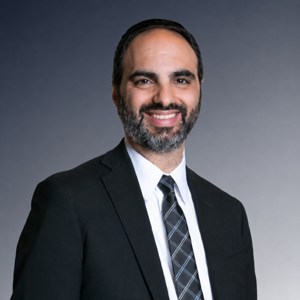
Living Emunah

Living Emunah

By Ashear, Rabbi DavidReligion & SpiritualityJudaism
Download on the App Store
  • Favorites

    27

    Followers

  • Typical duration

    6 min

    per episode

Based on Podcast App listening data

Living Emunah episodes

  • When We Give, We Get
    Teshuvah, tefila, and tzedaka are able to take away any harsh decrees. This time of year is the greatest for tefillah. As well, any kind of teshuvah is accepted at this time. And we have to go out of our way to give extra tzedaka. When someone is approached for money or some other type of request, the person may feel like he is being bothered again and quickly wants to dismiss the request. However, we should know when Hashem sends a person a chesed opportunity, it's for his own good. It may not seem that way because it has to be a test. In the end, the giver always gains more than the receiver. A man told, just as he started eating dinner one Thursday evening, there was a knock at the door. He figured it was a collector and kept eating. But as the knocking persisted, he fought himself and he got up to answer the knock. It was the neighbor's child. He was asking if his family could borrow fifty shekels. They often needed to borrow and he was happy to lend them. He went to the shelf on the bottom of the cabinet to get the money from a certain envelope, but the envelope wasn't there. He apologized to the boy saying he didn't have any money at the moment. Then he realized his problem was much bigger than his neighbor's. That envelope had a very large sum of money in it, as well as important documents. He searched high and low for it, and then came to the conclusion that it must have gotten thrown out. He prayed, pledged tzedaka, and then went outside to the garbage bins. He was embarrassed to go through his garbage with so many people walking by. At that moment, Hashem sent him a neighbor who was leaving the building. He told him of his problem and the neighbor said he would help and they would split the embarrassment. At the end of a long and unpleasant experience, Baruch Hashem, he found the envelope with the money and all of the documents. He especially felt a deep sense of hakarat hatov to Hashem, being that the garbage pickup came just 15 minutes later. Hashem sent him the chesed opportunity just in time. And just by getting up to answer the door, he was able to gain so much. Our attitude in giving should always be that we want to give. And if we don't have the ability to give, we should wish that we were able to give. If someone wants to give badly enough, hopefully Hashem will give him the ability to do so. A woman told me that her son was collecting for needy families in need of yeshiva tuition assistance. He asked his family members to contribute. The woman was only able to give him a small sum, but told him that she wished she could give more. That night she said to Hashem, "If You give me the money, I will give it all to help these needy families." Three days later, she saw a friend of hers at a gathering. The friend told her she had some good news. She just sold the pocket book that she had given her to sell. The woman then recalled, she gave her a pocket book to try and sell three years ago. She had assumed that she was never able to sell it and just gave it away to charity. Her friend said, I never lowered the price and just yesterday someone bought it for about a thousand dollars. The woman couldn't believe it. This was found money. She took the money and gave every single dollar to the needy families that her son was collecting for. She told Hashem, if He gives it to her, she would give it away. And she saw so clearly that Hashem was the One who gave her this money. Something that wasn't selling for three years suddenly got sold. When we give, we get. Especially at this time of year, tzedaka has an enormous power.
    5 min
  • Now Is the Time
    At this time, we are supposed to feel that our judgment is pending, and it is in our hands to get the best of everything. We need to utilize these days of Aseret Yemei Teshuva , to accept upon ourselves to become better, to make teshuva for what we have done wrong in the past, and to pray with all of our heart and soul. If there is anything we want, now is the greatest time for prayer. A person who has been waiting for so long to get married has to feel that he can get his salvation right now. A rosh yeshiva from Israel told me that in his yeshiva, they auction off the zechut of dedicating the יהא שמיה רבה of each Kaddish on the Yamim Noraim to the one who purchases it. This means that when the yeshiva boys answer אמן יהא שמיה רבה ..., praising the name of Hashem, they also have in mind a salvation for that person in need. Last year, a boy aged thirty, who had been trying very hard with Shidduchim for almost ten years, had almost decided to give up. Nothing ever went his way, and he wanted to just put it out of his mind, rather than continuing with the misery he was experiencing. Someone then told him of the miraculous salvation people have had by purchasing the zechut of the יהא שמיה רבה in that particular yeshiva in Israel. They convinced him to fly to Israel for Yom Kippur to get the zechut for himself. And that's what he did. Baruch Hashem, this year, he was zocheh to get married to a girl two years older than him. Until now, he never would have considered dating someone older than him. But in the zechut of that יהא שמיה רבה , Hashem did something to make it click in his head to try, and now he couldn't be happier. As an aside, sometimes people feel they have certain conditions they need to get married, but in reality, the zivug that Hashem has for them may not fulfill those conditions. We must be open to everything and give Hashem the "ability" to bring a person the zivug that He has had waiting for him since before they were born. I read a story in a Shalom Bayit book authored by Rabbi Nachum Diamant. A man went out with a girl and had a great time, but there was something about her looks that bothered him. She was cross-eyed. It was something that he didn't feel he could look past, but he discussed it with his rabbi first, and his rabbi encouraged him to go out a second time. The second date was even better than the first. Their personalities really clicked, but this problem was still weighing him down. He decided to continue, and then on one of the dates, he told the girl that he really wanted to marry her, but he didn't know if he could get past this issue. He mentioned there was a surgery she could do to fix it. Many girls in that situation may have gotten insulted and ended it on the spot, but Hashem guided this girl to say that she would agree to do the surgery. They got married relatively quickly before she actually got the surgery, and then she found out she was expecting, and they had to delay the surgery until after she gave birth. Finally, after she had the baby, she brought up the topic, saying she was ready for the surgery. He then said, "I think you are perfect just the way you are. Now I feel that your cross-eyes are part of your charm." When someone gets to know another person for who they are, suddenly the things they thought that would really bother them really don't. Part of getting a yeshuah in Shidduchim is being open when suggestions are made. No matter how long it has been, salvation can always come in the blink of an eye, and now is the time to pray with all of our might for yeshuot in all areas.
    5 min
  • Every Last Penny
    All of the money that will come into a person's possession this year was determined on Rosh Hashanah. This does not only apply to the money a person will earn from his job, it includes every last penny from every possible source, both expected and unexpected. At this time, the judgment is still pending and can be changed for the better. Many people had a very hard year financially, but it could all change in the blink of an eye. Not only is the exact dollar amount determined, but even the way that it will come to a person and by which individuals it will come from. People who have organizations and yeshivot to run, spend their days and nights trying to raise the money to keep them going. Every dollar that will be gained from fundraising is also being determined right now. The Shulchan HaTahor tells a story of two students of Rav Zusha of Anipoli who went to raise funds for a certain institution. They came to the city of a wealthy man who in the past supported the yeshiva very generously. Before visiting him, they went around to other people first. By the time they arrived at his home, they had already collected forty-nine gold coins. But to their dismay and astonishment, the wealthy man gave them just one. The students came back to their Rebbe dejected. The Rebbe told them not to feel bad as he already saw in Heaven that it was determined they would get fifty gold coins from that city. The wealthy man was only able to give them one because they had already gotten forty-nine. Hashem has many ways of supporting people and organizations and it's always amazing when we see in hindsight how He does it. A Rosh Yeshiva from Israel told me that he needed to do some renovations in his yeshiva and he was given a price by a contractor for the entire project. He raised the money and paid the contractor and when it was almost completed, the contractor told him that the electrician's work was going to cost more than expected, an additional five thousand dollars. The Rosh Yeshiva literally did not have another dollar to give and there were no other people he could think of to ask. He prayed to Hashem and asked Him to please cover this new expense that was beyond his budget. A couple of days later, the contractor told the Rosh Yeshiva that the electrician decided to do the extra work free of charge. The Rosh Yeshiva was amazed. He called the electrician to ask him why he would do this. The electrician said his father, who had passed away years before, came to him in a dream and asked him why he wasn't doing enough to raise his soul. He told his father he would donate the work to the yeshiva to raise his neshama and his father was happy. That's exactly the way the story happened and this is how Hashem covered the extra five thousand dollar bill for this yeshiva. The Rosh Yeshiva then told me another story of how Hashem once again helped his yeshiva. He was running an online campaign and the boys from the yeshiva were calling their friends and family for donations. He received a five-figure check from one of the student's family members. This student is already paying the tuition and it's rare for a family member to give that much in addition to the tuition. The boy told him the money came from his grandmother, who was not well-to-do financially. When her husband passed away a few years ago, he told her to give a large check to one organization. He did not know which one to give to, but he told her when the time came she would know where to give it. Over the last three years, she has given numerous small donations to many organizations and never felt that any one of them were the one she should give the large check to. But this time, when her grandson called her, she felt this was the one, and that is how the yeshiva got the large check. Hashem is deciding right now the income of every individual and organization. Tefila at this time can do wonders.
    6 min
  • Hashem Is on Our Side
    והחזירנו בתשובה שלמה לפניך . The mitzvah at hand is teshuvah . Some people have done things that they wish they could be forgiven for, but they don't even know how to start the process. The damage has been done, and teshuvah seems very far away. But the Torah tells us otherwise, לא בשמים היא...כי קרוב אליך הדבר מאד בפיך ובלבבך לעשותו . Teshuvah is not far away. It can be accomplished with one's heart and mouth. Hashem is on our side, He wants us to have a full teshuvah . If we are sincere and we start the process, doing whatever we can, Hashem will carry us the rest of the way. A woman related that she was walking into her house the other day and saw a piece of paper lying on her front lawn. She picked it up to discard it, but first looked to see what was written on it. It was a short letter from her nine-year-old granddaughter, and it said, "Dear Jews in Africa, I mistakenly made fun of you. I really feel bad. Now I have a massive stomach ache and I want to get better. Please forgive me." And she signed her name. The woman then asked her granddaughter about this letter. The granddaughter said she didn't know how to get in contact with the Jews in Africa, so she threw the letter out of her window and asked Hashem to get it there. The woman told her granddaughter she happened to know someone who lives in South Africa, and she would get the letter there. When she told this person about the letter, he said he had a meeting scheduled with the chief Rabbi of South Africa, and he would give him the letter. The chief Rabbi read the letter and then sent the granddaughter a letter back saying, "I received your letter to us in Africa. You sound like a very special girl. We know that Hashem loves you, and we love you. No matter how far apart we are, Klal Yisrael are always friends. Shanah Tova , a good sweet year. From the Jews in Africa." The lesson here is clear. This girl had a strong desire to get her letter to Africa, but she didn't know how to, so she did whatever she could, and Hashem did the rest. Although sometimes we may feel completely helpless, we must always remember that results are never in our hands. All we have to do is try, and Hashem produces the results. But being that, efforts are in our hands, we must make them. We have to do what we can. I read a story in the Zichron Torat Moshe bulletin, which took place a few years ago. Rabbi Betzalel Hemich from Lev L'Achim called up Rabbi Yehuda Blumenfeld to ask him if he would be able to teach a boy and help bring him closer to Torah and mitzvot. Rabbi Yehuda Blumenfeld agreed, and every week he took a bus a long way to learn with the boy. Several months later, Rav Yehuda received another phone call from Rav Betzalel asking him if he could attend their annual Melava Malka fundraiser. It was going to take place far from where Rav Yehuda lived, and being that Rav Yehuda wasn't going to be able to donate anything anyway, he declined. Rav Betzalel persisted saying, "Please, we need you there, even for just a half hour." Rav Yehuda finally agreed and attended for the half hour that he said he would. While there, he heard Rabbi Eliezer Sorotzkin give mind-blowing stories on the mesirut nefesh that Lev L'Achim's teens experience while returning to Torah and mitzvot. A week later, Rav Betzalel called Rav Yehuda and thanked him for getting them their largest donation of the night, over $100,000. Rabbi Yehuda said in disbelief, "I didn't bring in any money, and I didn't ask anyone for money." Rabbi Betzalel explained, "After your half hour visit, you went to your father-in-law's house and ended up telling him some of the hair-raising stories that you had just heard. That week, one of your father-in-law's congregants told him that he inherited several million dollars and was asking advice on where to donate the money to. Because of what he just heard, he suggested Lev L'Achim as one of the recipients, and that's how we got our largest donation from that Melava Malka." Even a person who can't afford to help with any money could be credited with helping an organization receive tens of thousands of dollars. It is not up to us to produce the results, but it is up to us to try.
    6 min
  • Yom Kippur: It’s Not Hopeless
    Living Emunah 2649 Yom Kippur: It's Not Hopeless The pasuk says, דרשו ה' בהימצאו, קראוהו בהיותו קרוב . We are to take advantage of the times that Hashem is closest to us. And right now, on Erev Yom Kippur, He is extremely close. We need to utilize this time to make teshuva and accept upon ourselves to improve our ways. There are people who want to be better, but the environment that they're in is stopping them. There are people who have relatives that have veered from the path, and they would do anything to get them back. To them it seems hopeless, but they must strengthen themselves and recognize that with Hashem nothing is ever hopeless. The Tanah de'Veliyahu teaches us that Hashem yearns for His beloved children to come back to Him more than a woman yearns for her husband to come back from a long journey. Hashem wants our relatives back more than we do. And we can help with our tefilot. A woman related that after her divorce she had to split the time she has with her daughter with her ex-husband. While she was growing in religion at a rapid pace, her ex-husband was going in the opposite direction. It was very confusing to her daughter to go back and forth to these different environments. The woman was so worried about her daughter every time she left the house to go to her father. This year specifically a change happened in scheduling. The daughter was going to go to her father every single Shabbat, while she would be by her mother during the week. The problem was the man doesn't keep Shabbat, and this was causing the woman so much stress and anxiety. He doesn't attend shul. There are no rabbis in the picture who he's connected to. To the woman this situation seemed hopeless. Every day she has a hotline reading the book A Daily Dose of Pesukei Bitachon . And one morning a few days before Rosh Hashanah they were discussing the pasuk which basically means there is nothing stopping Hashem from bringing salvation no matter what the salvation may be. This pasuk gave her so much strength and amazingly that same night she saw with her own eyes how Hashem could bring a yeshuah in the blink of an eye. The community in which her ex-husband lives decided to bring in a speaker from another city to give chizuk for Rosh Hashanah. Her daughter enjoys listening to that speaker very much, so she asked her father if she could go. He didn't want her to go by herself, so he said he would bring her. He went and became very inspired from the class and Bezrat Hashem will continue to grow going forward. The fact that this speaker ended up in that community on that night was an amazing story in itself. Hashem is ready and waiting to help us but we have to call out to Him first. Another story happened a couple of weeks ago. A woman was walking on Shabbat and lo alenu was struck by a car. As she was lying on the ground, the driver got out to see if she was okay. He then said out loud, "I knew Hashem was going to punish me for driving on Shabbat." The woman on the floor heard this man saying he is a Jew who desecrates Shabbat. In her weakened state she said to him, "If you will accept upon yourself right now to keep Shabbat, I will forgive you for this." The man accepted. We see a couple of lessons from this story. Number one, look at the purity of this woman. While she was suffering in pain, she was concerned that the driver who hit her should keep Shabbat. Number two, it was decreed for whatever reason that this woman had to get hit, but Hashem orchestrated it in a way where it would be this man, to give him a chance to come back to religion. Even somebody who has drifted so far that he was driving on Shabbat right in the heart of a Jewish community, Hashem yearned for him to come back. If someone has no connection to rabbis or Torah, we would think how is he going to get inspired, but Hashem always has a way, ways that we could never dream of. Now is the greatest time for us to ask Hashem for help with our own Teshuvah and to help bring back those people who we know have veered from the path. Gemar Chatima Tovah
    6 min
  • Crowning Hashem on Rosh Hashana
    Every year on Rosh Hashanah, Hashem reveals His kingship when He judges each person and determines his fate for the upcoming year. The Gemara says, אמר רבי יצחק: כל שנה שרשה בתחילתה מתעשרת בסופה - Any year when a person feels humbled like a beggar at the beginning of the year, it brings about blessing for the upcoming year. We are supposed to feel as if we have nothing coming to us. Whatever Hashem has given us until now was a complete undeserved gift, and we are hoping that He is going to continue bestowing His chesed upon us. We need to feel so overcome with gratitude for everything that Hashem has given us so far. People may look around and see what others have and feel that they are treated unfairly. "Why can't they have what the other one has?" they think. This causes them to completely overlook all of the wonderful blessings that they have in their lives. I once saw a parable of a man who had acres of fruit and vegetable fields that earned him a very bountiful income. One day, someone showed him an enormous diamond and said, "This one diamond is worth more than all your fields combined." He said he's in the wrong business. He should instead look to go into diamonds. The man was convinced and he sold all his fields and took the proceeds in search of diamonds. However, he was not able to find any diamonds remotely close to the one he was shown. He became depressed over it and was bitter about his life. Meanwhile, the man who bought his fields was walking through a stream that went through one of them. He stumbled upon something, picked it up, and it appeared to be a diamond. He took it to be appraised, and indeed, it was one of the most exquisite diamonds in the entire world. The man discovered that the stream was filled with these kinds of diamonds, and he lived happily ever after. The lesson is, the first person was sitting on diamonds, but he didn't know it. He had everything he could ever want right under his nose, he just didn't realize it. The same is true with everyone. Hashem gives each person his own field of diamonds. If we ignore the evil inclination telling us to look around at everybody else, we would enjoy our diamonds so much. Part of crowning Hashem King on Rosh Hashanah is feeling happy to be part of His Kingdom, to feel happy with the way that He deals with us. We may have things that we still want, but there's a way to approach it. The Midrash Raba in parashat Vayikra gives a mashal of two sharecroppers, each of whose fields were not doing so well, and they were in desperate need of more money from their landowner to keep the fields going. The first sharecropper put on nice clothing, and he went to the landowner with a smile. He said, "Baruch Hashem, everything is great, but if I can get an extra ten dinarim , I'll be able to help your field do much better." The landowner told the sharecropper, "Here, take twenty dinarim and go and produce a bountiful crop." The second sharecropper went to his landowner with a worried look on his face, saying the field's in trouble, he wished he'd never invested in it to begin with. He needed an emergency ten dinarim or the field would become totally ruined. The landowner told him he's fired and got someone else to run the land instead. Both of these sharecroppers were in the exact same situation. Both of their fields needed a lot of help, but the wiser one spoke with hope and anticipation, while the foolish one spoke with worry and depression. We are supposed to come to Hashem happily, with appreciation for everything He has given us. He knows there's things that we still need, but if we have the right attitude, He'll give us double. The Gemara says the angels once asked Hashem why He shows favoritism to the Jewish people. After all, it says in the Torah that Hashem doesn't show favoritism. Hashem answered, "It also says in the Torah, ואכלת ושבעת וברכת - that a person only has to say birkat hamazon when he's completely full. But the Jewish people say it, even for just a k'zayit of bread, even when they're not full." Look how much Hashem appreciates when we show hakarat hatov , even if we didn't get everything we wanted. Let us appreciate Hashem and show Him how happy we are to be in His Kingdom. B'ezrat Hashem, everybody should have a כתיבה וחתימה טובה. תזכו לשנים רבות
    6 min
  • A New Beginning
    There are many lessons that our Rabbis learn from the case of the בן סורר ומורה -the rebellious wicked son, which apply to Rosh Hashanah. One of them is that Hashem judges a person based on the direction that he's headed in more than on what he has done in the past year. Another one is that the בן סורר ומורה can only be sentenced to his harsh punishment if he committed the crimes in the first three months since he turned thirteen. And that is precisely why the Torah deals with him so harshly. He just turned Bar Mitzvah. Here he is just starting a new beginning and the first things he does are totally against the Torah. There is something special about a new beginning. We are supposed to feel like we have an opportunity to do everything right from the start. These are the feelings we are supposed to have now with Rosh Hashanah upon us. Even if we haven't been the best we could be, now we have a new chance to do things right from the start. One of the best places to begin with is right in our own homes. There is so much pain that people are experiencing all over the world. At least let us do what we can to make our homes places of happiness. We can resolve to give our spouses the attention and warmth that they need to be happy in marriage. We can go out of our way to be sweeter and more patient. A home with shalom bayit is a place where the Shechina dwells. Every little improvement goes a long way. I read a story that a man from Bnei B'rak told about himself. It was late one Erev Rosh Hashanah and he was planning to walk with his family to the other side of Bnei Brak to eat the meal with his wife's family. He told his family how important it was for them to be on time so that he wouldn't be late to the first Arbit of the new year. However, as it often happens, his wife needed extra time to get ready and he was watching the clock and getting more anxious by the minute. Eventually, he saw that he was definitely going to be late to Arbit . Inside, he was so angry. His wife knew it was Rosh Hashanah and how important it was for him to be on time for shul. His patience had reached its limit. And then, finally they were off. As they were walking, he found himself debating whether or not to express his disappointment and frustration to his wife. He said to himself, "Would Hashem want me to vent to my wife now? Or would He rather me treat her with respect, patience and empathy? Was she really trying to make me late or did she just get caught up in things that were important to her?" With that, he decided the best thing he could do to serve Hashem at that moment would be to stay quiet. So he took a deep breath and spoke to his wife as if everything was completely fine. They walked at a nice pace, without her feeling pressured, and had a nice conversation along the way. Indeed, he arrived to shul late and prayed the best he could under the circumstances. While that incident eventually receded to the back of his mind, he noticed something interesting as the year began to unfold. He was enjoying success in all areas on a level that he never experienced. It was so out of the ordinary that it struck him. He was waiting for his mazal to run out, but it continued throughout the year. He thought long and hard why he may have been zocheh to success on such a profound level, but he really didn't have a good answer. He had a typical year before, spiritually, with basically the same strong points and imperfections as usual. The only thing that he could think of was the self-control and patience that he displayed towards his wife on the night of Rosh Hashanah. We can never know for sure, but we do know how valuable it is to perfect our middot and overcome our inclinations to get angry, especially when it comes to our spouses. May Hashem help us start off the new year the right way and help us become the people that we are capable of becoming.
    6 min
  • Will Power
    There's a well-known saying found in many of the sifreh Acharonim , אין דבר עומד בפני הרצון , which literally means nothing can stand in the way of a person's will. Rabbi Menashe Reizman cautioned that misinterpreting this statement can lead to giving people false hope and letdowns. On the surface, this statement seems to be saying that if a person wants something badly enough, with perseverance, he'll eventually get it. But as we know, only Hashem decides if a person gets what he tries to get. A person can try from here until tomorrow, but if Hashem doesn't want him to achieve his goal, he won't achieve it. Everybody is given a different mission in life. Some people are meant to become great Rosheh Yeshiva . Some people are meant to become great baaleh tefilah . Some people are meant to become great in chesed and community service. Not everyone is capable of becoming a Rosh Yeshiva, because Hashem didn't give everyone the brain capacity for it. Of course, everyone is encouraged to become the best they could be, but there are no guarantees when it comes to results. So what does אין דבר העומד בפני הרצון mean? Rabbi Nachman of Breslov explained, אין לך דבר שמונע ממך לרצות - there is nothing that can stop a person from having a will to succeed. Even if a person is not capable of achieving something due to the limitations that Hashem gave him, he can still yearn and dream to become a certain type of person. Results are not in our control, but our will is in our control. A person should want to become great in all areas of Torah and mitzvot. He has to wish that he can pray like the greats of all time. He has to wish that he can learn Torah like the greats of all time. He has to wish that he can have the middot of the greats of all time. And the list goes on. We are always obligated to do what is in our control, and a major part of that is getting ourselves to want greatness. If someone is not capable of sitting for many hours straight learning Torah, he can still serve Hashem with his will to want to do that. We must put in our full effort and try to accomplish our goals, but we should not get discouraged if we aren't successful. If we wanted it and we tried hard, we were automatically successful. And if it has been determined that in a certain area something is beyond our capabilities, we can still continue to serve Hashem in that same area with our yearning alone. We once mentioned the Panim Yafot in the name of the Arizal, on the pasuk in Yeshayah perek 54, רוני עקרה לו ילדה . The barren one should rejoice, כי רבים בני שוממה מבני בעולה because she has more children than the ones who are able to have children. How do we understand this? How could a barren woman be better off with children than a woman who has children? The answer is, the barren woman yearns for children, and she has the purest intentions. She begs Hashem for a child, just so she could raise it in the ways of Torah and mitzvot. She dreams of having the perfect child that she's going to invest so much time and energy in, a child that will bring Hashem so much satisfaction. This desire of the barren woman is producing the holiest neshamot that actually come down into this world. The physical bodies may be from other families, but the holy neshamot they are producing and they will be rewarded for all eternity for what their pure intentions have produced. Nothing can ever get in the way of a person's will. As we approach the Yamim Nora'im , it is an opportune time to work on desiring greatness, to want to be the best in all areas of Torah and mitzvot, and b'ezrat Hashem, Hashem will see our pure intentions and efforts and bless them with siyata d'Shamaya .
    6 min
  • Why Don’t We Say Hallel on Rosh Hashana?
    Chazal tell us that the malachim ask HaKadosh Baruch Hu why the Jewish people don't say Hallel on Rosh Hashanah. The Chatam Sofer in his Derashot asked, why would the angels think that we should say Hallel on Rosh Hashanah. On Pesach, Shavuot and Sukkot, we are celebrating the miracles that Hashem did for us when He took us out of Mitzrayim and gave us the Torah. So that is why we say Hallel on those holidays. But there were no miracles that took place on Rosh Hashanah that should warrant saying Hallel. So why would they think that we should say it? The Chatam Sofer answered, that we have been in galut for nearly 2000 years, and now a new year is coming up and there are still Jews in the world keeping Torah and mitzvot just like they did during the days of Moshe Rabbeinu. Not only that, there are people interested in knowing what time they have until to say Kriyat Shema or until what time they have to say the Amidah . The angels in heaven are amazed that after centuries of persecutions and attempts to get us away from religion, we keep coming back stronger than ever. If we would think about it logically, it doesn't make any sense that there are millions of Jews flourishing in Torah and mitzvot after what we have been through. There are people in every shul across the world learning, praying, doing gemilut chasadim and serving Hashem in the most beautiful ways. The main time to recognize this miracle would be at the beginning of a new year. Our Avot never imagined that in the year 5785, we would still be in galut, and yet still keep every halacha the best way possible. We're still educating our children with purity. We still stand in shul on Rosh Hashanah and accept the kingship of Hashem and we say Malchuyot , Zichronot and Shofarot just like they did in the days of Ravah and Abayeh. There is no miracle greater than this. And so, what did Hashem answer the angels when they asked Him why we aren't saying Hallel? He replied, how could they say Hallel when the Sifrei Chaim and Sifrei Metim are opened in front of Me? The Chatam Sofer explained, those books also refer to the amount of life we will be given when doing mitzvot. Life- meaning excitement and energy. And the Sifrei Metim refers to doing mitzvot without any excitement or any enthusiasm. How could we say Hallel for something that's being decided right at that time? Are we going to have heavenly help to enjoy the Torah and do the mitzvot with a passion? Knowing that this is at stake, it is incumbent upon us to at least try our best on the day of Rosh Hashanah to show as much excitement and enthusiasm as we could when learning and praying. All the blessings for the entire year are found inside the day of Rosh Hashanah, both physical and spiritual. Everything we do on that day matters so much. We eat sweet foods, we act on our best behavior, and we are supposed to put forth our best spiritual efforts in everything we do that day. If we want to do mitzvot with a feeling of life, we have to at least show it outwardly. Even if we may not always have kavanah throughout the year during our tefila , we should make a special effort on Rosh Hashanah to focus from the beginning of the tefila all the way to the end. Hashem is ready to shower us with the greatest year, both spiritually and physically, but first we have to do our part. To get spiritual blessings, we have to want them deep down and show it as well. B'ezrat Hashem, everybody should be inscribed in the Sefer Hachaim , both spiritually and physically. Shabbat Shalom
    5 min
  • When We Don’t Get What We Want
    https://www.artscroll.com/ Books/lemynh.html  Living Emunah on Yamim Noraim Gaining faith from the Days of Awe Sometimes a person cries out to Hashem night and day for help. He doesn't only ask during the tefila times, he asks multiple times throughout the day at every chance he gets. He cries, he begs, he tells Hashem how good he's going to be if He gives him what he wants. Then, when the help doesn't come, he cries more and accepts even more things upon himself, but still no response. It appears as if Hashem is completely ignoring him, and he can't understand why. He's asking for something he knows is going to help him in so many ways, and he knows that Hashem wants to help him more than he wants to be helped, so why isn't Hashem helping? Then, regarding something seemingly insignificant, he sees clearly that Hashem helps him, and he wonders why would Hashem help him with things not so important, and not with the things that are very important? Someone told me her friend who works in a yeshiva day school needed to make baked ziti immediately after school one day, but had no time during the day to pick up the cheese to make it. If she first went shopping after school, she wouldn't meet the deadline that she had to cook by. She didn't know what to do. That afternoon, a truck pulled up at the school with a free delivery of cheese for whomever needed it. That may have been the first time that ever happened in the history of the school. The woman was amazed at how Hashem was personally involved in helping her accomplish what she needed to that day. It wouldn't have been a catastrophe if she didn't make the baked ziti, but even with that Hashem helped her. A man told me, he got home late from a wedding with his wife last week, and she thought she saw a roach go into one of their cabinets. She told him he had to find it. He was so tired, but he tried. While looking, he stumbled upon a paper that said his wife had a court date the next day for a traffic ticket that she got two years before. This was the final notice, and if she didn't make the appearance, they were threatening to suspend her license. They had completely forgotten about that notice. He never found the roach, and who knows if it was even there. That was Hashem alerting them to their court date. The next morning, she took the Zoom option of the meeting, and it lasted for about three minutes. She pleaded not guilty, and they dismissed the ticket. Hashem was clearly directly involved in helping them with something they were unaware of. It wouldn't have been the biggest deal if they had missed it, but even with that Hashem helped them. So again, why do we sometimes find Hashem helping people with things not so important, and then with things that are very important, it seems that the help is not coming? The answer is, Hashem is always helping from the most important things to the least important things. To Hashem, everything about us is important. If it's good for us to be helped, He'll help us, and if it's better for us not to be helped, then He'll refrain from giving us what we're asking for. Him refraining is out of love, because He knows it's better for us for things to remain the way they are. Although we can't fathom how not getting what we're asking for could be good, Hashem, who has the past, present, and future revealed before Him at all times, knows that it is. The rule is, Hashem always wants to help, and He does always help. The one condition that He has is that the help is going to truly benefit us. If we can trust Hashem during the times that we don't get what we're asking for, that is a great avodah of emunah, which will earn us endless rewards.

    5 min

About Living Emunah

From the publisher's feed

A Daily ethical teaching by Rabbi David Ashear

Best of Living Emunah

Ranked by our users in the last 21 days

More shows like Living Emunah

The Rabbi Sacks Legacy by Rabbi Lord Jonathan Sacks

The Rabbi Sacks Legacy

559 Listeners

The Israel Guys by The Israel Guys

The Israel Guys

308 Listeners

Jewish Stories to Inspire: Motivational & Spiritual Stories Based on the Torah's Ethics, Values and Wisdom by Stories to Inspire

Jewish Stories to Inspire: Motivational & Spiritual Stories Based on the Torah's Ethics, Values and Wisdom

186 Listeners

Living with Emunah by Rabbi Efrem Goldberg

Living with Emunah

109 Listeners

Meaningful People by Meaningful Minute

Meaningful People

1,986 Listeners

From the Inside Out: With Rivkah Krinsky and Eda Schottenstein by Rivkah and Eda

From the Inside Out: With Rivkah Krinsky and Eda Schottenstein

263 Listeners

The Q & A with Rabbi Breitowitz Podcast by Rabbi Dr Yitzchak Breitowitz

The Q & A with Rabbi Breitowitz Podcast

234 Listeners

Call Me Back - with Dan Senor by Ark Media

Call Me Back - with Dan Senor

3,197 Listeners

The Times of Israel Daily Briefing by The Times of Israel

The Times of Israel Daily Briefing

1,070 Listeners

Kosher Money by Living Lchaim

Kosher Money

820 Listeners

History for the Curious - The Jewish History Podcast by JLE

History for the Curious - The Jewish History Podcast

231 Listeners

Gedale Fenster - Podcast by Gedale Fenster - Podcast

Gedale Fenster - Podcast

399 Listeners

Honestly with Bari Weiss by The Free Press

Honestly with Bari Weiss

8,473 Listeners

Inspiration for the Nation with Yaakov Langer by Living Lchaim

Inspiration for the Nation with Yaakov Langer

1,121 Listeners

Stories Of Hope With Tzipora Grodko by Meaningful Minute

Stories Of Hope With Tzipora Grodko

324 Listeners