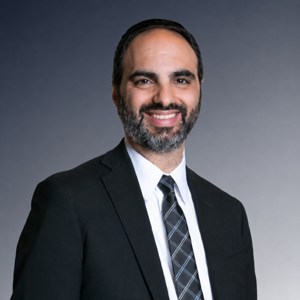
Living Emunah

Living Emunah

By Ashear, Rabbi DavidReligion & SpiritualityJudaism
Download on the App Store
  • Favorites

    26

    Followers

  • Typical duration

    6 min

    per episode

Based on Podcast App listening data

Living Emunah episodes

  • Exactly What You Desired
    The pasuk says that Hashem is משביע לכל חי רצון , which seems to be saying that Hashem provides nourishment for every living creature. However, the midrash asks, if so, it should have said that Hashem is משביע לעל חי מזון , referring to food. Why does it say the word רצון , meaning desire? The midrash answers, this pasuk is coming to tell us that Hashem does not only satiate a person with food. He gives every person exactly what he desires. For 40 years, Hashem sustained the Jewish people in the desert with mann. The midrash says, if a person at that time would have just thought, I'm really in the mood for a certain type of food, Hashem would make the mann that he was eating taste exactly like that food. This took place at every meal that millions of people ate over the course of the 40 years in the desert. Hashem gave every single individual exactly what he wanted, every time he wanted it. And it was not just for that generation. Hashem wanted to teach us that He could do the same for every single person today as well. This does not only apply to food. Hashem could fulfill all of a person's heart's desires in any area. It is true that we don't always get exactly what we want. That's because Hashem wants to give us what is truly good for us. And that is not always what we think is good for us. However, when coming to pray for something, we must believe Hashem can give us exactly what we want. And if it's good for us, He will. A man told me he had a very hard year. And as the summer was winding down, he was thinking about doing something fun to clear his head and help him prepare for the upcoming year. A couple of weeks ago, he was talking to his wife one morning and said to her, "Some people in my situation would need a long vacation to recuperate. I don't think I need that. I just need to have a little fun before going back to the grind. I would love to drive around in a Jeep Wrangler with the top down and enjoy some of my favorite music for a few days. I think that would do wonders for me." He was just talking out loud as he knew that cars don't just show up at a person's doorstep to enjoy for a few days. Later that same day, one of his rabbis called him asking for help with his car. The rabbi said his car is continuously having problems and was asking for advice. The man said he knows someone who deals with cars and he would call him right away about it. The car dealer heard the issues and recommended for the rabbi to try and sell his car for whatever he could get for it. Of course, he would have to tell the customer its faults. The car dealer then called the rabbi himself and told him he would sell it for him. Later that same day, the man called the car dealer to thank him for helping his rabbi. The car dealer then told him he was going to help him too. The man asked him what he meant by that. The car dealer then reminded him that two years before this when he leased him his current car, he told him how much he loved Jeep Wranglers, but it wouldn't be befitting for him to drive such a car for a long period of time. He then said that he just bought a Jeep Wrangler to resell and he wanted to give it to him as a gift to let him use it for a few days. The man couldn't believe his ears. It was just a few hours before this that he told his wife all he wanted was to take it easy for a few days and drive around the Jeep Wrangler and now someone was delivering him one right to his door. He said to me he felt so special. Even though his want was something silly in the great scheme of things, Hashem still gave it to him. It was just an extra that would make him feel good and Hashem provided it almost instantly. Hashem cares about every last detail of everyone's lives and can always help us with everything that we need.
    6 min
  • The Real Shadchan
    Hashem decides who marries who and exactly when the wedding should take place. When the time is right, He puts everything in order so that His will will come to fruition and the couple that's destined for each other will get married. A man told me his good friend who we'll call David was trying to get married for about ten years. During the first couple of years, he went out a few times with a girl who we'll call Sarah. He decided they weren't a match, and he moved on. A year later, he went out with a girl who we'll call Esther. They went out many times, and he decided she was the right one. However, to his dismay, she ended it, and he was left heartbroken. Many years went by after that with nothing to show for it. Then, one day the shadchan called and said that Sarah was interested in trying again since it's been so many years since they had gone out, maybe things have changed. David agreed to try it again. About an hour later, a different shadchan called and said that Esther was willing to try again and wanted to know if he was interested. This was the girl he wanted to marry who he was never able to get over. He quickly called back the first shadchan and asked if he was in contact with the other side yet. The shadchan said he didn't have a chance to call them but was planning on calling soon. David asked him to please put it on hold, and he would let him know if anything changed. He then said yes to the second shadchan and once again went out with Esther. This time, after just one date, he saw clearly that she was not for him. He then went out with Sarah and saw that she was for him, and Baruch Hashem, they got married. David said he was never able to give any other girls a fair chance because he always wanted to marry Esther. Once he saw that Esther wasn't for him, he was able to give Sarah a fair chance. When the time came for Sarah and David to get married, Hashem made sure that David's mind would be clear, so He caused Esther to want to try a second time. When it comes to anything in life, we can make all the hishtadlut we want, but ultimately only what Hashem wants is going to happen, and we see this time and time again when it comes to Shidduchim. A wealthy man who was a student of Rav Levi Yitzchak of Berditchev asked his Rebbe to pick out a good girl for his son. The Rebbe said he knew of a modest girl with yirat shamayim and told the wealthy man to come to Berditchev for the holidays, and he would set up a meeting with him and the girl's father. In Berditchev, there was a poor man whose profession was binding books. He had in his possession one very valuable book that he was hoping to sell but never found a buyer for. He was told that this wealthy man was coming to town, and he should ask him to buy it. When the wealthy man came, the poor man was too embarrassed to ask him to buy the book, so he sent his daughter there to ask him for him. When the girl came to where the wealthy man was staying, he thought this was the girl that the Rebbe was telling him about, and in order not to embarrass her, they told her to bring a book but she was really there to see if he wanted her for his son. The wealthy man inquired about her and heard great things and then asked for her for a shidduch for his son. She was very pleased with the shidduch, and it was finalized. When Rebbe Levi Yitzchak heard what happened, he said, "Once again, we see how Hashem determines who is going to marry who and nobody can say otherwise. I had a different girl in mind for this wealthy man's son but Hashem made the shidduch with who He knew was the right one." Hashem is always the מזווג זיווגים , and when the time is right, things fall into place.
    6 min
  • See Through the Camoflauge
    One of the consequences of Adam HaRishon's sin was בזיעת אפיך תאכל לחם , which the Kuntrus Minchat Ezra explains to mean that from then on all of mankind had to live in the falsehood of what we call hishtadlut . Why is it a falsehood? If we were asked the following question, "A person takes medication and he gets healed. Did Hashem heal the person through the medication or did Hashem heal him without the medication?" The standard answer would be that Hashem used the medication to heal him. That is the falsehood of hishtadlut . It seems to us that there is some type of difficulty involved in removing a sickness and it's easier for Hashem to use medication to do it than to do it without medication. But in truth, in order for the sickness to even be there in the first place, Hashem has to actively decide to put it there. And the moment He decides it shouldn't be there, it's gone. The medication is only a camouflage for us to be tested with. It is up to us to see through the camouflage and believe אין עוד מלבדו . The more we recognize Hashem's involvement in the world and in our lives, the closer we'll feel towards Him. Every time we have to make a hishtadlut in any area, we first have to remind ourselves that it's a curse that we have to put in effort to accomplish what we need. Hashem doesn't need our help to give us anything. It is incumbent upon us to make a hishtadlut , but we should feel that by doing it, we are just fulfilling our obligation and the effort we make is not at all affecting the results of what Hashem wants to give us. The closer we get to that belief, the better we're doing with this very difficult test. Every time a person needs to make a hishtadlut , he should say the words, be'ezrat Hashem , or אם ירצה ה ' , to remind him that what he is trying to accomplish will only happen if Hashem wants it to happen. Many times Hashem shows a person clearly that his hishtadlut is not what brought about the results he desired. We need to use those instances to remind us that that's always the way it is. A man, who will call Reuven, told that he was in great need of funds to marry off his son. He traveled abroad to see if others would help him in the cause. In a particular city, he made a connection with a driver who knew where all the wealthy people lived. The driver had others with him. Reuven was sitting in the back seat, and he made small talk with another collector. They discussed how difficult it was to travel and ask people for money. They arrived at a very wealthy man's home, and the driver told Reuven he had to go in last. He also told Reuven that this wealthy man does not like people coming with a driver. He had to wait to go in and under no circumstances was he allowed to tell the man that a driver brought him. Eventually, each person came out with a nice sum of money. When Reuven finally went in, the first question he was asked was how he got there. Reuven did not want to lie, nor did he want to break his word that he gave the driver, so he just ignored the question. He said that he came to collect for his son's wedding. The wealthy man was not happy with that response, and Reuven left the home empty handed. When Reuven got back to the house he was staying at, he saw the man that he made small talk with in the car. That man said he went on his own for a couple of hours to a friend and mentioned to the friend how difficult it was for him to collect. The friend gave him a very large donation and then told him he wanted to help someone else who was in need as well and he gave him the exact same amount of money to give to another person. The man told Reuven, "The first person I thought of was you because we spoke about how difficult it was for us to go collecting." He then handed Reuven that very large amount of money. Reuven felt like Hashem was telling him, "You don't need any particular wealthy man to help you. You don't need to be intimidated by anyone because I'm the One giving you your money." Yes, we have to make a hishtadlut, but we must know the hishtadlut is a test and we must believe that the results are only in the hands of Hashem.
    6 min
  • We Never Lose
    There are times when people seem to be doing everything right, but everything seems to be going wrong for them. During those times it is natural to feel discouraged and ask oneself, why should I continue on this path when it doesn't seem like Hashem is appreciating what I do anyway? Sometimes a person learns about a good practice to take on that is supposed to produce a result that he is waiting for, but then when he tries it, just the opposite happens and he's left wondering, what went wrong here? Someone once told me, whenever I thank Hashem, I feel like whatever I'm thanking Him for suddenly gets taken away. This has led this woman to be fearful to thank Hashem. She wants to be appreciative, but she is afraid of doing it because she doesn't want to lose as a result. What is the proper outlook to have in these circumstances? We must ingrain in our minds the midrash in parashat Re'eh which says, "אמר הקב"ה, אין אדם שומע לי ומפסיד – Hashem Himself tells us, nobody will ever lose by listening to Me." Which means, when it seems like things are going wrong because of our good deeds, it's just the yetzer hara trying to throw us off, or it is a test that Hashem is giving us so we can earn even more rewards for persevering. Hashem might make it appear as though we are losing as a result of the good that we are doing, but in reality we are not losing. Of course that woman should continue thanking Hashem with confidence. She'll be rewarded more for her efforts because of the test that she is being put though. And without a question, she will only gain from each time she appreciates what Hashem does for her. Chazal teach us, שלוחי מצוה אינם ניזוקין– people involved in the performance of a mitzvah will not get harmed. What happens when we see a person involved in a mitzvah and he does seem to get harmed? That is when we say, we don't understand, but for sure he was not harmed. What appears to us to be harm is in actuality a blessing for him in disguise. A man told me he got married 13 years ago and had a very lively wedding with all of his friends there. During the dancing, one of his good friends fell hard and shattered his knee. That friend was so upset about what occurred and it bothered him for years. He was involved in a mitzvah called simchat chatan , he was dancing to gladden the groom, how could he get damaged through the performance of that mitzvah? Seven years later, this man was diagnosed with cancer in the knee area. At that time, there was an experimental treatment that was only being given to select people. After running many tests on him, his doctor said to him because he was in such great shape, he qualified for the experimental treatment. Then the doctor asked him how he was in such top shape? The man replied because of what happened to his knee seven years before, he went through a lot of therapy and, seeing the benefits of all that exercise, he continued with it even after he was completely healed. Baruch Hashem, that experimental treatment turned out to be perfect for him, and he was totally cured from his sickness. What seemed to be damage at that wedding was actually paving the way for him to, b'ezrat Hashem, live a long and healthy life. We never lose by doing good. It might appear that way sometimes, but it is only a test. If we continue doing the right things despite those obstacles, we'll just be rewarded even more. And one day, we will see how everything that transpired was always the greatest benefit for us.
    5 min
  • The Creator of Cures
    If someone had a sickness that his doctors could not find a cure for and then, one day, he heard that a great doctor was visiting his city and that doctor had a reputation of doing wonders for people in curing them when no one else could. How excited would this person be to get an appointment with him? If someone heard that someone with the same sickness as him went to a Gadol and was healed through his beracha , how excited would he be to go see that same Gadol as well? How fortunate are we that we have the One who could heal any illness, available to us at all times! A man was bemoaning his fate to his Rabbi telling him that the doctors gave up hope trying to cure him and there was nothing left to do. The Rabbi told him, "I don't understand you. It says about Hashem that He is the בורא רפואות – He creates new ways of healing that even the greatest specialists could never have dreamed of." Many women have been told by doctors that there is no way they will ever have children. Someone related that three years ago she was at a Torah U'Mesorah Convention and she got a phone call from the coordinator of an A Time Shabbaton while the Shabbaton was going on. She told the coordinator that Rav Shmuel Kamenetsky was at the convention with her and he was not too far from where she was. The coordinator then told her she was with two women who, in the natural way of the world, would never be able to have children and asked if she could get a beracha from Rav Shmuel for them. When the Rosh Yeshiva was told that these women can't have children בדרך הטבע , he said, "Hashem can easily change teva ." Fast forward until today. A breakthrough in the medical world took place – uterine transplants had been attempted in Sweden and now here in America. Just a few weeks ago, one of those women who were asking for a beracha from the Rabbi had her first baby after having undergone that transplant. Indeed, Hashem changed the teva . The organization Bonei Olam put out a message that a client of theirs was told by the doctors that she had a 0% chance of ever having a baby. She took advantage of this new treatment that Hashem put into the world and, baruch Hashem, at the age of 40 she is now the proud mother of her very own child. Hashem creates cures and He also connects people who don't know about those cures to those who do. Hashem knows the future and at times He will set up situations from years in advance so that people will have the help that they need when they find out they need it. A man told me, three years ago a friend of his was taking his whole family to Israel. He told this friend that he knew a hotel owner there who would give him a discounted rate. The friend took him up on the offer and was very appreciative. Currently, this friend just discovered that his son suffers from a rare medical condition. He was told to go to Israel to find some pharmaceuticals and some therapies for his son there. He went back to the same hotel that he had been at three years before. While there, he happened to hear that the owner of that hotel has a grandson with the exact same rare condition. He got the number of the father of that child who proceeded to tell him about all the best doctors, therapies and treatments that are available in the market today for that rare condition. He also gave him chizuk and a lot of hope with all this valuable information. Hashem began setting this meeting up from three years ago to give this man the information he needed at the time he needed it. Hashem can help anyone with any medical condition. We are never hopeless. And the more emunah we have in His abilities to help, the greater is the zechut to bring down the refuah.
    5 min
  • Our Job Is to Focus
    Sometimes a person wants something very badly and he tries every which way to get it, but nothing works out. But then afterward, he realizes there was something else he could have done that would have gotten it for him, but now it's too late. Sometimes a person needs money and a business opportunity presents itself, but he is too hesitant to enter it because of the risk involved. Afterward he sees that everybody who did get involved earned an enormous profit from it and all he can think about is, why didn't he enter? At those times, the person has an opportunity to practice his emunah, to believe that he has exactly what Hashem wants him to have. He didn't find out about that other hishtadlut because Hashem didn't want him to know about it. He didn't enter that business venture because Hashem made it appear very risky for him. Hashem knows how to give a person what he is meant to have in a simple way. He knows how to find us and give us the opportunities that we will want to take. By not regretting what could have been, we are showing our emunah in Him. Our job is to focus on doing Hashem's will, that is the greatest hishtadlut we can do and that opens up the Shamayim for beracha to come down. Rabbi Ilan Guzel told a story of a young woman who was traveling to her home in Tiberias in a shared taxi van. At one of the stops, a few boys got in and started using the most foul, disgusting language. The young lady was afraid for her neshama , listening to their vulgarity. She went over to the driver and asked him if he could tell them to stop, but he refused. She then told the driver, "If you're not going to stop them, then please let me off." The driver said he would let her off at the next stop which would be in about 10 minutes. She said she couldn't wait that long and requested to be let off immediately, The driver then pulled over and let her off right on the side of the road. A rabbi on the bus who was listening to a Torah class and didn't hear what was going on saw the driver pull over and let this girl off on the side of the road. He asked what was happening while the driver was pulling away. When he found out, he complained that it was irresponsible to let off that girl there. The driver didn't seem to care and he kept going. The rabbi was worried about the girl. When he arrived at his destination – the kever of Rabbi Meir Baal Hanes, he was surprised when he saw that girl getting out of a car with another woman. He went over to her and asked her how she managed to get a ride. She said, while she was standing on the side of the road she told Hashem she only got off because she was trying to do His will, and then she asked Him if He could send someone to pick her up. Less than 30 seconds later, a car stopped with a religious woman behind the wheel, by herself, asking if she needed a ride. On the road the woman said she was on her way to the kever of Rabbi Meir. She explained, a few years before this, her daughter was diagnosed with a terminal illness and time was of the essence. There was a trial procedure that had not been proven yet that had a 50% chance of working, but there was also a 50% chance of fatality. She went to a gadol for advice and blessing. He told her she had to go forward with the procedure, but at the same time she should do an act of mesirut nefesh as a zechut for her daughter. He suggested that she pay the full wedding expenses of a needy bride. She told the rabbi, "If Hashem heals my daughter, I'll pay for a needy bride's wedding every single year on the anniversary of the day my daughter is declared healed." The Rabbi told her to go to the kever of Rabbi Meir and pray. She went there and while she was there she found a needy bride. Baruch Hashem, her daughter was healed and she paid for the entire wedding of that bride. Every year after, she comes to the kever of Rabbi Meir to thank Hashem. While driving this young lady, she said she was on her way to the kever because today is the anniversary. She then asked the young lady if she knew of any needy brides. The young lady replied, she is a needy bride, her family has no idea how they are going to pay for her upcoming wedding which was going to take place in two months. The lady was so happy to tell her, "I'm going to pay for the whole thing." This young lady was in great need. She did the will of Hashem by protecting her ears from hearing the wrong thing and Hashem connected her with the perfect person who was able to help her. Hashem could help us with all of our needs and He could do it in the simplest way possible.
    6 min
  • Give Your Children an Edge
    The Mishna Berura in siman 47 writes that a father and mother should constantly be praying for their children to be learners of Torah, to be tzaddikim and to have good middot . Rabbenu Yona writes in his Igeret HaTeshuva that a woman should be careful to pray every morning, afternoon and night that her children should be yirei Shamayim. The Mishna Berura in siman 122 writes, these prayers can be in any language, as long as they are from the depths of the heart. Our children are being bombarded with tests and temptations and they need all the help they can get to stay pure. Our tefilot are what can make all the difference. When a person prays for his child, that child will receive more Heavenly help from Hashem. And then, during those times when the child is in jeopardy of being convinced to make the wrong decisions, Hashem will give him the help that he needs. Prayer is the greatest help we can give our children. It doesn't cost us anything and in fact we even get a mitzvah for it. There are some decisions which could potentially determine the entire course of a person's life. At those times, the parents wish they could make the decisions for their children, but it's out of their hands. However, Hashem can guide the children in the right path and the amount of siyata d'Shamaya the children will get depends on the tefilot prayed on their behalf. Sometimes, we wish that our children could be in a certain yeshiva or in a certain environment that we think will be so beneficial for them, but they don't have the credentials to get in. Hashem could help with that too. A man told the following story on a hashgacha pratit hotline. He said 60 years ago, his grandfather and his family left their affluent lifestyle in Persia and went to live in Israel. His grandfather's father was hoping his son would be able to learn in a yeshiva there, but since the boy was 13 and didn't know anything beyond the Alef Bet and the siddur , he was having trouble getting into one. But his great-grandfather wouldn't give up. From one yeshiva office to the next he traveled, begging for his son to be accepted. One yeshiva agreed to meet his grandfather for an interview. When his grandfather came in, the Rosh Yeshiva asked him to elaborate on a certain topic in the Gemara called kum leh b'draba mineh. His great-grandfather was about to bury his head in shame at his son's ignorance, but surprisingly, the 13 year old opened up and began giving an entire discourse on the topic. The Rosh Yeshiva enjoyed it so much, he got up and kissed the boy on the forehead saying, "Welcome to our yeshiva." Later on, his father asked him how in the world he knew anything about that topic, never having learned Gemara his entire life. The boy replied, "That was just about the only thing I knew. You see, yesterday when I went to pray Mincha , there was a shiur going on in the shul so I stayed to listen. It was all about this specific topic and I listened to every single word. The speaker explained it very clearly and I repeated it exactly as I heard it to the Rosh Yeshiva." This siyata d'Shamaya that Hashem gave this boy enabled him to learn Torah in a good yeshiva and go on to raise a family of bnei Torah with children and grandchildren who are all yirei Shamayim and shomer Torah u'mitzvot. We can give our children a very big edge by utilizing the gift of tefila on their behalf.
    5 min
  • It’s No Secret
    If a person is trying to do something good but roadblocks get in his way, it's very easy to turn the other way and take the simple road. But if the person does that, he'll never know what he could have accomplished had he faced the challenge head on. Good things come with difficulty. All beginnings are hard. Statements like these should give us chizuk to stay the course and do our best to overcome the challenges. The difference between a person being successful or not depends on one factor: siyata d'Shayamaya – help from Hashem. Our first response to any difficulty should always be to ask Hashem for His help. That is the best and most effective solution we could possibly come up with. I read a couple of stories in the Machon Shaar HaBitachon which bring out this point. A young rabbi said he received a phone call from a local yeshiva asking if he could take over a class for the remainder of the year. Apparently, the class's teacher left because he wasn't getting along with the class. The rabbi agreed to try, understanding it would be challenging. After all, why else would the other teacher have left? The next day when he arrived, he saw it was much more challenging than he expected. Every student had different ideas of how to have fun, each one worse than the other. He stood there trying to teach amidst complete chaos. By the end of the day, he was ready to call in his resignation. He didn't need this headache. But then he started to think. These were just children. Who was going to take responsibility for their learning? He knew Hashem could change the way they behaved, so he decided to ask Hashem to help him help His children. He prayed for the wisdom to be able to teach them properly and that they should be receptive to what he had to say. He went to sleep calmly that night, placing the class in Hashem's hands. The next day began just like the day before, with chaos and wild behavior. The rabbi started telling them a story and somehow they calmed down and listened. At the end of the story, he was assuming they would revert to their wild ways, but baruch Hashem, they continued listening. The rest of the day went beautifully. He thanked Hashem for His help and continued with that class for the rest of the year. The principal was in awe of how much this class changed and asked the rabbi for his secret. The rabbi said, "It's no secret, it's Hashem." Instead of backing down, he asked Hashem for help and ended up changing the lives of an entire classroom of children. A woman had a teaching position that required her to drive one hour each way every day. Despite the commute, she loved the school and she loved her job. It was a long term substitute position and when it was finally over, the principal called her to tell her how great she was and how they didn't want to lose her. She mentioned that she would be given a future job opening if it ever came up. But somehow there was a misunderstanding. She thought she was hired, on the spot, for a different job. And so the next day she commuted all the way to the school and the principal was surprised to see her. She explained, they did not have any jobs available at the time, but if another came up in the future, she would call her. The woman drove home, completely dejected. She felt she was misled into believing she still had a job and now she had nothing. Her husband gave her a lot of chizuk , he spoke to her about Hashem testing them to help them grow in emunah. He encouraged her to believe that parnasa and jobs come only from Hashem and He could easily give her a job at any time. They accepted upon themselves to improve in the way they say Birkat HaMazon . Just two days later, his wife got a phone call from a school right in their neighborhood. The woman on the other line said she heard such great things about her and wanted her to substitute the rest of the year and then take a new class for the following year. It was right around the corner from their house, with better hours and better pay. Hashem could help us in all areas. Instead of running away from the issues, or becoming dejected when we don't get what we want, we should channel our energy and emotions toward tefila and bitachon in Hashem and ask Him to help us persevere.
    6 min
  • Turn Worry into Prayer
    When someone is in need of money and he doesn't have a natural means to obtain it, it can become a very painful experience. The person will most likely worry about his expenses every waking moment. He'll have trouble sleeping at night and concentrating on anything else during the day. However, if he works hard to strengthen his emunah, he can turn that potentially very difficult situation into a spiritual elevation and get closer to Hashem. Hashem can help the person in the blink of an eye. Strengthening emunah and tefila can do wonders. A man told that he runs a chesed organization and at least a few times a month he has to borrow a trailer to move large things. Each time, he had to borrow it from different people and it got to a point that he needed it a couple of times a week and it was getting too difficult to borrow. He calculated that he could designate 6000 shekel from the organization to try and buy a used one. He found a salesman who laughed at his offer and said that number wasn't even close to what the price was. He decided his only choice was to pay full price and then figure out how to raise the money later. He misplaced the number of that dealer and so he called his friend who gave it to him to get it again. The friend encouraged him to forget the dealer and pray to Hashem to help his organization get the trailer. His friend then told him, just the other day he was in the breakfast room in his place at work and there was nothing to eat. He prayed to Hashem to give him a poppy seed bagel and, sure enough, just five minutes later a man walked in with bagels and one of them was a poppy seed bagel. He took the advice and he began praying hard for a trailer. A week later, he found another one on sale for 11,000 shekel. He tried to bargain with the salesman, who was willing to go down to 9,000. The salesman then asked why he needed it. The man replied, for his chesed organization. The salesman said, "What? chesed organization? I want to have a share in the chesed that this trailer will do." He then gave him the trailer for free and said he was going to be his partner in chesed, and just like that the organization got a trailer free of charge. The power of emunah and tefila is truly wondrous. A rabbi said he was on the phone with a congregant who told him that he was out of ideas finding a way to finish paying last year's tuition balance for his children's school. The school wasn't going to give him admission cards for the upcoming year until his previous balance was paid. While they were on the line, the rabbi got a call from another congregant. The rabbi told the first man he would call him back. The second congregant had an issue that he was dealing with and needed the rabbi's advice. At the end of their long conversation, the rabbi asked this man if he perhaps wanted to help someone clear their tuition balance and allow their children to get into yeshiva this year. The man said, "Absolutely yes! And, Hashem, please let it be a zechut to solve my problem." And just like that the man's balance was cleared. Another man told me, he received a phone call from an old childhood friend who lives in another country. This friend said he was marrying off a child and asked if perhaps he knew people who could help. The man tried to make some phone calls but got only a few hundred dollars. That same day his eight year-old daughter came home saying she wanted to make a lemonade stand for charity and she wanted to do it with her friends. They said it was a great idea and planned to do it on Sunday to raise the money for this needy bride. Amazingly, that day they made $1800 from generous people driving by. Then they found someone who was flying to that country the following week, and the man making the wedding had the money in his hand, just one week later. Hashem has many ways of helping. If we can turn our worry into heartfelt prayer and work harder on our emunah, we can take a potentially difficult experience and turn it into a great avodat Hashem.
    6 min
  • Positive Feedback
    If a person does a good deed and gets positive feedback for what he did, that gives him the strength to make the effort to do that deed again. The greatest type of deed that a person could do is one that nobody knows about. But if no one knows about it, how is he going to get that positive feedback? The answer is with emunah. We know Hashem is watching and appreciating every effort we make. The fact that we know that it's even more valuable to Hashem that we're doing it in private will give us even more strength to continue. Sometimes Hashem Himself will give a person positive feedback for his good deeds. When that happens, the person gets even more chizuk . A man told me that his son needed extra help in his Gemara learning at school. They had time allotted each day to learn chavruta, and so this man asked Rosh Yeshiva if he could come to the school to learn with his son at that time. The Rosh Yeshiva was very impressed with this man's dedication and happily invited him to come every day during that one hour of chavruta with his son. The man sacrificed, taking away time from his job every single day to learn with his son. He was very dedicated. He prepared the Gemara each day so that he could have it clear when he learned with his son. It worked out so well last year that the man is looking forward to doing it again this upcoming year. A couple of weeks ago, he asked the Rosh Yeshiva which Gemara they would be learning so he could start preparing. The Rosh Yeshiva told him they were learning Masechet Pesachim from the beginning. The man began preparing. The first words in the Mishnah read, אור לארבעה עשר בודיקן את החמץ לאור הנר - On the אור of the 14th of Nisan, we have to check our homes for chametz using the light of a candle. There's a big discussion in the Gemara about what the word אור means. Does it mean the night of the 14th or does it mean the day of the 14th? The Gemara concludes that, in this context, the word אור means night. A couple of days after the man started preparing, he was told by his company that he had a Zoom meeting with a company called Laila, which means night. The meeting went extremely well. The next day, he had a different meeting on Zoom, and at this meeting, the representative he was speaking to was named Ohr. He couldn't believe it. Here, he was just learning about the word Ohr referring to night. And then he gets two meetings at work, one with Laila and one with Ohr, and they were both successful. But it gets better. A few days later, he had another meeting, and the customer introduced himself with the name Nir. The man almost fell off his chair. The Mishnah said we check for chametz with the light of a ner , which means candle. And now this customer's name is Nir. He felt so special, seeing how Hashem was showing him how much he appreciated the efforts he is making to help his son learn Gemara . When a person strengthens his emunah and believes in Hashem's absolute control, many times Hashem will show the person His control, and will give him the positive feedback he wants for the emunah he portrayed. A woman from Israel told me that a few people mentioned to her they heard her nephew was close to getting engaged, and they asked her who the girl was. She replied that she did not know. The other people couldn't believe she didn't know about her own nephew. She said it was extremely embarrassing. She knew that her brother was very private, but she really wanted to call him and find out who the girl is, in case it happened again. She did not want to be embarrassed like that again, but she also didn't want to pry into other people's lives. So she said to herself, "If I'm meant to know this information, Hashem will bring it about that I find out." A few days later, her daughter, who was visiting a different uncle(her mother's other brother) in Florida, called her to say that her uncle had just come home from shul, saying that his friend told him how nice it was that his niece was getting engaged to his nephew in Israel. And he told him the niece's name. He came home and he told this woman's daughter who that girl is. She then called her mother and related the information. This woman didn't tell anyone she was looking for that information. Hashem sent it to her, all the way from Florida. Every deed we do is appreciated by Hashem, but when we see His appreciation, it gives us even more strength.

    6 min

About Living Emunah

From the publisher's feed

A Daily ethical teaching by Rabbi David Ashear

Best of Living Emunah

Ranked by our users in the last 21 days

More shows like Living Emunah

The Rabbi Sacks Legacy by Rabbi Lord Jonathan Sacks

The Rabbi Sacks Legacy

558 Listeners

The Israel Guys by The Israel Guys

The Israel Guys

309 Listeners

Jewish Stories to Inspire: Motivational & Spiritual Stories Based on the Torah's Ethics, Values and Wisdom by Stories to Inspire

Jewish Stories to Inspire: Motivational & Spiritual Stories Based on the Torah's Ethics, Values and Wisdom

186 Listeners

Living with Emunah by Rabbi Efrem Goldberg

Living with Emunah

109 Listeners

Meaningful People by Meaningful Minute

Meaningful People

1,986 Listeners

From the Inside Out: With Rivkah Krinsky and Eda Schottenstein by Rivkah and Eda

From the Inside Out: With Rivkah Krinsky and Eda Schottenstein

263 Listeners

The Q & A with Rabbi Breitowitz Podcast by Rabbi Dr Yitzchak Breitowitz

The Q & A with Rabbi Breitowitz Podcast

234 Listeners

Call Me Back - with Dan Senor by Ark Media

Call Me Back - with Dan Senor

3,200 Listeners

The Times of Israel Daily Briefing by The Times of Israel

The Times of Israel Daily Briefing

1,069 Listeners

Kosher Money by Living Lchaim

Kosher Money

819 Listeners

History for the Curious - The Jewish History Podcast by JLE

History for the Curious - The Jewish History Podcast

231 Listeners

Gedale Fenster - Podcast by Gedale Fenster - Podcast

Gedale Fenster - Podcast

398 Listeners

Honestly with Bari Weiss by The Free Press

Honestly with Bari Weiss

8,477 Listeners

Inspiration for the Nation with Yaakov Langer by Living Lchaim

Inspiration for the Nation with Yaakov Langer

1,120 Listeners

Stories Of Hope With Tzipora Grodko by Meaningful Minute

Stories Of Hope With Tzipora Grodko

324 Listeners