Living Emunah

Living Emunah

By Ashear, Rabbi DavidReligion & SpiritualityJudaism
Download on the App Store
  • Favorites

    26

    Followers

  • Typical duration

    6 min

    per episode

Based on Podcast App listening data

Living Emunah episodes

  • In Suspense until the Last Day
    How does emunah come into play when it comes to the idea of loving our fellow Jew? First and foremost, someone who has emunah wants to do the will of Hashem to the best of his ability. There are numerous mitzvot in the Torah regarding not hating others, but rather loving them. If someone fully believes in Hashem, he'll overcome his inclinations towards hatred and channel them towards what Hashem wants. Unfortunately, sometimes it's religion itself that is the cause of the hatred. We know that it is wrong for a non-religious person to dislike someone because they're religious. But sometimes people who are religious may think that disliking someone non-religious is justified. When Hashem told Moshe to tell Pharaoh that the Jewish people were considered like His precious firstborn child, what level of religion were they on? The midrash says their hairstyles were done in the style of idol worshippers. They did not have a brit milah. They wore shatnez . Most of them were born into families that had already been influenced by Egyptian culture. They were following what they knew. But Hashem still loved them like his own children. There are many people who refuse to be in the same room as someone else who differs in his philosophies in religion. Rabbi Menashe Reizman made a beautiful point, using emunah to bridge these gaps. Hashem, in His infinite wisdom, decides where each neshama needs to be in this world to do its unique job. Some people He places into families with no religion. Some people He places into families that have X type of philosophy, and some into families with Y type of philosophy. In most cases, the reason a person thinks the way he does is because of the environment that Hashem put him in. When we want to dislike someone else because of his philosophy, we should also think about the fact that if Hashem would have put us in that person's environment, we would think exactly like he does. So how could we dislike someone because of the environment that Hashem put him in? A person might say, "But how could it be? Does Hashem want someone not to be religious or to have the wrong philosophy? How could He put him in an environment that is not conducive for the proper spiritual growth?" To that we say, we are not capable of fathoming the ways of Hashem in this world. Consider as a Mashal a writer of suspense novels. If he's a good writer, the reader will not be able to put everything together until the very last paragraph of the book. A good writer can keep his reader in suspense until the very end. On that last page, everything comes together and it all makes sense. If the writer is not so good, his readers can begin figuring him out, or figuring out the end of the book as they come upon the last few chapters. The greater the writer, the longer he can keep his reader in suspense. Hashem, kavayachol , is the greatest writer of all. Nobody has been able to figure Him out, and nobody will be able to figure Him out until He reveals Himself on that final day. On that day, we will understand exactly why there needed to be different philosophies and different types of Jews, all serving Hashem the way they were taught. We will also understand why there had to be Jews who didn't even know they were Jews. For now, Hashem wants us to love even the people that we disagree with. If we can learn to love, in honor of Hashem, that will hasten the Geulah . And then, Hashem will let us understand everything that ever happened throughout history.
    5 min
  • How to Deal with Difficulties
    Living Emunah 2620 How to Deal with Difficulties If a person is given a very difficult situation to deal with, having emunah does not mean that the person just says, "There's nothing to worry about. I know Hashem is with me. Everything will be fine." It is true that Hashem could take the person out of the difficulty in the blink of an eye, but it doesn't just happen with a positive attitude. A difficulty is something serious that needs to be dealt with in the proper way. The pasuk says, when we go out to war and see an army greater than us advancing towards us, לא תירא מהם . We are not to fear them because we have Hashem with us. Rabbi Menashe Reizman pointed out, it doesn't say have no fear at all. It says don't be afraid of them . The army has no control, but Hashem does. From Him we must have fear. Someone in a difficult situation who has bitachon will increase his fear of Hashem. He will say, "I know Hashem can save me. And I also know Hashem wants something from me." The difficulty is a calling to get closer to Hashem, to improve spiritually, to pray harder. But to just say everything's fine and continue living life as is, is not emunah or bitachon . Bitachon requires work, to understand who Hashem is and what His capabilities are, to fully believe in His ability to help. Yes, He loves us and wants to help us, but first we have to do something to activate that Heavenly help. Hashem can help us in many ways, in ways in which we could never imagine. A man told me he was in great need of money, and he exhausted all the natural possibilities of obtaining it. He put all of his energy into heartfelt tefila , getting closer to Hashem. Amazingly, he received a check in the mail from his mortgage company from something which took place seven years ago. The mortgage company said they decided to reopen a case and they ruled in his favor, sending him the unexpected check just when he needed it the most. The man had a problem. He worked hard on his tefila, and then Hashem helped him. Another man told me he had a large order that arrived at the port, and his customer's clearance agent told him that he was informed by the FDA that the item he ordered was considered a medical device and would not pass inspection without a registered medical device number. The supplier did not have this number, and there was no other way for him to get it. The supplier wouldn't take the merchandise back either, which left this man with a big problem. He made all the hishtadlut he could make to get that number but was unsuccessful. This meant that the goods were just going to have to be destroyed, leaving him with a very big loss. He decided he was going to go to the only One who was really in charge. He worked on his emunah to believe that Hashem orchestrated this entire process for his good, to the point where he was thanking Hashem for the position he was in. Amazingly, the next day, the FDA released the goods without the number they were requesting. When someone is given an issue, it's usually a calling to get closer to Hashem. If the person works on improving himself and his bitachon in Hashem, then he is responding with emunah.
    5 min
  • Parashat Va’etchanan: Chizuk for Shidduchim
    At the end of parashat Devarim, when the Jewish people were getting ready to conquer Eretz Yisrael, Moshe Rabbenu told them, לא תיראום כי כי ה' אלוקיכם הוא הנילחם לכם - Don't be afraid of the opposing nations, because Hashem your God will be the One fighting for you. Immediately after that, the pasuk says, ואתחנן אל ה' בעת ההיא לאמר - Moshe prayed 515 tefilot , begging Hashem to allow him to enter Eretz Yisrael. The Baal HaTurim writes, Moshe Rabbeinu knew the value of giving chizuk to others, and so he used that et ratzon , to pray to break the decree of not being allowed to go into Israel. It was only after he gave chizuk to the Jewish people, calming them down regarding their upcoming battle, that he then prayed for himself. This is the value of giving chizuk to others. This Sunday night is Tu B'av, a day that is synonymous with shidduchim . It is a day that our Rabbis tell us, that we are alone with Hashem, and our tefilot have so much power. What a zechut it would be for someone who is waiting for a shidduch , to first give chizuk to someone else waiting for a shidduch . The person can say, "I know what you're feeling, I also am going through this," and then share words of chizuk that have helped him or her in the past. And then, after giving the chizuk , the person can pray for others, and then pray for himself. Every effort counts. We don't know which zechut we need to bring our yeshua , but we do know that every one of them gets us closer to it. I read a story of a man who couldn't bear to see the pain of his daughter, being in shidduchim for so long, without any ray of hope. He traveled to go see one of the Gadoleh H aDor , to seek counsel and ask what he could do as a zechut for his daughter. The Gadol asked him which minyan he attended for Shacharit each day. The man replied that he prays at seven o'clock in his local shul. The Gadol then asked him what time he usually arrives to shul. The man said, "Just about seven o'clock." The Gadol told him to accept upon himself to arrive at least five minutes prior to the minyan, and be'ezrat Hashem, in that zechut , his daughter would find a shidduch . The father left the Gadol on cloud nine. He was so excited from that meeting, and he indeed began to go to shul, every day, five minutes earlier. Just two weeks later, the call came in for a shidduch , which Baruch Hashem proved to be this girl's zivug . Many people may hear this story and say, what? "I have done so many more things than that, and I still haven't gotten married." That is definitely a natural reaction. But the proper reaction would be to say, "Look at the value of one small deed. We don't know which one of them will put us over the top. I'm sure that father had already done multiple other things in the zechut that his daughter get married. That was just the icing on top." Everything we do is valuable. Moshe Rabbenu did not just pray once to enter Eretz Yisrael, and then say, "Well, if Hashem didn't answer me, that means the prayers aren't doing anything." He knew sometimes a person needs dozens of tefilot , sometimes hundreds, and sometimes thousands. Every single one of them contributes to getting what he's asking for. And anyway, the main gain in any prayer or any kabalah is not the salvation that it brings, but rather the prayer itself or the kabalah itself. We are in this world to grow spiritually, and every bit of growth that we make is what enables us to fulfill our jobs in this world. Getting the yeshua we're looking for is an added bonus. And therefore, we must never let up. If we accepted three things upon ourselves, it's time to add a fourth, and so on. B'ezrat Hashem, all of those looking for their zivug should find them b'karov . And more importantly, they should continue growing higher and higher in the service of Hashem. Shabbat Shalom.
    6 min
  • Capitalize on the Opportunity
    f a person feels that something is happening in his life that is unfair, and he wants to complain and question Hashem about it, it is important to know that he has a golden opportunity in front of him. One of the main jobs that a person has in this world is to learn to trust in Hashem. When we don't understand why things are happening and we wish they would be different, that is when we can show our trust in Him. It is specifically during instances where things don't make sense to us that we can capitalize on the opportunity we're being given to recognize that Hashem has a plan and it's for our best. This avodah is so precious to Hashem and is rewarded greatly. When Aharon and his children were chosen to be kohanim , only the future children that would be born to them would get the status of a kohen . Since Pinchas, the son of Elazar, was already born, he was excluded from the kehunah at that time. This meant he would be the only one in a family of kohanim who wasn't a kohen . When they would share in the eating of a korban , Pinchas would not be allowed to partake. When they would go to do the avodah in the Mishkan , Pinchas would not be allowed to go with them. As he got older, he watched every one of his cousins enjoying the rites of kehunah while he sat on the side, the only one excluded. It went on like that for 40 years. Pinchas could have said to himself, "This is not fair, why do I have to be the only one left out?" But instead, Pinchas had emunah in Hashem and did his job every day as a God-fearing Jew to the best of his ability with happiness. On the day he killed Zimri and stopped the anger of Hashem and stopped the plague from the Jewish people, that is when it became clear why Hashem kept him from being a kohen for all those years. If he had been a kohen , he would have lost it forever through that act of killing. Although it was l'shem shamayim , it still would have disqualified him from doing the avodah and enjoying the rites of a kohen . It was then that Hashem made Pinchas a kohen , but not just any kohen . All of the future Kohanim Gedolim only came from Pinchas, as it says in Sefer Yechezkel, perek 47. Furthermore, the Gemara tells us, all of the unanswered questions that our Rabbis in the Gemara had will one day be answered by Eliyahu HaNavi. Who became Eliyahu HaNavi? None other than Pinchas. As a reward for not questioning Hashem for 40 years, he is going to be the one to answer all of the difficult questions that our Rabbis had. Not only that, it says that Eliyahu is going to bring peace between us and Hashem. Eliyahu is going to answer all the difficult questions that people had regarding their own lives. For example, why couldn't I find my zivug ? Why wasn't I zocheh to have children? Why was it so hard for me to earn parnasah ? Why did I always feel alone in my life? Why did I lose my loved ones? There are so many questions that people have. At that time in the future, the answers will make sense to us. It will be so clear that we won't understand how we even had questions to begin with. If someone who has a question can decide now to trust in Hashem and remove the ill feelings that he has from his heart, that would be such a powerful avodah and would bring so much nachat ruach to Hashem. And then, instead of being ashamed when he is given the answers in the future, he will rather be praised for trusting Hashem and will be rewarded for all eternity.
    5 min
  • A Little Chizuk
    I read a story about an avrech who was going through a very difficult time in his life. He called his rabbi to pour out his heart in the hope of getting chizuk . The avrech was walking aimlessly in the streets of Yerushalayim very late at night as he was telling his rabbi all his problems. The rabbi patiently listened as the clock was approaching 2 a.m. All of a sudden, the avrech saw a little boy who looked like he was three years old walking by himself in the middle of the night. He was about to call for help and then he saw the boy's parents turn the corner ten seconds later. The avrech said afterward, that scene gave him so much chizuk . He felt like Hashem was sending him a direct message. The message was- sometimes we think we're all alone with our problems in this world, like that three-year-old boy, but little do we know that our Father is right behind us watching over us and helping us. We're never alone. Hashem is always with us. That little incident changed his entire perspective and gave him the chizuk he needed to continue on happily. Sometimes a small change in thought could help us in so many ways. It could come from seeing an incident or it could come from just hearing a story. A man, by the name of Zev from Betar Elit, said his daughter got engaged a couple of months ago and the wedding is scheduled to take place in Elul. In his neighborhood, it's almost impossible to find an apartment. Every couple that gets married practically needs a miracle to find even the smallest apartment there. Many even start paying rent months before the wedding just to secure the apartment. The pressure of finding a new apartment for his daughter was getting to him. Zev thought of a plan. He was going to go over and above on advertising that he's looking for an apartment. His goal was for everyone in the city to know that he is looking. This way, if any young couple plans to move out, they'll know about him and they'll call him to offer him their apartment. He put signs in all the stores, in all the shuls, and everywhere else he could think of. He then thought to himself, he'll make hundreds of copies of the fliers and give them out to the children in all the schools so they could bring them home to their parents. Their parents would then show their neighbors and the neighbors would tell their relatives, and this way everyone in the city would know that he needs an apartment. That evening, he heard a story that changed his entire perspective. A man from Betar Elit had advertised a year before that he had an apartment for rent. On the first day that he advertised, he received dozens of phone calls, but he wasn't yet ready to answer the phone. The moment he was ready, the phone rang and he picked it up. It was someone looking for an apartment for his daughter. He came down to see the apartment and signed right away. The owner then told him, "I received so many phone calls this morning. I wonder why you were the person that I picked up for." The man said, "I know why. We already signed the lease on a beautiful apartment three weeks ago. But then we were told that there was a couple getting married that day and they still didn't have an apartment. My daughter still had a month until her wedding. And so I decided to give them the apartment that we found. And I asked Hashem to help us when our daughter gets married, which is now. Hashem made it that you were ready the moment that we called." When Zev heard that story, he stopped himself from doing any more hishtadlut . He did not send fliers home with the children or do anything else. He said, "Hashem just showed me, all it takes is one phone call with Heavenly help to get an apartment. Hashem doesn't need me to put in all this extra hishtadlut ." After hearing this story, he became so much calmer and trusted in Hashem. And just two days later, he met a friend of his who told him that he heard of a couple that is planning to move out at the end of Av, two weeks before his daughter's wedding. He called them and baruch Hashem, he got that apartment. A little chizuk can go a very long way.
    6 min
  • Let Us End the Fighting
    We are now in the shavuah shechal bo Tisha B'Av and it is incumbent upon us to try to feel some of the pain of the Shechina that is still in exile after so many years. Chazal tell us Hashem was forced, kavayachol , to destroy His own home because of our sins, primarily sinat chinam . And we are still preventing Him from building it. The Chafetz Chaim writes in his sefer Shmirat Halashon in the name of Rishonim , if baseless hatred caused the destruction of the built Beit HaMikdash , surely it will not be rebuilt so long as the hatred continues. The sefer Aleh Ayin writes, when Yaakov Avinu wanted to reveal to his children the date of the Final Geula , he told them האספו, which means you must gather together and be united in order for it to take place. There are people who don't talk to each other because of monetary disputes or because one insulted the other. The Peleh Yoetz writes, whatever the reason for the hatred, it is still called baseless because Hashem is really the one who brings about everything. If we got insulted or lost money, it's because it was the will of Hashem for us. And it is Hashem's will that we don't hate anyone, even in our hearts. There are family members who don't speak to each other, lo alenu . Even children who refuse to talk to their parents, Rachmana letzlan . The Final Redemption is in our hands. No one should ever say, what is my forgiving going to help, there are still thousands of people who hate? First of all , we don't know the value of each person's deeds and secondly, we are not obligated to do the entire job ourselves, but have to do at least our part. If the only incentive in forgiving people and uprooting the hatred would be that we are doing the will of Hashem and enabling Him to bring the Geula , it would be more than enough. But there's more. Hashem loves when we make peace so much, He also gives it side rewards in this world as well. Rabbi Yitzchak Zilberstein told a story about a woman whose name is Rachel who had a good job working in a certain children's center. One day, her friend Rivka was pleading with her to get her a job in the same center. She acquiesced and Rivka got hired. A few months later, Rachel was doing construction on her home which was close to where she worked, and so, from time to time, she would leave work for a few minutes to make sure the construction was being done properly. On one occasion, the manager of the center came to speak to Rachel while she was on one of those quick visits. The manager asked Rivka, "Where is Rachel?" Rivka told her the truth. The manager became furious and, when Rachel came back, she fired her saying, "You can't just leave work whenever you want." When Rachel found out that Rivka told her where she was, she became livid. She yelled at her saying, "This is the thank you I get for getting you this job? Couldn't you just have said that I stepped out for a minute?" From that day on, Rachel stopped talking to Rivka. She couldn't forgive her, especially since she got fired at a time that she needed the money so much to pay for her construction. Some time later, Rachel was on a bus traveling from Bnei Brak to Elad with a friend, and Rivka was on that same bus. Rivka went over to her to say hello, but Rachel completely ignored her. Rachel's friend asked her who that person was and why she ignored her. Rachel then told her the story. The friend said, "Please, do me a favor. I have a sister who's married for sixteen years without children. I've heard so many stories about the power of blessing that a person receives when she forgives. Please forgive Rivka now and then ask Hashem to give my sister a child. Rachel said, "I'm sorry, I can't forgive her. I can't even look at her." But as the bus ride progressed, Rachel began to think about it more. She herself had a 27 year old son who was having an extremely hard time in shidduchim . She told her friend, "I'm going to go right now and forgive her and then, b'ezrat Hashem, I'll pray that your sister has a child and that my son gets married. Rachel went over to Rivka, and they made up right there on the spot. Rabbi Zilberstein paused the story and said he has heard many stories like this, but each one of them is so special because it shows how much Hashem loves when His children forgive each other and make up. Baruch Hashem, this time as well, the yeshuot were not delayed in coming, Rachel's son got engaged within the next few months, and her friend's sister made a Brit Milah for a healthy baby boy on the 3 rd day of Cheshvan, which was within a year of her forgiving, less than 2 years ago from today. Let us end the fighting. Do it because it is the will of Hashem and then, b'ezrat Hashem we'll be able to enjoy the rebuilding of the Beit HaMikdash . Amen .

    7 min
  • What We Are Mourning For
    Chazal tell us, from the moment the Jewish People went into exile, the Shechina Hakedosha also went into exile. When we mourn over the destruction of the Beit HaMikdash , we are mourning over the pain of the Shechina . I heard a mashal to explain of a prince who was caught committing a terrible crime. He was brought to court and found guilty on all charges and sentenced to five years in prison, having to sleep on the floor and eat only bread and water. When the king heard about what his son did and his sentencing, he had to sign on it, following the rules of the kingdom. That night, when they were ready to serve the king dinner, they brought before him a meal fit for a king, as usual. But the king said, "I can't eat this. My son is in jail having bread and water, how could I enjoy a luxurious meal?" And he refused to eat it, only eating bread and water. Later that night, when he was getting ready to go to sleep, his servants prepared his royal bed for him to sleep on. But he said, "My son is sleeping on the floor, how could I sleep on a bed?" And he lied down on the floor instead. This repeated itself day after day, week after week and month after month. One day, the prince asked, "Where's my father? Why didn't he get me out of this prison yet?" Then the prince was told how much agony his father was in over his circumstance and how he was sleeping on the floor and only eating bread and water from the day he was put into jail. The prince couldn't believe what he was hearing. He felt worse for his father than he did for himself. He knew he acted foolishly, but what did his father do to deserve this? From that day on, he tried his hardest to act as best as he could to try to get out earlier to end the suffering of his father. This is how we are supposed to feel about the tza'ar of our Father, the Shechina . Especially during this time of year. We are the ones causing the pain because if the Beit HaMikdash was not rebuilt yet it's like it was destroyed in our days as well. Someone who cares about Hashem does not have hatred towards others. The reason is simple, Hashem is the focus of his life and he lives to do the will of Hashem. Just like he's careful to do all the mitzvot the best way possible, he's careful to do the mitzvah of not hating as well. Someone who is truly a yireh Shamayim does not differentiate between mitzvot , saying this one I do but this one I don't do. He only sees ratzon Hashem and he knows, no matter what another person does to him, he is never justified in hating him because Hashem commanded לא תשנא אחיך בלבבך . If his emunah in Hashem is complete, he would understand that people have no power to hurt him, they are just acting as His messengers. We need to overcome what meets the eye. The Gemara says at the end of days, the face of the generation will be like the face of a dog and Rav Chaim Volozhiner explained, if you hit a dog with a stick, the dog will try to bite the stick, even though it's the man holding the stick who's really hitting him. The final generation will have the same foolishness. A person may harm another individual and that individual will harbor ill feelings towards that person, even though the person was just a rod in the hands of Hashem. If we would just believe in Hashem more, we would live a more elevated life. A man who had great difficulty with his temper once went to ask a great Rebbe for advice on how to control it. The Rebbe told him to wait outside in the waiting room while he thinks about it. Then, the Rebbe told his gabai in a loud voice, he wanted to see this man in anger, so he told him to do things that will bring him to anger. The gabai then went outside and "accidentally" spilled his coffee all over this man, and then apologized. The man said, "Don't worry, I'm fine." And was completely calm and cool about it. The gabai then tried doing a few more things to anger him and, each time, the man was composed. The Rebbe then called the man back and said, "Seems like you're cured. So many things just happened that would normally agitate people, but you didn't budge." The man replied it's because he knew it was a set-up. He overheard the Rebbe telling the gabai of what he was about to do. The Rebbe then told him, "That's how it always is. Hashem is setting up every potentially aggravating circumstance and it's up to us to know we are being tested and overcome it. The more we care about the tza'ar of the Shechina , the harder we'll try to end this galut . If we could elevate ourselves to live above the pettiness of this world and only focus on ratzon Hashem, b'ezrat Hashem we will be zocheh to the בנין בית המקדש במהרה בימינו אמן Shabbat Shalom.
    7 min
  • How do we stop?
    The Talmud Yerushalmi in Masechet Yoma says the reason the Bet HaMikdash was destroyed was because the people at the time were chasing money and had baseless hatred. The question was asked, what is the connection between these two? Rabbi Matisiyahu Solomon explained, the people were chasing after their friend's money. It was their jealousy which led to their hatred. If someone covets what his friend has, he eventually starts to think, "Why does he have it? He doesn't deserve it. I should be getting that." And then he comes to resent his friend for having what he wants. That is baseless hatred. How do we stop it? Isn't jealousy a natural feeling? I read a mashal which was written to explain the words of the Ibn Ezra on this subject. Imagine, there was a farmer who spent all of his days planting cucumbers, onions and various other vegetables. He had no formal education and he lived in a hut. One day, he hears loud music coming from a distance. He goes to see what's happening and there he watches as a special procession is in progress, celebrating the engagement of the princess. She's on a big chariot with her groom to be, waving to the crowd, and everyone is cheering. Would this farmer feel jealous that he was not chosen to marry the princess? Of course not. It's so far out of the realm of possibility that the thought wouldn't even enter his mind. That is how we are supposed to view what other people have. Whatever a person was given was first determined by our purposeful Creator. He gives people their spouses, their homes, their children, because He determined that is what they need to fulfill their purpose in the world. What someone else has was never in the realm of possibility for anyone else to get. A person might feel he was more qualified for a job than someone else who got it, and he is burning with jealousy that he wasn't picked. He must realize, he was never a candidate for that job to begin with. It doesn't matter how qualified he is, for his purpose in this world, that job was bad for him and that's why Hashem didn't let him have it. We have it within our ability not only to not be jealous of others, we could even be happy with what others have, even though we might have wanted it for ourselves. The moment something is decided, whether it's our friend signing a lease on an apartment we wanted or getting a job we wanted, we have an opportunity to accept the will of Hashem and say "thank you for putting everyone where You know they need to be." If someone doesn't fix this inclination towards jealousy, he is only hurting himself. People spend painful hours thinking about what they could have had or what they should have had and ask why everyone else gets what they want. We have what's meant for us and if it would be any other way, we'd be missing out on our opportunity to fulfill our purpose here. Even when it comes to our spiritual lives, we're not supposed to feel bad when we see others more successful than us. A person who is struggling to understand Torah might get down on himself when he sees his friend understand everything right away. Another person might feel bad when he sees his friend able to react so calmly when his patience is tried, while when he is in the same situation he's ready to explode. Everyone has a different purpose, everyone is given different strengths and different weaknesses for their jobs. It could be for a person with a temper to hold back his anger just a little bit is more precious to Hashem than the man who reacts calmly who has no inclination towards anger. And for a person who has a hard time grasping Torah, to sit and try is more precious to Hashem than the genius understanding it instantly. What matters the most is our efforts, not the results. To summarize, everyone is given the exact character traits and circumstances that they need to be in to be considered successful with their mission in this world. If we can accept the will of Hashem for ourselves and for others, we'll reach great levels in emunah, we'll release so much stress and tension and we'll be able to have true Ahavat Chinam.
    6 min
  • When it Comes to Money…
    It says in the Reshit Chochma that the true determinant whether a person is considered a tzaddik is from the way he deals with others when it comes to money. It says in the Tana Diveh Eliyahu Raba that בעלי אמנה – those who are honest when it comes to money are the ones who will merit to be together with Hashem במחיצתו-in His partition, as it says in Tehillim, "עיני בנאמני ארץ לשבת עמדי-My eyes are on the faithful of the land; they will dwell with me." Someone who has Yirat Shamayim is extra careful to make sure he never owes anybody money. His first priority is honesty and integrity. Unfortunately, there are unscrupulous individuals who don't have a problem violating the will of Hashem and taking money in treacherous ways. What should a person's attitude be if he was swindled by one of those people? I met a man recently who told me that some ten years ago over $200 million was stolen from him, which he was never able to recover. After a couple of years of depression and thinking about what could have been and what should have been, he began delving into the topic of emunah. And today, he is happier than ever. He understands the money came to him from Hashem and was taken away from him by Hashem. He used the experience to get closer to Hashem and now spends his days involved in communal work. As much as it looks like people can use their free will to take money from us, it's not true. They could use their free will to try to take, but they can't actually accomplish anything if it is not the will of Hashem. Hashem has countless ways of foiling people's plans and when He doesn't, it's because that's what was meant to be. Of course, the deceitful party will have to pay for his actions, but that's not our business. Somebody told me they were swindled out of an inheritance by their very own family member. They know no one can take a penny from them, and they know they're allowed to make a hishtadlut to try to get it back, but it bothers them so much to know that they were betrayed by their very own family. They don't know if they can ever have any type of relationship with them ever again. It's a hard nisayon to deal with, but they should know, the more they're able to rise above their nature and view what happened as totally coming only from Hashem, the better off they will be. They still have the mitzvah of not bearing a grudge, and they still have the mitzvah of not harboring hatred. Those are commandments given by Hashem. He knows how difficult they are, and He will reward those who make the efforts to keep them. Hashem can give us the money that's meant for us in so many ways. Our primary goal is always making sure we are pleasing Him. A man who lives in Israel told me that he has a daughter and a son-in-law, who we'll call Yosef, who work together in their own travel agency. They recently had a dispute with somebody over a thousand shekels. Yosef explained to the other party why it was clear that he owed the money, but he just wouldn't hear it. Yosef then suggested politely that they go to a Bet Din to settle it. The other party said, "No way, I'm taking you to a Bet Mishpat," (a secular court). Although Yosef knew he was one hundred percent right and would definitely win, he also knew it would be a chilul Hashem for him to be in a secular court over this. He has a picture in his home of Rav Shteinman with a caption saying, "My whole life, I never saw anybody being mevater – giving in – and losing as a result." So with great strength, he told the other party, "Forget it, I'm dropping it." The very next day, Yosef was in a convenience store and decided to buy a scratch-off ticket, something he never does. He scratched off the numbers and was delighted to see, he won exactly 1000 shekels. הרבה שלוחים למקום-Hashem has many agents. What is meant for us to have, we're going to get. We have to concentrate on doing what Hashem wants us to do. We need to be considered a tzaddik in Hashem's eyes, and everything else will fall into place.
    6 min
  • Parashiyot Matot-Masei: We have Hashem
    In parashat Matot , we read about the war that the Jewish People waged against Midyan. A thousand people were chosen from each tribe to be the soldiers to fight the battle. Fighting in war was an important part of the Jewish People's being the Am Hashem . Later on in the parasha when Moshe thought that some of the tribes were trying to get out of fighting, he became very upset. As we know, Jewish wars are not won with strong soldiers, they are won by Hashem, as it says, "ה' איש מלחמה," and therefore, the people chosen to fight were the most righteous individuals who would have extra Siyata d'Shamaya . As well, Chazal tell us, when the Jews fought against Midyan, for each soldier that went out to battle, there needed to be a corresponding individual who would stay back to learn and pray on his behalf. It was a partnership. Some would go out to the battlefield, and some would stay back to fight on the spiritual front. Torah and tefila protect us. They are the real ammunition we need to do battle. We are far from being the strongest nation in the world, but luckily for us, we don't need physical might, because we have Hashem to fight our wars. In 1967, the millions of Jews living in Israel were in grave danger. The Egyptian leader Abdel Nasser began moving tens of thousands of soldiers and hundreds of tanks to the Sinai Peninsula towards Israel's southern border. Egypt also blockaded the Straits of Tiran, an international waterway, which was essentially a declaration of war. The people of Israel turned to the nations of the world, primarily the US, for assistance against this Egyptian aggression, but somehow all the Western countries chose to remain neutral. The Jewish People of Israel were left all alone to face the might of the Arab nations who were looking to obliterate them off the face of the earth. Egypt, Syria, Jordan, Iraq and Lebanon all formed a military alliance and began moving forces into Jordan, towards Israel's border. When the other Arab countries realized that the world had abandoned Israel, they began openly calling for the destruction of Israel and the murder of millions of Jews. Military experts projected a loss of possibly 100,000 Jewish lives. They were digging mass graves in case the cemeteries ran out of space. On June 15, at 7:15 in the morning, the Israelis attempted a very daring mission. The risk was extraordinary. They dispatched almost their entire air force, flying at an unprecedented low altitude, less than 20 meters from the ground. Egypt had the most advanced ground to air missiles in the Middle East, and the Israeli planes were old and outdated. But like all other battles, we had Hashem on our side, as was so clear from the events which transpired after that. Precisely during that one hour that the air force went out, the most advanced Russian made jets that patrolled along the border between Egypt and Israel were grounded. Right at that time, the commanders of Egypt, Jordan and Iraq were flying together to observe the Egyptian forces invading Sinai, so they ordered all anti-aircraft units not to fire unless they were given a direct order, as long as they were still in flight. That is precisely when the Israeli Air Force struck. And by 7:45, all their planes were bombing the Egyptian airfields without even being detected. They knocked out half their fleet, and then they went to Cairo to finish off the job. They were outnumbered in soldiers, in planes and in tanks, but it didn't matter, because the battle was not fought with might, it was won by Hashem. Our main concern is our spirituality. Are we as pure as we are supposed to be? We are to provide the spiritual energy and then we'll see the fulfillment of the pasuk "ה' ילחם לכם ואתם תחרישון". Shabbat Shalom.
    6 min

About Living Emunah

From the publisher's feed

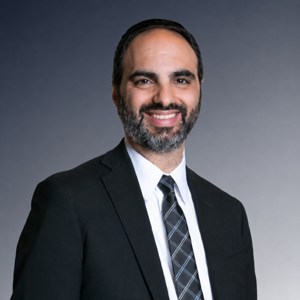
A Daily ethical teaching by Rabbi David Ashear

Best of Living Emunah

Ranked by our users in the last 21 days

More shows like Living Emunah

The Rabbi Sacks Legacy by Rabbi Lord Jonathan Sacks

The Rabbi Sacks Legacy

558 Listeners

The Israel Guys by The Israel Guys

The Israel Guys

309 Listeners

Jewish Stories to Inspire: Motivational & Spiritual Stories Based on the Torah's Ethics, Values and Wisdom by Stories to Inspire

Jewish Stories to Inspire: Motivational & Spiritual Stories Based on the Torah's Ethics, Values and Wisdom

186 Listeners

Living with Emunah by Rabbi Efrem Goldberg

Living with Emunah

109 Listeners

Meaningful People by Meaningful Minute

Meaningful People

1,986 Listeners

From the Inside Out: With Rivkah Krinsky and Eda Schottenstein by Rivkah and Eda

From the Inside Out: With Rivkah Krinsky and Eda Schottenstein

263 Listeners

The Q & A with Rabbi Breitowitz Podcast by Rabbi Dr Yitzchak Breitowitz

The Q & A with Rabbi Breitowitz Podcast

234 Listeners

Call Me Back - with Dan Senor by Ark Media

Call Me Back - with Dan Senor

3,200 Listeners

The Times of Israel Daily Briefing by The Times of Israel

The Times of Israel Daily Briefing

1,069 Listeners

Kosher Money by Living Lchaim

Kosher Money

819 Listeners

History for the Curious - The Jewish History Podcast by JLE

History for the Curious - The Jewish History Podcast

231 Listeners

Gedale Fenster - Podcast by Gedale Fenster - Podcast

Gedale Fenster - Podcast

398 Listeners

Honestly with Bari Weiss by The Free Press

Honestly with Bari Weiss

8,477 Listeners

Inspiration for the Nation with Yaakov Langer by Living Lchaim

Inspiration for the Nation with Yaakov Langer

1,120 Listeners

Stories Of Hope With Tzipora Grodko by Meaningful Minute

Stories Of Hope With Tzipora Grodko

324 Listeners