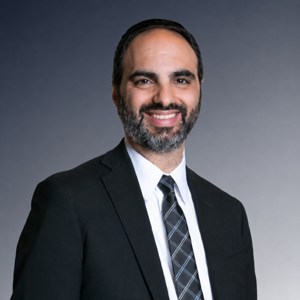
Living Emunah

Living Emunah

By Ashear, Rabbi DavidReligion & SpiritualityJudaism
Download on the App Store
  • Favorites

    26

    Followers

  • Typical duration

    6 min

    per episode

Based on Podcast App listening data

Living Emunah episodes

  • Crowning Your Friend
    As we conclude the mourning period for the 24,000 students of Rabbi Akiva, it behooves us to learn one of the lessons that Chazal told us we are supposed to take from their deaths. The Gemara says they died because they did not give each other the proper kavod . They were great Torah scholars and most certainly did not belittle each other. But they were held accountable for not honoring each other the way they were supposed to. Chazal tell us when a person stands in judgment in front of Hashem after 120, he is going to be asked if he crowned Hashem king and if he crowned his friend king. This means that Hashem expects us to view others as if they are kings. A Jew is compared to a Sefer Torah . The same respect we have for a Torah, we have to have to our fellow man. The Torah calls us children of Hashem, and we must respect people accordingly. The Mishna in Pirkei Avot tells us, when we talk to people, we are supposed to make them feel that we are so happy to be able to speak with them. Rabbi Dessler writes, included in the concept of דרך ארץ קדמה לתורה is that a person has to feel obligated to give every person that he meets the honor that is befitting him. The Gemara says about Rabban Yohanan Ben Zakkai that he knew every facet of Torah. He even knew the conversations that the angels had. He knew how to understand the language of the trees. He perceived the full depth of Hashem's Heavenly Chariot. Yet, even while he was engrossed in Torah, walking the streets, listening as well to the birds talking and the trees talking, the Gemara testified that in his entire lifetime nobody ever greeted the Rabbi first, including gentiles. Although the Rabbi had so much kedusha and was so busy with his Torah, he understood his obligation as an Eved Hashem to give every person the honor that he needs, which includes giving them a warm greeting. Everybody wants to be recognized. Everybody wants to feel important. And we have the ability to fulfill that need of others. It is not just a nice thing to do. It's a full-fledged obligation. Everyone needs to hear positive things about themselves. Everybody needs reassurance that they mean something. Even Gedolim could use chizuk . Rav Elyashiv once told his mechutan , Rav Shlomo Zalman Aurbach, that his grandfather, known as the Leshem , first put out his sefer , Leshem Shevo V'Achlama , in Yerushalayim , and nobody really grasped its greatness. When the sefer eventually reached the hands of the Ben Ish Chai in Baghdad, he told his students to get dressed up in their fine Shabbat clothing, and they were personally going to go to the house of the Leshem and thank him for putting out a wondrous sefer that will light up the world in Torah for generations to come. After they came to the Rabbi and praised him, he said afterward he wished they would have come earlier, because by this time he could have put out volume two of that sefer . This story shows us how important it is for us to say a good word to others. Even the greatest tzaddikim need chizuk . If someone would have told the Leshem how great his sefer was before, that would have given him the chizuk to write another one. As we prepare for Matan Torah , we must increase our efforts in giving other people kavod , treating them the way that Hashem wants His children to be treated.
    5 min
  • I Can't Believe I Did All This
    The best investment a person can possibly make in this world is in Torah and mitzvot. Those are the only things that are eternal. Those are the only things he can take with him when he leaves this world. Now it may not appear that mitzvot are valuable, but in the future, it's going to be revealed. The Shulchan HaTahor writes that in the future, all of a person's mitzvot will gather and appear before him. They will give off a light whose brightness is beyond comprehension. Those lights will become the clothing he will wear in Gan Eden and in Olam Haba . And when he finally sees the value in every mitzvah that he ever did, he will say to himself, מי ילד לי את אלה - I can't believe that I did all of this! The Shomer Emunim writes on the next few words in that pasuk , ואני שכולה וגלמודה , that now, especially at the end of this long exile, people feel low and don't think they are accomplishing anything with the mitzvot they do. But when Hashem shows them how much each mitzvah accomplished and the ripple effects of what they accomplished and how much they affected in the Upper Worlds, the person will be in awe seeing what he actually did. We have no idea about the effects that our actions and words have on other people. With one good deed or one word of encouragement, we can gain a lifetime's worth of mitzvot. Every person we inspire or encourage is credited to our spiritual bank accounts. We should never be shy and hold back from helping others grow in Torah and mitzvot. This is the purpose of why we were put in this world. A young man called me the other day to tell me about how much he has seen Hashem taking care of him and his family with parnasa. The hashgacha of Hashem in his life is very obvious, but what inspired me even more was the background he gave about himself before the story. He said after he graduated from yeshiva high school, he went off the derech . He slowly stopped keeping the mitzvot and then quickly spiraled downward spiritually. He got a job that required a lot of time, but he loved it because he was making a lot of money there. By the time he was 24, he was living his life completely like a goy . One day, a friend of his courageously invited him to come to a Torah class given by a very popular rabbi. He immediately declined saying that wasn't for him, but the friend persisted and each week, with a sweetness, suggested that he come with him to the class just to try it once. Finally, one week he agreed, and he enjoyed it. He went back the following week and again the following week and he felt a feeling of spirituality that he realized he was lacking. Slowly, he started becoming religious again until he became fully shomer Torah and mitzvot and he even married a religious girl. He left that job that required working from early morning until late at night and threw himself into the arms of Hakadosh Baruch Hu , dedicating more time to learning Torah. Eventually, he began learning in a full-time kollel and that is where he is right now. Hashem has supported him in miraculous ways. He is now able to earn money to support his family by working just one hour a day. Here is a man that was completely separated from Torah with nothing in his life even potentially able to bring him back to religion. And then, an old friend came along and he did not just turn the other way and say, “We lost him.” He made a hishtadlut just to try to get him to come to one Torah class and look what that turned into. B’ezrat Hashem, this young man is going to raise generations of religious children and grandchildren all because of one person who cared. Every one of us can make a difference. Every effort we make counts. We may not see the fruits of our labor now, but one day, Hashem is going to show us all the ripple effects of everything we ever did. And at that time, we will be in awe and think the words, מי ילד לי כל אלה - I can't believe that I did all of this!
    6 min
  • Parashat Behar: Immediate Reciprocation
    In this week's parasha, Behar, the Torah tells us, if the landowner recognizes that his land belongs to Hashem and he leaves his land fallow for the entire year of Shemitah, then Hashem will bless him with so much extra bounty. By not working the land, it would seem as though the farmer was going to lose, but when it comes to Hashem, it doesn't go by the way things seem. When we follow His rules, we get blessed, although the logic would dictate otherwise. Later on in the parasha, the pasuk tells us if we see our fellow Jew struggling financially, we have a mitzvah to help him and give him our own money. Here as well, it would seem that by giving, we are going to lose. But the Torah tells us again and again that by giving others, we will only gain more. Following the Torah requires a lot of Emunah. The rewards don't necessarily come right away, but that's all part of the test. Sometimes we do see immediate reciprocation, and when that happens, it gives us a lot of chizuk. A man told me last week, some of the neighborhood children were playing a game outside his house and one of them badly damaged his car. He took the car for an estimate to be fixed, and the cost of the repair came out to one thousand dollars. The man told the neighbor whose child damaged his car about it, and the neighbor said he was struggling financially and asked him to ask his rabbi what should be done. That same day, this man was in shul for mincha and was going to speak to his rabbi right after the tefila. However, before he started the amida, he felt bad for the struggling individual and was just going to let him off from paying without involving his rabbi. After mincha, he saw that he had five missed calls on his phone. He called back to see what was so urgent, and he was told that he had just won a very expensive prize in an auction. He told me it was amazing. Within one minute of his decision to let that person off, Hashem let him win back much more. הרבה שלוחים למקום -Hashem has infinite ways of blessing a person financially. Another man told he received a bill from the electric company that was way overdue and way too much for him to pay. He only had a few days left to pay it before they were going to turn off his electricity. He's a rebbe in a Yeshiva and really didn't have any way of earning extra income. He also didn't want to borrow because he was afraid he wouldn't be able to pay it back. He decided to strengthen himself in Emunah and go directly to Hashem for help. He convinced himself of how easy it would be for Hashem to give him the money. He thought about how much Hashem loves him and he was able to calm himself down. Instead of tossing and turning all night in his bed, he fell asleep calmly with the chizuk that he gave himself. The very next day, his wife called him in the middle of the day with excitement in her voice, telling him that they had just won the lottery. He said he never bought a lottery ticket. She said it wasn't really a lottery, but it felt like it. Her mother had just come to the house and dropped off an envelope that her single brother decided to give them. It was a gift of money, something he had never done before. "How much money do you think it is?" she asked her husband. Her husband didn't want to guess too high because he was afraid of being disappointed, so he said, "500 pounds, maybe a thousand." She said, "No. 8,000 pounds." They were both in awe of how Hashem sent them this money out of nowhere. Hashem could bless us in so many ways. It is our job to trust in him and follow the Torah the best way we can.
    5 min
  • We Have Gotten a Glimpse
    The Malbim, in Yechezkel perek 38 writes, one of the purposes of the final war called Gog u’Magog is for Hashem to take vengeance against all our enemies who have harmed us throughout the generations. Rabbi Shimon bar Yochai writes, in the Zohar HaKadosh, parashat Bereshit , that in the future Hashem will bring back to life all of the wicked kings who have harmed us throughout history and they will be part of this final war. It is apparent from the way Chazal interpret the pesukim discussing this war that the Jewish people will not have to fight at all. Whenever that time comes, Hashem will fight our enemies Himself. At times it may look very grim for Klal Yisrael, but we know, in seconds, everything can change. In the story of Purim, Haman was the prime minister over 127 provinces. He made a decree signed with the king's seal to annihilate the entire Jewish nation, men, women and children. At that time, Mordechai was sitting on the floor in ashes, mourning, as the gallows were being prepared to hang him upon. It could not have looked more hopeless than that. And then, in the blink of an eye, everything turned around. Suddenly, Haman was hanged on the gallows and Mordechai was elevated to become the prime minister. The Jews did not need to fight at all to get rid of Haman. Hashem took care of it from behind the scenes. In today's times as well, we have just gotten a glimpse of how Hashem can fight our battles so easily without us even having to lift a finger. Just a week ago, we were all praying for a Jew in Iran, 20 years old, who was sentenced to the death penalty for defending himself against an attacker. It seemed like a hopeless case, but we know there's always hope. After Shabbat, we got word that it was postponed until Monday. And then we got word that it's being postponed for another month and, b’ezrat Hashem, he will be exonerated. The death penalty is carried out in Iran hundreds of times a year due to its wicked leader. A leader who was responsible for firing an unprecedented number of missiles at the Jewish people just one month ago. A man who most certainly spent his days and nights plotting how to kill Jews. And then, in an instant, HaKadosh Baruch Hu rid him from the world in a helicopter crash. We did not need to carry out any secret missions to accomplish this. We did not need to fight any battles to accomplish this. כהרף עין , when nobody expected it, he was killed. As Rabbi Benzion Musafi put it, he was given all four mitot Bet Din simultaneously. This is part of Hashem avenging those who harm his nation. This is just a tiny glimpse into the Yad Hashem at the end of days. B'ezrat Hashem, there will be open miracles to come. כן יאבדו כל אויבך ה'. אמן כן יהי רצון .
    4 min
  • It Matters
    The mishna in Pirkeh Avot says, in the name of Rabbi Shimon Bar Yochai, that if three people sit down and eat at a table and nobody says a word of Torah, it's considered as if they ate from food that was used in the service of an idol. This is an astonishing statement. This means even if the people ate without speaking one word of lashon hara and no other forbidden speech, even if they just sat there quietly the entire meal, it's considered as if they ate the worst kind of tumah, impurity. What could be worse than idol worship? But the mishna continues, If they do speak words of Torah, then it's considered as if they ate at the table of Hashem Himself, the holiest form of eating possible. This means that to transform a meal from avoda zara to sitting with Hashem, what does it take? Someone to say one word of Torah. Rabbi Yaakov Sofer pointed out from here how powerful a word of Torah is. Sometimes people feel that they learn and learn, but they don't see any change in themselves. This mishna is coming to give them chizuk. We are inside of a physical body, and it's hard for us to feel the spiritual growth that we gain from Torah and mitzvot. But it's a reality. One word of Torah could elevate the worst form of tumah into the greatest kedusha. How much more so does it have an effect on our neshamot that are already in the holiest of realms! We don't have the eyes to see, but everything we do spiritually brings about kedusha and even physically changes things for the better. The mishnah says, every mitzvah we do creates a heavenly advocate for ourselves. If a person says a beracha properly on his food, he creates an angel. If he had spiritual eyes, he would see the angel appear right in front of him and then fly up to shamayim to be an advocate for him now and after 120. Rabbi Zamir Cohen said a study was done in Israel about the physical effects that a beracha has on a cup of water. They took seeds and put them in the same environment. Some of them were watered with water from the tap, and the others were watered with water that had a beracha said upon it. Two weeks later, they saw a major difference in the two, with the water that had a beracha clearly producing much more growth than the other one. So if the water which had a beracha said upon it affects the growth of a plant, how much more so does it do to the body of the person who said the beracha on it? If a person is, let's say, walking in the street and sees an acquaintance of his who looks sad, and he says a couple of words to cheer him up, he just created an angel who is going to help him for all eternity. The same applies to every single mitzvah that we do. The more difficult the mitzvah is, the more powerful the angel is. If a person says divrei torah at his table all the time and uses his table properly, the table itself will go up to shamayim and stand for him in his judgment after 120. Rabbi Yehuda Tzadka said on the words of the pasuk: זה השולחן אשר לפני ה ', the table itself will stand in front of Hashem to testify on the person's behalf. Everything we do matters. We may not see it now, but the effects are there and we will see them in the future. If a person utilizes his time here and learns Torah and does mitzvot, he is benefiting himself both in this world and the next.
    5 min
  • Maintaining Emunah
    A woman told me that a couple of weeks ago, her child turned on the shower and a few minutes later, water was pouring through the ceiling of their basement. They called the plumber the next day, but he couldn't figure out where the leak was coming from. They called a second plumber, who opened up some walls, and even with that, was not able to find the source of the leak. It was obviously very frustrating not being able to use their shower and not knowing if and when it will be repaired. Being that this woman is a teacher in school, she decided to use the experience to teach her class a lesson in emunah. She told the class about the challenges that Hashem sends in life and how we're supposed to accept them and recognize that they are for our best. She spoke about rising to the occasion and understanding that Hashem could always bring the salvations in an instant. She then left off with her class that she will let them know how she does with her current nisayon . This experience helped her strengthen herself in emunah and happily accept what she was going through. That same day, her husband told her he donated $5,200 to an organization in the zechut that Hashem helps them with their plumbing issue. That night, they decided to try the shower and see if the problem was solved, and amazingly, it was. There was no leak. The next day, they all used the shower in preparation for Shabbat, and again, no trace of a leak. They told the plumber, and he didn't believe them. He said, leaks don't just fix themselves. They, however, said to themselves, it's true, leaks don't fix themselves, but Hashem does fix them. The woman was so excited to tell her class on Monday of the amazing miracle that Hashem did for them. Two days later, the woman's housekeeper quit. They had her for quite some time and were very dependent on her. With both her and her husband working full days and, baruch Hashem, a household of little children, this was a blow to them. Initially, the woman wanted to complain, but then she stopped herself. She reminded herself of how the Jewish people openly saw the hand of Hashem in Mitzrayim and in the desert, and yet, many of them still complained when things got tough. She was always baffled, asking, “How could it be that people who saw Hashem openly could ever complain about anything?” And now, she applied that to herself. She said, “I just saw Hashem openly in my life, and I'm ready to complain.” She used that thought process to give herself chizuk , and she held back from complaining. Rather, she was able to accept that the housekeeper quitting came directly from Hashem for her best, and once again, Hashem was waiting for her to respond the right way. That night, she went to sleep completely calm and said, “I know Hashem could give me a housekeeper that's better in every way than the one I had.” Sure enough, just a few days later, that housekeeper was found. The woman is so much happier with the new housekeeper than the one she had previously. Everyone is tested in different ways. Some people may say, “I wish my test was which housekeeper I'm getting.” Nobody should ever feel they want anybody else's test or what anybody else has. Hashem gives every person exactly what they need to do their job. If we go through the challenges that Hashem sends us the way that Hashem wants us to, then we will always be successful, no matter what the outcome is. We love to see yeshuat Hashem, but even if we don't see it, we should be happy with the knowledge that we maintained our emunah in any given circumstance and understand that that is the best gain we can possibly have.
    5 min
  • Overcoming Our Tests
    Overcoming very difficult tests are great ways of accessing extra beracha . When our natural inclinations are pushing us very hard to react in an animalistic way, we must pause for a moment and remember, it's Hashem testing us with a big test because He wants to bless us. The tests are hard, but that just makes the rewards even greater. The sefer Or David told a story that involved the Chacham Tzvi, Rav Tzvi Ashkenazi in his younger years. When he was learning in Yeshiva after high school, he stayed at the home of a very wealthy man. Because Rav Tzvi was such a diligent student, he would arrive back to the house at very late hours of the night. Besides the fact that the family was generally unhappy housing this boy, they especially got irritated when they heard him coming back late at night, sometimes waking them up. They would constantly ask their father to send the boy somewhere else. But the father just remained silent. This went on for months until one day the father himself couldn't take it anymore. It was that day that he had a big business issue and was already very irritable. That night he said some nasty words to the young Rav Tzvi and even though he didn't outright ask him to leave, it was apparent from his words that they weren't happy with him being there anymore. Right after he spoke nastily, he regretted it. He went over to the boy afterward and sincerely apologized. It was just moments later that evening that a couple of leaders from another community came knocking on the door to ask if the young Rav Tzvi would become the Av Bet Din of their city. The young Rabbi agreed and was going to move the next day to that city. When the Rabbi left, he told the homeowner, “It was deemed in Shamayim how long I was going to stay at your house. Yesterday was the last day and that was the day you were tested the most. If you would have held back for one more day and not complained about what my learning caused your family, you would have been zocheh to children and grandchildren who would become great in Torah. You will still have children and grandchildren with tremendous wealth, but none of them will become talmidei chachamim .” And that is exactly what happened as testified to by people from later generations. A few years ago, a Palestinian missile landed directly on the home of a large family in Ashdod. Baruch Hashem, no one from the family was there at the time, but their house was completely destroyed. They needed about nine weeks of renovations to make it livable again and the family was stranded without an apartment. Someone told a man in Tzfat about them. He had an apartment he had been trying to rent out for the past year. He said he would be happy to let them live in it until he found a tenant. He even gave it to them free of charge, but said if he would find a tenant, they would have to go. They moved their stuff to Tzfat and settled in this apartment. And after just two days, a renter appeared. It had been a whole year without finding someone and now, right after this family moved in, they did. The renter was asked if he could wait a couple of months. He said he needed the apartment immediately. He even offered to pay rent for two years, the entire amount in cash up front. It was too good to be true. The family from Ashdod was close with Rav Chaim, zatzal and they told him the details of what had transpired. Rav Chaim said, “Tell the owner, if he lets you stay in the apartment, he'll gain much more than he'll gain from this renter.” When the owner was told of this, he said he has emunat chachamim and turned down the rental agreement. A month later, the landlord received a check in the mail for 75,000 shekels. Years before, there was a windstorm in Tzfat and his property was damaged. His insurance company denied the claim twice and his lawyers told him to just drop it. They made it clear there was no chance of them ever changing their decision. And now, this check arrived with a letter explaining they decided to reopen the case and ruled he was entitled to the money. The tests in life are hard, but when we overcome them, we always win.
    6 min
  • Don’t Overlook
    Although we have been learning about how valuable it is to accept and thank Hashem for the way He deals with us when things don't necessarily go the way we want, we cannot forget about thanking Him when things do go the way we want. We are not only supposed to thank Hashem when a problem arises. We should thank Hashem and praise Him constantly for the endless chesed which He bestows upon us. In the very same Chazals which tell us to thank Hashem for the “bad”, somehow we sometimes forget and overlook the parts that tell us to thank Him for the good. One example, the pasuk says in Tehillim , חסד ומשפט אשירה , which Chazal tell us means that David HaMelech did not only sing to Hashem when he experienced His open chesed , he even sang to Him when he experienced what appeared to be the opposite of chesed . Usually, when that Chazal is quoted, the speaker ends up talking about thanking Hashem for the difficulties. But we can't forget about the first part of the Chazal . David HaMelech also sang to Hashem every time he experienced something good, חסד אשירה . On the pasuk which tells us to love Hashem בכל מאודך , the Chazal tell us, בכל מידה ומידה שהוא מודד לך הוי מודה לו במאד מאד . Whatever Hashem sends a person's way, he is supposed to thank Him for very much. On this Chazal as well, we tend to focus on the part that tells us to thank Hashem for the “bad”. But we must not lose sight of the words בכל מידה ומידה , for the good as well. We have to thank Hashem very much. The Shomer Emunim quotes the Midrash in Tehillim perek 100 which tells us that if a person thanks Hashem for the good that he receives, it's considered as if he's bringing a korban todah in the Bet HaMikdash , and he brings upon himself and the entire world more chesed from Hashem. The Yesod V'Shoresh HaAvodah used to thank Hashem for every little chesed that he received. He would first acknowledge that every little chesed came from Hashem, and then he would thank Him for it. He gave examples to his children about how he thanked Hashem. He wrote, on one occasion, when a glass that he was holding fell on the floor, it didn't break. He thanked Hashem for the chesed he just did for him. He realized it was Hashem who decided to leave the glass intact. It doesn't have to be that when a glass falls, it breaks. Whatever Hashem wants to happen is going to happen. On another occasion, he passed by a dangerous place and didn't get harmed, and he thanked Hashem for protecting him. The Chozeh M’Lublin had a revelation from Shamayim about how precious this avodah was to Hashem. Hashem loves when people thank Him, especially for every little thing that they receive. Chazal tell us, Yosef HaTzaddik always had the name of Hashem on his lips. He constantly asked Hashem for help, and then would thank Him afterward. And that is why, בכל הוא עושה ה- מצליח בידו - Hashem brought success to everything that Yosef did. Here, the Torah and Chazal are teaching us the recipe for success. Constantly asking Hashem for help, and constantly thanking Him afterward. Chazal also say, if someone had a miracle performed on his behalf, it may take away from his merits in the Next World. But if he sings to Hashem and thanks Him for the miracle, not only will he not lose zechuyot , he will even gain atonement for all of his sins and become like a newborn. Look at the power of recognizing and thanking Hashem for the good! Every time we say thank you for anything we get, it brings so much joy to HaKadosh Baruch Hu . He wants us to recognize all the good that He does. An individual who is looking to thank will find more and more reasons to thank Hashem. And he'll also realize how much blessing he truly has.
    6 min
  • Private Miracles
    Even when Hashem makes open miracles, He keeps nature intact for everybody who is not affected by the miracle. The Maharal writes regarding Kriyat Yam Suf that besides for the moments that Hashem split the waters across the entire world; during the Kriyat Yam Suf , only the people involved in the miracle were able to witness it. If there would have been a boat traveling through the Yam Suf at that time, while the Jews were passing through, the boat would have been able to sail across just like it would have on any other day. When Hashem brought the makah of darkness upon the Egyptians, for everybody else it was still light out. When Hashem stopped the sun in the sky for Yehoshua, for the rest of the world, He kept it on its normal path. If this is the way that Hashem does open miracles, how much more so when He performs private miracles. Hashem helps people in their own lives in miraculous ways, and He keeps it hidden from everyone around them. During the Holocaust, the Nazis, yimach shemam , made the Jews jump across large trenches that they themselves had to dig. If they made it across to the other side, they would be allowed to live, but if they fell short, they were killed on the spot. A certain electrician testified he was there together with the Bluzhever Rebbe, who at that time was completely emaciated. Most of the Jews were too weak to make any kind of big jump, let alone across a very large trench. When it was the Bluzhever Rebbe's turn, he closed his eyes and made the leap. It was truly miraculous how he glided to the other side. None of the Nazis were moved by the open miracle, because Hashem did not allow them to realize it. But this electrician saw with his own eyes how Hashem carried the Rabbi through the air. He was so inspired himself that he took the chizuk , and with all of his strength, he was also able to get to the other side and he lived to tell the story. The Shomer Emunim writes in his ma'amar Hashkacha Pratit perek 22, one of the ways that a person is zocheh to get extra help from Hashem is by believing in His hashgacha pratit in every detail of the person's life. The more a person attributes everything that happens to him as coming from Hashem, the more Divine Providence he'll receive. He writes that every mitzvah carries with it a certain segula , and the segula that comes along with the belief in hashgacha pratit is that it brings extra help and protection from Hashem. He writes further, even if the entire world would have to endure a certain affliction, if a person's belief in Hashem's hashgacha is ironclad, he will be protected from it. And not only that, in the zechut of his belief, he will cause Hashem to deal with the world with His middah of mercy, which will, in turn, sweeten the judgments for so many people in Klal Yisrael . Which means, when this person goes up to Shamayim after 120, he will find that he was credited with helping countless individuals just from his emunah alone. In order for a person to merit all of these blessings, he has to train himself to attribute everything that happens in his life as coming from Hashem. Everything good that happens to him and every affliction that happens to him. If someone tells him something that hurts him, he has to believe it was from Hashem. If someone is delaying him when he's in a rush, he has to believe that is from Hashem. If someone denies his request, he has to believe it's from Hashem. And if someone accepts his request, he has to believe it's from Hashem. The list goes on. The job is not easy, but the rewards are endless. May we all be zocheh to have this type of emunah in Hashem's hashgacha pratit always.
    5 min
  • Parashat Kedoshim: Bringing Holiness into Your Life
    The pasuk tells us in this week's parasha, קדושים תהיו . And Rashi writes, this is a command to distance ourselves from forbidden relationships. And the more fences we put up to protect ourselves from them, the more kedusha we bring into our lives. A few pesukim later, the Torah speaks about what's called pigul . If during one of the four main services of a korban , the kohen who is performing them, thinks about a disqualifying thought, it ruins the entire korban . The mefarshim tell us we see from here how important even the thoughts of a person are. A person may think, “What's the big deal? It's just a thought.” The Torah is teaching us, an entire korban can become disqualified with just one thought. A person's thoughts are his essence. We think with our neshama . Our thoughts are directly connected to Hashem. And thus, we find the Torah giving special commandments on thoughts alone. The pasuk says, ונשמרתם מכל דבר רע , which Chazal tell us means, we must keep our thoughts pure, and are prohibited from thinking about a forbidden relationship. The purer our thoughts are, the more holiness we bring into ourselves, and the more connected to Hashem we'll be. Furthermore, when a person guards his thoughts, he is considered to have a high level of emunah. Although thoughts are so private, and the way it seems, is that nobody else could possibly know what a person is thinking about. Someone who's guarding his thoughts is saying, “I know Hashem knows every thought that passes through my brain, and I'm going to act accordingly.” Part of protecting our thoughts is protecting ourselves from what we see. Especially in today's times, this is a very big challenge. And because the test is so difficult, it makes the rewards that much greater. Every time a person turns away from seeing the wrong thing, he becomes more kadosh , and stands out above the crowds in the eyes of Hashem. When we do extra things to protect ourselves, it makes Hashem even prouder. A man told me, his extended family rented a few homes in a secluded area for Pesach. They set up their own shul and Bet Midrash there for the week and had a very uplifting experience. On the first day of Chol HaMoed, they went to a secluded beach, and while playing in the ocean, one boy accidentally knocked off another boy's glasses. The boy whose glasses got knocked off had terrible eyesight and can't see a thing without his glasses. They searched and searched, but no one was able to recover them. After much effort, they finally gave up, and this boy was left to spend the rest of the holiday there without his glasses. He did not have contact lenses either. Each day in shul, after Shacharit, a different person was appointed to prepare a Devar Torah to give to everybody else. The next day, the rabbi who was speaking, gave a shiur about the Shevi'i shel Pesach , and he spoke about the abilities of Hashem. He told everybody, “If we had real emunah, we would believe that Hashem could give us back so-and-so's glasses, even from amidst the enormous ocean.” That day, most of the boys once again went to the beach, but this time there was somebody there, and the person was not dressed properly. They walked for at least a quarter of a mile down the beach and set up their game there. While they were playing, one of the mothers came and told them that they were too close to that person dressed improperly. Although she was extremely far from them, they picked up and began walking even further away. While they were walking, somebody noticed what appeared to be a pair of glasses half buried in the wet sand. They picked them up and brought them back to where they were staying and gave them to that boy. It was indeed his lost glasses! They were all in awe of how Hashem brought the glasses back. The rabbi told everybody, it was in the zechut that they were willing to be extra careful and move even further away to protect themselves from potentially seeing the wrong thing. The more we protect ourselves, the more kadosh we become. Shabbat Shalom.

    6 min

About Living Emunah

From the publisher's feed

A Daily ethical teaching by Rabbi David Ashear

Best of Living Emunah

Ranked by our users in the last 21 days

More shows like Living Emunah

The Rabbi Sacks Legacy by Rabbi Lord Jonathan Sacks

The Rabbi Sacks Legacy

558 Listeners

The Israel Guys by The Israel Guys

The Israel Guys

309 Listeners

Jewish Stories to Inspire: Motivational & Spiritual Stories Based on the Torah's Ethics, Values and Wisdom by Stories to Inspire

Jewish Stories to Inspire: Motivational & Spiritual Stories Based on the Torah's Ethics, Values and Wisdom

186 Listeners

Living with Emunah by Rabbi Efrem Goldberg

Living with Emunah

109 Listeners

Meaningful People by Meaningful Minute

Meaningful People

1,986 Listeners

From the Inside Out: With Rivkah Krinsky and Eda Schottenstein by Rivkah and Eda

From the Inside Out: With Rivkah Krinsky and Eda Schottenstein

264 Listeners

The Q & A with Rabbi Breitowitz Podcast by Rabbi Dr Yitzchak Breitowitz

The Q & A with Rabbi Breitowitz Podcast

235 Listeners

Call Me Back - with Dan Senor by Ark Media

Call Me Back - with Dan Senor

3,202 Listeners

The Times of Israel Daily Briefing by The Times of Israel

The Times of Israel Daily Briefing

1,070 Listeners

Kosher Money by Living Lchaim

Kosher Money

819 Listeners

History for the Curious - The Jewish History Podcast by JLE

History for the Curious - The Jewish History Podcast

231 Listeners

Gedale Fenster - Podcast by Gedale Fenster - Podcast

Gedale Fenster - Podcast

398 Listeners

Honestly with Bari Weiss by The Free Press

Honestly with Bari Weiss

8,478 Listeners

Inspiration for the Nation with Yaakov Langer by Living Lchaim

Inspiration for the Nation with Yaakov Langer

1,121 Listeners

Stories Of Hope With Tzipora Grodko by Meaningful Minute

Stories Of Hope With Tzipora Grodko

325 Listeners