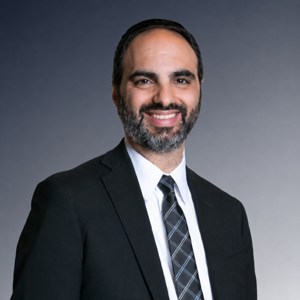
Living Emunah

Living Emunah

By Ashear, Rabbi DavidReligion & SpiritualityJudaism
Download on the App Store
  • Favorites

    26

    Followers

  • Typical duration

    6 min

    per episode

Based on Podcast App listening data

Living Emunah episodes

  • Struggling with Parnasa?
    Hodu La'Hashem Ki Tob ! for iPhone users https://apps.apple.com/us/app/ itorah-watch-listen-stream/ id6472929090 for Android users https://play.google.com/store/ apps/details?id=com.itorah.app Everything Hashem does is good, even though sometimes we can't imagine how that could be so. If a person is struggling financially, having trouble supporting his family with their basic needs, he can't see how that could possibly be good. The Shomer Emunim in his derush on bitachon perek 7 quotes from the Baal HaTanya that people who struggle a great deal with parnasa and accept it with love from Hashem gain more from that than tzaddikim who serve Hashem their entire lives with the least amount of physicality possible. It could be that a regular righteous man with a big family struggling with parnasa is becoming more purified in this world with his struggle than even a tzaddik whose life is learning Torah with little physicality, but his needs have been taken care of. The Shomer Emunim adds, of course, this is not talking about someone struggling with parnasa to keep up with his indulgence in Olam HaZeh . We're talking about a person who just wants to get by comfortably, and even with that he struggles. Every little bit of suffering that a person goes through comes from the mercy of Hashem. The Shomer Emunim writes there, sometimes Hashem wants to give a person a big gift or a salvation for a big problem but the way things stand it wouldn't be good for him to get it. So Hashem, in His infinite kindness, will give the person certain afflictions or a loss of money that will make his position ideal for him to receive that gift. Every little bit of suffering cleanses a person and elevates him to a higher level. However, in order for the yissurin to do its full job the person needs to accept it without complaint. The power of accepting yissurin is unbelievable. A man told me he was recently walking and his heel started hurting a lot. It kept getting worse and worse until he couldn't continue walking. He sat down and then remembered all of the emunah lessons he had been learning. He decided to accept the pain with love, and he thanked Hashem for it and asked that it should fulfill its purpose. Thirty seconds later, the pain disappeared. He got up and continued walking like nothing happened. Sometimes Hashem wants to help a person with his spiritual growth and enable him to fulfill his purpose in this world. Yet the way things are, he does not merit to get that help. So Hashem will cleanse him with yissurin to make him worthy. The more a person accepts the yissurin with love, the less he needs of them. If a person is able to not only accept but to even be happy with the yissurin, then the afflictions themselves produce such a great and awesome light. All of the negative forces in this world become gripped with trepidation when they see the great light coming from the person who is happy with his yissurin . Sometimes Hashem lets a person see with his own eyes at least one aspect of why his yissurin were good. A person has millions of benefits that come from his yissurin but seeing even one of them is a great chizuk . A man told me, ten years ago he was struggling so much with parnasa and nothing he was doing at work was helping anyway. So he decided to learn half a day. That decision changed his life for the better in every way possible. Shortly afterward, his business picked up. Today he is still learning half a day. He looks back at that struggle as the greatest chesed that Hashem ever did for him. Everything Hashem does is good. If we believe it, accept it and are even happy with it, it makes the yissurin become infinitely more valuable.
    5 min
  • The Main Beneficiaries
    The good deeds we do for people eases their minds and helps them continue on with their lives happily. The Gemara in Baba Batra says, whoever is constantly doing acts of tzedaka will merit to have children who are wise in Torah and financially secure. When a person is asked to help others, there's a natural yetzer hara that tries to dissuade him by telling him what a burden it's going to be. Our Chazal have given us ammunition to fight this yetzer hara by telling us how much more we gain when we help others. Rabbi Tzvi Nakar told a story about a woman who was married for six years without children. Her neighbor passed away from a serious illness leaving four orphans. The children's father was not completely functional. And so, heroically, they accepted to take care of the four orphans as their own. Miraculously, soon thereafter, without any medical intervention, she and her husband merited to have their own children, and baruch Hashem, they had many, many children. They took care of the orphans as well as their own children, and eventually they married off all four orphans. One Shabbat, they went out of town and allowed others to use their apartment while they were away. One of the guests carelessly lit her Shabbat candles on a plastic surface in one of the bedrooms, and it caught fire and spread very quickly. Baruch Hashem, nobody was harmed, but the apartment got destroyed. The owners of the home had no hard feelings towards them. They were the ones calming their negligent guests down, saying it was all min haShamayim , and they accepted it with love. In the fire, another miracle took place. Everything was burned except for the room in which the orphans slept. That room did not even have the smell of fire. In addition, there was a closet in a different room that had two shoe drawers at the bottom, which held the orphans' slippers. The entire closet got burned except for those two drawers. It was as if the orphans created a protective wall around everything that was theirs. After the fire, this family had incredible siyata d’Shamaya . A contractor offered to rebuild their apartment at cost price. A man who sold building materials, said that he wanted to donate all the materials for free. During the rebuilding, they added on three new rooms. Today, they have a large, spacious apartment with all of their children living happily in it. The fire was actually the catalyst for their brand new, large apartment to come about. They did a tremendous chesed in raising four orphans, and Hashem gave them children as a result. They did a chesed of lending out their apartment, which initially seemed to cause a loss. But in the end, Hashem only enlarged their apartment from it. The main beneficiaries of any chesed are always the ones who are providing the chesed .
    5 min
  • Parashat Bamidbar: Our Greatest Gift
    For a 20% discount on Rabbi Ashear's new book on THE TEENS BOOK click the link below https://www.artscroll.com/ Books/9781422640289.html On June 11th, Erev Shavuot, Rabbi Ashear will be starting Mishna Berura on the Laws of Shabbat. No better time to join and show your commitment to the Torah. Click on the link to join this program. https://chat.whatsapp.com/ EJFtV50LPJq44X7o0nthnN Today's Lesson dedicated for the Refuah Shelema of Shlomo Zalmen Ha'Levy ben Golda At the end of this week's parasha, Bamidbar , the Torah begins to count Shevet Levi for the purpose of working in the Mishkan for people between the ages of thirty to fifty. The family of Kehat was counted first, followed by Gershon and then Merari. The Midrash asks, usually the Torah gives preference to the bechor , who in this case is Gershon, so why is Kehat counted before him? The Midrash answers, because the children of Kehat carried the Aron HaBrit , which had the Torah inside of it. And the Torah is more important than the bechor . The Kli Yakar asked, why was Kehat chosen to carry the Aron and not Gershon? Shouldn't Hashem have given precedence to the bechor to have this honor? The Kli Yakar answered, that if Gershon carried the Aron and he was counted first, we would not have seen that it's the Torah that gave him precedence, we may have thought it was his bechor status. Hashem wanted it to be clear to all that it is the ma'alah of Torah that supersedes everything. Another reason why Gershon didn't get it is because Hashem wanted to teach us that the crown of Torah can be gotten by anyone. You don't need to have special lineage. You don't need to be a bechor . The greatest crown of all is available to anyone for the taking. As we prepare for Shavuot, we are to take to heart the message that the Torah is the greatest gift ever given. It is incumbent upon us to give honor to the Torah and to those who learn it. Those who learn it most know what real kavod HaTorah is. Rav Chaim Kanievsky zatzal once related that in the Chazon Ish's day, there was a great need for money to help those observing Shemitah properly. The first Shemitah after the war in 1948 was going to take place in 1951. At that time there was a lot of poverty and the farmers were having a hard time getting motivated enough to keep Shemitah that year. The Chazon Ish wanted to help them with their test and give them peace of mind by raising money on their behalf. So the Chazon Ish sent Rabbi Zelig Shapiro to handle this issue and raise the funds. A rich man in Tel Aviv told Rabbi Zelig he was prepared to cover any amount the Chazon Ish wanted, on one condition. He wanted the Chazon Ish himself to come to his house for a gathering and he would give him the money at that gathering. Rabbi Zelig was so excited, his legs carried him quickly back to the Chazon Ish's house to relate the good news. He was going to be able to get all the money in an easy way. No going around knocking on doors, no explanations and requests for donations. When Rabbi Zelig arrived at the Chazon Ish's house, he told him about the wealthy man and then told him of the condition and respectfully asked, “Can I tell him that the Chazon Ish will come?” To his astonishment, the Chazon Ish said, “Absolutely not. I should go there just to receive money? That would be a dishonor to the Torah, and it is forbidden to do such a thing.” The Chazon Ish did not go, and the wealthy man did not donate the money. The fundraising campaign continued with a lot of difficulty. In this story, there was no miraculous ending. Nobody else stepped up to give the large donation that this man would have. Not every story has to have a miraculous ending. The greatest part of this story is that the Chazon Ish would not bend one inch when it came to kavod Torah . No matter how much money was depending upon it. That is true emunah, following what Hashem wants under all circumstances. B’ezrat Hashem, this should give us a new appreciation of what Kavod Torah is and how Gedolei Yisrael make decisions. The Torah is our greatest gift and we have to treat it that way, as well as those who learn it. Shabbat Shalom.
    5 min
  • What Matters Most
    For a 20% discount on Rabbi Ashear's new book on Parnassah click the link below and enter Promo Code - Emunah20 https://www.artscroll.com/ Books/9781422640708.html On June 11th, Erev Shavuot, Rabbi Ashear will be starting Mishna Berura on the Laws of Shabbat. No better time to join and show your commitment to the Torah. Click on the link to join this program. https://chat.whatsapp.com/ EJFtV50LPJq44X7o0nthnN A man recently asked me for chizuk regarding his financial problems. He did not have the funds to cover his mounting expenses. He was getting very anxious and worried. I told him about our main purpose in this world and how Hashem creates situations for people to be in and expects them to go through them with emunah the way He told us to. The Jewish people reached the highest levels when they followed Hashem into the desert not knowing how they would be able to feed their large families. Hashem considered that act a personal chesed that they did for Him, and they will be rewarded eternally for it. Life is a cycle. Sometimes a person has extra and sometimes he doesn't have enough. Everybody somehow manages to get through life. What matters most and what lasts forever is the emunah the person displays while he is going through a challenge. On one hand, we have to feel calm knowing that we are in Hashem's hands. He is controlling the circumstances. He knows about the expenses, and He will deal with them in the best way possible. At the same time, we must hope that Hashem will help us potentially in ways we could have never thought of. Hashem takes care of every person in their own way. A rabbi told me his daughter needed braces which was going to cost over $6,000, money he did not have to spare. Their health insurance already denied the request twice and they were at a standstill. Somebody mentioned that a new office was opening in their neighborhood with a selection of dentists to choose from. There was a highly acclaimed dentist joining that practice, but he took a different insurance than they had. Under the rabbi's current plan, he was able to switch providers and so he immediately switched. The next day, he called for an appointment with this dentist for his daughter and was told the odds were highly unlikely that he would ever get an appointment to see him. So he called back the insurance company and asked to please switch back to what he had. They told him no problem, they would do it. But a week later, he received the cards for the new insurance. That day, they had an appointment with their current dentist. When he saw their new insurance card, he encouraged them to apply to this insurance for coverage for braces. They did and, baruch Hashem, this insurance company approved it. The rabbi was so thankful. He said Hashem caused him to switch insurances just to get the braces paid for. The same rabbi said the yeshiva he was teaching in no longer needed him after Pesach as most of the boys from his class moved on to different yeshivot. He really needed the parnasa but how would he find a job towards the end of the school year? Right before Pesach, he was cleaning out his pockets and going through old papers. He found the number of a rabbi who had asked him to work in his yeshiva four years ago. He decided to call the number and see if there was anything available. The rabbi apologized saying that at that time there was nothing available. But amazingly, the next day that yeshiva decided to split a class in two and they needed an additional rebbe to take one of the classes. The rabbi was called and he happily agreed. Hashem made him find the number of a rabbi from a yeshiva who He knew was going to have an available job for him. Hashem has infinite ways of helping people. Our job is to always maintain our emunah during the struggle and hope and pray for Hashem to bring a yeshua .
    5 min
  • Every Minute of Life
    For a 20% discount on Rabbi Ashear's new book on Parnassah click the link below and enter Promo Code - Emunah20 https://www.artscroll.com/ Books/9781422640708.html On June 11th, Erev Shavuot, Rabbi Ashear will be starting Mishna Berura on the Laws of Shabbat. No better time to join and show your commitment to the Torah. Click on the link to join this program. https://chat.whatsapp.com/ EJFtV50LPJq44X7o0nthnN Hashem values life so much. The halacha says that if a person has a condition that is potentially life-threatening, it's a mitzvah to desecrate Shabbat to save his life. The quicker people act to help him, the more praiseworthy they are. If there is any risk of life, a person is not even allowed to ask a rabbi if it's permitted to desecrate Shabbat because every second counts. There are many details to these halachot and everybody should learn them. But from this one halacha , we see the value Hashem gives to life. Even though violation of Shabbat is one of the most severe sins in the Torah, when it comes to life, it's even a mitzvah to desecrate it. Every second counts. A Hatzalah member told me he received a call from a shul. When he arrived, the rabbi there told him that a congregant looked very bad. The man was sweating and experiencing chest pains. The Hatzalah member immediately recognized that this man was having a heart attack. The man told the Hatzalah member he was not going to a hospital under any circumstances. The Hatzalah member tactfully told him to just step outside for some air. While they were outside, he gave him medication that would slow down the process of any further artery clogging. Then, an ambulance pulled up and the man was asked to get on just to take an EKG. The test showed that he had full blockage in one artery and majority of another. The Hatzalah rushed him to the hospital, and he was immediately taken in for surgery. His heart stopped while on the operating table, but baruch Hashem, they were able to revive him and save his life. The surgery was a success, and the man was able to go home just two days later. The doctor said afterward, if this man was not given medication to slow down the heart attack and was not rushed to the hospital like he was, he would not have survived. The Hatzalah member who arrived first and administered the medication told me that this particular case was especially dear to him. Over twenty years ago, when he was in day camp, he was very shy and had a hard time making friends. A young man who worked in the kitchen, who was his brother's friend, took him under his wing and made sure to help him have friends. He would call him into the kitchen occasionally and give him ices to give out to the boys and it was only because of him that this Hatzalah member was able to make friends then and keep them. Now, over two decades later, this Hatzalah member was the one who administered the medication to this same man who had helped him in camp live a happy life. Now the Hatzalah member helped this man continue on with his life. Hashem works in amazing ways. Every deed we do is remembered and rewarded. Every minute of life is valuable. Hashem values our lives so much and we have to do the same.
    4 min
  • No One Can Touch It
    For a 20% discount on Rabbi Ashear's new book on Parnassah click the link below and enter Promo Code - Emunah20 https://www.artscroll.com/ Books/9781422640708.html The Gemara says in Masechet Yoma , daf 38, that a person cannot touch what is meant for someone else. Whatever Hashem decrees a person should get, he will get. If we take this Gemara to heart, it will save us a lot of potential anguish in life and will also give us motivation to always do what's right. Sometimes we have an opportunity to make a certain business deal or buy a certain house and somehow things fall apart. And then we start second-guessing what we did and think if we had acted differently, things would have turned out differently. This Gemara teaches us, what happened was what was meant to happen and no matter what we would have done, the same results would have occurred. A man from Bnei Brak related, he was on his way to a bris one morning, and he noticed a nice chair in great condition that was placed by the curb. He had the same exact chairs in his house and needed another one. As he was walking towards it, he noticed someone else who seemed interested also walking towards it. He said to himself, “If someone else wants it, I don't want to cause him anguish by taking it first even though I know that I saw it first.” So he continued walking and went to the bris. On his way back, he saw the chair was gone. He kept walking and then saw an old acquaintance of his. The acquaintance said he found a beautiful chair that was left for taking and he saved it for someone who might want it. He then offered it to him. They went into his building together and saw it was the same chair. That other guy never took it. The acquaintance said he had a car and would be happy to drive it to his apartment. The man was so happy to see whatever is meant for a person he will get. By giving in, he even saved himself the burden of having to carry it home in the hot summer. A principal in a Talmud Torah related that he was happy with all of the rebbes who taught in his school, except for one. That one somehow always forgot everything he was told to do and the principal wanted to fire him. But that rabbi's students learned so well and the parents really liked him, so the principal never brought himself to do it. Baruch Hashem, their yeshiva was growing and they needed a new building. One day, a very wealthy man came down to the yeshiva to take a tour and see if he wanted to donate to the new building project. The rebbe, who the principal was not so fond of, had made a deal with his class that if they all did well on a test, he would let them turn over their chairs in the classroom and drive them like cars and have a game of bumper cars with them. That day, when the wealthy man came down to the yeshiva, was the day that this rebbe let his class play bumper cars. When the principal brought the wealthy man to the classroom, he was horrified by what he saw: twenty boys riding their chairs on the floor across the room with the rebbe participating. He tried to excuse the scene to the wealthy man but he was completely humiliated over it. Later that day, the principal fired the rebbe saying this was the straw that broke the camel's back. The rebbe pleaded with him to reconsider saying he would be left with no parnasa with ten children at home. But the principal wouldn't hear it. A couple of days later, one of the principal's children fell and broke his leg. The next day, a different child ran through a glass door and got injured. Two days later, another child needed to go to the hospital. Then his wife broke her hand. The principal realized he did something wrong and told his rabbi what was happening. His rabbi asked him if he hurt another Jew recently, and he told him that he fired a rebbe. His rabbi told him to go back and apologize to this rebbe and rehire him. The rebbe accepted the apology, but in the meantime he already got a different job. A week later, the wealthy man called the principal and said he wanted to sponsor the entire building. He expressed his delight at how things were operating at the yeshiva and was especially impressed with the class that took a break and played bumper cars. He loves a yeshiva that has a loose atmosphere. The principal said afterward, “I see from here, we're going to get what we're meant to get even if it seems that we made an opposite hishtadlut than we were supposed to. And therefore, I have to work on myself and not get angry or annoyed when things don't go the way that I want.”
    6 min
  • Extra Help
    For a 20% discount on Rabbi Ashear's new book on parnassah click the link below https://www.artscroll.com/ Books/9781422640708.html The pasuk says in this week's parashah Bechukotai that if the Jewish people are following the mitzvot properly, then when they go to war, five of us will pursue a hundred of our enemies and a hundred of us will pursue ten thousand enemies. Rashi asks, to conform to the ratio here of five pursuing a hundred, which is one to twenty, it should have said that a hundred will pursue two thousand. Why does it say that a hundred will pursue ten thousand? Rashi answers, you can't compare the zechut of many people following the Torah to a few people following it. The zechut of the many is exponentially greater than the zechut of the few. This example of war is just one of the many places where we see that things happen in this world based on our zechuyot . The more zechuyot we have, the more Heavenly help we get. People who know this are constantly looking for more ways to gain zechuyot . A man told me about six months ago, the doctor saw something of concern in his wife and ordered a retest for this past week. The test was on Tuesday and so he and his wife read the entire Tehillim on Sunday, and then he asked Hashem to please send him an opportunity to get the zechut he needs for everything to be okay with his wife. The next day, on Monday afternoon, a rosh yeshiva came to his office for the first time in his life. He brought his son with him, explaining a very important project that he was working on and asked if he would be interested in partnering with him financially to benefit Klal Yisrael. The man was so happy to get this opportunity. He understood it was sent by Hashem and he agreed to help them. Baruch Hashem, the next day, his wife was declared completely healthy. A rabbi told me, recently his wife's cell phone broke and was completely irreparable. She asked the man in the store if he could at least get her contacts off it. The man said with the issue on her phone it would take a miracle to get the contacts off, but if she wanted, she could pay twenty dollars and leave it there and he would try it. She really needed the contacts, so she said okay. The next day, her husband, the Rabbi, spotted a cell phone in the corner of the coatroom in his yeshiva. It was covered in dust and looked like it had been there for a long time. He saw it as an opportunity to get a zechut and find its owner. He picked up the phone and spent time trying to track down the owner based on the contacts. He finally got in touch with the owner's brother who gave him the number of his wife. When he called the wife's phone and told her he found her husband's phone, she immediately called her husband with excitement and said, “Baruch Hashem, someone found your phone.” It had been lost since before Pesach and because a new phone was so expensive, they were holding out hoping someone would find it. The Rabbi got the zechut of helping someone else with their phone and later that evening, the phone store called and said, it was a miracle, they managed to get all his wife's contacts off her phone. Many times, Hashem wants to give us extra help and the way He does it is by first presenting us with an opportunity to gain the zechut we need. Whether we get something out of it or not, we should always be looking to gain as many zechuyot as possible. Shabbat Shalom.
    5 min
  • Capitalize on the Opportunities
    Very often we see clearly how Hashem gives people the chizuk they need to overcome the test that He gives them. A woman told me that someone asked her to borrow a few hundred dollars. Her first reaction was to say no, because this woman did something to her in the past that ruined their relationship. She had been trying to forgive her, but it was very hard. She told the woman she did not have access to Quickpay at the moment, and she would call her back later and let her know about it. Deep down she felt this was a test from Hashem to completely forgive her friend, but it was very tough. That night she opened up a chizuk email that she had received on a different day that she hadn't gotten to yet. The lesson was about Hashem sending a person a test to give him a zechut that he needs, to access a beracha that he needs. She took this message to heart and immediately called that woman and told her she would be happy to lend her the money. The very next day she got a different chizuk email, and this time the lesson was all about Hashem giving people the chizuk they need to pass the tests that He gives them. She felt like Hashem was talking directly to her. A man told me, last Shabbat he prayed at a shul that he attends maybe once a year. On that particular Shabbat with no rhyme or reason, he decided this was the week he was going to that shul. Afterward, he felt very uplifted, enjoying the Rabbi’s devar torah there very much. It was all about Hashem sending a person an opportunity to get the zechut that he needs, to access the beracha that he needs. On Tuesday at work, this man was told by an extremely important customer that they were canceling an order that he already created the merchandise for. They were a little late in delivery, and so the company exercised its right to cancel. This was going to cost him somewhere in the hundreds of thousands of dollars. He couldn't think clearly the rest of the day. He finally left his office at 6 o'clock and was going to go straight to a shul in Brooklyn at 7:00 for Mincha. On the way home, he couldn't focus on listening to the Daf Yomi shiur as he usually did, so he put on a Jewish radio station instead. Towards the end of that ride, the host was talking about saying the phrase, Elaka d'Meir aneni , three times, and giving money to tzedakah when in need of a yeshua . The man decided to try it, and as he was getting close to shul, he said it three times, and had in mind he was going to give tzedakah right when he arrived. A minute later, his phone rang with an unknown caller. He was expecting a call, and so he picked it up. The person on the other line introduced himself, and then asked this man if he remembered him from years ago in Florida. The man had no recollection, and asked him what this call was about. The person started talking about his financial difficulties, and the man immediately realized where the conversation was heading. He had no patience for this at the moment, and he apologized and said he wouldn't be able to help and hung up the phone. As he walked into the shul, he recalled the rabbi's speech from the previous Shabbat about Hashem answering a person's prayers by sending him the zechut he needs to get the yeshua he needs. Here, he had just asked Hashem for help, and right away, he got this phone call, and he completely ignored it. Right after Mincha, he called that person back and apologized to him, and once again asked him what he could do to help him. He had a number in mind that he was willing to give, and amazingly, the person said he was exactly that amount short on his rent, which was due the next day. The man immediately sent him the money electronically, and the person heaped upon him blessing after blessing. Normally, he would interrupt such a thing, but this time, he said he needed all the blessings he could get, and so he let them continue coming. He then asked this person why he chose to call him. The person said he was just scrolling on his phone, and randomly selected him. The man thanked him and said, “Nothing is random. Hashem sent you.” He felt so much better after he hung up the phone. The next morning, when he came into his office at 9.30, the problem was resolved. The company said they would take the merchandise. Hashem gives us opportunities for zechuyot , and He even gives us the chizuk we need to capitalize on those opportunities.
    6 min
  • What Hashem Adores
    One of the great ploys of the evil inclination is to get a person to believe that Hashem is not interested in his service, especially when things aren't going the way the person wants, and he tries harder to do more mitzvot, but things still don’t improve. Then the evil inclination tells him, why bother? Hashem is not accepting what you're doing anyway. If the person would only know how much Hashem values everything he has done already and continues to do, he would do it even better. If things don't improve when we improve, that just means the worth of our avodah becomes infinitely greater. When the evil inclination works overtime to get us to try and turn away from Hashem, that's when Hashem wants us the most. No matter what a person has done, Hashem always wants his avodah . So long as there's life, there's a way to improve. Hashem yearns even for the people who are completely estranged from Him. Every Jew is His precious child, and He can't wait to be close to us. Rabbi Elkarif from Israel told a story that was related by a tour guide in Italy, which recently took place. There was a group of Chasidim, traveling by bus on a highway in Italy that rarely has traffic. They intended to pray Mincha when they returned to their hotel, but unexpectedly, there was a big traffic jam on the highway. When they realized they wouldn't make it back in time for Mincha, they told the tour guide they wanted to pull over to a gas station so that they could pray there. The tour guide encouraged them to pray on the bus, being that in Italy there was a lot of anti-Semitism, and if people would see a large group of Jews all standing together at a gas station, who knows what would happen. The Chasidim were not worried. They insisted on pulling over so they could pray the right way. The guide directed the driver off the highway, and they all got off the bus, washed up, and were getting ready to start Mincha. All of a sudden, a huge motorcycle making loud, obnoxious noises pulled up right next to them, with a large man sporting a ponytail on it. He looked very scary. He lifted off his dark helmet, took one look at the Chasidic group, and then said, “Mincha?” They were shocked by his request, and they proceeded to pray together as a group. At the conclusion of Mincha, this biker said Kaddish, and then got back on his bike and was ready to go. One of the Chasidim approached him and asked him what his story was. The biker said he grew up in Jerusalem in a religious family, but he moved away and declined rapidly in his Torah and mitzvot. His father passed away a few years ago, and on his deathbed, he asked him to please say Kaddish for him. He mentioned that he always begged him to put on tefillin and keep Shabbat, but he never listened. Now he was imploring him to say Kaddish on his behalf. The biker told his father, “I eat non-kosher, and I use my mouth to speak inappropriately. This mouth will not be able to lift your soul with its Kaddish.” His father said, “No, the Kaddish will help,” and once again reiterated the importance of him saying it. The biker finally agreed. Every year, he made it a point to say Kaddish on the yahrtzeit . Then he said, “Today, I planned on traveling from my city in Italy where I live to Merce, 700 kilometers away. In the middle of the journey, I remembered it was my father's yahrtzeit , and it was not going to be possible to find any shuls in the small towns on the way. I turned to Hashem and said, “If my Kaddish has any value, and You want me to say it, please help me find a minyan.” I kept riding my bike, and as the sun was setting, I saw your group gathering at the gas station out of nowhere. My heart jumped. Hashem made it possible for me to say Kaddish today. He showed me that even my Kaddish is worth something.`` Hashem adores everything we do. There is never a time that He does not desire our avodah

    5 min
  • Crowning Your Friend
    As we conclude the mourning period for the 24,000 students of Rabbi Akiva, it behooves us to learn one of the lessons that Chazal told us we are supposed to take from their deaths. The Gemara says they died because they did not give each other the proper kavod . They were great Torah scholars and most certainly did not belittle each other. But they were held accountable for not honoring each other the way they were supposed to. Chazal tell us when a person stands in judgment in front of Hashem after 120, he is going to be asked if he crowned Hashem king and if he crowned his friend king. This means that Hashem expects us to view others as if they are kings. A Jew is compared to a Sefer Torah . The same respect we have for a Torah, we have to have to our fellow man. The Torah calls us children of Hashem, and we must respect people accordingly. The Mishna in Pirkei Avot tells us, when we talk to people, we are supposed to make them feel that we are so happy to be able to speak with them. Rabbi Dessler writes, included in the concept of דרך ארץ קדמה לתורה is that a person has to feel obligated to give every person that he meets the honor that is befitting him. The Gemara says about Rabban Yohanan Ben Zakkai that he knew every facet of Torah. He even knew the conversations that the angels had. He knew how to understand the language of the trees. He perceived the full depth of Hashem's Heavenly Chariot. Yet, even while he was engrossed in Torah, walking the streets, listening as well to the birds talking and the trees talking, the Gemara testified that in his entire lifetime nobody ever greeted the Rabbi first, including gentiles. Although the Rabbi had so much kedusha and was so busy with his Torah, he understood his obligation as an Eved Hashem to give every person the honor that he needs, which includes giving them a warm greeting. Everybody wants to be recognized. Everybody wants to feel important. And we have the ability to fulfill that need of others. It is not just a nice thing to do. It's a full-fledged obligation. Everyone needs to hear positive things about themselves. Everybody needs reassurance that they mean something. Even Gedolim could use chizuk . Rav Elyashiv once told his mechutan , Rav Shlomo Zalman Aurbach, that his grandfather, known as the Leshem , first put out his sefer , Leshem Shevo V'Achlama , in Yerushalayim , and nobody really grasped its greatness. When the sefer eventually reached the hands of the Ben Ish Chai in Baghdad, he told his students to get dressed up in their fine Shabbat clothing, and they were personally going to go to the house of the Leshem and thank him for putting out a wondrous sefer that will light up the world in Torah for generations to come. After they came to the Rabbi and praised him, he said afterward he wished they would have come earlier, because by this time he could have put out volume two of that sefer . This story shows us how important it is for us to say a good word to others. Even the greatest tzaddikim need chizuk . If someone would have told the Leshem how great his sefer was before, that would have given him the chizuk to write another one. As we prepare for Matan Torah , we must increase our efforts in giving other people kavod , treating them the way that Hashem wants His children to be treated.
    5 min

About Living Emunah

From the publisher's feed

A Daily ethical teaching by Rabbi David Ashear

Best of Living Emunah

Ranked by our users in the last 21 days

More shows like Living Emunah

The Rabbi Sacks Legacy by Rabbi Lord Jonathan Sacks

The Rabbi Sacks Legacy

558 Listeners

The Israel Guys by The Israel Guys

The Israel Guys

309 Listeners

Jewish Stories to Inspire: Motivational & Spiritual Stories Based on the Torah's Ethics, Values and Wisdom by Stories to Inspire

Jewish Stories to Inspire: Motivational & Spiritual Stories Based on the Torah's Ethics, Values and Wisdom

186 Listeners

Living with Emunah by Rabbi Efrem Goldberg

Living with Emunah

109 Listeners

Meaningful People by Meaningful Minute

Meaningful People

1,986 Listeners

From the Inside Out: With Rivkah Krinsky and Eda Schottenstein by Rivkah and Eda

From the Inside Out: With Rivkah Krinsky and Eda Schottenstein

263 Listeners

The Q & A with Rabbi Breitowitz Podcast by Rabbi Dr Yitzchak Breitowitz

The Q & A with Rabbi Breitowitz Podcast

234 Listeners

Call Me Back - with Dan Senor by Ark Media

Call Me Back - with Dan Senor

3,200 Listeners

The Times of Israel Daily Briefing by The Times of Israel

The Times of Israel Daily Briefing

1,069 Listeners

Kosher Money by Living Lchaim

Kosher Money

819 Listeners

History for the Curious - The Jewish History Podcast by JLE

History for the Curious - The Jewish History Podcast

231 Listeners

Gedale Fenster - Podcast by Gedale Fenster - Podcast

Gedale Fenster - Podcast

398 Listeners

Honestly with Bari Weiss by The Free Press

Honestly with Bari Weiss

8,477 Listeners

Inspiration for the Nation with Yaakov Langer by Living Lchaim

Inspiration for the Nation with Yaakov Langer

1,120 Listeners

Stories Of Hope With Tzipora Grodko by Meaningful Minute

Stories Of Hope With Tzipora Grodko

324 Listeners