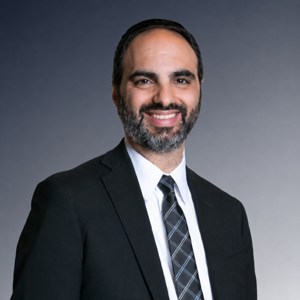
Living Emunah

Living Emunah

By Ashear, Rabbi DavidReligion & SpiritualityJudaism
Download on the App Store
  • Favorites

    26

    Followers

  • Typical duration

    6 min

    per episode

Based on Podcast App listening data

Living Emunah episodes

  • Rise to the Top
    Some people are blessed with wonderful talents. Others are given great wealth. Because of those gifts, these people receive a tremendous amount of honor in their lives. Wherever they go, they are the center of attention. And the people who are not blessed with those same gifts may feel a little shortchanged, wondering why they never get any recognition. We must never get fooled by the way people perceive things, or according to the way that people honor things. Our measure of value should only depend on the way that Hashem sees things. The Gemara tells us that Rav Yosef, the son of Rav Yehoshua ben Levi, passed away and then came back to life. When he came back, his father asked him what he saw in the upper world. Rav Yosef answered, he saw that the ones who received all the honor down here were not so important up there. And the ones who were considered not so important here, were very important there. Rashi explains, the people who were honored in this world because of their wealth were not getting any of that honor there, while the people who were poor and downtrodden here were getting all the honor there. The Mabit and others explain, Rav Yosef was referring to Torah scholars who receive a tremendous amount of honor in this world, but do not use their full potential. In the next world they are going to be low, while people who push themselves to their limits in Torah, who may not have achieved success in their studies, are going to be on top in the next world. There are people who are blessed with very sharp minds or photographic memories. Because of those gifts, with a regular amount of learning, they are able to acquire a wealth of knowledge and because of it, they receive a great deal of honor. Hashem does not reward people for what He gives them. He rewards them for the efforts that they make. Another person who learns day and night, but has a hard time understanding or retaining his Torah will most likely get no honor in this world. In fact, he may even be shamed. But because he tries his hardest, he is going to be from those who are honored for all eternity. In this world, we are unable to recognize true value. We give honor based on results. In the World to Come, however, honor is given to those who worked hardest in Torah mitzvot. You could have a rabbi who people go to for blessings, who is always given the honor of being mesader kiddushin at every wedding he attends. He is called HaGaon Ha'adir HaGadol. Yet, there could be someone else who nobody knows about, who struggles day-in and day-out, trying to figure out simple peshat in the Gemara. But he works harder than the first rabbi. In Olam Ha-Ba, he's going to be on a higher level. Of course, if the first rabbi who was gifted works hard to fulfill his potential, he is going to receive honor in both worlds. Moshe Rabbenu was born with tremendous gifts, but he still worked extremely hard to fulfill his potential, and that is how he became the great eved Hashem that Hashem described him as. A man who decided to retire at an advanced age wanted to spend his days learning Torah. He began learning every single day, but after six months, only managed to finish one page of Gemara. He went to the Chafetz Chaim in a bitter state, asking the rabbi if he should bother continuing to learn with such little progress. The Chafetz Chaim said to him, “You learned a hundred pages in six months, and you're asking me if you should continue?” The man said, "No, rabbi, just one page." The Chafetz Chaim then opened the Avot de-Rabbi Natan, which says that one time with difficulty is better than a hundred times without difficulty. This does not only apply to a person's level of intellect. If someone struggles in parnasa, or in raising children, or in health, yet he pushes himself to do his best in Torah, he is going to be from the most important ones in the next world. This world is short. That world is forever. Hashem is the fairest judge. Everybody has equal opportunity to become great. As long as we put in the effort, we will rise to the top.

    6 min
  • Going Through the Motions
    We are familiar with one of the rules of hishtadlut, given by the Mesilat Yesharim, that it is required but not what really accomplishes. This idea gives us chizuk not to overdo it and to maintain our humility, recognizing that we don't deserve credit for our efforts, because it's really Hashem who accomplishes. Another area in which this concept helps is when the only hishtadlut available to do does not seem like the greatest option. If it was the hishtadlut that was accomplishing, then that should deter us, but now that we know we are just going through the motions to open a pipeline for Hashem to send his blessings, we should never get deterred when the hishtadlut does not seem to be such a great option. We should go through the motions and hope that Hashem will bring results. Rabbi Shalom Schwadron once told an amazing story that he heard from a Jew in London. While the rabbi was traveling there to collect funds for Chinuch Atzmai, he met A ba’al Teshuva who had served in the British Navy. This man got wounded and went through rehab and received a large stipend from the British government for his disability. He slowly became stronger in his observance of Torah and Mitzvot until he became a full-time learner of Torah. He was able to live on the government stipend. Every three years, people receiving this stipend had to have a hearing to determine their continued eligibility. The man related what took place: “After his next hearing, he said they decided I was fit to work and were canceling my stipend. I submitted two appeals, but both were rejected. I did some research and found there was a way to appeal the committee's decision by presenting the case to the military court.Whatever they decided was final. “ I went to ask my rabbi, the one who made me a ba’al teshuva, if I should attempt the appeal. I was already rejected three times, and it didn't seem likely that the military court would override the decision. My rabbi said, you need to do your hishtadlut and you don't need to lie about anything when doing it. When you appear before the judge, imagine you're talking to Hashem. Tell him everything that's bothering you and why you feel you should continue getting that stipend. When the day arrived, I stated my case and what I was doing with my time. “The judge said, ‘you've already submitted three appeals. You want to sit in your synagogue and waste time while upstanding British citizens support you? You'll be acting like a parasite.’ “I'm not a parasite,” I replied. We connect to our Father in heaven by studying the Talmud. It fills us with inner joy and satisfaction and happiness, and if you take that away from me, you'll be taking away all the meaning in my life. I went through a very difficult rehab as a wounded war veteran, and I really don't think that I should be robbed of my meaning in life. The judge, along with two others, left the courtroom for ten minutes and then came back and said he would grant a lifelong stipend. The lawyers were astounded. Just before this, the judge was calling the man a parasite and now he completely changed. The judge explained many years before this, he was the commander of a submarine in the submarine corps. One day during a standard mission in the Atlantic, World War II broke out and they were told no boat could go in or out of any ports because it would be immediately sunk by German torpedoes. They were stuck there for a full year. They rationed their reserves of food and everyone became demoralized. None of the soldiers had any reason to get out of bed. The judge said, ‘One day, I entered the place where the soldiers sleep and I heard singing. I was shocked. It came from three men learning Talmud. I couldn't believe there were still happy people on the submarine. After listening outside their room for ten minutes, I went in and asked them what they were doing. They told me of the satisfaction and purpose that their learning brings them, and I was so impressed.’ The judge then turned to the lawyers and said, “every country needs such people for a rainy day. Those who are inside the water yet know how to keep their heads above. They elevate the entire nation. Because of them, we could continue to smile even in difficult situations. That is why I rule in his favor.” We make hishtadlut whether or not it seems like the best option, and we hope that Hashem will bring the results.
    6 min
  • Empower Your Tefilot
    One of the greatest ways of empowering our tefilot is by believing in them more. When someone gets used to asking for the same thing day after day, even though he wants it so much, he tends to lose the energy and emotion that a good tefila requires. Sometimes, it gets to a point where tefila becomes just another box to check instead of the wondrous meeting between us and our creator that it's supposed to be. A few words of chizuk can go a very long way. People who have been praying for something for years by rote, who suddenly got the right inspiration, have boosted their tefilot immensely and seen amazing results. A man told me, when he was 22 years old, he lifted something too heavy and developed a severe back problem as a result. The pain was enormous and he was not able to function normally. He went from doctor to doctor, getting various shots and treatments, but nothing worked for more than a day or so. It came to a point where he realized there was really nothing else left for him to try, and so he accepted the fact that he was going to have to live his entire life with a bad back. Of course, he continued praying every day for his back to be healed, but deep down, he didn't fully believe it would happen. Over time, his back slightly improved, but he still was not able to do most things that people with a healthy back could do. One day, about 20 years after that incident, he went to a class on the topic of tefila. There, the rabbi spoke about the wonders of tefila and how much it could accomplish. The rabbi suggested to his crowd that when they ask for things from Hashem, they should ask with thoughts of how they are going to use what they're asking for towards avodat Hashem. The man became very inspired by that class. He thought of the different ways he would be able to improve in his service of Hashem if he had a good back. He began praying with those thoughts in mind. He said to Hashem, "Please, I want to be able to bow down when I say the Amida." He said to Hashem, "I want to be able to help my wife more, instead of being the one who always needs the help." Then he said his wife was about to give birth. He wanted to be able to bend over and lift the baby out of the crib. His prayers improved one hundred percent. Weeks later, he was on his way to work as usual, and the roads were slippery. All of a sudden, the car in front of him stopped short. He quickly slammed on his brakes and avoided an accident. The car behind him, however, was not as quick in stopping, and it crashed right into him. His first thoughts were about his back. He couldn't afford to injure it more than it was already injured. He attempted to get out of his car as usual. He lifted his hand to grab the assist grip in his car to lift himself up. It was always a process to get out of the car with his back the way it was. This time, he got out fairly easily. Before he even turned around to look at the accident, he attempted to bend over. Baruch Hashem, he was able to fully bend with ease. His back was healed! He then turned around and saw a six car pile up. The car behind him looked like an accordion, but Baruch Hashem, nobody was hurt. His car had no damage. When the police report came out a week later, his car wasn't even put on it. The only thing that resulted in his life from that car accident was that his back healed . Something no doctor could fix, Hakadosh Baruch Hu fixed in a very surprising way. Today, he is over 60, and Baruch Hashem his back has been fine for the last 20 years. Prayer can do wonders, but we must give it the respect that it deserves.
    5 min
  • Parashat Shelach: Each Challenge a Test
    In this week's Parasha, Shelach, we read about the lack of emunah the Jewish people had in Hashem, which caused them to have to wander in the desert for 40 years before they could finally enter Eretz Yisrael. The Mefarshim tell us that the sins of the ז' עממין , the seven nations who occupied Israel at that time, did not yet reach the level that would warrant them to be expelled from the land. They still had 40 years left until that time would come. So it appears that the Jews would've had to wait 40 years either way to enter the land. Based on this, the Arugat Habosem asked why Hashem took them out of Mizraim at this specific time, knowing they wouldn't be able to enter the land anyway for 40 more years. The Rabbi answered, when it comes to reward and punishment, things can always change. There are numerous factors involved. Before Hashem revealed himself to the world with the ten makkot and kriyat Yam Suf, the sins of the seven nations were considered to be a smaller infraction because they weren't expected as much to follow Hashem's rules. Afterwards,however, He clearly showed them that He runs the world, and yet they still continued with their corrupt and immoral behavior. Then, their sins did reach the level that obligated them to be expelled from the land. However, everything in the world happens based on the way we act. If the Jewish people would've fully believed in Hashem's abilities to conquer the giants who occupied the land, they would've gone in immediately. But since they were afraid and they were not confident in Hashem's powers, the claim against the seven nations became smaller. After all, if the children of Avraham, Yitzchak, and Yaakov were not believing in Hashem, how could the seven nations be expected to believe in him? It was our lack of emunah that let the seven nations off the hook and gave them back the 40 years that they had lost. Rabbi Manasseh Reizman brought this lesson closer to home. We are also waiting for the time when the nations of the world who persecute us will deserve to be destroyed. They see the sun rise and set every single day, and they believe that happens on its own. If we want that to be held against them, then we ourselves have to believe that Hashem is actively involved in every single act of nature that takes place every minute of the day. We say in the Tefillah, גולל אור מפני חושך וחושך מפני אור . Hashem brings on the night, and then the day, and then once again the night. Nothing happens on its own. If our emunah would be the way it's supposed to be, then they would be held accountable for their lack of emunah. We have opportunities to show our emunah every day of our lives. When things happen that threaten to disturb our peace of mind, we can either lose ourselves and feel hopeless, or we can say, "Hashem is behind this. I know it happened for my best, and I know going forward Hashem can help me get out of it in an instant." If the Jewish people would've known what was at stake when they were tested with the Meraglim, they would've easily passed that test. We must remember, each challenge we have is also a test, and there is so much we could accomplish when we have emunah during those challenges. If we can strengthen our emunah, we are not only going to enjoy our lives better, and not only going to get closer to Hashem, and not only be earning eternity, we will also be helping the entire klal Yisrael. This is the zechut we need to attain our final ge'ula which we are yearning so much for. It will come when we collectively raise our level of emunah, and that will happen when each person takes it upon himself to improve in his own personal life in emunah. Shabbat Shalom.
    5 min
  • Age Does Not Matter
    I have heard about numerous weddings taking place this past year where the bride was older than the groom, and in some cases by a few years. אשריכם ישראל that our young men are being guided by Daat Torah who does not conform to what the average person thinks is right and proper. Age does not matter. It's the person that matters. There are many zivugim that Hashem has created where the girl is older than the boy and therefore we must not get caught up in pettiness but rather keep our options open to whoever may be a proper match. I read a story that a man who we’ll call Reuven told about himself, which was very inspiring. He said he married a secular Jew like himself and raised his children with that upbringing. His wife eventually became religious, and he was not opposed. After ten years of marriage, his wife became fully Shomer Torah Mitzvot, and she managed to bring him along with her. Then, years after that, they felt they were even more thirsty for spirituality. They heard of a kollel for twenty families opening in a certain city in America. It was part of a well-known organization that operates many kollelim in far-flung locations. These kollelim become beacons of spirituality for their surroundings. He felt he was able to learn for a half a day, and so they decided to move there and try the kollel life. They sold their nice home and car to help with their future expenses. A few years passed and they were so happy with their new lifestyle until one day when everything changed. The donor who had been financing the project suddenly demanded that the local community leaders chip in. He thought he was going to get government assistance, but it never happened. When the community leaders denied his request, he announced his complete withdrawal from the project. Then began the mass exodus with all the families looking for new places to live. There was no way any of them could continue living in the middle of nowhere with nobody paying their bills. Everyone left except Reuven and his chavruta. He learned every day with his chavruta with no clear plans on what he would do going forward. Eventually, he had to make a decision. He put his head down on the table one day and cried, asking Hashem to please allow him to keep learning. He accepted upon himself to learn a full day if such an opportunity would present itself. About a month later, they received a letter from a lawyer saying they were the sole relatives of a man who recently passed away and he left his entire fortune to them. It was a relative of his wife's, and it was for millions of dollars. They used that money to make aliyah and buy a nice house in Israel, and he continued his learning in a full-time kollel. Today, he is the happiest man. When he recalls the events of his life that led to where he is, he becomes emotional. When his wife-to-be was originally suggested as a possible match, he found out she was six years older than him. That seemed like an unbridgeable age gap. But after contemplating it a lot and dating some others in between, he decided to give up on his ideal age gap and go out with her. At the time he thought he was compromising, but who is the one who brought him close to Hashem? Who is the one who got him a dream inheritance of millions of dollars? This wife who is an Eshet Chayil. Age does not matter, only the person matters.
    5 min
  • Our Greatest Privilege
    With our good deeds, we are able to bring joy and satisfaction to HaKadosh Baruch Hu. Although logically that doesn't make so much sense, we would never imagine that a little ant could bring satisfaction to a king surrounded by servants and advisors at his beck and call. How much more so us in comparison to HaKadosh Baruch Hu? Yet, Hashem told us in the Torah regarding the korbanot, they are a ריח ניחוח לה ', which Chazal explained to mean that Hashem gets satisfaction when we follow His will. The greatest satisfaction we could bring Hashem is when we do His will with joy and excitement. Being happy to do Mitzvot elevates us and brings us even closer to him, as well as opens up pipelines of blessing, both physically and spiritually. It's not easy to be excited about something we do all the time, but when we hear of what previous generations had to go through to do what we take for granted, it gives us extra chizuk to appreciate the treasures that we have before us. Rabbi Bergman told a story which took place 30 years ago. An elder, noble-looking Jew began coming to a certain shul in Brooklyn for shacharit. He arrived 15 minutes early and said Birkot HaShachar and korbanot with great kavana. Rabbi Bergman was astonished to see him pray the entire Tefillah without tefillin. After the Tefillah, he went over to the man and introduced himself. The man said his name was Zusha and he had come to America from Russia. The rabbi offered to let him use his tefillin, but Zusha declined, saying he would never borrow tefillin because they're too expensive and he's afraid to damage them. The next morning, he prayed once again without tefillin. This time Rabbi Bergman went around and made a collection to buy tefillin for Zusha who couldn't afford them himself. Everybody in the shul donated generously and the rabbi was able to buy a pair of very mehudar tefillin. The next day, the rabbi presented Zusha with the tefillin when he arrived at shul. When he heard they were a gift from the members of the shul, he burst out into tears like a young child. His tefillah with tefillin that day was like ne'ilah on Yom Kippur. He was so emotional, crying the entire tefillah. Afterward, Rabbi Bergman approached him and asked him when the last time he put tefillin on was. Zusha replied 60 years ago. Rabbi Bergman was shocked. He said to Zusha, "I watched you put them on. You knew exactly what you were doing. Not like a secular newcomer for the first time." Zusha replied, "Not a day went by that I didn't put on tefillin." Now, Rabbi Bergman was really confused. Zusha explained. He said, "My father was a real yireh shamayim. During those years in Communist Russia, whoever was caught practicing religion would vanish without a trace. My father bought me the most beautiful tefillin for my bar mitzvah, and he took me up to our attic, shuttered all the windows, and taught me how to put them on. Within ten minutes, three KGB thugs appeared. Someone had informed on us. They tore the tefillin off my head and my father from the house. Since then, I haven't had tefillin, and since then, I haven't seen my father, 60 years." "The next morning while my mother cried in the kitchen, I went back up to the attic without my father and without my tefillin, but with my siddur. I lifted my eyes to the heavens and said to Hashem, 'They stole my father and they stole my tefillin, but they can't steal my heart. My heart is fired with love for you, Hashem. I want to put on tefillin so badly, but I don't have them. I'm going to go through the motions of putting on tefillin with the proper kavana every single day. Through that, I will connect to you the Boreh Olam.' And every day, for the last 60 years, I put on tefillin with just the motions. I didn't have the physical tefillin, but I had the heart of tefillin." Rabbi Bergman was so inspired. Look at the love that this Jew had for the mitzvot. From that day on, Rabbi Bergman had a new appreciation for his tefillin and for all the mitzvot as well. If we could value the mitzvot and feel that they are our greatest privilege, that would bring so much satisfaction to HaKadosh Baruch Hu.
    6 min
  • Remembering the Awesome Revelation
    There are ten things that we are obligated to remember every single day. One of which is ma'amad Har Sinai. The Rambam writes in his Igeret Teman that Hashem commanded us to constantly remember what took place on Har Sinai and we are to teach our children about it and raise up that ma'amad in their eyes and that will help strengthen their emunah in a very big way. That Ramban as well, in parashat V’etchanan , writes that we are commanded to always remember the way that Hashem gave us the Torah in a wondrous fashion. At that time Hashem came down with all His glory and spoke directly to millions of people. Rabbi Yosef Deutsch, quoting the midrashim , gave the following description. Amidst brilliant flashes of lightning and mighty crashes of thunder, the blast of the shofar struck fear into everyone's hearts. Then a huge pillar of flame, a symbol of the Shechina and the Torah, erupted from the base of the mountain and pierced the heavens. The flames were fiercer than the fire of a furnace and their intense spiritual light obliterated all signs of day and night. The fire emanated from the mountaintop in seven concentric circles rising in intensity as they came closer to the Shechina . As the Shechina descended upon Har Sinai, the heavens draped themselves like a sheet over the mountaintop. The mountain shuddered, then lifted itself up into the cloud bank like a servant running out to greet his master. The heavens and earth came toward each other and embraced and the Shechina rested its presence in that embrace. The seven heavens parted and revealed the glory of the Shechina. 22,000 chariots of angels clothed in fire accompanied one side of the Shechina . In their hands, they held the crowns for the Levi’im to be placed on their heads during Matan Torah. All the angels were singing the praises of Hashem. On the other side, the Shechina was accompanied by tens of thousands of other angels. The entire world trembled as the Shechina descended upon the mountain. The earth shook to its very core, the mountains shivered, hills collapsed, seas and rivers receded, trees shattered and fell. Even the angels shrank back, frightened that they would be consumed by the radiance of the Shechina . Then, when the voice of Hashem emanated from the fire on top of the mountain, everything came to a halt. All of the tremors subsided. The sun stopped in its path. The water stopped flowing. The birds stopped chirping. All of the animals were silent. The angels stopped all of their movements. The entire world was still. And then Hashem said the words, אנכי ה' אלקיך - I am Hashem your God. The Maor Aynaim writes, based on the midrash , when Hashem said those words, they were heard from every single place in the world. Every rock, every piece of wood, every piece of metal, every grain of sand, all screamed out, “ אנכי ה' אלקיך .” At that time, everyone understood that nothing in this world has its own existence. There's a spark of Hashem inside of everything that enables it to exist. This is what it means when it says that at ma'amad Har Sinai, we were taught, ה' הוא האלוקים אין עוד מלבדו - There is nothing in this world other than Hashem's presence. This is the glory that Hashem gave us the Torah with. He rested His presence on Har Sinai and spoke to us directly. We don't need to “believe” in Hashem, He revealed Himself openly to our ancestors and they have passed down that experience from generation to generation. If we can remind ourselves every day of this awesome revelation at Har Sinai, we will fulfill a great mitzvah and we will ensure that our emunah will always be solid.
    5 min
  • Access Heavenly Help
    The greatest success possible to achieve in this world is in the area of Torah and mitzvot. Money and physical pleasures can only benefit a person for a limited time. Spirituality, however, will benefit a person forever and ever. The evil inclination tries to deter us and make us think that this world is where it's at. But we must not get fooled by his ploys. If we are growing in Torah and mitzvot, we should be more excited than winning a lottery for a billion dollars. Not everybody has the zechut to be growing in Torah and mitzvot. Although Hashem wants more than anything for every one of His children to be close to Him, it is not a given by any means that a person will attain that connection. Hashem gives us free will to choose where we want to put the emphasis of our lives. The evil inclination strengthens itself upon a person every single day. And if a person does not merit to get help from Hashem, he will fail his mission. The good deeds that we do and the prayers that we make help us get the siyata d’Shamaya that we need for success in this world. It has to be important enough to us to constantly be asking Hashem for help with our spiritual growth as well as with our families. Sometimes one decision can change the entire course of a person's life. If he would have help from Hashem, he would choose correctly. Sometimes the chizuk a person needs is right in front of him, but in order to access it, he needs Heavenly help. I once knew a man who was struggling with certain areas of religion. He had so much potential but just couldn't overcome those struggles. On one occasion, I invited him to a class with a guest rabbi who I knew would be very inspirational and he said he would be there. The guest rabbi gave a fiery speech on every struggle this particular individual was dealing with. It was one of the most inspirational speeches I ever heard. But unfortunately, this man did not show up that day and he missed out on a class that potentially could have altered the course of his entire life. We need zechuyot for success in spirituality. Tefila provides great merits, and so we must ask Hashem for his help for all of our spiritual needs. I read a story told by Rabbi Tzvi Nakar about a man who became fully shomer Torah and mitzvot later on in life, but his wife did not accompany on his journey. At one point they came to the realization that their marriage was in jeopardy, being that neither was willing to budge on their beliefs. One day the man told his wife he really didn't want to break up the family and requested that they go to an Arachim seminar, perhaps she would get inspired there. She agreed to go. The main speech was being given by Rabbi Yosefi. Although the woman was completely secular, that morning she actually asked Hashem for help so she could see the right path. She went to the shiur that night and, as usual, Rabbi Yosefi electrified his audience and managed to stir her neshama . The Rabbi touched on the most sensitive and problematic points that weighed on her heart and she sat and cried during the entire speech. After the speech, she approached the Rabbi and told him she was going to take upon herself to do complete teshuvah . She added that she prayed that day to recognize the truth. The Rabbi asked her when she prayed and, when he heard the time, he was in awe. He told her that morning he woke up with a fever close to 104. He was about to call the organizers of the event and tell them he wasn't going to make it. As he picked up the phone, he heard an inner voice calling, “You can't give this up, you have to go.” He then got up, splashed cold water on his face and, surprisingly, he felt a little better. He gave himself chizuk and said he was going to give the speech. He found out from this woman that it was right after the time of her prayer that he felt this inspiration to go through with the speech despite his high fever. We need siyata d’Shamaya for help in Torah and mitzvot and the best way to get it is to ask Hashem for help.
    6 min
  • Parashat B’ha’alotecha: Never Get Fooled
    The pasuk says in this week’s parasha, B’ha’alotecha, אשר הראה ה' את משה כן עשה את המנורה, and the Midrash with the mefarshim explain, Moshe couldn’t figure out how to make the Menorah from one solid piece of gold until Hashem showed him exactly how to do it. However, Moshe kept forgetting, until Hashem himself made it for him. The sefer Imreh Yitzchak asks, it seems like initially it was the will of Hashem that Moshe be the one to make the Menorah and it was only due to the difficulty involved that Hashem had to do it Himself. And so, the Rabbi asked, if Hashem really wanted Moshe to do it, He could have made him not forget, He is unlimited. So why, in the end, did Hashem make the Menorah Himself. The Rabbi quoted a principle that he learned from Rav Yosef Zalman Bloch and used it to explain. The way that it appears to us is that Hashem gives certain powers for things to work in a natural way and that’s why they work, but in reality, everything that takes place is a hidden miracle. It is not the item working because Hashem gave it power, it is Hashem actively making it work right at this moment. When a person does even the smallest chore like pick up a phone to make a phone call, countless things have to go on in the brain to send the messages to move the fingers and for the buttons on the phone to work and for the call to go through, it all needs siyata d’Shamaya. Hashem is involved every step of the way and it is only because of Him that a simple thing like a phone call could be made. Says the Imreh Yitzckak, it is this message that Hashem wanted to hint to us in the making of the Menorah. Even though Moshe was shown exactly what to do to make it. And even though he had a very strong brain that could comprehend anything, and even though he tried his hardest to get it done, Hashem wanted to teach us, it is not a person’s mind that is able to think and it is not a person’s hishtadlut that is able to get things done; it is all Hashem from beginning to end. And when He says the mind shouldn’t process something, it will not. And when He says an effort shouldn’t be successful, it doesn’t matter how strong a person is, it will not be. And whenever someone does accomplish with his hishtadlut, he is supposed to feel as though it happened without him, by the doing of Hashem. And this lesson was specifically taught to us through the making of the Menorah because it is the Menorah that was the testimony that the Shechina was amongst us, like the Gemara says in Masechet Menachot, daf 86b. When a person knows that Hashem is in complete control of everything, he is able to live his life with much more peace of mind. A young woman in shidduchim said she suffers from a hair loss condition. She found very expensive hair extensions that were perfect for her. She needed to use adhesives each day to stick them down to her head. After a few months, her hair started growing back, baruch Hashem, but in the meantime it was getting tough to get the adhesives to stick. It was very challenging on Shabbat to do it without violating halacha and when she asked her rabbi about it, he told her it was forbidden. Although they were very expensive, she immediately said, “I learned Hashem completely pays for Shabbat expenses, so I am totally fine getting brand new ones.” With this thought process, she became much calmer. She searched for the new ones and found the perfect ones but they were going to cost $2400, which was an enormous amount of money for her. She, however, was confident that Hashem would be paying. At this time, she just began paying for medical insurance with her new employer. She had to pay $200 a month. Before she even paid for the extensions, she received an email from her old medical coverage saying that, due to the fact that Covid emergency was still in effect, they were going to keep her on for one additional year at no cost. Exactly the value of $2400. Hashem controls everything. Our efforts are only meant to camouflage Him. However, we must never get fooled by the camouflage. Even when our efforts are successful, we are to know it was only because of Hashem. Shabbat Shalom.
    6 min
  • Do Wonders
    Hodu La'Hashem Ki Tob ! The iTorah APP has launched. Click below to download! for iPhone users https://apps.apple.com/us/app/ itorah-watch-listen-stream/ id6472929090 for Android users https://play.google.com/store/ apps/details?id=com.itorah.app A man from Israel, who was heavily in debt, traveled to London to try to collect tzedakah on the advice of his rabbi. He spent several weeks there and it was very difficult for him to get in to see a certain wealthy man. He chased after him unsuccessfully, and then asked a big rabbi in Israel who had a relationship with this philanthropist to help him get a meeting with him. The rabbi spoke to the philanthropist and then told the man he would be calling him to set up an appointment. Just as he was about to start Mincha , he received a call from a private number. He answered and heard the voice of the philanthropist, who mentioned that the rabbi called him, and he asked how he could be of assistance. The man got so excited and was about to tell him his entire story but then he stopped himself realizing he was about to meet with someone much more important. He said to himself, I'm about to pray Mincha and I know Hashem doesn't want me to speak to a human being at the expense of praying with a minyan. He told the wealthy man he was about to pray and politely asked him to call afterward. After he hung up the phone, he felt a wonderful feeling that he had never felt before. How long had he been running after this wealthy man? How much effort had he put in just to meet someone that Hashem blessed with some money? Now he was going to talk to the richest One in the world. He also called and was willing to listen attentively to every word he was about to say. “Why don't I pray with the same excitement I would feel if I met the philanthropist face-to-face,” he thought. “Why don't I approach tefilah with the feeling that I am now coming before the One who can give me everything that I need in an instant.” This was the best tefilah he had ever prayed. He felt so close to Hashem and merited great siyata d’Shamaya from it. We all know this is true, but sometimes we forget and we need to remind ourselves. In every situation in life, we must remember, we could always turn to our Father who can help us in an instant. There is nothing too big and nothing too small. Another man said, one day his washing machine just stopped working. He called the company that he bought it from and they sent a technician to check it out. The technician came and, after trying many different things, he said the machine had breathed its last breath. There was no way to fix it. The man asked for a new machine because it was still under warranty. The technician apologized saying this particular issue was not covered. The man was stuck. A new machine would cost thousands of dollars which he simply did not have. After making various efforts, unsuccessfully, to get a new machine, he remembered he hadn't yet done the most important hishtadlut of all. He started praying like a child talking to his father. He spoke about how hard it was for him to buy a new machine and how much they really needed it. After he finished praying, he had an idea to call a handyman that he knew to come try and fix it. His wife said, if the company couldn't fix it, how would this handyman fix it? He replied, “It can't hurt to try.” The handyman came and, amazingly, was able to fix the machine and he only charged him a hundred shekels for the job. Hashem can help us with everything. We have to feel the same excitement when we come to pray to Him, at least as much as we would feel with a generous philanthropist that wants to help us. If we can do that, our prayers would do wonders.
    5 min

About Living Emunah

From the publisher's feed

A Daily ethical teaching by Rabbi David Ashear

Best of Living Emunah

Ranked by our users in the last 21 days

More shows like Living Emunah

The Rabbi Sacks Legacy by Rabbi Lord Jonathan Sacks

The Rabbi Sacks Legacy

558 Listeners

The Israel Guys by The Israel Guys

The Israel Guys

309 Listeners

Jewish Stories to Inspire: Motivational & Spiritual Stories Based on the Torah's Ethics, Values and Wisdom by Stories to Inspire

Jewish Stories to Inspire: Motivational & Spiritual Stories Based on the Torah's Ethics, Values and Wisdom

186 Listeners

Living with Emunah by Rabbi Efrem Goldberg

Living with Emunah

109 Listeners

Meaningful People by Meaningful Minute

Meaningful People

1,986 Listeners

From the Inside Out: With Rivkah Krinsky and Eda Schottenstein by Rivkah and Eda

From the Inside Out: With Rivkah Krinsky and Eda Schottenstein

263 Listeners

The Q & A with Rabbi Breitowitz Podcast by Rabbi Dr Yitzchak Breitowitz

The Q & A with Rabbi Breitowitz Podcast

234 Listeners

Call Me Back - with Dan Senor by Ark Media

Call Me Back - with Dan Senor

3,200 Listeners

The Times of Israel Daily Briefing by The Times of Israel

The Times of Israel Daily Briefing

1,069 Listeners

Kosher Money by Living Lchaim

Kosher Money

819 Listeners

History for the Curious - The Jewish History Podcast by JLE

History for the Curious - The Jewish History Podcast

231 Listeners

Gedale Fenster - Podcast by Gedale Fenster - Podcast

Gedale Fenster - Podcast

398 Listeners

Honestly with Bari Weiss by The Free Press

Honestly with Bari Weiss

8,477 Listeners

Inspiration for the Nation with Yaakov Langer by Living Lchaim

Inspiration for the Nation with Yaakov Langer

1,120 Listeners

Stories Of Hope With Tzipora Grodko by Meaningful Minute

Stories Of Hope With Tzipora Grodko

324 Listeners