
Sign up to save your podcasts
Or

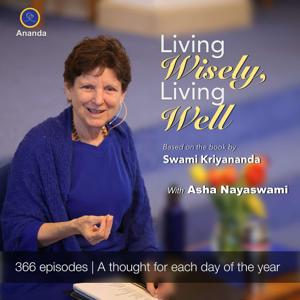


Invite the participation of others when possible in the decisions you make. The more you involve them, the more they will take an interest in and commit themselves to, working with and helping you.
Support the show
Intuition is simple because it involves direct perception and is not a process of joining thoughts and ideas together painstakingly like a jigsaw puzzle. People usually become increasingly complex with the acquisition of knowledge. Learn instead to approach your problems not by puzzling them through but by withdrawing to your own center. There, offer your problems up to that pivotal simplicity. Never feel that you have your answer, until you have reached in your heart a sense of its perfect rightness.
Support the show
To know God it is said that one must possess the simplicity of a child. How, one wonders, considering the vastness and complexity of the universe, can simplicity be a part of any equation involving true wisdom. The metaphor itself supplies the answer. A child is simple because although it observes it doesn't prejudge. Thus it lives in the present. Far more so than most adults whose tendency it is to dwell on the past or the future. For such adults the present is hardly more than a connecting bridge. Be childlike in the sense of living in but not for the present. Be childlike but not childish. Not overreacting, that is to say, to pains or slights.
Support the show
In writing, try as much as possible to avoid repeating too closely even such essential words as and, of, the, and a. Interchange these last two from time to time. Try to avoid too close a juxtaposition of words that end similarly—for example, words ending in “-ly,” “-ity,” or “-tion.” If you do repeat similar sounds, do so deliberately, for effect. Remember, of course, that every rule can be broken sometimes, depending on the kind of interest you want to awaken. Even speed readers, however, will prefer a flow that is enhanced by right word-sequences.
Support the show
To inject uplifting vibrations into whatever you write, try to perfect the word-sequences. These will “work” best if they follow the natural flow of thought. Read each sentence over and over carefully, to ensure the achievement of this flow. Re-position words, phrases, and clauses as necessary for increasing clarity. For instance, in an earlier version of a sentence for July 25 in this book I wrote, “Isn’t it in your interest to offer him your sincere friendship in return?” I changed it to read: “It will be more in your interest to offer him, instead, your sincere friendship.” This change places the most important words, “sincere friendship,” at the end, making those words linger on in memory. When you do this work for your readers, they will benefit more greatly from what you have to offer them.
Support the show
When others project disharmony toward you, send them in return, from your heart, rays of kindness and harmony. The more consciously you send those thoughts out in blessing, the more others will change. In time they, too, will project only harmony.
Support the show
Why is there so much violence in the world? Surely it is because people are not satisfied with themselves! Today’s terrorists imagine a world remade in their own image. Should they ever succeed, however, in killing off everyone who falls short of that image, they’d only end up butchering one another! Ultimately, the only way to establish peace on earth is for people everywhere to be peaceful first in themselves.
Support the show
Meet anger, when possible, with silence, respect, and good will. Don’t let anyone’s anger shake you from that inner resolve. Peace is the way to avoid all emotional whirlpools. Only by first being inwardly peaceful can your influence for good spread, and bring peace to all.
Support the show
To be truly creative, work with an attitude of bliss. God’s motive in creating the universe was not only, as the Indian scriptures declare, “to enjoy Himself through many.” It is also His very bliss-nature to be self-expansive. Despite the widespread suffering on earth, the end of every soul’s long, winding, sometimes harrowing journey is perfect bliss—a bliss, as Yogananda put it, “beyond imagination of expectancy.”
Support the show
Regardless how people treat you, determine your response to them by the criterion of inner freedom. How others behave is their business. How you respond to them is yours. If someone tells you he hates you, will it make you happier to hate him in return? It will be more in your interest to offer him, instead, your sincere friendship.
Support the show
From the publisher's feed
Ranked by our users in the last 21 days

37,578 Listeners

14,913 Listeners

71 Listeners

12 Listeners

5,456 Listeners

15,891 Listeners

37 Listeners

2,109 Listeners

8,805 Listeners