
Sign up to save your podcasts
Or

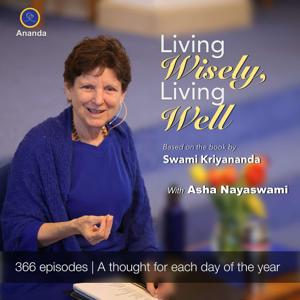


Ideas should be presented with simple, grounding examples. Try never to offer mere abstractions. The more specific you can be, the clearer your concepts will be to yourself, and the clearer also the understanding you convey to others. When describing waves on a vast ocean, for example, first see them clearly in your mind. Hear them; feel them. That clear visualization will help you to make your presentation more vivid.
Support the show
White is a blend of all the colors of the rainbow. If the energy moves up the spine toward the brain, white can inspire a consciousness of purity. If that energy withdraws passively into the spine, however, white may suggest a bland lack of interest. Choose white to develop non-attachment to worldliness. Don’t choose it if your nature is too passive.
Support the show
Violet is the color of high thoughts, high principles, noble aspirations. This color will help you to rise out of the lower emotions into the realization that you, in your true Self, are pure Spirit. Violet in its negative aspects can erect a psychic wall between yourself and the earthly realities around you, making your ideals unrealistic and impractical.
Support the show
Indigo implies pure feelings, and the love of beauty in all its manifestations. Choose this color to deepen your love for others, and for God, as well as your appreciation for everything good in life. Indigo has its negative aspects, however, especially for those whose emotions take them downward. Don’t let indigo generate in you attitudes of rejection or withdrawal.
Support the show
Blue is the color of expansive calmness. If it lacks warmth, however, its effect on the feelings can be chilling. (Think of the expression, “steely blue.”) This color, therefore, should also be given a touch of warmth to keep its influence uplifting and devotional. Blue is a good color for meditation.
Support the show
Green is the color of health and harmony; it is most visible among growing things. Green gives a heightened sense of physical and mental well-being. Where there is a focus on health, however, there can also be one on ill health. Unpleasant shades of green can disturb the feelings. Green, therefore, is associated also with harmful emotions such as envy and jealousy.
Support the show
Yellow is the color of wisdom, insight, and calm acceptance. This color can also, however, be disturbing for those who shrink from meeting challenges. If what you seek in life is progress, yellow may help you to become more creative. An impure yellow, however, can have a somewhat sickening effect on the mind.
Support the show
The color orange suggests fire. It helps one to generate enthusiasm for destroying all desires and attachments. It can also be irritating, however, especially if one tends toward placidity. And orange can feed a tendency to cry out to people, “Look at me!” Think of workers on the roads. They purposely wear orange to be noticed, so that cars won’t hit them.
Support the show
The color red can be cheerful. It can also—especially if it is muddy—stimulate to lust or anger. If red resonates with you, make sure that it affects you in the right way, by making you brighter, more cheerful, happier.
Support the show
The colors of the rainbow have not only a visual impact. They can also affect you vibrationally, when they resonate with the field of energy surrounding you—that is to say, your aura. Surround yourself with pure colors. Muddy hues can obscure mental clarity. Bright hues can induce brighter emotions. Colors should resonate with your nature as it is, and with the qualities you would like to develop in yourself.
Support the show
From the publisher's feed
Ranked by our users in the last 21 days

37,578 Listeners

14,913 Listeners

71 Listeners
12 Listeners

5,456 Listeners

15,891 Listeners

37 Listeners

2,109 Listeners

8,805 Listeners