
Sign up to save your podcasts
Or

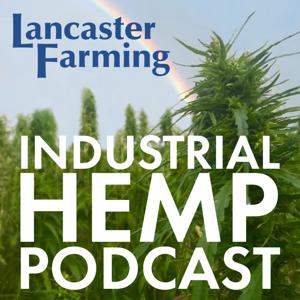

This week on the Hemp Show we talk to Maciej Kowalski, founder and CEO of Kombinat Konopni, a hemp company in Northern Poland.
We hear how he built a vertically integrated company — from planting, harvesting, processing, all the way to manufacturing finished goods — and why he would rather control the system rather than rely on supply chains that don't fully exist.
"Everyone is saying about the need to build a supply chain. Yeah, that's one approach. The other is be your own supply chain," Kowaski said.
His pragmatism is often guided by a healthy skepticism.
"If you have a dozen intermediaries between you and the manufacturer of raw materials, there is a geometrically raising probability of someone in this chain being not honest."
We talk about his farming practices and why his farmers do not need anything more than a rake and a baler to harvest the hemp stalks, because they practice "winter retting" where the hemp is left standing throughout the winter.
By spring the stalks are brittle enough they can be knocked down and windrowed with a standard rake and then baled like any other crop.
"Just leave the plants throughout the winter in the field — they're just going to separate on their own. If it sounds magical, it's because it is." Kowalski said.
How does this affect the finished fiber in terms of strength and durability?
He said winter retted hemp is slightly over-retted, so it is weaker but softer, which to Kowalski is a feature not a bug.
"The biggest difficulty of introducing or reintroducing hemp as an apparel grade textile is its stiffness. So if you make it slightly weaker, but softer at the same time — that's good."
We also talk about his company's recent listing on the Warsaw Stock Exchange — and why it wasn't about raising money.
"We made a promise to our investors, six, five, four years ago when we were raising money, that one day you will be able to buy or sell those shares on a stock exchange," he said.
"So even if I am not having anything out of it right now, it's like an essential part of keeping your word, which has two parts of it. One is just being a decent man. And the other part is being a businessperson and keeping your promises is good for business long term."
Learn Morekombinatkonopny.pl
Maciej Kowalski on LinkedIn
https://www.linkedin.com/in/maciejkowalskihemp/
News NuggetsU.S. judge lets Medicare hemp pilot program proceed as critics escalate opposition
hemptoday.net/u-s-judge-lets-medicare-hemp-pilot-program-proceed-as-critics-escalate-opposition
USDA National Hemp Report (April 16, 2026)
https://www.lancasterfarming.com/usda-hempreport2026-pdf/pdf_0d5fa8a7-4e7a-4150-87cd-af77968557a1.html
NHA + HEMI Leadership Announcement
https://www.globenewswire.com/news-release/2026/04/21/3277845/0/en/national-hemp-association-and-hemp-education-and-marketing-initiative-announce-leadership-appointments-and-national-initiative-to-advance-u-s-hemp-industry.html
NIHC USDA Export Funding Announcement
nihcoa.com/national-industrial-hemp-council-secures-usda-award-to-expand-global-market-opportunities-for-u-s-hemp
SponsorsIND HEMP
indhemp.com
Forever Green
hempcutter.com
This episode of the Lancaster Farming Industrial Hemp Podcast features a long-form interview with Maciej Kowalski, founder of Kombinat Konopny, a vertically integrated hemp company based near Elbląg, Poland. The conversation explores industrial hemp supply chains, fiber processing, textile manufacturing, and cannabinoid product development within a single operational system.
Kowalski describes a "seed to shelf" model in which hemp is grown, processed, decorticated, cottonized, spun into yarn, and manufactured into finished goods such as socks, garments, and home textiles. The discussion highlights the challenges of building hemp infrastructure in emerging markets and the limitations of fragmented supply chains in the global hemp industry.
The episode also examines winter retting, a low-input fiber processing method that relies on natural field exposure over winter months to break down plant material. Kowalski explains how this approach reduces capital requirements, simplifies harvesting through "rake and bale" systems, and produces fiber suitable for textile applications.
Additional topics include the Warsaw Stock Exchange listing of Kombinat Konopny, the economics of hemp textiles versus synthetic fibers like polyester, and the broader role of industrial hemp in global agriculture, manufacturing, and sustainable materials markets.
 View all episodes
 By Eric Hurlock, Digital Editor

4.6
6868 ratings
This week on the Hemp Show we talk to Maciej Kowalski, founder and CEO of Kombinat Konopni, a hemp company in Northern Poland.
We hear how he built a vertically integrated company — from planting, harvesting, processing, all the way to manufacturing finished goods — and why he would rather control the system rather than rely on supply chains that don't fully exist.
"Everyone is saying about the need to build a supply chain. Yeah, that's one approach. The other is be your own supply chain," Kowaski said.
His pragmatism is often guided by a healthy skepticism.
"If you have a dozen intermediaries between you and the manufacturer of raw materials, there is a geometrically raising probability of someone in this chain being not honest."
We talk about his farming practices and why his farmers do not need anything more than a rake and a baler to harvest the hemp stalks, because they practice "winter retting" where the hemp is left standing throughout the winter.
By spring the stalks are brittle enough they can be knocked down and windrowed with a standard rake and then baled like any other crop.
"Just leave the plants throughout the winter in the field — they're just going to separate on their own. If it sounds magical, it's because it is." Kowalski said.
How does this affect the finished fiber in terms of strength and durability?
He said winter retted hemp is slightly over-retted, so it is weaker but softer, which to Kowalski is a feature not a bug.
"The biggest difficulty of introducing or reintroducing hemp as an apparel grade textile is its stiffness. So if you make it slightly weaker, but softer at the same time — that's good."
We also talk about his company's recent listing on the Warsaw Stock Exchange — and why it wasn't about raising money.
"We made a promise to our investors, six, five, four years ago when we were raising money, that one day you will be able to buy or sell those shares on a stock exchange," he said.
"So even if I am not having anything out of it right now, it's like an essential part of keeping your word, which has two parts of it. One is just being a decent man. And the other part is being a businessperson and keeping your promises is good for business long term."
Learn Morekombinatkonopny.pl
Maciej Kowalski on LinkedIn
https://www.linkedin.com/in/maciejkowalskihemp/
News NuggetsU.S. judge lets Medicare hemp pilot program proceed as critics escalate opposition
hemptoday.net/u-s-judge-lets-medicare-hemp-pilot-program-proceed-as-critics-escalate-opposition
USDA National Hemp Report (April 16, 2026)
https://www.lancasterfarming.com/usda-hempreport2026-pdf/pdf_0d5fa8a7-4e7a-4150-87cd-af77968557a1.html
NHA + HEMI Leadership Announcement
https://www.globenewswire.com/news-release/2026/04/21/3277845/0/en/national-hemp-association-and-hemp-education-and-marketing-initiative-announce-leadership-appointments-and-national-initiative-to-advance-u-s-hemp-industry.html
NIHC USDA Export Funding Announcement
nihcoa.com/national-industrial-hemp-council-secures-usda-award-to-expand-global-market-opportunities-for-u-s-hemp
SponsorsIND HEMP
indhemp.com
Forever Green
hempcutter.com
This episode of the Lancaster Farming Industrial Hemp Podcast features a long-form interview with Maciej Kowalski, founder of Kombinat Konopny, a vertically integrated hemp company based near Elbląg, Poland. The conversation explores industrial hemp supply chains, fiber processing, textile manufacturing, and cannabinoid product development within a single operational system.
Kowalski describes a "seed to shelf" model in which hemp is grown, processed, decorticated, cottonized, spun into yarn, and manufactured into finished goods such as socks, garments, and home textiles. The discussion highlights the challenges of building hemp infrastructure in emerging markets and the limitations of fragmented supply chains in the global hemp industry.
The episode also examines winter retting, a low-input fiber processing method that relies on natural field exposure over winter months to break down plant material. Kowalski explains how this approach reduces capital requirements, simplifies harvesting through "rake and bale" systems, and produces fiber suitable for textile applications.
Additional topics include the Warsaw Stock Exchange listing of Kombinat Konopny, the economics of hemp textiles versus synthetic fibers like polyester, and the broader role of industrial hemp in global agriculture, manufacturing, and sustainable materials markets.

90,963 Listeners

21,898 Listeners

43,976 Listeners

32,110 Listeners
768 Listeners

30,230 Listeners
28,108 Listeners

112,191 Listeners

56,577 Listeners

24,554 Listeners
514 Listeners

4,210 Listeners

6,409 Listeners

16,215 Listeners

10,766 Listeners