
Sign up to save your podcasts
Or

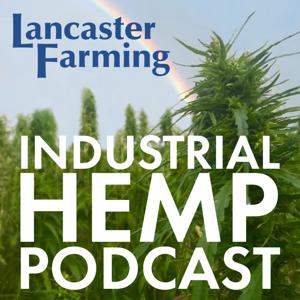
By Eric Hurlock, Digital Editor


4.6
6868 ratings


The podcast currently has 409 episodes available.
The most played episodes among Podcast App listeners.
This week's Hemp Podcast is divided into two parts. First, we take a look at the recent changes in U.S. hemp policy in a conversation with Rachel Umansky-Castro, the agriculture reporter for Bloomberg Government, who has spent the summer covering the fight over the federal definition of hemp. She walks us through what's been happening in D.C. lately, who the various lobbying groups are and what they ultimately want from federal policy. "There are so many divisions among these lawmakers, and it's clear that the hemp issue has split members of the same party, " Umansky-Castro said. Last week, Congress used a continuing resolution to push the so-called Mitch McConnell deadline from November to December 11, and Umansky-Castro explains what that extra month does and doesn't buy the industry. In part two of the show, we check in with Tennessee filmmaker Jordan Berger, whose documentary, "One Plant," is finally finished after several years of production. "The plant itself, you know, it touches on everything. And this thing started as a series because there's just so much, but we ultimately made it one film," Berger said. One Plant premieres at the Nashville Film Festival on September 26, 2026. From there, the film travels around the country to other festivals, with stops in Bozeman, MT; Santa Cruz, CA; and Minneapolis, MN. On October 24, the Lancaster Farming Industrial Hemp Podcast will host a double screening of One Plant in Lancaster, PA, at the Zoetropolis Theatre with a Q&A and time to meet others from the film and the Pennsylvania hemp community. Doors open at 11:30 a.m., tickets are available on Eventbrite at the link below. Learn More Get Tickets — ONE PLANT in Lancaster eventbrite.com ONE PLANT Lancaster Screening, Oct 24 oneplant.film/lancaster Bloomberg Governmentnews.bgov.com/ Rachel Umansky-Castro — Bloomberg Government news.bgov.com/author/rachel-umansky-castro-25432161 Hemp Ban Delay Passed by Congress After Blowback From Hardliners news.bgov.com/bloomberg-government-news/hemp-ban-delay-passed-by-congress-after-blowback-from-hardliners Nashville Film Festival — World Premiere, Sept 26 nashvillefilmfestival.org/2026-festival Bozeman Film Festival — Oct 10 bozemanfilmfestival.org Santa Cruz Film Festival — Oct 17 santacruzfilmfestivals.org NIHC Global Summit — "Seed to Style," FIT, NYC nihcglobalsummit.com Choose Your Change — Farm to Fabric Hemp Textile Symposium chooseyourchange.org Sponsors Jungmaven — hemp clothing, made in the USA jungmaven.com IND Hemp — Fort Benton, Montana indhemp.com

This week on the Industrial Hemp Podcast, we talk to Patrick Atagi, president and CEO of the National Industrial Hemp Council, the organization that's hosting the Seed to Style hemp fiber summit in conjunction with the Fashion Institute of Technology in New York City, Sept. 16-18. This event is a continuation of the conversations NIHC facilitated in Raleigh, N.C., last summer when they held their fiber summit at N.C. State's Wilson College of Textiles. But this year, the stakes are a little higher and the energy burns a little brighter. Because that's what New York City does: It amplifies everything. "It's building materials, it's clothing — the different parts and pieces of hemp all together, making it all work together. And the culmination is a fashion exhibit," Atagi said. The fashion exhibit caps the summit on Thursday evening — hemp coming off the field and onto the mannequin, the "seed to style" idea made real. Also, one big nugget of hemp news this week: Congress has hit the snooze button on the McConnell deadline that threatens to shut down the vast majority of the cannabinoid hemp industry. Intoxicating hemp products are still out, but the industry has an extra month to fight for its future. The clock is still ticking, but now the alarm is set for Dec. 11, 2026. Learn more NIHC Global Hemp Summit nihcglobalsummit.com Summit Sessions nihcglobalsummit.com/sessions/ The Goodness of Hemp Act thegoodnessofhemp.org Cornell Hemp hemp.cals.cornell.edu Thanks to Sponsors Jungmaven jungmaven.com IND HEMP indhemp.com Kings AgriSeeds kingsagriseeds.com Forever Green hempcutter.com
This week on The Hemp Show, we check in with Greg Wilson from Hempwood in Murray, Kentucky where, five years ago, Lancaster Farming's National Hemp Tour made its first stop. A lot has happened with Hempwood since then, and on this episode, Wilson brings us up to speed. In many ways, this show is a counting of the blessings — a list of what Wilson and his team have accomplished over the past half decade. We discuss new factories, new products and award-winning installations in the Bowling Green public schools that are changing the quality of education through natural building materials for generations of Kentucky schoolchildren. Learn more HempWood hempwood.com Bowling Green Daily News bgdailynews.com/2026/08/11/students-returning-to-school-amid-numerous-projects/ Cornell Hemp hemp.cals.cornell.edu Ursa Alta from Condor Seed condorseed.com/seeds/industrial-hemp/hemp-ursa-alta/ Murray State University – Center for Agricultural Hemp murraystate.edu/academics/CollegesDepartments/HutsonSchoolOfAgriculture/CenterForAgriculturalHemp/index.aspx Land Between the Lakes landbetweenthelakes.us Floor Covering News fcnews.net/2026/07/flooring-sustainability-summit-honors-2026-award-winners/ Thanks to our Sponsors! Jungmaven jungmaven.com IND HEMP indhemp.com Americhanvre americhanvre.com Forever Green hempcutter.com
This week on the hemp podcast we take a ride in the RV Time Machine. We're going back five years, back to the National Hemp Tour in the summer of 2021, when we took the podcast on the road — and took my family too. We traveled over ten thousand miles from coast to coast in a rented RV visiting hemp farms, processors and manufacturers across the country. The industry was sparse then and these hemp companies were few and far between in 2021. And keep in mind that in 2021, most of the noise around industrial hemp was actually about CBD flower and canabinoid production. What made our trip different was that we were talking to the people on the fiber and grain side of the industry, where the game-changing potential of this plant is strongest. Think houses, textiles, food and fuel. Think row crops, think big acreage, think about a third crop in with our beloved corn and soy. Think Hemp, big, boring and ubiquitous. But it has to start somewhere. People have to start doing things to make it happen. So in 2021, I set out to meet the people where they were. I went to see the farms, see the fields and see the factories. I wanted to meet the people, hear their dreams and see their visions come to life. And now five years later, with gas prices approaching 5 dollars a gallon, we go back on the road again, but this time we go virtually. Over the next few months, I will be sharing new conversations from the people I met on the road back then. We'll hear what's changed, what's stayed the same and what the industry looks like now. But before we start publishing those episodes, we're going to go back in time and revisit the tour itself. This episode is your atlas for our time travel. Buckle up, buttercup, and we'll see you in 2021. Thanks to our Sponsors IND HEMP indhemp.com Condor Seeds condorseed.com Forever Green hempcutter.com
On this week's show, we catch up with Lancaster County farmer, hemp innovator and cover-crop coach Steve Groff to hear about the progress on two machines that have been years in the making and, he thinks, are finally about ready. The headliner is the Fiber King in-field decorticator, a project Groff has been developing with Larry Serbin of Hemp Traders. Instead of hauling bulky raw stalks off the field, the machine decorticates the hemp right where it grows: the fiber is laid on the ground to dry for a couple of days and then round-baled while the wet hurd drops into a standard forage wagon. Groff calls it a systems approach. They're ready to build the first commercial unit and are testing at universities, but they're waiting on investor funding to get there. The economics are the whole point. Hemp is expensive to move as raw biomass — you just can't get enough weight on a truck — so decorticating in the field adds value for the farmer and lowers transportation costs as the crop gets denser. "You want to give the farmer as much profit as possible," Groff said. We also talked about his four-inch precision no-till hemp planter, developed through a Pennsylvania Department of Agriculture innovation grant. By singulating seed and placing it on even four-inch spacing, the planter aims for the uniform, pencil- to Sharpie-sized stalks that textile buyers want, Groff said. Learn More Steve Groff stevegroff.com Hemp Traders hemptraders.com Hemp Events and Happenings One Plant Documentary World Premiere — Nashville Film Festival Nashville, TN Sept. 26 nashfilmfest2026.eventive.org/schedule/one-plant-6a729213e47b192d0a91b154 Hemp Lava Love Workshop Tucson, AZ Oct. 13–15 hemplavalove.my.canva.site/garden-wedding-website-ph-in-white-red-black-romantic-scrapbook-style-style One Plant Documentary Screening Lancaster, PA Oct. 24 eventbrite.com/e/lancaster-farming-sunflower-present-one-plant-tickets-1998324956739 Thanks to Our Sponsors! Americhanvre americhanvre.com IND Hemp indhemp.com Forever Green hempcutter.com
The podcast currently has 409 episodes available.

91,027 Listeners

21,841 Listeners

43,897 Listeners

32,074 Listeners
764 Listeners
30,187 Listeners
27,824 Listeners

111,979 Listeners

56,469 Listeners
24,560 Listeners
520 Listeners

4,219 Listeners
6,373 Listeners

15,815 Listeners
10,646 Listeners