
Sign up to save your podcasts
Or

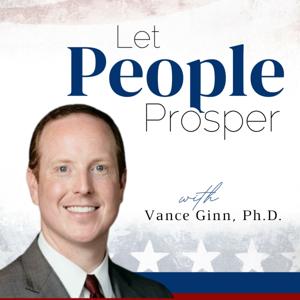

We’re at a moment where support for free-market capitalism is slipping—and it’s not hard to see why. From both political parties, we’re hearing the same kinds of ideas: cap prices, punish profits, and have the government take a more active role in managing markets.
Politicians are increasingly trying to pick outcomes, override prices, and direct capital. And history is clear: this doesn’t fix capitalism's weaknesses—it replaces markets with politics.
In today’s episode of This Week’s Economy, I break down why prices and profits matter—how they act as the heartbeat of the free market, sending signals, shaping decisions, and fueling the competition that improves our quality of life. Tune in to the full episode on YouTube, Apple Podcast, or Spotify, and visit my website for more information about my work at Ginn Economic Consulting.
 View all episodes
 By Vance Ginn, Ph.D.
5
3131 ratings
We’re at a moment where support for free-market capitalism is slipping—and it’s not hard to see why. From both political parties, we’re hearing the same kinds of ideas: cap prices, punish profits, and have the government take a more active role in managing markets.
Politicians are increasingly trying to pick outcomes, override prices, and direct capital. And history is clear: this doesn’t fix capitalism's weaknesses—it replaces markets with politics.
In today’s episode of This Week’s Economy, I break down why prices and profits matter—how they act as the heartbeat of the free market, sending signals, shaping decisions, and fueling the competition that improves our quality of life. Tune in to the full episode on YouTube, Apple Podcast, or Spotify, and visit my website for more information about my work at Ginn Economic Consulting.
39,134 Listeners

971 Listeners

4,373 Listeners

4,278 Listeners
381 Listeners

1,535 Listeners
4,890 Listeners
586 Listeners

367 Listeners
6,547 Listeners

6,521 Listeners

43,878 Listeners
450 Listeners

224 Listeners

58 Listeners