
Sign up to save your podcasts
Or

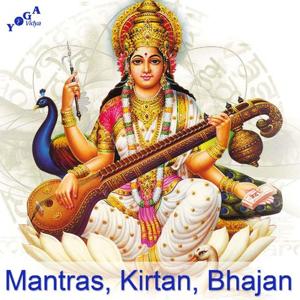


Suguna and Sabina are chanting Om Namah Shivaya at Yoga Vidya in Bad Meinberg, Germany.
If you are interested in seminars with music, you can find here seminars on mantra and music. For more kirtan and Mantra vocal recordings click here. For more information on Yoga, meditation and Ayurveda can be found on the internet pages of Yoga Vidya.
“Om Namah Shivaya” is the Panchakshara Mantra of Shiva. “Om Namah Shivaya” is a Dhyana Moksha Mantra, a mantra for meditation, a mantra that leads to liberation. “Om Namah Shivaya” means: Om – infinite sound, Namah means “homage, greeting to,”
Shivaya means “to Shiva.” And Shiva means “the auspicious one,” “the benevolent one,” “the loving one.” One could also say: “Homage to cosmic love, to the consciousness that is everywhere.” “Om Namah Shivaya” can also be repeated specifically to let go, to let go of thoughts, to deepen meditation, and to go within.
Om Shakti Om is a dynamic, energetic kirtan for Shakti, the cosmic energy. In this kirtan, Shakti, the cosmic power, becomes tangible and palpable. Let yourself be carried away by the dynamics of this Om Shakti Kirtan.
Performed by Sundaram & Friends at the Yoga Vidya Easter Concert 2024
More at www.sundaram.de and sundaram.de/shop/
Em
Jay Ambe Jagadambe
composed and performed by Lisa Lilamayi
A kirtan that invokes the Divine Mother as joy. Jaya Ma - may the Divine Mother triumph - yes she will triumph, in me, everywhere in the world.
Ma stands for Durga, but also for all manifestations of the Divine Mother, the Devi, the feminine power.
Hagit Noam sings the Ganesha Gayatri Mantra and Om Gam Ganapataye Namah. Let yourself be enchanted by Hagit's wonderful singing! She is a specialist in early music and interprets well-known mantras in an inspiring way.
Hagit regularly gives seminars and concerts at Yoga Vidya.
Om
followed by the Ganesha Mantra Om Gam Ganapataye Namaha (number 699 under Ganesha in the kirtan booklet)
Om Gam Ganapataye Namaha.
If you are interested in seminars with music, you can find here seminars on mantra and music. For more kirtan and Mantra vocal recordings click here. For more information on Yoga, meditation and Ayurveda can be found on the internet pages of Yoga Vidya.
Radhe Radhe Radhe Bolo
Bm A Bm
Shiva Shiva Shiva Bolo
Performed by
Ishwara: vocals & guitar
This is a particularly dynamic, energetic kirtan. When you sing or listen to this kirtan, you will be filled with joy, energy, confidence, and courage.
New yoga teachers from Bamberg and Bayreuth in Germany are chanting the Shri Nrisimha Mahamantra during a saturday evening satsang at Yoga Vidya in Bad Meinberg, Germany.
Here are the lyrics to sing along:
Ugram Viram Maha-vishnum 'Jvalantam Sarvato-mukham /
Namas Te Nara-sinhaya 'Prahlada-hlada-dayine /
Ito Nri-sinhah Parato Nri-sinho 'Yato Yato Yami Tato Nri-sinhah /
Narasimha is the lion god. Narasimha is an incarnation of Vishnu. Vishnu takes on various forms to restore dharma, the divine order. And Narasimha is one of them. Narasimha means half human, half lion. Simha means lion, Nara means human. Narasimha, the man-lion, or sometimes simply Nrisimha, the human lion or the lion-like man. Man-lion, lion-man is how it is translated. This kirtan consists of three verses and invokes this lion power.
If you are interested in seminars with music, you can find here seminars on mantra and music. For more kirtan and Mantra vocal recordings click here. For more information on Yoga, meditation and Ayurveda can be found on the internet pages of Yoga Vidya.
Group Mudita perform the kirtan Jago Ma Jago Ma at Yoga Vidya in Bad Meinberg, Germany.
The kirtan uses a simple but powerful repetition: the word “Jago” (wake up), combined with “Ma” (mother), invokes the divine mother in collective singing.
Jago Jago Ma, Jago Jago Ma
Shankari Ma
(... further invocations ...)
The sound is cyclical—ranging from a calm, meditative mood to an uplifting, communal energy. This dynamic allows for both individual listening and communal singing and chanting in a circle.
Jago means “awaken/wake up.” In spiritual songs, this can mean: Awaken inwardly, open your heart, recognize divine reality.
Ma stands for “mother” — here in the sense of a divine, universal mother, often associated with the feminine power of the universe. In many mantras and bhajans, “Ma” is used as an address to the divine mother.
Shankari Ma refers to a form of this Divine Mother — a loving, protective, and awakening power. In kirtan, she is invoked to grant protection, awareness, and blessings.
In the tradition of such bhajans and kirtans, the call “Jago Ma” often symbolizes awakening — whether spiritual, emotional, or as an awareness of the divine presence within us.
If you are interested in seminars with music, you can find here seminars on mantra and music. For more kirtan and Mantra vocal recordings click here. For more information on Yoga, meditation and Ayurveda can be found on the internet pages of Yoga Vidya.
Vallabha chants Shri Ram Jaya Ram at Yoga Vidya in Bad Meinberg, Germany.
Shri Ram Jaya Ram,
If you are interested in seminars with music, you can find here seminars on mantra and music. For more kirtan and Mantra vocal recordings click here. For more information on Yoga, meditation and Ayurveda can be found on the internet pages of Yoga Vidya.
The kirtan “Shri Ram Jaya Ram Jaya Sita Ram” expresses in various ways how one can see God and what relationship one can have with God. In this kirtan, Rama is particularly revered, so it is a Rama kirtan. Rama is worshipped as Ram, and Ram is both the short form of Rama, as it is in Hindi, but Ram is also the bija mantra of Rama, bija, the seed mantra. Rama is Shri, Shri means “blissful” and “respect.” When Shri precedes a name, it is always an expression of respect and at the same time of closeness. "Shri Ram. Oh Rama, I feel close to you and I worship you. Jaya Ram. May your principles triumph.
The entire mantra means: I am abundance, fulfillment from the transcendent. I am supreme consciousness, great abundance, beyond all that is movable and immovable. I am Shiva, pure consciousness, my nature is eternal joy. I am bliss, cosmic bliss.
Sachara Chara Pari Purna Shivoham sung by Bhakti – this is the name of this kirtan, which is very popular at Yoga Vidya. It is a Vedanta kirtan that expresses the unity of the individual soul with the Cosmic Soul: Shivoham, I am Shiva, is the refrain.
Dm C
Sachara Chara Pari Purna
Bb C Dm
Shivoham, Shivoham
Dm C
Nityananda Svarupa
Bb C Dm
Shivoham, Shivoham
Dm C
Anandoham Anandoham
Bb C Dm
Anandam brahmanandam
The entire mantra means: I am fullness, fulfillment from the transcendent. I am supreme consciousness, great fullness, beyond everything that is movable and immovable. I am Shiva, pure consciousness, my nature is eternal joy. I am bliss, cosmic bliss.
If you are interested in seminars with music, you can find here seminars on mantra and music. For more kirtan and Mantra vocal recordings click here. For more information on Yoga, meditation and Ayurveda can be found on the internet pages of Yoga Vidya.
Newly trained yoga teachers sing the kirtan Krishna Hare Krishna Gopala during a Saturday evening satsang at Yoga Vidya in Bad Meinberg. Listen to the singing of Krishna Hare Krishna Gopala and join in. You will not find the lyrics in the Yoga Vidya kirtan booklet.
The kirtan is characterized by a simple but powerful structure: The mantra phrases “Krishna Hare Krishna, Gopala Hare...” are sung repeatedly — often alternating between the lead singer and the choir (call and response), accompanied by the harmonium.
The chant unfolds in several phases:
First, calm and inviting — ideal for entering and connecting.
Then increasingly rhythmic and expressive — generating collective energy and a sense of community.
Finally, into a meditative, solemn sound space that provides room for inner peace and devotion.
🧘 Meaning of the mantra names
Krishna — Among other things, this name means “the all-attractive one,” “the attractive one.” It symbolizes divine attraction, love, and universal beauty.
Gopala — Literally “cowherd”: ‘go’ = cow, “pāla” = guardian/protector. As Gopala, Krishna is revered in his role as a loving guardian and protector.
Hare — An invocation of divine energy, the divine “Shakti.” In the context of the mantra, ‘Hare’ is often understood as a request: “Oh divine energy, please take me into your service/close to you.”
According to traditional belief, chanting these names creates a spiritual vibration that opens the heart, clears the mind, and can establish a connection with the divine.
If you are interested in seminars with music, you can find here seminars on mantra and music. For more kirtan and Mantra vocal recordings click here. For more information on Yoga, meditation and Ayurveda can be found on the internet pages of Yoga Vidya.
From the publisher's feed

7,624 Listeners
10,506 Listeners

209 Listeners
32 Listeners
223 Listeners
2,626 Listeners
23 Listeners

98 Listeners

72 Listeners
649 Listeners

112 Listeners

26 Listeners
9 Listeners
800 Listeners

165 Listeners