
Sign up to save your podcasts
Or

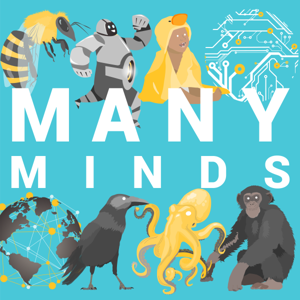


Welcome back folks! The new season of Many Minds is quickly ramping up. On today's episode we're thrilled to be rejoined by Dr. Michael Muthukrishna. Michael is Associate Professor of Economic Psychology at the London School of Economics. He's an unusually wide-ranging and rigorous thinker; though still early in his career, Michael has already made key contributions to our understanding of culture, intelligence, evolution, innovation, cooperation and corruption, cross-cultural variation, and a bunch of other areas as well.
We wanted to have Michael back on—not just because he was an audience favorite—but because he's got a new book out. It's titled A theory of everyone: The new science of who we are, how we got here, and where we're going. In this conversation, Michael and I talk about the book and lay out that grand theory mentioned in the title. We discuss energy and how—since the very origins of life—it's proven to be a fundamental, unshakeable constraint. We talk about the nature of human intelligence and consider the dynamics of human cooperation and innovation. We also delve into a few of the implications that Michael's "theory of everyone" has for the future of our species. Along the way, we touch on carrying capacity, nuclear fusion, inclusive fitness, religion, the number line, multiculturalism, AI, the Flynn effect, and chaos in the brickyard.
If you enjoy this one, you may want to go back to listen to our earlier chat as well. But more importantly, you may want to get your hands on Michael's book. It's ambitious and inspiring and we were barely able to graze it here.
Alright friends, without further ado, on to my second conversation with Dr. Michael Muthukrishna. Enjoy!
A transcript of this episode is available here.
Notes and links
8:30 – Dr. Muthukrishna completed his PhD at the University of British Columbia, where he was advised by Joseph Henrich. He also worked with Ara Norenzayan, Steven Heine, and others.
9:30 – Previous books on dual-inheritance theory and cultural evolution mentioned here include The Secret of Our Success by Joseph Henrich, Not by Genes Alone by Peter Richerson and Robert Boyd, and Darwin's Unfinished Symphony by Kevin Lala.
16:30 – Dr. Muthukrishna's paper on the theory problem in psychology, drawn from his dissertation.
17:10 – The classic paper 'Chaos in the Brickyard,' about the need for theory-building in science.
22:00 – For a brief overview of Dr. Muthukrishna's understanding of human intelligence and human uniqueness, see this recent paper. For an overview of cumulative culture in comparative perspective, see here.
23:00 – For the 2005 issue of Science magazine showcasing 25 big unanswered questions, see here.
23:30 – For the review paper on cooperation by Dr. Muthukrishna and Dr. Henrich, see here.
26:00 – For Dr. Muthukrishna's empirical work that attempts to induce corruption in the lab, see here.
28:00 – The scholar Robert Klitgaard, mentioned here, is well-known for his research on corruption.
29:00 – See the preprint by Dr. Muthukrishna and colleagues titled 'The size of the stag determines the level of cooperation.'
33:30 – A video laying out the RNA world hypothesis.
45:00 – For more on the evolution of human brain size, see our earlier conversation with Dr. Muthukrishna, as well as our conversation with Jeremy DeSilva.
47:00 – For the metric known as Energy Return on Investment (EROI), see here.
54:00 – For more on the cross-cultural variation in numeracy, see here.
55:20 – To correct the record, according to this review of rare numeral systems, there is only a single known base 8 system in the world's languages.
57:15 – In our earlier conversation (around 42:00), we discussed the work by Luria on 'If P, then Q' reasoning.
57:30 – For more on the so-called WEIRD problem, see our earlier audio essay.
1:00:30 – For some experimental evidence consistent with the idea that language improves the transmission of cultural information, see here.
1:07:00 – For data on the acceleration of urbanization, see here.
1:16:00 – For a brief primer on land value taxes, see here.
1:18:30 – For the idea that Machiavelli's The Prince was satire, see here.
Many Minds is a project of the Diverse Intelligences Summer Institute, which is made possible by a generous grant from the Templeton World Charity Foundation to UCLA. It is hosted and produced by Kensy Cooperrider, with help from Assistant Producer Urte Laukaityte and with creative support from DISI Directors Erica Cartmill and Jacob Foster. Our artwork is by Ben Oldroyd. Our transcripts are created by Sarah Dopierala.
Subscribe to Many Minds on Apple, Stitcher, Spotify, Pocket Casts, Google Play, or wherever you listen to podcasts. You can also now subscribe to the Many Minds newsletter here!
We welcome your comments, questions, and suggestions. Feel free to email us at: [email protected].
For updates about the show, visit our website or follow us on Twitter: @ManyMindsPod.
And we're back! It's been a while, friends. Hope you enjoyed your fall and your holidays. Thanks so much for re-joining us—we're super excited to be kicking off a brand-new season of the Many Minds podcast. We thought we'd get things started this year with an audio essay, one partly inspired by some musings and mullings from my parental leave. Hope you enjoy it folks—and we'll see you again in a couple weeks with our first interview of 2024.
Now on to 'Dawn of the smile.' Enjoy!
A text version of this episode is available here.
Notes and links
3:00 – Darwin describes his children's first smiles in his 1872 book, The Expression of the Emotions in Man and Animals.
4:10 – On so-called Duchenne smiles, see this classic investigation.
5:00 – For a summary of "basic emotions" theory, see any number of Paul Ekman's writing (e.g., here, here). For a recent articulation of the "social tools" theory, see writings by Alan J. Fridlund (e.g., here). For another influential recent critique of "basic emotions" theory, see here.
6:00 – For the classic bowling study, see here.
7:00 – For a recent review of facial expressions in blind people, see here.
7:45 – For a review of smiling and gender (and the importance of "rules and roles"), see here. For one of the studies linking smiliness to historical migration patterns, see here.
8:30 – For the historical shift in smiling—and its possible relation to the Kodak company—see here. For the yearbook photo analysis, see here.
9:30 – See Darwin's discussion of infant laughter in The Expression of the Emotions in Man and Animals.
10:30 – For Darwin's observations of laughter and smiles in primates, again, The Expression of the Emotions in Man and Animals. See Jan van Hooff's classic study here.
11:30 – For the study comparing laughter across the Great Apes, see here. For the study of an "ape-like" stage in human laughter, see here.
12:30 – For a review of play vocalizations and laughter across species, see here.
13:20 – For the Marina Davila-Ross's suggestion that laughter and smiles share a common evolutionary source, see here.
13:30 – For research on human infants' open-mouthed smiles, see here.
14:00 – For the idea of the "acoustic origin" of the smile, see here.
Many Minds is a project of the Diverse Intelligences Summer Institute, which is made possible by a generous grant from the Templeton World Charity Foundation to UCLA. It is hosted and produced by Kensy Cooperrider, with help from Assistant Producer Urte Laukaityte and with creative support from DISI Directors Erica Cartmill and Jacob Foster. Our artwork is by Ben Oldroyd. Our transcripts are created by Sarah Dopierala.
Subscribe to Many Minds on Apple, Stitcher, Spotify, Pocket Casts, Google Play, or wherever you listen to podcasts. You can also now subscribe to the Many Minds newsletter here!
We welcome your comments, questions, and suggestions. Feel free to email us at: [email protected].
For updates about the show, visit our website or follow us on Twitter: @ManyMindsPod.
Hi friends! We've been on hiatus for the fall, but we'll be back with new episodes in January 2024. In the meanwhile, enjoy another favorite from our archives!
----
[originally aired November 2, 2022]
Some of us are a little shy; others are sociable. There are those that love to explore the new, and those happy to stick to the familiar. We're all a bit different, in other words—and when I say "we" I don't just mean humans. Over the last couple of decades there's been an explosion of research on personality differences in animals too—in birds, in dogs, in fish, all across the animal kingdom. This research is addressing questions like: What are the ways that individuals of the same species differ from each other? What drives these differences? And is this variation just randomness, some kind of inevitable biological noise, or could it have an evolved function?
My guest today is Dr. Kate Laskowski. Kate is an Assistant Professor of Evolution and Ecology at the University of California, Davis. Her lab focuses on fish. They use fish, and especially one species of fish—the Amazon molly—as a model system for understanding animal personality (or as she sometimes calls it "consistent individual behavioral variation").
In this episode, Kate and I discuss a paper she recently published with colleagues that reviews this booming subfield. We talk about how personality manifests in animals and how it may differ from human personality. We zoom in on what is perhaps the most puzzling question in this whole research area: Why do creatures have personality differences to begin with? Is there a point to all this individual variation, evolutionarily speaking? We discuss two leading frameworks that have tried to answer the question, and then consider some recent studies of Kate's that have added an unexpected twist. On the way, we touch on Darwinian demons, combative anemones, and a research method Kate calls "fish Big Brother."
Alright friends, I had fun with this one, and I think you'll enjoy it, too. On to my conversation with Kate Laskowski!
A transcript of this episode is available here.
Notes and links
3:00 – A paper by Dr. Laskowski and a colleague on strong personalities in sticklebacks.
5:30 – The website for the lab that Dr. Laskowski directs at UC-Davis.
7:00 – The paper we focus on—'Consistent Individual Behavioral Variation: What do we know and where are we going?'—is available here.
11:00 – A brief encyclopedia entry on sticklebacks.
13:00 – A video of two sea anemones fighting. A research article about fighting (and personality) in sea anemones.
15:00 – A classic article reviewing the "Big 5" model in human personality research.
17:00 – The original article proposing five personality factors in animals.
22:30 – A recent special issue on the "Pace-of-Life syndromes" framework.
27:00 – A recent paper on evidence for the "fluctuating selection" idea in great tits.
29:00 – A 2017 paper by Dr. Laskowski and colleagues on "behavioral individuality" in clonal fish raised in near-identical environments.
32:10 – A just-released paper by Dr. Laskowski and colleagues extending their earlier findings on clonal fish.
39:30 – The Twitter account of the Many Birds project. The website for the project.
Dr. Laskowski recommends:
Innate, by Kevin Mitchell
Why Fish Don't Exist, by Lulu Miller
The Book of Why, by Judea Pearl and Dana Mackenzie
Many Minds is a project of the Diverse Intelligences Summer Institute, which is made possible by a generous grant from the Templeton World Charity Foundation to UCLA. It is hosted and produced by Kensy Cooperrider, with help from Assistant Producer Urte Laukaityte and with creative support from DISI Directors Erica Cartmill and Jacob Foster. Our artwork is by Ben Oldroyd. Our transcripts are created by Sarah Dopierala.
Subscribe to Many Minds on Apple, Stitcher, Spotify, Pocket Casts, Google Play, or wherever you listen to podcasts. You can also now subscribe to the Many Minds newsletter here!
We welcome your comments, questions, and suggestions. Feel free to email us at: [email protected].
For updates about the show, visit our website or follow us on Twitter: @ManyMindsPod.
Hi friends, we're on hiatus for the fall. To tide you over, we're putting up some favorite episodes from our archives. Enjoy!
----
[originally aired July 20, 2022]
The world is bigger than you think. I don't mean geographically, though maybe that too. I mean in terms of its textures and sounds and smells; I mean in terms of its hues and vibrations. There are depths and layers to the world that we don't usually experience, that we might actually never be able to experience. Our senses just aren't wired to take it all in. We're simply not tuned to all the dimensions of reality's rich splendor. But there is a way we can appreciate these hidden dimensions: with a flex of the imagination, we can step into the worlds of other creatures; we can try out different eyes and noses; we can voyage into different perceptual universes. Or at least we can try.
My guest today is Ed Yong, author of the new book An Immense World: How Animal Senses Reveal the Hidden Realms Arounds Us. Ed is a science writer for The Atlantic and the author of an exceptional earlier book on the microbiome called I Contain Multitudes. This new book tours the wide diversity of animal senses. It asks what it's like to be a bat, sure, but also what it's like to be a star-nosed mole, a manatee, or a mantis shrimp. Informed by some truly extraordinary science, the book considers how it might feel to electrolocate around the ocean, to hear through the threads of a web, or to be tugged by the earth's magnetic field.
There's a lot of praise I could lavish on this book, but I'll just say this: it really makes you feel more alive. Reading it makes everything, in fact, seem more alive. It makes the world seem richer, more vivid, somehow more technicolor and finely textured. It makes you realize that every organism, all the creatures we share this planet with, possesses a kind of vibrant genius all their own.
After this episode we will be on a short holiday, and then we'll be gearing up for Season 4. If you have guests or topics you want us to cover, please send us a note. And, of course: if you've enjoyed the show so far, we would be most grateful if you would leave us a rating or a review. I know I say this all the time, and it's probably a bit annoying: but it really, truly helps, and I would personally, very much appreciate it!
Alright friends, now to my conversation with Ed Yong. Enjoy!
A transcript of this episode is available here.
Notes and links
3:30 – One of our earlier audio essays—'Me, my umwelt, and I'—profiled von Uexküll and his concept of an Umwelt.
6:00 – The classic Nagel article 'What is it like to be a bat?'; Mike Tomasello's recent variant, 'What is it like to be a chimpanzee?', which we discussed just last episode.
10:00 – One of many articles by Ed about COVID-19. He was awarded a Pulitzer prize for his coverage of the pandemic.
14:30 – A popular article on proprioception.
19:00 – A research article on the evolution of opsin proteins.
20:00 – A primer on echolocation.
25:00 – A brief article on heat-sensitive pits in snakes.
26:30 – An academic article about the "star" of the star-nosed mole. A video showing the star-nosed mole in action.
31:00 – A popular article about the eyes of starfish.
32:00 – A collection of research articles about the Ampullae of Lorenzini.
35:00 – A very recent article about spider webs as "outsourced" hearing.
38:00 – A research article about aspects of bird song that humans can't hear.
40:00 – A study by Lucy Bates and colleagues about how elephants operate with a spatial model of where their kin are.
You can read more about Ed's work at his website, catch up on his stories in The Atlantic, or follow him on Twitter.
Many Minds is a project of the Diverse Intelligences Summer Institute, which is made possible by a generous grant from the Templeton World Charity Foundation to UCLA. It is hosted and produced by Kensy Cooperrider, with help from Assistant Producer Urte Laukaityte and with creative support from DISI Directors Erica Cartmill and Jacob Foster. Our artwork is by Ben Oldroyd. Our transcripts are created by Sarah Dopierala.
Subscribe to Many Minds on Apple, Stitcher, Spotify, Pocket Casts, Google Play, or wherever you listen to podcasts. You can also now subscribe to the Many Minds newsletter here!
We welcome your comments, questions, and suggestions. Feel free to email us at: [email protected].
For updates about the show, visit our website or follow us on Twitter: @ManyMindsPod.
Hi friends, we're on hiatus for the fall. To tide you over, we're putting up some favorite episodes from our archives. Enjoy!
----
[originally aired May 25, 2022]
When we think about ancient humans, we often imagine them doing certain kinds of things. Usually very serious things like hunting game and making tools, foraging for food and building fires, maybe performing the occasional intricate ritual. But there was definitely more to the deep past than all this adulting. There were children around, too—lots of them—no doubt running around and wreaking havoc, much as they do today. But what were the kids up to, exactly? What games were they playing? What toys did they have? What were their lives like?
My guest today is Dr. Michelle Langley, an archaeologist at Griffith University in Queensland, Australia. Michelle grapples with questions about children, play, and childhood in the deep past. In recent work, she draws on ethnographic reports to assemble a picture of what children have in common all across the globe. She then uses that understanding to cast new light on the archaeological record, to make fresh inferences about what kids must have been doing, making, and leaving behind.
In this conversation, Michelle and I talk about the kinds of basic activities that have long been a mainstay of childhood everywhere—activities like playing with dolls, keeping pets, collecting shells, and building forts. We discuss how archaeologists often assume that hard-to-interpret objects have ritual purpose, when, in fact, those objects could just as easily be toys. We talk about how children seek out and engineer "secret spaces". We also touch on how a male-centric bias has distorted archaeological discussions; how the baby sling may have been the primordial container; and how otters stash their favorite tools in their armpits.
This is a super fun one, folks. But first a tiny bit of housekeeping: in case you missed the news, we have new newsletter. Seriously, who wouldn't want a monthly dose of Many Minds right in their inbox? You can find a sign-up link in the show notes.
Alright friends, on to my conversation with Dr. Michelle Langley. Enjoy!
A transcript of this episode is available here.
Notes and links
2:30 – A 15,000 year old horse figurine from Les Espélugues cave in France.
6:00 – A classic paper by Conkey & Spector that helped initiate a wave of feminist archaeology.
7:30 – Dr. Langley's first paper to examine children's leavings in the archaeological record.
8:30 – See here for discussion and examples of perforated batons or bâton percés.
9:30 – Dr. Langley's paper, co-authored with Mirani Litster, 'Is it ritual? Or is it children?'
14:00 – An influential discussion of ethnographic analogies in archaeology.
18:30 – A paper on the interpretation of Dorset miniature harpoon heads.
23:30 – An article on the Neanderthal ornamental use of raptor feathers.
29:00 - Dr. Langley's paper on identifying children's secret spaces in the archaeological record.
30:30 – A book by David Sobel on children's special spaces.
34:00 – A website about the site of Étiolles.
40:00 – A figure showing the layout of the Bruniquel Cave, including the secondary structures.
41:00 – More information about the mammoth bone huts of Ukraine.
44:00 – A paper by Dr. Langley and Thomas Suddendorf on bags and other "mobile containers" in human evolution.
47:00 – A video showing a sea otter using their underarm "pocket" to store objects.
50:00 – The "carrier bag theory of evolution" was proposed by Elizabeth Fisher in Women's Creation. This later inspired Ursula Le Guin to propose the "carrier bag theory of fiction."
51:30 – An experimental study by Dr. Langley and colleagues on children's emerging intuitions about the use of containers and bags.
55:30 – A paper by Dr. Langley and colleagues on early symbolic behavior in Indonesia.
Dr. Langley recommends:
Growing up in the Ice Age, by April Nowell
You can read more about Dr. Langley's work at her website and follow her on Twitter.
Many Minds is a project of the Diverse Intelligences Summer Institute, which is made possible by a generous grant from the Templeton World Charity Foundation to UCLA. It is hosted and produced by Kensy Cooperrider, with help from Assistant Producer Urte Laukaityte and with creative support from DISI Directors Erica Cartmill and Jacob Foster. Our artwork is by Ben Oldroyd. Our transcripts are created by Sarah Dopierala.
Subscribe to Many Minds on Apple, Stitcher, Spotify, Pocket Casts, Google Play, or wherever you listen to podcasts. You can also now subscribe to the Many Minds newsletter here!
We welcome your comments, questions, and suggestions. Feel free to email us at: [email protected].
For updates about the show, visit our website or follow us on Twitter: @ManyMindsPod.
Hi friends, we're on hiatus for the fall. To tide you over, we're putting up some favorite episodes from our archives. This week's episode is in our audio essay format. Enjoy!
----
[originally aired May 26, 2021]
Welcome back folks! We've got an audio essay for you this week. It touches on art, music, the skin, the spine, individual differences, vestigial responses, tiny muscles. There's even some Darwin thrown in there. It's a fun one. Hope you enjoy it!
A text version of this essay is available on Medium.
Notes and links
1:30 – The novel that very recently gave me goosebumps.
2:00 – A brief discussion of Nabokov and his ideas about the tell-tale tingle.
2:45 – Some terms for goosebumps in other languages.
3:00 – A primer on skin anatomy.
4:00 – A paper on the thermoregulatory function of piloerection in primates and other animals.
4:25 – Read Darwin's Expression here.
5:00 – A paper about "nails on chalkboard chills." A paper that discusses claims that piloerection attends awe (but which fails to find evidence for this association in a lab setting). A paper on goosebumps in religious experiences. A paper that references mathematicians getting goosebumps when seeing proofs.
5:30 – The 1980 paper by Goldstein on "thrills."
6:45 – The Darwin passage is quoted in McCrae 2007.
7:00 – A 1995 paper by Panskepp, as well as his 2002 study with a co-author.
7:40 – A recent paper on chills in response to films; another on poetry.
9:15 – The paper by McCrae reporting the association between "openness to experience" and chills.
10:00 – A paper by Fiske and colleagues on kama muta, the "sudden devotion emotion."
11:10 – Panskepp's "separation call" hypothesis is perhaps best described in his 2002 study.
Many Minds is a project of the Diverse Intelligences Summer Institute, which is made possible by a generous grant from the Templeton World Charity Foundation to UCLA. It is hosted and produced by Kensy Cooperrider, with help from Assistant Producer Urte Laukaityte and with creative support from DISI Directors Erica Cartmill and Jacob Foster. Our artwork is by Ben Oldroyd. Our transcripts are created by Sarah Dopierala.
Subscribe to Many Minds on Apple, Stitcher, Spotify, Pocket Casts, Google Play, or wherever you listen to podcasts. You can also now subscribe to the Many Minds newsletter here!
We welcome your comments, questions, and suggestions. Feel free to email us at: [email protected].
For updates about the show, visit our website or follow us on Twitter: @ManyMindsPod.
Hi friends, we're on hiatus for the fall. To tide you over, we're putting up some favorite episodes from our archives. Enjoy!
----
[originally aired June 23, 2021]
You've no doubt heard that—as humans—our sense of smell is, well, kind of pathetic. The idea goes all the way back to Aristotle, that we have advanced senses—especially sight and hearing—and then lowly, underdeveloped ones—taste and smell. It's an idea that has been repeated and elaborated over and over, throughout Western intellectual history. Along with it comes a related notion: that smells are nearly impossible to talk about, that odors simply can't be captured in words. These ideas may be old, but are they actually true?
A number of researchers would say they're ripe for reconsideration. And my guest is one such researcher, Asifa Majid. She's Professor in the Department of Psychology at the University of York in the UK. For a decade now, Asifa's been pioneering a new wave of research on human olfaction, especially how it interfaces with language, thought, and culture.
In this conversation we talk about the general notion that some kinds of experience are harder to put into words than others. We discuss Asifa's fieldwork with hunter-gatherer groups in the Malay peninsula, as well as her studies with wine experts in the west. We talk about whether learning special smell terms seems to sharpen one's ability to discriminate odors. And we venture beyond Asifa's own work, to touch on a bunch of recent highlights from the broader science of olfaction.
This was such a fun conversation, folks! I've admired Asifa's work on this topic since her very first paper. She's a truly interdisciplinary thinker and, as you'll hear, she's got a nose for fun examples and deep questions.
Without further ado, on to my conversation with Dr. Asifa Majid! Enjoy.
A transcript of this episode is available here.
Notes and links
3:40 – A paper on the 19th century rise of the myth that humans are poor smellers.
6:00 – A paper estimating that humans can discriminate possibly a trillion different odors.
7:30 – A theoretical paper by Dr. Majid and a collaborator on "differential ineffability" and the senses.
9:20 – Dr. Majid's collaborator in her work on Jahai, a Malaysian language, was Niclas Burenhult.
11:00 – A classic book on the idea of "basic terms" in the domain of color, which provide an analogy for basic terms in the domain of smell.
12:30 – A first paper by Dr. Majid and Niclas Burenhult describing the language of olfaction in Jahai.
14:45 – Dr. Majid's first experiment comparing odor naming (and color naming) in Jahai and English.
20:00 – Dr. Majid has also examined smell lexicons in several other languages, including Seri, Thai, Maniq, and Cha'palaa.
25:40 – A follow-up study by Dr. Majid and a collaborator on two groups within Malaysia who contrast in subsistence mode.
29:30 – A paper detailing cultural practices surrounding smell among the Jahai.
31:00 – Dr. Majid discusses the factors shaping cultural variation in olfaction (as well as a number of other interesting issues) in her most recent review paper.
39:00 – The "deodorization" hypothesis was discussed in a classic book on the cultural history of aroma.
39:40 – In a recent study, Dr. Majid and collaborators failed to find evidence that the frequency of smell language has fallen off since industrialization.
45:50 – Dr. Majid led a study comparing 20 languages across the world in terms of how expressible their speakers found different sensory experiences.
53:00 – Some possible reasons for the general trend toward the ineffability of smell are considered in Dr. Majid's recent review paper.
57:00 – Along with her collaborators, Dr. Majid has examined the smell-naming abilities of wine experts. See one paper here.
1:02:45 – A recent paper by Dr. Majid and colleagues showing that wine experts' smell-naming abilities are not dependent on "thinking in" language.
1:05:35 –Some evidence from "verbal interference" tasks suggests that, when carrying out color discrimination tasks, people rely on language in the moment.
1:09:00 – The Odeuropa project.
1:10:20 – The website of Noam Sobel's lab.
Dr. Majid's end of show recommendations:
What the Nose Knows, by Avery Gilbert
The Philosophy of Olfactory Perception, by Andreas Keller
Aroma: The Cultural History of Smell, by Constance Classen, David Howes, and Anthony Synott
Neuroenology, by Gordon Shepard
Cork Dork, by Bianca Bosker
You can keep up with Dr. Majid on Twitter (@asifa_majid).
Many Minds is a project of the Diverse Intelligences Summer Institute, which is made possible by a generous grant from the Templeton World Charity Foundation to UCLA. It is hosted and produced by Kensy Cooperrider, with help from Assistant Producer Urte Laukaityte and with creative support from DISI Directors Erica Cartmill and Jacob Foster. Our artwork is by Ben Oldroyd. Our transcripts are created by Sarah Dopierala.
Subscribe to Many Minds on Apple, Stitcher, Spotify, Pocket Casts, Google Play, or wherever you listen to podcasts. You can also now subscribe to the Many Minds newsletter here!
We welcome your comments, questions, and suggestions. Feel free to email us at: [email protected].
For updates about the show, visit our website or follow us on Twitter: @ManyMindsPod.
Hi friends, we're on hiatus for the fall. To tide you over, we're putting up some favorite episodes from our archives. Enjoy!
----
[originally aired February 17, 2021]
Guess what folks: we are celebrating a birthday this week. That's right, Many Minds has reached the ripe age of one year old. Not sure how old that is in podcast years, exactly, but it's definitely a landmark that we're proud of. Please no gifts, but, as always, you're encouraged to share the show with a friend, write a review, or give us a shout out on social.
To help mark this milestone we've got a great episode for you. My guest is the writer, Brian Christian. Brian is a visiting scholar at the University of California Berkeley and the author of three widely acclaimed books: The Most Human Human, published in 2011; Algorithms To Live By, co-authored with Tom Griffiths and published in 2016; and most recently, The Alignment Problem. It was published this past fall and it's the focus of our conversation in this episode.
The alignment problem, put simply, is the problem of building artificial intelligences—machine learning systems, for instance—that do what we want them to do, that both reflect and further our values. This is harder to do than you might think, and it's more important than ever.
As Brian and I discuss, machine learning is becoming increasingly pervasive in everyday life—though it's sometimes invisible. It's working in the background every time we snap a photo or hop on Facebook. Companies are using it to sift resumes; courts are using it to make parole decisions. We are already trusting these systems with a bunch of important tasks, in other words. And as we rely on them in more and more domains, the alignment problem will only become that much more pressing.
In the course of laying out this problem, Brian's book also offers a captivating history of machine learning and AI. Since their very beginnings, these fields have been formed through interaction with philosophy, psychology, mathematics, and neuroscience. Brian traces these interactions in fascinating detail—and brings them right up to the present moment. As he describes, machine learning today is not only informed by the latest advances in the cognitive sciences, it's also propelling those advances.
This is a wide-ranging and illuminating conversation folks. And, if I may say so, it's also an important one. Brian makes a compelling case, I think, that the alignment problem is one of the defining issues of our age. And he writes about it—and talks about it here—with such clarity and insight. I hope you enjoy this one. And, if you do, be sure to check out Brian's book.
Happy birthday to us—and on to my conversation with Brian Christian. Enjoy!
A transcript of this show is available here.
Notes and links
7:26 - Norbert Wiener's article from 1960, 'Some moral and technical consequences of automation'.
8:35 - 'The Sorcerer's Apprentice' is an episode from the animated film, Fantasia (1940). Before that, it was a poem by Goethe.
13:00 - A well-known incident in which Google's nascent auto-tagging function went terribly awry.
13:30 - The 'Labeled Faces in the Wild' database can be viewed here.
18:35 - A groundbreaking article in ProPublica on the biases inherent in the Correctional Offender Management Profiling for Alternative Sanctions (COMPAS) tool.
25:00 – The website of the Future of Humanity Institute, mentioned in several places, is here.
25:55 - For an account of the collaboration between Walter Pitts and Warren McCulloch, see here.
29:35- An article about the racial biases built into photographic film technology in the 20th century.
31:45 - The much-investigated Tempe crash involving a driverless car and a pedestrian:
37:17 - The psychologist Edward Thorndike developed the "law of effect." Here is one of his papers on the law.
44:40 - A highly influential 2015 paper in Nature in which a deep-Q network was able to surpass human performance on a number of classic Atari games, and yet not score a single point on 'Montezuma's Revenge.'
47:38 - A chapter on the classic "preferential looking" paradigm in developmental psychology:
53:40 - A blog post discussing the relationship between dopamine in the brain and temporal difference learning. Here is the paper in Science in which this relationship was first articulated.
1:00:00 - A paper on the concept of "coherent extrapolated volition."
1:01:40 - An article on the notion of "iterated distillation and amplification."
1:10:15 - The fourth edition of a seminal textbook by Stuart Russell and Peter Norvig, AI a Modern approach, is available here: http://aima.cs.berkeley.edu/
1:13:00 - An article on Warren McCulloch's poetry.
1:17:45 - The concept of "reductions" is central in computer science and mathematics.
Brian Christian's end-of-show reading recommendations:
The Alignment Newsletter, written by Rohin Shah
Invisible Women, by Caroline Criado Perez:
The Gardener and the Carpenter, Alison Gopnik:
You can keep up with Brian at his personal website or on Twitter.
Many Minds is a project of the Diverse Intelligences Summer Institute, which is made possible by a generous grant from the Templeton World Charity Foundation to UCLA. It is hosted and produced by Kensy Cooperrider, with help from Assistant Producer Urte Laukaityte and with creative support from DISI Directors Erica Cartmill and Jacob Foster. Our artwork is by Ben Oldroyd. Our transcripts are created by Sarah Dopierala.
Subscribe to Many Minds on Apple, Stitcher, Spotify, Pocket Casts, Google Play, or wherever you listen to podcasts. You can also now subscribe to the Many Minds newsletter here!
We welcome your comments, questions, and suggestions. Feel free to email us at: [email protected].
For updates about the show, visit our website or follow us on Twitter: @ManyMindsPod.
Hi friends, we're on hiatus for the fall. To tide you over, we're putting up some favorite episodes from our archives. Enjoy!
---
A pharmacologist and a philosopher walk into a bar... This is not the start of a joke—it's the start of our 2021 finale and our first ever theme episode. The idea with these theme episodes is that we have not one but two guests, from different fields, coming together to discuss a topic of mutual interest.
Our theme for this first one—in the spirit of the holiday season—is intoxication and our guests are Dr. Oné Pagán and Dr. Edward Slingerland. Oné is a Professor of Biology at West Chester University and our pharmacologist in residence for this episode. He just published Drunk flies and stoned dolphins: A trip through the world of animal intoxication. Ted is a Professor of Philosophy at the University of British Columbia and our resident philosopher. He is the author of the recent book Drunk: How we sipped, danced, and stumbled our way into civilization.
We range over a lot of ground in this conversation. We talk about alcohol as a kind of pharmacological "hand grenade"—whereas other substances are more like "scalpels". We touch on catnip, cannabis, psychedelic fungi, and poison toads. We discuss Asian flushing genes and what they might suggest about the functions of alcohol. We talk about self-medication in the animal kingdom and in Neanderthals. We size up the "drunken monkey", "stoned ape", and "beer before bread" hypotheses. And though we mostly keep things light and festive here, we also do delve into the dark side of intoxication—which may have gotten that much darker with the advent of distilled liquor.
Whether you're a tippler or a teetotaler, I'm guessing you'll find this to be a heady conversation. Did you really think I was going to make it to the end of this intro without a single intoxication-related pun? You know me better.
Alright friends—be well, be merry, and be safe this holiday season. We'll be back in mid-January after a not so long winter's nap. Now on to my conversation with Dr. Oné Pagán and Ted Slingerland. Cheers!
A transcript of this episode is now available.
Notes and links
4:00 – The "write drunk, edit sober" idea is sometimes (mis)attributed to Ernest Hemingway.
8:00 – Dr. Pagán wrote an earlier book about his favored model organism, the planaria (or flatworms). You may recall we discussed planaria in our recent episode with Dr. Michael Levin.
10:10 – Dr. Slingerland wrote an earlier book about the Chinese ideal of wu-wei. See this brief discussion of his ideas in The Marginalian.
13:00 – The idea of alcohol as pharmacological "hand grenade" is a metaphor due to Steven Braun.
19:30 – An article in Science about "why cats are crazy for catnip."
21:20 – A recent article in The Conversation about Asian flushing genes.
26:00 – Thomas Hunt Morgan, who won the Nobel Prize in 1933, pioneered the use of drosophila as an animal model.
28:20 – An article on the inebriometer (with an accompanying illustration).
33:00 – The biologist Robert Dudley introduced the "drunken monkey" hypothesis. A recent synopsis by Dudley.
38:00 – Not to be confused with the "stoned ape" hypothesis, which was introduced by Terrence McKenna. A recent popular article on the hypothesis.
41:00 – The idea of psychedelics as introducing "mutagens" into culture comes from How to Change Your Mind, by Michael Pollan.
44:00 – A recent popular article on the "beer before bread" hypothesis. The idea was originally proposed in 1953.
48:50 – Pharmaceutical practices of non-human animals are called "zoopharmacognosy." A 2014 summary of findings about animal self-medication.
53:00 – The original report in Science on the "flower burial" in Shanidar cave.
56:20 – The Laussel Venus appears to be drinking (alcohol?) from a horn.
59:20 – An article describing the tragic case of Tusko the elephant.
1:03:50 – One example of practices that moderate alcohol's dangerous effect is the Greek symposium.
1:08:00 – A brief history of distillation, which is a relatively recent invention.
1:11:00 – Planaria are widely used as an animal model for understanding nicotine, among other intoxicating substances.
Dr. Slingerland recommends the following books:
Buzz, by Steven Braun
Drink, by Iain Gately
A Short History of Drunkenness, by Mark Forsyth
Dr. Pagán recommends the following book:
Intoxication, by Ronald Siegel
You can find Dr. Slingerland on Twitter (@slingerland20) and follow him at his website; you can find Dr. Pagán on Twitter (@Baldscientist), follow him at his website, and listen to his podcast.
Many Minds is a project of the Diverse Intelligences Summer Institute, which is made possible by a generous grant from the Templeton World Charity Foundation to UCLA. It is hosted and produced by Kensy Cooperrider, with help from Assistant Producer Urte Laukaityte and with creative support from DISI Directors Erica Cartmill and Jacob Foster. Our artwork is by Ben Oldroyd. Our transcripts are created by Sarah Dopierala.
Subscribe to Many Minds on Apple, Stitcher, Spotify, Pocket Casts, Google Play, or wherever you listen to podcasts. You can also now subscribe to the Many Minds newsletter here!
We welcome your comments, questions, and suggestions. Feel free to email us at: [email protected].
For updates about the show, visit our website or follow us on Twitter: @ManyMindsPod.
Hi friends, we will be on hiatus for the fall. To tide you over, we're putting up some favorite episodes from our archives. Sadly, the guest featured in this week's archive pick—Karen Bakker—passed way last month. Her colleagues at UBC posted a rememberance here.
———
Consider the peacock. Its plumage is legendary—those shimmering, iridescent colors, and those eerie, enchanting eyespots. But what often goes less appreciated (at least by us humans) is that this chromatic extravaganza is also a sonic extravaganza. The peacock's display operates in infrasound, an acoustic dimension that we simply can't hear without assistance. Which raises a question: If we're oblivious to the full vibrancy of the peacock's display, what other sounds might we be missing out on?
My guest today is Dr. Karen Bakker. Karen is Professor of Geography at the University of British Columbia and author of the new book, The Sounds of Life: How Digital Technology is Bringing us Closer to the Worlds of Animals and Plants. In the book, Karen dives into rich realms of sound that, for one reason or another, humans have tended to ignore.
In this conversation, Karen and I discuss the twin fields of "bioacoustics" and "ecoacoustics." We talk about "deep listening" and "digital listening", "infrasound" and "ultrasound." We discuss why sound is such a ubiquitous signaling medium across the tree of life. We consider the fact that scientific discoveries about sound have often been resisted. We touch on debates about whether animal communication systems constitute languages, and discuss new efforts to decode those systems using AI. We also talk about turtles, bats, plants, coral, bees, and—yes—peacocks.
If you enjoy our conversation, I strongly recommend Karen's book. It's really bursting with insight, science, and stories—all presented with unusual clarity.
Another year of Many Minds is drawing to a close and we're about to go on a brief holiday hiatus. But first a little end-of-year ask: What topics or thinkers would you like to see us feature in 2023? If you have any ideas, we'd love to hear them. You can email us at: [email protected].
Alright friends, I hope you enjoy the holidays. And I hope you enjoy this conversation with Dr. Karen Bakker.
A transcript of this episode is available here.
Notes and links
3:30 – A range of bat sounds are available on the website of Dr. Mirjam Knörnschild (who was previously featured on the show!).
4:30 – The winner of the 2014 'Most Beautiful Sound in the World' contest was a recording of a froggy swamp in Malaysia.
10:30 – A popular article profiling the relatively young field of "bioacoustics." A recent academic article by Dr. Bakker and a colleague about "conservation acoustics" in particular.
11:30 – A popular article about the use of acoustic technologies to discover and monitor whale populations.
17:00 – A research article about the involvement of infrasound in peacock mating displays.
23:30 – A research study showing that coral larvae move toward reef sounds.
28:00 – A review paper by Camila Ferrara and colleagues about sound communication in Amazonian river turtles.
31:00 – A research article by Heidi Appel and a colleague about plants responding to the sounds of leaf-chewing.
35:00 – A recent historical study of Karl von Frisch and his work with honey bees. A recent study suggesting the possibility of play in bumble bees (not honey bees).
42:00 – A popular article profiling the field of "biosemiotics."
48:00 – An essay by Dr. Bakker about honeybee communication and how technologies may be helping us understand it.
53:00 – Dr. Bakker recommends books by Indigenous scholars Robin Wall-Kimmerer (Braiding Sweetgrass), Dylan Robinson (Hungry Listening), and John Borrows.
Dr. Bakker recommends:
A number of examples of the "sounds of life" are collected at Dr. Bakker's website, here. The same site also includes recommendations for getting involved in citizen science. In addition to the books by Indigenous scholars listed above, Dr. Bakker recommends work by Monica Gagliano.
You can read more about Karen's work on her website and follow her on Twitter.
Many Minds is a project of the Diverse Intelligences Summer Institute (DISI) (https://disi.org), which is made possible by a generous grant from the Templeton World Charity Foundation to UCLA. It is hosted and produced by Kensy Cooperrider, with help from Assistant Producer Urte Laukaityte and with creative support from DISI Directors Erica Cartmill and Jacob Foster. Our artwork is by Ben Oldroyd (https://www.mayhilldesigns.co.uk/). Our transcripts are created by Sarah Dopierala (https://sarahdopierala.wordpress.com/).
You can subscribe to Many Minds on Apple, Stitcher, Spotify, Pocket Casts, Google Play, or wherever you like to listen to podcasts.
**You can now subscribe to the Many Minds newsletter here!**
We welcome your comments, questions, and suggestions. Feel free to email us at: [email protected].
For updates about the show, visit our website (https://disi.org/manyminds/), or follow us on Twitter: @ManyMindsPod.
From the publisher's feed
15,235 Listeners

10,727 Listeners

5,485 Listeners

2,452 Listeners

766 Listeners

542 Listeners

820 Listeners
314 Listeners
4,166 Listeners

112 Listeners
5,559 Listeners

15,904 Listeners

354 Listeners
116 Listeners

44 Listeners