
Sign up to save your podcasts
Or

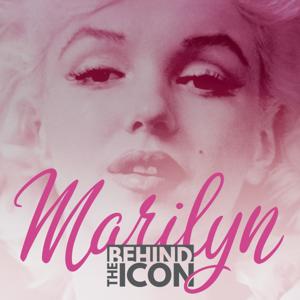


The panel introduces the first of the key players who began the rumor mill that has plagued the Marilyn legacy for six decades.
The panel talks about how there are many Marilyn Monroe photographs that are photoshopped or cropped and sensationalized in the media.
The panel looks into the connection of Marilyn and columnist Dorothy Kilgallen alleged in the book "Collateral Damage".
The co-producers go behind the scenes regarding the famous “Happy Birthday Mr. President” 1962 performance by Marilyn, how it was well planned and rehearsed, and the facts and professionals behind its staging. Gary clears up the rumors surrounding Marilyn’s business relationship with Fox Studio head Darryl Zanuck, the true story of Marilyn’s friendship with Ella Fitzgerald and how she supported the singer’s career advancement. Also talked about is Marilyn’s strong advocacy for civil rights issues, carrying the message all the way up to the Kennedy Administration. Also covered are facts and details about the famous ‘afterparty’ in New York City after Marilyn’s performance where she met and spoke briefly with President Kennedy and Robert Kennedy.
While preparing to perform at President Kennedy’s Birthday Salute in 1962, Marilyn Monroe and Ella Fitzgerald reflect upon their friendship and efforts towards advancing the civil rights movement, hoping to influence the Kennedy brothers’ policies. The episode also highlights the very private party following the gala honoring JFK’s birthday, where Marilyn was famously photographed with the Kennedys. Also featured is one of Marilyn’s many battles with 20th Century Fox Studios over a photograph featuring her, the legendary jazz pianist Hank Jones, and her costume designer for “Gentlemen Prefer Blondes”, William Travilla. Jones was also Marilyn’s pianist at the 1962 “Happy Birthday” performance.
The co-producers discuss the complex web of outlandish rumors, theories, and complete lies about Marilyn’s end. Gary, Nina, and Randall cover Marilyn’s mental health issues affecting her in 1962. An overview of Season 2 of the series, Gary’s forthcoming book on her death, the JFK birthday gala in 1962, and the story of Marilyn’s relationship with Ella Fitzgerald in a future episode are all discussed.
In this episode, the series producers give you a glimpse into the last 24 hours of Marilyn’s life, which over the years, has been one of the most controversial days ever portrayed. This episode highlights some of the day’s events: Marilyn collecting prescriptions at the San Vicente Pharmacy, discussing her career challenges with publicist Patricia Newcomb, and receiving a phone call from the actor, Peter Lawford. The producers breakdown each scene and outline the upcoming episodes of the podcast.
The co-producers discuss the legend of Marilyn’s white piano as a metaphor for her childhood. Discussed is the identity of her abuser, the woman who failed to protect her, and the impact of sexual abuse and childhood trauma on her life. Gary, Nina, and Randall also cover how Marilyn learns to protect herself in the male-powered entertainment industry and her meeting with studio mogul Harry Cohn at Columbia in 1948 when she attempts to negotiate her contract after completing Ladies of the Chorus.
Marilyn attends an auction with acting coach Natasha Lytess and reclaims a white piano from her childhood. She re-experiences the period she lived with her mother, childhood sexual abuse traumas, and her mother’s psychotic episode which leaves Gladys institutionalized. The aftermath fragments little Norma Jeane’s daily life as Grace struggles to find a place for her with stable living conditions. A teenage Marilyn is signed to the Blue Book Modeling agency and learns to protect herself in the male-powered entertainment industry. She later attempts to negotiate her contract with studio mogul Harry Cohn at Columbia Studios.
Co-producers Nina, Randall and Gary explore Marilyn’s friendship with Sidney Skolsky and relationships with older partners influenced by abandonment and rejection by her father. Gary describes Marilyn’s lack of protection in childhood and fragmentation resulting in her craving a father figure, as well as the impact of her father’s rejection on her psyche, making her vulnerable to targeting by unhealthy males. Randall highlights actress Mary Pickford as a role model to young Norma Jeane, both women having screen images different from their personalities and establishing their own production companies. They discuss films and female stars of the 1930s providing education and escape to Norma Jeane and her ability to use visualization to achieve her goals. Gary explores Marilyn’s relationship with her half-sister and efforts to protect her family from the media.
From the publisher's feed
Marilyn: Behind the Icon is three series in one: an audio drama, an investigative series, and a discussion series. It blends a original scripted episodic story with commentary on the remarkable…
We’ll highlight the tragedy and pain yet celebrate the triumphs of the life, legend, and the global phenomenon known as MARILYN.

10,691 Listeners
12,901 Listeners

19,144 Listeners

2,762 Listeners

570 Listeners

19,106 Listeners

961 Listeners

46,903 Listeners

4,388 Listeners
1,543 Listeners

2,833 Listeners
132 Listeners

1,160 Listeners
390 Listeners
26,075 Listeners