
Sign up to save your podcasts
Or



Send us Fan Mail
Dr. Michael Koren and Rich Jones, in front of a live audience, present a rundown of cholesterol, what it is, and what the numbers you get on a lab test mean. They discuss why cholesterol matters, what labs measure, what affects your numbers, and why the same lab results can mean different treatments for different people. To exemplify this, Dr. Koren reviews the lab results of three real patients, with their permission, and explains why each patient is unique. He explains that a high LDL is not as important for someone with high HDL and low risk factors, but that a slightly lower LDL with a history of possible heart attack needs to be aggressively lowered. Finally, he evaluates a patient with relatively good numbers but several risk factors who may benefit from lifestyle adjustments before medical intervention.
Be a part of advancing science by participating in clinical research.
Have a question for Dr. Koren? Email him at [email protected]
Listen on Spotify
Listen on Apple Podcasts
Watch on YouTube
Share with a friend. Rate, Review, and Subscribe to the MedEvidence! podcast to be notified when new episodes are released.
Follow us on Social Media:
Facebook
Instagram
X (Formerly Twitter)
LinkedIn
Want to learn more? Checkout our entire library of podcasts, videos, articles and presentations at www.MedEvidence.com
Music: Storyblocks - Corporate Inspired
Thank you for listening!
Send us Fan Mail
Dr. Michael Koren joins Kevin Geddings from New Orleans to share the latest updates from the American College of Cardiology (ACC) conference. The doctor relays new changes to the lipid guidelines that can affect what procedures and tests insurance may cover and goes into the increasing research into genetic treatments for heart issues. Dr. Koren also ties in new studies looking at GLP-1 add-on medications that may help people lose weight even if they have not met the success they seek so far.
Be a part of advancing science by participating in clinical research.
Have a question for Dr. Koren? Email him at [email protected]
Listen on Spotify
Listen on Apple Podcasts
Watch on YouTube
Share with a friend. Rate, Review, and Subscribe to the MedEvidence! podcast to be notified when new episodes are released.
Follow us on Social Media:
Facebook
Instagram
X (Formerly Twitter)
LinkedIn
Want to learn more? Checkout our entire library of podcasts, videos, articles and presentations at www.MedEvidence.com
Music: Storyblocks - Corporate Inspired
Thank you for listening!
Send us Fan Mail
Dr. Michael Koren joins Kevin Geddings to discuss how clinical research leaves patients with clarity, support and new care options, including through new gene editing studies for high cholesterol. They then move to talking about studies involving GLP-1 weight loss drugs and investigations into how to improve them.
Be a part of advancing science by participating in clinical research.
Have a question for Dr. Koren? Email him at [email protected]
Listen on Spotify
Listen on Apple Podcasts
Watch on YouTube
Share with a friend. Rate, Review, and Subscribe to the MedEvidence! podcast to be notified when new episodes are released.
Follow us on Social Media:
Facebook
Instagram
X (Formerly Twitter)
LinkedIn
Want to learn more? Checkout our entire library of podcasts, videos, articles and presentations at www.MedEvidence.com
Music: Storyblocks - Corporate Inspired
Thank you for listening!
Send us Fan Mail
Dr. Michael Koren sits down with a clinical trial participant named Walt to talk about lipoprotein(a), also called Lp(a). At a community health event, Walt discovered he had hight levels of Lp(a), which puts him at an increased risk of heart attack and stroke. Walt asks what Lp(a) is, how it causes damage, and how the investigational clinical trial medications work. The duo then move through how Walt has felt through the clinical trial process and the enrollment demographics in a clinical trial.
Be a part of advancing science by participating in clinical research.
Have a question for Dr. Koren? Email him at [email protected]
Listen on Spotify
Listen on Apple Podcasts
Watch on YouTube
Share with a friend. Rate, Review, and Subscribe to the MedEvidence! podcast to be notified when new episodes are released.
Follow us on Social Media:
Facebook
Instagram
X (Formerly Twitter)
LinkedIn
Want to learn more? Checkout our entire library of podcasts, videos, articles and presentations at www.MedEvidence.com
Music: Storyblocks - Corporate Inspired
Thank you for listening!
Send us Fan Mail
Dr. Michael Koren joins Kevin Geddings to discuss a new concept in cholesterol treatment: gene editing. Dr. Koren talks about a new study, just opening in the United States, that is the first of its class. This study explores gene editing to tackle familial hypercholesterolemia (high cholesterol caused by genetics) through a once-in-a-lifetime, single-shot treatment.
Be a part of advancing science by participating in clinical research.
Have a question for Dr. Koren? Email him at [email protected]
Listen on Spotify
Listen on Apple Podcasts
Watch on YouTube
Share with a friend. Rate, Review, and Subscribe to the MedEvidence! podcast to be notified when new episodes are released.
Follow us on Social Media:
Facebook
Instagram
X (Formerly Twitter)
LinkedIn
Want to learn more? Checkout our entire library of podcasts, videos, articles and presentations at www.MedEvidence.com
Music: Storyblocks - Corporate Inspired
Thank you for listening!
Send us Fan Mail
Rheumatologist Dr. Manish Jain joins Cardiologist Dr. Michael Koren to break down what gout is, why it can be one of the most painful forms of arthritis, and why it can affect far more than the big toe. Dr. Jain explains gout's metabolic underpinnings, the role uric acid plays in the disease, and how systemic complications can affect the kidneys and beyond. The doctoral duo then discusses what uric acid levels mean, why some uric acid results may be misleading, and how important it is to control these levels for a gout patient. The duo finishes by reviewing standard treatments for gout, the importance of "not killing the patient to treat gout," and new treatments on the horizon in gout clinical trials.
Be a part of advancing science by participating in clinical research.
Have a question for Dr. Koren? Email him at [email protected]
Listen on Spotify
Listen on Apple Podcasts
Watch on YouTube
Share with a friend. Rate, Review, and Subscribe to the MedEvidence! podcast to be notified when new episodes are released.
Follow us on Social Media:
Facebook
Instagram
X (Formerly Twitter)
LinkedIn
Want to learn more? Checkout our entire library of podcasts, videos, articles and presentations at www.MedEvidence.com
Music: Storyblocks - Corporate Inspired
Thank you for listening!
Send us Fan Mail
Dr. Michael Koren and Dr. Ravi Pande present What You Should Know about Strokes, including how high cholesterol and blood pressure can increase your risk. In this episode, recorded in front of a live audience, the two doctors discuss the BE FAST warning signs of a stroke and the importance of getting to an emergency room as fast as possible. Then they talk about treatment options, including new medications and guidelines that guide how doctors may use medications or rapid surgery to help preserve brain cells. Finally, the doctors emphasize the importance of prevention and how keeping blood pressure and cholesterol under control has measurable, positive impacts on stroke risk and recovery.
Be a part of advancing science by participating in clinical research.
Have a question for Dr. Koren? Email him at [email protected]
Listen on Spotify
Listen on Apple Podcasts
Watch on YouTube
Share with a friend. Rate, Review, and Subscribe to the MedEvidence! podcast to be notified when new episodes are released.
Follow us on Social Media:
Facebook
Instagram
X (Formerly Twitter)
LinkedIn
Want to learn more? Checkout our entire library of podcasts, videos, articles and presentations at www.MedEvidence.com
Music: Storyblocks - Corporate Inspired
Thank you for listening!
Send us Fan Mail
Dr. Michael Koren joins Kevin Geddings to discuss the Fatty's Liver's Domino Effect; the concept that a fatty liver can cascade into serious liver problems, including a need for a liver transplant. The duo also discusses the FibroScan, a non-invasive test to assess the level of fatty liver for at-risk individuals. They finish by talking about the importance of early diagnosis to stop the domino effect before it gets out of control.
Be a part of advancing science by participating in clinical research.
Have a question for Dr. Koren? Email him at [email protected]
Listen on Spotify
Listen on Apple Podcasts
Watch on YouTube
Share with a friend. Rate, Review, and Subscribe to the MedEvidence! podcast to be notified when new episodes are released.
Follow us on Social Media:
Facebook
Instagram
X (Formerly Twitter)
LinkedIn
Want to learn more? Checkout our entire library of podcasts, videos, articles and presentations at www.MedEvidence.com
Music: Storyblocks - Corporate Inspired
Thank you for listening!
Send us Fan Mail
Dr. Robert Pearl joins Dr. Erich Schramm to discuss the burgeoning role AI will play in the American healthcare system and how doctors may be able to leverage the systems to spend more time with patients who need interventions and achieve better patient outcomes for all. They spend time comparing AI outcomes not to an ideal but to the current system, and discuss pilot programs that have shown better triage, intervention, and (surprisingly) patient empathy scores with AI-integrated systems. They also briefly mention some of the dangers of generative AI and the need to tackle this issue early with incoming medical students.
Dr. Pearl's book, ChatGPT, MD: How AI-Empowered Patients & Doctors Can Take Back Control of American Medicine is available from his site, robertpearlmd.com
Be a part of advancing science by participating in clinical research.
Have a question for Dr. Koren? Email him at [email protected]
Listen on Spotify
Listen on Apple Podcasts
Watch on YouTube
Share with a friend. Rate, Review, and Subscribe to the MedEvidence! podcast to be notified when new episodes are released.
Follow us on Social Media:
Facebook
Instagram
X (Formerly Twitter)
LinkedIn
Want to learn more? Checkout our entire library of podcasts, videos, articles and presentations at www.MedEvidence.com
Music: Storyblocks - Corporate Inspired
Thank you for listening!
Send us Fan Mail
Dr. Michael Koren joins Kevin Geddings to discuss an eventful weekend, focusing on the passing of singer, songwriter, and pianist Neil Sedaka. The doctor talks about how a teacher early in the musician's life changed his trajectory and that teachers in general undersand the importance of bringing students up to their potential. The doctor then relates this to clinical research, and how research specialists use all available resources to bring each participant up to their health potential, and how this increases health for that patient and everyone who benefist from advances in medicine.
Be a part of advancing science by participating in clinical research.
Have a question for Dr. Koren? Email him at [email protected]
Listen on Spotify
Listen on Apple Podcasts
Watch on YouTube
Share with a friend. Rate, Review, and Subscribe to the MedEvidence! podcast to be notified when new episodes are released.
Follow us on Social Media:
Facebook
Instagram
X (Formerly Twitter)
LinkedIn
Want to learn more? Checkout our entire library of podcasts, videos, articles and presentations at www.MedEvidence.com
Music: Storyblocks - Corporate Inspired
Thank you for listening!
From the publisher's feed
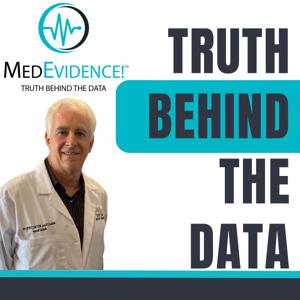
Welcome to the MedEvidence! podcast, hosted by Dr. Michael Koren. MedEvidence, where we help you navigate the real truth behind medical research with both a clinical and research perspective. In…
227,562 Listeners

43,324 Listeners

9,616 Listeners

11,777 Listeners

8,463 Listeners
3,424 Listeners
12,515 Listeners

1,652 Listeners

19,270 Listeners

12,495 Listeners