
Sign up to save your podcasts
Or

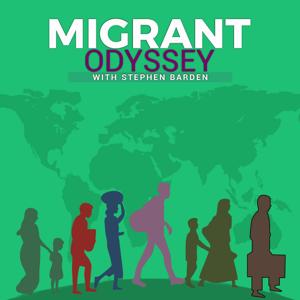


This is the story of a 6 year old girl who was left to look after her younger brother and sister while her migrant parents worked every day and most of the night.
This is the story of Mirujaa, eldest daughter of Sri Lankan refugees whose single minded goal was to succeed in their new country while paying back their families "back home".
This is the story of how the burden of the desperate and the dispossessed is passed onto the next generation. And how it is lifted.
Send us Fan Mail
Support the show
You know as well as I do that stories about migrants don’t attract big sponsors.
Governments are hostile, corporations stay cautious, and even NGOs hang on to their tightening budgets.
That's why we need your help. Migrant Odyssey exists — to make sure those voices are still heard.
If you’ve ever felt that empathy without action isn’t enough, this is one real way to make a difference. Even a small monthly contribution — one you’ll hardly notice — helps keep these voices alive.
A sandstorm birth, a village donkey named Kajol, and a gun barrel to the head during the Khartoum Massacre—Ethar’s story pulls you straight into Sudan’s living history and insistently asks a hard question: 70 years of warfare has changed nothing, so where does real change begin?
We open with a clear, human overview of Sudan’s long arc of coups, civil wars, Darfur’s horrors, and the power struggle between the SAF and RSF, then step into a home where a Ministry of Justice mother and a communist father model how to disagree politically while being totally aligned morally and ethically. That paradox becomes a compass as Ethar learns to push back—against assumptions, about her religion, her beliefs, her capabilities and her country.
As Ethar, reminds us, the wars in Sudan were never for the people - but for power. And her stories in this episode have people at their core - her family, her neighbour who rescued her from a mob, her friend who saved her life. And Ethar herself, who insists that change only comes when ordinary people's daily lives are tangibly changed for the better. Village by village, town by town, person by person.
Please help support the show: by sharing with your network; by making a small contribution and by sending us feedback.
Send us Fan Mail
Support the show
You know as well as I do that stories about migrants don’t attract big sponsors.
Governments are hostile, corporations stay cautious, and even NGOs hang on to their tightening budgets.
That's why we need your help. Migrant Odyssey exists — to make sure those voices are still heard.
If you’ve ever felt that empathy without action isn’t enough, this is one real way to make a difference. Even a small monthly contribution — one you’ll hardly notice — helps keep these voices alive.
Stephen Barden talks to Ruchira Gupta, lifelong activist against human trafficking - especially the trafficking of women. This extraordinary woman not only founded a global organization to protect and educate sexually trafficked women and their daughters but, through her work with the United Nations, has driven changes in global laws on human trafficking and drawn up rules of behaviour for the peacekeepers themselves.
In this episode we hear how she started on her campaign decades ago when she was covering a story in Nepal and discovered there were no girls in village after village. Her question "Where are all the girls", set her on a path that she's following to this day.
Send us Fan Mail
Support the show
You know as well as I do that stories about migrants don’t attract big sponsors.
Governments are hostile, corporations stay cautious, and even NGOs hang on to their tightening budgets.
That's why we need your help. Migrant Odyssey exists — to make sure those voices are still heard.
If you’ve ever felt that empathy without action isn’t enough, this is one real way to make a difference. Even a small monthly contribution — one you’ll hardly notice — helps keep these voices alive.
Send us Fan Mail
Support the show
You know as well as I do that stories about migrants don’t attract big sponsors.
Governments are hostile, corporations stay cautious, and even NGOs hang on to their tightening budgets.
That's why we need your help. Migrant Odyssey exists — to make sure those voices are still heard.
If you’ve ever felt that empathy without action isn’t enough, this is one real way to make a difference. Even a small monthly contribution — one you’ll hardly notice — helps keep these voices alive.
From the frontlines of one of the world's most enduring humanitarian crises comes a story of extraordinary dedication. Dr Lex Takkenberg takes us through his extraordinary four-decade journey working with refugees and displaced persons, including thirty years with the United Nations Relief and Works Agency for Palestinian refugees (UNRWA).
What begins as an academic interest in international law at the University of Amsterdam transforms into a lifelong commitment when Lex joins UNRWA during the first Intifada. Through his eyes, we witness the evolution of conflict in the region - from the relatively contained stone-throwing confrontations of the late 1980s to the increasingly lethal violence that followed the second Intifada and beyond.
Lex offers rare insights into UNRWA's precarious position between competing stakeholders. Initially established to provide relief while deflecting attention from refugees' right of return, the agency evolved into an essential provider of education, healthcare, and social services while constantly navigating accusations of bias from all sides. His account of developing "robust neutrality frameworks" reveals the extraordinary scrutiny UNRWA faces compared to other UN agencies.
Send us Fan Mail
Support the show
You know as well as I do that stories about migrants don’t attract big sponsors.
Governments are hostile, corporations stay cautious, and even NGOs hang on to their tightening budgets.
That's why we need your help. Migrant Odyssey exists — to make sure those voices are still heard.
If you’ve ever felt that empathy without action isn’t enough, this is one real way to make a difference. Even a small monthly contribution — one you’ll hardly notice — helps keep these voices alive.
Send us Fan Mail
Support the show
You know as well as I do that stories about migrants don’t attract big sponsors.
Governments are hostile, corporations stay cautious, and even NGOs hang on to their tightening budgets.
That's why we need your help. Migrant Odyssey exists — to make sure those voices are still heard.
If you’ve ever felt that empathy without action isn’t enough, this is one real way to make a difference. Even a small monthly contribution — one you’ll hardly notice — helps keep these voices alive.
Ahmad Jaafil shares his story of extraordinary and persistent willpower, He talks matter of factly about his severe and rare eye disease and the horrendous struggle to try and save his sight- in Lebanon and then the USA. If you want to know, in painful detail, what it's like for a family to do everything and more to heal their young son, this episode will do that for you.
And it's also a story of
- fierce determination and huge will
- of a young man who went from being seen as "hopeless and weak" by his classmates to being named student of the year
- of the power of acceptance of what is, but not of what can be
Help support Waves to Home (www.wavestohome.org) and amplify the stories of all uprooted people around the world.
And, please do tell us what you think and feel about Migrant Odyssey.
We need your support. We love your feedback
Send us Fan Mail
Support the show
You know as well as I do that stories about migrants don’t attract big sponsors.
Governments are hostile, corporations stay cautious, and even NGOs hang on to their tightening budgets.
That's why we need your help. Migrant Odyssey exists — to make sure those voices are still heard.
If you’ve ever felt that empathy without action isn’t enough, this is one real way to make a difference. Even a small monthly contribution — one you’ll hardly notice — helps keep these voices alive.
This is the story of Hajar - a young woman with Palestinian and Lebanese parents - who understands that her people are woven together - not just by ideologies or politics or even the yearning for a safe homeland but by their stories. The stories of their humanity, eccentricities, intimacy and tenderness. Stories that are embroidered into every part of their lives.
Send us Fan Mail
Support the show
You know as well as I do that stories about migrants don’t attract big sponsors.
Governments are hostile, corporations stay cautious, and even NGOs hang on to their tightening budgets.
That's why we need your help. Migrant Odyssey exists — to make sure those voices are still heard.
If you’ve ever felt that empathy without action isn’t enough, this is one real way to make a difference. Even a small monthly contribution — one you’ll hardly notice — helps keep these voices alive.
Can standing on a rooftop in a refugee camp be the starting point of a journey toward empowerment and change? This episode of "Migrant Odyssey" features Manal, a dedicated social worker and the founder of the Kayani Foundation, that support Palestinian women and girls through the values of family. She takes us through the harrowing history of her family, the struggles of her parents, and the poignant memories of her grandmother, whose stories and a cherished memento profoundly shaped her path.
Beyond personal anecdotes, we confront the harsh realities faced by Palestinian refugees in Lebanese schools. Manal recounts her own experiences of racism and systemic barriers that hinder educational and professional aspirations. The rigid curriculum, internal violence, and flawed educational systems paint a stark picture of the obstacles that students encounter daily. Through Manal's narrative, we see the disparity between the immense potential of these students and the limited opportunities available to them, driving home the pervasive sense of hopelessness that many feel.
Lastly, we explore the complexities of Palestinian identity and the emotional weight of statelessness. Manal shares her passion for outdoor activities and discusses her impactful work in mental health, child protection, and capacity building within refugee camps. The conversation also emphasizes gender equality initiatives and the resistance faced when promoting sensitive issues like feminism. Highlighting the necessity of involving men and boys in this fight, Manal's work underscores a broader commitment to fostering respect and healthy family dynamics, striving for equal opportunities and continuous support for the Palestinian community.
Send us Fan Mail
Support the show
You know as well as I do that stories about migrants don’t attract big sponsors.
Governments are hostile, corporations stay cautious, and even NGOs hang on to their tightening budgets.
That's why we need your help. Migrant Odyssey exists — to make sure those voices are still heard.
If you’ve ever felt that empathy without action isn’t enough, this is one real way to make a difference. Even a small monthly contribution — one you’ll hardly notice — helps keep these voices alive.
Life on the West Bank is upside down for Palestinians. They have little of rights on their land that they have lived on for centuries. The towns that they do live in cannot grow because they are being strangled by encroaching Israeli settlements. East Jerusalem, internationally designated as the Palestinian capital - is not. A journey that should take minutes takes hours and hours. The places where the are supposed to be safe - are not.
It is, says today's guest Firas, like Maqluba - the beloved Palestinian upside down dish. Except it isn't. Unlike Maqluba,living on the West Bank is neither tasty nor beloved.
This episode is co-hosted by Zoya (our half Palestinian half Ukrainian guest from episode 9) who brings her compassion, with and experience of, the Palestinian tragedy to a thoughtful discussion that ranges from Firas' personal story to questions of decolonizing minds and managing conflict where laws and governance do not apply. And it ends - as so many of our stories do - with the ties of the heart: those profound emotional bonds that define what it means to truly belong "with" a place and its people.
Send us Fan Mail
Support the show
You know as well as I do that stories about migrants don’t attract big sponsors.
Governments are hostile, corporations stay cautious, and even NGOs hang on to their tightening budgets.
That's why we need your help. Migrant Odyssey exists — to make sure those voices are still heard.
If you’ve ever felt that empathy without action isn’t enough, this is one real way to make a difference. Even a small monthly contribution — one you’ll hardly notice — helps keep these voices alive.
From the publisher's feed
Real voices. True journeys. Humanity without borders
Migrant Odyssey tells the stories of people who’ve crossed borders and kept going — individuals whose intelligence,…

91,022 Listeners
21,795 Listeners

43,852 Listeners

38,016 Listeners

6,762 Listeners

43,359 Listeners
26,831 Listeners

2,861 Listeners

111,799 Listeners

2,387 Listeners

619 Listeners
16,365 Listeners
14,353 Listeners

15,882 Listeners
1,645 Listeners