
Sign up to save your podcasts
Or

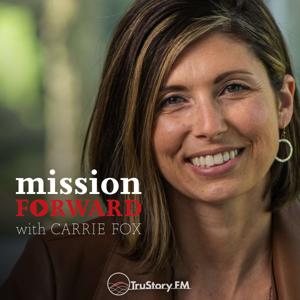


In a nation increasingly riven by polarization and mistrust, the spirit of "civitas"—the collective body coming together for good—can feel like a distant dream. But amidst this bleak landscape, rays of hope shine through in the form of organizations like Welcoming America.
This week, Carrie Fox sits down with Rachel Perić, Executive Director of Welcoming America, to discuss their new report, "The State of Welcoming." Perić shares her powerful personal story and sheds light on how creating a culture of belonging for immigrants and refugees can strengthen the social fabric of entire communities.
From the economic benefits to the democratic necessity, Perić outlines the "five whys" that underscore the vital importance of the welcoming movement. She cites success stories like Dayton, Ohio, a Rust Belt city that reversed a 50-year population decline by becoming a leader in immigrant inclusion.
This work is not without its challenges. Perić candidly discusses the dehumanizing narratives that scapegoat newcomers and the global forces displacing people at an unprecedented scale. Yet through it all, her message is one of determined hope: with intention and infrastructure, we can build welcoming communities equipped to meet the defining challenges of our time.
Anyone yearning to rekindle the spirit of civitas in an age of division, this is your episode. It will leave you inspired by the power of human connection and moved to join the growing chorus of upstanders working to ensure that everyone—no matter their origins—can belong and thrive in the place they call home.
Our great thanks to Rachel Perić for joining us for Mission Forward this week.
Links & Notes
Taking action seems more complicated than in years past. As we dive into 2024, leaders are facing greater threats and barriers to change, particularly to advancing social change: from policies and lawsuits that threaten DEI practices, technological innovations that threaten workforces, political elections that threaten democracy, and extreme weather that threaten our existence. Where, then, to begin with a reinvention?
This week’s episode comes from the Finding The Words column, a series published every Wednesday that delivers a dose of communication insights directly to your inbox. If you like what you read, we hope you’ll subscribe to ensure you receive this each week.
In a world grappling with complex challenges, corporations have the potential to be powerful forces for good. But it takes courageous leadership to set audacious goals and rally entire organizations to drive meaningful change.
On this episode of Mission Forward, Carrie Fox sits down with Lisa Gibby, Deputy Executive Vice President and Chief Communications Officer at Nestlé. As the first person to hold this role, Lisa is responsible for building and maintaining trust in Nestlé's global brand across 186 markets - no small task.
Lisa shares her journey from running her own small communications firm to leading anti-poverty efforts at Bono's ONE Campaign to now sitting on Nestlé's executive board and ESG council. Her story is one of pursuing purpose at every scale.
Under Lisa's leadership, Nestlé has made bold moves—like being one of the first companies to publish a roadmap to reach net-zero emissions. Setting such ambitious public goals created some organizational nervousness, but it also rallied and engaged employees in a shared mission.
The conversation touches on navigating complex social issues as a global company, the importance of humility and embracing failure as part of the process, and how a new generation of consumers passionate about sustainability gives hope for the future.
At its core, this is a discussion about the power and responsibility of communications to drive positive impact. It's about having the courage to set big goals, the focus to build alignment and momentum, and the wisdom to know you can't do it alone. Lisa leaves us with an empowering message - that everyone has an opportunity to contribute as a force for good, and even failure is part of the journey forward.
Tune in for an inspiring look at purpose-driven leadership and the role we can all play in building a better world, one bold goal at a time. Our great thanks to Lisa for joining us for this conversation.
We are what we eat. It's an axiom. We take it as a great truth that the better the food we take on to fuel our human engines, the better those engines shall hum. Our guest this week asks us to both embrace that truth and expand it one further: we are what our food eats.
This is just one of the core principles of regenerative agriculture, a practice celebrated by our guest today. Ryan Pintado-Vertner is an activist and a strategic marketing impact expert who helps purpose-driven founders, CEOs, and their teams stay true to their mission through thoughtful marketing and business growth strategies. Ryan has also spent a good part of his career working in natural foods and consumer packaged goods and works at the intersection of what we consume and how that consumption affects our planet and our bodies.
Ryan is also a noted enthusiast for the transformative potential of regenerative agriculture. Far from a niche concept, regenerative practices offer a powerful trifecta of benefits: sequestering carbon to combat climate change, producing more nutritious food, and fostering healthier ecosystems.
As Ryan explains, the health of the soil is the cornerstone that enables plants to convey the best nutrient benefits to both humans and animals. He illuminates how regenerative agriculture's focus on building healthy soil can allow agriculture to become a net negative contributor to atmospheric carbon. While still in the early stages, hundreds of organizations worldwide are pioneering regenerative practices at various scales.
However, regenerative agriculture is about more than just farming techniques. Ryan emphasizes how it represents a broader approach to life and relationships, one that honors the sacredness of every part of the ecosystem. Embracing regenerative principles means adding value rather than extracting it and recognizing that diversity is inherently essential for any system to thrive.
As awareness of regenerative agriculture grows, it has the potential to not only heal our planet and nourish our bodies, but to profoundly reshape how we relate to one another and the natural world we inhabit. This week's show invites each of us to plant the seeds of a regenerative future, one nutrient-rich carrot at a time. Our great thanks to Ryan for joining us this week on Mission Forward.
Links & Notes
Character building may not help you in the moment of crisis. But, what could it could do for you if you started investing back into your own character-building today? Because character-building may be the very best way to maintain your reputation for the long term.
This week’s episode comes from the Finding The Words column, a series published every Wednesday that delivers a dose of communication insights directly to your inbox. If you like what you read, we hope you’ll subscribe to ensure you receive this each week.
Laurence Evans is the CEO of Reputation Leaders and a global thought leader in building trust and reputation. This week on the show, he joins Carrie for a conversation that challenges long-settled leadership assumptions.
Laurence's journey into purpose-driven work began early, inspired by his father's example as a mayor who made a significant difference in their community. His experiences at Edelman, working on groundbreaking projects like the Dove Report on Real Beauty Self-Esteem and the "Dirt is Good" campaign, solidified his belief that companies can pursue a purpose while also benefiting their brand. This realization led him to establish Reputation Leaders, with the aim of helping companies build positive reputations that create a virtuous circle.
Carrie and Laurence delve into the challenges CEOs face in speaking out on important issues without alienating key audiences. Laurence shares fascinating research revealing that while conversations around diversity, equity, and inclusion have increased since George Floyd's death, many CEOs lack a plan for addressing these topics. He emphasizes the importance of listening to employees, board members, and customers, as well as setting clear values and commitments to sustainability and DEI.
"Diversity is good for business," he says. "Why do I believe that?"
First, embracing diversity opens up new, underserved markets. Second, bringing together people from diverse backgrounds leads to different perspectives and better decision-making.
"We rush into the emotional side of it, and we don't actually say, 'You know what? There's a very good reason why we're doing this. It's just good for business.'" The lesson, then, is that by framing DEI as a strategic business imperative rather than a moral obligation, we can more effectively communicate the value and necessity of our DEI initiatives to a broader set of stakeholders.
For Laurence, leadership lessons boil down to the wisdom of everyday Americans, who increasingly believe CEOs should speak to environmental issues, refrain from taking sides on geopolitical issues, and address social issues that relate to their company's values. Put simply: "When we asked people back in November, 'What do you want companies to do most in 2024?' The answer was integrity. We just want them to do what they say."
This week's show brings invaluable guidance for purpose-driven CEOs navigating a polarized world. The issues we face are many and they are significant. But if we learn anything from Laurence's experience, sometimes simple statements of authenticity—repeated clearly—are the most valuable in building trust that lasts. Our great thanks to Laurence and Reputation Leaders for making this conversation possible.
Have you ever questioned the impact you can make as one person? What If you have a far greater influence and impact than you realize? And what if your micro-level decisions can result in powerful and positive macro-level changes?
This week’s episode comes from the Finding The Words column, a series published every Wednesday that delivers a dose of communication insights directly to your inbox. If you like what you read, we hope you’ll subscribe to ensure you receive this each week.
In the face of global challenges and societal shifts, Carrie sits down with Carol Cone, a pioneer in social purpose, to explore the critical role of courageous leadership in navigating the complexities in the year ahead.
The imperative for companies to adopt a holistic approach that integrates business strategy with social impact initiatives is at the forefront. For Cone, that comes in the form of the "power of and" – the ability to simultaneously pursue short-term value while investing in long-term sustainability. It’s an example of cognitive dissonance, sure, but with examples like Eli Lilly's commitment to affordable insulin and Macy's alignment with diverse suppliers, it’s clear: the approach can work.
Carrie and Carol delve into the rapidly evolving storm of artificial intelligence (AI). While AI holds immense promise for augmenting human capabilities, what should we be concerned with when it comes to the potential for deep fakes and the need for ethical guidelines in this space? What happens when organizations approach the tools with training and understanding rather than fear?
Climate change remains a pressing issue, and Carol highlights the growing number of companies investing in sustainability. She cites IBM's Sustainability Accelerator as an example of how large organizations are leveraging their resources to support innovative climate solutions. At a smaller scale, she emphasizes the need for collaboration between businesses and non-profits to address supply chain issues and promote social justice.
As the demand for skilled labor grows, Carol discusses the importance of new skills development. She applauds IBM's commitment to "new collar jobs" and their recognition that college degrees are not the only pathway to successful careers. Organizations like Per Scholas are bridging the gap by providing certification programs and job placement assistance at scale.
At a time of growing polarization, this week’s conversation is a reminder that complex challenges require nuanced solutions. By spotlighting leaders who hold long and short-term needs in careful balance, Carrie and Carol offer hope in the power of business to drive social progress when rooted in purpose. With care and conviction, they compel us to expand our perspectives, collaborate across sectors, and activate our highest values in service of the greater good. Our great thanks to Carol Cone for joining us this week.
Links & Notes
The headlines say it all. We’re living in complicated times. As threats to our economy, democracy, public health, humanity, and the planet all converge, how in the world are we as leaders meant to navigate through it?
Will you do right by your public commitments to DEI or walk them back? Will you lead through your values or your bottom line? Will you stand by while the world changes, or will you be the change?
Hey, I’m Carrie Fox, host of the Mission Forward podcast and a firm believer in the power of communications as a force for good.
Whether you’re working to address climate change or public health, DEI, or AI, communications matters. Courage, care, and civility matter, too. How you practice those three C’s will directly affect your future, too.
On this 9th season of Mission Forward, we’ll introduce you to a host of global thought leaders who will share their take on this consequential year and how they navigate the issues ahead. We hope you’ll come along because there’s too much ahead to navigate alone, particularly as the headlines are breaking all around you.
We’ll see you on February 29th for our first episode of Season 9.
Jennifer Brandel is a co-founder of Hearken, which she’ll talk about extensively today, but she’s also behind Zebra's Unite, Civic Exchange Chicago, Democracy SOS and WBEZ Chicago's Curious City. She joins Carrie Fox for a conversation on approaching the most challenging problems with an open and curious perspective in this rebroadcast from season 7.
She is a serial entrepreneur and innovator who works between industries to address how to design better systems for listening, responding, and evolving with their stakeholders. She is a co-founder of Hearken, which she’ll talk about extensively today, but she’s also behind Zebra's Unite, Civic Exchange Chicago, Democracy SOS and WBEZ Chicago's Curious City.
Now that we have her bona fides out of the way, here’s the real reason Jennifer is special to us: there are so few people able to clearly create an environment that makes the complicated approachable, and the messiest of problems solvable. Even the problems we face today, problems many believe to be impossible.
“We're coming to a moment in which many more people are recognizing that collaborations and the interdependencies of sectors, of organizations, even departments within a company need to be in better and closer communication with one another. And the more we divide and silo ourselves and separate the work, it's at our peril. We're missing insights. We're missing opportunities to leverage one another's work. We’re being less efficient. All of these things translate into the workplace of making our lives harder and also making us keep doing things the same way over and over again, rather than evolving at the speed at which we could be.”
How does she approach these intractable problems at Hearken? Curiously. She’s an enthusiastic observer with inexhaustible energy to face hard things and try to make them better. If you’ve never heard of Jennifer or her work, we’re thrilled and honored to be able to present her worldview to you on this show. Thank you to Jennifer for joining us on the show this week.
From the publisher's feed

441 Listeners
8 Listeners

21 Listeners

37 Listeners

38 Listeners

12 Listeners

100 Listeners

4 Listeners
2 Listeners

8 Listeners

0 Listeners

69 Listeners

6 Listeners

0 Listeners

5 Listeners

8 Listeners

0 Listeners

0 Listeners
2 Listeners