
Sign up to save your podcasts
Or

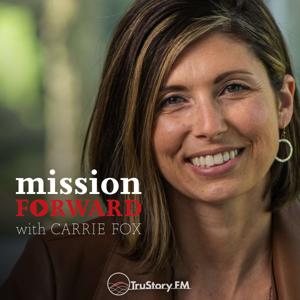


George Jones is the CEO of Washington, DC-based Bread for the City, which supports people living with low incomes to develop their power to determine the future of their own communities. They provide food, clothing, medical care, and legal and social services to reduce the burden of poverty. And in working to solve some of the city’s most pressing challenges, George Jones is one of the very best.
That’s what you get when you discover your calling at 12 years old, as George did, realizing early on that his journey was one rooted in justice and equity. Today, he lives at the intersection of race, racism, and poverty, and through Bread for the City and his work as an evangelist for equity, he carries his belief that DC can be not just an antiracist city but a beloved city of peace and equity.
In this rebroadcast from season 7, George sits down with Carrie to talk about the root causes that exist around poverty, homelessness, and food insecurity in DC, but we hope you learn, too, that missions can come from anywhere, at any age, and his is a model and inspiration for us all. Our great thanks to George Jones for his wisdom this week.
There's a superhero origin story in all of us. We're convinced of it. But it's not the story you might think — learning how to fly, or figuring out how to lift cars over our heads. No, the real superhero story is the story we each carry in our hearts that reminds us of the first time we learned compassion, the first time we learned how to feel for another human being, and the first time we learned to love unconditionally.
In this rebroadcast from season 6, we present Schroeder Stribling, President, and CEO of Mental Health America. She's with us to talk about mental health, the narrative we've written around it as a society, and why it's time to get serious and teach one another to approach trauma with compassion. Along the way, you're going to hear Schroeder's superhero origin story. We hope it triggers something for you that reminds you of your own.
Because we contend that it's only by reminding one another — and ourselves — of our ability to love that we'll be able to reduce barriers and increase access to mental health care that is increasingly critical to so many of us. Achieving practical, boots-on-the-ground success in meeting the mental health needs of our peers, colleagues, and strangers alike will require us to believe in our ability to bring change to their lives and our own in so doing.
Schroeder is an incredibly powerful individual and if you have never crossed her path, we're thrilled to be the show to do it for you today. Our deepest thanks to Schroeder Stribling for her time and friendship.
We can’t turn back time, but we can progress forward. So, if there is a person you believe you’re done learning from, I invite you to reach out to them today. Tell them that you were thinking about them. And then listen closely to whatever they have to share. You may be surprised by how much there is left to learn.
This week’s essay comes from the Finding The Words column, a series published every Wednesday that delivers a dose of communication insights directly to your inbox. If you like what you read, we hope you’ll subscribe to ensure you receive this each week.
According to this week's guest, there is a direct and unbreakable connection between the time we have as individuals to use each day and the broader health of our communities. All right, that doesn't sound like an earth-shattering observation, especially to listeners of this show.
But, if that's the case, if we understand clearly that our communities are only as healthy as the members who contribute to it, then why are so many of our communities sick?
This week, Carrie Fox sits down with Dr. Jean Accius, President and CEO of Creating Healthier Communities (CHC), to discuss just what it means to build healthier and more equitable communities. As Dr. Accius notes, “The work that we’re doing is about addressing these gaps because what it means is that it’s shortening people's ability, their time to contribute to their family, to their communities, and to our broader economy."
And make no mistake, it is the broader economy that is at stake. Social determinants of health and our ability to address them connect every one of us to keystone issues: who gets access to affordable health care? How do we approach the pressing mental health crisis facing our youth? What do we do when we look at communities directly impacted by climate change without access to health resources?
Carrie and Dr. Accius explore strategies for assessing and responding to the unique needs of different communities through strategic partnerships and deep listening. “Let’s take the time to get close and understand what our people are saying ... in terms of to what extent we are supporting their total well-being,” explains Dr. Accius.
We face challenges. But we hope you find after listening to this conversation that there is hope. There is hope for cross-sector collaboration and truly human-centered innovation across the healthcare landscape. There is hope for connection between and across communities to lift one another toward change. There is hope that the louder organizations like CHC call for change, the more we will rise to the challenge of building community health improvements through connection, compassion, and collective action.
Our great thanks to Dr. Accius and CHC for making this conversation possible.
–––
Now Available! More Than Words: Communications Practices of Courageous Leaders by Carrie Fox, founder and CEO of Mission Partners, is available. You're invited to join an emerging community of practice and become a positive and powerful agent of change.
We often talk about the challenging ideas that come with a career in communication. We even talk about the words behind the ideas, which words conjure explicit experiences across cultures and communities, and we try our best to assess how we, as communicators, can face those challenges and adapt toward a space of understanding. But rarely do we talk about words in quite the way our guests this week have built their careers talking about words.
Kathy and Ross Petras are the New York Times bestselling authors of You’re Saying It Wrong, That Doesn’t Mean What You Think It Means and Awkword Moments, A History of the World Through Body Parts, and numerous other non-fiction books. And for podcast fans just like you out there listening right now, you’ll want to check out their award-winning NPR.org podcast, also called You’re Saying It Wrong (awarded first prize for podcasts by the Public Media Journalists Association) about word histories, language controversies, grammar, and all things word-related.
This week, we’re clearing the air on the words that trip us up the most. From affect to effect to impact, our most common pronunciation peccadillos (go ahead, say “quay” aloud right now before you listen!), to the most important point of all: relax, and keep talking.
Our greatest thanks to Kathy and Ross for joining this week on Mission Forward!
–––
Now Available! More Than Words: Communications Practices of Courageous Leaders by Carrie Fox, founder and CEO of Mission Partners, is available. You're invited to join an emerging community of practice and become a positive and powerful agent of change.
This episode is brought to you by Edgility Consulting.
How can leaders of social impact organizations build equitable pipelines of leadership to sustain their missions? That is our central question this week as Carrie Fox sits down with Christina Greenberg, Co-Founder and Managing Partner of diversity-focused talent management firm Edgility Consulting. It’s a question that begs us to examine all our best practices for succession planning and talent development to ensure organizations stay true to their values over time.
When most organizations start planning for succession, it is often too late, Greenberg explains. Succession planning must start years in advance with strategic talent management - identifying core competencies for roles at every level and systematically developing staff. Just as we plan for communications risk scenarios, leaders should have multiple potential successors identified by giving them concrete experiences to demonstrate readiness. With an intentional focus on competency gaps and development areas, organizations can build diverse benches of potential leadership.
How can social impact organizations close skills gaps in order to nurture well-rounded leaders? Where are potential successors today, and what experiences do they need to get them ready? How can succession planning apply to all levels? True succession planning requires looking beyond ego to the future health of the institution and its social mission. As Greenberg says, “What I would just tell people about this process is it’s hard and daunting and scary, but just take it in bite-sized pieces."
We just scratch the surface of Christina’s expertise in nonprofit succession planning and talent development. The bottom line: building an equitable leadership plan for the long term requires leading with values first, and letting the right people with the right skills rise to meet them. Our great thanks to Christina and Edgility Consulting for their partnership in this conversation!
Today's show is brought to you by Edgility Consulting, your compass for building equitable organizations where all staff thrive. Their talent management experts empower you to break free from traditional hiring, compensation, and talent management norms that often perpetuate inequality and prevent you from hiring and retaining great staff.
Put your values to work, act on equity, visit Edgility Consulting and talk to a consultant about upgrading your talent systems to attract and retain top talent and ensure equity at your organization today.
This week, the story of a quote. This quote is among the most well-known and widely shared of the words of Nelson Mandela. It’s been used by well-established thought leaders, in scholarly publications, books, and presentations, with thousands of references to this quote across social media. The problem is Mandela never said it.
This week’s essay comes from the Finding The Words column, a series published every Wednesday that delivers a dose of communication insights directly to your inbox. If you like what you read, we hope you’ll subscribe to ensure you receive this each week.
Ready to take your leadership communications practice to the next level? Join the More Than Words Book Club!
Join an upcoming cohort of the More Than Words Book Club for courageous leaders. We begin new cohorts of the book club each month. Each cohort consists of 6-8 participants who meet 3 times over a 3-month period. The book club is free to join, we simply ask that your purchase a copy of the book to participate.
✍️ Click here to sign up today!
This episode is brought to you by Edgility Consulting.
This week, Carrie Fox sits down with Jonathan Howard, Associate Partner at Edgility Consulting, about the importance of building equitable hiring practices to create a truly inclusive workplace. "Our goal is to create the expectation and the conditions for collective responsibility for equity in our search process. So it's on us as facilitators of the process, but it's also on the committee and the organization."
Carrie and Jonathan dive into how to write thoughtful, inclusive job descriptions. They discuss removing coded language that may deter certain groups from applying. For example, describing the workplace as "competitive" and "fast-paced" can imply a male-dominated culture. Jonathan emphasizes carefully considering the words used in postings to make them as equitable as possible.
According to Jonathan, effective succession planning is crucial for identifying and developing a diverse pipeline of future leaders. He advises organizations to proactively assess internal candidates, nurture leadership potential, and fill skill gaps well in advance of transitions. "I would just really encourage folks to think about succession planning. If you're talking to me or if you're talking to Edgility about a key leadership role when the need is imminent, I would call it imminent, like you need somebody in the next six months or I could even argue a year, it's too late."
What’s clear is that building an equitable, inclusive workplace takes continuous, intentional effort across all talent management processes. But as Jonathan emphasizes, organizations genuinely committed to equity can achieve meaningful progress through thoughtful, disciplined hiring practices. His passion shines through as he shares hard-won best practices in equitable recruiting. Our thanks to Jonathan and Edgility Consulting for making this conversation a reality.
Today's show is brought to you by Edgility Consulting, your compass for building equitable organizations where all staff thrive. Their talent management experts empower you to break free from traditional hiring, compensation, and talent management norms that often perpetuate inequality and prevent you from hiring and retaining great staff.
Put your values to work, act on equity, visit Edgility Consulting and talk to a consultant about upgrading your talent systems to attract and retain top talent and ensure equity at your organization today.
This week’s episode is brought to you by SHRM. Read on to learn more.
How do we build workplaces that work for all of us? That's the central question of this week's conversation, one that serves to anchor a narrative around workplace trends and fads and all shades of work between. Carrie Fox continues her conversation with George Rivera, Senior Vice President of SHRM Enterprise Solutions.
Rivera believes the workplace provides an invaluable opportunity to foster human connection and purpose. With over 15 years of experience in people-focused business leadership, he recognizes work environments as a chance to create positive change in society. As he says, "If we can create workplaces that work for all, we can create a society and world that works for all."
Throughout their discussion, Fox and Rivera examine key forces shaping today's workforce strategy that begins with the heart of the organization itself, its culture: "Do we have a culture plan? As an organization, do we have the ability to map where we are culturally today and where we want to be two or three years from now?"
Rivera peels back the four forces shaping workforce strategy: workforce planning, skills building, culture creation and technology integration. Along the way, he emphasizes thoughtful flexibility, sustainability, and aligning business practices with a company's culture and values.
"The perfect answer is what's perfectly aligned to your culture. Having a defined culture is the prerequisite to build the north star that you actually can then go after."
So, how can organizations develop an intentional culture strategy? What is the right balance of upskilling versus reskilling? And how can AI and technology be deployed thoughtfully? For leaders aiming to elevate their organization's impact, this week's conversation provides perspective on constructing genuinely human-centered workplaces.
Our great thanks to George Rivera and the SHRM team for making this conversation possible.
Sponsor: SHRM
SHRM provides solutions for 95% of Fortune 500 companies to transform talent management, accelerate executive development, elevate workplace culture, and build inclusive workplaces. SHRM promotes diversity, equity, inclusion, and belonging while advancing women leaders to construct better workplaces. Mission Partners routinely consults SHRM first when facing HR and best practice challenges and we're thrilled to be able to work with SHRM as the sponsor of this week's episode. Learn more at SHRM.org.
This week’s episode is brought to you by SHRM. Read on to learn more.
How should your organization thoughtfully adopt artificial intelligence (AI) in ways that enhance instead of displace the human workforce? It’s a staggeringly important question that is looming over us as the nature of work evolves before our very eyes. In the face of this extraordinary time-innovation compression, Carrie sits down with a guest uniquely qualified to take on these questions as we look out on the horizon toward the future of work.
“AI plus HI equals ROI,” says George Rivera, Senior Vice President of SHRM Enterprise Solutions, "The magic lies in working together. And, frankly, it's not just us that believe it. If you really look back at any of the AI advancements we've had over the last 20 or 30 years, that concept has always shined through."
Rivera stresses the importance of aligning an organization's AI strategy with its culture. Rather than wholesale technology replacement of workers, Rivera advocates an "augmented intelligence" approach where AI supplements and supports employees. "We believe every organization has a unique culture to them and so each organization has to determine how AI is going to play and should play a role within that culture."
Key themes discussed in this wide-ranging conversation include using AI ethically, with Rivera noting the risk of perpetuating bias and emphasizing customizing implementation around an organization's unique culture. Rivera also talks about how AI can increase productivity and strengthen relationships by streamlining tedious tasks and providing insights into employee engagement. Additionally, he covers how AI can reinforce skills training and institutional knowledge, acting as a tool to augment human intelligence.
Rivera shares valuable perspective on both the promise and pitfalls of workplace AI. He advocates thoughtful adoption focused on enhancing human potential. Organizations must approach AI as a tool, not a panacea, and remain vigilant about its risks. "Ultimately, we find that it's important for organizations to be good stewards of their capital and make sure that they're getting the best impact or the best out of their employees that they possibly can."
This is just part one of Carrie’s conversation with George Rivera. Our great thanks to George and the SHRM team for making this set of conversations possible.
Sponsor: SHRM
SHRM provides solutions for 95% of Fortune 500 companies to transform talent management, accelerate executive development, elevate workplace culture, and build inclusive workplaces. SHRM promotes diversity, equity, inclusion, and belonging while advancing women leaders to construct better workplaces. Mission Partners routinely consults SHRM first when facing HR and best practice challenges and we're thrilled to be able to work with SHRM as the sponsor of this week's episode. Learn more at SHRM.org.
From the publisher's feed

441 Listeners
8 Listeners

21 Listeners

37 Listeners

38 Listeners

12 Listeners

100 Listeners

4 Listeners
2 Listeners

8 Listeners

0 Listeners

69 Listeners

6 Listeners

0 Listeners

5 Listeners

8 Listeners

0 Listeners

0 Listeners
2 Listeners