
Sign up to save your podcasts
Or

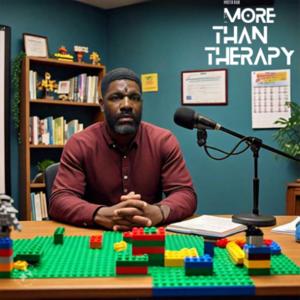


Felipe Khristopher Blue discusses men's mental health, and the title of his book, "It's Okay to Not Be Okay." He talks about how societal expectations have shaped the way men express themselves, and how this can lead to issues like anger, irritability, depression, and substance abuse. He provides practical strategies and self-care practices for men, such as mindful journaling, cognitive reframing, and building Supportive relationships. The book also covers the importance of confronting barriers to connection and seeking help.
IT IS OK TO NOT BE OK - A MEN'S MENTAL HEALTH AWARENESS MONTH EVENT ON 6/28/2025 at 12pm
Join us for an afternoon of honest conversation, reflection, and community as we launch It’s Okay to Not Be Okay: An Empowering Discussion Regarding Men’s Mental Health in recognition of Men's Mental Health Awareness Month. This event is designed to break the silence around men’s mental health, challenge outdated narratives, and empower attendees to embrace vulnerability as a pathway to resilience and connection.
Who Should Attend:
Men seeking support, understanding, or a new perspective on mental health.
Allies, partners, and community members interested in breaking down stigma.
Therapists, counselors, educators, and advocates for men’s wellness.
Anyone ready to challenge the old script and help build a new, more inclusive narrative.
Why Attend?
Despite progress, many men still struggle in silence, caught between inherited expectations and the realities of modern life. This event offers a safe space to explore the roots of stoic masculinity, unpack cultural myths, and discover that real strength comes from authenticity and connection, not suppression.
What's Included?
Community, discussions, food and light beverages, a signed copy of the newly released book on the same subject matter which includes an 8 week programming one can use for self empowerment or use in a group setting, resources, and ongoing support via networking, and for mental health professionals, up to 3 CEU from the NCSAPPB board under General Skill Building.
https://nextevent.morethantherapy.org/
This document summarizes the key themes and "Golden Rules" for mastering a new skill, as presented in the provided excerpts from "Mastering Skills: Guitar and Beyond." The author uses their journey of learning guitar as a framework to outline universal principles applicable to a wide range of skill-based pursuits. The central idea is the transformation of theoretical knowledge into practical ability through consistent, focused, and analytical practice.
The core message of the source revolves around the deliberate and structured approach required for effective skill acquisition. The author emphasizes that simply acquiring knowledge is insufficient; it must be actively converted into demonstrable proficiency. This transformation is guided by a set of "Golden Rules," which are presented as crucial for sustained progress and avoiding common pitfalls.
Most Important Ideas/Facts (Golden Rules):
The author outlines seven key rules for mastering any new skill, drawing parallels from their guitar learning experience:
Consistency is King: The most critical element is regular practice, even in short bursts. The author states, "It's far more important to pick up that axe for a little bit almost every single day than to attempt an all-nighter once a month." This steady engagement builds momentum and reinforces learning. The author's personal goal of "30-60 minutes daily, broken into short bursts" exemplifies this principle.
Immerse Yourself to Speak the Language of Licks: To truly master a skill, one must become deeply familiar with its fundamental elements, treating it like learning a new language. The author describes becoming a "musical sponge," "immersing myself in basic patterns, chord progressions, and simple melodies, repeatedly and daily." This foundational fluency is essential before attempting more complex aspects.
Analyze Your Faux Pas to Fix Your Fretting Fails: Identifying and understanding mistakes is paramount for improvement. The author highlights the importance of dissecting "screw-ups" to understand "why your fingers are doing the funky chicken instead of a smooth chord change." Seeking feedback from "a more experienced jam buddy, a sympathetic teacher, or some online tutorials" is suggested as a means to pinpoint and correct these errors.
Focus on the Fretboard, Not the Fame: Rather than fixating on distant goals or rapid progress, learners should concentrate on controllable actions in the present. The author advises against obsessing over achieving a certain level, which can lead to frustration. Instead, focus should be placed on "practicing your scales, drilling those tricky chord changes, learning new songs, and just playing for the sheer joy of it."
Don't Try to Learn Every Solo Ever Written – Just a Few Key Riffs: Being strategic with learning is crucial. Attempting to absorb all available knowledge at once can be overwhelming. The author advocates for focusing on "a few targeted exercises" and resisting the urge to get "sidetracked by the siren song of a new, impossibly fast lick." This focused approach allows for deeper understanding and mastery of specific areas.
Turn Knowledge into Skill with Tiered Tremolos: Theoretical knowledge must be translated into practical skill through systematic and repetitive practice at increasing levels of difficulty. The author describes a "tiered approach," starting with slow practice without pressure, then adding pressure, and finally increasing tempo and intensity. Each tier involves striving for perfect execution, moving to the next when proficiency is achieved.
Don't Forget to Rock Out (and Have Fun!): Maintaining enjoyment in the learning process is vital for avoiding burnout. The author acknowledges that learning can be challenging but stresses the importance of finding joy in the process. They note that the "sheer joy of making even a slightly recognizable melody has only grown" during their guitar journey. If learning feels like a chore, motivation will likely wane.
Learning a new skill, like playing the guitar, requires transforming theoretical knowledge into practical ability. The author shares "Golden Rules" for mastering any new skill, derived from their guitar-learning journey.
These rules include:
Spoken by Felipe Khristopher Blue of More Than Therapy as his alias, the creative, Jamari Leonard.
Do you need a therapist?
More Than Therapy
201 W Main Street
Suite 316
Durham, NC 27701
Specializing in CBT, CBT-I, DBT, Solution Focused Therapy, stress, anxiety, depression, relationship issues, trauma, addictions, and more....
Happy Mother's Day!
Recorded by Felipe Blue, LCAS, LCMHCA, CCS for More Than Therapy which is located at: 201 W Main Street Suite 316 Durham, NC 27701. Accepting new clients!!
Can you think of some good things that have come through your own self-discovery?
What might our knowledge of ourselves reveal about life?
Do you know anyone who constantly struggles looking for answers in the wrong places? How might you help them find the right place?
Spoken by:
Felipe Khristopher Blue, LCAS, LCMHCA, CCS, CCTP, CMNCS, C-DBT (Licensed Clinical Addictions Specialist, Licensed Clinical Mental Health Counselor Associate, Certified Clinical Supervisor, Certified Clinical Trauma Professional, Certified Mental Health & Nutrition Clinical Specialist, Certification in Dialectic Behavioral Therapy) More Than Therapy 201 W Main Street Suite 316 Durham, NC 27701 www.MoreThanTherapy.org Office: 919-729-6300Mobile: 919-679-2263
and
Brook and Jubal from the Brook and Jubal Show.
The stigma surrounding mental health has various impacts on individuals, such as preventing them from seeking treatment and causing discrimination in the workplace. Addressing stigma can lead to better access to care and resources for those with mental health conditions, as well as promoting social inclusion and empowerment for individuals to manage their health and pursue their goals. It can also foster a stronger, more diverse community. During the podcast, Felipe Blue, LCAS, LCMHCA, CCS discuss the importance of mental health and the challenges faced by marginalized communities when it comes to accessing mental health resources. He is joined by two preseasoned therapists, Alex Hatley and Alexis Prunczic, who share their personal experiences and insights on the topic. Together, they discuss the impact of systemic racism, poverty, and other social factors on mental health and how community involvement can help in raising awareness and promoting access to mental health services. They emphasize the need for Stigma around mental health needs to be addressed in order to promote well-being and reduce discrimination against those living with mental health challenges. To reduce stigma, it is important to promote open conversations, educate ourselves and others, and advocate for supportive policies and human rights. Acknowledging individuals' abilities and empowering them to reach their full potential can also help reduce stigma. Media also plays a role in perpetuating or reducing stigma, so it is important to be mindful of the content we consume and create.
Mental health stigma is a negative attitude or belief towards people with mental health conditions, and it is common in society. Public stigma is when people view mental health negatively and may prevent individuals from seeking help. There is also self-stigma where individuals put themselves down or identify strongly with their diagnosis. Structural stigma is when societal structures create an environment of stigmatizing certain groups, such as those in the LGBTQ+ community or low-income individuals. The consequences of mental health stigma can include individuals not seeking This was a conversation about the stigma surrounding mental health and the barriers that prevent people from seeking help. The participants discussed the societal pressures and stereotypes that contribute to the stigma, and how this can lead to social isolation and discrimination for those struggling with mental health challenges. They also discussed the importance of education and empathy and the need for more accessible and supportive mental health services in the workplace.
Alexis M. Prunczik and Alexandra Hatley are both master 's-level Clinical Mental Health Counseling graduate students at the University of North Carolina at Pembroke.
Ms. Prunczik is a mental health professional of six years; her work includes being a Direct Support Professional II within group homes, an Autism Support Specialist, an Applied Behavior Analysis Therapist, and currently a Qualified Professional and Employment Support Professional III. She obtained a Bachelor of Arts in Psychology with a Minor in Alcohol & Drug Studies through East Carolina University.
Ms. Hatley also previously has experience as a Registered Behavioral Technician within the Applied Behavior Analysis field and double-majored in psychology and sociology during her undergraduate studies at East Carolina University. She volunteered at a Crisis Text-Line center for over a year and is interested in growing as a professional through knowledge and advocating for both equality and access.
#multiculturalism #decolonizetherapy #mentalhealthawareness
Hosted by Felipe Blue, LCAS, LCMHCA, CCS
Recorded at More Than Therapy
201 W Main Street
Suite 316
Durham, NC 27701
Director of Photography:
Kaya Jay
Intro Music:
Felipe Blue
How easy is it for you to notice all that is around you? Can you do it all of the time? Most of the time?
How much do you lose when you do not pay attention to the present moment?
Will you ever get it back again?
Part 1 presented by Felipe Blue, LCAS, LCMHCA, CCS.
Part 2 presented by Jude and June Blume.
Recorded in connection with:
More Than Therapy
201 W Main Street
Suite 316
Durham, NC 27701
Do you need therapy?
Schedule a consult with us when you are ready.
www.morethantherapy.org
919-679-2263
In this episode, we dive into the transformative process of creating a vision board for 2025, building on the reflections from last year's board. We discuss the importance of self-reflection and goal assessment as we evaluate what worked and what didn’t in 2024.
Key Highlights:
Reflecting on 2024: We start by encouraging listeners to take a moment to look back on their 2024 vision board. What goals were achieved? Which ones fell short? Understanding these outcomes helps in setting realistic and meaningful intentions for the upcoming year.
Lessons Learned: We provide insights into the common obstacles that may have hindered progress in 2024. Listeners will learn how to identify these barriers, whether they be lack of time, motivation, or clarity in goals.
Setting Intentions for 2025: Transitioning into the new year, we emphasize the importance of specificity in goal-setting. We discuss how to define clear, actionable goals that resonate with personal values and aspirations.
Today's thought of the day enters on the power of selfless service, emphasizing that everyone possesses the capacity to contribute positively to others' lives. It defines a "heart full of grace" as virtuous and compassionate, suggesting that serving others cultivates both personal growth and spiritual connection. The author encourages readers to embrace service with love and compassion, prompting reflection on motivations and expectations surrounding acts of kindness. Finally, the text connects serving others with finding meaning and purpose in life.
Recorded by:
Felipe Khristopher Blue, LCAS, LCMHCA, CCS, CCTP, CMNCS, C-DBT
Executive Director of More Than Therapy
201 W Main Street
Suite 316
Durham, NC 27701
Office: 1-919-729-6300
Business Mobile: 1-919-679-2263
Do you want/need therapy and live in NC or SC?
Do you have Aetna insurance? Quest Behavioral Health? Carelon Behavioral Health? Anthem EAP - Bank of America?
Let's schedule a consultation to assist you with your personal goals.
(Licensed Clinical Addictions Specialist, Licensed Clinical Mental Health Counselor Associate, Certified Clinical Supervisor, Certified Clinical Trauma Professional, Certified Mental Health & Nutrition Clinical Specialist, Certification in Dialectic Behavioral Therapy)
From the publisher's feed