
Sign up to save your podcasts
Or



Episode Overview
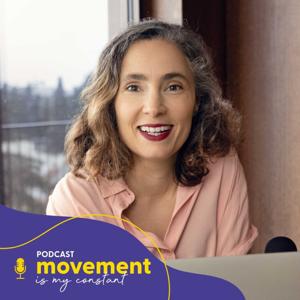
Francisca Mix has spent nearly twenty years working at the intersection of somatic psychology and relational healing. In this conversation, we explore what happens when couples stop trying to talk their way through disconnection and start moving through it instead. From the neuroscience of stress responses to the surprising things partner dancing reveals about power, presence, and trust, this episode looks at what the body knows about a relationship long before the distance between them has a name.
What We Cover
How Francisca's own experience with partner dancing led her to dance/movement therapy — and eventually to a thesis on communication and Argentine tango
Why somatic psychology, once considered peripheral, is now reshaping how the field understands lasting change
What couples actually bring into the therapy room — and why their bodies are often saying something their words aren't
The animal instinct underneath conflict: why stressed nervous systems don't turn toward each other, and what conditions make turning toward possible
The Beyond Words® workshop — what happens when couples explore communication, trust, and intimacy through movement rather than conversation, including one unexpected outcome that surprised even Francisca
What longer-term couples look like in movement, versus newer ones — and what playfulness, or the loss of it, reveals about a relationship over time
Power dynamics and embodiment: why lead and follow in partner dancing shows up across all kinds of couples, regardless of gender
The limits of this work: when nervous systems are too activated for movement to help, and when separation — not togetherness — is the right first step
One simple practice to try at home: the back-to-back sway, and why it works at a physiological level
Resources & Links
Beyond Words® — Francisca's experiential workshop for couples: franciscacc.com/beyond-words-1
Couples Therapy in Motion® — movement-based training for mental health professionals: franciscacc.com/couples-therapy-motion
Polyvagal theory — referenced in relation to nervous system regulation and social engagement
Bartenieff Fundamentals — the movement framework underlying Francisca's somatic approach
Body-Mind Centering — referenced in relation to organ awareness and intentional embodied presence
About the Guest
Francisca F. Mix, MA, LPC, ACS, BC-DMT is the CEO and Founder of Francisca Consulting & Counseling, based in the Denver metro area of Colorado. A Licensed Professional Counselor, Board-Certified Dance/Movement Therapist, and Approved Clinical Supervisor with nearly twenty years of experience, Francisca created Beyond Words®, an experiential workshop for couples, and Couples Therapy in Motion®, a movement-based training for mental health professionals. Her work integrates somatic psychology, nervous system awareness, and embodied approaches to help individuals and couples move beyond stuck relational patterns and reconnect — with themselves and with each other.
Call to Action
Subscribe to Movement Is My Constant wherever you listen. If this episode made you curious about what your body might already be saying in the spaces between conversations, send it to someone who needs to hear it — a couple working through something, or a clinician looking for new ways in.
For more at the intersection of movement, the body, and what's underneath it, join the newsletter at movementismyconstant.com/newsletter.
🎙️ More Episodes: movementismyconstant.com
📱 Follow on Instagram: @movementismyconstant
✨ Want to go deeper? Explore my mindfulness courses and 1:1 sessions at MiCa Mindfulness — designed to support caregivers, creatives, and mission-driven humans.
Episode Credits
Produced, Edited and Mixed by Chris Forbes
Artwork Design by Utterly Create
Music is by Pictures of a Floating World from the Free Music archive.org
Be sure to follow and tag Movement is My Constant on Instagram
🎧 Subscribe now and get grounded, insightful episodes that feel like a deep exhale
Episode Overview
In this episode, Beatrice Brunelli brings a perspective you don't often find in the movement world: one that is equal parts scientific and embodied. A former competitive athlete, engineer, and myofascial yoga teacher, Beatrice has spent years working at the intersection of fascial anatomy, the nervous system, and yoga practice. What emerges is a conversation about what it actually means to train the whole body — not as a collection of parts to manage, but as a living system in constant dialogue with what we do, feel, and experience.
Resources and Links
Beatrice's website: yogamiofasciale.it
Beatrice on Instagram: @beatrice.brunelli.yoga
About the Guest
Beatrice Brunelli is a myofascial yoga teacher, engineer, and creator of the BodyTensFlow® method. After fifteen years as a competitive athlete — first as a swimmer, then in horse riding — she studied energy engineering and worked for a multinational company before returning to movement full time. Her work sits at the intersection of fascial anatomy, nervous system science, and yoga practice, and she now teaches practitioners through a master's programme she developed in myofascial release. Her book on BodyTensFlow® is available in Italian, with more to come.
Call to Action
Subscribe to Movement Is My Constant wherever you listen. And if this episode landed for you — if you've ever pushed through instead of pausing, or trained the activity without training the system around it — share it with an athlete who might be ready to hear it differently.
For more at the intersection of movement, health, and performance, join the newsletter at movementismyconstant.com/newsletter.
🎙️ More Episodes: movementismyconstant.com
📱 Follow on Instagram: @movementismyconstant
✨ Want to go deeper? Explore my mindfulness courses and 1:1 sessions at MiCa Mindfulness — designed to support caregivers, creatives, and mission-driven humans.
Episode Credits
Produced, Edited and Mixed by Chris Forbes
Artwork Design by Utterly Create
Music is by Pictures of a Floating World from the Free Music archive.org
Be sure to follow and tag Movement is My Constant on Instagram
🎧 Subscribe now and get grounded, insightful episodes that feel like a deep exhale
Episode Overview
In this episode, therapist and EMDR trainer Erica Bonham makes the case that trauma doesn't live where we think it does — not in what we know, but in what the body has stored, patterned, and organized around long before the thinking mind gets a vote. Erica and Ana talk through what it actually takes to build a nervous system with more capacity: not bypassing what's hard, but developing the physical ability to stay present to it, one breath and one contraction-and-expansion at a time.
What We Cover
About the Guest
Erica Bonham, LPC, MA, is a Licensed Professional Counselor in Colorado, a certified EMDR clinician, consultant, and trainer, and the founder of AVOS Counseling Center in Arvada, Colorado. She specializes in somatic and attachment-focused EMDR, ketamine-assisted psychotherapy, and nervous system regulation, with a practice focus that includes the LGBTQ community and trauma related to racial and social injustice, abuse, and spiritual harm. She is the author of Always Enough, Never Done: Volume I: Heal Your Nervous System, Turn Wounds Into Wisdom, and Cultivate Your Inner Badass, and a nationally sought-after speaker on trauma, embodiment, and collective healing.
Resources and Links
Call to Action
Subscribe to Movement Is My Constant wherever you listen. And if this episode landed somewhere, share it with someone who's been told to think their way out of a body that's still holding the story.
For more at the intersection of movement, the body, and what's underneath it, join the newsletter at movementismyconstant.com/newsletter
🎙️ More Episodes: movementismyconstant.com
📱 Follow on Instagram: @movementismyconstant
✨ Want to go deeper? Explore my mindfulness courses and 1:1 sessions at MiCa Mindfulness — designed to support caregivers, creatives, and mission-driven humans.
Episode Credits
Produced, Edited and Mixed by Chris Forbes
Artwork Design by Utterly Create
Music is by Pictures of a Floating World from the Free Music archive.org
Be sure to follow and tag Movement is My Constant on Instagram
🎧 Subscribe now and get grounded, insightful episodes that feel like a deep exhale
Episode Overview
In this episode, Brendan Cournane — a lawyer turned ultra-endurance runner and coach — talks about what it actually took to run 100+ marathons across all fifty states, seven continents, and all six World Marathon Majors, and why crossing every one of those finish lines never quite delivered the feeling he was chasing. A coronary artery disease diagnosis mid-training eventually forced him to stop, and to ask what all that mileage had really been for.
What We Cover
Resources & Links
About the Guest
Brendan Cournane is a Chicago-based running coach, motivational speaker, and practicing municipal finance lawyer. Since getting sober in 1989 and qualifying for the 100th Boston Marathon in 1995, he has completed more than 100 marathons, including one in every U.S. state, on all seven continents, and all six World Marathon Majors — a combination fewer than 250 people worldwide have completed. A coronary artery disease diagnosis in 2022, which led to two stents and a pacemaker, ended his marathon training and reshaped how he thinks about effort, recovery, and identity. He now coaches endurance athletes and professionals through Coach Brendan Running and is the author of Seeking Serenity: Finding Happiness by Embracing Your Present Attitude.
Call to Action
Subscribe to Movement Is My Constant wherever you listen. And if this episode landed somewhere, share it with someone who's chasing a summit, a fight, or a personal record and has never quite asked themselves why the bar keeps moving.
For more at the intersection of movement, the body, and what's underneath it, join the newsletter at movementismyconstant.com/newsletter.
🎙️ More Episodes: movementismyconstant.com
📱 Follow on Instagram: @movementismyconstant
✨ Want to go deeper? Explore my mindfulness courses and 1:1 sessions at MiCa Mindfulness — designed to support caregivers, creatives, and mission-driven humans.
Episode Credits
Produced, Edited and Mixed by Chris Forbes
Artwork Design by Utterly Create
Music is by Pictures of a Floating World from the Free Music archive.org
Be sure to follow and tag Movement is My Constant on Instagram
🎧 Subscribe now and get grounded, insightful episodes that feel like a deep exhale
Episode Overview
In this episode, therapist and climber Michael Herr talks about what actually drove fifteen years of climbing and a decade of boxing — and what happened when he watched a climbing partner nearly die and his body simply refused to climb again. Drawing on his book The Shadow of the Climber, Michael traces how shame and the need to prove something can power real athletic achievement, right up until the moment the body stops going along with it.
What We Cover
Resources & Links
About the Guest
Michael Herr is a therapist and climber, and the author of The Shadow of the Climber: The Psychology of Extreme Sports. Trained originally as a cognitive behavioral therapist, his own clinical path moved toward depth psychology as he began to recognize how much of his climbing — and before that, ten to fifteen years of boxing — was shaped by forces he wasn't fully conscious of. He has spent roughly fifteen years climbing in and around Boulder, Colorado, with Rocky Mountain National Park as home ground. The Shadow of the Climber draws on his own climbing history, his clinical training, and interviews with figures in the climbing world to look at what pulls people toward extreme sports — and what those sports can end up covering for.
Call to Action
Subscribe to Movement Is My Constant wherever you listen. And if this episode landed somewhere, share it with someone who's chasing a summit, a fight, or a personal record and has never quite asked themselves why the bar keeps moving.
For more at the intersection of movement, the body, and what's underneath it, join the newsletter at movementismyconstant.com/newsletter.
🎙️ More Episodes: movementismyconstant.com
✨ Want to go deeper? Explore my mindfulness courses and 1:1 sessions at MiCa Mindfulness — designed to support caregivers, creatives, and mission-driven humans.
Episode Credits
Produced, Edited and Mixed by Chris Forbes
Artwork Design by Utterly Create
Music is by Pictures of a Floating World from the Free Music archive.org
Be sure to follow and tag Movement is My Constant on Instagram
🎧 Subscribe now and get grounded, insightful episodes that feel like a deep exhale
Episode Overview
In this episode, Suzanne Roberts shares profound insights from her five-decade journey at the intersection of the body, leadership, and systemic change. Her work invites us to see movement as a gateway to wholeness, connecting individual energy to collective systems and societal structures.
What We Cover
Resources & Links
About the Guest
Suzanne Roberts is the Founder of UnifyingSolutions and a transformational speaker, facilitator and author with over four decades of experience guiding leaders and organizations toward sustainable, systemic change. She is the creator of Polarity System Design™- a methodology that empowers individuals and teams to reclaim their inner capacity, lead with clarity, and design cultures rooted in purpose, equity, and lasting impact.
Suzanne creates spaces where people can thrive and contribute with clarity and purpose. Her book and documentary, It’s Deeper Than That: Pathway to a Vibrant, Purposeful, Life, will premiere October, 2025.
Call to Action
Subscribe to Movement Is My Constant wherever you listen. And if this episode sparked something, share it — share it with someone who's been taught to see their body as something to fix, hide, or fear instead of a source of wisdom.
For more at the intersection of movement, health, and systems change, join the newsletter at movementismyconstant.com/newsletter.
🎙️ More Episodes: movementismyconstant.com
📱 Follow on Instagram: @movementismyconstant
✨ Want to go deeper? Explore my mindfulness courses and 1:1 sessions at MiCa Mindfulness — designed to support caregivers, creatives, and mission-driven humans.
Episode Credits
Produced, Edited and Mixed by Chris Forbes
Artwork Design by Utterly Create
Music is by Pictures of a Floating World from the Free Music archive.org
Be sure to follow and tag Movement is My Constant on Instagram
🎧 Subscribe now and get grounded, insightful episodes that feel like a deep exhale
Episode Overview
Nine months after fracturing his femur in three places on an obstacle course, G. Scott Graham joins the podcast still mid-recovery — not narrating the comeback from a safe distance, but living inside it.
A career coach, Tai Chi teacher, long-distance paddleboarder, Appalachian Trail hiker, and EMT instructor, Scott is also the author of Come As You Are: Five Years Later, a memoir that moves between losing his husband Brian after 31 years together and the unexpected grief of falling in love again with Peter.
This conversation traces how movement once became a way of outrunning stillness, what Buddhist philosophy's concept of the "near enemy" reveals about mistaking momentum for avoidance, and why Scott insists equanimity isn't armor — it's the capacity to stay open to what scares you.
What We Cover
Resources & Links
Come As You Are: Five Years Later - Scott Graham book
Scott Graham on Medium
Scott Graham website
About the Guest
G. Scott Graham is an existential handyman — fixing what’s broken, realigning what’s off-kilter, and helping people rebuild their lives with meaning, purpose, and the occasional strip of duct tape. He’s also an author, career coach, business coach, and psychedelic support coach based in Boston, Massachusetts.
Scott is driven to help clients follow their “true azimuth” — a direction distinct from “true north.” It’s not about chasing some universal ideal. It’s about identifying what genuinely matters to you. It’s about recognizing the forces that pull your life off course and learning how to adjust so you still arrive where your heart wants to go. When you’re 90 and looking back, your life should feel like it was truly yours — filled with pride, purpose, and meaning. No regrets.
Call to Action
Subscribe to Movement Is My Constant wherever you listen. And if this episode sparked something, share it — share it with someone who's been taught to see their body as something to fix, hide, or fear instead of a source of wisdom.
For more at the intersection of movement, health, and systems change, join the newsletter at movementismyconstant.com/newsletter
🎙️ More Episodes: movementismyconstant.com
📱 Follow on Instagram: @movementismyconstant
✨ Want to go deeper? Explore my mindfulness courses and 1:1 sessions at MiCa Mindfulness — designed to support caregivers, creatives, and mission-driven humans.
Episode Credits
Produced, Edited and Mixed by Chris Forbes
Artwork Design by Utterly Create
Music is by Pictures of a Floating World from the Free Music archive.org
Be sure to follow and tag Movement is My Constant on Instagram
🎧 Subscribe now and get grounded, insightful episodes that feel like a deep exhale
Episode Overview
In this episode, I sit down with Sydney Zwicker — fascia-based bodyworker, pelvic health educator, and founder of Sovereign Touch Bodywork and Pelvic Care — for a conversation about reclaiming women's bodies as a site of wisdom rather than fear. Sydney's own healing path, which began after surviving sexual assault in her late teens, led her from talk therapy through somatic and dance-based therapies into a decade-plus practice in pelvic touch work, trauma integration, and the nervous system.
Together we explore why movement and touch can access what words and intellect alone cannot, what "non-agenda touch" really means, and how the pelvis — often called the body's foundation — connects directly to breath, voice, posture, and the wider nervous system. Sydney makes the case that embodiment, especially for women, isn't indulgent self-care but a quiet form of rebellion with consequences for relationships, sexuality, and the larger systems we live inside.
This episode offers a grounded, anatomy-first entry point into deeper questions of safety, pleasure, and truth — and a reminder that healing is rarely linear, but spiral.
What We Cover
Resources
Sovereign Touch Bodywork and Pelvic Care — Sydney Zwicker's practice
Waking the Tiger: Healing Trauma by Peter Levine — the foundational text behind Somatic Experiencing, closely aligned with the "fact-checking the nervous system" and unfinished stress-response cycles Sydney describes
The Body Keeps the Score by Bessel van der Kolk — widely known starting point for how trauma lives in the body, useful for anyone new to that framing
Come As You Are by Emily Nagoski — research-grounded look at women's sexuality and arousal, pairs well with the episode's focus on sexuality and the pelvis
Anatomy Trains by Thomas Myers — the standard reference on fascia for bodyworkers, fits Sydney's "fascia-based" framing if you want something more technical
Full Body Presence by Suzanne Scurlock-Durana — a craniosacral-rooted guide to body awareness, gentler and more accessible than the others if you want something practice-oriented rather than clinical
About the Guest
Sydney Zwicker is a fascia-based bodyworker, pelvic health educator, and founder of Sovereign Touch Bodywork and Pelvic Care. Her work weaves together over a decade of study in women's health, sexuality, trauma integration, and the nervous system, grounded in embodied awareness. After surviving sexual assault in her late teens, Sydney's own healing journey moved through talk therapy, somatic therapy, and dance movement before landing in hands-on pelvic bodywork — the practice she's now offered for almost a decade. She helps women build a relationship with their pelvis, their nervous system, and their own truth through what she calls non-agenda touch: approaching the body with curiosity instead of the goal of fixing it. Find more of Sydney's work through Sovereign Touch Bodywork and Pelvic Care [add website/social links].
Call to action
Subscribe to Movement Is My Constant wherever you listen. And if this episode sparked something, share it — share it with someone who's been taught to see their body as something to fix, hide, or fear instead of a source of wisdom.
This summer, join me at the Sun & Light retreat with Five Senses Retreats — July 31–August 2, 2026, at Haltia Lake Lodge in Nuuksio National Park, Finland — where I'll be leading a session series called Move & Settle. Use code MiMC15 for a discount on your booking.
For more at the intersection of movement, health, and systems change, join the newsletter at movementismyconstant.com/newsletter.
🎙️ More Episodes: movementismyconstant.com
📱 Follow on Instagram: @movementismyconstant
✨ Want to go deeper? Explore my mindfulness courses and 1:1 sessions at MiCa Mindfulness — designed to support caregivers, creatives, and mission-driven humans.
Episode Credits
Produced, Edited and Mixed by Chris Forbes
Artwork Design by Utterly Create
Music is by Pictures of a Floating World from the Free Music archive.org
Be sure to follow and tag Movement is My Constant on Instagram
🎧 Subscribe now and get grounded, insightful episodes that feel like a deep exhale
Episode Overview
In this episode, Camille Ellis shares her journey through unimaginable loss—the death of her son—and how she transformed grief from a debilitating experience to a source of profound purpose. Her insights illuminate how grief, when consciously integrated, can lead to personal growth, deeper love, and meaningful service.
Camille Ellis is a certified coach, speaker, and resilience mentor who helps people rise after devastating loss. At 60, Camille is proof that reinvention is possible at any stage, and that choosing herself was the beginning, not the end.
She speaks powerfully about courage, grief, self-trust, and building a meaningful life after everything falls apart.
This episode offers a masterclass in transforming grief into a vessel for love, purpose, and resilience. Camille’s story exemplifies that although grief brings pain, it also opens pathways to profound connection, spiritual growth, and a more compassionate life.
Coming from a lineage of healers, Camille reflects on how we can go back to ourselves by embracing the different experiences that prepare us for what's coming.
What We Cover
Resources
About the Guest
Camille Ellis is a Certified Life Coach, speaker, and resilience mentor who helps people rise after devastating loss. Her story includes surviving abuse, losing a child to suicide, enduring years of emotional loneliness. Camille helps people who feel broken, stuck, or lost after major life events rediscover strength, clarity, and direction. Her clients learn how to move through grief without being consumed by it, reclaim their voice, and build a life that feels honest and fulfilling—even after devastating loss. Find more of Camille's work on her official website and Instagram or Facebook accounts.
Call to action
Subscribe to Movement Is My Constant wherever you listen. And if this episode sparked something, share it—share it with someone who's succeeding on the outside but running on empty.
For more at the intersection of movement, health, and systems change, join the newsletter at movementismyconstant.com/newsletter.
🎙️ More Episodes: movementismyconstant.com
📱 Follow on Instagram: @movementismyconstant
✨ Want to go deeper? Explore my mindfulness courses and 1:1 sessions at MiCa Mindfulness — designed to support caregivers, creatives, and mission-driven humans.
Episode Credits
Produced, Edited and Mixed by Chris Forbes
Artwork Design by Utterly Create
Music is by Pictures of a Floating World from the Free Music archive.org
Be sure to follow and tag Movement is My Constant on Instagram
🎧 Subscribe now and get grounded, insightful episodes that feel like a deep exhale
Episode overview
My guest on this episode digs into the core of what it means to operate at the highest levels of performance, blending mental resilience, emotional awareness, and balance. Stuart Wade, a high performance mindset coach and clinical hypnotherapist, offers profound perspectives on how men (and everyone) can cultivate sustainable success without losing their sense of authenticity or well-being.
Resources & links
Stuart's visualisation audio tool
Connect with Stuart on Linkedin
More on Stuart's work online
Book: The Body Keeps the Score by Bessel van der Kolk - concept referenced in episode
What we cover
About the guest
Stuart Wade is a High Performance Mindset Coach, Clinical Hypnotherapist, and lifelong martial artist with a bold vision—to elevate human potential at the highest levels in order to create lasting, global change.
From a shy six-year-old boy inspired by Bruce Lee to a 5th Dan Blackbelt in Taekwondo, 2nd Dan in Kickboxing, and four-time World Champion, Stuart’s journey has been anything but ordinary. At just eight, he failed his first Blackbelt test. That failure was a defining moment—igniting a relentless drive for mastery that would shape the rest of his life.
Call to action
Subscribe to Movement Is My Constant wherever you listen. And if this episode sparked something, share it—share it with someone who's succeeding on the outside but running on empty.
For more at the intersection of movement, health, and systems change, join the newsletter at movementismyconstant.com/newsletter.
🎙️ More Episodes: movementismyconstant.com
📱 Follow on Instagram: @movementismyconstant
✨ Want to go deeper? Explore my mindfulness courses and 1:1 sessions at MiCa Mindfulness — designed to support caregivers, creatives, and mission-driven humans.
Episode Credits
Produced, Edited and Mixed by Chris Forbes
Artwork Design by Utterly Create
Music is by Pictures of a Floating World from the Free Music archive.org
Be sure to follow and tag Movement is My Constant on Instagram
🎧 Subscribe now and get grounded, insightful episodes that feel like a deep exhale
From the publisher's feed
10,514 Listeners