
Sign up to save your podcasts
Or

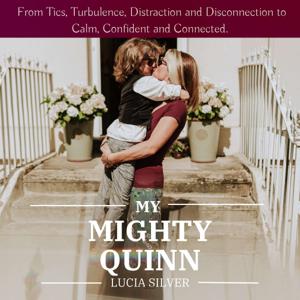


Welcome to My Mighty Quinn
In this illuminating episode, I’m joined by Dr Daniel Kimbley, founder of Nexus Family Chiropractic and creator of the Nexus Method — a nervous system-first clinical approach designed to identify and restore the brain’s missing input.
Dr Daniel began his career not in a clinic, but in a classroom. He watched children labelled as defiant, distracted, and disruptive — yet instinctively knew something deeper was at play. What looked like “won’t” was often “can’t.” What was dismissed as behaviour was, in truth, nervous system capacity.
Together, we explore what happens when a child’s brain is stuck in protection mode and why so many of the challenges facing our children today are not psychological failures, but neurological adaptations to stress.
We go inside the nervous system itself — how it develops, how it becomes dysregulated, and crucially, how it can be restored.
Key takeaways
This episode is about understanding the child beneath the behaviour. About recognising that the brain is not broken — it is adaptive. Because healing doesn’t begin with behaviour. It begins with the brain.
Resources
Free Guide
Dr Daniel Kimbley's Website
Support the show
Resource Links:
Welcome to My Mighty Quinn
In this powerful, wide-angle, and deeply grounding episode, I’m joined by Alicia Drummond, founder of The Wellbeing Hub and recent recipient of the BETT 2026 Award for Best Wellbeing Resources, dive inside the reality of what is really happening in schools right now and the pressure our children are carrying.
Alicia brings a rare panoramic view, drawn from supporting 170,000+ students across 300+ schools in 6 countries, and what she shares, confirms what so many parents are sensing but struggling to name: we are no longer dealing with isolated issues, we are facing a whole-system strain on children, families, and schools alike.
Together, we explore what teachers are seeing at every stage of development, from children arriving at school not ready to learn, to rising anxiety, emotional dysregulation, school avoidance, burnout, and distress.
This is not a conversation about blame. It’s a conversation about biology, nervous systems, belonging, and capacity and about how parents and schools can work with one another instead of breaking apart under pressure.
Key takeaways include:
This is an episode about understanding, compassion, and shared responsibility.
Because children don’t develop — or heal — in isolation.
And when the adults around them feel more regulated, informed, and supported, children have a far better chance of doing the same.
Resources
Free Guide
The Wellbeing Hub Website
Support the show
Resource Links:
Welcome to My Mighty Quinn
In this deeply honest, compassionate, and empowering episode, I’m joined by Sean McNicholas, founder of New Me Therapy, also known as The ADHD Expert, to shine a long overdue light on a missing part of the ADHD conversation: The Parent.
This episode is for the adults — especially parents parenting with ADHD (diagnosed or undiagnosed) — who are holding families together while feeling overwhelmed, distracted, reactive, exhausted, and often quietly ashamed.
Together, we unpack why parenting with ADHD feels so relentlessly hard — and why it’s not a personal failing, but biology under pressure.
We explore the invisible load ADHD parents carry: the mental juggling, time blindness, sensory overwhelm, emotional reactivity, masking, guilt, burnout, and the collapse that so often happens behind closed doors.
And crucially, we talk about what actually helps — in the moment and long-term.
Key takeaways include:
This is an episode about relief, understanding, and permission.
Because when parents feel safer and more supported, families do too.
Resources
Free Guide
Sean's Website
Support the show
Resource Links:
Welcome to My Mighty Quinn
In this deeply grounding and illuminating episode, I’m joined by Fran Aitken, founder of Awaken Chiropractic, to explore why the nervous system must always be the first place we look when a child is struggling.
This conversation is called “Wired from the Start” — because so many children’s challenges don’t begin with behaviour, school, or diagnosis. They begin much earlier, in pregnancy, birth, and the early environment, where a child’s nervous system is already adapting, compensating, and doing its best to survive.
Together, Fran and I unpack how early stress can wire a child’s nervous system into heightened vigilance from day one. We explore why symptoms like poor sleep, sensory sensitivity, emotional dysregulation, hyperactivity, digestive issues, tics, and difficulty with transitions are not “bad behaviour” — but biology communicating distress.
Crucially, this episode also speaks to parents. Because children don’t regulate alone — they co-regulate — and why self-care is not indulgence, but a duty of care for our children’s development.
Key Takeaways include:
This is an episode about sequence, safety, and hope.
About understanding that healing doesn’t start with fixing symptoms — it starts with helping the nervous system feel safe enough to develop as nature intended.
Resources
Free Guide.
Fran's Website
Support the show
Resource Links:
In this warm, practical, and laugh-because-it’s-true Christmas special, I sit down once again with the incomparable Lucinda Miller — family nutrition expert, bestselling author, founder of NatureDoc, and one of our most beloved experts inside the Whole Child Healing Course.
Together, we unravel the real reason December hits families so hard — not because we’re doing Christmas “wrong,” but because exhausted children, depleted parents, overstimulating routines, and a month-long sugar parade collide in a way no nervous system was built to handle.
This episode is a lifeline for every mother (and every dad, grandparent, and caregiver) trying to hold it all together through the longest school term of the year, the onslaught of colds, the late nights, the overstimulation, the food battles, the emotional wobbles… and still somehow “make the magic.”
Lucinda and I break down practical, doable, genuinely sanity-saving ways to support your child’s behaviour, mood, sleep, immunity — and crucially, your own wellbeing — through the most dysregulating month of the year.
Without perfection. Without pressure. Without martyrdom.
Because calm isn’t accidental — it’s created.
And when we feed the calm, the whole family shifts.
Key Takeaways Include:
Happy Christmas — and remember: even one quiet breath is a gift to your nervous system.
Resources
NatureDoc Recipes
Brain Brilliance Book
Christmas Survival Guide
Christmas Giveaway
Support the show
Resource Links:
In this beautifully honest and deeply validating episode, I sit down with the remarkable Dr Hilary Claire — clinical psychologist, nutritionist, integrative practitioner, and the author of Mama, Let It Go, The Motherhood Reset, and The Nourished Mama.
Together, we unpack one of the most urgent and misunderstood crises of modern motherhood: maternal burnout — not as a moral failing, not as a personal weakness, but as a physiological, psychological, and cultural collision of pressures no mother was ever meant to endure alone.
Dr Hilary and I explore the real forces draining today’s mothers: from nutrient depletion, sleep loss and dysregulated nervous systems to toxic expectations, unsupported homes, perfectionism, and the invisible emotional labour women carry every hour of every day.
Most importantly, she shows mothers the path back — not through grand gestures or unrealistic routines, but through micro-shifts, nervous-system repair, nourishment, boundaries, and remembering our own humanity.
Because a calm nervous system is not a luxury, it is the most powerful healing force in your home.
Key Takeaways Include:
Listen now to reclaim your energy, your clarity, and the calm power every child depends on.
Resources
Download the Free Guide
Dr Hilary's Website
Support the show
Resource Links:
Welcome to My Mighty Quinn
In this powerful and deeply personal episode, I’m joined by the extraordinary Dr Lauren Lee Stone — functional medicine practitioner, homotoxicologist, and mother of two boys once diagnosed with autism and PANS — neither of whom holds those diagnoses today.
Together, we expose the hidden toxic load affecting every modern child — from food, water, air and medications to birth trauma, stress, and emotional overwhelm — and how these silent stressors are inflaming young brains and bodies.
Dr Lauren shares her family’s remarkable recovery story and explains why so many children today struggle with sleep, anxiety, aggression, gut issues, tics and learning challenges — and what parents can do to start clearing the path to healing.
She breaks down complex science into compassionate, practical steps any family can take right now — showing that true detox is not deprivation or “kill protocols,” but a gentle, bio-individual process of strengthening and re-educating the body to heal itself.
Key Takeaways include:
Listen now to understand why your child’s body may be too burdened to heal — and how you can begin lifting that load, one gentle step at a time.
Resources
Free Guide
Support the show
Resource Links:
Welcome
If you’ve ever wondered why your baby hates tummy time, startles at every sound, or feels “floppy” in your arms — this episode is for you.
Because the truth is, those tiny movements in the first 90 days of life are doing far more than we think. They’re wiring your baby’s brain for a lifetime of learning, focus, and emotional connection.
I sit down with Brandon Kingston, functional neurologist and founder of Bright Minds Neurodevelopment, to uncover the extraordinary science — and simple daily practices — that shape your child’s brain and nervous system from birth.
If you’re an expectant parent, new parent, or simply want to understand how to build your baby’s brain the natural way — this conversation is pure gold.
Episode Summary
Brandon and I dive deep into the miraculous first 90 days and how sensory input, movement, and connection lay the foundation for lifelong learning and behaviour.
Brandon explains why those first three months are the fastest period of brain growth we’ll ever experience, how primitive reflexes build the foundations for attention, emotional regulation, and even eating habits, and why modern parenting habits may be quietly rewiring development in the wrong direction.
And perhaps most importantly, we remind parents that they are enough.
Because the greatest “neurotherapy” any child can receive is a calm, connected caregiver.
Key Takeaways
Resources
Bright Minds Website
Free Guide
Support the show
Resource Links:
Welcome back to My Mighty Quinn, today, I’m joined by Melissa and Spencer Doman of Doman International. Spencer is the grandson of Glen Doman, a pioneer in brain development whose revolutionary approach has helped over 30,000 families worldwide. Glen’s work focused on treating the brain rather than symptoms, leading to remarkable outcomes for children with autism, cerebral palsy, developmental delays, ADHD, and more.
Melissa and Spencer continue his legacy, championing the Doman Method, a family-centred, brain-first approach that gives parents the tools to foster real progress in their children.
We discuss:
Key Takeaways
Resources & Links
Support the show
Resource Links:
Welcome
If you’ve ever been told your child is “just anxious,” needs firmer discipline, or is simply wired differently — this episode could change everything.
Because sometimes, it’s not “just behaviour.” It’s not ADHD. It’s not autism. It’s your child’s immune system attacking their brain.
I sit down with Dr Nancy O’Hara — world-renowned paediatrician and functional medicine expert — to expose the truth about PANS, PANDAS, and Basal Ganglia Encephalitis: immune-driven brain conditions that are more common than most realise, often misunderstood, and frequently misdiagnosed.
This is personal. My son Quinn has PANS. I’ve lived the overnight personality shifts, the fear, the school calls, the tics, sleep terrors, and seizures. If you’ve ever looked at your child and thought, “This isn’t my child anymore,” this conversation will meet you there — and offer grounded hope.
Episode Summary
Dr O’Hara and I unpack what PANS and PANDAS truly are, how they differ from typical mental health conditions, and why so many children are missed. We explore symptoms like sudden OCD, anxiety, tics, regression, sleep and eating changes, and even seizures. Dr O’Hara explains how infections, mould, and toxins can trigger these conditions — and why this isn’t “bad behaviour,” it’s brain inflammation.
We also cover diagnosis, treatment, and the vital role of parental self-care and advocacy. I share my journey with Quinn — the heartbreak, the healing, and the fierce love it takes to fight for answers.
Key Takeaways
Parental stress is inflammatory too. Your nervous system affects theirs — which is why self-care and co-regulation are essential, not optional.
Resources
Support the show
Resource Links:
From the publisher's feed
Welcome to "My Mighty Quinn”, the introductory podcast series that finally sheds light and clarity on the mysteries behind our beautiful children's learning, attention, behaviour and developmental…
Throughout "My Mighty Quinn," we'll engage in captivating interviews, gain expert insights, and be inspired by heart-warming success stories, that will empower and inspire parents, caregivers, and families facing similar challenges.
70 Listeners
293 Listeners
17 Listeners