
Sign up to save your podcasts
Or



Based on Podcast App listening data
Underworld Journeys: The Realms of Copper, Silver, and Gold
Stories of the underworld and underworld experiences are an important piece of our mythic inheritance and yet our understanding of the variety and nuances may be limited.
What distinguishes the "underworld" from the upper world, and from other realms and dimensions of experience that also deviate from the everyday? What takes place in the underworld, and why are so many of us (all of us?) compelled to go there at one time or another?
If you look at some of the better-known myths today, Inanna and Persephone, for example, and the Christian image of Hell, you might conclude that the underworld is a place of wrath, violent violation, entrapment, and/or grisly death. And, you wouldn't be wrong. But there's more.
Support the show
Email Catherine at [email protected]
Post a positive review on apple podcasts!
Learn how you can work with Catherine at https://mythicmojo.com
Buy me a coffee. Thank you!
This episode revolves around a Czech fairy tale that you've probably never heard of but I suspect you'll recognize some of the motifs. The story raises some interesting questions about the nature of abundance and what's necessary to the life of our "kingdom," the kingdom of our inner world and the outer society.
Fairy tales speak to us about common life experiences and psychological processes. They also convey cultural values, and the needs and concerns of particular times and particular places. I think the themes and messages that show up in story after story also tell us something about our collective aspirations. I hope you finds something useful in this story.
Support the show
Email Catherine at [email protected]
Post a positive review on apple podcasts!
Learn how you can work with Catherine at https://mythicmojo.com
Buy me a coffee. Thank you!
“Epic shows us again and again the pattern of moving from the old myth to a new, carrying everything of value with it as it goes.” -- Louise Cowan
Christopher Nolan's film version of the ancient Greek myth The Odyssey has been big news. Written down by "Homer" some 3-400 years after the destruction of the city of Troy, The Odyssey is a mythic account of rise of Greek civilization after the collapse of the Bronze Age Mycenaean kingdoms.
It's an old story about ancient times. A blast of the past. And, it always has been. Thousands of years ago, the ancient Greeks heard the myth and remembered their history. They were looking back, recalling a pivotal time of change. A time when notions of honor, order, and the right way of being and living together were redefined.
When we read or watch The Odyssey today, we're stepping into this lineage. Many of us see myth as entertainment, and there have been centuries of cultural change. Still, I wonder if the lasting resonance of The Odyssey reveals the power this story continues to hold and explains the big response to Nolan's movie.
We are, after all, living in a time when notions of honor, order, and the right way of being and living together are being redefined.
Support the show
Email Catherine at [email protected]
Post a positive review on apple podcasts!
Learn how you can work with Catherine at https://mythicmojo.com
Buy me a coffee. Thank you!
"It may be that when we no longer know what to do, we have come to our real work, that then when we no longer know which way to go, we have come to our real journey. The mind that is not baffled is not employed. The impeded stream is the one that sings." ---- Wendell Berry
The situation that Berry describes is a creative edge, the place where the known meets the unknown, where what is and has been realized and understood fades into the possibilities of what is yet to be.
Two questions arise for me in contemplating this creative edge. Where do we look for guidance? Or rather, what are we in conversation with when we reach the edge of knowing? And what is a good way to court this guiding source, energy, inspiration, or wisdom?
The nine Muses of ancient Greece and their mother, the Titan goddess Mnemosyne, offer some ideas.
Thanks for listening and keep the mystery in your life alive...
Support the show
Email Catherine at [email protected]
Post a positive review on apple podcasts!
Learn how you can work with Catherine at https://mythicmojo.com
Buy me a coffee. Thank you!
“Energy, creation, movement and harmony, development, all happen under the aegis of love, in the domain of eros. Desire is the cause of all movement, and movement is the character of all being. The universe is a process, and its method is change.” — Germaine Greer
The ideas expressed by Greer in this quote reflect the ancient Greek perception of a cosmic dynamic of love and attraction, imagined as the god Eros. The notion of Eros is thousands of years old and yet still central, compelling, and meaningful.
In this episode, we take a look at two ancient poets whose poetry about eros speak to us today. The Roman Ovid was fascinated with the psychology and effects of eros, passionate love. In his view, love is the catalyst for transformation and our passions are our folly. This is a mad, crazy world.
Ovid's work was innovative and yet he had an important predecessor in Sappho, a Greek lyric poet whose primary theme was also love. Her work was also ground-breaking and known to Ovid. He even included her in his Heroides, a collection of fictitious letters exchanged between lovers.
The work of these two poets, conceived centuries ago, illuminates some of the ways that ancient Greco-Roman ideas about eros influence our ideas about love and passion today.
Thanks for listening and keep the mystery in your life alive...
Support the show
Email Catherine at [email protected]
Post a positive review on apple podcasts!
Learn how you can work with Catherine at https://mythicmojo.com
Buy me a coffee. Thank you!
"Some sisters said such things could never be, while others were convinced that anything was in the power of true deities---"
-The Metamorphoses, Book 4, by Ovid translated by Allen Mandelbaum
Ovid wove Greek myths of transformation to create his masterwork, The Metamorphoses. This poem describes a world of shapeshifting, ambiguity, and forms in flux. Of endless transformations instigated by passion: passionate feelings, fantasies, pleas, prayers, and convictions.
This episode contains a couple of more obscure myths from Book 4 that seed a meditation on the fluidity of identity and gender, and the blurriness of boundaries in an ever-changing cosmos.
Thanks for listening and keep the mystery in your life alive...
Support the show
Email Catherine at [email protected]
Post a positive review on apple podcasts!
Learn how you can work with Catherine at https://mythicmojo.com
Buy me a coffee. Thank you!
“All things change; nothing perishes.”-- Ovid
Ovid was a Roman poet who wrote his master work, The Metamorphoses or "Transformations," in 8 C.E.. He weaves more than 250 Greek myths together in one long poem to tell a story of transformation, and explore the complexities of love as an agent of change.
Ovid's voice has been influential over the centuries. The Metamorphoses was an important touchstone for Dante, Chaucer, Shakespeare, and other artists and thinkers whose works are foundational to today’s dominant culture. HIs perspective and the story that he tells are worth examination.
Is it still useful to us? Does it offer anything to our vision of the future?
Support the show
Email Catherine at [email protected]
Post a positive review on apple podcasts!
Learn how you can work with Catherine at https://mythicmojo.com
Buy me a coffee. Thank you!
“The universe is a continuous web. Touch it at any point and the whole web quivers.” ― Stanley Kunitz
I always dedicate the April episodes of Myth Matters to poetry as a way to celebrate National Poetry month here in the United States. This year, I'm turning to the work of Stanley Kunitz.
Kunitz received nearly every honor bestowed upon a poet in this country. His work is a marvelous blend of deep feeling and philosophy, and clear observations of the natural world. He lived to be a 100 years old and was lucid to the end; the writing from his later years is beautiful and wise, marked by his earthy eroticism and fascination with the mysteries.
Poetry is a valuable tool and resource in this time of cultural transformation, a source of truth, inspiration, and companionship, and a doorway into inner calm. I hope you enjoy this episode and if you have a favorite poem or poet, please share them with me!
Support the show
Email Catherine at [email protected]
Post a positive review on apple podcasts!
Learn how you can work with Catherine at https://mythicmojo.com
Buy me a coffee. Thank you!
"But people must be taught lessons. Without them, none of them will ever learn.
People are dreams and awkwardness and gawk. They prick their fingers
Bleed and snore and drool. Politeness is as quiet as a grave,
Unmoving, roses without thorns. Or white lilies. People have to learn."
-- excerpted from "Observing the Formalities" by Neil Gaiman
Our myths and old stories play a complicated role in our personal and collective evolution. On the one hand, they are conservative carriers of social values that impede change. On the other, they are tools for de-conditioning and vehicles for liberation.
The role they play depends on the perspective we take and the interpretative lens that we bring to them. We inherit our myths and we're taught how to receive them.
This episode is an exploration of this idea, a thought experiment using a fairy tale that you may know, "Briar Rose" AKA "Sleeping Beauty." I found something new in this story and hope that you do too.
Thanks for listening and keep the mystery in your life alive...
Support the show
Email Catherine at [email protected]
Post a positive review on apple podcasts!
Learn how you can work with Catherine at https://mythicmojo.com
Buy me a coffee. Thank you!
The Norwegian fairy tale of "Tatterhood" begins as many stories do, with a kingdom that lacks something essential. Each of us lives in a fairy tale kingdom or two, in an orderly system of protocols and social rules that structure both outer and inner worlds.
The stability of the kingdom is important. And yet, the structure eventually outlives its usefulness. The old order stagnates, degrades, and loses meaning. The boundaries are too tight and the space feels too small. Because life = change.
Something new, something radical, is needed to catalyze a necessary renewal.
Support the show
Email Catherine at [email protected]
Post a positive review on apple podcasts!
Learn how you can work with Catherine at https://mythicmojo.com
Buy me a coffee. Thank you!
From the publisher's feed
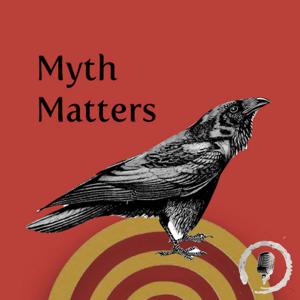
Welcome to Myth Matters, a thought-provoking exploration of myth in contemporary life and the intersection of myth, creativity, and consciousness. Host Catherine Svehla PhD. shares her knowledge of…
Learn more at www.mythicmojo.com and keep the mystery in your life alive.
Ranked by our users in the last 21 days

10,506 Listeners

1,855 Listeners
2,621 Listeners

1,465 Listeners
341 Listeners

1,027 Listeners
2,845 Listeners
1,519 Listeners

1,662 Listeners
4,247 Listeners

1,037 Listeners
152 Listeners
134 Listeners
677 Listeners

8,799 Listeners