
Sign up to save your podcasts
Or

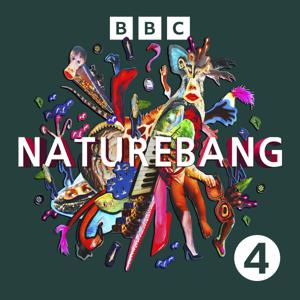


Becky Ripley and Emily Knight look to the giggles and guffaws of the animal kingdom to ask where human laughter has come from.
At least 65 species have been identified as making 'play vocalisations', a sort of animal version of laughter, according to a recent UCLA paper studying animals at play. Rats giggle in ultrasound, elephants have a play-specific trumpet, and kia parrots cackle from the treetops. These sounds are auditory cues that have come from breathing during play, and they signal to fellow playmates that their rough-and-tumble is in jest.
But us humans have taken laughing to new levels. Our laughter has evolved from a play-specific vocalisation into a highly sophisticated tool of communication, sometimes spontaneous, other times performed. It is a powerful spell that affects our brains and bodies, playing so many important roles in our close relationships and wider social networks. And the best thing about it: it’s good for you.
Featuring biological anthropologist Sasha Winkler, co-author of the UCLA paper 'Play vocalisations and human laughter: a comparative review' (2021), and Professor Sophie Scott, Director of the Institute for Cognitive Neuroscience at UCL. Produced and presented by Emily Knight and Becky Ripley.
Animal recording credits:
Rhythm is everywhere in the biological world. The rhythm of heartbeat, the rhythm of breathing, the rhythm of gait and walking. In fact, in 'The Descent of Man', Charles Darwin wrote that the perception of rhythm is "probably common to all animals and no doubt depends on the common physiological nature of their nervous system.” And yet, recent studies have shown that even our closest living relatives, the great apes, can't seem to keep a beat. Becky Ripley and Emily Knight investigate.
Enter YouTube sensation Snowball the Cockatoo. Much to the intrigue of evolutionary biologists, Snowball loves to dance to anything with a strong beat. Especially The Backstreet Boys. How is it that chimpanzees can't keep a beat and yet this parrot - which is more closely related to a dinosaur than a human - clearly loves to groove? What's going on in the brain of this bird? And how does that link to our own beat-keeping brains?
Back in the human world, there's serious neurological benefit to this beat-based research. The more we understand how and why people move to a beat, the more we can appreciate its powerful therapeutic effects. It unites our brains with our bodies, which can help to relieve symptoms of movement-based neurological disorders like Parkinson's, and it unites us to each other.
Featuring cognitive neuroscientist Aniruddh Patel and dance psychologist Peter Lovatt.
Becky Ripley and Emily Knight look to the freeze-thaw abilities of the North American wood frog to ask whether we can freeze ourselves in order to return to a future world...
Early March is breeding season for the North American wood frog. They are frisky because they’ve just thawed out having spent the winter not just in hibernation, but frozen at -18°C. How do they do it, and still survive? And what can we learn from their frozen ways?
Enter the growing field in medicine called cryo-preservation: the process of preserving cells, tissues, or organs by cooling them to very low, or freezing, temperatures. This can grant more time for medical procedures and operations, and help to preserve things like organs during a transplant. And if you take cryopreservation to the extreme, you get to the slightly sci-fi world of cryonics. The practice of cryo-preserving the whole body – immediately upon point of death - in the hope that future medicine can bring it back to life.
Maybe in the future, we will crack the code on how to bring bodies back from the cold. And maybe some of the science lies in the freeze-thaw abilities of the wood frog. Or maybe cryopreserved bodies will remain frozen forever…
Featuring Dr Allison Sacerdote-Velat, Curator of Herpetology at Chicago Academy of Sciences, and Dr Anders Sandberg, senior research fellow at the Future of Humanity Institute at the University of Oxford. Produced and presented by Emily Knight and Becky Ripley.
You may think 'culture' is one of those peculiar things unique to humans, like dancing to pop music or yelling at the TV. But you'd be wrong. Animals may not flock to the Opera, but they absolutely do have 'culture'; habits; traditions; ways of doing things that are passed down from one generation to the next. Animal culture has been studied in fish, mammals and even insects, and one of the longest-running studies is on a bird you might have spotted flitting around your garden, the humble great tit.
Becky Ripley and Emily Knight head into the woods, armed with delicious peanuts, to find out more about great tit culture. It turns out that these enigmatic birds have long traditions which are shared among the community, and once formed, they can be hard to break, even if they're not serving the birds needs any more. Innovative experiments with puzzle-boxes show that old habits die hard. The one thing that can break the deadlock of tradition and bring back innovative thinking is the arrival of new birds - ones which aren't beholden to the prevailing culture.
In the human world, it's well known that an influx of immigrants can have a profound effect on the prevailing culture, often bringing new ways of thinking and innovations in technology, or brand new cuisines. Becky and Emily explore one extraordinary example of this that emerged from the horrors of the Second World War. As German-Jewish scientists fled the anti-Semitic persecution of the Third Reich, they arrived on American shores with plenty to offer the established scientific culture.
Featuring Michael Chimento, post-doctoral researcher at the Max Planck Institute of Animal Behaviour, and Professor Petra Moser, professor of Economics at NYU Stern. Produced and presented by Emily Knight and Becky Ripley.
We've all seen the Attenborough documentaries, full of the hurrying and scurrying of life on earth, the drama constantly unfolding. The natural world is a BUSY place... Or is it?
The surprising truth is, away from the cameras, most animals spend most of the time doing absolutely nothing at all. It's not just the sleepy sloths and the cat-napping cats, even the critters with reputations for being the most industrious animals on the planet have an astonishing amount of down-time. Peer into the dark warmth of an ant's nest, for example, and you might be surprised to note that just under half of them... don't DO anything. Not a jot. They sit, still and silent, apparently contributing nothing to the colony. Evolution abhors wasted energy so... what's going on? Becky Ripley and Emily Knight search for answers among our insect friends.
On the human side of the equation, we're astonishingly bad at doing nothing. We fuss and fidget, we tap our fingers and twiddle our thumbs, trying to escape the horrible fate of being BORED. When animals are so good at efficiently conserving energy, why do so many of us find it so uncomfortable? Perhaps the answer lies in not trying to escape boredom at all, but embracing it, and its creative potential. Becky and Emily discover that it's only through boredom that we can tap in to an extraordinary set of neural processes known as 'The Default Mode Network', and access the most creative parts of our brains. Perhaps doing nothing is more exciting than we first thought.
Featuring Professor Dan Charbonneau, behavioral ecologist studying social insect behaviour at the University of Arizona, and Dr Sandi Mann, senior psychology lecturer at the University of Central Lancashire. Produced and presented by Emily Knight and Becky Ripley.
Becky Ripley and Emily Knight ask whether giving legal rights to things like rivers and forests changes how we think about the world that lives around us.
The Whanganui River, in New Zealand, is a legal person in the eyes of the law. It is legally defined as a living whole, from the mountains to the sea, and two local Maori tribe members speak on its behalf as its legal representatives. Other nations have had similar thinking: the Amazon rainforest in Columbia, one of the Great Lakes in the US, and the River Ganges in India all have legal personhood, as does land in Ecuador and Bolivia, where Mother Earth is recognised as a legal person.
Assigning personhood to non-human things is not a new idea. Since the late 1800s, corporations have been granted legal personhood, giving them the rights to hold property, enter into contracts, and to sue or be sued. Then in 1972, Christopher Stone, himself a Professor of Law, published the essay ‘Should Trees Have Standing?’, arguing that if corporations can have personhood, why can’t natural entities?
Does the act of doing this reframe our relationship to the natural world, as something which lives not just for us, but alongside us in its own right? And as the law extents rights to nature, does that - in turn - extend our empathy towards the more-than-human world?
Featuring Dr Rāwiri Tinirau, advisor on Māori and Indigenous human rights, and Anna Grear, Professor of Law and Theory at Cardiff University and founder of the Journal of Human Rights and the Environment. Produced and presented by Emily Knight and Becky Ripley.
Why are some sounds more frightening than others? Are there evolutionary origins behind the things we find scary? And is there anything more blood-curdling than a full throated scream?
Becky Ripley and Emily Knight tune in to the sounds that send the shivers down our spines, via a frightened Marmot in the Rocky Mountains of Colorado, and a brand new kind of musical instrument known as the 'apprehension engine'. Beware listeners, you may be in for a fright....
Featuring professor Daniel Blumstein, Chair of the Department of Ecology at UCLA, and film score composer Mark Korven. Produced and presented by Emily Knight and Becky Ripley.
As our global society becomes ever more mobile, with people migrating across borders and making new homes among strangers, how do we figure out how to fit in? Trust is the glue that holds society together, but trust - as we all know - must be earned. Becky Ripley and Emily Knight take a trip to the African savanna, to see what a mob of dwarf mongooses can teach us about migration, integration, and making friends across cultural divides.
Featuring behavioural biologist professor Andy Radford, and political scientist Marc Hooghe.
Why do we want the things we want? What really drives us? And how in control of our instincts are we? All questions you might ask the humble cuckoo. This dastardly bird - a 'brood parasite' - famously leaves its eggs in another bird's nest and flies off, never to be seen again. The enormous chick hatches, kills all its nest-mates, then runs its adoptive parents ragged with round-the-clock feedings. But why on earth do the poor host-parents fall for the con?
To find the answer, Becky Ripley and Emily Knight delve into the history of animal behavioural research to uncover the 'Supernormal Stimulus', a curious phenomenon in which an animal's most basic instincts can be over-ridden, twisted and manipulated, to make them behave in extraordinary ways. Often against their own best interests.
And if you think humans are far too smart to be manipulated in this way, think again. Take a look at the things you like, and ask yourself why? Why do you like fast food when it's so bad for you? Why is porn so appealing, when it's so unrealistic? And why can't you put your smart-phone down? Perhaps just like the parasitised victims of the cuckoo chicks, you're not completely in control of what you want.
Featuring evolutionary biologist professor Rebecca Kilner and evolutionary psychologist Becky Burch
From the publisher's feed
Becky Ripley and Emily Knight make sense of what it means to be human by looking to the natural world... Science meets storytelling with a philosophical twist.

873 Listeners

2,107 Listeners

2,015 Listeners
4,825 Listeners

486 Listeners

405 Listeners

823 Listeners

238 Listeners

480 Listeners

344 Listeners
136 Listeners

3,215 Listeners

109 Listeners

912 Listeners
14 Listeners