
Sign up to save your podcasts
Or



Becky Ripley and Emily Knight get to grips with fatherhood in the animal kingdom by way of the largest land animal on earth, a fully grown bull elephant. Like the majority of mammals, male elephants aren't directly involved in raising the youngsters - that's left to the matriarchal herd composed of grandmothers, mothers and daughters. But you'd be wrong to think that means they don't have an influence. Via an extraordinary physiological phenomenon unique to elephants, known as 'musth', elephant bulls have a huge role in helping the teenage males navigate their tricky teenage years. And when it goes wrong, tragedy can strike.
Back in the human world, dads play a major role in their children's upbringing. Human men are what's known as 'investing fathers', with powerful brain chemistry bonding them to their partners AND to their babies. The skills of fatherhood, which have evolved over millennia, are instinctive, biologically innate and hugely impressive, yet often get overshadowed by our culture's (perhaps understandable) focus on motherhood. Perhaps it's time for a rethink?
Featuring conservationist Gus Van Dyk, and evolutionary anthropologist Dr Anna Machin.
What is this thing we call "consciousness"? It feels like a non-physical thing that somehow exists as a separate entity to our physical body. We might think of it as being located up in our brain where our internal chatter is generated, but the 'mind' still somehow feels separate to the 'brain'.
Then along comes an octopus to complicate the matter. Octopuses clearly have consciousness and high intelligence. But the last common ancestor between us and them is a flatworm that trawled the sea floor about 750 million years ago, so it's not surprising that their brains have evolved to be very different to ours. In fact, some people say they have nine brains. This is due to a complex neural network that runs throughout their body, meaning they have the ability to make different decisions from all eight arms without having to send messages back up to the central brain.
So how can the mind of an octopus be seperate to its body? And does this mean that our mind and body are also one and the same?
Featuring writer Sy Montgomery, author of 'The Soul of an Octopus', and philosopher Julian Baggini, author of 'How the World Thinks'.
Sex is simple. Or so we're taught; animals can be male or female. But even the briefest glance at the animal kingdom tells us that this simply isn't true. Some creatures have only one sex; some have three; some have none at all. Some animals are two sexes at the same time; some flip flop between them when the time is right. When evolution came to solve the problem of procreation, she did it in a myriad of mind-blowing ways.
When it comes to humans, it's even more complicated - we have this thing called Gender, too. It's often defined as the social and cultural side of sex, distinct from the biological. But that's not the full story. Becky Ripley and Emily Knight travel back to the dawn of human culture, and into the tangled depths of our genetic code, to try and unravel why we are the way we are, and why it matters so much that we understand it all properly.
Featuring Professor Jenny Graves, geneticist at La Trobe University, and the writer and scholar Meg-John Barker.
Becky Ripley and Emily Knight celebrate the intelligence of a brainless slime mould. As single-cell protists, with no brain and no nervous system, slime moulds do not 'think' in human terms, but they can calculate and navigate complex systems with incredible efficiency and objectivity. With some help from a few oat flakes, because slime mould loves oats.
One species in particular, Physarum Polycephalum, has proven itself to outwit us time and time again, from solving complex urban transport problems to mapping the structures of the cosmic web. In doing so, it totally overthrows our human definition of intelligence, where we have positioned ourselves at the top of a big biological hierarchy. From the bottom up, slime mould is starting to uproot the whole system.
Featuring Merlin Sheldrake, writer of 'Entangled Life', and experimental philosopher Jonathon Keats.
Becky Ripley and Emily Knight examine the naked mole rat, a saber-toothed sausage of a rodent, which seems to defy the mammalian laws of aging. It lives way longer than what is expected of a rodent and is now the focus for much medical research as scientists try to understand more about their aging process in the name of human life extension.
Of course, we all want to age slower and live longer, but does that mean we should continually strive to extend human life expectancy forever and always? Beyond the ethics, there's also some big philosophical questions. How does a longer life span affect our sense of 'self'? And does living longer solve the problem of death?
Featuring Dr Rochelle Buffenstein, Senior Principal Investigator at Calico Life Sciences, and Julian Baggini, philosopher, journalist and author.
Becky Ripley and Emily Knight find out what ants teach us about surviving a pandemic.
As social animals, we're particularly susceptible to disease, so perhaps there are lessons to be learned from other sociable species in how we manage this. Ants are one of the most social species on the planet, and it turns out they know a thing or two about self-isolation and social distancing.
The story of how we protect each other (and ourselves) is a story that takes us from the complex maze of an anthill to the equally complex maze of human etiquette. If you think social distancing is a new invention - or even a human invention - think again.
Featuring Dr Nathalie Stroeymeyt, Senior Lecturer at the University of Bristol, and Michael de Barra, Lecturer in Psychology at Brunel University London.
Naturebang is back. Becky Ripley and Emily Knight are again trying to make sense of what we humans are all about, with a little help from the natural world. And this week, they’re getting lost.
Navigating our world is a challenge faced by every creature that moves. From dung beetles mapping the desert dunes, to eels circumnavigating the globe, each finds its own way about with unerring accuracy. How do they do it? And how is that going to help Becky and Emily get out of the woods?
The story of animal (and human) navigation is a story of the sun, the stars, magnetic fields, polarised light, and… dog poo. Yes, dog poo.
Featuring Michael S. Painter, Assistant Professor at Barry University, and John Edward Huth, Donner Professor of Science at Harvard University.
Ah, true love. Who can quantify that heady rush, the joy of another’s company, the unshakable bonds between one lover and another? Well, vole experts can.
This tiny rodent is not just an anagram of love, it can also teach us a lot about why we fall. And why we sometimes stray.
Prairie Voles form life-long monogamous bonds, together until death they do part. Almost identical Meadow Voles don’t, living the single life, and mating at will.
It all comes down to brain chemistry. And it turns out, some of us are more Prairie Vole than others.
Featuring Dr Larry Young from the Emory University, and author of 'Sex at Dawn', Chris Ryan.
Produced and presented by Becky Ripley and Emily Knight.
First broadcast on BBC Radio 4 in June 2019.
If you think you’re in control, think again.
What invisible forces might be guiding your behaviour, your decisions, your most intimate emotions?
Becky Ripley and Emily Knight take a trip into the bizarre nightmare world of the undergrowth, and watch ‘zombie ants’ stumble forward, blindly following the orders of the deadly fungi controlling their brains.
Parasites often get the upper hand of their hosts, manipulating their behaviour in sometimes horrifying ways. But is that true of humans too? Could we be unknowingly subservient to creatures that live inside us?
Do they wish us well, or might they be plotting our downfall?
Featuring entomologist Dr David Hughes from Penn State University, and neuroscientist John Cryan from University College Cork.
Produced and presented by Becky Ripley and Emily Knight.
First broadcast on BBC Radio 4 in June 2019.
Strange things dwell out in the open ocean.
Bobbing atop the waves, Becky Ripley and Emily Knight meet one such creature, the Portuguese Man O’War.
With its bulbous air-sacs and trailing tentacles you’d be forgiven for thinking it’s a jellyfish, but you’d be wrong. It’s a colony, a society of tiny individual animals, who work together to eat, hunt and reproduce as one.
In the Age of the Individual, we humans like to think of ourselves as self-sufficient little nodes who don’t need nobody. But that perspective gets called into question when you consider where we live.
Thanks to some complex maths and some incredible data-crunching, we’re beginning to see the cities we inhabit in a different light. They grow, move, breathe, and die, just like a living organism, according to strict mathematical principles.
Just like polyps in a Man O’ War, are we really any more than cogs in a machine?
Featuring:
* Marine Biologist, Dr John Copley from the University of Southampton
Produced and presented by Becky Ripley and Emily Knight.
First broadcast on BBC Radio 4 in June 2019.
From the publisher's feed
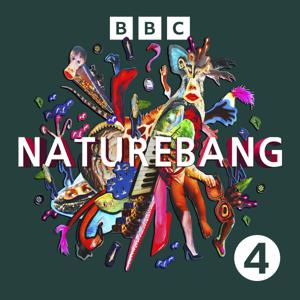
Becky Ripley and Emily Knight make sense of what it means to be human by looking to the natural world... Science meets storytelling with a philosophical twist.

873 Listeners

2,107 Listeners

2,015 Listeners
4,825 Listeners

486 Listeners

405 Listeners

823 Listeners

238 Listeners

480 Listeners

344 Listeners
136 Listeners

3,215 Listeners

109 Listeners

912 Listeners
14 Listeners