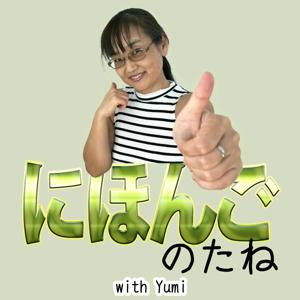
にほんごのたね Nihongo no Tane with Yumi

にほんごのたね Nihongo no Tane with Yumi

By TheJapanesePage.comEducationLanguage Learning
Download on the App Store

にほんごのたね Nihongo no Tane with Yumi episodes

  • Nihongo no Tane 153: クラシック音楽 Classical Music | Japanese Immersion podcast

    In this episode of her podcast, Yumi delves into the profound impact of classical music on personal growth, inspired by violin prodigy Yoshimura Himari's mesmerizing performances. She beautifully narrates her own musical journey and the unexpected ways a popular manga stirred a friend's ambition to master Chopin, weaving a narrative that celebrates the transformative power of art and inspiration. Listen to this episode and let us know if you had some experience like this!


    KEY VOCABULARY:

    1. 聴(き)く - to listen to (music)
  • 演奏(えんそう) - music performance
  • ハマってしまった – got hooked; ended up getting hooked [ハマって (て-form ofハマる/はまる (to get hooked)); しまった(past form of しまう(to end up with ~))]
  • ~というわけです - ~ is what happened; ~ is the reason (for it) [this expression is used to explain a background which lead to a decision or an outcome]
  • きっかけ - opportunity; occasion [an initial opportunity or situation that leads someone or something to something else]
  • ~を習(なら)う to take lessons in
  • 中級(ちゅうきゅう) - intermediate level [中(ちゅう) (middle; intermediate); 級(きゅう) (grade; class; level)]
  • 吹奏楽(すいそうがく)部(ぶ) brass band club [吹奏(すいそう) (wind instrument); 楽(がく) (music); 部(ぶ) (school club)]
  • 地(じ)元(もと)福(ふく)井(い)県(けん) - (my) home region, Fukui prefecture [地(じ)元(もと) (local area); 福(ふく)井(い)県(けん) (Fukui prefecture)]
  • 行進曲(こうしんきょく) marching band music [行進(こうしん) (march; parade); 曲(きょく) (music)]
  • 全国大会(ぜんこくたいかい) - national competition [全(ぜん) (all; whole); 国(こく) (country); 大会(たいかい) (competition; convention)]
  • 序曲(じょきょく) - overture
  • ~作曲(さっきょく) - composed by ~ [作(さく) (make); 曲(きょく)(piece of music); 作曲(さっきょく) means “composition (of music)”]
  • 懐(なつ)かしい nostalgic [an adjective that describes a feeling one feel when reminiscing about good memories]
  • 青春(せいしゅん) - youth; one’s youthful days; time of adolescence; the springtime of one's life [literally, “blue spring”]
  • 流行(はや)る - to be popular; to come into fashion [流行(りゅうこう)する is a very similar word but is mainly used for fashion or cold & flue.]
  • (を)目指(めざ)す - to aim to become ~ [also “to aim a location as a goal to get to”
  •  


    For upper beginners to intermediates. Listen to the short podcast and then answer the comprehension questions on the website: https://thejapanesepage.com/nihongonotane-index/

    Take a quiz on this episode here:

    https://thejapanesepage.com/podcast-nihongonotane-153

    If you are a Makoto+ member, you can find the transcript, English translation, key vocabulary, and a downloadable PDF for printing:

    https://MakotoPlus.com/podcast-nihongonotane-153-m

    --

    Become a Makoto+ member and get show notes with a complete transcript, translation, key vocabulary, and a downloadable PDF.

    www.MakotoPlus.com


    5 min
  • Nihongo no Tane 152: 神童(しんどう)Child Prodigy | Japanese Immersion podcast

    Have you ever heard the term "神童" (shindou)? It refers to child prodigy, and this time, Yumi will talk about it. Listen to the podcast and let us know what you think about it in the comments below!


    KEY VOCABULARY:

    1. 神童(しんどう) child prodigy; genius; wonder child [神(しん) (god); 童(どう) (child)]
  • 大(おと)人(な)に負(ま)けない as good as adults; comparable to adults; unyielding to adult; unbeatable by adult [literally, “unbeatable by adults”; 大(おと)人(な) (adult); に(to; against); 負(ま)けない (unbeatable; unyielding); a fixed phrase which is used when describing young child of high skill or strength]
  • 理(り)解(かい)力(りょく) ability to understand; comprehension; ability [理解(りかい) (understanding; comprehension); 力(りょく) (power; ability)]
  • めちゃくちゃ incredibly; really; super (when used as adverb)
  • 何(なに)気(げ)なくunintentionally; inadvertently; casually
  • 大(おと)人(な)でも難(むずか)しい difficult even for grownups; even grownups would struggle
  • コンクール competition; contest
  • 審査員(しんさいん) judge
  • 感想(かんそう) comment
  • 特別(とくべつ)賞(しょう) special award; special prize
  • 受(う)け答(こた)え (her) answer (in the interview) [literally, “receiving answering” which means “answering to the question that were received”. 受(う)け答(こた)え doesn’t only mean “the answer” which was spoken but also means the way one carries herself or himself in the whole conversation as well]
  • 立(りっ)派(ぱ) splendid; elegant; impressive; fine
  • 教育(きょういく)が行(ゆ)き届(とど)いている well educated in every way (by her parents) [教育(きょういく) (education); 行(ゆ)き届(とど)いている (ているcontinuous form of 行(ゆ)き届(とど)く(to be complete; to be through); ている here is indicating state of “well educated”, not an ongoing action)]
  • バイオリンバカ violin fanatic; violin nut; violin enthusiast [バイオリン (violin); バカ (“fool/ idiot” is used as suffix which means “fanatic” or “enthusiast”)]
  • 鼻(はな)が高(たか)い very proud [literally, “one’s nose is tall”; it is used when parents are proud of his/her child or a teacher being proud of their students]
  • 出来過(できす)ぎてしまう overly capable; too intelligent; too good (in a lot of things) [ 出来過(できす)ぎて(て-form of 出来過(できす)ぎる (出来(でき)る (can) + 過(す)ぎる (beyond; surpass)); しまう(to be ~ unfortunately; to end up ~))]
  • 助(たす)けてあげないといけない must help; should help; unavoidable to help; absolutely necessary to help [literally, “it’s not good if (her parents) don’t help”; 助(たす)けてあげない (negative of 助(たす)けてあげる; あげるindicates providing the action(helping)); と (if); いけない (not good); “~ないといけない” is “must do ~”]
  • 同年代(どうねんだい) same generation [同 (same); 年代 (age; era)]
  • 話(はなし)が 合(あ)わない to have different interest [Literally, “talk don’t match” which means “not able to engage in the same subjects” which really means “can’t have close relationship” or “can’t get along”]
  • ~ならではの unique to ~ [~ならでは (unique to ~); の (“of”; connecting the words before and after it)]
  • 思(おも)いやりconsideration; compassion; understanding (of others situation or emotion)
  •  


    For upper beginners to intermediates. Listen to the short podcast and then answer the comprehension questions on the website: https://thejapanesepage.com/nihongonotane-index/

    Take a quiz on this episode here:

    https://thejapanesepage.com/podcast-nihongonotane-152

    If you are a Makoto+ member, you can find the transcript, English translation, key vocabulary, and a downloadable PDF for printing:

    https://MakotoPlus.com/podcast-nihongonotane-152-m

    --

    Become a Makoto+ member and get show notes with a complete transcript, translation, key vocabulary, and a downloadable PDF.

    www.MakotoPlus.com


    7 min
  • Nihongo no Tane 151: 能登半島地震The Noto Peninsula Earthquake | Japanese Immersion podcast

    Happy New Year! (Better late than never, right?). This year started not too good in Japan, with an earthquake and a plane crushing. So, this time Yumi will talk about it. Have you ever been in an earthquake? Let us know in the comments below!


    KEY VOCABULARY:

    1. 石川県(いしかわけん)能登(のと)半島(はんとう) the Noto Peninsula in Ishikawa Prefecture [石川県(いしかわけん) (Ishikawa Prefecture); 能登(のと) (Noto); 半島(はんとう) (peninsula)]
  • 炎上(えんじょう)事故(じこ) crash that ended in inferno [炎上(えんじょう)(going up in flames); 事故(じこ) (accident; crash)]
  • 海上(かいじょう)保(ほ)安(あん)庁(ちょう) Japan Coast Guard [海上(かいじょう) (maritime; sea service)保(ほ)安(あん)庁(ちょう)(National Security Agency)]
  • 無事(ぶじ) no damage; unharmed; safety; security
  • 奇(き)跡(せき) miracle
  • 慌(あわ)ただしい constantly busy (with many events); whirlwind; fast-paced
  • 慌(あわ)てない (です) don’t/ doesn’t panic [negative form of 慌(あわ)てる (to panic; to haste; to fluster)]
  • 収(おさ)まる to quiet down; to calm down; to settle
  • 冷静(れいせい) cool; composed; cool-headed [冷(れい) (cool; cold); 静(せい) (quiet; still)]
  • 山(やま)津(つ)波(なみ) landslide; earthflow [山(やま) (mountain; hill); 津(つ)波(なみ) (tsunami; tidal wave); also called “山(やま)崩(くず)れ (landslide)”]
  • ガスの元栓(もとせん) main valve of gas pipe/tank [majority of Japanese household use the propane gas or the city gas for cooking and possibly heating water]
  • 訓練(くんれん) training; discipline; drill; practice
  • うち履(ば)き indoor shoes [うち (inside); 履(ば)き (“foot wear”; noun form of 履(は)く (to wear/to put on (shoes)); also called 上履(うわば)き or ルームシューズ)]
  • 散乱(さんらん)している is scattered around [from 散(さん)乱(らん)する (to scatter around; to scatter); (て)いる here indicates a state/condition of “glass pieces scattered around”)]
  • 裸足(はだし) barefoot
  • 来(きた)るべきして来(き)た ought have come (by now); due to come [literally, “came because it had to come”; a fixed phrase that sounds literary, archaic and formal to modify some occurrence that happened which was destined to happen in the hindsight; 来(きた)るべき (“should come”); して (as); 来(き)た (“has come”)]
  • 南海(なんかい)トラフ巨大(きょだい)地(じ)震(しん) Nankai Trough mega earthquake [南海(なんかい) (Nankai);トラフ (trough); 巨大(きょだい) (mega; colossal; jumbo); 地(じ)震(しん) (earthquake)]
  • 潜(もぐ)り込(こ)んでいる is slipping under [the continuous form of 潜(もぐ)り込(こ)む (to slip under)]
  • ひずみ distortion; skewness; strain
  • 跳(は)ね返(かえ)る bounce back; spring back; recoil [compound verb of 跳(は)ねる (jump; bounce) and 返(かえ)る (return; revert; turn back)]
  • 100年(ねん)間隔(かんかく)で in 100 year interval [間隔(かんかく) (interval; space (in between); distance); で (in)]
  • 耐震(たいしん)化(か) earthquake-proofing [耐震(たいしん)化(か) (earthquake-proofing; earthquake-resistant; earthquake-ready; 耐(たい) (resist; endure); 震(しん) (shake); 化(か) (“-ization”; “-ification”) is a suffix that means “to change into ~”)]
  • 固(こ)定(てい)しておくhave (furniture) to be fastened/anchored [固(こ)定(てい)して (て-form of 固(こ)定(てい)する (to fasten; to anchor; to fix); (て)おくmeans “to have ~ done in advance for preparation of something)]
  • 時(じ)限(げん)爆弾(ばくだん) ticking bomb; time bomb [時(じ)限(げん) (time- programed); 爆弾(ばくだん) (bomb)]
  •  


    For upper beginners to intermediates. Listen to the short podcast and then answer the comprehension questions on the website: https://thejapanesepage.com/nihongonotane-index/

    Take a quiz on this episode here:

    https://thejapanesepage.com/podcast-nihongonotane-151

    If you are a Makoto+ member, you can find the transcript, English translation, key vocabulary, and a downloadable PDF for printing:

    https://MakotoPlus.com/podcast-nihongonotane-151-m

    --

    Become a Makoto+ member and get show notes with a complete transcript, translation, key vocabulary, and a downloadable PDF.

    www.MakotoPlus.com


    7 min
  • Nihongo no Tane 150: 睡眠時間Sleeping Time and Daylight Savings | Japanese Immersion podcast

    Let’s talk about sleep! This time, Yumi will talk about her sleeping time, what she was doing when she woke up during the night (and now she stopped!) and how daylight saving times could affect your life or the life of your pet. Listen this episode and let us know what you think!


    KEY VOCABULARY:

    1. 寝付(ねつ)きがいい easy to fall asleep; to fall asleep quickly [寝付(ねつ)き (falling asleep) indicates “how quickly/easily one normally can fall asleep”; 寝付(ねつ)き is the noun form of 寝付(ねつ)く (to fall asleep)]
  • 周(まわ)りpeople close (to me); people around (me) [周(まわ)りis “vicinity” or “surroundings” and can be used to mean “people around someone”]
  • びっくりされる to have people to get surprised (about me falling asleep so fast) [passive form of びっくりする (to be surprised); the speaker (Yumi) being the receiver of people’s surprise about her falling asleep so fast]
  • 夜(よ)中(なか) midnight; middle of the night
  • 動(どう)画(が) video
  • 平均(へいきん) average
  • 大丈(だいじょう)夫(ぶ) fine; okay
  • 随分(ずいぶん) considerably; fairly; very
  • ズレ deviation; shift; discrepancy [noun form of ズレる (to shift; to deviate; to slide; to slip off; to be out of alignment)]
  • 意(い)外(がい)とunexpectedly [意(い) (thoughts); 外(がい) (outside)]
  • 逆転(ぎゃくてん) reversal [逆(ぎゃく) (reverse; opposite); 転(てん) (turning)]
  • 時差(じさ) time difference
  • 仕(し)方(かた)がない no other choice; nothing one can do [literally “there is no means (to cope)”]
  • 初頭(しょとう) beginning (of a century, etc.)
  • 節約(せつやく) saving
  • 発想(はっそう) idea; concept [noun form of 発想(はっそう)する (conceptualize; to come up with ideas)]
  • 愛犬(あいけん) beloved dog
  •  


    For upper beginners to intermediates. Listen to the short podcast and then answer the comprehension questions on the website: https://thejapanesepage.com/nihongonotane-index/

    Take a quiz on this episode here:

    https://thejapanesepage.com/podcast-nihongonotane-150

    If you are a Makoto+ member, you can find the transcript, English translation, key vocabulary, and a downloadable PDF for printing:

    https://MakotoPlus.com/podcast-nihongonotane-150-m

    --

    Become a Makoto+ member and get show notes with a complete transcript, translation, key vocabulary, and a downloadable PDF.

    www.MakotoPlus.com


    5 min
  • Nihongo no Tane 149 Nihongo no Tane - 健康オタク(けんこうおたく) Health Freak | Japanese Immersion podcast

    What do you eat during the day? Listen to the podcast and find out the new diet Yumi is doing!


    KEY VOCABULARY:

    1. 実際(じっさい)に actually; really; truly; indeed
  • 具体的(ぐたいてき)に specifically; in detail [具体的 (specific); に (“-ly”; makes the preceding word into adverb form)]
  • 薄(うす)める to dilute; to thin
  • 炒(いた)め物(もの) stir-fry; stir-fried food [炒(いた)め (fry; broil; roast); 物(もの) (thing; item)]
  • 物足(ものた)りなさそうseeming not enough; seeming unsatisfied [物足りな is from 物足りない (not enough; not satisfied); “さ” is necessary between “~な(い)” and そう (seemingly)]
  • 以(い)前(ぜん)は before; prior to [“as for before”]
  • 冷凍食品(れいとうしょくひん) frozen food [冷凍(れいとう) (frozen; freezing);食品(しょくひん) (food; food products)]
  • めんどくさい bothersome; tiresome; cumbersome [shortened from めんどうくさい and sounds more casual]
  • 温(あたた)めておいて warm (them) up for me [温(あたた)めて from 温(あたた)める (to reheat; to warm up); おいて is て-from of (て)おく (to have ~ in a certain condition); て-form is often used when asking to do something in very casual situations]
  • 新鮮(しんせん)な fresh
  • 野(や)菜(さい) vegetables
  • 小(こ)麦(むぎ)食品(しょくひん) wheat-based food products [小(こ)麦(むぎ) (wheat); 食品(しょくひん) (food products)]
  • 自家(じか)製(せい) homemade [自家(じか) (one’s own house); 製(せい) (“-made”; made in)]
  • 立(りっ)派(ぱ)な credible; fine; undeniable
  • 健康(けんこう)オタク health geek [健康(けんこう) (health); オタク (geek; nerd; enthusiast)]
  • 生(しょう)姜(が) ginger
  • 薄(うす)切(ぎ)りthin slice [薄 (thin); 切り(cut; noun form of 切(き)る (to cut))]
  • 炭酸水(たんさんすい) carbonated water [炭酸(たんさん) (carbonic acid); 水(すい) (water)]
  • 風邪(かぜ) cold; flu
  • 予(よ)防(ぼう) prevention
  •  


    For upper beginners to intermediates. Listen to the short podcast and then answer the comprehension questions on the website: https://thejapanesepage.com/nihongonotane-index/

    Take a quiz on this episode here:

    https://thejapanesepage.com/podcast-nihongonotane-149

    If you are a Makoto+ member, you can find the transcript, English translation, key vocabulary, and a downloadable PDF for printing:

    https://MakotoPlus.com/podcast-nihongonotane-149-m

    --

    Become a Makoto+ member and get show notes with a complete transcript, translation, key vocabulary, and a downloadable PDF.

    www.MakotoPlus.com


    6 min
  • Nihongo no Tane 148: 腸活 Keeping the Gut Health | Japanese Immersion podcast

    Yumi continues her talking about the changes she made in her life. What do you think of these changes? Listen to the podcast to know all the changes she made!


    KEY VOCABULARY:

    1. 大腸(だいちょう)カメラcolonoscopy [大腸(だいちょう) (large intestine; colon)]
  • がん cancer
  • ポリープ polyp
  • 麻(ま)酔(すい) anesthesia [麻(ま) (hemp; flax); 酔(すい) (drunk)]
  • 痛(いた)くもかゆくもない “it’s no concern at all” or “it has no effect on me whatsoever” [literally, “it’s neither painful nor itchy”]
  • 固(こ)形(けい) solid [固(こ) (harden); 形(けい) (form; shape)]
  • 一切(いっさい) absolutely (not); entirely (not)
  • 下(げ)剤(ざい) laxative
  • ずいぶん very; considerably; awfully
  • 申(もう)し訳(わけ)ない I’m sorry [literally, “(it’s) inexcusable”; 申(もう)し訳(わけ) (excuse); ない (not)]
  • 腸内(ちょうない) inside of colon [腸(ちょう) (intestine); 内(ない) (inside)]
  • 順調(じゅんちょう)に steadily; smoothly
  • 溜(た)まる to accumulate
  • 着替(きが)えをする to get changed [着替(きが)え (changing of clothes)]
  • 腸活(ちょうかつ) intestinal activities; promoting activity of the intestines]
  • 食物(しょくもつ)繊(せん)維(い) dietary fiber [食物(しょくもつ) (food); 繊(せん)維(い) (fiber)]
  • 発酵食品(はっこうしょくひん) fermented food [発酵(はっこう) (fermentation); 食品(しょくひん) (food)]
  • 加(か)工(こう)食品(しょくひん) processed food [加(か)工(こう) (processing)]
  • 整(ととの)う (environment) is prepared for; put in order for; becomes conducive for
  • 増々(ますます) increasingly; more and more; even more
  •  


    For upper beginners to intermediates. Listen to the short podcast and then answer the comprehension questions on the website: https://thejapanesepage.com/nihongonotane-index/

    Take a quiz on this episode here:

    https://thejapanesepage.com/podcast-nihongonotane-148

    If you are a Makoto+ member, you can find the transcript, English translation, key vocabulary, and a downloadable PDF for printing:

    https://MakotoPlus.com/podcast-nihongonotane-148-m

    --

    Become a Makoto+ member and get show notes with a complete transcript, translation, key vocabulary, and a downloadable PDF.

    www.MakotoPlus.com


    6 min
  • Nihongo no Tane 147: 階段(かいだん) Stairstepper

    Have you tried stair stepper? Listen to Yumi to know why is she doing it and how it helped her to be in better shape.


    KEY VOCABULARY:

    1. 階段(かいだん) stair; stairway
  • 目標(もくひょう) goal; objective; target
  • 心臓(しんぞう) heart
  • 心臓(しんぞう)が口(くち)から飛(と)び出(だ)す one’s heart pops out of the chest [it’s a saying that describes bodily feeling where one’s heart is beating so fast due to physical exertion or extreme nervousness that it almost feels as if the heart is about to pop out the mouth]
  • ~うちに while doing ~
  • ~を目指(めざ)す to aim for ~
  • 汗(あせ)のかき具(ぐ)合(あい) sweating condition; the way of sweating [汗(あせ)のかき from 汗(あせ)をかく (to sweat);具(ぐ)合(あい) (condition; the way of (sweating))]
  • 息(いき)は切(き)れる be out of breath [usually 息(いき)が切(き)れる; 息(いき) (breath); 切(き)れる (to run out)]
  • 負(ふ)担(たん) burden
  • 足(あし)腰(こし) one’s area of legs, hips lower back [足(あし) (legs); 腰(こし) (hip; lower back); it refers to the whole lower part of body that supports the upper body for one to be able to move around]
  • 歩(ある)き回(まわ)る to walk around [compound word; 歩(ある)き (ます-stem of 歩(ある)く(to walk) + 回(まわ)る (to go around))]
  • ~に対応(たいおう)できない unable to cope with ~ [対応(たいおう)する (to respond; to cope)]
  • 血糖(けっとう)値(ち) blood sugar level [血(けつ) (blood); 糖(とう) (sugar); 値(ち) (value; worth)]
  • 飢餓(きが) starvation; hunger
  • 溜(た)めてある脂(し)肪(ぼう) accumulated fat; fat that has been saved up [溜(た)める (to accumulate); (て)ある (to have something done for a reason)]
  • ~に向(む)いていない not suited for ~; not suitable for ~ [~に向(む)く(to suited for ~); (て)いない (negative of (~て)いる which indicates a condition/situation)]
  • 安静(あんせい) rest
  • 宇(う)宙(ちゅう)飛(ひ)行(こう)士(し) astronaut [宇宙 (universe; cosmos; space); 飛(ひ)行(こう)士(し) (pilot; airman)]
  • 無(む)重力(じゅうりょく) no gravity; weightlessness [無(む) (“non-“); 重力(じゅうりょく) (gravity)]
  • 食(た)べさせてもらう to be assisted to eat (food) [食(た)べさせて isて-form of 食(た)べさせる (to feed; to assist someone eat; to make someone eat); (~て)もらう means “to have someone do ~ for oneself”)]
  •  


    For upper beginners to intermediates. Listen to the short podcast and then answer the comprehension questions on the website: https://thejapanesepage.com/nihongonotane-index/

    Take a quiz on this episode here:

    https://thejapanesepage.com/podcast-nihongonotane-147

    If you are a Makoto+ member, you can find the transcript, English translation, key vocabulary, and a downloadable PDF for printing:

    https://MakotoPlus.com/podcast-nihongonotane-147-m

    --

    Become a Makoto+ member and get show notes with a complete transcript, translation, key vocabulary, and a downloadable PDF.

    www.MakotoPlus.com


    5 min
  • Nihongo no Tane 146: 生活で変えたことその2 Changes I’ve made Part 2 | Japanese Immersion podcast

    Yumi continues her talking about the changes she made in her life. What do you think of these changes? Listen to the podcast to know all the changes she made!


    KEY VOCABULARY:

    • 順調(じゅんちょう)に steadily; smoothly; without a hitch
    1. 何(なん)度(ど)も many times; frequently; plenty of times 
  • 血液検(けつえきけん)査(さ) blood test; blood exam [血液(けつえき) (blood); 検(けん)査(さ) (check; checkup; inspection; exam)]
  • 血管(けっかん) blood vessel [duct; tube]
  • 血栓(けっせん) blood clot [栓(せん) (plug; stopper; spigot)]
  • 可(か)能(のう)性(せい) possibility
  • 大腸(だいちょう)カメラ colonoscopy [大腸(だいちょう) (large intestine)]
  • 食(しょく)物(もつ)繊(せん)維(い) dietary fiber [食(しょく)物(もつ) (food); 繊(せん)維(い) (fiber)]
  • お味噌(みそ)汁(しる) miso soup [味噌(みそ) (miso); 汁(しる) juice; soup]
  • 山(やま)盛(も)り heap [盛り(heap; pile); refers to “a large serving piled up high”]
  • 週(しゅう)に何回(なんかい)か several times a week [週(しゅう)に(in a week); 何回(なんかい)か (several times; か indicates “unspecified numbers”)]
  • 缶詰(かんづめ) canned food [缶(かん) (tin; can); 詰(つめ) (stuffing; packing)]
  • コーヒー派(は) coffee lover [派(は) (faction; side)]
  • 食(しょく)事(じ)内容(ないよう) dietary contents [食事(しょくじ) (meal);内容(ないよう) (content; substance)]
  • 筋(きん)トレ strength training; weight training [shortened from shortened from 筋肉(きんにく)トレーニング; 筋肉(きんにく) (muscle)]
  • 有酸運動(ゆうさんうんどう) aerobic exercise [有 (having; with); 酸素 (oxygen); 運動 (exercise)]
  • 予(よ)算(さん)の都(つ)合(ごう) budgetary reasons; budget constraints [予(よ)算(さん) (budget); 都(つ)合(ごう) (reason; circumstances; convenience)]
  • 紫(し)外(がい)線(せん) ultraviolet rays [紫(し) (purple); 外(がい) (outside); 線(せん) (ray; line)]
  • 日(ひ)焼(や)け止(ど)め sunscreen [日(ひ)焼(や)け (sunburn); 止(ど)め (stopper); also called “日(ひ)焼(や)け止(ど)めクリーム”]
  •  


    For upper beginners to intermediates. Listen to the short podcast and then answer the comprehension questions on the website: https://thejapanesepage.com/nihongonotane-index/

    Take a quiz on this episode here:

    https://thejapanesepage.com/podcast-nihongonotane-146

    If you are a Makoto+ member, you can find the transcript, English translation, key vocabulary, and a downloadable PDF for printing:

    https://MakotoPlus.com/podcast-nihongonotane-146-m

    --

    Become a Makoto+ member and get show notes with a complete transcript, translation, key vocabulary, and a downloadable PDF.

    www.MakotoPlus.com

    6 min
  • Nihongo no Tane 145: 生活で変えたことその1 Changes I’ve made Part 1 | Japanese Immersion podcast

    Yumi has made some changes in her life. What do you think she changed? Listen to the podcast and hear her reflections on this!


    KEY VOCABULARY:

    1. あまり~ない (there is ) not so much ~; (I have) not so much ~ [あまりmeans “very” or “much” when used with ~ない]
  • これといって nothing special; not worth mentioning [always used with ~ない; “いって” is “言(い)って”, but usually written in hiragana]
  • 神様(かみさま) [God]
  • 退屈(たいくつ) boring; dull; boredom [a state where nothing to do to spend time]
  • つまんない boring; dull [casual for つまらない ; used when one is not having fun because something one is engaged in is not interesting enough] 
  • とはいえ but; that said; that being said; having said that [“いえ” is “言え”, and commonly written in hiragana in this phrase]
  • 細身(ほそみ) slender; narrow [細(ほそ) (thin); 身(み) (body)]
  • 外見(がいけん)を気(き)にする worry about the looks/appearance [外見(がいけん) (looks; appearance); 気(き)にする (worry; pay attention to); a commonly used phrase]
  • 観察(かんさつ) する[to observe]
  • 自(じ)信(しん)を持(も)つ have confidence in oneself [自(じ)信(しん) (confidence)]
  • 瘦(や)せる to lose weight; to become thin
  • 戻(もど)る to return; to go back
  • ~そう seems ~; looks like ~; seems to ~ [“ます-stem + そう” is “it looks like doing ~”]
  • 目立(めだ)つ to stand out; to be noticeable
  • 言(い)い訳(わけ) excuse
  • ~かろうが no matter how ~ [“い-adjective stem + かろうが”; 若(わか) is adjective-stem of 若(わか)い (take the い ending);
  • 年(とし)寄(よ)りelderly; elder person
  • ~であろうが no matter ~ [“noun/な- adjective + であろうが”]
  • 食(た)べる量(りょう) the amount to eat; amount of food one eats
  •  


    For upper beginners to intermediates. Listen to the short podcast and then answer the comprehension questions on the website: https://thejapanesepage.com/nihongonotane-index/

    Take a quiz on this episode here:

    https://thejapanesepage.com/podcast-nihongonotane-145

    If you are a Makoto+ member, you can find the transcript, English translation, key vocabulary, and a downloadable PDF for printing:

    https://MakotoPlus.com/podcast-nihongonotane-145-m

    --

    Become a Makoto+ member and get show notes with a complete transcript, translation, key vocabulary, and a downloadable PDF.

    www.MakotoPlus.com

    5 min
  • Nihongo no Tane 144: 電気ってすばらしい Electricity is Wonderful | Japanese Immersion podcast

    The Hurricane Idalia has come to Florida, and after its passage, it left Yumi without electricity for a few hours. This made Yumi think about the importance of electricity in her life. Listen to the podcast and hear her reflections on this!


    KEY VOCABULARY:

    1. 直撃(ちょくげき)する to hit directly [直(ちょく) (direct); 撃(げき) (hit; attack)]
  • 避(ひ)難(なん)する to evacuate; flee; escape
  • 出身(しゅっしん) one’s origin (country, city, town; school)
  • 平(ひら)屋(や) single story house [平(ひら) (flat); 屋(や) (house; roof)]
  • こもる to stay inside; to hide away; to be confined in]
  • パターン (usual) pattern; (common) practice
  • モーボーホーム mobile home; manufactured home [also called モバイルホーム]
  • 自(じ)体(たい) itself [自(じ)(self)]
  • 片(かた)付(づ)ける [tidy up; put away; clean up]
  • 置(お)きっぱなし left ~ alone without attended;  left ~ alone for a period of time [“ます-stem V + っぱなし” means “to have something in one condition for a long time unattended” or “to continue to be in one condition. ~っぱなし is often used in a negative sense (not always).]
  • 電(でん)池(ち) battery
  • 点(つ)くto be lit; to be turned on; to come on
  • 確認(かくにん)する to check; to confirm; to make sure
  • 汲(く)んで to get (water) and … [て-form of 汲(く)む (to ladle; to scoop) and it is used only when scooping water or some liquid into a container]
  • 備(そな)える to prepare; to make preparations; to equip with
  • 買(か)い込(こ)む to buy in large amount; to stock up on [“ます-stem V + 込(こ)む”; 込(こ)む means “to pack in” in this particular compound word]
  • 避(さ)ける to avoid
  • 案(あん)の定(じょう) as expected; sure enough [a fixed phrase. 案(あん) means “expectation” or “idea”. 定(じょう) means “fixed” or “decided”]
  • 不(ふ)衛生(えいせい) unsanitary; hygienic [不(ふ) (un-; in-; non-); 衛生(えいせい) (sanitary; hygienic)]
  • (火(ひ)を)起(お)こす to start/to make (a fire)
  •  


    For upper beginners to intermediates. Listen to the short podcast and then answer the comprehension questions on the website: https://thejapanesepage.com/nihongonotane-index/

    Take a quiz on this episode here:

    https://thejapanesepage.com/podcast-nihongonotane-144

    If you are a Makoto+ member, you can find the transcript, English translation, key vocabulary, and a downloadable PDF for printing:

    https://MakotoPlus.com/podcast-nihongonotane-144-m

    --

    Become a Makoto+ member and get show notes with a complete transcript, translation, key vocabulary, and a downloadable PDF.

    www.MakotoPlus.com


    6 min

About にほんごのたね Nihongo no Tane with Yumi

From the publisher's feed

A weekly podcast for upper beginner to intermediate learners of Japanese.

More shows like にほんごのたね Nihongo no Tane with Yumi

Learning English Conversations by BBC Radio

Learning English Conversations

1,025 Listeners

Let’s Talk in Japanese! by Tomo

Let’s Talk in Japanese!

126 Listeners

YUYUの日本語Podcast【Japanese Podcast】 by YUYU NIHONGO

YUYUの日本語Podcast【Japanese Podcast】

166 Listeners

Learn Japanese with Noriko by Japanese with Noriko

Learn Japanese with Noriko

93 Listeners

宮說宮有理 by 國立故宮博物院 National Palace Museum

宮說宮有理

38 Listeners

日本語の聴解のためのPodcast by あかね的日本語教室

日本語の聴解のためのPodcast

68 Listeners

Everyday Japanese Podcast by Sayuri Saying

Everyday Japanese Podcast

80 Listeners

N2~N1日本語!Haru no Nihongo by Haruka

N2~N1日本語!Haru no Nihongo

75 Listeners

EZ JAPAN 編輯的あのね by EZ叢書館

EZ JAPAN 編輯的あのね

9 Listeners

日本語 with あこ - Nihongo Picnic Podcast - by Ako

日本語 with あこ - Nihongo Picnic Podcast -

20 Listeners

Japanese with Shun by Shunsuke Otani

Japanese with Shun

160 Listeners

5分鐘情境日文馬上用 | MJ日語 | MJ Japanese by MJ日語 | MJ Japanese

5分鐘情境日文馬上用 | MJ日語 | MJ Japanese

17 Listeners

The Bite size Japanese Podcast by Layla from Bite Size Japanese

The Bite size Japanese Podcast

94 Listeners

Oyasumi Japanese with Shun by Japanese with Shun

Oyasumi Japanese with Shun

46 Listeners

日本語の会話のpodcast −ことのは− by 日本語の先生:ことのは

日本語の会話のpodcast −ことのは−

41 Listeners