
Sign up to save your podcasts
Or

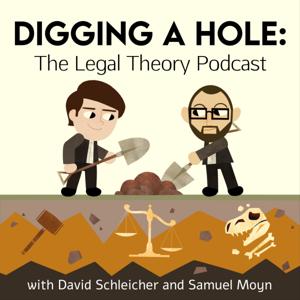

Our final guest for Season 3 is Nikolas Bowie, assistant professor of law at Harvard Law School and board member of the ACLU of Massachusetts, Lawyers for Civil Rights, the People’s Parity Project, and MassVote. In this episode, we dive into two of his recent articles -- “Antidemocracy” and “The Constitutional Right of Self-Government.” We begin by discussing the Court’s recent ruling in Cedar Point Nursery v. Hassid (2021) and how it ties to Heart of Atlanta Motel, Inc. v. United States (1964). As part of this conversation, we touch on the implications of Cedar Point moving forward, whether the Court is operating as a democratic institution, and how our institutions can move toward isocracy, a system of government where citizens have equal political power. Next, we discuss the Assembly Clause of the First Amendment and how early in the country’s founding, activists used their right to assemble to defend their right of self-governance. This history of the Assembly Clause offers new possibilities of interpretation that would lead to a greater protection of self-governance.
Our last episode of the season will be an “Ask Me Anything!” You can submit questions for us at our website, DiggingAHolePodcast.com
Referenced Readings:
 View all episodes
 By Digging a Hole Podcast

4.8
6565 ratings
Our final guest for Season 3 is Nikolas Bowie, assistant professor of law at Harvard Law School and board member of the ACLU of Massachusetts, Lawyers for Civil Rights, the People’s Parity Project, and MassVote. In this episode, we dive into two of his recent articles -- “Antidemocracy” and “The Constitutional Right of Self-Government.” We begin by discussing the Court’s recent ruling in Cedar Point Nursery v. Hassid (2021) and how it ties to Heart of Atlanta Motel, Inc. v. United States (1964). As part of this conversation, we touch on the implications of Cedar Point moving forward, whether the Court is operating as a democratic institution, and how our institutions can move toward isocracy, a system of government where citizens have equal political power. Next, we discuss the Assembly Clause of the First Amendment and how early in the country’s founding, activists used their right to assemble to defend their right of self-governance. This history of the Assembly Clause offers new possibilities of interpretation that would lead to a greater protection of self-governance.
Our last episode of the season will be an “Ask Me Anything!” You can submit questions for us at our website, DiggingAHolePodcast.com
Referenced Readings:

1,941 Listeners

678 Listeners
1,114 Listeners
6,300 Listeners
1,575 Listeners

7,230 Listeners

2,064 Listeners
5,801 Listeners

94 Listeners

15,984 Listeners
397 Listeners
744 Listeners

341 Listeners

338 Listeners
35 Listeners