
Sign up to save your podcasts
Or

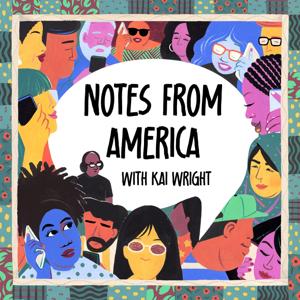


Jennifer Willoughby was in an abusive marriage. Saily Avelenda was unhappy with her congressman, who'd held office for over two decades without facing a serious contender. They didn’t know they were about to topple two political giants. Plus, want to know the real reason the 2018 midterms could make history? It has to do with a number political scientists call the "gender gap."
Note: WNYC made several attempts to reach Rob Porter for comment. He did not respond before this episode was released.
The United States of Anxiety is supported in part by the Economic Hardship Reporting Project. Additional support for WNYC’s election coverage is provided by Emerson Collective, The New York Community Trust, and New York Public Radio Trustee Dr. Mary White.
Tell us what you think. We're @noteswithkai on Instagram and X (Twitter). Email us at [email protected]. Send us a voice message by recording yourself on your phone and emailing us, or record one here.
Notes from America airs live on Sundays at 6 p.m. ET. The podcast episodes are lightly edited from our live broadcasts.
Women gained the right to vote nearly a century ago. Yet, power is still concentrated in the hands of men. In a year that’s seen a surge of female candidates, the question at the heart of the 2018 midterms is: Who is our democracy for?
Tell us what you think. We're @noteswithkai on Instagram and X (Twitter). Email us at [email protected]. Send us a voice message by recording yourself on your phone and emailing us, or record one here.
Notes from America airs live on Sundays at 6 p.m. ET. The podcast episodes are lightly edited from our live broadcasts.
A record number of women are running for office this primary season, which means there's a groundswell of energy around targeting female voters with campaign ads.
For our next season of the United States of Anxiety, we’re focusing on power and gender, and we’ve partnered with ProPublica to look at how political advertising targets people of different genders differently on Facebook.
Unlike broadcast television ads, which are heavily regulated, we have no idea how individual voters are micro-targeted on Facebook. It’s still the Wild West. Nor do we know about potentially unethical or misleading advertising that may be happening.
We do know from the Cambridge Analytica scandal that much of the misinformation spread in 2016 targeted people based on their race and gender. And we know that this is an election in which gender is expected to be a decisive factor.
What can you do?
By doing this, you'll be part of groundbreaking research — remember this is the first election cycle since Facebook changed its policies. And you'll also be helping WNYC and ProPublica bring you reporting and analysis about these campaign ads.
To get started, visit propublica.org/facebook.
Tell us what you think. We're @noteswithkai on Instagram and X (Twitter). Email us at [email protected]. Send us a voice message by recording yourself on your phone and emailing us, or record one here.
Notes from America airs live on Sundays at 6 p.m. ET. The podcast episodes are lightly edited from our live broadcasts.
America incarcerates more people than any country in the world. It starts with kids. On any given night, roughly 53,000 young people are in some form of lockup. Nearly 60 percent are black or Latino. We all make dumb mistakes in our youth. But for these kids, those same destructive choices have a lasting impact. Mass incarceration starts young.
From the team that brought you The United States of Anxiety, Caught: The Lives of Juvenile Justice tells the stories of young lives forever changed by collisions with law and order. In this episode, meet Z, a kid who had his first encounters with law enforcement when he was just 12 years old. Now, at 16, he’s sitting in detention on an armed robbery charge. Z's story introduces the questions: What happens once we decide a child is a criminal? What does society owe those children, beyond punishment? And what are the human consequences of the expansion and hardening of criminal justice policies that began in the 1990s – consequences disproportionately experienced by black and brown youth?
Caught: The Lives of Juvenile Justice is supported, in part, by the Anne Levy Fund, Margaret Neubart Foundation, the John and Gwen Smart Family Foundation, and the Economic Hardship Reporting Project. Subscribe on iTunes.
Tell us what you think. We're @noteswithkai on Instagram and X (Twitter). Email us at [email protected]. Send us a voice message by recording yourself on your phone and emailing us, or record one here.
Notes from America airs live on Sundays at 6 p.m. ET. The podcast episodes are lightly edited from our live broadcasts.
We've got a story from the WNYC newsroom that we really want to share with you. Our WNYC colleagues, Andrea Bernstein and Ilya Marritz, in partnership with ProPublica and The New Yorker investigate how President Trump's two eldest children avoided criminal charges in a probe related to the Trump SoHo.
Tell us what you think. We're @noteswithkai on Instagram and X (Twitter). Email us at [email protected]. Send us a voice message by recording yourself on your phone and emailing us, or record one here.
Notes from America airs live on Sundays at 6 p.m. ET. The podcast episodes are lightly edited from our live broadcasts.
President George W. Bush, speaking at a mosque on Sept. 17, 2001: "The face of terror is not the true faith of Islam. That’s not what Islam is all about. Islam is peace."
Donald Trump, campaigning for president on March 9, 2016: "I think Islam hates us."
David Yerushalmi was living in an Israeli settlement near Jerusalem speaking on the phone with his father when the planes hit the towers on Sept. 11, 2001. "We got it wrong," Yerushalmi remembers telling his father. Before Sept. 11th, Yerushalmi thought terrorism was about nationalism, a fight over land. Afterward, he decided terrorism committed by Muslim extremists was driven by Islam itself -- and underpinned by Islamic Shariah law.
Pamela Geller and David Yerulshami(Pamela Geller)
So he packed up his family and moved to New York to become part of a fledgling community of conservatives who would come to be known as counter-jihadists. They had an uphill battle to fight: In the aftermath of Sept. 11, President Bush and most Americans, according to polls, did not equate Islam with terrorism.
But 16 years later, even though there hasn't been another large-scale terrorist attack on American soil committed by a Muslim, America's perspective on Islam has changed -- evidenced most notably by the election of a president who believes the religion itself hates the country.
Yerushalmi is a big reason for this change of heart. He's a behind-the-scenes leader of the so-called "counter-Jihad" movement, filing lawsuits pushing back against the encroachment of Islam in the public sphere and crafting a series of anti-Sharia laws that Muslims and civil rights groups decry as Islamophobic.
"Do I think that the United States is weak enough to collapse either from a kinetic Jihad, meaning war, or even a civilizational Jihad that the Muslim Brotherhood talks about? No. At least not in my lifetime. But do I think it's an existential threat that allows for sleeper cells and the Internet-grown Jihadist that we see day in and day out wreaking so much havoc here and in Europe? Yes. Do I see it as a threat to our freedoms and liberties incrementally through their so-called civilizational Jihad where they use our laws and our freedoms to undermine our laws and our freedoms? Absolutely."
Matt Katz speaks to Yerulshami about what he thinks is the creeping threat of Sharia law.
Episode Contributors
Kai Wright
Matt Katz
Karen Frillmann
The United States of Anxiety is hosted by Kai Wright and produced by WNYC Studios.
Listen to more shows from WNYC Studios: http://wny.cc/yzc4304odXp
WNYC Studios is the producer of other leading podcasts including Freakonomics, Radiolab, Here's The Thing with Alec Baldwin and many more.
Tell us what you think. We're @noteswithkai on Instagram and X (Twitter). Email us at [email protected]. Send us a voice message by recording yourself on your phone and emailing us, or record one here.
Notes from America airs live on Sundays at 6 p.m. ET. The podcast episodes are lightly edited from our live broadcasts.
In the wake of the recent violence in Charlottesville, where a protester was killed by a white supremacist, dozens of monuments to the Confederacy are being taken down.
It's an extraordinary moment in American history, and in this episode, we stop to ask: When did the Confederate flag start showing up in the North?
The story brings together segregationists like Strom Thurmond with Southern rock icons Lynyrd Skynyrd and TV's The Dukes of Hazzard. All of them helped bring the flag to a national audience in the 20th century, as white Americans struggled to make sense of the civil rights movement, and in many cases, pushed back.
Additionally, WNYC is mapping the locations of Confederate flags in New York state. If you've spotted one, please let us know here!
A Confederate flag in Delaware County, NY
Tell us what you think. We're @noteswithkai on Instagram and X (Twitter). Email us at [email protected]. Send us a voice message by recording yourself on your phone and emailing us, or record one here.
Notes from America airs live on Sundays at 6 p.m. ET. The podcast episodes are lightly edited from our live broadcasts.
This fourth of July, one year after the podcast began, we look back at a culture that’s made us so anxious, but also what holds us together, and where we’re going as a nation. Since nothing seems to bind Americans more together than food, we’re starting off with a key marker of American culture--pie. Kai Wright and Karen Frillmann spend some time partaking in a key American tradition-baking a cherry pie.They’ll talk pie-making with food writer Kathy Gunst, coming together in the kitchen and what gets passed down along with a recipe.
Kai Wright and Karen Frillmann bake a pie.
Then we’ll turn to Nancy Solomon, who's having a BBQ on a very diverse block in New Jersey where everyone from Donald Trump supporters to liberal lesbians live. We’ll hear about their anxieties, and see just what they’re doing to alleviate any potential tensions as the state gears up for a gubernatorial election later this year. Jim O’Grady delves into what exactly the Declaration of Independence means today. Finally, we’ll be listening in to you, and your thoughts and fears, about the cultural wars in America.
Episode Contributors:
Kai Wright
Jim O’Grady
Arun Venugopal
Nancy Solomon
Karen Frillmann
Subscribe to the podcast on Apple Podcasts.
Sources:
Professor Andrew Shankman, Rutgers University, author of Original Intents
Professor Andrew Schocket, Bowling Green State University, author of Fighting over the Founders
The New York Public Library and it's original copy of The Declaration of Independence in Thomas Jefferson's hand
Tell us what you think. We're @noteswithkai on Instagram and X (Twitter). Email us at [email protected]. Send us a voice message by recording yourself on your phone and emailing us, or record one here.
Notes from America airs live on Sundays at 6 p.m. ET. The podcast episodes are lightly edited from our live broadcasts.
As the opioid epidemic continues to increase, we take a look back at the Sixties when the War on Drugs, a federal effort to decrease illegal drug use, was beginning to take shape. It was a decade of intense change in America as political assassinations took place, the Black power movement rose, and the Vietnam War intensified. It was also a time that conservatives, scared about the future of their country, were beginning to fight back. No one understood this more than Richard M. Nixon during his second run for president in 1968. Nixon knew that many people, especially southern whites, were afraid of the social progress that the country was making at the time. He also knew that drug use and crime were going up and that tapping into the fears and anxieties, while tying them to race, may have been just the strategy he needed to win. “The wave of crime is not going to be the wave of the future in the United States of America,” Nixon said in 1968 as he accepted the Republican nomination, becoming the law and order candidate.It worked, and when he was elected he decided to make good on his promise, focusing not only on crime, which is often a state issue, but drugs. Drugs were a federal issue that was gaining traction among the public and in the political realm, as heroin use spread among both Americans at home and US soldiers in Vietnam.Christopher Johnson looks at the beginning of the War on Drugs in America, from it’s roots with the Southern Strategy, to the strange support for methadone treatment centers, to the so-calledRockefeller Drug Laws in New York. “America’s public enemy number 1 in the US is drug abuse,"declared Nixon in 1971 as he launched the War on Drugs. “In order to defeat this enemy, it is necessary to wage a new, all-out offensive.” Though he didn’t utter the phrase, Nixon's "War On Drugs" was a costly offensive whose long-lasting impact on drug policy, law enforcement and American culture continues today.Episode Contributors:Kai WrightChristopher JohnsonKaren FrillmannThe United States of Anxiety is hosted by Kai Wright and produced by WNYC Studios<https://itunes.apple.com/us/artist/wnyc/id127981066?mt=2>.Listen to more shows from WNYC Studios: http://wny.cc/yzc4304odXpWNYC Studios is the producer of other leading podcasts including Freakonomics, Radiolab, Here's The Thing with Alec Baldwin and many more.
Tell us what you think. We're @noteswithkai on Instagram and X (Twitter). Email us at [email protected]. Send us a voice message by recording yourself on your phone and emailing us, or record one here.
Notes from America airs live on Sundays at 6 p.m. ET. The podcast episodes are lightly edited from our live broadcasts.
This week we’re looking at a President Richard M. Nixon, a man obsessed with winning. Whether it was an election or becoming a great leader, he would go to great lengths to ensure his success. But Nixon felt he was surrounded by enemies, so to make sure he triumphed, he had his staff create an “Enemies List:” a document with hundreds of people he thought could do him harm. It was part of the White House "Political Enemies Project," and included people ranging from some of Hollywood’s biggest stars to members of the media to business and labor leaders.
“It just so unpresidential for presidents to have enemies," said John Dean, Nixon’s White House Counsel who disclosed the existence of the list when he testified before the Senate Watergate committee. “I mean, theoretically, the President is the President of the United States, not the President of the Republican or Democratic Party, or the President of the people who voted for him. We don't like to think of our leaders as being that narrow-minded that they think everybody is their enemy who isn't their friend.”
Beyond it’s existence, the list was also remarkable because Nixon and his aides considered using it to try and find ways to use the power of the federal government to go after their enemies. How? One way was through the IRS.
Charlie Herman looks at Nixon’s infamous “Enemies List,” an unprecedented step taken by an embattled President who worried about being betrayed by everyone around him.
Episode Contributors:
Kai Wright
Charlie Herman
Karen Frillmann
Subscribe to the podcast on Apple Podcasts.
Tell us what you think. We're @noteswithkai on Instagram and X (Twitter). Email us at [email protected]. Send us a voice message by recording yourself on your phone and emailing us, or record one here.
Notes from America airs live on Sundays at 6 p.m. ET. The podcast episodes are lightly edited from our live broadcasts.
From the publisher's feed

43,845 Listeners

37,803 Listeners

6,790 Listeners

9,170 Listeners

3,986 Listeners

1,567 Listeners

8,432 Listeners

473 Listeners

55 Listeners

12,666 Listeners

14,442 Listeners

6,427 Listeners

14,638 Listeners

3,507 Listeners

112,160 Listeners

2,800 Listeners
9,062 Listeners

1,406 Listeners

1,196 Listeners

5,568 Listeners

5,767 Listeners

421 Listeners

16,323 Listeners

16,169 Listeners

2,820 Listeners

645 Listeners

1,968 Listeners

1,619 Listeners
1,747 Listeners

241 Listeners

20 Listeners

17 Listeners