Off Camera with Sam Jones

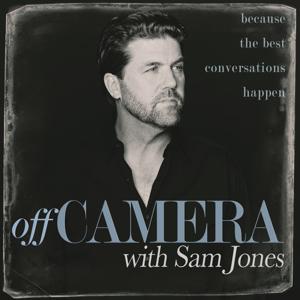
Off Camera with Sam Jones

Download on the App Store

Off Camera with Sam Jones episodes

  • 54. Dan Patrick
    When SportsCenter icon Dan Patrick said goodbye to ESPN, he had no idea what was next. For someone who never dreamed of anything but being a sportscaster, leaving the network he helped build took more career balls than Nolan Ryan ever threw. But such risks are usually mitigated in direct proportion to how much you love what you do. And Patrick loves to talk about sports, which he decided to do from his attic, and now does on one of the most successful—and unique—shows on national radio (or TV). What he doesn’t love is toeing anyone’s line but his own. His irreverence, intelligence, and ability to put sports in a larger cultural context put The Dan Patrick Show in a league of its own. One of the best hosts in the biz talks about calling his own shots, what makes great radio and why you should be concerned with the amount of wood paneling in your boss’s office. This is a guy who finds motivation in every challenge, and for whom “every day is the Super Bowl.” So should we be concerned he’s eyeing the Off Camera host slot? As Patrick himself might say, “You can’t stop him, you can only hope to contain him.” We’re not sure we even did that. Let’s go to the highlights…
    58 min
  • 53. Joanne Froggatt
    Joanne Froggatt is now quite clear that performing in front of the TV doesn’t mean you’re actually on TV, but when she was three, all she knew was she needed to get in that box and live the exciting lives of its inhabitants. At 16 she did, as an unwed teen mom on Coronation Street, a role that still informs her craft today, but did little to prepare her for the phenomenon of Downton Abbey. Audiences worldwide fell in love with the show, and Froggatt’s Anna Bates, a servant whose kindness, honesty and bravery made us question whether the manor’s true ladies were living upstairs or down. Now that Froggatt is no longer required to maintain discreet restraint, we talk about her early career struggles, the art of conveying emotion as a character whose job de-pends on not showing any, and why neither she nor our host became veterinarians. We were also curious what one does after six years on one of the most acclaimed shows in TV history. “You chuck a brick and run after it.” Well, that clears that right up.
    57 min
  • 52. Matt Berninger
    For someone who admits that “relaxed” is not his natural setting, The National frontman Matt Berninger seems pretty okay with himself. What’s more, he seems pretty okay with anyone else seeing him for who he is, even when he’s perhaps not at his best. But more on that later. Berninger and the band came late to careers in indie rock, and without the youth or cool that serves as the usual currency of that scene. He was doing well in his nice desk job as an ad agency creative director, but as he told The Telegraph, “Once I entertained the thought that maybe I wouldn’t ever have to go and sit in conference rooms with MasterCard to discuss web ads again, I couldn’t shake it.” As a family man, was he confident he could make a living in his new chosen profession? And what of the fact that his music experience comprised absorbing large amounts of vinyl and live shows versus the more tried-and-true approach of actually playing an instrument or reading music? Neither mattered much, really; he’s a guy that enjoys climbing out on the thin branches. If Berninger and The National did come to rock late in the game, they came to it not only more confident in who they were as artists, but also more tolerant – and even appreciative – of the failures, though there haven’t been many to date. After a lot of rehearsal space toil (there’s only so much magic in art, folks), their complex, biting songs gained traction with each new release, from their self-titled breakout to subsequent successes like Boxer, High Violet and Trouble Will Find Me. In 2015, Pitchfork mused about the “surprisingly long shadow” the band has come to cast over alt-rock. “The National have emerged as a big-tent indie mainstay because their widescreen melancholia has proven durable and difficult to emulate.” For a former ad man, there’s probably some good irony to be mined in all The National songs that have landed in commercials, TV shows and even political campaigns, even if it hasn’t brought them widespread fame or magazine covers. Ascendance has come through their giant base of live-show fans, many of who were looking forward to the band’s first documentary in 2014. Instead, they got Mistaken For Strangers, a film The Guardian called “a nail-biting, cringe-inducing study of self-destruction and fraternal love, a film full of emotional explosions…and how you can find beauty in disaster.” A few of those emotional explosions are courtesy of Berninger as he deals with his younger brother’s attempt to be The National’s assistant tour manager while also shooting a film about the band. If, as Berninger says, “I wasn’t trying to hide what an asshole I am,” he also doesn’t mask a very human need to love and understand the people he’s closest to. Understanding his unusual approach to finding melodies and lyrics that stick is harder, though we certainly make the attempt in this conversation. He’s constantly throwing out one set of musical chemicals in search of another and is more tempted than terrified at the prospect of a flop. Six acclaimed albums and one well-reviewed side project in, he says he’s just in middle of figuring out how to be a songwriter. For Berninger, the magic trick seems to be in staying there.
    57 min
  • 51. Tim Robbins
    At 6’ 5”, Tim Robbins is the tallest actor ever to win an Academy Award, but until they start handing out statuettes for height alone, he’ll have to be content with a regular old Oscar and slew of Golden Globes recognizing his talent. Cutting such an imposing figure could’ve made it easy for Hollywood to serve him up time and again as the loveable, lumbering galoot he played so successfully in his breakout role as Bull Durham’s “Nuke” LaLoosh. But even a passing glance at his long filmography is a startling reminder that Robbins is an artist whose physicality is completely overshadowed by his versatility. He plays innocent and shrewd, hero and scoundrel, with such careful shadings and intelligence that watching him, we’re kept tantalizingly off balance. His boyish, wide-open countenance can conceal a menace that’s all the more disturbing because it’s felt more than seen. In other words, Robbins is a master manipulator – he’s playing us, but gleefully and with the best of intentions. He’s the naïve screwball in the Coen brothers’ Hudsucker Proxy, and the new neighbor in Arlington Roadwho’s so nice and normal that we can never quite put a finger on why something about him just doesn’t seem right. Though inarguably well deserved, the acclaim he’s received for his astounding performances in films like The Shawshank Redemption,Mystic River and The Player can make it too easy to overlook some of his most important contributions to his craft, as well as how he’s chosen to shape his career. While still in college he founded The Actors’ Gang, which changed the landscape and status of L.A. theater and created an incubator for both great plays and talented young actors. His passion for theater also pervaded the chaotically joyous, collaborative spirit of Bob Roberts, a film Robbins wrote, directed and starred in his early 30’s. Long before “mockumentary” became common film vocabulary, it incisively and uproariously presaged the media’s trivialization of politics. Come to think of it, it’s mandatory election year viewing. Though he admits his success has put him in a position to pick and choose, Robbins has always been an admirable purist, writing, directing, producing and acting in only the projects that speak to his sense of moral and artistic integrity. He knows his legacy may not matter to the public, but it matters to him. That integrity – and his standing as one of our true auteurs – prompted Robert Altman to call him the second coming of Orson Welles. High praise; but like Welles, his standards don’t frequently align with those of his industry, making his film projects increasingly rare. Our conversation reminded us of the treasure we have in Robbins, and as much as we hate to bother a 6’ 5” former hockey player, we respectfully demand more.
    1 hr 1 min
  • 50. Aubrey Plaza
    When the notoriously poker-faced Aubrey Plaza says that she’s wanted to be an actor since she was 13 and thus isn’t surprised it’s happening, or that perhaps the universe responded to her acting daydreams, you have to wonder, does she really mean that? Understandably, Aubrey Plaza used to hate the word “deadpan,” as associated as it’s become with the detached, almost unreadable delivery she’s cultivated as characters like Julie Powers in Scott Pilgrim vs. the World, Darius in Safety Not Guaranteed and perhaps most famously, Parks and Recreation’s wryly impassive April Ludgate. Then her Ned Rifle director Hal Hartley cast the term in a different light: maybe it occasionally serves a character to drop lines with a certain lack of personal involvement. Though no one expects much from a zombie in the way of emoting, The Guardian said of Life After Beth, “…Plaza steals the show with one foot in the grave, her rotting heroine ricocheting between adolescent snarkiness and cadaverous rage…” When you think about it, it takes a certain amount of equanimity to put a line out there and let it sit without telegraphing what we’re supposed to think about it or how we’re supposed to react. If that means viewers remain a bit off balance, all the better to hold our attention while we supply our own context. But back to those comments. She was (we’re pretty sure) quite sincere, though Plaza herself likely had more to do with moving her career along than the universe. Philosophically, she seems to fall somewhere between fatalism and determinism. When her mom introduced her to Saturday Night Live, young Aubrey decided it was her dream job. When she looked up cast member bios and saw standup comedy as the common thread among her idols, she went promptly into improv, and later actually interned at SNL. Shortly after, she started growing the career she’s still building today with drolly arresting roles in films like Funny People and About Alex and The To Do List, often playing younger, still-at-that-awkward-stage characters. Perceptive viewers of her arc on the recently-ended Parks and Recreation might have noticed Plaza’s very intentional efforts to add layers and different choices to April Ludgate, without any overreaching departures from the essence of her character. Now able to poke her head up take a look around after six seasons on Parks, Plaza plans to continue her attempt “…to be considered a well-rounded actor, not a weirdo.” That starts next year with Dirty Grandpa and Mike and Dave Need Wedding Dates. Given her peppy, workmanlike embrace of masturbation (The To Do List), doll parts (Playing It Cool), and, um, quirky guest appearances (any number of talk shows), she’s demonstrated she’s unafraid to attempt almost anything, including being herself – no small feat in her line of work. If part of the outrageousness allows her to remain a bit of an enigma, we can live with that. What we most want to see is what Plaza does next, because if there’s one thing that’s obvious, the woman’s capable of almost anything.
    1 hr 4 min
  • 49. Linda Cardellini
    Every successful actor will tell you how lucky they are to do what they get to do; it’s pretty standard actor PR speak, and in most cases, probably true. Still, it’s genuinely refreshing to come across someone who seems to be happier practicing her craft the longer she does it. Linda Cardellini believed her dad when he told her it would be possible to build a rollercoaster in their back yard. Perhaps that’s where she got the “screw-loose optimism” responsible for making her think she could be an actress in the first place, and what led her to L.A. to audition for roles she thought (or was actually told) she wouldn’t get, one being her breakout series Freaks and Geeks. She even managed to find a small moment of pleasure in the rather sudden late-night announcement of its cancellation. And she believes there’s benefit to be found in even the most nerve-racking auditions. It's a testament to Freaks and Geeks and Cardellini herself that she’s still best known (and rightfully lauded) for work on a show that was cancelled after just 18 episodes in 1999, not even beating the 10th season of Cops in the ratings. The show was unusual and ahead of its time in ways too numerous to mention, all of which probably boil down to its just being too good for TV at the time. On the bright side, the current streaming, watch-when-you-want age that enabled its phenomenal post-cancellation embrace gives us hope that such honest, sui generisshows and the people who create them will endure. Recalls Freakswriter Paul Feig, “Lindsay Weir was the only character not based on someone I knew, but Linda Cardellini was the exact person I had in my head.” Chalk that up to her innate ability (at 24) to bring an authenticity to a teenage character that completely matched the spirit of the show. “Life is filled with moments where you have to sit alone with yourself, and the show let us do that in a way that wasn’t normal at the time,” she told Vanity Fair. “You don’t know what to say or do, so you have to sit there in that uncomfortableness.” For a more recent example of her instinct for telling a story through silences and a complete lack of vanity, seek out the extraordinaryReturn, and you’ll be way ahead of the deprived people who are bound to stumble across and love it years from now. As her career progresses, she’s reflecting the experience and motivations of a widening range of grown-up women with roles in Mad Men, Welcome to Me, 2016’s The Founder and yes, even Avengers: Age of Ultron, which prompted theWashington Post to praise the calmness, clarity and wisdom of her performance – in a superhero movie. It’s a maturity she seems to find satisfying, and one that will likely ensure a long future as an artist. And the optimism just gets worse from here. As someone whose stated acting ambition is working with as many of her peers as possible to observe their approach, she’s landed in a series of jackpots, the latest of which is Bloodline with Sissy Spacek and Sam Shepard. So if you don’t like happy stories, stop here. And definitely don’t see her in the slightly sweet, slightly off-kilter, full-on funny Daddy’s Home this Christmas. But if like Cardellini, you believe the best is still to come, read on.
    1 hr 4 min
  • 48. Bill Lawrence
    Have complete confidence in each decision you make. If you’re wrong, have complete confidence in the next one. You could stop reading here and have all the advice you need from one of the most talented, inventive writers and producers in the TV business today. But that would be a mistake, because Bill Lawrence, as you might suspect of one of the most prolific creators of network sitcoms, tells a great story. Many great stories, actually. He was one of the youngest writers ever hired for Friends on its first season, and created Spin City at the ripe old age of 26. He went on to write, create and/or produce Scrubs,Cougar Town and Undateable – the show NBC said wasn’t “a good fit with our brand” and subsequently went on to renew for three seasons running (that one’s a particularly good story). As early as high school, Lawrence had visions of being a standup comedian until he figured out other people were better at delivering his material than he was. Though he says he’ll always be a comic at heart, he had too many ideas and too much confidence not to take his “spec script scam” out to Hollywood, where he quickly progressed from writing shows to running them to producing them, working with some of the best mentors in the business along the way. But here’s the thing about Bill, who at this point is a pretty successful guy with a nice pool and his own busy production company. Like any true and restless creative, he can’t resist a challenge or pushing on walls – in case of Undateable, the fourth wall. When NBC’s marketing commitment for the show seemed more likely to doom than promote it, Lawrence launched a grass-roots, whistle-stop bus tour that included throwing himself (a “below-mediocre comic”) into standup shows with a lineup of some of the best comedians in the business. Cue the flop sweat. After experimenting with a live broadcast ofUndateable, which involves on-the-fly live script changes and re-directing of actors during commercial breaks, he decided to do the whole third season that way, essentially creating a live scripted comedy-variety show hybrid. Ideas that would have most execs downing Costco-size doses of Pepto-Bismol just don’t seem to faze him; in fact, in a sort of meta way, he seems to make navigating the business sound like a sitcom itself. So tune in as Lawrence discusses what it takes to succeed as a TV writer, the inner workings of pitching, producing and marketing shows in the shifting TV landscape, and two shows he and George Clooney decided would never work: Friends and ER. Like he said, just have confidence in the next decision…
    1 hr 2 min
  • 47. Paul Dano
    In its review of Love & Mercy, Decider.com simultaneously lauded Paul Dano’s portrayal of the young Brian Wilson, and bemoaned his under-the-radar status. “Despite boasting an impressive list of credits, Dano is frequently left out of the cultural and critical conversation, and doesn’t receive the recognition he deserves for his powerful performances. He’s arguably one of the greatest actors of his generation, but his subtle presence in strong material hasn’t been enough to gain him awards season traction or long-term attention.” The article speculated Love & Mercy would change all that, but it raises a question: Does an artist have to be a widely known and/or “award-winning” to be appreciated or validated in some way? With the proliferation of social media and “entertainment news”, it seems we need to know an actor as a person, that he has to exist publicly and consistently in the “real” world to exist as an artist. Few who’ve seen Dano’s work in films like L.I.E., Little Miss Sunshine and 12 Years a Slave would question his disconcerting ability to absorb and then stun us with a kaleidoscopic range of characters. But try and describe Paul Dano the person and most of us would search long and hard for adjectives. And that’s fine. “Fame looked horrible to me,” says Dano. Though he still can’t completely articulate why he got into theater at age 10 and is just now starting to figure out what he does want as an actor, instinct has always led him away from what he doesn’t: Early on, he got the feeling that films like his 2004 teen rom-com The Girl Next Door would likely define him before he had a chance to do so himself. So his next choice was indie The Ballad of Jack & Rose with Daniel Day-Lewis, “Because someone there believed I could be nothing like me.” He’s since shone in a string of highly acclaimed performances in some of the most intriguing releases in recent years, including Prisoners, The Extra Man, and There Will Be Blood, of which Texas Monthly said: “Dano is so electric that the movie sags whenever he’s not around.” But it’s the aforementioned Love & Mercy that truly bears witness to his sensitivity as a performer and a vulnerability Dano says came from an almost personal regret about not being able to protect someone who couldn’t do it himself. The result was a portrait far more real than any degree of physical mimicry could ever convey. Dano takes the long view of his career, asking of each new role, “Why would I do this?” As much as he questions what he can give to each project, he wants to know what he can take from it for the next – and how it’s going to be different from the last. Dano’s never going to be the guy wearing the lampshade at your next dinner party. He will, however, take on a new and meta persona in the upcoming Youth, playing the kind of actor he never wanted to be, and prompting us to ask, how does an actor prepare to play an actor? We loved getting know him at least a bit better, and as far as adjectives go, we’ve landed on “necessary.” Because as long as Paul Dano continues acting, we know there will be films we really want to see.
    57 min
  • 46. Joseph Gordon-Levitt
    One of best ways to enter and appreciate the original, prolific brain of Joseph Gordon-Levitt is through the lens of hitRECord, the open, collaborative production company he founded in 2005, and one of the most creative and inspiring uses of the Internet ever. Its nearly 100,000 members submit projects – films, stories, songs, drawings, you name it – for other members to edit, build on and evolve. Gordon-Levitt credits directing short films on hitRECord with teaching him what he needed to know to make Don Jon, his first feature film as a writer, director and star. It was a darkly comic but ultimately hopeful tale about what happens when we become too connected to our devices, consuming people as things and communicating at versus with each other. His effort was rewarded with critical acclaim rare for actors who have the audacity to become auteurs; more importantly, audiences dug it. A lot of artists might find hitting it out of the park on their first time at bat daunting, but it just made him want to do more, and on a more collaborative level. That’s because Gordon-Levitt has never been fond of one-way streets – not for communication, not for critiques, not for creating, and especially not for careers. He could’ve ambled down his own pretty easy and lucrative path after early childhood success in commercials, films and most famously, NBC’s hit sitcom 3rd Rock from the Sun. Instead, he went to Columbia University, largely out of a desire to reclaim the feeling of “not knowing what I was going to be” – an open question for many college freshmen, but few actors who’ve worked steadily from the age of four. When he found himself roaming the streets of New York with a video camera, he knew a return to acting was inevitable, but he knew it would have to be in unexpected roles – not to make an artistic statement, but to prove to the business (and himself) that he didn’t have to be just one thing. When such roles weren’t immediately forthcoming, his restless creativity found an outlet in hitRECord. The roles he was seeking eventually surfaced in films like 500 Days of Summer, Brick, Inception and Mysterious Skin; and hitRECord projects began to take on momentum. Good times for someone who “gets off on the stuff I never anticipated would happen.” He believes we should welcome versus dread the unexpected, that change is the most natural state, that good becomes great when we all participate and, as poignantly demonstrated by his late brother Dan, that “people can be whatever the hell they want to be.” All of which posits that the best artists are collaborators, and the best collaborators tend to have a stubborn optimistic streak. Maybe it’s that enthusiasm (and a certain degree of DIY showmanship) that invests his performance as funambulist Philippe Petit in Robert Zemekis’ The Walk with such verve and authenticity. That, and his superior make-believe skills – a blank green screen is no match for a fertile imagination. In this issue, we talk to him about that film, the role of technology in modern life, what he’s learned from being on both sides of the camera, and his hopes for future of hitRECord. For those still unclear on that concept, tune in to our broadcast episode for Gordon-Levitt’s demonstration – and the musical results. Thanks, well,…everyone.

    1 hr 3 min

About Off Camera with Sam Jones

From the publisher's feed

Off Camera is a podcast hosted by photographer/director Sam Jones, who created the show out of his passion for the long form conversational interview, and as a way to share his conversations with a…

More shows like Off Camera with Sam Jones

WTF with Marc Maron Podcast by Marc Maron

WTF with Marc Maron Podcast

28,893 Listeners

Happy Sad Confused by Josh Horowitz

Happy Sad Confused

1,281 Listeners

Awards Chatter by The Hollywood Reporter

Awards Chatter

1,343 Listeners

IndieWire's Filmmaker Toolkit by Chris O'Falt

IndieWire's Filmmaker Toolkit

109 Listeners

In the Envelope: The Actor’s Podcast by Backstage

In the Envelope: The Actor’s Podcast

180 Listeners

Armchair Expert with Dax Shepard by Armchair Umbrella

Armchair Expert with Dax Shepard

69,560 Listeners

Conan O’Brien Needs A Friend by Team Coco & Earwolf

Conan O’Brien Needs A Friend

59,373 Listeners

The Three Questions with Andy Richter by Team Coco & Earwolf

The Three Questions with Andy Richter

3,610 Listeners

Literally! With Rob Lowe by Stitcher & Team Coco, Rob Lowe

Literally! With Rob Lowe

12,390 Listeners

Mike Birbiglia's Working It Out by Mike Birbiglia

Mike Birbiglia's Working It Out

4,588 Listeners

SmartLess by Jason Bateman, Sean Hayes, Will Arnett

SmartLess

57,744 Listeners

Blocks: I Wish I Knew w/ Neal Brennan by Neal Brennan

Blocks: I Wish I Knew w/ Neal Brennan

1,377 Listeners

Family Trips with the Meyers Brothers by Seth Meyers and Josh Meyers

Family Trips with the Meyers Brothers

2,869 Listeners

Where Everybody Knows Your Name with Ted Danson and Woody Harrelson (sometimes) by Team Coco & Ted Danson, Woody Harrelson

Where Everybody Knows Your Name with Ted Danson and Woody Harrelson (sometimes)

3,408 Listeners

Good Hang with Amy Poehler by The Ringer

Good Hang with Amy Poehler

12,445 Listeners