
Sign up to save your podcasts
Or

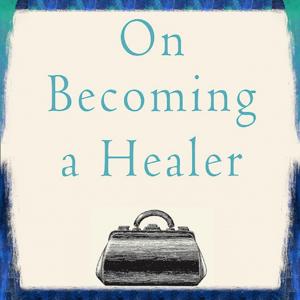


Unfortunately, bad leadership is common, with 50% of American's leaving a job because of a bad boss, and medicine is no exception. Saul and Stefan, with a combined 60 years in academic medicine and clinical practice, share personal experiences and anecdotes that highlight the characteristics of dysfunctional and toxic leaders, and discuss their implications for health care training and practice environment, including the trickledown effect on patients. They consider why and how bad leaders end up in positions of power, and what to do about it, acknowledging the difficulties in identifying and promoting effective leaders.
Writing about the illness experience, medical sociologist Richard Frank described an unspoken agreement with his doctor that if he adopted their detached and clinical language when discussing his illness, "I would have at least a junior place on the management team." Initially it seemed like "not a bad deal," until he experienced the toll it took, concluding that, "No one should have to stay cool and professional while being told their body is breaking down, though medical patients always have to do just that."
Through three poems selected by our repeat guest, English professor Laura Greene of Augustana College, we see the pain and cost to patients when their doctors and nurses hold them at arm's length, unable or unwilling to see their humanity. We reflect on why, and what to do about it.
A growing number of US states and other nations are legalizing either voluntary euthanasia in which a physician (or designate) administers lethal drugs, or physician-assisted dying in which the drugs are given to the patient to self-administer. Our guest, Erica Baccus, tells us about her husband's determination to end his life rather than die of Alzheimer's disease, and the journey they took to Switzerland to make it possible (US laws don't apply to dementia). His wishes were unquestionably honored. At the same time the procedure has implications we find troubling, especially for what it can mean for the doctor-patient relationship, such as in Canada where some physicians are now killing several of their patients a week.
For years, doctors and those learning to practice medicine were told pain is "the fifth vital sign" and to treat it aggressively – including with opioids, "if that's what it takes." A consequent rise in opioid prescribing contributed to the devastating opioid crisis.
Then the pendulum swung in the opposite direction, hard, with physicians cutting off opioid prescribing to patients, often without their consent. That too led to suffering with many deaths by suicide. What do these two seemingly opposing trends share in common? Both reflect a failure to embrace current knowledge about chronic pain and to bring compassion and caring to people who are suffering.
Co-hosts Saul Weiner and Stefan Kertesz discuss the implications from two perspectives: Medical learners are still taught to treat chronic pain like a simple bodily injury ("somatically") with the caveat to avoid opioids, spurring apathy and frustration. Stefan, an addiction medicine specialist who has been conducting a national study of suicides related to forced opioid tapers, argues that we have "become addicted to talking about opioids" rather than about all the good we could do if we applied current knowledge and compassion to help people who are suffering.
From the 1940 to the 1970's, medicine went from an almost exclusively male club to a profession in which women physicians were commonplace.
Our physician guest is Dr. Anne Walling, who has written a book about the experiences of 37 women who attended a Midwestern medical school, Women in Medicine: Stories from the Girls in White
This was a time when pornographic images appeared in lecture slides, and sexual harassment and discrimination in the job market were ubiquitous.
Despite the misogyny, the women interviewed nearly all expressed gratitude that they were able to have such meaningful, rewarding, and stimulating careers.
Our guest told us that her interviewees described reunions where male colleagues seemed burned out and cynical, while many of these women remained upbeat and excited about their medical work.
What can we learn from the story of women's entry into mainstream medicine? How has the profession been changed (or not) by their presence?
Soon after Lisa Iezzoni MD was diagnosed with multiple sclerosis during her first year at Harvard Medical School, from which she graduated in 1984, faculty and administrators discouraged her from practicing medicine.
And in her final year they made it impossible for her when the dean's office refused to write a recommendation letter (now called a Medical Student Performance Evaluation).
This week marks the 35th anniversary of the American Disabilities Act which was signed into law on July 26th, 1990. Much has changed since but -- as Dr. Iezzoni, who went on to become an eminent scholar and national policy leader on disability, has documented -- not nearly enough.
She and others have documented wide disparities in the quality of care patients with disabilities still receive, and in 2021 she published the findings of a national study of physician attitudes towards disability that document's persistent stigma and misinformation. Disabled patients were described as a "disruption to clinic flow" and a majority of physicians believed that patients with significant disability inherently have a worse quality of life.
Practices are also ill-equipped to care for them, Dr. Iezzoni, who chaired the U.S. Access Board's advisory committee on accessibility standards for medical equipment observed that "healthcare has been among the most backward environments, in terms of making itself accessible. Movie theaters are accessible, sports stadiums are accessible, transit is accessible. But healthcare facilities—no."
In our conversation with her, we explore why. How is it that physicians have such difficulty appreciating that disability is simply a part of the human experience? We explore the link between the culture within medical education and training, and the kind of people physicians become.
------
References:
Physicians' Perceptions of People with Disability and Their Health Care
US Access Board
It is difficult to overstate the achievements of Richard Clarke Cabot (1868-1939) a relatively little-known, old-moneyed physician of the early 20th century who was far ahead of his time in how much he contributed, and how willing he was to question his own limitations.
Cabot's achievements include: creation and self-funding of the first medical social work service and establishment of the fields of clinical pastoral care and medical ethics. His work offered seminal contributions to the fields of hematology, cardiology, infectious disease, and medical education – including the clinical pathologic conference, case-based learning and the differential diagnosis; the first large-scale randomized experiment in the history of criminology; the science of medical error; and introducing the concept of a group insurance plan. He authored countless books, articles and textbooks.
Most remarkable, considering Cabot's extraordinary intellect, was his openness to reflecting on his own deficits as a physician, including getting diagnoses wrong, and describing his own failures in seeing the humanity of his patients.
Joy, curiosity, and generosity were among his distinctive personal characteristics.
So, why is he not more widely remembered? Perhaps because of one of his greatest attributes: he pointed out things about his profession that the medical establishment didn't want to hear.
In an April 23rd executive order (EO), the president of the United States alleges that the Liaison Committee for Medical Education (LCME) and the Accreditation Council for Graduate Medical Education (ACGME) are requiring medical schools and residency programs to pursue unlawful discrimination through DEI policies. The EO calls for the US Department of Education to "assess whether to suspend or terminate" them, and to "streamline the process" for recognizing new accreditors to replace them.
In addition, medical journals, including the New England Journal of Medicine, are getting letters from a US Attorney, calling them "partisans in various scientific debates," and requesting information.
As a follow up to our last episode on authoritarianism and its implications for the medical profession, we consider these new developments from two perspectives: On the one hand we look for evidence to support the government's claims; and, on the other, we consider how they fit into the authoritarian's playbook of capitalizing on polarization to breakdown civil society and consolidate power.
There are things physicians and other health professionals can and should be doing now – and we propose a few -- to protect our profession from an authoritarian incursion that threatens our commitment so scientific integrity, and to a medical education system that, however imperfect, is informed by expert knowledge and professional values.
The record of physicians standing up for their values as healers under authoritarian regimes is not good, whether it's Nazi Germany, the former Soviet Union, or Iraq, with behaviors ranging from assisting in torture, to psychiatric hospitalization for political reasons. And sadly, it's often without any coercion.
More subtly, physicians may go along with authoritarian regimes' demands, thinking they can just "stay above the fray." But is that possible? Already, other professional institutions, including academia and law, have struck deals in the hope they they can move on, rather than defend academic freedom or long-standing legal principles.
What's in store for medicine? Some might say "not much" -- physicians must simply continue to take good care of their patients. But some are already acceding to orders to abandon care to certain populations, including trans people and refugees; or to compromise privacy. And professional organizations are saying little about looming cuts that would curtail access to care for millions of Americans.
One scholar of authoritarianism, Timothy Snyder has written, "When political leaders set a negative example, professional commitments to just practice become more important. Authoritarians need obedient servants."
In this episode, two physicians wrestle with what those commitments are, and how we hold on to them.
From the publisher's feed
Ranked by our users in the last 21 days

90,529 Listeners

6,806 Listeners

43,324 Listeners

10,713 Listeners

8,424 Listeners

111,708 Listeners

56,380 Listeners
32,256 Listeners
598 Listeners
1,887 Listeners
16,310 Listeners

389 Listeners

6,339 Listeners

16,072 Listeners

8,478 Listeners